Kinetics of Lagging-strand DNA Synthesis In Vitro by the Bacteriophage T7 Replication Proteins

February 25th, 2017
We describe sensitive, gel-based discontinuous assays to examine the kinetics of lagging-strand initiation using the replication proteins of bacteriophage T7.
Related Concept Videos
01:26
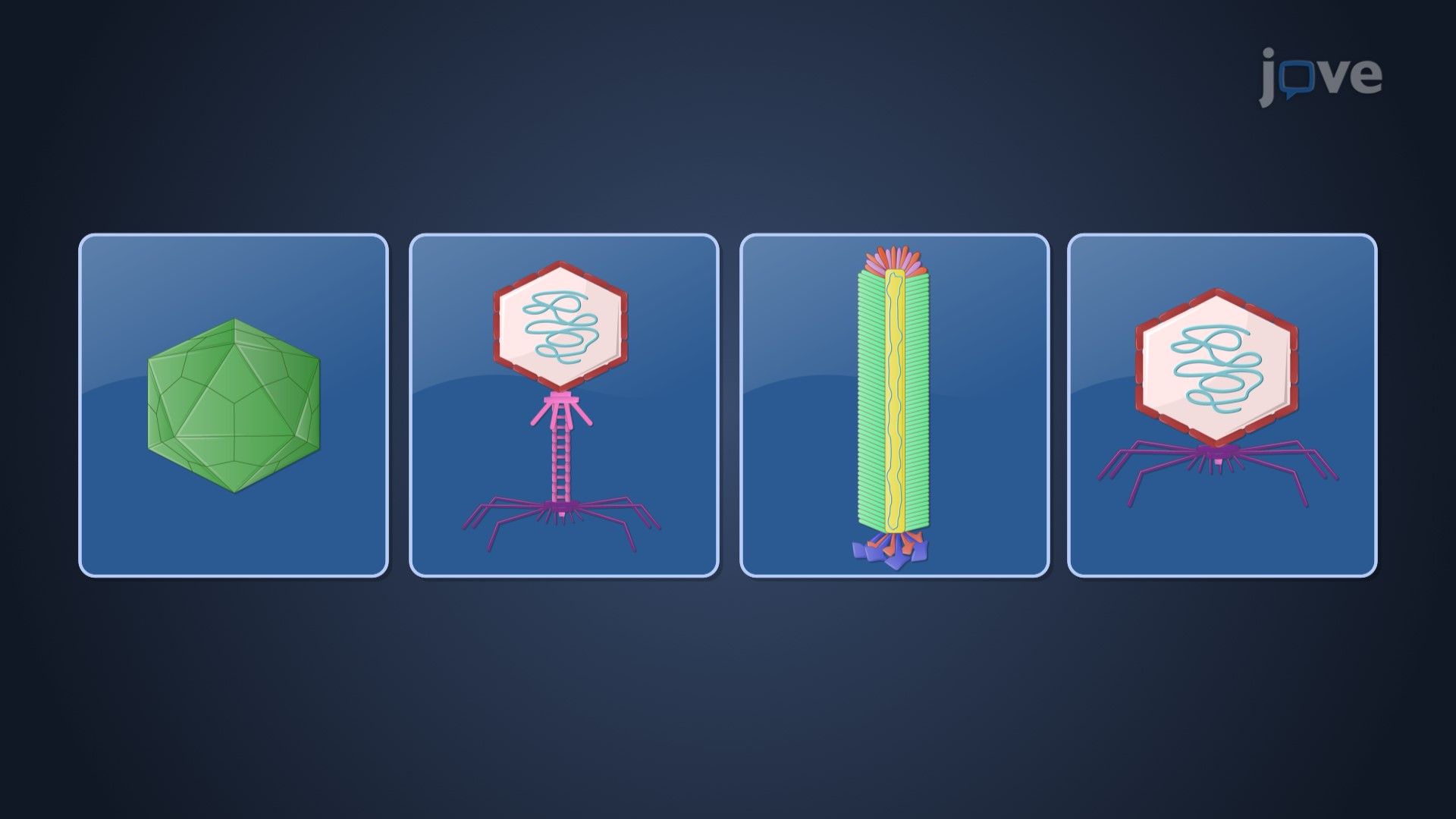
DNA Bacteriophages
Bacteriophages, or phages, are viruses that specifically infect bacteria, utilizing their genetic material to hijack host cellular machinery for replication. DNA bacteriophages employ single-stranded DNA (ssDNA) or double-stranded DNA (dsDNA) genomes. These phages exhibit diverse replication strategies and host interactions, influencing their ecological roles and applications in biotechnology and medicine.ssDNA BacteriophagesssDNA phages, with their small genomes, utilize unique strategies to...

02:01
Lagging Strand Synthesis
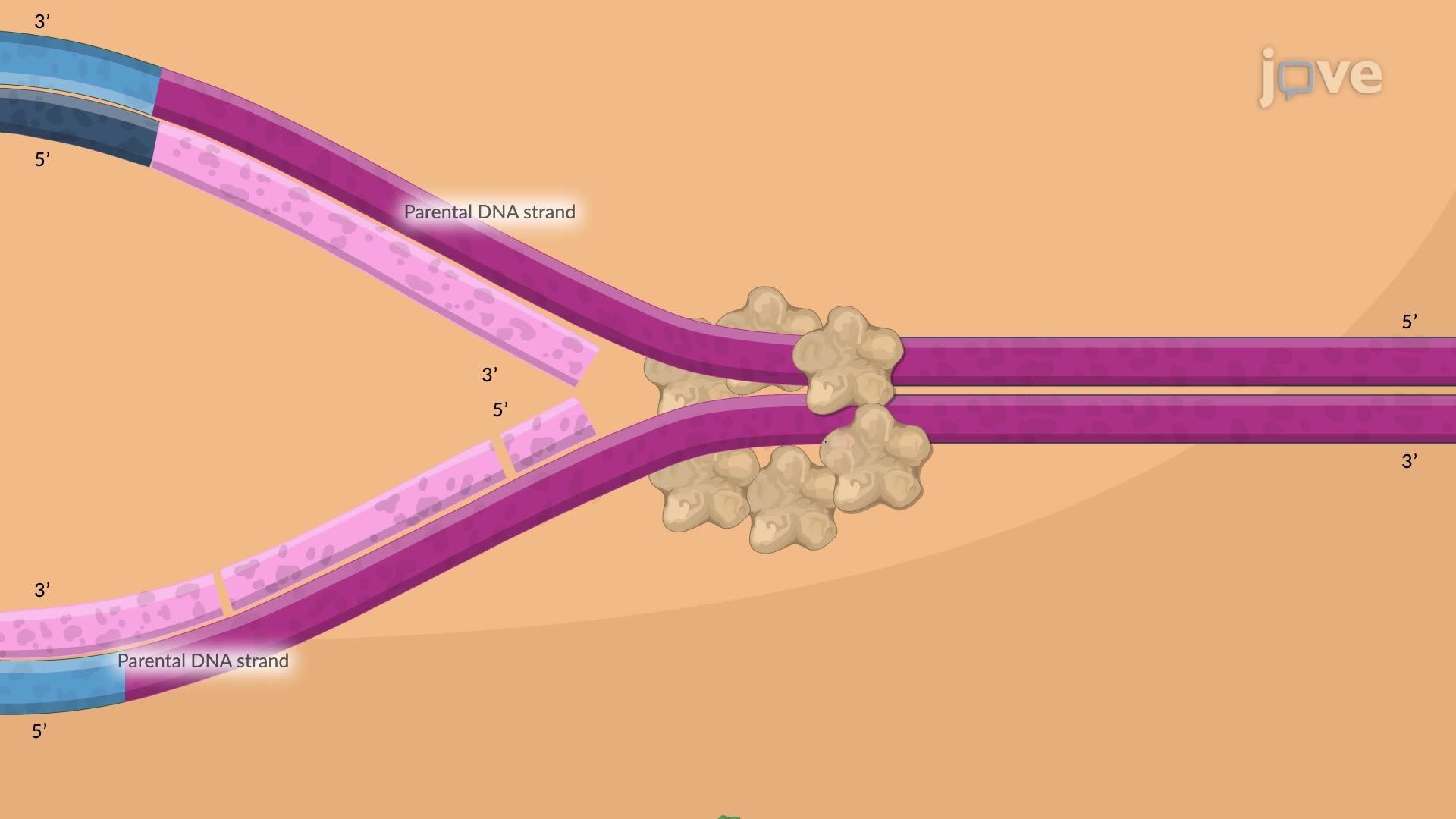
During replication, the complementary strands in double-stranded DNA are synthesized at different rates. Replication first begins on the leading strand. Replication starts later, occurs more slowly, and proceeds discontinuously on the lagging strand.There are several major differences between synthesis of the leading strand and synthesis of the lagging strand. 1) Leading strand synthesis happens in the direction of replication fork opening, whereas lagging strand synthesis happens in the...

03:01
The Replisome
DNA replication is carried out by a large complex of proteins that act in a coordinated matter to achieve high-fidelity DNA replication. Together this complex is known as the DNA replication machinery or the replisome.The synthesis of the leading and lagging strands is a highly coordinated process. To explain this, the “Trombone model” was proposed by Bruce Alberts in 1980. The DNA loop formation starts when a primer is synthesized on the parent lagging strand. The loop grows with the...
02:57
Replication in Prokaryotes
DNA replication has three main steps: initiation, elongation, and termination. Replication in prokaryotes begins when initiator proteins bind to the single origin of replication (ori) on the cell’s circular chromosome. Replication then proceeds around the entire circle of the chromosome in each direction from two replication forks, resulting in two DNA molecules.Many Proteins Work Together to Replicate the ChromosomeReplication is coordinated and carried out by a host of specialized proteins.

01:32
Replication in Prokaryotes
DNA replication has three main steps: initiation, elongation, and termination. Replication in prokaryotes begins when initiator proteins bind to the single origin of replication (ori) on the cell's circular chromosome. Replication then proceeds around the entire circle of the chromosome in each direction from the two replication forks, resulting in two DNA molecules.Many Proteins Work Together to Replicate the ChromosomeReplication is coordinated and carried out by a host of specialized...