
10 Fun Ways to Teach the Scientific Method in Middle School
Teaching the scientific method doesn’t have to be dry or overly technical. In fact, the best scientific method activities are interactive, hands-on, and designed to get middle schoolers thinking like real scientists.
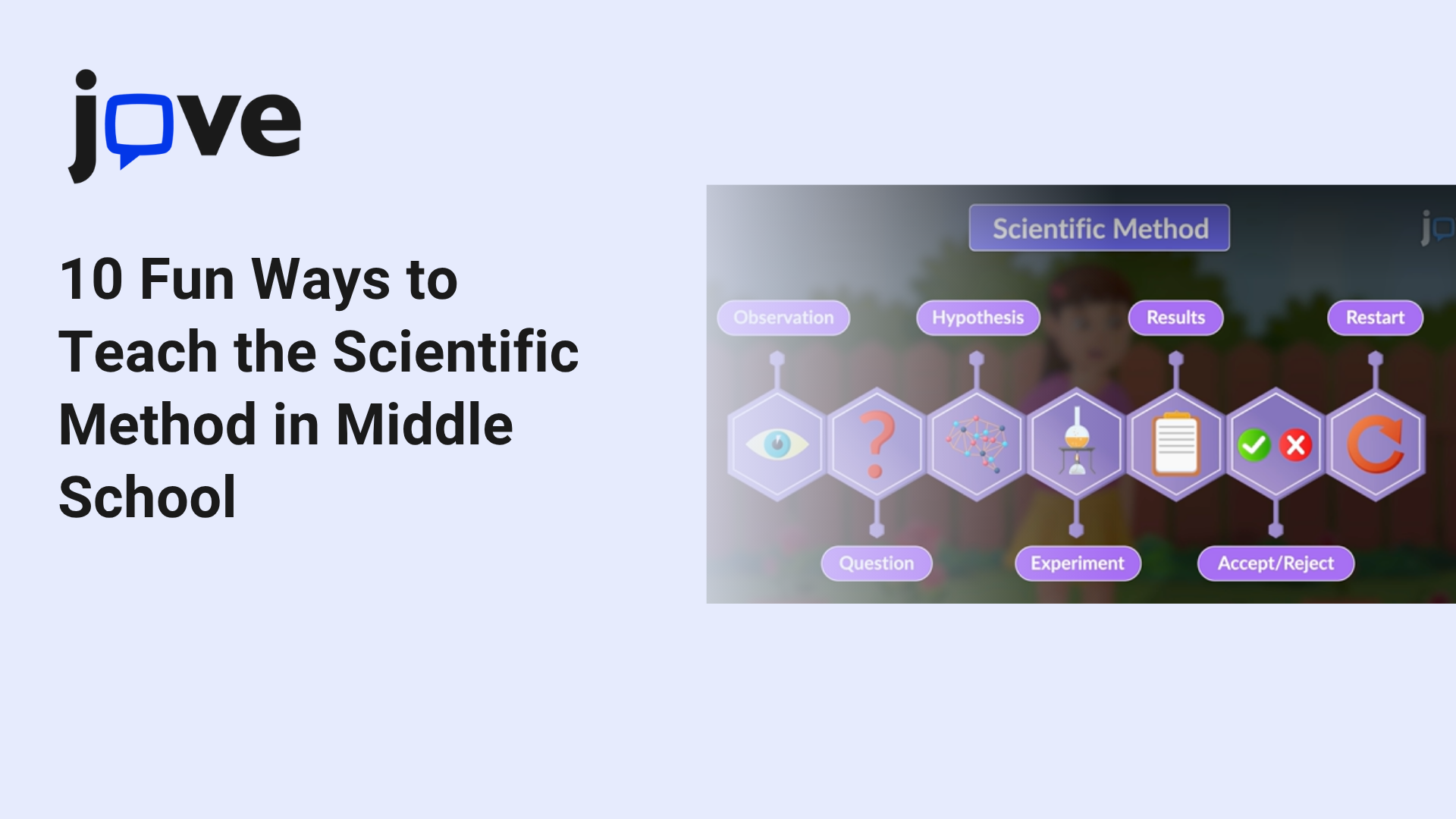
Show students how real experiments unfold, explore JoVE’s Scientific Method video to kick off your lesson visually.
These ten strategies below help you cover each part of the scientific method steps-from asking questions to drawing conclusions-all while keeping your students excited and engaged.
Be the First to Try Our AI Tools Soon!
1. Introduce the Scientific Method Steps with Real Examples
What to do:
Begin by walking students through the six classic steps of the scientific method:
- Ask a question
- Do background research
- Form a hypothesis
- Conduct an experiment
- Analyze data
- Draw a conclusion
Display these steps using a visual anchor like JoVE’s Scientific Method video, which helps reinforce the process with animated clarity.
How to teach the scientific method to students:
Make the method feel relevant by tying it to everyday challenges. Try this example:
Which brand of paper towel absorbs the most water?
Let students:
Brainstorm testable questions and variables
Form hypotheses (e.g., Brand A will absorb more than Brand B)
Conduct side-by-side experiments using equal amounts of water
Record measurements and draw conclusions from results
Why this works:
- It’s hands-on and low-cost
- It introduces all six steps in one guided activity
- It shows students that science starts with curiosity
Pro Tip: Have students compare results across groups to emphasize how real scientists repeat and verify experiments.
2. Mystery Powder Lab (Observation & Hypothesis Testing)
Objective: Teach students to form a hypothesis and test it.
Materials: White powders (baking soda, flour, sugar, cornstarch), droppers, vinegar, water
Steps:
- Students observe and record powder characteristics
- Add liquids to test reactions
- Identify each substance based on results
Why it works:
This is one of the most classic hands-on science activities and helps reinforce observation and testing skills in a safe, fun way.
3. Use JoVE’s Scientific Method Video
Why it’s effective:
JoVE’s Scientific Method video visually demonstrates how each scientific method step plays out in a lab setting. Students can follow along and relate the abstract steps to real-world experimentation.
4. Egg Drop Challenge (Testing and Analyzing)
Activity Setup:
- Give students basic materials (straws, tape, paper, string)
- Ask them to design a structure to protect a raw egg from a fall
Scientific Method Connection:
This classic science experiment for middle school gets students to form a hypothesis, test it, observe the outcome, and draw conclusions.
5. Which Cookie Melts Fastest? (Forming a Hypothesis)
Fun Twist:
Use different types of cookies and test them on warm plates or under a lamp.
Ask students: Which cookie will melt the fastest and why? Let them research ingredients and structure a proper hypothesis.
6. Water Travel in Plants (Controlled Experiment Design)
Use celery or carnations and food coloring.
- Teach how to control variables (amount of water, light exposure, etc.)
- Have students draw and compare results
This is perfect for scientific method lesson plan middle school ideas tied to botany and plant biology.
7. Classroom Poll + Data Analysis
Steps:
- Ask a question like: “Do students who sleep 8+ hours perform better on tests?”
- Let students survey classmates and analyze the results.
This method builds critical thinking and real-life relevance into your scientific method activities.
8. Balloon Blow-Up with Vinegar and Baking Soda
Why it’s great:
- Safe chemical reaction
- Lets students measure results (size of balloon)
- Ideal for demonstrating independent and dependent variables
Use this to discuss hypothesis testing and interpreting experimental outcomes.
9. MythBusters-Style Science Debates
Have students pick a popular myth (like ‘sugar makes you hyper’) and investigate it using scientific method steps.
Let them present their research and conclusions to the class.
10. Build a Scientific Method Anchor Chart
Classroom Visual:
Create a wall display where students can add photos, experiment ideas, and new vocabulary terms.
This reinforces the scientific method steps all year long.
FAQ: Teaching the Scientific Method
Try hands-on challenges like the Mystery Powder Lab, Egg Drop, or cookie melting test to engage students through experimentation and discussion.
Use relatable examples, visual demonstrations like JoVE videos, and encourage active questioning and hypothesis testing.
A good lesson plan includes explaining steps, modeling an experiment, doing a classroom activity, and reflecting on results.
Conclusion: Bring Science to Life with Inquiry
These fun scientific method activities for middle school help turn abstract steps into memorable experiences. When paired with JoVE’s classroom-ready science videos, they create an environment where young scientists can thrive.
Bring the scientific method to life – sign up for a free JoVE trial to access this video and more engaging experiment content for your class.
JoVE’s science video library starts at just $2 per student*. Explore funding options now.
*Pricing based on 1,500 students

