
Is It Alive? 7 Characteristics of Life and How to Teach Them
What makes something alive? Middle school students often ask this exact question, and the answer goes far beyond just whether it moves or it eats. To truly understand what defines a living thing, they need to explore the 7 characteristics of life, the shared traits that all living organisms have in common.
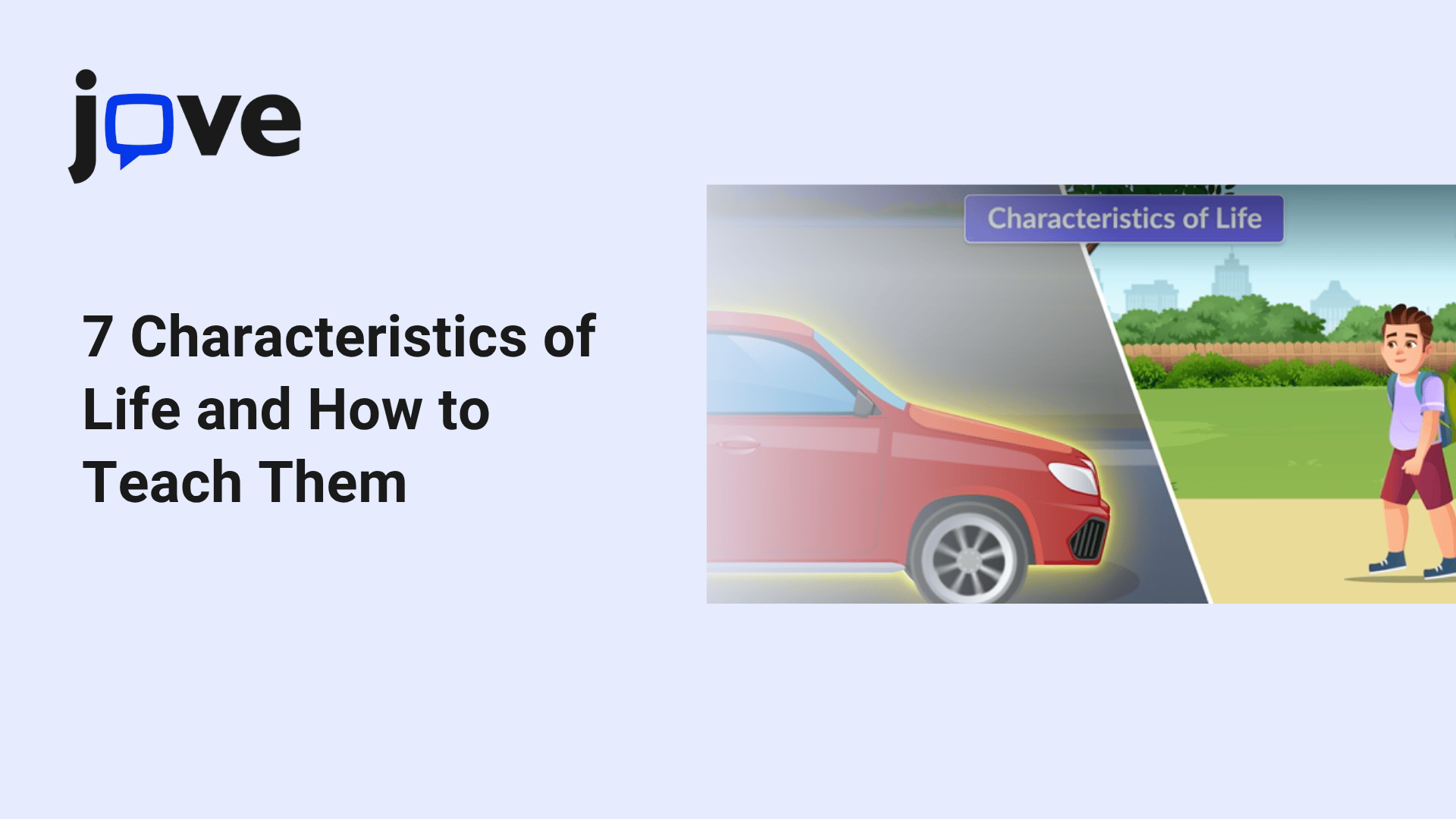
To help bring these concepts to life in your classroom(literally), JoVE’s video on the Characteristics of Life is an excellent visual tool. It introduces each trait clearly, helping students better understand what separates a rock from a rabbit.
Want a visual resource that simplifies this for students? Watch JoVE’s Characteristics of Life video with your class.
Below are the seven characteristics of life, explained in student-friendly terms, with hands-on teaching strategies for each.
The 7 Characteristics of Life (and How to Teach Each One)
1-Organization of Cells
All living things are made of one or more cells, the basic unit of life.
How to teach it:
Bring out the microscopes, have students compare cells in plants, animals, and bacteria. They’ll quickly see how some organisms are built from one cell, while others, like humans, are made of trillions.
2-Response to Stimuli
Living organisms respond to changes in their environment — whether it’s light, temperature, or touch.
How to teach it:
Show a video of a Venus flytrap snapping shut or test your class’s reflexes with a ruler drop. You could also place plants by a window and track how they lean toward sunlight.
3-Homeostasis
Life maintains internal balance like body temperature or water levels no matter what’s happening outside.
How to teach it:
Try measuring students’ pulse or body temperature before and after physical activity. Then discuss how their bodies return to balance afterward.
4-Metabolism (Use of Energy)
Living things need energy to carry out life processes- whether through eating, photosynthesis, or absorbing nutrients.
How to teach it:
Build a food web as a class and trace where energy comes from and where it goes. You can even challenge students to explain how their breakfast fuels their body!
5-Growth and Development
All organisms grow and change over time, from infancy to adulthood.
How to teach it:
Time-lapse videos work wonders here — show a seed sprouting or a butterfly emerging from a chrysalis. Or let students bring baby photos and compare physical changes over time.
6-Reproduction
Living things produce new organisms either sexually or asexually to ensure survival of the species.
How to teach it:
Use simple models to show cell division or plant pollination. Compare how bacteria reproduce vs. animals. It’s a great opportunity for interactive group comparisons!
7. Adaptation Through Evolution
Over generations, living organisms change in response to their environments — this is evolution at work.
How to teach it:
Introduce examples like camouflage, antibiotic resistance, or Darwin’s finches. A bead simulation of natural selection makes for a fun, memorable classroom activity.
Fun Classroom Idea: Living vs Nonliving Sorting Game
Create a sorting station with pictures or objects, including both obvious and tricky examples (e.g., fire, virus, seed). Let students work in teams to determine which are living, nonliving, or once-living based on the 7 characteristics of life.
Why it works: It encourages critical thinking and helps students test their understanding in a fun, hands-on way.
FAQ: Teaching the Characteristics of Life
Use relatable examples and visuals. Break each trait into simple language and reinforce it with real-world demonstrations.
Sorting games, microscope observations, and behavior response experiments all help clarify what makes something alive.
Start with a JoVE video to give students a visual overview. Then let them observe organisms or simulate life processes themselves.
Absolutely! Many of the activities from sorting games to watching videos can be done with basic classroom supplies.
Conclusion: Teaching What Makes Life-Life
By helping your students understand the 7 characteristics of life, you’re giving them the foundation for all biology learning ahead. With clear visuals, student-friendly explanations, and fun activities, you’ll turn an abstract list into a powerful concept they’ll remember.
JoVE’s science video library starts at just $2 per student*. Explore funding options now.
*Pricing based on 1,500 students

