
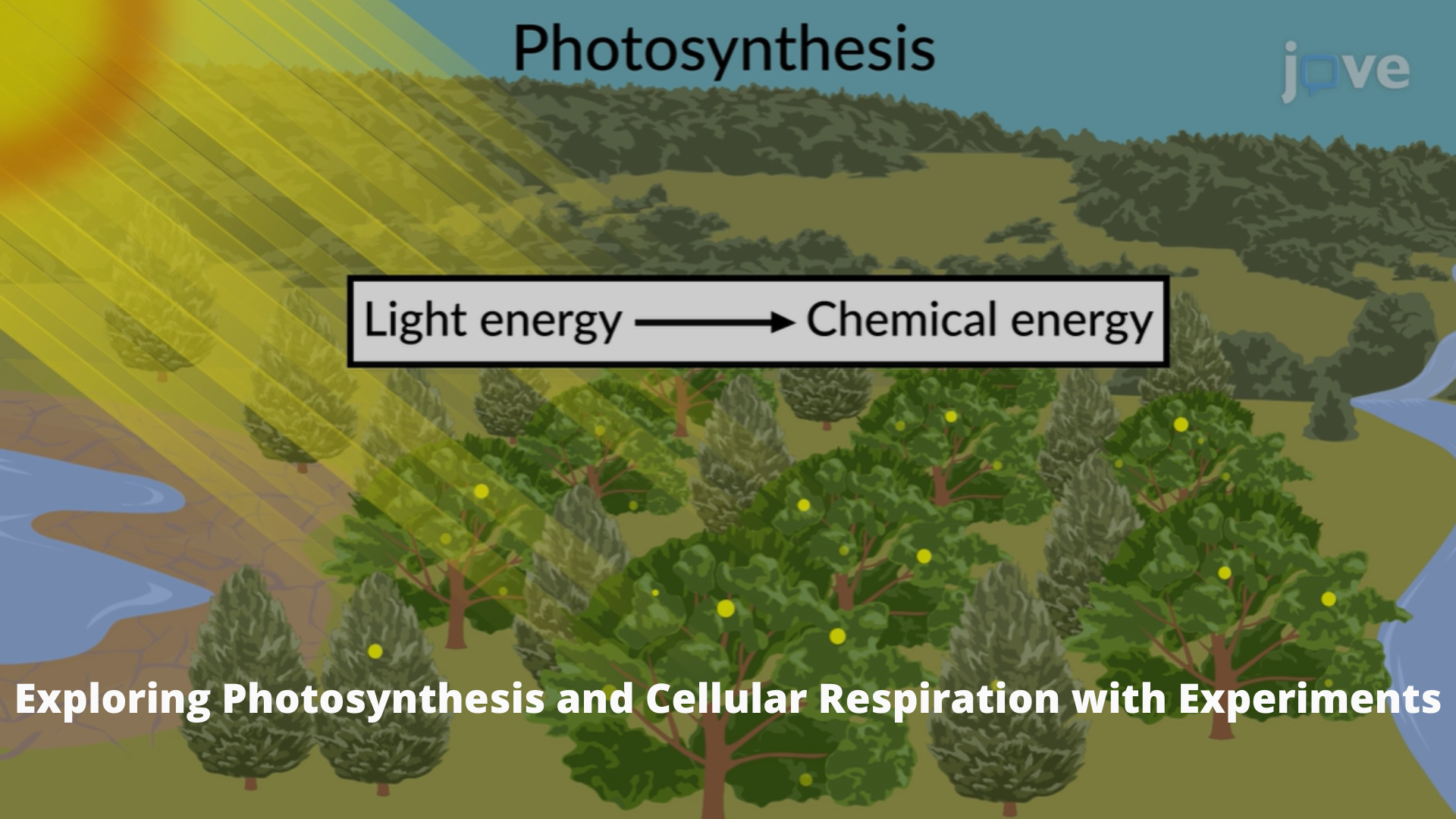
Exploring Photosynthesis and Cellular Respiration with Hands-On Experiments
Did you know that active learning methods significantly improve student performance in science? A study published in the Proceedings of the National Academy of Sciences found that students engaged in hands-on activities had higher assessment scores and lower failure rates compared to those in traditional lecture-based settings (Source).
Photosynthesis and cellular respiration are complex processes that students often struggle to visualize. By incorporating interactive experiments, educators can help students see these biochemical reactions in action, making the concepts more tangible and easier to understand.
Why Photosynthesis and Cellular Respiration Matter in High School Biology
Both photosynthesis and cellular respiration are essential for sustaining life. While photosynthesis converts light energy into chemical energy, cellular respiration breaks down glucose to release energy. These processes are interconnected, and understanding them provides students with insight into:
- How plants produce oxygen and glucose
- How cells convert energy into usable forms
- The role of ATP (adenosine triphosphate) in biological systems
- The balance of carbon dioxide and oxygen in ecosystems
Hands-on experiments make these concepts more tangible, reinforcing key biological principles in a memorable and interactive way.
Hands-On Experiments to Teach Photosynthesis and Cellular Respiration
1. Observing Stomata to Understand Gas Exchange
Objective: Students will examine the tiny openings (stomata) on leaves to understand how gases like CO₂ and O₂ are exchanged during photosynthesis and respiration.
Materials Needed:
- Fresh leaves
- Clear nail polish
- Clear tape
- Microscope slides
- Microscope
Procedure:
- Apply a thin layer of nail polish to the underside of a leaf.
- Let it dry completely, then carefully peel it off using clear tape.
- Stick the tape to a microscope slide and observe the stomata under a microscope.
What students learn: This experiment visualizes gas exchange, helping students connect leaf anatomy to photosynthesis and respiration.
2. Investigating the Effect of Light on Photosynthesis
Objective: Students will explore how light intensity impacts the rate of photosynthesis by measuring oxygen production in aquatic plants.
Materials Needed:
- Elodea (aquatic plant)
- Beakers
- Water
- Baking soda (for carbon source)
- Light source
- Timer
Procedure:
- Fill a beaker with water and add a small amount of baking soda to provide CO₂.
- Place a sprig of Elodea inside.
- Position a light source at different distances and observe oxygen bubbles forming.
What students learn: By measuring oxygen production, students can quantify how light influences the photosynthetic rate.
3. Modeling Cellular Respiration with Yeast
Objective: This experiment demonstrates how yeast cells break down sugar to produce carbon dioxide, mimicking cellular respiration.
Materials Needed:
- Active dry yeast
- Warm water
- Sugar (glucose, sucrose, or fructose)
- Balloon
- Flask or bottle
Procedure:
- Mix warm water and yeast in a flask.
- Add a sugar solution to provide a fuel source.
- Place a balloon over the opening of the flask and observe CO₂ inflation.
What students learn: This simple demonstration shows how different sugars impact respiration rates and introduces the concept of energy release in cells.
Enhancing the Learning Experience with JoVE Videos
Hands-on experiments can be even more effective when paired with visual learning resources. JoVE’s peer-reviewed science videos provide step-by-step demonstrations that reinforce complex concepts.
📌 Watch the JoVE Video: Cellular Respiration and Energy Production
Why use JoVE videos?
✔ NGSS-aligned content for high school teachers
✔ Step-by-step guidance for easy implementation
✔ Improves student engagement through interactive visuals
By incorporating JoVE videos, students gain a deeper understanding of these biological processes beyond the textbook.
Connecting the Experiments to Real-World Science
How Do Scientists Use These Processes?
- 🌱 Agriculture: Optimizing plant growth through controlled photosynthesis conditions.
- 🏥 Medicine: Understanding metabolic disorders related to cellular respiration.
- 🌎 Environmental Science: Studying CO₂ levels and climate change.
Common Student Challenges and Solutions
Problem: No bubbles appear in the photosynthesis experiment.
✅ Solution: Ensure the plant is fresh and exposed to enough light.
Problem: The yeast balloon doesn’t inflate.
✅ Solution: Use warmer water to activate yeast but avoid boiling temperatures.
Addressing these issues helps students conduct successful experiments and draw meaningful conclusions.
Conclusion: Why Teachers Should Incorporate These Experiments
Teaching photosynthesis and cellular respiration through interactive lab activities improves comprehension, encourages critical thinking, and makes biology exciting. Using JoVE videos alongside these experiments provides an engaging, standards-aligned learning experience that supports teachers in creating dynamic science lessons.
Try JoVE for Free and Make Photosynthesis & Cellular Respiration Interactive!

