
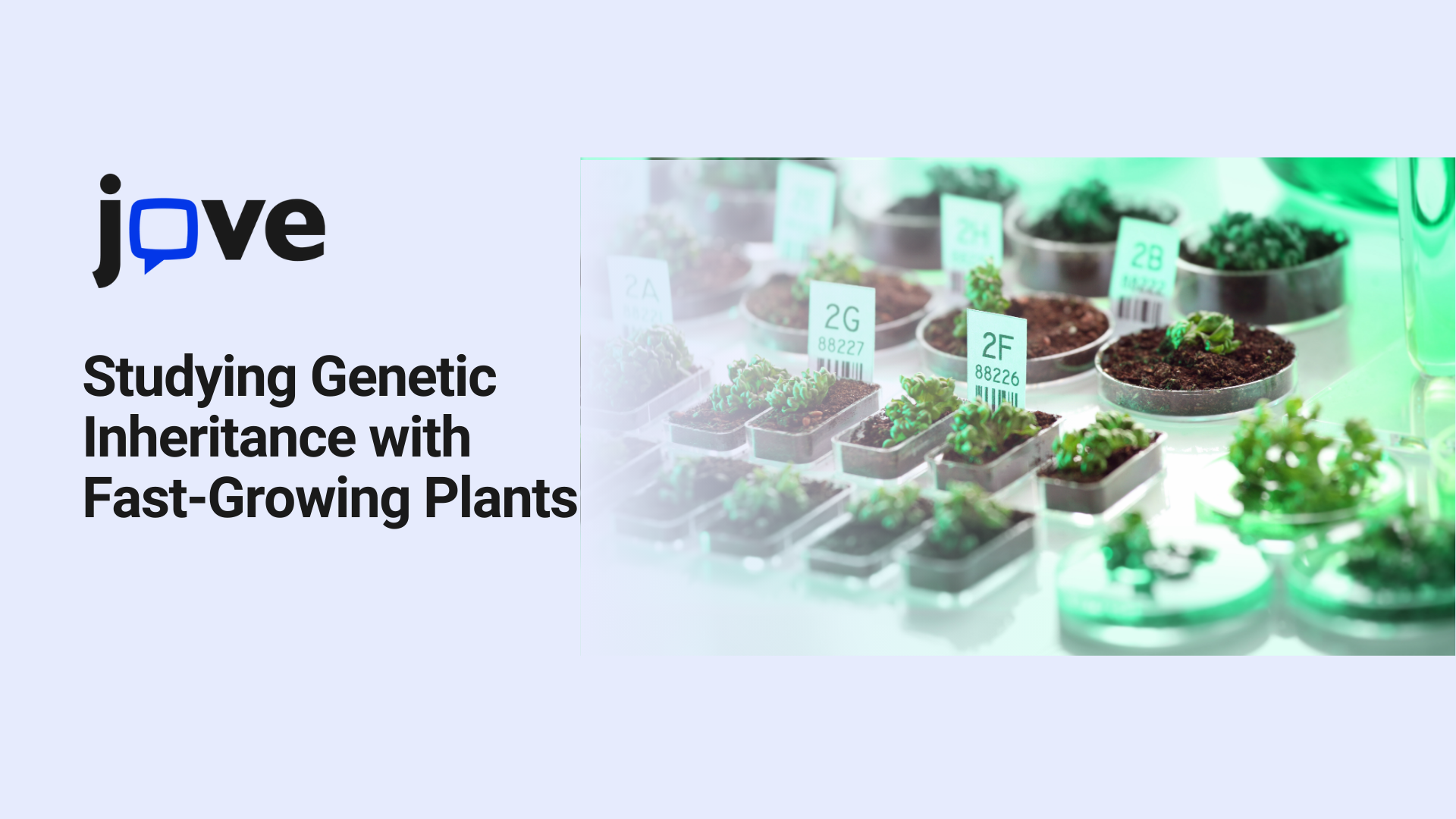
Studying Genetic Inheritance with Fast-Growing Plants
Introduction: Bringing Genes to Life Through Rapid Plant Growth
When Mr. Alvarez asked his class how offspring inherit traits, students could recite “dominant and recessive genes” but couldn’t explain why some traits appear while others don’t. That’s when he introduced a series of genetics experiments using fast-growing plants. Within just a few weeks, students could observe real genetic variation—flower color, stem height, and leaf shape—in action.
By combining plant-based labs with JoVE’s NGSS-aligned genetics videos, educators help students visualize how genes are passed down through generations. These labs make Mendelian and non-Mendelian inheritance patterns tangible, providing rich opportunities to practice Punnett squares, probability, and trait analysis.
Why Genetics Education Matters in Science Classrooms
Understanding inheritance is key to exploring evolution, biodiversity, agriculture, and biotechnology. Yet many students struggle to grasp abstract genetic concepts. According to a 2022 study published in Science Education, over 51% of high school students hold misconceptions about dominant traits and genetic variation. 🔗(source)
NGSS performance expectation HS-LS3-1 calls for students to “ask questions to clarify relationships about the role of DNA and chromosomes in coding the instructions for characteristic traits.” Genetics experiments using fast-growing plants allow students to investigate these relationships firsthand—bridging the gap between theoretical instruction and visual, observable outcomes.
Engaging Genetics Experiments for High School Biology
The following NGSS-aligned plant genetics experiments for biology class activities let students explore heredity through real-time plant trait observation, data collection, and trait analysis in plant models.
1. Observe Trait Segregation Across Generations
Objective: Visualize dominant and recessive traits in offspring
✅ Use Wisconsin Fast Plants or similar species with known parent genotypes
✅ Track flower color, stem height, or leaf structure in F1 and F2 generations
🎥 Pair with JoVE’s Mendelian Inheritance to reinforce key vocabulary and processes
2. Use Punnett Squares to Predict Inheritance
Objective: Apply probability to trait prediction
✅ Students use observed phenotypes to hypothesize parental genotypes
✅ Model F1 and F2 crosses with Punnett squares and compare outcomes
🎥 Use JoVE’s Probability in Genetics to demonstrate ratios and phenotype expectations
3. Test Real-World Variability in Traits
Objective: Explore environmental influence and genetic diversity
✅ Grow plants under different light, water, or nutrient conditions
✅ Measure variation in traits beyond Mendelian predictions
🎥 Use JoVE’s Genes, Traits, and Environment to explain genotype-environment interaction
4. Extract DNA from Fast Plants for Visualization
Objective: Link traits to molecules
✅ Use simple protocols to extract DNA from plant leaves
✅ Discuss how DNA codes for observable traits
🎥 Pair with JoVE’s DNA Structure and Function to connect molecular biology with inheritance patterns
5. Host a “Genetics Gallery Walk” Project
Objective: Reinforce learning through student-created models
✅ Each group creates a mini-poster detailing a plant cross, observed traits, and genotype predictions
✅ Present findings to classmates for peer review and discussion
🎥 Use JoVE’s Genetics of Organisms to scaffold experimental design and data analysis
Real-World Example: Genetic Modeling in Chicago Public Schools
At Lindblom Math & Science Academy, biology teachers partnered with a local urban agriculture center to implement genetics experiments using brassica plants. Students used JoVE videos to guide lab setup and track inheritance of stem color, leaf variegation, and flowering time.
Their final presentations combined lab photos, Punnett square calculations, and reflections on human genetic traits—drawing meaningful connections between plant biology and personal identity.🔗(source)
Conclusion — Growing Genetic Understanding with Every Leaf
Genetics doesn’t have to stay in the abstract. With fast-growing plants, students can witness inheritance firsthand—enhancing their grasp of DNA, probability, and phenotypes.
By combining hands-on genetics experiments with JoVE’s NGSS-aligned science videos, teachers can cultivate deeper comprehension, spark student curiosity, and build real-world connections in the biology classroom.
🌿 Ready to plant the seeds of genetic literacy?
👉 Book a FREE Demo today and get full access to JoVE’s animated videos, interactive resources, and solar science experiments!

