

Aerobic vs Anaerobic Respiration: Key Differences for Students to Understand
Why do we breathe heavily after running? What happens when there’s not enough oxygen in our muscles? These questions lead directly to one of the most essential life science concepts- aerobic and anaerobic respiration.
Teaching students the differences between these two types of cellular respiration provides insight into how the body works, how cells generate energy, and how organisms survive in different environments. JoVE’s NGSS-aligned visual science resources make it easier to connect these concepts with real examples and classroom labs.
Start by introducing JoVE’s Introduction to Cellular Respiration, which explains how cells convert nutrients into usable energy.
What Is the Difference Between Aerobic and Anaerobic Respiration?
Both aerobic and anaerobic respiration are processes cells use to convert glucose into ATP—the energy currency of life. The key difference? Oxygen.
- Aerobic respiration requires oxygen and produces a large amount of ATP. It occurs in most plants, animals, and many bacteria.
- Anaerobic respiration happens without oxygen. It’s less efficient and produces less ATP, but it allows cells to survive in oxygen-poor conditions.
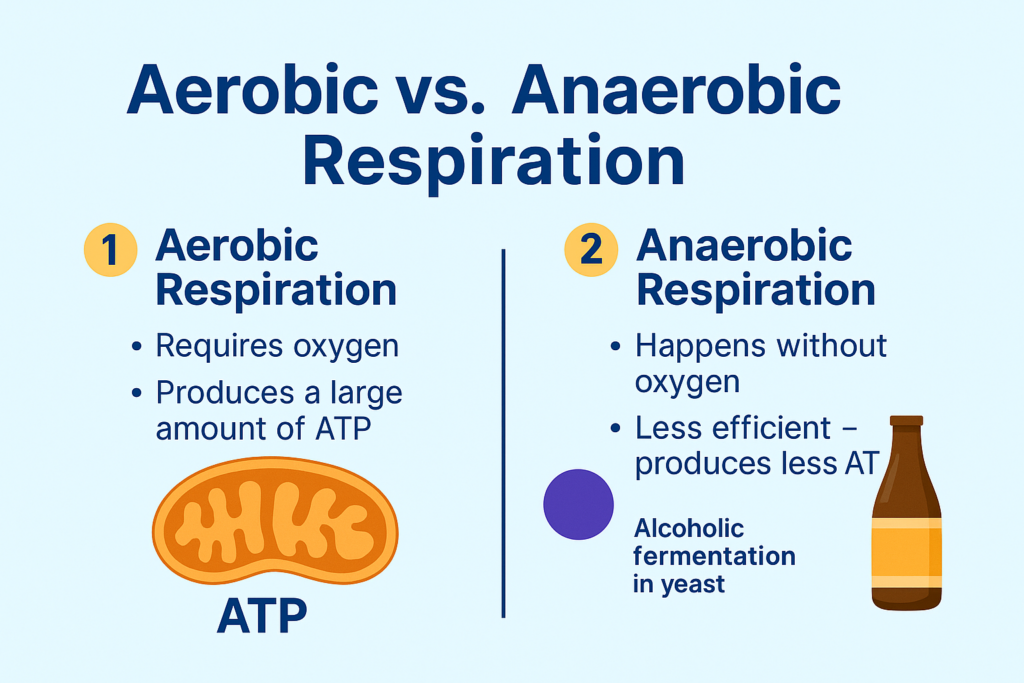
In humans, anaerobic respiration leads to lactic acid buildup during intense exercise. In yeast, it results in alcoholic fermentation—used in baking and brewing.
Use JoVE’s ATP Yield video to help students visualize how much energy cells produce with and without oxygen.
Why This Concept Matters in Middle School Life Science
Understanding how cells create energy is a core part of NGSS MS-LS1-7, which focuses on developing models that explain how food and oxygen are used during cellular respiration. These ideas also reinforce students’ ability to interpret chemical reactions, systems thinking, and real-world biological processes.
Learning Oxygen use in cells and how different respiration types work helps students connect cellular activity to:
- Physical movement and fatigue
- Microbial survival
- Food science and health
JoVE’s Products of the Citric Acid Cycle video adds clarity by showing how energy is generated during aerobic respiration.
Hands-On Activity – Classroom lab for cellular respiration comparison
Objective: Compare the observable byproducts of aerobic and anaerobic respiration using yeast, sugar, and oxygen control.
Materials:
- Dry yeast
- Warm water
- Sugar
- Two containers
- Balloons
- Access to air vs sealed environment
- Timer, ruler, and JoVE lab sheet
Instructions:
- Mix yeast, sugar, and water in two separate containers.
- Seal one (anaerobic) and leave the other open (aerobic).
- Place a balloon over each and observe gas production.
- Ask students to hypothesize which will produce more CO₂ and why.
Use JoVE’s Pyruvate Oxidation video to show how aerobic processes continue after glycolysis—deepening the comparison between the two pathways.
Real-Life Connection – Respiration and Physical Activity
Students can apply this concept directly to their own lives. During a sprint, their muscles switch to anaerobic respiration, leading to lactic acid buildup and muscle fatigue. In contrast, jogging or walking allows aerobic respiration to work efficiently.
This comparison also helps explain:
- Athletic performance and endurance
- Why yeast is used in baking and brewing
- Microbial life in oxygen-depleted environments
Use JoVE’s Outcomes of Glycolysis video to demonstrate what happens before either energy pathway is chosen by the cell.
Conclusion – Teaching Respiration Through Visual Models
By comparing aerobic and anaerobic respiration, students begin to understand that cells adapt to available resources to stay alive and functional. Using JoVE’s NGSS-aligned tools, you can show energy production clearly, link science to physical health, and build lab literacy.
This topic helps answer fundamental questions like: How do cells produce energy with and without oxygen? and Why does oxygen matter? questions students can explore with evidence, experimentation, and visual learning.
Book a Free Demo to access JoVE’s full middle school genetics collection.
Bring JoVE to your school starting at just $2 per student.
(Pricing based on 1,500 students. Explore funding options here.)

