
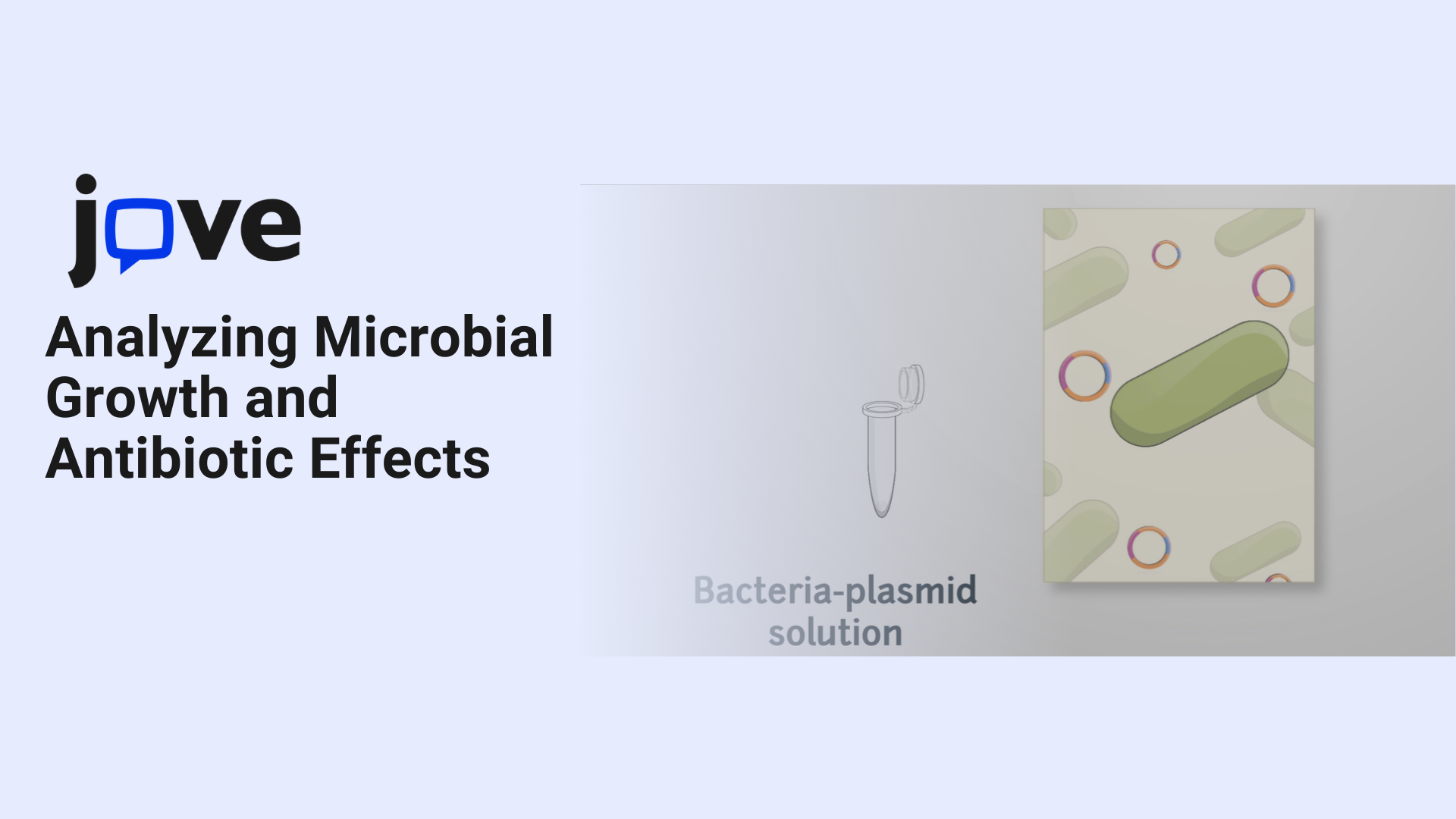
Analyzing Microbial Growth and Antibiotic Effects
Introduction: The Antibiotic Puzzle — When Medicine Fails
Imagine this: A patient with a bacterial infection is prescribed antibiotics. After a few days, the infection clears — but in another case, the same antibiotic fails, and the infection worsens.
What’s going on?
The answer lies in understanding microbial growth and antibiotic resistance — two critical concepts that explain how bacteria multiply and why some strains can survive even powerful medications.
Research published in the Journal of Microbiology & Biology Education found that students who participated in hands-on microbiology experiments demonstrated a 28% improvement in their understanding of bacterial growth and antibiotic resistance compared to lecture-only lessons (Source).
By combining interactive experiments with JoVE’s microbiology videos, educators can simplify complex microbiology concepts and improve student engagement.
In this article, we’ll explore how microbial growth works, uncover common misconceptions, and share classroom activities to help high school students grasp these essential biology concepts.
What is Microbial Growth?
Microbial growth refers to the increase in the number of cells within a population. Bacteria reproduce rapidly through a process called binary fission, where one cell splits into two identical cells.
The Four Phases of Bacterial Growth
- Lag Phase: Bacteria adapt to their environment before dividing.
- Log (Exponential) Phase: Bacteria reproduce rapidly, doubling their population within minutes or hours.
- Stationary Phase: Growth slows as nutrients deplete and waste accumulates.
- Death Phase: Bacterial cells die faster than they reproduce.
In JoVE’s Microbial Growth Video, students can visualize these phases and understand how environmental factors like temperature, pH, and nutrients influence bacterial growth.
How Do Antibiotics Affect Bacteria?
Antibiotics are chemicals that inhibit bacterial growth or kill bacteria by targeting essential processes like:
✅ Cell wall synthesis (e.g., penicillin)
✅ Protein production (e.g., tetracycline)
✅ DNA replication (e.g., ciprofloxacin)
However, some bacteria develop antibiotic resistance, allowing them to survive and multiply even when treated with medication.
In JoVE’s antibiotic resistance video, students can explore how genetic mutations, biofilm formation, and overuse of antibiotics contribute to resistance.
Common Misconceptions About Bacterial Growth and Antibiotics
Students often face confusion when learning about bacteria and antibiotics. Common misconceptions include:
❌ Believing all bacteria are harmful — in reality, many bacteria are essential for digestion, immunity, and environmental balance.
❌ Thinking that antibiotics kill viruses — antibiotics only target bacteria, not viral infections like the flu or COVID-19.
❌ Assuming antibiotic resistance means the body becomes immune — in fact, resistance occurs in bacteria, not humans.
Hands-On Classroom Activity: Testing Antibiotic Effects on Bacteria
This experiment allows high school students to observe how antibiotics influence bacterial growth.
Materials:
- Petri dishes with nutrient agar
- Cotton swabs
- Bacterial cultures (e.g., E. coli or Bacillus subtilis)
- Antibiotic discs (ampicillin, tetracycline, etc.)
- Ruler (for measuring zones of inhibition)
Steps:
- Prepare the Agar Plates: Label the Petri dishes and swab the agar surface with bacterial cultures.
- Apply Antibiotic Discs: Place antibiotic discs on the agar surface using sterile forceps.
- Incubate the Plates: Store the plates in an incubator at 37°C for 24–48 hours.
- Observe Results: Measure the zone of inhibition (clear area around the antibiotic disc) to assess the antibiotic’s effectiveness.
Analyze the Data: Discuss why some antibiotics worked better than others and how resistance may have influenced the results.
Real-World Applications of Microbial Growth Studies
Understanding bacterial growth and antibiotic effects is crucial in various fields:
✅ Healthcare: Doctors rely on bacterial testing to select effective antibiotics.
✅ Food Safety: Bacteria control techniques are essential in preventing foodborne illness.
✅ Environmental Science: Scientists monitor microbial populations to assess ecosystem health.
Conclusion: Exploring Microbial Growth with JoVE Videos
Microbial growth and antibiotic effects are key topics in biology and medicine. By combining JoVE’s educational videos with hands-on experiments like the Antibiotic Effectiveness Test, educators can simplify complex microbiology concepts and improve student comprehension.
Next Steps:
- Explore JoVE’s microbial growth videos to enhance your biology lessons.
- Try the Antibiotic Effectiveness Test for an interactive learning experience.
- Encourage students to research antibiotic resistance and its impact on public health.
With engaging visuals and practical experiments, students can better understand how bacteria grow — and why antibiotic resistance continues to be a major scientific challenge.
Curious to see how JoVE’s standards aligned videos can simplify bacterial growth concepts for your students? Book a demo today and unlock 30 days of full access — empower your students with engaging science resources!

