
Exploring Chemical Properties of Matter Through Hands-On Science and Video Learning
What Are Chemical Properties — and Why Do They Matter?
What makes wood burn, metals rust, or vinegar bubble when mixed with baking soda? These everyday reactions are examples of chemical properties of matter — characteristics that reveal themselves only when a substance undergoes a chemical change.
Common chemical properties include:
- Reactivity with other substances
- Flammability
- Acidity or basicity (pH)
- Toxicity
- Oxidation potential (such as rusting)
Understanding these properties gives students insight into how the world works. Whether it’s teaching chemical reactions in the classroom or exploring real-world phenomena like climate change or medication design, chemistry becomes more meaningful when tied to application.
JoVE’s science concept videos help bring these invisible changes to life by showing reactions in action — from bubbling acid-base interactions to slow-motion combustion.
Knowing how to teach chemical properties of matter in science starts with connecting definitions to real-life transformations — helping students shift from memorization to scientific reasoning.
Making Chemistry Visual with JoVE Videos
For middle school students, chemistry can feel abstract — unless it’s visual and hands-on. JoVE’s NGSS-aligned video library helps educators make chemistry both accessible and memorable.
Through JoVE videos, students can observe:
- Gas production during acid-metal reactions
- Controlled flammability demonstrations
- Molecular changes as bonds break and form
📈 In one study, using JoVE’s visual resources raised student post-test scores from 28.2% to 89.5% in a general chemistry course — showing how much more effective learning can be when supported by engaging media.
NGSS in Action: Using Models to Explore Reactions
Activity 1: Baking Soda and Vinegar Reaction
Goal: Observe an acid-base chemical reaction and gas formation
What to Do: Combine vinegar (acid) and baking soda (base) in a flask or beaker.
What You’ll Observe: Immediate bubbling and fizzing as carbon dioxide gas is released.
Why It Matters: This reaction models gas-producing chemical changes found in cooking, cleaning products, and environmental systems.
Activity 2: Flammability Test
Goal: Compare how materials respond to heat exposure
What to Do: Under supervision, expose paper, fabric, and metal to a small flame.
What You’ll Observe: Paper ignites quickly, fabric may smolder, and metal resists burning altogether.
Why It Matters: Demonstrates flammability and reactivity, helping students connect chemical properties to material safety and real-world design.
Activity 3: Acids and Metals
Goal: Model the reactivity of metals with acids
What to Do: Drop a piece of zinc or aluminum into lemon juice or vinegar.
What You’ll Observe: Small bubbles (hydrogen gas) form on the metal’s surface as the acid reacts.
Why It Matters: Shows how acid-base properties and reactivity influence material durability — like corrosion in batteries or plumbing.
🎥 Each activity becomes even more effective when paired with JoVE’s step-by-step videos, which provide slow-motion visuals, safety tips, and scientific explanations.
Crosscutting Concept: Cause and Effect in Chemistry
NGSS also encourages the use of Crosscutting Concepts (CCCs) — ideas that help students make connections across scientific disciplines. One key CCC is Cause and Effect, which is especially useful when analyzing chemical change.
Here are some relatable chemistry examples:
- Cause: Vinegar is added to baking soda
Effect: A gas forms and bubbles appear - Cause: A reactive metal touches acid
Effect: Hydrogen gas is released - Cause: A flammable substance contacts flame
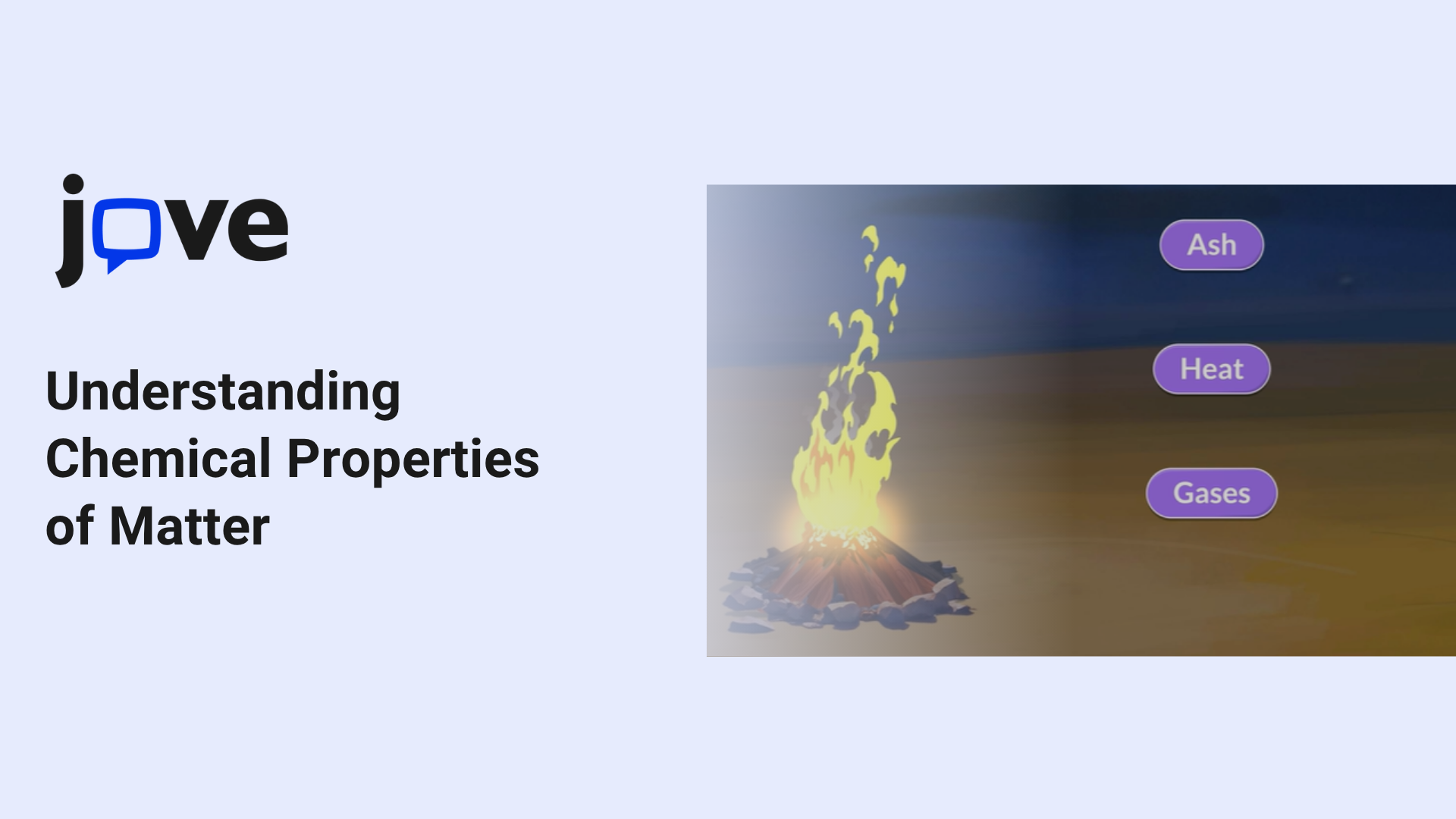
Effect: A combustion reaction produces heat and light
Teaching these cause-and-effect patterns helps students understand how chemical reactions drive change in energy, structure, and matter — key NGSS goals.
Real-World Connections to Chemistry
The chemical properties of matter extend far beyond the lab. Here’s how they impact our daily lives:
- Reactivity affects material choices in construction and battery design
- Flammability guides fire safety regulations and product labeling
- Acid-base properties influence soil health, digestion, and product development
When students explore these ideas through experiments and video, they not only grasp chemical reactions — they build a lasting, applied understanding of science.
How JoVE Supports Teaching Chemical Properties
JoVE empowers educators with a full suite of chemistry teaching tools, making lesson planning easier and more effective. Whether you’re focusing on acid-base properties, reactivity, or combustion, JoVE offers:
✅ NGSS-mapped explainer videos
✅ Pre-built assessments and quizzes
✅ JoVE videos for visualizing chemical changes
✅ Step-by-step demonstrations led by scientists
These tools support inquiry, boost engagement, and align with best practices for teaching chemical reactions at the middle school levels.
Conclusion: Bring Chemistry to Life with Visual and Inquiry-Based Learning
From baking soda reactions to rusting nails, the chemical properties of matter are part of the world your students already live in.
With JoVE’s inquiry-driven activities and visual video support, you can confidently deliver hands-on chemistry activities for middle school that stick.
Whether you’re explaining flammability and reactivity or diving into pH and oxidation, JoVE gives you the tools to teach chemistry in a way that’s exciting, standards-aligned, and unforgettable.
🎓 Book a Free Demo to access JoVE’s full chemistry video library and experiment toolkit — no prep needed, just real science that connects.
Bring JoVE to your classroom starting as low as $2 per student.*
Explore funding resources to learn how your school can start using JoVE’s complete STEM video library today.
*Pricing based on 1,500 students.

