
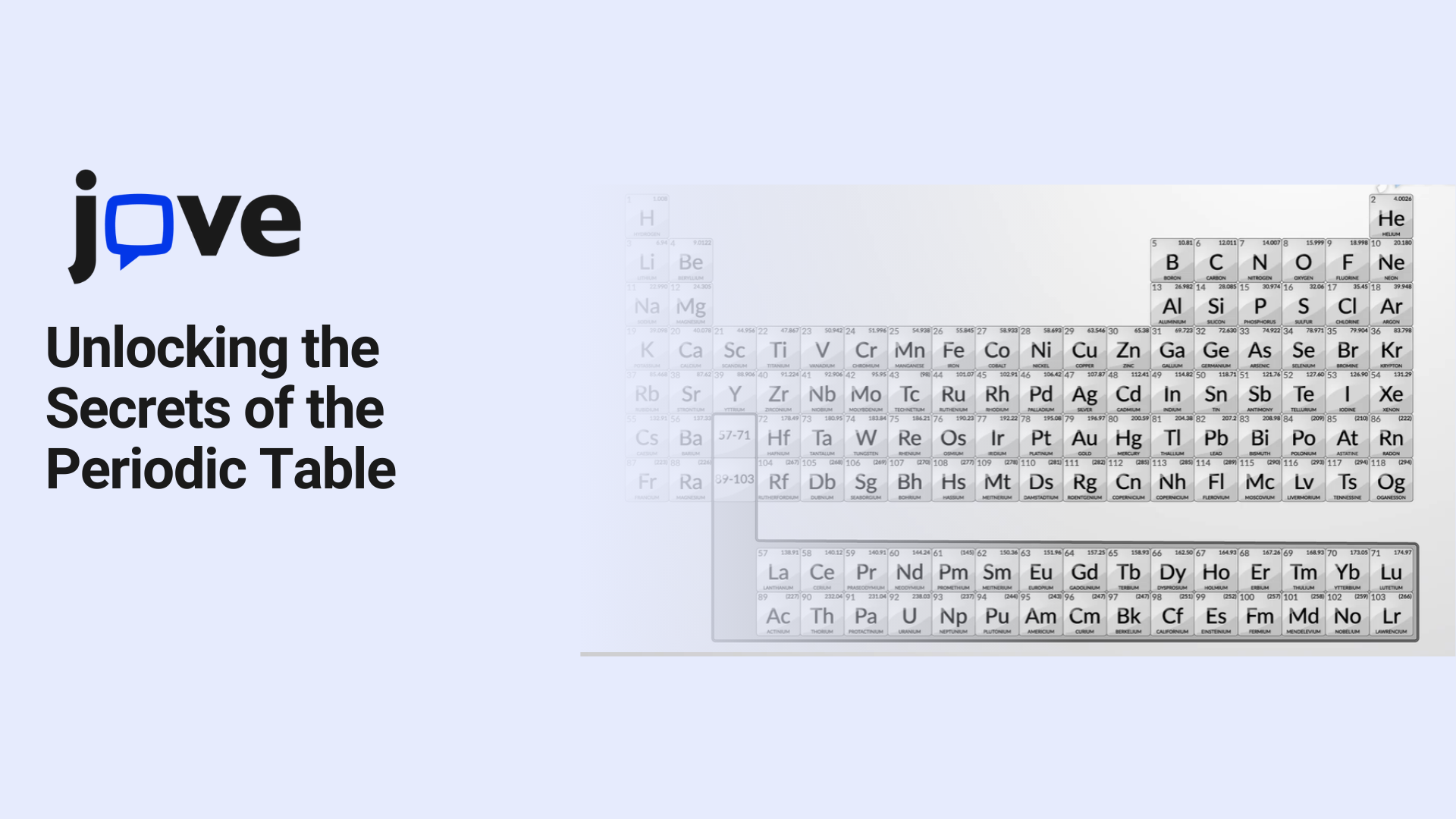
Unlocking the Secrets of the Periodic Table by Exploring Mendeleev's Predictions
Introduction: The Element That Didn’t Exist — Yet
In 1871, Russian chemist Dmitri Mendeleev made a bold prediction — he claimed that an unknown element with properties similar to aluminum would soon be discovered. Skeptics doubted him, yet just a few years later, gallium was found — matching Mendeleev’s predicted properties almost exactly.
Mendeleev’s ability to predict undiscovered elements wasn’t luck — it was the result of his remarkable understanding of periodic trends and element behavior.
Educational experts emphasize that visual demonstrations are highly effective in helping students understand abstract science concepts. According to research supported by organizations like the American Association for the Advancement of Science (AAAS) and the National Science Teaching Association (NSTA), students who engage with visual learning tools demonstrate improved comprehension and retention of complex chemistry topics like periodic trends.
By combining Mendeleev’s discovery story with visual aids such as JoVE’s interactive videos, educators can make the periodic table easier for middle school students to understand.
In this blog, we’ll uncover how Mendeleev’s periodic table revolutionized chemistry, explore his most successful predictions, and share classroom activities to help students grasp these powerful concepts.
How Did Mendeleev Organize the Periodic Table?
Mendeleev’s periodic table arranged elements based on atomic mass and chemical properties. While some chemists had attempted to arrange elements before him, Mendeleev’s table was unique because he:
✅ Left gaps for undiscovered elements
✅ Accurately predicted the properties of these missing elements
✅ Recognized that elements in the same column shared similar chemical behaviors
In JoVE’s Periodic Table Video, students can watch how Mendeleev’s logic and observations led to a periodic table that scientists still build upon today.
Mendeleev’s Most Impressive Predictions
Mendeleev famously predicted several elements with remarkable accuracy, including:
Gallium (Ga)
- Predicted as “eka-aluminum”
- Mendeleev predicted its melting point, density, and chemical behavior — and his estimates closely matched gallium’s actual properties when discovered.
Germanium (Ge)
- Predicted as “eka-silicon”
- Mendeleev foresaw germanium’s density, atomic mass, and metallic properties years before its discovery.
In JoVE’s video on element properties, students can see visual explanations of these trends in action, making Mendeleev’s predictions easier to grasp.
Common Misconceptions About the Periodic Table
Many students struggle with key periodic table concepts. Common misconceptions include:
❌ Thinking elements are arranged by atomic number only (Mendeleev initially used atomic mass)
❌ Believing all elements follow a predictable pattern (outliers like hydrogen can confuse students)
❌ Assuming the periodic table never changes (scientists still refine and expand it today)
JoVE’s periodic table videos provide clear visuals that address these misconceptions by showing real-life examples and practical applications.
Hands-On Classroom Activity: Predicting the Unknown
Help students understand Mendeleev’s process with this engaging activity:
Materials:
- Periodic table (with selected elements hidden)
- Element property cards (showing boiling points, atomic masses, etc.)
- Blank cards for students to create “missing elements”
Steps:
- Prepare the Table: Cover the names of key elements like gallium, germanium, and scandium.
- Distribute Element Cards: Provide students with property cards that describe these missing elements.
- Challenge Students: Ask them to predict where the unknown elements belong based on their properties.
- Reveal the Answers: Compare their predictions to the actual periodic table and discuss how Mendeleev followed this same method.
This hands-on activity encourages critical thinking while reinforcing periodic trends.
Real-World Impact of Mendeleev’s Periodic Table
Mendeleev’s periodic table is still vital today. Some key applications include:
✅ Medicine: Element properties guide pharmaceutical discoveries
✅ Technology: Semiconductor materials like germanium revolutionized electronics
✅ Environmental Science: Understanding element behavior helps researchers address pollution and climate challenges
In JoVE’s real-world science videos, students can explore how these periodic trends continue to impact our world.
Conclusion: Bringing the Periodic Table to Life with JoVE Videos
Mendeleev’s periodic table was a groundbreaking achievement that transformed chemistry. By combining JoVE’s interactive videos with hands-on activities like the “Predicting the Unknown” challenge, educators can help students understand not just the structure of the periodic table — but the logic and discovery behind it.
Next Steps:
- Explore JoVE’s periodic table resources to enhance your lessons
- Try the “Predicting the Unknown” activity to engage your students
- Encourage students to spot periodic trends in everyday life — from kitchen metals to mobile phone batteries
With engaging visuals and practical experiments, students can unlock the fascinating secrets of the periodic table just like Mendeleev did.
Want to see how JoVE’s interactive videos can help your middle school students understand physical science better?
Unlock full access to JoVE’s library for free. Book a demo with us today!

