
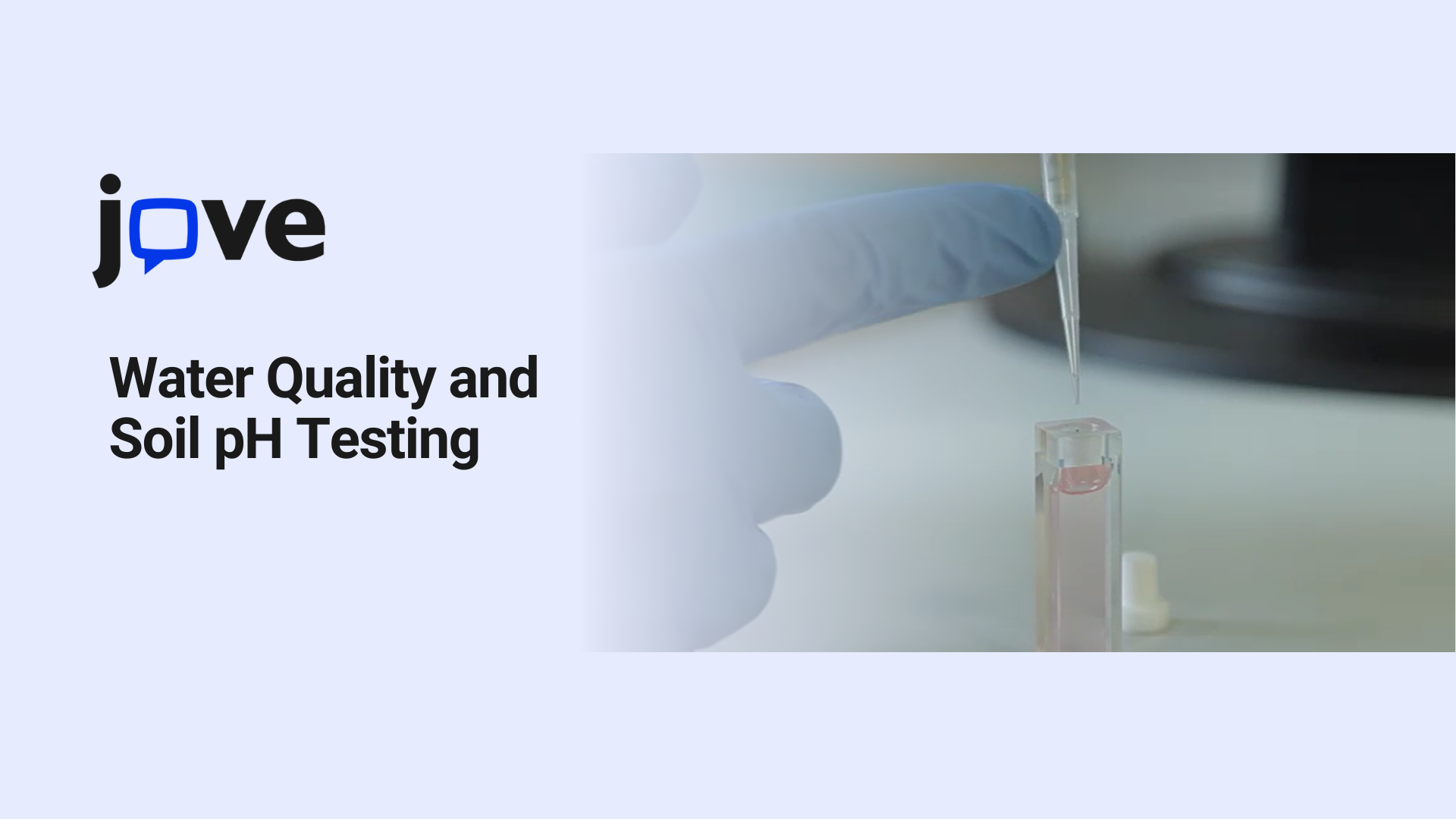
Water Quality and Soil pH Testing: Environmental Science Experiments
Did you know that nearly 50% of U.S. rivers and streams are too polluted for safe swimming, fishing, or drinking? (EPA Report) Understanding water and soil health isn’t just a science lesson—it’s a real-world challenge affecting ecosystems, agriculture, and human health.
By incorporating water and soil testing experiments, students can analyze real environmental issues, develop STEM skills, and build a deeper connection to sustainability.
JoVE research shows 96% of students improve comprehension with visual learning. Pairing hands-on experiments with video-based instruction makes complex topics easier to grasp and more engaging.
Let’s explore simple, impactful experiments that bring environmental science to life!
The Importance of Water Quality Testing
Water is essential for all forms of life, and its purity directly impacts health and ecosystems. In recent years, concerns about contaminants like lead in drinking water have heightened awareness. For instance, several school districts have detected lead in their water sources, underscoring the need for regular testing and remediation.(Source).
Conducting a Water Quality Experiment
Objective: Equip students with the skills to assess water quality by testing for common contaminants.
Materials Needed:
- Water samples from various sources (tap, river, pond)
- Water testing kits (capable of detecting lead, pH, nitrates)
- Protective gloves and goggles
- Data recording sheets
Procedure:
- Sample Collection: Gather water samples from different locations, ensuring they are labeled accurately.
- Testing for Contaminants:
- Use water testing kits to measure key parameters such as pH levels, heavy metals (e.g., lead), and nitrate concentrations.
- A great visual resource for understanding how nutrient levels impact water quality is this JoVE video: Measuring Nitrate and Phosphate in Water.
- Data Analysis: Record the results and compare them against established safety standards to determine overall water quality.
Scientific Explanation: Regular monitoring of water quality helps identify pollutants that pose health and environmental risks. By engaging students in this process, they develop awareness and proactive attitudes toward environmental stewardship.
Exploring Soil pH and its Impact on Plant Growth
Soil pH significantly influences nutrient availability and, consequently, plant health. Understanding how to measure and adjust soil pH can lead to more effective agricultural practices.
Soil pH Testing Experiment
Objective: Teach students how to determine soil pH and understand its effects on plant growth.
Materials Needed:
- Soil samples from different areas
- pH testing kits or pH sensors
- Distilled water
- Beakers and stirring rods
- Protective gloves
Procedure:
- Sample Preparation: Place a small amount of soil into a beaker and add distilled water to create a soil slurry.
- Measuring pH: Insert the pH test strip or sensor into the slurry and record the pH value. For a more precise measurement, students can use a pH meter, ensuring proper calibration for accuracy.
- Watch this JoVE video on Using a pH Meter: Principles, Calibration, and pH Measurement to understand how to correctly measure pH in scientific experiments.
- Analysis: Discuss how the pH levels might affect plant nutrient uptake and suggest amendments to optimize soil pH for agriculture.
Scientific Explanation: Soil pH affects the chemical form of nutrients, influencing their availability to plants. By adjusting soil pH, farmers can enhance crop yields and maintain soil health. Proper pH measurement techniques, as demonstrated in the JoVE video, ensure that readings are reliable and actionable for agricultural and environmental applications.
Enhancing Learning with JoVE Educational Videos
To complement these experiments, JoVE offers a vast library of science videos that provide visual demonstrations of environmental science concepts. These resources can deepen students’ understanding and engagement.
Benefits of Using JoVE Videos:
- Visual Learning: High-quality videos illustrate complex procedures, making them easier to comprehend.
- Curriculum Integration: Content aligns with educational standards, ensuring relevance to your teaching objectives.
- Accessibility: Students can access these resources anytime, facilitating flexible learning.
Safety Considerations
While conducting these experiments, prioritize safety by:
- Wearing Protective Gear: Ensure students use gloves and goggles to prevent exposure to contaminants.
- Proper Handling of Samples: Teach students to handle all samples responsibly to avoid contamination.
- Supervision: Always oversee student activities during experiments to ensure protocols are followed correctly.
Conclusion
Incorporating hands-on experiments in water quality and soil pH testing empowers students with practical skills and a deeper appreciation for environmental science. By utilizing JoVE’s educational videos alongside these activities, educators can create a dynamic and impactful learning experience that bridges theoretical knowledge with real-world applications.

