
What’s Inside a Cell: Understanding Organelles and Their Role in Keeping Cells Healthy
Introduction: Are All Organelles Really That Important?
“Cells are just blobs with a nucleus in the middle, right?” It’s a common misconception — and one that often trips up students when they begin learning biology.
The reality is far more fascinating. Cells are highly organized structures, and each part plays a vital role in keeping the entire organism alive and healthy. When even one organelle fails to do its job, the consequences ripple across the entire system.
In this article, we’ll break down the essential roles of cell organelles, address common misunderstandings, and explore hands-on middle school classroom activities — all supported by JoVE’s standards-aligned science videos and visual learning tools to make the invisible world of cells come to life.
Understanding the Structure of a Cell
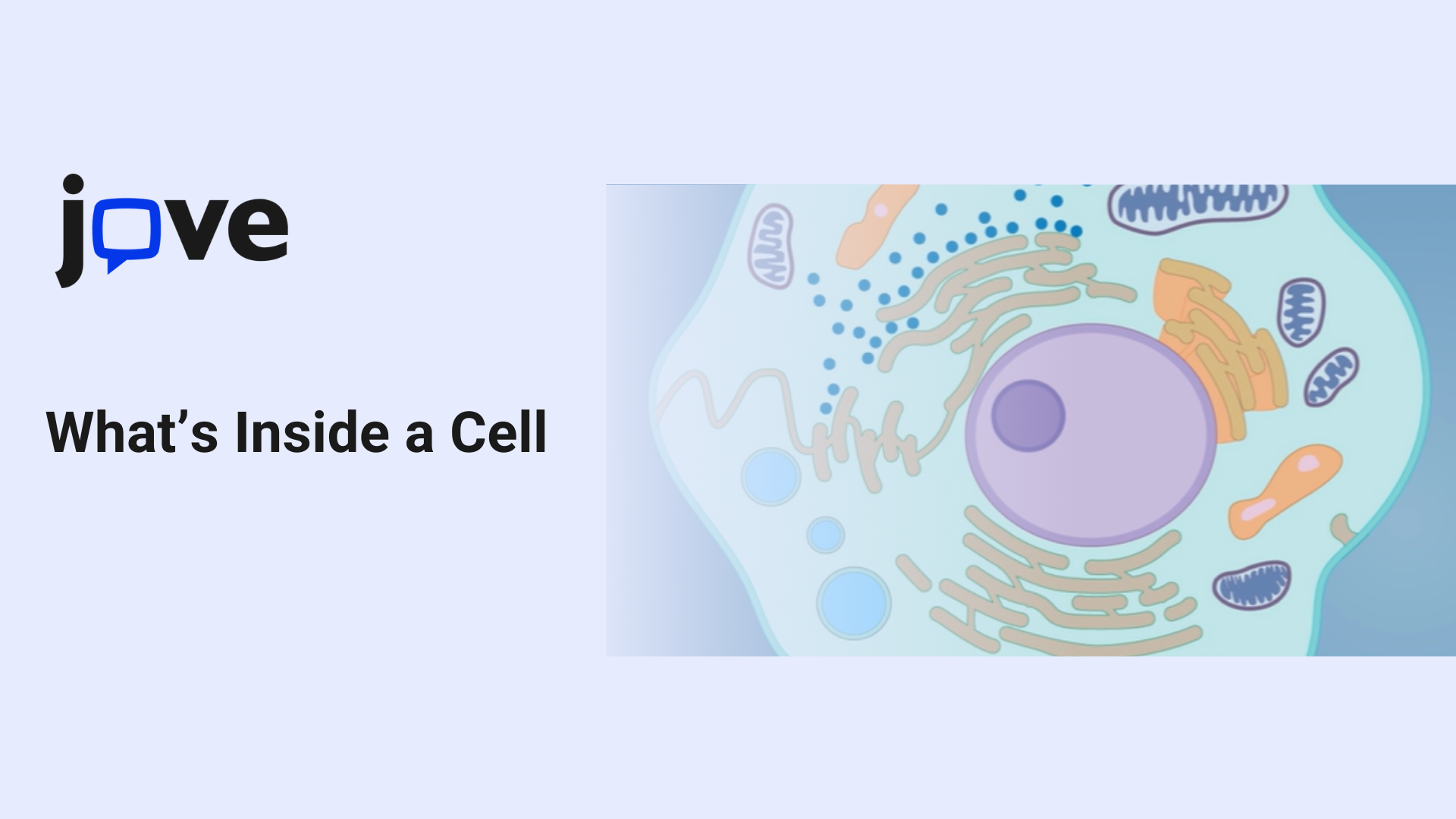
Cells are made up of organelles — specialized structures, each with a defined function. Together, they ensure that cells grow, repair, defend, and thrive.
Here are the major organelles and what they do:
- Nucleus – Stores genetic material and acts as the control center.
- Mitochondria – Produces ATP (energy); often called the powerhouse of the cell.
- Ribosomes – Assemble proteins from amino acids.
- Endoplasmic Reticulum (ER) – Transports proteins and lipids.
- Golgi Apparatus – Packages and distributes proteins and materials.
- Lysosomes – Break down waste and unwanted material.
- Cell Membrane – Controls what enters and exits the cell.
🎥 Watch JoVE’s Cell Biology Video – This video shows how organelles work together inside a living cell, with animations that help students visualize each structure in action.
Classroom Activity: Build a 3D Cell Model
This hands-on activity allows students to build a physical model of a cell using common materials, helping them remember the structure and function of organelles.
Materials:
- Foam ball or plastic container (cell)
- Clay, buttons, beads, yarn, or pasta (organelles)
- Toothpicks and labels
Instructions:
- Build the cell model using clay and other craft materials to represent each organelle.
- Insert toothpick labels and explain the role of each organelle.
- Discuss how the model mimics a real cell and where improvements could be made.
This activity supports middle school standards and is effective because it allows students to interact with the concept physically and visually — building a stronger memory connection.
Common Misconceptions About Cells
Here are three common myths students believe — and what you can do to correct them:
- “Only the nucleus is important.” → All organelles have distinct, essential roles.
- “Organelles float around randomly.” → The cytoskeleton and cellular organization keep things structured.
- “One broken part isn’t a big deal.” → Cell failure often starts with malfunctioning organelles.
Use visuals from JoVE to help students see exactly how cells are structured and function as systems.
Real-Life Connections: What Happens When Cells Break Down?
Learning about cells isn’t just theoretical — it connects directly to human health and biology.
- Immune responses depend on white blood cells that are packed with active organelles.
- Fatigue and metabolic issues can trace back to poorly functioning mitochondria.
- Lysosomal storage diseases are a result of malfunctioning lysosomes.
When students understand how cells work, they begin to see how biology connects to their own bodies.
Reinforce Learning with JoVE’s Visual Tools
JoVE offers video content that:
- Animates key organelle processes
- Explains cell structure and function clearly
- Includes virtual experiments and visual labs
🎥 Explore JoVE’s Cell Biology Resources – A complete visual resource to support middle school cell biology units.
Conclusion: Help Students See the Cell in a Whole New Way
When taught through clear visuals and hands-on models, cell organelles go from abstract vocabulary to real, working parts of a fascinating microscopic system.
Bring the biology of cells to life in your classroom with JoVE’s visual learning tools.

