
How to Teach Classification of Living Things in Middle School
How can we make taxonomy fun? For middle schoolers, sorting and grouping comes naturally, so it’s the perfect time to introduce biological classification. Teaching the classification of living things not only helps students organize the diversity of life but also builds foundational biology knowledge.
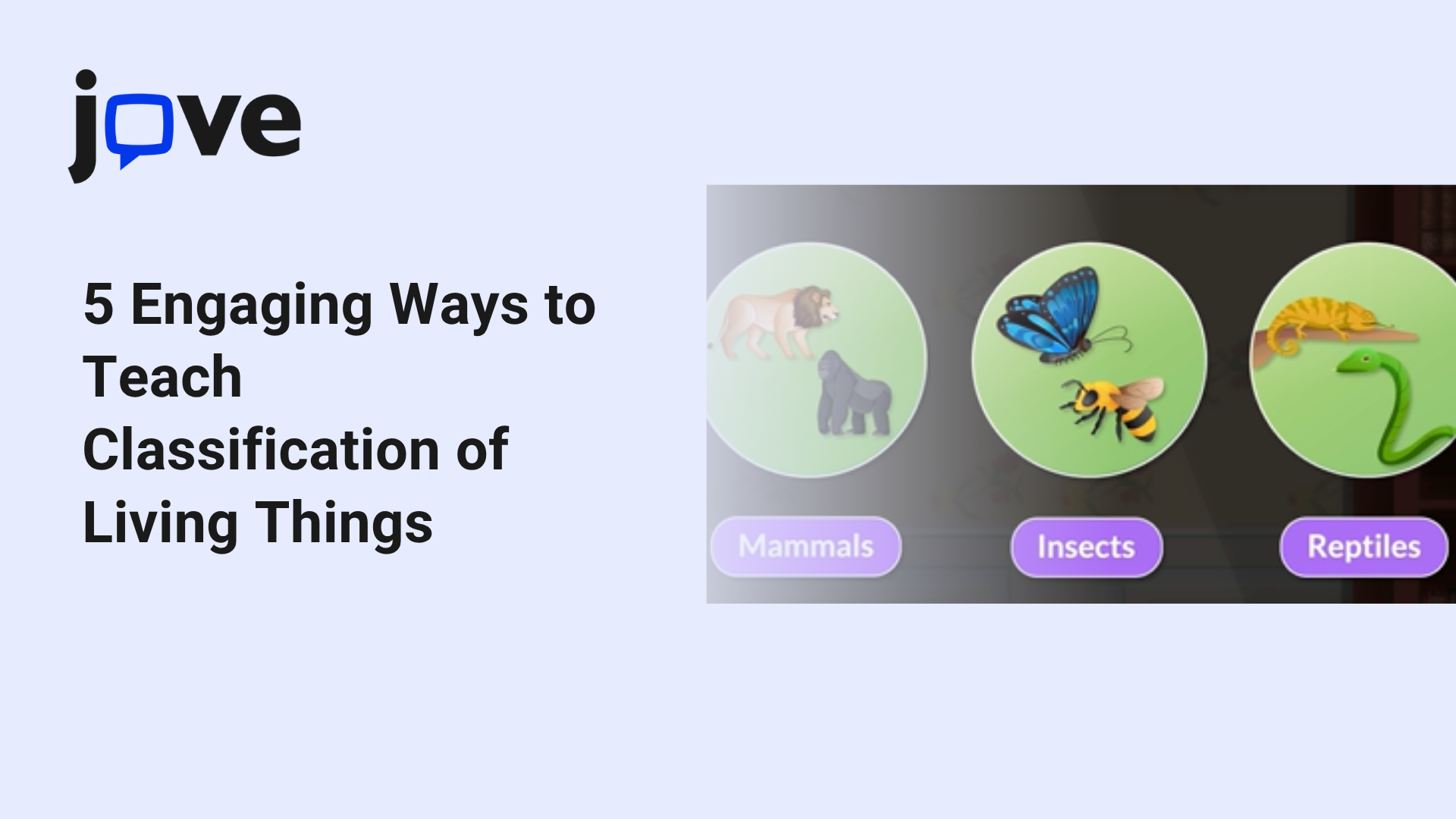
JoVE’s Classification of Living Things video offers a visual introduction to domains, kingdoms, and the purpose of taxonomy. Below are five fun ways to help students grasp this important concept through active, student-centered learning.
The 5 Best Ways to Teach Classification (with Student-Friendly Tools)
1. Start with Sorting Everyday Objects
Why it works:
Classification becomes less abstract when students begin with familiar items. Let them sort buttons, fruit, or classroom supplies into categories and explain their logic.
Then connect it to biology:
Explain how scientists do the same thing, they sort organisms based on traits. This activity introduces the concept of biological classification in a way that feels familiar and logical.
2. Introduce the 7 Taxonomic Levels with a Mnemonic
How to do it:
Break down the classification system: Domain, Kingdom, Phylum, Class, Order, Family, Genus, Species.
Use a mnemonic:
Try ‘Dear King Philip Came Over For Great Spaghetti.’
Then, use animals your students know like lions or dogs to trace classification from kingdom to species. The more relatable the example, the better!
3. Create a Classification Card Sort Game
Make it interactive:
Prepare cards showing a mix of organisms (real or invented). Each card should include clues: Is it unicellular? Does it eat or produce food? Is it prokaryotic or eukaryotic?
Activity:
Students work in groups to place the cards into the correct kingdoms. This hands-on game reinforces how scientists determine classification based on shared characteristics.
4. Try a Dichotomous Key Scavenger Hunt
Why it’s effective:
A dichotomous key teaches students to observe, analyze, and decide.
Activity idea:
Give each team a set of leaves, shells, or toy animals and a simple field guide. They’ll follow yes/no questions to identify the specimens. For a creative twist, let students build their own dichotomous key using objects from the classroom.
5. Watch a Visual Guide to Classification
Why it works:
Visuals simplify complex topics. JoVE’s Classification of Living Things video illustrates how living organisms are grouped and why classification is important.
How to use it in class:
Pause during the video to quiz students or ask them to note key characteristics of each kingdom. Use it as a launch point for a classroom discussion or game.
Bonus Activity: Design a New Species
Creative extension:
Ask students to invent a brand-new organism. They must describe its traits and determine where it fits in the classification system—from domain to species.
This activity builds understanding of taxonomy while encouraging imagination and synthesis of knowledge.
FAQ: Classification of Living Things
Domain, Kingdom, Phylum, Class, Order, Family, Genus, and Species.
Use sorting games, mnemonic devices, hands-on keys, and visual videos like JoVE’s to make classification concrete and fun.
It helps scientists organize living things, understand relationships, and communicate clearly about species.
Try a dichotomous key scavenger hunt or a card sorting game to bring taxonomy to life.
Conclusion: Make Classification Click
By breaking classification down into engaging activities, relatable examples, and visual resources, you can make taxonomy one of your students’ favorite life science lessons.
JoVE’s science video library starts at just $2 per student*. Explore funding options now.
*Pricing based on 1,500 students

