This systematic review and meta-analysis offers preliminary exploratory evidence suggesting Gua Sha (scraping therapy), as a potential adjunctive intervention, may help mitigate spasticity, improve motor function and lower inflammatory responses.
مقالة بحثية
Gua Sha (Scraping Therapy) for Spasticity After Stroke: Systematic Review and Meta-Analysis of RCTs with Integrated Preclinical Mechanistic Synthesis
في هذه المقالة
ملخص
الملخص
Emerging clinical data from Chinese randomized controlled trials (RCTs) suggest Gua Sha (scraping therapy) may deliver adjunct antispastic benefits for spasticity after stroke (SAS) when combined with standard rehabilitation. This study aimed to synthesize clinical efficacy evidence and explore treatment parameters for this intervention. We searched eight electronic databases from database inception to January 1, 2026; two independent reviewers completed study screening, risk-of-bias assessment using Cochrane Risk of Bias 2.0 tool, and data extraction. Meta-analytic effect sizes were calculated using mean difference (MD), and the review protocol was preregistered on PROSPERO. Sixteen eligible RCTs enrolling 1227 stroke survivors were included, all conducted in China, which may limit the external transferability of our results. Pooled random-effects estimates indicated that add-on scraping therapy was associated with reduced Modified Ashworth Scale and Visual Analog Scale for Pain (VAS-P) scores, lower serum hs-CRP and Hcy, as well as improved motor function and activities of daily living. Grading of Recommendations Assessment (GRADE) rated the certainty of evidence for all outcomes as very low due to high heterogeneity, methodological limitations, suspected publication bias and limited cross-regional data. Exploratory subgroup analyses identified numerically larger spasticity relief in regimens with 5-day treatment intervals, 1.5-month treatment duration and intensive scraping stimulation. These cross-study comparisons generate preliminary hypotheses awaiting verification through dedicated head-to-head dosing trials. Proposed mechanistic pathways linking scraping therapy to symptom relief rely largely on preclinical evidence, including enhanced local microcirculation and modulation of inflammatory and neural signaling. Current evidence supports scraping therapy as an investigational adjunctive strategy for SAS. Given the low-certainty evidence base and lack of inclusion in international rehabilitation guidelines, this therapy should be evaluated only in clinical settings with certified practitioners and standardized adverse event monitoring. Further well-designed RCTs are required to clarify its long-term therapeutic benefits and complete safety profile.
المقدمة
With the global aging population, stroke remains the second leading cause of death and the third leading cause of disability worldwide1. Over the past three decades, the disease burden of stroke has increased substantially, with a more prominent upward trend in low-income and lower-middle-income countries2. Spasticity is a common complication following stroke and is widely recognized as a major contributor to long-term disability in stroke survivors. Recently, it has been redefined as a sensorimotor control disorder resulting from upper motor neuron lesions, characterized by intermittent or sustained involuntary muscle activation3. SAS not only induces abnormal body postures and movement patterns but also is closely associated with pain and impaired activities of daily living (ADLs) in stroke patients, severely affecting their quality of life4.
The pathophysiology of SAS is complex and involves multiple factors such as abnormalities in supraspinal drive, disordered intraspinal information processing, and alterations in muscle intrinsic properties5. Current clinical guidelines recommend goal-oriented, multidisciplinary rehabilitation alongside focal botulinum toxin injection6. For focal or multifocal spasticity, botulinum toxin type A is the established first-line treatment: administered via local injection, it irreversibly blocks acetylcholine release at nerve terminals through cleavage of soluble NSF attachment protein receptor (SNARE) complexes, thereby directly alleviating local muscle spasticity7,8,9. For patients with more generalized conditions, systemic medications such as baclofen are commonly used, exerting their effect by inhibiting spinal hyperreflexia7,10. In addition, rehabilitation training—including but not limited to muscle stretching, strength training, splinting, and aerobic exercise—is an indispensable component of routine SAS management. These rehabilitation measures can exert positive regulatory effects on spastic muscles from both neurophysiological and biomechanical perspectives2.
However, SAS presents complex pathophysiological mechanisms, and mainstream treatments carry inherent drawbacks and adverse effects. Systemic medications may trigger generalized muscle weakness, dizziness and other unwanted reactions, whereas long-term rehabilitation frequently suffers from low patient compliance and unsatisfactory outcomes in severe spasticity cases. These limitations have driven research into complementary and alternative modalities. Evidence strength stratifies these interventions into distinct tiers. Acupuncture boasts moderate, expanding supportive data for SAS management11, while Gua Sha (scraping therapy) remains an investigational complementary intervention. Though preliminary Chinese clinical trials report promising symptomatic relief, the available evidence is insufficient to support routine integration into standard rehabilitation guidelines.
As a standardized nursing modality within traditional Chinese medicine (TCM), scraping therapy is widely adopted clinically for its ease of operation and broad applicability. Clinicians perform linear repeated skin scraping with smooth-edged tools (buffalo horn, jade or coins) after topical massage oil application, inducing temporary subcutaneous petechiae and ecchymosis termed “Sha”12. This non-invasive cutaneous stimulation delivers favorable tolerability and safety when operated following standardized protocols. Clinicians must nevertheless acknowledge key hazards, including scraping syncope, skin damage, hemorrhage, local pain, secondary infection and cutaneous allergy13,14. The transient petechial ecchymosis post-scraping arises from minor microvascular rupture, a therapeutic marker defined as “Sha” under TCM theory that fades spontaneously over time. Practitioners must distinguish this physiological response from pathological bruising, allergic lesions or hematomas requiring clinical management. Per Chinese national standard GB/T 21709.22‑201313, each target region receives 20–30 scraping strokes until mild manifestations of “Sha” (cutaneous flushing, tiny petechiae or local warmth) emerge. Operators should avoid forced heavy scraping among patients with poor “Sha” formation. Absolute and relative contraindications include coagulation disorders, anticoagulant use, local skin lesions, pregnancy, severe cardiovascular disease and uncontrolled psychiatric illness13,14. Full contraindication details are summarized in Table 1.
Table 1: Contraindications and corresponding rationales of scraping therapy. This table systematically summarizes 14 categories of clinical contraindications for scraping therapy, covering systemic conditions, coagulation abnormalities, cutaneous pathologies, special physiological states, and high-risk anatomical regions, along with rationales for each restriction. Please click here to download this file.
Accumulated Chinese RCTs indicate scraping therapy could alleviate SAS-related symptoms15,16,17,18,19,20,21,22,23,24,25,26,27,28,29,30. Nonetheless, this body of evidence is hampered by methodological flaws, suspected publication bias and limited cross-regional generalizability. Current findings cannot be regarded as definitive proof of efficacy without rigorous systematic appraisal. To date, no complete meta-analysis has simultaneously evaluated the efficacy, safety and underlying therapeutic mechanisms of scraping therapy for SAS. This work therefore synthesizes all available RCT evidence to quantify clinical benefits and safety profiles, alongside a consolidated review of plausible mechanistic pathways. The findings aim to provide an evidence-based reference for the exploratory use of scraping therapy as a complementary adjunct within integrated stroke spasticity rehabilitation.
البروتوكول
This study was strictly conducted in line with the Preferred Reporting Items for Systematic Reviews and Meta-Analyses (PRISMA) guidelines31 and the Cochrane Handbook32. The protocol of this systematic review and meta-analysis has been registered with the International Prospective Register of Systematic Reviews (PROSPERO, CRD42024508379). Software and research tools used in this study are detailed in the Table of Materials; protocol deviations are presented in the Supplementary File.
Literature search
Two reviewers searched the PubMed, Web of Science, Cochrane Library, Embase, Chinese National Knowledge Infrastructure (CNKI), China Science and Technology Journal Database (VIP), Wanfang Database and Chinese Biomedical Literature Database (CBM) from the database establishment until January 1, 2026, using the keywords: scraping therapy, stroke, spasticity (detailed search strategies and literature screening log are reported in Supplementary Table 1 and Supplementary Table 2). No language restrictions were applied. Meanwhile, the gray literature and reference lists of eligible studies were also searched independently by two reviewers.
Inclusion criteria
The inclusion criteria were established in strict accordance with the Participant, Intervention, Comparison, Outcome, and Study Design (PICOS) framework, ensuring the rigor and reproducibility of the study selection process, as follows:
Participants (P)
Participants were required to be clinically diagnosed with SAS, confirmed by internationally or nationally recognized clinical diagnostic criteria. Specifically, the diagnostic criteria included but were not limited to the Chinese Guidelines for Diagnosis and Treatment of Acute Intracerebral Hemorrhage 201933 and the Chinese Guidelines for Diagnosis and Treatment of Acute Ischemic Stroke 201834. No restrictions were imposed on participants’ age, sex, region, ethnicity, stroke type (ischemic or hemorrhagic), etiology, or disease course, to maximize the generalizability of the study results.
Intervention (I)
The experimental group received scraping therapy as the core intervention, without scraping tool restrictions. Concurrent interventions were permitted in the experimental group, including but not limited to exercise rehabilitation and lifestyle modifications, provided that these concurrent interventions were consistent with those in the control group.
Comparison (C)
The control group received only the concurrent interventions (e.g., exercise rehabilitation, lifestyle modifications) that were also administered to the experimental group, without any additional scraping therapy.
Outcomes (O)
Primary and secondary outcome measures were clearly defined to ensure the focus and comparability of the synthesized evidence: Primary outcome: the severity of spasticity, which was primarily evaluated using standardized assessment scales, including the Modified Ashworth Scale (MAS) or the Composite Spasticity Scale (CSS). Secondary outcomes: the Fugl-Meyer Assessment (FMA) for motor function, the BI/MBI for ADLs, the VAS-P for pain intensity, and the levels of hs-CRP and Hcy for inflammatory and metabolic indicators.
Study design (S)
Only RCTs were included.
Exclusion criteria
Studies were excluded if they met any of the following criteria: (1) duplicate publications or studies with overlapping data; (2) unclear diagnostic criteria for SAS; (3) absence of the prespecified primary outcome measure; (4) inclusion of other potentially confounding interventions, such as multiple concurrent TCM techniques, without clear separation of their individual effects; or (5) incomplete outcome data.
Study selection
Two reviewers independently screened the literature using reference management software and cross-checked the results of the qualified articles that met the above requirements. Finally, the reference lists of the selected literature were examined through snowballing to trace more relevant RCTs. Disagreements were assessed by a third reviewer. The full text of the relevant literature was further examined. When the data was unclear or incomplete, the corresponding author would be contacted via email.
Data extraction
Two independent reviewers extracted data from the included studies using a pre-designed, standardized data extraction form. The extracted information covered four key domains to ensure comprehensiveness and consistency: (1) basic study characteristics, including article title, first author, year of publication, and country/region of the study; (2) baseline characteristics of participants, such as total sample size, mean age (or age range), and stroke type (ischemic or hemorrhagic); (3) detailed intervention information related to scraping therapy, including scraping sites, treatment frequency, and intervention duration; and (4) outcome indicators and corresponding measurement data. Following independent data extraction by each reviewer, a cross-verification process was conducted to validate the accuracy and completeness of the extracted data. Any discrepancies or disagreements between the two reviewers were resolved through discussion and consensus. If a consensus could not be reached, the corresponding author would be consulted to make a final decision.
Risk of bias assessment
Two reviewers independently assessed methodological quality using the standardized risk-of-bias evaluation framework for RCTs35. The evaluation mainly includes five domains: (1) randomization process; (2) deviations from intended interventions; (3) missing outcome data; (4) measurement of the outcome and (5) selection of the reported result. Each domain is graded as "low risk", "some concerns", or "high risk", and the final evaluation results are based on the consensus of two reviewers (arbitrated by a third reviewer if necessary).
Statistical analysis
All quantitative data synthesis was performed using statistical software. Pooled effects were expressed as MD or standardized mean difference (SMD) with 95% confidence interval (CI). MD was applied for outcomes measured on identical scales, while SMD was used for indicators with different measurement tools. Two-tailed statistical tests were performed, with the significance threshold set at p < 0.05. The MAS was treated as a continuous variable in this meta-analysis, with the rationale outlined below. The six-grade MAS reflects a continuous spectrum of spasticity severity, and methodological evidence supports pooled MD analysis for ordinal scales with 3–6 grades. Included studies only reported MAS means and standard deviations without grade distribution data, precluding ordinal meta-analytic models. This approach conforms to previous systematic reviews and enables cross-study evidence comparison. Despite this treatment, the MAS remains an ordinal scale. Pooled MDs only capture between-group changes in muscle tone rather than linear shifts across discrete grades, requiring cautious interpretation of findings.
Heterogeneity across trials was quantified using the I2 statistic. General model-selection rules were defined as follows: a fixed-effect model would be adopted if trials shared consistent clinical design and exhibited low statistical heterogeneity (p ≥ 0.1, I2 ≤ 50%). A random-effects model would be prioritized in the presence of prominent clinical heterogeneity, or high statistical heterogeneity (p < 0.1, I2 > 50%); subgroup analyses would then be conducted to explore potential sources of heterogeneity. Nevertheless, the included trials displayed inherent and substantial clinical heterogeneity. Inter-study discrepancies existed widely in scraping intervention parameters, control regimens, spasticity-affected regions, stroke subtypes and outcome measurement tools. For this reason, a random-effects model was pre-specified as the sole pooling method for all meta-analyses in this study, irrespective of the magnitude of statistical heterogeneity.
Predefined subgroup stratifications covered stroke subtype, participant age, spasticity location and scraping parameters (intensity, treatment frequency, and duration). All subgroups were classified strictly based on intervention protocols reported in original trials, without post-hoc regrouping driven by outcome data. Although subgroup analyses were pre-specified in the PROSPERO protocol, the observation that regimens with a 5-day treatment interval, 1.5-month treatment duration and intensive scraping stimulation yielded more favorable functional outcomes was identified post-hoc. These cross-study comparisons were underpowered and prone to multiple confounding factors. Accordingly, all subgroup findings should be interpreted only as exploratory signals rather than definitive conclusions. Sensitivity analyses were undertaken to assess the robustness of pooled results. Publication bias was evaluated via funnel plots and Egger’s regression test only when at least 10 eligible trials were available.
النتائج
Literature selection
A total of 105 records were identified through database searching. After removing 56 duplicates, 49 unique records remained. Screening of titles and abstracts excluded 14 irrelevant studies. Full-text review of the remaining 35 records resulted in the inclusion of 16 RCTs15,16,17,18,19,20,21,22,23,24,25,26,27,28,29,30 involving 1227 participants. The literature screening process is shown in the PRISMA flow diagram (Figure 1).
Characteristics of the included studies
Sixteen RCTs15,16,17,18,19,20,21,22,23,24,25,26,27,28,29,30 were quantitatively synthesized, all conducted and published in China between 2020 and 2025. Sample sizes ranged from 42 to 200 participants (total n = 1227), with 613 (49.96%) in the experimental group and 614 (50.04%) in the control group; mean participant age was 45–66 years. All studies15,16,17,18,19,20,21,22,23,24,25,26,27,28,29,30 showed no significant baseline differences between groups. Twelve studies included both ischemic and hemorrhagic stroke15,16,17,18,19,20,21,23,24,25,26,27, and four included only ischemic stroke22,28,29,30. Outcome measures included MAS, FMA, BI/MBI, VAS-P, hs-CRP, and Hcy: 15 studies16,17,18,19,20,21,22,23,24,25,27,28,29,30 used MAS for muscle tone, one study26 used CSS for spasticity, 13 studies15,16,17,18,21,22,23,24,25,27,28,29,30 used FMA for limb motor function, 11 studies16,17,19,20,21,23,24,27,28,29,30 used BI or MBI for ADLs, two studies19,20 used VAS-P for pain, two studies17,28 used hs-CRP, and three studies17,24,28 used Hcy for inflammatory and biochemical markers. One study24 reported scraping-related adverse events (four cases of scraping syncope, one case of skin damage). Three studies17,23,28 reported 13 participants with missing outcome data (eleven voluntary withdrawals, two losses to follow-up). All trials compared scraping with other interventions (e.g., exercise rehabilitation, lifestyle modification). Details of included RCTs are presented in Table 2.
Table 2: Characteristics of the included studies. Outcomes: (1) MAS; (2) FMA; (3) BI; (4) MBI; (5) VAS-p; (6) hs-CRP; (7) Hcy; (8) CSS. Abbreviations: GV = Governor Vessel; BL = Bladder Meridian; ST = Stomach Meridian; GB = Gallbladder Meridian; LI = Large Intestine Meridian; LR = Liver Meridian; LU = Lung Meridian; PC = Pericardium Meridian; HT = Heart Meridian; TE = Triple Energizer Meridian. Please click here to download this file.
Risk of bias assessment for MAS
Risk of bias for MAS was independently evaluated across five domains using the standardized risk-of-bias assessment framework for RCTs, and the assessment results are summarized below: Randomization process: All 15 RCTs15,16,17,18,19,20,21,22,23,24,25,27,28,29,30 reported random allocation sequence. One study28 provided detailed randomization methods (low risk); 14 studies15,16,17,18,19,20,21,22,23,24,25,27,29,30 lacked randomization details (some concerns). Deviations from intended interventions: Blinding of participants and interventionists was unfeasible due to the nature of scraping therapy, but no trial had deviations from intended interventions. All 15 studies15,16,17,18,19,20,21,22,23,24,25,27,28,29,30 were rated low risk. Missing outcome data: twelve studies15,16,18,19,20,21,22,24,25,27,29,30 had no participant loss to follow-up. The remaining three studies17,23,28 reported limited dropout rates (<20%) with clear reasons for participant withdrawal. All studies were judged as low risk, as low missing data rates and explicit dropout information minimize attrition bias. Measurement of outcomes: The MAS is a semi-quantitative spasticity scale with inherent subjectivity, rendering assessor blinding critical for mitigating evaluation bias. Among the 15 included studies, four studies20,23,24,28 implemented outcome assessor blinding (low risk), whereas the remaining 11 studies15,16,17,18,19,21,22,25,27,29,30 did not report blinding procedures for outcome evaluation (some concerns). Selection of reported results: fourteen studies15,16,17,18,19,20,21,23,24,25,27,28,29,30 fully reported pre-specified outcomes (low risk); one study22 only reported MAS grades 3–4, indicating potential selective reporting (high risk). Overall, one study28 was rated as low risk of bias, one study22 as high risk of bias, and the remaining 13 studies15,16,17,18,19,20,21,23,24,25,27,29,30 as having some concerns. The detailed results of the risk of bias assessment are presented in Figure 2A,B.
Content and implementation of the scraping therapy
Selection of meridians and acupoints for SAS
Meridians and acupoints selected for SAS were summarized from the 16 included studies (Figure 3A). In TCM, meridians are defined as pathways for qi and blood circulation, and acupoints are specific locations along these meridians. The Bladder Meridian was the most frequently used meridian (14 studies), followed by the Stomach Meridian and Large Intestine Meridian (11 studies each). For upper limbs, the Large Intestine Meridian and Lung Meridian were prioritized, while the Stomach Meridian and Liver Meridian were the most commonly used for lower limbs (Figure 3B). The top 11 commonly used acupoints for SAS management were Dazhu (BL11), Dazhui (GV14), Shentang (BL44), Gaohuang (BL43), Zusanli (ST36), Huantiao (GB30), Yanglingquan (GB34), Jiexi (ST41), Quchi (LI11), Hegu (LI4), and Waiguan (TE5) (Figure 3C). These acupoints are distributed along the aforementioned meridians and are traditionally hypothesized to regulate qi-blood circulation. From an anatomical perspective, most of these acupoints are located near joints, which may contribute to the prevention of joint contracture and the relief of muscle spasticity. Table 3 summarizes the scraping protocols for upper and lower limb spasticity reported across included studies. These descriptive findings are provided only for reference in future research and should be interpreted with caution.
Table 3: Meridians and acupoints used for limb spasticity. The table summarizes the commonly used meridians and acupoints and the scraping areas reported for upper- and lower-limb spasticity in the included studies. Abbreviations: GV = Governor Vessel; BL = Bladder Meridian; ST = Stomach Meridian; GB = Gallbladder Meridian; LI = Large Intestine Meridian; LR = Liver Meridian; LU = Lung Meridian; PC = Pericardium Meridian; HT = Heart Meridian; TE = Triple Energizer Meridian. Please click here to download this file.
Scraping manipulation parameters and clinical application in included studies
According to TCM principles, the clinical effects of scraping therapy are largely governed by four core parameters: manipulation speed, intensity, treatment frequency, and total intervention duration. These parameters are typically individualized according to the patient’s physical condition, disease status, and tolerance to optimize safety and therapeutic response. In clinical practice, two manipulation modes are commonly distinguished: reducing manipulation, characterized by rapid scraping (>30 times per min) with intensive scraping stimulation, and reinforcing manipulation, defined as slow scraping (<30 times per min) with mild intensity. Among the included trials, scraping intensity was classified as intensive in six studies15,17,21,24,28,30, moderate in eight studies16,20,22,23,25,26,27,29, and a combination of intensive and moderate in two studies18,19. Treatment intervals varied across studies: scraping was administered once every two days in one study27, once every five days in eight studies15,18,20,23,24,25,29,30, and once weekly in six studies16,17,19,21,26,28, with one study22providing no clear specification. Total treatment duration also differed: two weeks in one study23, one month in 11 studies15,16,17,18,20,22,25,27,28,29,30, one and a half months in two studies24,26, and three months in one study21, while one study19 did not report a defined duration.
Outcome analysis: primary outcome
Muscle tone
Muscle tone was measured using either the MAS or the CSS. The MAS stratifies muscle tone into grades 0–4 (grade 0 = normal resting tone; grade 4 = limb flexion stiffness)36. Meta-analysis of MAS outcomes pooled 14 trials15,16,17,18,19,20,21,22,23,24,25,27,28,29,30 enrolling 1073 participants. Pooled results demonstrated that scraping therapy significantly reduced MAS scores relative to control interventions (MD, −0.74 [95% CI, −0.97 to −0.51], p < 0.001; Figure 4A). One trial22 was excluded from this pooling, as it only reported participants with MAS grades 3–4. This separate trial still indicated scraping therapy alleviated spasticity and reduced the proportion of patients presenting severe grade 3–4 spasticity. A single trial26 (74 participants) adopted the CSS37, which evaluates Achilles tendon reflex, ankle plantar flexor tone, and ankle clonus; severity stratification ranges from 0–9 (mild), 10–12 (moderate), to 13–16 (severe spasticity). CSS scores were markedly lower in the scraping group (8.19 ± 0.71) versus controls (10.24 ± 0.53), reflecting superior tone improvement.
Substantial statistical heterogeneity was detected across MAS trials (τ2 = 0.14, I2 = 89.95%, p < 0.001), hence a random-effects model was adopted. A sensitivity comparison between random- and fixed-effect frameworks was conducted to assess weighting impact: random-effects MD = −0.740 (95% CI, −0.967 to −0.512, p < 0.001; Figure 4A), fixed-effects MD = −0.840 (95% CI, −0.870 to −0.800, p < 0.001; Supplementary Figure 1). The larger pooled effect under the fixed-effect model indicated dominant weighting from large-sample trials. Crucially, both models yielded consistent benefit direction and statistical significance, so core conclusions regarding scraping therapy’s capacity to lower MAS scores were robust to model choice. Nevertheless, the 95% prediction interval [−1.592, 0.113] crossed the null value, meaning true treatment effects in future individual trials could be negligible or absent; this mandates cautious interpretation of the pooled point estimate. Leave-one-out sensitivity analysis further verified result stability. Sequential exclusion of every single trial generated pooled MD values ranging from −0.783 to −0.656, with all corresponding 95% CIs excluding the null (Figure 4B). No individual study exerted disproportionate influence on the overall pooled outcome.
Predefined subgroup analyses explored potential drivers of between-trial heterogeneity, stratified by patient age, stroke subtype, spasticity-affected site, scraping frequency, treatment duration and scraping intensity. Most subgroups showed statistically significant spasticity relief (p < 0.05); only the purely ischemic stroke subgroup exhibited a borderline non-significant trend (p = 0.06). Inter-subgroup comparisons detected significant differences solely within the scraping frequency stratum, suggesting frequency may contribute to observed heterogeneity. Remaining subgroup contrasts returned to non-significant intergroup differences. Heterogeneity magnitude varied widely across strata: zero heterogeneity was seen in subgroups limited to upper-limb spasticity, once-weekly scraping, and combined moderate-intensive scraping protocols, while most remaining subgroups retained high heterogeneity, likely attributable to limited sample sizes, anatomical variation, and inconsistent operational protocols. Full subgroup numerical outputs are summarized in Table 4.
Table 4: Subgroup analysis of MAS. The table summarizes subgroup analyses according to patient age, stroke type, spasticity site, scraping frequency, treatment duration, and scraping intensity. Symbols: I2, percentage of total variation explained by inter-study heterogeneity; Qb, between-subgroup heterogeneity statistic; p, probability value. Abbreviations: MD = mean difference; CI = confidence interval. Please click here to download this file.
Funnel plots, Egger’s test, Begg’s test and the trim-and-fill method were applied to evaluate small-study effects (funnel plots are presented in Figure 5A and Figure 5B). Visual funnel asymmetry was apparent, supported by formal statistical testing: Egger’s test (β₁ = −4.02, SE = 1.192, z = −3.37, p = 0.0008) and Begg’s test (Kendall’s τ = −0.4725, Z = −2.41, p = 0.0215) both indicated significant small-study effects. Trim-and-fill imputation identified two hypothetically missing unpublished trials. After adjustment, pooled MD shifted from −0.740 (95% CI, −0.967 to −0.512) to −0.840 (95% CI, −1.054 to −0.626), with unchanged benefit direction and statistical significance. The amplified absolute effect magnitude implies missing unpublished studies are likely small trials reporting favorable scraping outcomes. Importantly, trim-and-fill only provides statistical simulation of unobserved trials and cannot substitute genuine primary data. Given extreme between-trial heterogeneity (I2 = 89.95%) and clear evidence of small-study effects, adjusted pooled estimates require conservative interpretation without overstated clinical benefit.
Current meta-analytic evidence indicates scraping therapy may reduce pathological muscle tone in patients with SAS. However, substantial heterogeneity across trials and measurable small-study effects limit overall evidence certainty, precluding definitive clinical guideline recommendations at present. Large-scale, high-quality prospective RCTs are required to validate these preliminary findings.
Outcome analysis: secondary outcomes
Motor function
The FMA includes five dimensions with a total score of 100, and is classified into five levels: severe motor impairment (<50); obvious motor impairment (50–84); moderate motor impairment (85–95); mild motor impairment (96–99); and no motor impairment (100)38. Thirteen studies15,16,17,18,21,22,23,24,25,27,28,29,30 involving 1029 participants were included in the meta-analysis. A random-effects model was applied due to substantial heterogeneity (τ2 = 0.2815, I2 = 82.52%, p < 0.001). Meta-analysis demonstrated that the experimental group with additional scraping therapy exhibited improved FMA scores compared with the control group (SMD, 1.37 [95% CI 1.10 to 1.65], p < 0.001) (Figure 6A). The 95% prediction interval [0.211, 2.537] did not cross zero, indicating that future individual studies are highly likely to maintain a positive effect.
Quality of life
Both BI and MBI include 10 items with a total score ranging from 0 to 100, where a higher score indicates better independence39. Eleven studies16,17,19,20,21,23,24,27,28,29,30 with 771 participants were analyzed. A random-effects model was used because of high heterogeneity (τ2 = 2.1576, I2 = 96.28%, p < 0.001). Most studies showed that the experimental group had higher BI/MBI scores than the control group (SMD, 1.47 [95% CI 0.57 to 2.36], p < 0.001) (Figure 6B). Although the study by Li 202527 showed an opposite trend, the overall pooled effect remained statistically significant. However, the 95% prediction interval (-2.012 to 4.944) crossed zero, indicating that future individual trials may yield null or negative results.
Pain intensity
The VAS consists of a 100-mm straight line, with one end labeled 0 for “painless” and the other end labeled 100 for “intolerable pain”. Patients mark their pain intensity, and the distance from 0 to the marked point represents the pain level40. Two studies19,20 with 124 participants were enrolled. No statistical heterogeneity was detected (τ2 = 0.00, I2 = 0%, p = 0.65), yet prominent clinical heterogeneity prompted the use of a random-effects model. The results indicated that the experimental group with additional scraping therapy effectively relieved pain intensity, as reflected by lower VAS-P scores compared with the control group (MD, -1.98 [95% CI -2.30 to -1.66], p < 0.001) (Figure 6C). The prediction interval was not calculated or reported owing to the small number of included trials. Given that this analysis drew evidence from merely two small trials, the statistically significant pooled effect may overestimate the true therapeutic effect and should be interpreted only as exploratory.
Hs-CRP content
Hs-CRP is an acute-phase reactive protein synthesized by the liver and a widely used clinical marker of systemic inflammation, which can sensitively reflect low-grade chronic inflammation41. Two studies17,28 enrolling 150 participants were included. Statistical heterogeneity was negligible (τ2 = 0.00, I2 = 0%, p = 0.85). However, given that the included studies exhibited some clinical heterogeneity, we adopted a random‑effects model for this analysis. The experimental group showed significantly reduced hs-CRP levels in SAS patients compared with the control group (MD, -0.33 [95% CI -0.59 to -0.07], p = 0.01) (Figure 6D). Due to the inclusion of only two studies, the prediction interval could not be reliably estimated and is therefore not reported in this analysis. Importantly, this significant finding was based on merely two small studies, limiting the meta-analytic evidence base. The observed effect may overestimate the genuine therapeutic benefit and should be considered exploratory rather than confirmatory.
Hcy content
Hcy is a key biomarker of endothelial dysfunction and oxidative stress. Elevated Hcy concentrations represent a potential risk factor for impaired functional recovery and recurrent complications in neurological disorders42. Three trials17,24,28 enrolling a total of 200 participants were pooled for analysis. Statistical heterogeneity was negligible (τ2 = 0.00, I2 = 0%, p = 0.94). Despite absent statistical inconsistency, moderate clinical heterogeneity across eligible trials warranted use of a random-effects pooling model. Pooled estimates showed that scraping therapy yielded lower Hcy levels relative to control interventions (MD, −2.85 [95% CI, −3.74 to −1.96], p < 0.001; Figure 6E). The 95% prediction interval for the underlying true effect spanned [−8.634, 2.936]. While the overall pooled point estimate favored the scraping group, the wide interval crossing the null suggested treatment effects may differ substantially in future independent trials, including potential null or even harmful effects. Notably, this statistically significant result originated from only three small trials and should be interpreted as exploratory; the magnitude of benefit may be overestimated, and larger high-quality trials are required to validate these preliminary observations.
Collectively, leave-one-out sensitivity analyses confirmed that pooled effect estimates for FMA, VAS-P, hs-CRP and Hcy were not disproportionately driven by any single trial, supporting robust summary findings. For BI/MBI outcomes, while the overall pooled effect was moderately influenced by the trial reported by Li 202527, exclusion of this study did not alter the direction or statistical significance of the treatment difference, and the overall stability of results remained acceptable. In summary, the core conclusions derived from all secondary outcomes of this meta-analysis demonstrated satisfactory stability; full sensitivity outputs are provided in the Supplementary Figure 2.
Quality of evidence
We applied the GRADE framework to evaluate the certainty of evidence across all measured outcomes, with every indicator graded as very low certainty. For MAS, FMA and BI, downgrades stemmed from concerns over risk of bias, substantial inconsistency and indirectness; we further downgraded MAS and BI due to clear suspicion of publication bias. VAS-P was rated very low, driven by risk of bias, indirectness, imprecision and suspected publication bias. While hs-CRP and Hcy exhibited minimal risk of bias and acceptable consistency, their overall certainty remained very low because of indirectness, imprecision and suspected publication bias. CSS received a very-low rating on account of risk of bias, indirectness and imprecision, and full appraisal records for each outcome are summarized in Table 5.
Table 5: GRADE assessment of the certainty of evidence. The table summarizes the certainty of evidence for the primary and secondary outcomes according to the GRADE framework. Meaning of superscripts: a, Fifteen trials measured the MAS, but one trial22only reported patients limited to MAS grades 3–4 and was excluded from pooled analysis, leaving 14 trials eligible for quantitative synthesis; b, Lack of blinding; c, I2 value of the combined results was large and high heterogeneity; d, All studies are from China; e, Patients have different levels of sensitivity to pain, so the scores are specific to each individual; f, Small sample size; g, The funnel plot shows obvious asymmetry. Abbreviations: GRADE = Grading of Recommendations Assessment, Development and Evaluation; E = experimental group; C = control group; MAS = Modified Ashworth Scale; FMA = Fugl-Meyer Assessment; BI = Barthel Index; VAS-P = Visual Analog Scale for Pain; hs-CRP = high-sensitivity C-reactive protein; Hcy = homocysteine; CSS = Composite Spasticity Scale; CI = confidence interval; MD = mean difference; SMD = standardized mean difference. Please click here to download this file.
DATA AVAILABILITY STATEMENT:
Relevant raw data have been uploaded in the repository (https://doi.org/10.5281/zenodo.21474244). Supporting materials that do not contain raw data are provided as supplementary files.
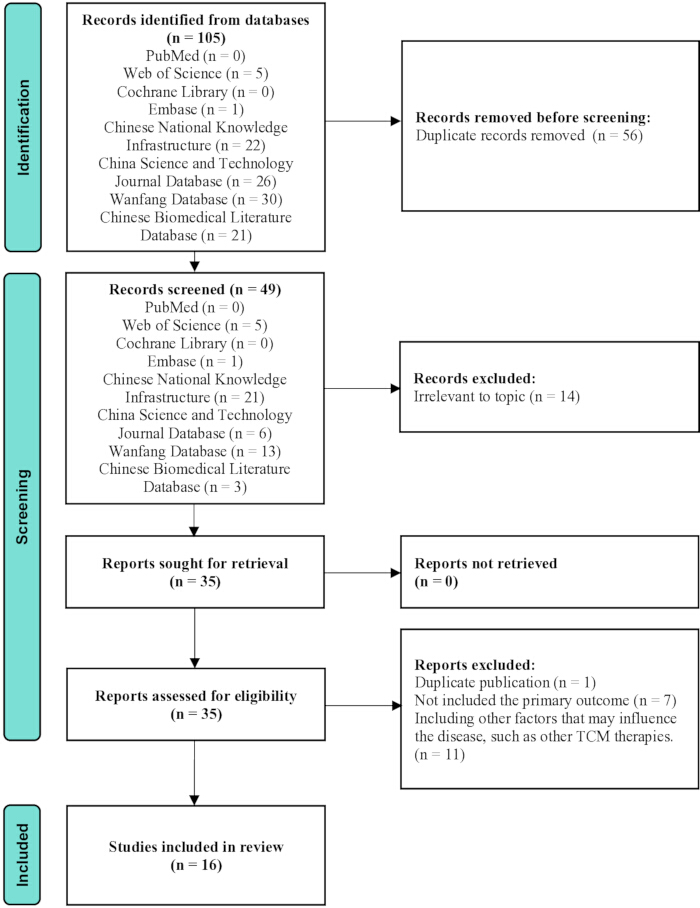
Figure 1: Flow diagram of the literature screening process and results. PRISMA flow diagram showing the literature searching, screening and eligibility evaluation procedures for RCTs of scraping therapy for SAS. Initially, 105 records were retrieved from databases. After removing duplicates, irrelevant articles and studies failing the inclusion criteria step by step, 16 eligible RCTs were ultimately incorporated into the meta-analysis. Please click here to view a larger version of this figure.
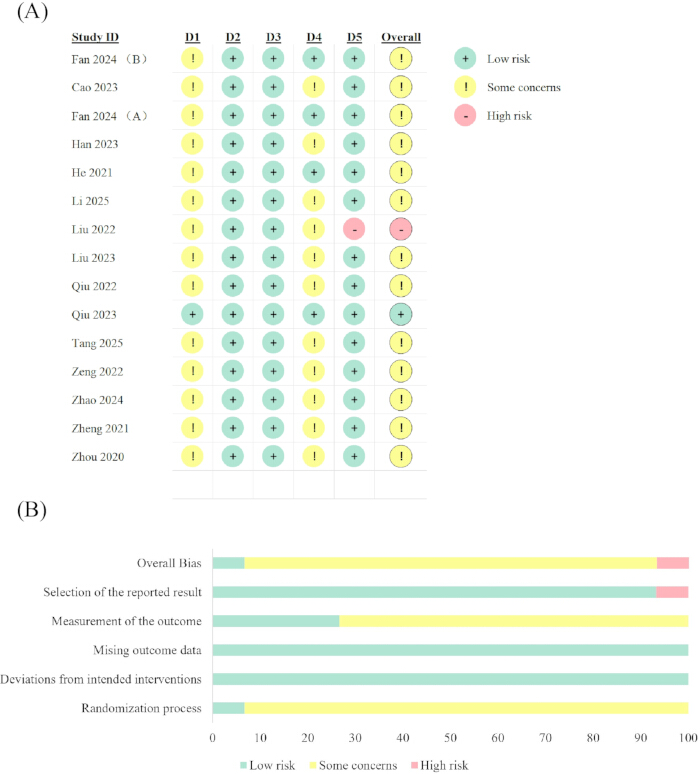
Figure 2: Risk of bias assessment for studies measuring spasticity using the MAS. (A) Risk-of-bias judgments for individual studies across all five bias domains. (B) Summary plot showing the proportion of studies rated as low risk, some concerns, or high risk within each bias domain. D1: randomization process; D2: deviations from the intended interventions; D3: missing outcome data; D4: measurement of the outcome; D5: selection of the reported result. Please click here to view a larger version of this figure.
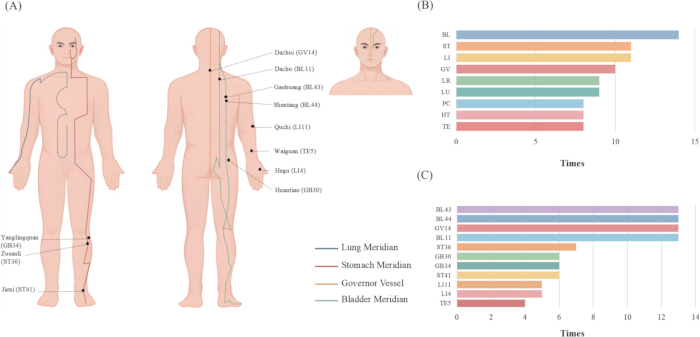
Figure 3: Schematic diagram and selection frequency of meridians and acupoints for SAS in included studies. (A) Schematic diagram of commonly used meridians and acupoints for spasticity after stroke. (B) Frequency of meridian selection among included studies. (C) Frequency of acupoint selection among included studies. Abbreviations: GV = Governor Vessel; BL = Bladder Meridian; ST = Stomach Meridian; GB = Gallbladder Meridian; LI = Large Intestine Meridian; LR = Liver Meridian; LU = Lung Meridian; PC = Pericardium Meridian; HT = Heart Meridian; TE = Triple Energizer Meridian. Figure 3A was created using FigDraw and is reproduced with permission from FigDraw under Copyright Authorization Code OWYUO06055 (by figdraw.com). Please click here to view a larger version of this figure.
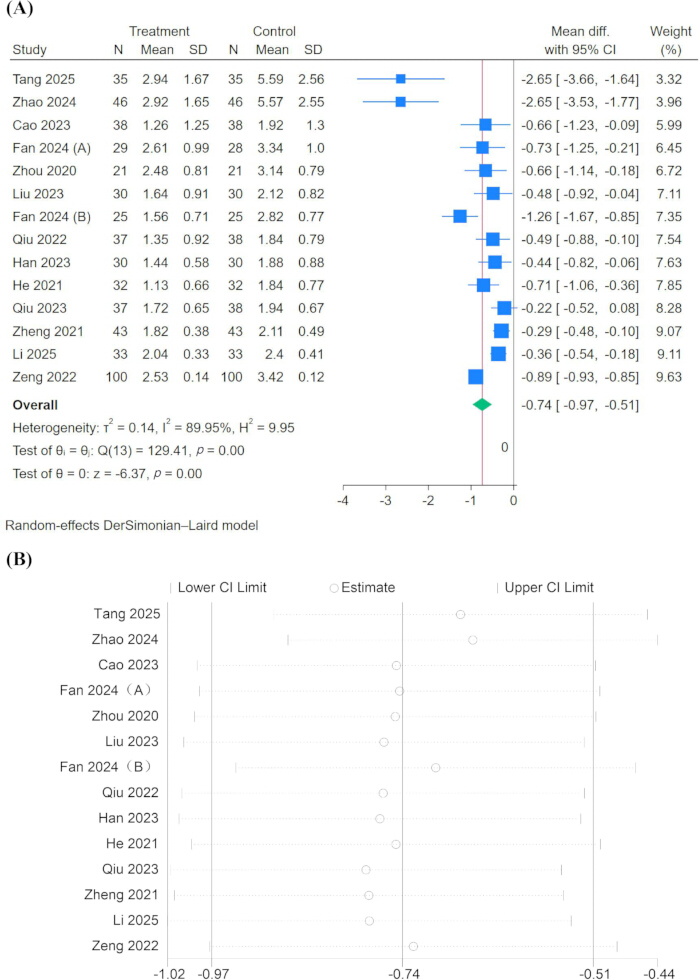
Figure 4: Forest plot and sensitivity analysis of MAS. (A) Forest plot for the MAS. (B) Sensitivity analysis of MAS. N represents sample size. Symbols: τ2, between-study variance; I2, percentage of total variation explained by inter-study heterogeneity; H2, heterogeneity ratio; Q, Cochran’s heterogeneity test statistic; θ, overall pooled effect size; z, z-test statistic; p, probability value. Abbreviations: SD = standard deviation; CI = confidence interval. Please click here to view a larger version of this figure.
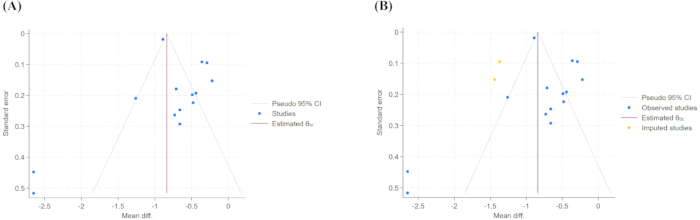
Figure 5: Funnel plots for publication bias assessment of MAS. (A) The funnel plot for the MAS (B) Funnel plot for the MAS using the trim-and-fill method. Symbols: θ, estimated overall effect size. Abbreviations: CI = confidence interval. Please click here to view a larger version of this figure.
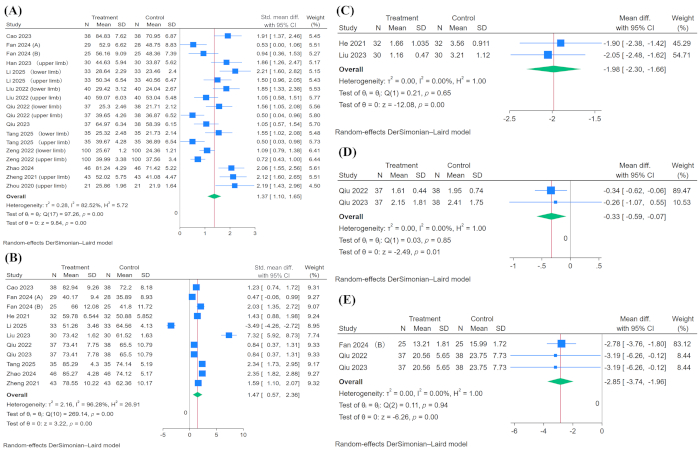
Figure 6: Forest plots of secondary outcomes. (A) Forest plot for the FMA. (B) Forest plot for the BI/MBI. (C) Forest plot for the VAS-P. (D) Forest plot for the hs-CRP content. (E) Forest plot for the Hcy content. N represents sample size. Symbols: τ2, between-study variance; I2, percentage of total variation explained by inter-study heterogeneity; H2, heterogeneity ratio; Q, Cochran’s heterogeneity test statistic; θ, overall pooled effect size; z, z-test statistic; p, probability value. Abbreviations: SD = standard deviation; CI = confidence interval. Please click here to view a larger version of this figure.
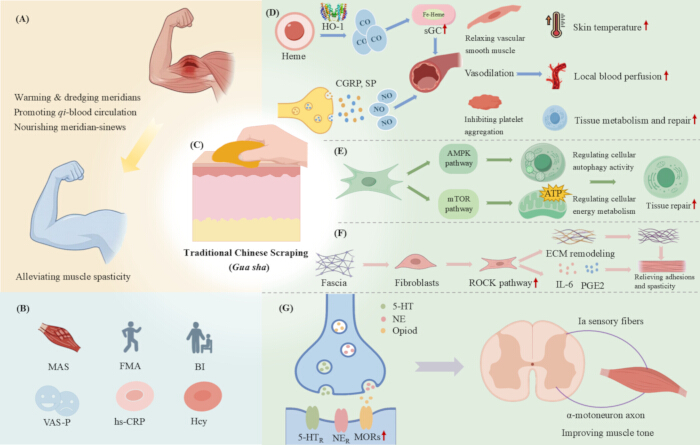
Figure 7: Integrated overview of scraping therapy for SAS. (A) TCM theories underlying the antispastic effects of scraping therapy. (B) Clinical findings. (C) Schematic illustration of scraping therapy. (D) Microcirculation regulation pathway. (E) Tissue repair pathway regulated by the AMPK/mTOR signaling cascade. (F) Fascia remodeling pathway via ROCK signaling to relieve myofascial adhesion and pathological muscle hypertonia. (G) Neuromuscular regulation and analgesic pathway. Abbreviations: MAS = Modified Ashworth Scale; FMA = Fugl-Meyer Assessment; BI = Barthel Index; VAS-P = Visual Analog Scale for Pain; hs-CRP = high-sensitivity C-reactive protein; Hcy = homocysteine; HO-1 = heme oxygenase-1; CO = carbon monoxide; sGC = soluble guanylate cyclase; CGRP = calcitonin gene-related peptide; SP = substance P; NO = nitric oxide; AMPK = AMP-activated protein kinase; mTOR = mammalian target of rapamycin; ATP = adenosine triphosphate; ECM = extracellular matrix; ROCK = Rho-associated protein kinase; IL-6 = interleukin-6; PGE2 = prostaglandin E2; 5-HT = 5-hydroxytryptamine; NE = norepinephrine; 5-HTR = 5-hydroxytryptamine receptor; NER = norepinephrine receptor; MOR = µ-opioid receptor. Figure 7 was created using FigDraw and is reproduced with permission from FigDraw under Copyright Authorization Code TIAYA8f9d1 (by figdraw.com). Please click here to view a larger version of this figure.
Supplementary Figure 1: Forest plot of MAS based on the fixed-effect model. The plot presents the pooled MD of MAS scores comparing adjuvant scraping plus other interventions with other interventions alone using a fixed-effect meta-analytic model. N represents sample size. Symbols: I2, percentage of total variation explained by inter-study heterogeneity; H2, heterogeneity ratio; Q, Cochran’s heterogeneity test statistic; θ, overall pooled effect size; z, z-test statistic; p, probability value. Abbreviations: MAS = Modified Ashworth Scale; MD = mean difference; SD = standard deviation; CI = confidence interval. Please click here to download this file.
Supplementary Figure 2: Sensitivity analysis forest plots for secondary outcomes. (A) Sensitivity analysis forest plot for FMA. (B) Sensitivity analysis forest plot for BI/MBI. (C) Sensitivity analysis forest plot for VAS-P. (D) Sensitivity analysis forest plot for hs-CRP. (E) Sensitivity analysis forest plot for Hcy. Abbreviations: CI = confidence interval. Please click here to download this file.
Supplementary Table 1: Search strategy. This table records the full keyword combinations, retrieval logic and search syntax used across eight databases for literature screening. Please click here to download this file.
Supplementary Table 2: Literature screening log. This table documents the full step-by-step screening records, exclusion reasons and quantity statistics at each literature filtering stage. Please click here to download this file.
المناقشة
This systematic review is the first quantitative synthesis exclusively focused on scraping therapy for SAS, built on the most up-to-date clinical literature. We pooled data from 16 RCTs enrolling 1227 SAS patients, conducted subgroup stratification based on scraping operational parameters, incorporated hs-CRP and Hcy as secondary outcomes, and integrated mechanistic interpretations of TCM and modern neurophysiology to provide preliminary evidence-based references for integrated Chinese-Western rehabilitation of SAS. Pooled analyses confirmed scraping therapy reduces spasticity measured by MAS and CSS; the intervention also improves FMA and BI/MBI scores, alleviates VAS-P, and lowers circulating hs-CRP and Hcy to suppress systemic inflammation.
Exploratory subgroup analyses identified scraping frequency, treatment duration and stimulation intensity as modifiable factors affecting antispastic efficacy. Intervals of five days generated better therapeutic effects than weekly or two-day intervals, consistent with routine clinical practice where subsequent scraping is arranged after petechiae fade and frequency is adjusted according to spasticity severity and pain tolerance43; this regimen delivers adequate mechanical stimulation without triggering secondary hyperalgesia. A 1.5-month intervention cycle produced superior antispastic benefits, conforming to a non-linear U-shaped dose-response relationship where excessively short or prolonged durations weaken efficacy44. High-intensity scraping outperformed moderate stimulation in alleviating muscle tone, likely via sustained local hyperperfusion that relieves persistent spastic muscle contraction through blood-activating manipulation45. Importantly, all subgroup outcomes are hypothesis-generating rather than definitive, and cannot guide routine clinical practice before validation in prospective trials with preset parameter comparison arms. For outcomes with substantial inter-trial heterogeneity such as MAS, scraping frequency was confirmed as one source of heterogeneity, yet stratified subgroups still yielded low-certainty evidence due to high baseline bias risk and imprecise pooled estimates, requiring cautious clinical interpretation of subgroup effects.
SAS presents velocity- and length-dependent increases in resistance to passive muscle stretch, a typical positive sign of post-stroke upper motor neuron syndrome5. Its core pathogenesis lies in hyperexcitability of descending corticospinal and reticulospinal pathways, which amplifies spinal stretch reflexes46,47,48; secondary intraspinal circuit disorder and peripheral muscle remodeling (increased connective tissue, higher type I fiber ratio, shortened sarcomeres) jointly induce muscle stiffness, joint contracture and progressive motor impairment49. From the TCM perspective, SAS falls into sinew-meridian disorders, resulting from disrupted cerebral qi and blood circulation that impairs sinew-meridian motor regulation. In TCM theory, the Governor Vessel is considered closely associated with the brain and cerebral function and therefore serves as a core scraping target; stimulation along this channel is traditionally considered to modulate central neural activity50. SAS predominantly affects upper limb flexors and lower limb extensors. Accordingly, the Lung Meridian covers upper limb flexor spastic areas, whereas the Stomach Meridian traverses lower limb extensor spastic sites, consistent with the traditional TCM principle that meridians treat their corresponding anatomical regions (Figure 3A). Insufficient yang qi in meridians fails to warm sinews, clinically manifested as elevated muscle tone or joint contracture51. All included RCTs adopted metal scraping tools, whose rapid heat conduction and slow heat dissipation facilitate local microcirculation improvement and muscle tension relief in clinical practice.
All mechanistic pathways below are extrapolated from preclinical experiments instead of direct biomarker testing in included RCTs, serving only as theoretical foundations for follow-up mechanism-focused clinical verification. Scraping-induced mechanical stimulation upregulates tissue heme oxygenase-1 (HO-1) expression to enhance antioxidant capacity52; mechanical skin stress activates local neural reflexes to release vasoactive mediators including calcitonin gene-related peptide, substance P and nitric oxide53,54, which dilate terminal arterioles, raise skin temperature, boost regional perfusion and accelerate tissue metabolism and repair via the skin-brain axis52,55,56,57. Similar to mechanical loading on somatic cells, scraping force regulates cellular energy metabolism and autophagy through AMP-activated protein kinase (AMPK) and mammalian target of rapamycin (mTOR) cascades to promote soft tissue repair58. Analgesia relies on combined peripheral and central neuroregulation53: based on established pain neuroscience, scraping may upregulate µ-opioid receptor expression in spinal dorsal root ganglia, modulate descending serotonergic and noradrenergic inhibitory pathways, and block nociceptive signal transmission to the central nervous system — this multi-layer pain regulatory model still needs dedicated scraping-specific biomarker validation56,59. Moreover, mechanical traction on fascia and cutaneous tissue reshapes fibroblast morphology and transmits mechanical signals to activate the Rho-associated kinase (ROCK) pathway, drive extracellular matrix remodeling, and secrete interleukin-6 and prostaglandin E256,60,61. Collectively, these molecular and tissue-level pathways may alleviate myofascial adhesion and pathological muscle hypertonia after scraping (Figure 7).
This study bears certain limitations mainly derived from methodological defects of primary RCTs. First, nearly all trials recruited small samples, reducing statistical power and cross-population generalizability; participant and therapist blinding was inherently unachievable due to the physical nature of scraping, while absent assessor blinding inflated detection bias for subjective scale indicators and likely overestimated therapeutic benefits. Future trials must implement independent blinding for outcome evaluators and statisticians to reduce measurement bias. Second, unified placebo control protocols are absent in existing research; subsequent designs can set matched placebo comparators by adjusting scraping intensity, treatment area or lubricant medium to meet standard RCT requirements62. Third, spasticity evaluation solely depended on subjective scales such as MAS, whose results are interfered by inter-rater inconsistency, baseline muscle strength and variable passive stretch velocity during testing63. Objective quantitative tools including electrophysiological recording, shear wave elastography64 and digital muscle function assessment systems65 should be incorporated into follow-up trials to improve outcome reliability. However, it should be noted that shear wave elastography reflects alterations in muscle structure rather than the neural components of spasticity. Therefore, a multi-model assessment strategy—combining validated scales, structural imaging, and neuroelectrophysiological recordings—should be adopted in both clinical practice and future research to comprehensively evaluate SAS. Fourth, inconsistent scraping protocols (variable target meridians/acupoints, manipulation intensity, frequency and duration) caused severe inter-trial heterogeneity, restricting definitive conclusions on scraping efficacy for SAS. Fifth, all optimal parameters identified via subgroup analysis are exploratory hypothesis signals rather than formal clinical guidance; several subgroups contained only a small number of trials, further lowering the precision of pooled effect sizes and requiring restrained interpretation. Sixth, every eligible RCT was conducted within China, where TCM scraping has mature local operating specifications and high patient acceptance. Such geographic homogeneity obviously weakens external validity, as international clinical systems lack unified training standards and accumulated practical experience for scraping, making it hard to directly extend our findings to overseas populations. Seventh, marked statistical heterogeneity and detectable small-study effects lowered overall GRADE evidence certainty for all outcomes. The antispastic benefit of scraping therefore cannot support formal clinical guideline recommendations at present and must be interpreted conservatively. Eighth, all proposed mechanisms originate from preclinical animal and cell models rather than direct biomarker quantification in stroke patients from included RCTs; dedicated prospective human trials detecting relevant circulating and tissue mediators are required to confirm these theoretical pathways. Ninth, safety reporting was extremely incomplete across primary literature: only one RCT clearly recorded scraping-related adverse events, and current safety evidence is insufficient to draw reliable conclusions on scraping’s safety profile among SAS patients. To address the above gaps, future research priorities include standardized scraping protocols, adequately powered multi-center international RCTs, rigorous blinding and placebo-controlled design, and mandatory structured adverse event reporting to raise the overall certainty of evidence for scraping in SAS treatment.
Current international guidelines for SAS advocate individualized multi-modal rehabilitation matching spasticity severity and patient functional demands2. Routine rehabilitation training forms universal foundational management, while exercise modality, intensity and delivery must be personalized. Sustained stretching, splinting, neuromuscular electrical stimulation and Bobath techniques are recommended for severe spasticity to correct pathological movement synergies and recover discrete voluntary motor control5,66; mild spasticity gains consistent benefits from aerobic exercise, task-oriented training and mirror therapy, which enhance sensorimotor cortical plasticity, rebalance interhemispheric inhibitory signals and drive compensatory motor recovery67,68. Emerging preclinical stroke research further supports severity-stratified rehabilitation strategies: bilateral limb training preserves corticospinal tract integrity and remodels commissural white matter connections under moderate ischemic injury to optimize thalamocortical microstructure and motor recovery, while unilateral constraint-induced movement therapy produces better functional gains for severe lesions by reinforcing ipsilesional thalamocortical pathways, alleviating pathological interhemispheric inhibition and remodeling residual motor white matter tracts69. Translating these preclinical outcomes to human trials, future SAS rehabilitation programs may adopt diffusion tensor imaging biomarkers to stratify patients by white matter lesion burden and deliver lesion-tailored training regimens to maximize motor recovery. We hypothesize adjuvant scraping combined with stratified conventional rehabilitation can generate synergistic therapeutic effects, mainly by improving regional soft tissue perfusion and relieving myofascial adhesion in spastic muscle groups. Clinically, scraping can target two categories of meridians: central regulatory meridians such as the Governor Vessel linked to cerebral neuromodulation50, and lesion-targeted meridians traversing spastic limbs (Lung Meridian for upper limb flexors, Stomach Meridian for lower limb extensors) to achieve broad neuromodulatory effects. Although this meta-analysis identifies scraping as a promising adjunctive intervention for SAS, rigorously designed multi-center trials are still needed to confirm its long-term clinical value and formulate standardized application protocols.
Pooled analyses reveal scraping therapy serves as a viable adjunct to standard rehabilitation for mitigating SAS manifestations. Restricted geographic recruitment, substantial inter-trial inconsistency, small-study effects and inherent methodological drawbacks collectively downgrade the certainty of the synthesized evidence. Current datasets lack adequate safety profiles for this modality, and high-powered, rigorously designed trials are yet absent to corroborate its sustained clinical benefits and risk profile. Accordingly, scraping should be administered merely as an exploratory supplementary therapy within clinical settings staffed by certified practitioners and equipped with routine adverse event surveillance. Future well-powered prospective trials are warranted to robustly delineate the long-term efficacy and safety of scraping therapy for SAS management.
الإفصاحات
The author(s) report no conflicts of interest in this work.
شكر وتقدير
This study was supported by the National Natural Science Foundation of China (Grant No. 82405579). The authors thank all participants and clinical investigators involved in the studies included in this review. The authors also thank the peer reviewers for their constructive comments and contributions to improving the manuscript.
المواد
| الاسم | الشركة | رقم فهرسي | التعليقات |
|---|---|---|---|
| Cochrane Risk of Bias 2.0 (RoB 2.0) | Cochrane Collaboration | https://www.riskofbias.info/welcome/rob-2-0-tool/current-version-of-rob-2 | A standardized risk-of-bias assessment tool for randomized controlled trials. |
| Figdraw | Figdraw Platform | https://www.figdraw.com | Schematic drawing tool for meridians/acupoints and mechanism diagrams (Figure 3(A) and Figure 7) |
| GRADEpro | GRADE Working Group | https://gdt.gradepro.org | System to grade overall certainty of clinical evidence across all outcomes |
| NoteExpress 3.2.0 | Aegean Software | https://www.inoteexpress.com | Literature management software for screening, deduplication and reference sorting |
| Stata 18 | StataCorp LLC | https://www.stata.com | Statistical software for meta-analysis, subgroup, sensitivity & publication bias analysis |
| Zenodo | CERN (European Organization for Nuclear Research) | https://zenodo.org/ | Open-access digital repository for depositing raw data of this systematic review and meta-analysis |
المراجع
- Owolabi MO, et al. Primary stroke prevention worldwide: translating evidence into action. Lancet Public Health. 2022;7(1):e74-e85.
- Suputtitada A, Chatromyen S, Chen CPC, Simpson DM. Best practice guidelines for the management of patients with post-stroke spasticity: a modified scoping review. Toxins (Basel). 2024;16(2):98.
- Li S, Francisco GE, Rymer WZ. A new definition of poststroke spasticity and the interference of spasticity with motor recovery from acute to chronic stages. Neurorehabil Neural Repair. 2021;35(7):601-10.
- Bhimani R, Chappuis D, Mathiason MA, Anderson LC. Spasticity, pain, and fatigue: are they associated with functional outcomes in people with stroke? Rehabil Nurs. 2022;47(2):60-71.
- Li S, Francisco GE. New insights into the pathophysiology of post-stroke spasticity. Front Hum Neurosci. 2015;9:192.
- Bajko J, et al. Botulinum toxin type A in the treatment of post-stroke spasticity - a review of current evidence. Quality in Sport. 2026;54:70227.
- Satkunam L, et al. Post-stroke spasticity treatment: a retrospective cohort study from Alberta, Canada. Can J Neurol Sci. 2024;1-9.
- Cai S, Kumar R, Singh BR. Clostridial neurotoxins: structure, function and implications to other bacterial toxins. Microorganisms. 2021;9(11):2206.
- Onan D, Farham F, Martelletti P. Clinical conditions targeted by onabotulinumtoxinA in different ways in medicine. Toxins (Basel). 2024;16(7):309.
- Ertzgaard P, Campo C, Calabrese A. Efficacy and safety of oral baclofen in the management of spasticity: A rationale for intrathecal baclofen. J Rehabil Med. 2017;49(3):193-203.
- Zhu RR, et al. Evidence-based evaluation for stroke guidelines mentioning traditional and complementary medicine rehabilitation. BMC Complement Med Ther. 2025;25:184.
- Marion T, Cao K, Roman J. Gua Sha, or coining therapy. JAMA Dermatol. 2018;154(7):788.
- National Administration of Quality Supervision, Inspection and Quarantine, Standardization Administration of China. Standardized manipulations of acupuncture and moxibustion—Part 22: Scraping therapy. GB/T 21709.22-2013. 2013.
- Beijing Office of Traditional Chinese Medicine Nursing Competence Improvement Project, Beijing Traditional Chinese Medicine Nursing Quality Control Center. Expert consensus statement on risk management for scraping treatment. Chinese Journal of Integrative Nursing. 2023;9(4):231-36.
- Zeng TY, Liao XZ, Zhang MJ, Yao ZQ. Therapeutic effect of copper scraping combined with rehabilitation on patients with hemiplegia and increased muscle tone after stroke. J Chin Foreign Med Pharm Res. 2022;1(12):84-86.
- Zheng CT, Lu YC, Chen JX. Discussion on the application of copper needle scraping in the rehabilitation care of patients with spastic hemiplegia after stroke. Diet Health. 2021;(28):184.
- Qiu HJ, et al. Clinical study on spastic hemiplegia in ischemic stroke patients with wind-phlegm blocking collaterals syndrome by scraping with copper scraper. Guiding J Tradit Chin Med Pharm. 2022;28(11):71-82.
- Zhou L. Copper scraping therapy for the management of upper-limb spastic hemiplegia after stroke: a randomized controlled trial. Chin J Mod Drug Appl. 2020;14(10):189-91.
- Liu YY, et al. Application of copper scraping along the meridian-sinews in reducing muscle tone in patients with poststroke spastic hemiplegia: a randomized controlled trial. Med Health. 2023;(6):60-63.
- He W, You M. Efficacy of nursing intervention of scraping therapy along the meridians on patients with upper-limb spasticity after stroke: a randomized controlled trial. J Anhui Med Coll. 2021;20(4):63-64+66.
- Cao SF, et al. Clinical effect analysis of rehabilitation nursing for spastic hemiplegia patients after stroke with TCM copper needle scraping technique. Smart Healthc. 2023;9(7):255-58.
- Liu YY, et al. Application of Traditional Chinese medicine copper bian scraping technique in rehabilitation nursing of spasmodic hemiplegia patients after stroke. Clin Nurs Res. 2022;31(16):130-32.
- Fan YL, et al. Scraping therapy combined with anti-spasticity nursing for post-stroke spastic hemiplegia: a randomized controlled trial. Geriatr Res. 2024;5(4):9-13.
- Fan YL. Clinical study of Tongbian Guasha on spastic hemiplegia after stroke with phlegm-stasis obstruction [thesis]. Anhui Univ Chin Med; 2024.
- Han S, Liu ZY, Yan LM. Dahuoluo pill combined with Tongbian scraping in the treatment of upper limb spasmodic hemiplegia after cerebral apoplexy. Chin J Trad Chin Med Mod Distance Edu. 2023;21(12):93-95.
- Hu J, Feng LP. Application of traditional Chinese scraping in rehabilitation nursing for patients with post-stroke spastic hemiplegia: a randomized controlled trial. Chin J Sci Tech Database (Med). 2021;79.
- Li YY. Effect of Traditional Chinese scraping therapy on limb motor function in patients with post-stroke spastic hemiplegia: A randomized controlled trial. Chin J Sci Tech Database (Med). 2025;65-69.
- Qiu HJ. Clinical efficacy of Li’s scraping therapy for spastic hemiplegia in patients with ischemic stroke [thesis]. Hunan Univ Chin Med; 2023.
- Tang HX. Huatan Tongluo decoction combined with traditional Chinese scraping for spastic hemiplegia after acute cerebral infarction: a randomized controlled trial. Home Health. 2025;(1):140-42.
- Zhao PZ. Clinical evaluation on Huatan Tongluo decoction combined with Gua Sha for spastic hemiplegia after acute cerebral infarction. J Pract Trad Chin Med. 2024;40(11):2138-40.
- Page MJ, et al. The PRISMA 2020 statement: an updated guideline for reporting systematic reviews. BMJ. 2021;372:n71.
- Higgins JPT, et al. Cochrane Handbook for Systematic Reviews of Interventions version 6.5 (2024-08). Cochrane; 2024.
- Chinese Medical Association Neurology Branch, Chinese Medical Association Neurology Branch Cerebrovascular Disease Group. Chinese guidelines for diagnosis and treatment of acute intracerebral hemorrhage 2019. Chinese Journal of Neurology. 2019;52(12):994-1005.
- Chinese Medical Association Neurology Branch, Chinese Medical Association Neurology Branch Cerebrovascular Disease Group. Chinese guidelines for diagnosis and treatment of acute ischemic stroke 2018. Chinese Journal of Neurology. 2018;51(9):666-82.
- Higgins JPT, et al. Chapter 8: Assessing risk of bias in a randomized trial. In: Higgins JPT, Thomas J, Chandler J, Cumpston M, Li T, Page MJ, Welch VA, editors. Cochrane Handbook for Systematic Reviews of Interventions version 6.5. Cochrane; 2024.
- Vidmar T, Goljar KN, Puh U. Reliability of the Modified Ashworth Scale after stroke for 13 muscle groups. Arch Phys Med Rehabil. 2023;104(10):1606-11.
- Kim KH, Jang SH. Effects of task-specific training after cognitive sensorimotor exercise on proprioception, spasticity, and gait speed in stroke patients: a randomized controlled study. Medicina (Kaunas). 2021;57(10):1098.
- Gladstone DJ, Danells CJ, Black SE. The fugl-meyer assessment of motor recovery after stroke: a critical review of its measurement properties. Neurorehabil Neural Repair. 2002;16(3):232-40.
- Cai YF, et al. Multicenter evaluation of the ischemic stroked patients with the Chinese Barthel Index: a prognostic study. Chin J Cerebrovasc Dis. 2007;4(11):486-90.
- Gao WL, Wang XH. Preoperative selection of patient pain score method and effect analysis of postoperative pain assessment. J Pract Med. 2013;29(23):3892-94.
- Cui Y, et al. Machine learning prediction of thrombolysis efficacy using hs-CRP and inflammatory markers in stroke. Medicine (Baltimore). 2025;104(43):e45405.
- Moretti R, Caruso P. The controversial role of homocysteine in neurology: from labs to clinical practice. Int J Mol Sci. 2019;20(1):231.
- Yoo SS, Tausk F. Cupping: East meets West. Int J Dermatol. 2004;43(9):664-65.
- Davis JM, Svendsgaard DJ. U-shaped dose-response curves: their occurrence and implications for risk assessment. J Toxicol Environ Health. 1990;30(2):71-83.
- Yang KW, et al. Effects of different scraping techniques on body surface blood perfusion volume and local skin temperature of healthy subjects. J Basic Chin Med. 2016;27(4):587-91.
- Bhimani R. Intrathecal baclofen therapy in adults and guideline for clinical nursing care. Rehabil Nurs. 2008;33(3):110-16.
- Bhimani RH, Peden-McAlpine C, Gaugler J, Anderson LC. Spasticity over time during acute rehabilitation: a study of patient and clinician scores. Appl Nurs Res. 2016;30:16-23.
- Zhong JS, et al. Novel efficacy evidence and mechanistic explorations of motion-style scalp acupuncture in post-stroke muscle spasticity management: Systematic review and meta-analysis of randomized controlled trials. Neuroscience. 2025;589:96-108.
- Wang JX, Fidimanantsoa OL, Ma LX. New insights into acupuncture techniques for poststroke spasticity. Front Public Health. 2023;11:1155372.
- Wang JX, et al. New perspectives on the efficacy of Governor Vessel moxibustion combined with rehabilitation training for poststroke muscle spasticity: a systematic review and meta-analysis of randomized controlled trials. Brain Behav. 2026.
- Yang YH, et al. Discussion on the idea of acupuncture diagnosis and treatment of stroke sequelae based on identifying the disease location. Chin Acupunct Mox. Ahead of print.
- Kwong KK, et al. Bioluminescence imaging of heme oxygenase-1 upregulation in the Gua Sha procedure. J Vis Exp. 2009;(30):1385.
- Chu ECP, Wong AYL, Sim P, Krüger F. Exploring scraping therapy: Contemporary views on an ancient healing - A review. J Family Med Prim Care. 2021;10(8):2757-62.
- Burnstock G. Release of vasoactive substances from endothelial cells by shear stress and purinergic mechanosensory transduction. J Anat. 1999;194(Pt 3):335-42.
- Zhang X, et al. Analysis of acupoint selection rules for Guasha treatment of primary headaches based on data mining. J Pain Res. 2024;17:1393-400.
- He T, et al. Skin-brain axis: neural pathways in acupuncture treatment. Chin Med. 2025;20(1):163.
- Xu QY, et al. Effects of Weizhong (BL 40) area scraping on blood perfusion level of the skin microcirculation of Oihaishu (BL 24) region at the ipsilateral back of the volunteer’s body. Acupunct Res. 2013;38(1):52-56.
- Zhou X, et al. Mechanical loading modulates AMPK and mTOR signaling in muscle cells. J Proteome Res. 2024;23(10):4286-95.
- Musial F, Michalsen A, Dobos G. Functional chronic pain syndromes and naturopathic treatments: neurobiological foundations. Forsch Komplementmed. 2008;15(2):97-103.
- Yang YG. Clinical experience for treating nape muscular fasciae inflammation by scraping plus oral medicine. Clin J Chin Med. 2016;8(10):31-32.
- Lambert M, et al. The effects of instrument-assisted soft tissue mobilization compared to other interventions on pain and function: a systematic review. Phys Ther Rev. 2017;22(1-2):76-85.
- Zeng Y, et al. Control of placebo effect in clinical studies of TCM nursing techniques: a scoping review. Mil Nurs. 2023;40(11):79-82.
- Bhimani R, Horowitz C, Mathiason MA, Anderson LC. Are symptoms of spasticity, pain, and fatigue related in people with stroke? Rehabil Nurs. 2022;47(1):31-40.
- Stiver ML, Mirjalili SA, Agur AMR. Measuring shear wave velocity in adult skeletal muscle with ultrasound 2-D shear wave elastography: a scoping review. Ultrasound Med Biol. 2023;49(6):1353-62.
- Lettner J, et al. Evaluating the reliability of MyotonPro in assessing muscle properties: a systematic review of diagnostic test accuracy. Medicina (Kaunas). 2024;60(6):851.
- Brusola G, et al. Effectiveness of physical therapy interventions on post-stroke spasticity: An umbrella review. NeuroRehabilitation. 2023;52(3):349-63.
- Fling BW, et al. Neuroplasticity of the sensorimotor neural network associated with walking aid training in people with multiple sclerosis. Mult Scler Relat Disord. 2019;31:1-4.
- Avanzino L, et al. Training based on mirror visual feedback influences transcallosal communication. Eur J Neurosci. 2014;40(3):2581-88.
- Zhao X, et al. Atlas-based analysis of diffusion imaging may predict efficacy of forelimb movement therapy for motor recovery in post-stroke rats. Neuroimage. 2025;321:121517.
إعادة الطباعة والأذونات
تم نشر هذه المقالة
الفيديو قريباً