15.22
本课讨论使用弱碱的交叉羟醛反应。 通过将具有α氢的醛缓慢添加到甲醛和弱碱(如氢氧化物和醇盐)的混合物中,可以防止其自缩合。 缓慢添加醛后,碱使醛的 α 碳去质子化,形成相应的烯醇化物。 烯醇化物随后攻击甲醛形成单一交叉产物。 图1描述了上述反应。
图 1. 单一交叉产物的形成
在β-酮酯和酮之间的反…
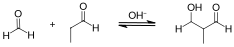
请记住,一个高效的交叉羟醛反应要求两个不同的羰基化合物中,至少有一个不含α氢原子,这一点在甲醛与另一个含有α氢的醛的反应中得到了体现。
通过将含有α氢的醛缓慢加入到甲醛和弱碱的反应混合物中,可防止其发生自身缩合反应。
需注意,pKa 值相对较小的氢氧化物和醇盐作为弱碱发挥作用。
在此反应中,氢氧根离子夺取醛的 α 氢生成亲核性烯醇负离子,该负离子进攻甲醛,生成单一的交叉羟醛产物。
类似地,在β-酮酯和酮的混合溶液中,pKa值较低的β-酮酯酸性更强。因此,乙醇钠作为一种弱碱,优先使β-酮酯去质子化,生成的烯醇负离子再与酮反应,以较高的产率生成单一产物。
View the full transcript and gain access to JoVE Core videos
Q1: Why is an aldehyde with an α hydrogen added slowly in a crossed aldol reaction with formaldehyde?
Slow addition prevents self-condensation of the aldehyde containing an α hydrogen. By adding it gradually to a mixture of formaldehyde and weak base, the base preferentially deprotonates the formaldehyde's α carbon first, forming an enolate that attacks the slowly added aldehyde, yielding a single crossed aldol product rather than multiple byproducts.
Q2: What role do weak bases play in crossed aldol reactions?
Weak bases like hydroxide and alkoxide ions deprotonate the α hydrogen of carbonyl compounds to form nucleophilic enolates. These bases have relatively smaller pKa values, allowing them to selectively deprotonate the more acidic compound in a mixture, ensuring formation of a single enolate that attacks the electrophilic carbonyl partner.
Q3: How does pKa determine which compound reacts first in a crossed aldol with a β-ketoester and ketone?
The β-ketoester has a lower pKa than the ketone, making it more acidic. Sodium ethoxide, a weak base, preferentially deprotonates the more acidic β-ketoester to form its enolate. This enolate then attacks the ketone electrophile, producing a single crossed aldol product in good yield.
Q4: What is the difference between using formaldehyde and other aldehydes in crossed aldol reactions?
Formaldehyde lacks an α hydrogen, making it unable to undergo self-condensation or form an enolate. This property makes it an ideal electrophile in crossed aldol reactions. When paired with an aldehyde containing an α hydrogen, formaldehyde ensures selective formation of one crossed product without competing self-condensation pathways.
Q5: What is an enolate and how does it form in weak base-catalyzed aldol reactions?
An enolate is a nucleophilic carbanion formed when a weak base deprotonates the α hydrogen of a carbonyl compound. The resulting negative charge is stabilized by resonance with the carbonyl π system. In crossed aldol reactions, the enolate attacks the electrophilic carbonyl carbon of the second reactant, forming a new carbon-carbon bond.
Q6: Why does sodium ethoxide selectively deprotonate the β-ketoester over the ketone?
Sodium ethoxide is a weak base that selectively deprotonates the more acidic compound. The β-ketoester possesses a lower pKa than a simple ketone due to the electron-withdrawing ester group, which stabilizes the resulting enolate through resonance. This acidity difference ensures selective enolate formation from the β-ketoester.
Q7: What outcome results from using weak bases instead of strong bases in crossed aldol reactions?
Weak bases enable selective deprotonation based on relative acidity, allowing control over which carbonyl compound forms the enolate. This selectivity prevents unwanted self-condensation and side reactions, yielding a single crossed aldol product in good yield. Strong bases would deprotonate both compounds non-selectively, producing multiple products.