8.10
方螺纹螺旋千斤顶是一种广泛用于提升重物或施加相当大力的机械设备。使螺旋千斤顶更有效和可靠的关键特征之一是其自锁能力。
如果施加在其上的力矩消除后螺钉仍保持其位置,则承载负载的方螺纹螺旋千斤顶被认为是自锁的。
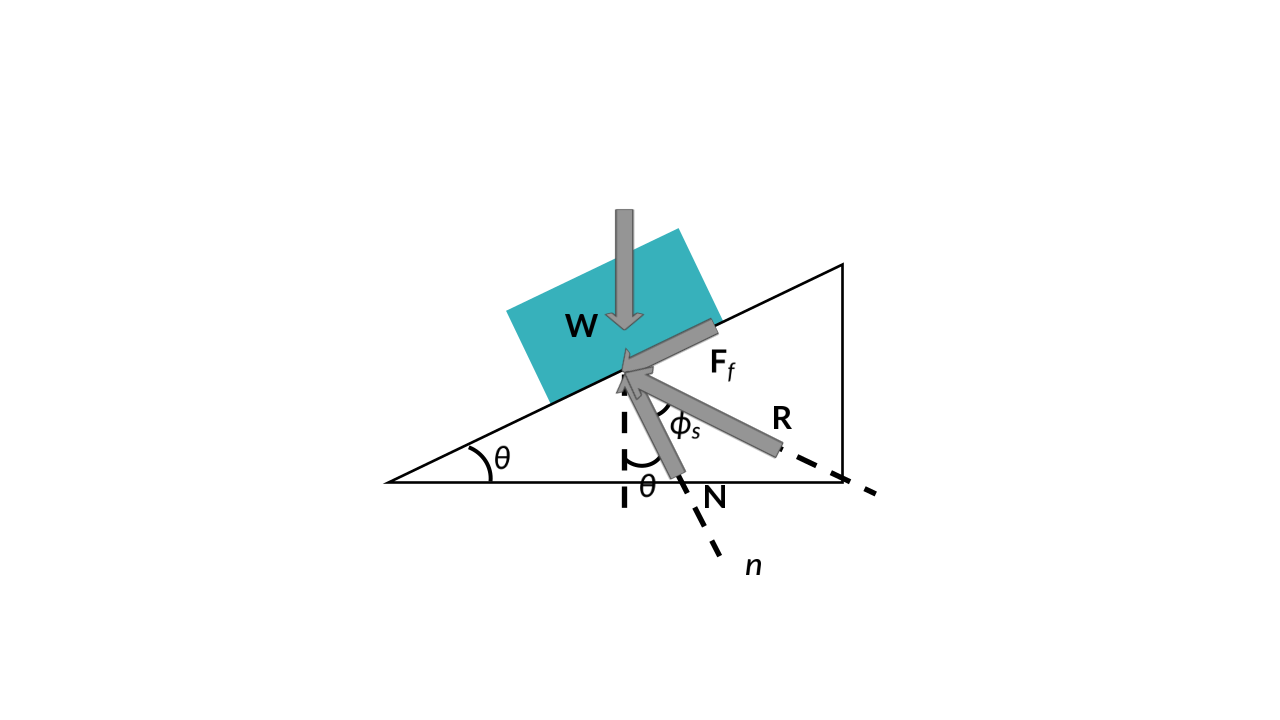
当摩擦力的方向发生反转时,便会出现这种情况,并且反作用力作用在螺纹法线的另一侧。在这种情况下…
考虑一个承受载荷的方牙螺纹千斤顶。如果在去除转矩后螺纹仍能保持其位置不变,则称为自锁。
当摩擦力方向反转且反作用力作用于螺纹法线的另一侧时,就会发生这种情况。
此处,静摩擦角可以大于或等于导程角。
要使自锁螺钉向下旋转,必须对螺钉施加一个相反方向的力矩。通过应用力的平衡方程,可以确定该力矩的大小。
如果两个角度相等,反作用力将垂直作用,使载荷达到平衡,此时螺钉处于即将向下旋动的临界状态。
如果摩擦角小于导程角,则螺杆不具备自锁性,需施加反向力矩以阻止螺杆向下旋动。
这一力矩产生一个水平方向的力,可防止螺纹在斜面上滑动。根据受力分析图,可确定该力矩的大小。
View the full transcript and gain access to JoVE Core videos
Q1: What makes a screw jack self-locking?
A screw jack is self-locking when it retains its position after the applied moment is removed. This occurs when the static friction angle is larger than or equal to the lead angle, causing the frictional force direction to reverse. The reaction force then acts on the opposite side of the thread's normal, preventing downward motion without external force.
Q2: How do friction angle and lead angle determine if a screw is self-locking?
When the static friction angle equals or exceeds the lead angle, the screw becomes self-locking and holds its load without additional moment. If the friction angle is smaller than the lead angle, the screw is not self-locking and requires an opposing moment to prevent downward winding. This relationship is fundamental to understanding screw jack behavior under load.
Q3: What moment is required to lower a self-locking screw?
To wind a self-locking screw downwards, a moment must be applied in the opposite direction of the initial loading. Using equilibrium equations for the forces acting on the screw, engineers can determine the magnitude of this required moment. The calculation depends on the load, thread geometry, and friction characteristics of the screw jack system.
Q4: What happens when friction angle equals the lead angle in a screw jack?
When the static friction angle equals the lead angle, the reaction force acts vertically, perfectly balancing the load. The screw reaches a state of equilibrium on the verge of winding downwards, maintaining its position without any additional moment. This critical condition represents the threshold between self-locking and non-self-locking behavior.
Q5: How does a non-self-locking screw behave under load?
In a non-self-locking screw, the static friction angle is smaller than the lead angle, allowing the screw to slide downward when the moment is removed. An opposing moment must be applied to prevent this downward winding. This opposing moment generates a horizontal force that prevents thread sliding on the inclined plane of the screw jack.
Q6: Why is self-locking important in screw jack design?
Self-locking capability makes a screw jack more effective and reliable by eliminating the need for continuous force to maintain load position. This feature is crucial for safety-critical applications where load retention is essential. Engineers select appropriate screw parameters based on friction and lead angle relationships to achieve desired self-locking behavior for specific applications.
Q7: How can you determine the moment needed to prevent downward winding?
For non-self-locking screws, the required opposing moment can be determined by analyzing the free-body diagram and applying equilibrium equations. The horizontal force generated by this moment prevents thread sliding on the inclined plane. This analysis is essential for designing screw jacks that operate safely and effectively under specified load conditions.