1.2
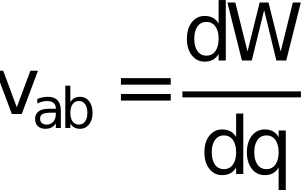
电子在导体中的运动通常需要某种形式的能量或功,一般是由外力提供,例如电池。这种力称为电动势或电压。电路中两点(称为点“a”和“b”)之间的电压是将单位电荷从点“a”移动到点“b”所需的能量(或功),此关系可以从数学上表示为:
在该等式中,“w”代表以焦耳 (J) 为单位测量的能量,“q”则代表以库仑…
导体中电子的移动需要某种形式的能量或功,通常由外部力提供,例如电池。这种力称为电动势或电压。
电压表示在两点之间移动单位电荷所需的能量。它也被称为电势差,单位为伏特。
正号和负号定义了电压的方向或极性。
感知电压有两种方式:某一点的电势 a 可以描述为 Vab 比点处的电势高伏特 b,或某一点的电势 a 相对于点 b 是 Vab.
此外,从 a 到 b 的电压降等效于从 b 到 a 的电压升高。
电压可以是恒定的或随时间变化的。由电池产生的恒定电压通常称为直流电压(DC电压),常用于由电池供电的便携式设备中。
由发电机产生的随时间呈正弦变化的电压称为交流电压。这种电压被输送至家庭,用于驱动各种电器设备。
View the full transcript and gain access to JoVE Core videos
Q1: What is voltage and why is it needed in an electric circuit?
Voltage is the electromotive force that provides energy to move electrons through a conductor. It represents the energy required to transport a unit charge between two points in a circuit, typically supplied by a battery or generator. Voltage is measured in volts and is essential for establishing current flow in electric circuit elements.
Q2: How is voltage notation interpreted between two points in a circuit?
Voltage notation Vab between points a and b can be interpreted two ways: point a is at a potential Vab volts higher than point b, or the potential at point a relative to point b is Vab. The plus and minus signs indicate polarity direction. A voltage drop from a to b equals a voltage rise from b to a.
Q3: What is the difference between DC voltage and AC voltage?
DC voltage is constant and typically produced by batteries, used in portable equipment. AC voltage varies sinusoidally with time and is produced by electric generators, supplied to homes for operating appliances. Both types deliver energy to move charges, but differ in consistency and source.
Q4: How does voltage relate to the energy needed to move a charge?
Voltage is defined as the energy or work required to move a unit charge between two points. Mathematically, voltage equals work divided by charge, where work is measured in joules and charge in coulombs. This relationship shows voltage as the energy per unit charge transferred through a circuit element.
Q5: What does it mean when voltage is positive or negative?
Voltage polarity, indicated by plus and minus signs, determines the direction of potential difference between two points. A positive voltage means point a is at higher potential than point b; negative voltage indicates the opposite. Polarity is essential for understanding current direction and energy flow in circuits.
Q6: Why is voltage also called potential difference?
Voltage is called potential difference because it represents the difference in electric potential energy between two points in a circuit. It quantifies how much potential energy exists per unit charge at one point relative to another. This terminology emphasizes that voltage measures the relative energy state between two locations.
Q7: What external force provides voltage in a battery-powered circuit?
An external force called electromotive force, or EMF, provides voltage in battery-powered circuits. This force does work on charges to move them through the conductor, creating the potential difference needed for current flow. Batteries are common sources of constant DC voltage in portable electronic devices.