啮齿类动物的抓取与固定技术

此处描述的所有动物实验操作必须遵循机构动物伦理指南,并经动物实验管理与使用委员会(IACUC)批准。所有操作均须遵守“3R”原则——替代(Replacement)、减少(Reduction)和优化(Refinement),并由经过培训的人员执行。
1. 啮齿类动物操作:
- 啮齿类动物操作对于常规实验操作至关重要,但可能引发应激反应。这些反应可能影响动物福利和实验结果。因此,有必要采用优化的操作技术,以最大限度减少应激并提高数据的可靠性。
- 适应性训练包括逐步暴露于操作和实验流程,以降低恐惧反应。通过重复的、无威胁性的互动,帮助动物熟悉操作人员和环境。可在笼内提前引入操作工具,使其在使用前自愿探索。使用正向强化手段(如食物奖励)可促进动物自愿参与并表现出合作行为。
- 手捧法操作
- 手捧法是一种优化的、非厌恶性操作技术,常用于小鼠。
- 将动物轻柔地引导至张开的手掌上,或用双手 scoop 起,以提供全身支撑。
- 允许小鼠在手掌上自由探索,以减轻焦虑并减少防御性行为。
- 轻柔、可控的动作以及持续的支撑对于维持低应激互动至关重要。
- 通过重复操作,动物将逐渐适应,从而提高操作便利性并降低应激反应。
- 管道法操作
- 管道法操作是指使用管状或隧道状装置转移啮齿类动物,而非直接用手接触。
- 可将管道放置于动物的居住笼内,使其将其作为庇护所使用,并逐渐熟悉该装置。
- 啮齿类动物通常会自愿进入管道,随后可将其转移至不同位置。
- 该方法可减少操作引起的应激,特别适用于换笼等常规操作。
- 管道法操作被广泛推荐为一种优化技术,可有效降低动物对操作的厌恶反应。
- 三指法(优化的固定支撑法)
- 三指法是一种在手动固定小鼠过程中采用的优化方法。
- 该方法包括用拇指和食指轻捏颈背部皮肤,同时用中指沿身体提供额外支撑。
- 该技术可提高固定稳定性和控制性,同时减少对动物的压力。
- 对身体和后肢的适当支撑对于减轻不适和防止损伤至关重要。
- 该方法应由经过培训的人员操作,且仅在实验操作需要固定时使用。
- 手捧法操作
2. 限制技术
- 抓取颈背部皮肤固定法
在需要进行特定操作时,可使用抓取颈背部皮肤的方法来固定小鼠,有时也适用于幼年大鼠;然而,在可能的情况下,应优先采用更精细的抓取处理方法。由于成年大鼠颈部肌肉更发达、松弛皮肤较少,并且对此方法有较强抵触,因此使用该技术固定较为困难。- 单手固定法最常用于非常温顺的小鼠品系,例如裸鼠(athymic nude)、SCID 小鼠以及某些基因工程小鼠(GEM)品系。但使用此方法时被咬伤的风险更高。新手实验人员应在尝试单手固定法之前,先熟练掌握双手固定技术。
- 将动物放置在可抓握的表面上,例如金属网笼盖或垫板。
- 可轻柔引导动物移动至可抓握的表面,以尽量减少对尾部施加牵引力。
- 旋转手掌,使其朝向动物身体方向。
- 用食指和拇指在动物肩部上方将其固定。
- 轻柔地将拇指和食指向前滑动,并置于颅底位置,抓取颈部松弛的皮肤并将动物提起。
- 用中指沿背部固定动物,将背部皮肤压在拇指根部以保持稳定。
- 双手固定法
- 将动物放置在可抓握的表面上。
- 用优势手握住尾根部(距身体 1–2 cm 处),并施加轻柔的向后牵引力。这会使动物抓紧表面,从而使身体伸展拉长。
- 用另一只手的食指和拇指在动物肩部上方将其固定。
- 轻柔地将拇指和食指向前滑动,并置于颅底位置,抓取颈部松弛的皮肤并将动物提起。
- 用其余手指沿背部固定动物,将背部皮肤压在拇指根部以保持稳定。
- 通过用无名指将尾部压在手掌上,或让后肢置于稳固的表面上,以固定动物的后半身。
- 单手固定法最常用于非常温顺的小鼠品系,例如裸鼠(athymic nude)、SCID 小鼠以及某些基因工程小鼠(GEM)品系。但使用此方法时被咬伤的风险更高。新手实验人员应在尝试单手固定法之前,先熟练掌握双手固定技术。
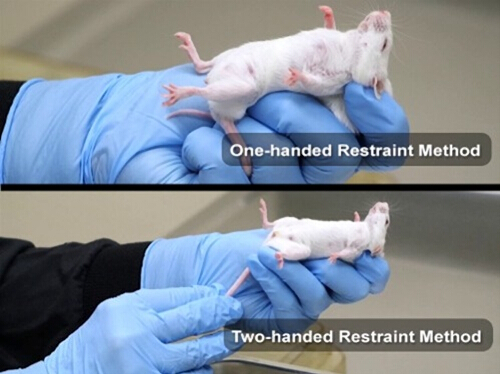
图1:小鼠的一手和双手固定方法
2. 手套
有多种手套可供操作人员佩戴,以防止被大鼠咬伤。手套应具备足够的灵活性,便于轻柔操作,因为触觉敏感度降低可能会增加动物的应激反应。通常,许多类型手套的缺点超过其优点。
- 棉质帆布工作手套不具备防咬功能,但可为操作者提供一定程度的牙齿和爪子防护。由于它们在毛发上容易打滑,因此无法提供良好的抓握力。
- 优质皮革手套具有防咬性能。然而,其材质较硬,会导致操作灵活性下降。皮革的厚度虽具保护作用,但会降低触觉敏感性和手部活动能力。
- 链甲手套可为动物操作人员带来心理上的安全感。然而,这类手套重量较大,且大多数大鼠的牙齿能够穿透链节之间的缝隙。此外,这些手套会降低手部灵活性,若使用不当,反而对动物和操作者均构成更大风险。
- 家庭中常用于洗碗的橡胶绝缘手套具有纹理化的掌面,能够牢固抓握啮齿类动物的毛发。其弹性乳胶材质足够厚以抵御啮齿类门齿的穿刺,又足够薄以感知并控制动物的动作。主要缺点是这类手套由乳胶制成,对乳胶过敏者存在风险。此外,这些手套在光照下易老化,需定期更换。
3. 身体固定
- “T. rex 握法”是一种用于大鼠的双手固定方法。
- 将大鼠放置在可抓握的表面上。
- 用一只手握住尾巴根部,另一只手从背部上方伸入,食指与中指分开。
- 将手置于肩部上方,食指置于头部一侧,中指置于另一侧。手指位于头部两侧可限制头部左右移动。
- 用无名指、小指和拇指环抱前肢后方的身体。操作时需注意避免压迫胸部,以免影响呼吸。此握法可防止大鼠在手中前后移动。
- 通过握住尾巴根部(可同时握住后肢足部或不握)来稳定尾巴和后躯。
- 该固定方法适用于体型较大的大鼠,且在需要接触头部时尤为有效。
- 前肢控制法是一种双手固定方法。
- 将动物置于其可抓握的表面上。
- 用优势手握住尾巴根部(距身体1-2 cm处),并施加轻柔的向后牵引力。这会使动物抓紧表面,身体随之伸展拉长。
- 另一只手从背部后方越过动物背部。
- 在肩部后方直接抓握大鼠,手指置于胸一侧,拇指置于另一侧,然后将手向前滑动,迫使前肢向前伸出。
- 前肢将在大鼠颏下交叉,形成物理屏障,防止其头部向下移动靠近手指。
- 操作时需注意避免压迫胸部,以免影响呼吸。
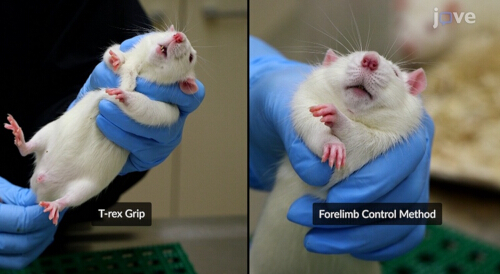
图2:用于固定大鼠的T型握持法与前肢控制法
4. 限制装置
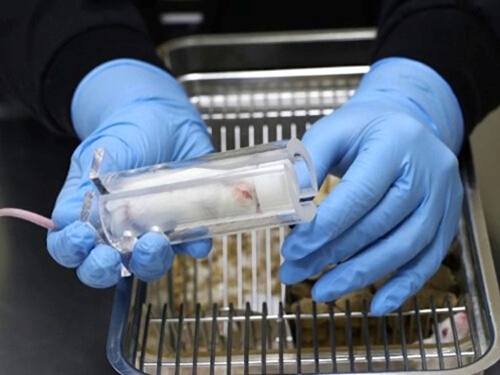
图3:Broome式固定装置
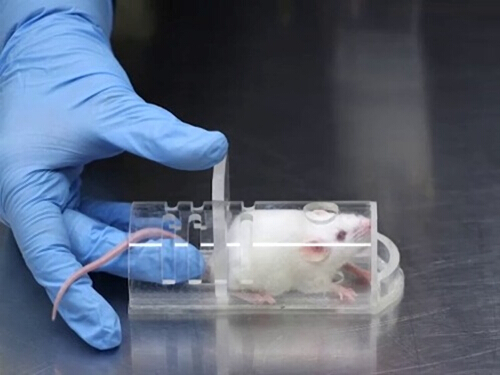
图 4:平底式啮齿类动物固定器
- 刚性固定装置有多种类型,通常由不易渗透的材料制成,易于消毒。
- 布鲁姆式固定装置(Broome-style restraint)设计用于方便对尾部进行静脉注射。该装置沿全长设有一条狭缝,可引导动物先将后肢进入固定器内,再插入塑料鼻部限位片以固定动物。
- 通过松开螺丝,将鼻部限位片从固定管主体上取下。
- 用优势手抓住动物尾根部,并将固定管倾斜,使管体全长的狭缝朝上。轻柔地引导动物以先入后肢的方式进入固定装置。
- 通常将动物置于光滑表面上有助于其顺利进入管内。
- 当动物完全进入管内并被拉至封闭端时,将塑料鼻部限位片滑入管中,以封闭开口。
- 安装鼻部限位组件时,应使动物鼻部位于中心孔洞内。切勿将限位片安装过紧,以免影响动物呼吸。
- 平底式啮齿类动物固定器为半圆柱形结构,顶部和底部设有开口,便于从上下方向接触动物。通过将一块硬质塑料挡板插入多个分级槽口之一,以在装置内固定动物。
- 用优势手在光滑表面或笼盖上抓住动物尾根部。
- 另一只手握住平底式固定管,将其倾斜,使开口端以45°角对准动物头部,且与实验台或笼盖表面成45°角。
- 部分动物会立即进入管内,而另一些则较为抗拒,需要操作者引导其进入。
- 将固定管罩住动物头部,轻柔向前引导动物,促使其进入装置。
- 一旦动物进入固定装置,即将塑料挡板滑入合适的槽口,以固定动物位置。
- 管式固定器为一端封闭的有机玻璃圆筒,封闭端带有通气孔或狭缝,以保证空气流通。部分型号在圆筒一半长度处设有宽槽,便于暴露后肢进行肌肉注射、隐静脉或股静脉采血,或接触背部区域以进行皮下注射。
- 用优势手在光滑表面或笼盖上抓住动物尾根部。
- 另一只手握住固定管,并将其倾斜,使开口端以45°角对准动物头部,且与实验台或笼盖表面成45°角。
- 部分动物会立即进入管内,而另一些则较为抗拒,需要操作者引导其进入。
- 将固定管罩住动物头部,轻柔向前引导动物,促使其进入装置。
- 对于不配合的动物,可由经过培训的人员短暂使用手动固定。
- 一旦动物进入固定装置,必须封闭开口,防止动物后退。
- 根据具体操作需要,可用数个手指堵住开口。
- 将一副较大的乳胶手套塞入开口处。手套通常具有纹理表面,能够紧贴有机玻璃内壁。
- 某些固定管配有专用于该型号或尺寸的封闭装置。
- 布鲁姆式固定装置(Broome-style restraint)设计用于方便对尾部进行静脉注射。该装置沿全长设有一条狭缝,可引导动物先将后肢进入固定器内,再插入塑料鼻部限位片以固定动物。
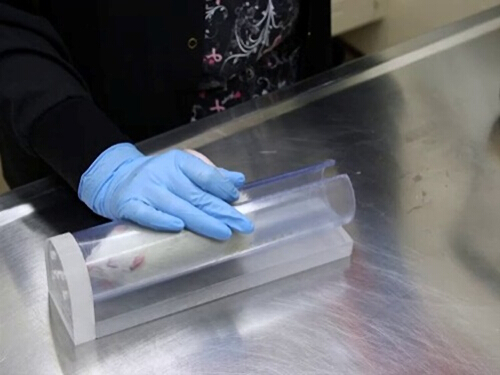
图 5:管式固定装置
- 柔性固定器是一次性使用的柔性塑料锥形管,有透明和不透明两种材质可选。塑料管壁较薄,允许针头穿刺,从而可在不将动物从固定装置中取出的情况下完成注射。该装置有多种尺寸,适用于成年及断奶期的小鼠和大鼠。
- 使用剪刀剪开塑料管,以便接触动物的四肢、尾巴及其他注射部位。
- 选择适合动物体型的锥形管尺寸。锥形管长度应足以在动物臀部后方延伸出 2–3 英寸。
- 将动物插入锥形管
- 打开锥形管,用手握住其上半部分。
- 用优势手抓住动物尾根部,将其置于光滑表面或笼盖上。
- 另一只手握住固定锥形管,将其倾斜,使开口端朝向动物头部,并与桌面或笼盖表面呈 45° 角。
- 部分动物会主动进入锥形管;另一些动物则较为抗拒,需要操作者引导其进入固定装置。
- 将锥形管罩住动物头部,立即轻敲其臀部并保持压力,防止动物后退。由于锥形管开口直径较大,动物更容易转身试图退出。
- 一旦动物完全进入锥形管,立即抓住开口端并封住,迫使动物移至管的末端。
- 将塑料边缘沿尾部一侧折叠,并用文件夹夹住折叠处以固定开口,注意避免夹到尾巴或皮肤。或者,也可将塑料沿尾部周围均匀收拢,尽可能靠近身体处用束线带扎紧以封闭开口。
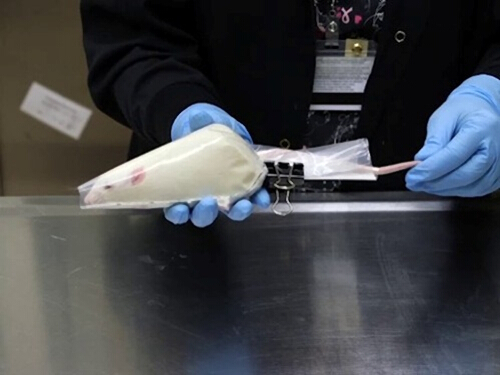
图6:可调节固定器
5. 特定技术操作的固定方法
- 腹侧暴露是进行腹腔注射所必需的。
- 抓取颈背部皮肤固定
- 抓取动物颈背部皮肤,并转动手指使腹部暴露。
- 倾斜动物身体,使其头部向下呈30°角。
- 用无名指将尾巴压在手掌上,以固定后肢部分。
- 或者,也可通过将背部多余的皮肤夹在手指与拇指根部之间来固定后半身。
- T. rex握持法及前肢控制固定法
- 使用上述任一技术抓取动物(仅适用于大鼠)。
- 用另一只手抓住双侧后肢踝关节以上部位,并向尾侧伸展。
- 用手掌支撑动物背部以承托其体重。
- 倾斜动物身体,使其头部向下呈30°角。
- 由第二名操作人员实施注射。
- 刚性固定器
- 大多数刚性固定装置无法防止动物出于本能翻转以保持直立姿势。
- 若使用刚性固定器,应将动物放置成头部朝下且与实验台面垂直。
- 柔性固定器
- 当动物被正确放入柔性塑料锥形管中时,其无法翻身或转动。
- 必须小心调整动物位置,确保后肢充分分开,以便接触腹部区域。
- 由于动物在受压状态下,注射部位必须足够靠腹侧下方,以避免刺破脾脏、肝脏、肾脏或胃。
- 抓取颈背部皮肤固定
- 背侧暴露是进行皮下注射所必需的。
- 抓取颈背部皮肤固定
- 抓取动物颈背部皮肤,使其后肢置于坚实平坦的表面上。
- 提起颈背部皮肤,使颈部和肩部形成帐篷状皮肤褶皱。
- 对小鼠注射时,应将手的重量放在桌面上;若将重量施加于小鼠身体上可能导致窒息。
- 固定大鼠时,可用手压住其后半身,但切勿压迫胸部。
- 将药物注射至动物体表手指下方的皮下间隙。
- 刚性固定器
- 将动物放入带有足够大开口的固定装置中,以便轻柔提起皮肤。
- 必要时可使用镊子夹住皮肤。
- 大多数动物在固定后能保持适当体位,除非固定装置被旋转。
- 注射体积不得过大,以免注射完成后皮肤无法从开口处回缩。
- 抓取颈背部皮肤固定
- 进行肌肉注射、隐静脉/股静脉/股动脉采血以及足垫注射时,必须固定后肢。
- 小鼠及小型大鼠(体重低于200 g)的颈背部皮肤抓取固定法
- 抓取动物颈背部皮肤,并转动手指使腹部暴露。
- 将足部置于手指之间以接触后脚。
- 该方法仅最适合用于足垫注射。
- T. rex握持法或前肢控制法
- 该方法需要两人配合:一人固定动物身体,另一人固定肢体并实施注射。
- 抓住大鼠足部以伸展后肢,便于接触隐静脉、股静脉或股动脉,或为肌肉注射提供通路。
- 足垫注射时,应握住踝关节上方以固定腿部。
- 刚性固定器
- 将动物头先进入方式放入固定管中。
- 轻轻向后牵引尾部和后肢部分,使其从管中露出。
- 通过抓取侧腹皮肤并将膝关节拉直固定,以实现肢体固定;此方法可暴露小鼠或大鼠的股四头肌用于注射,同时防止动物从固定装置中退出。
- 对于具有较大开槽的固定装置,可将腿部置于管外,以便接触血管进行采血或进行足垫注射。
- 带有扁平端盖的固定管可平稳放置于实验台上,在操作过程中稳定装置。
- 由于动物在此方式下已被牢固固定,单名技术人员即可完成大鼠的注射或采血操作。
- 柔性固定法
- 可通过在柔性塑料固定器上切割开口,以适应肢体暴露的需求。
- 可根据不同动物或特定操作定制开口位置和大小。
- 由于动物在此方式下已被妥善固定,单名技术人员即可完成大鼠的注射或采血操作。
- 小鼠及小型大鼠(体重低于200 g)的颈背部皮肤抓取固定法
关键术语与定义:
移除笼中啮齿类动物的常用方法包括杯式抓取、隧道式抓取和全身支撑转移法。尾部抓取仅应在无法采用其他方法的特定情况下使用。
对于焦虑或表现出刻板行为的动物,在笼内放置管状物可降低操作难度,并减少日常饲养管理过程中动物的逃跑或惊恐反应。使用非多孔材料制成的管状物可作为环境丰容装置,为动物提供藏身或安全庇护之所。此类管状物可两端开口,或一端封闭。大多数小鼠或大鼠在打开笼盖后会主动进入管中,或可轻松引导其进入。当动物进入管内后,将开口端盖住,即可转移至新位置。转移至新笼时,可轻轻将管向上倾斜,促使动物离开。动物对此换笼方法易于形成条件反射,会主动迅速进入管中,使该方法在转移动物时与其他方法一样快速简便。尽管管状物无需始终置于居住笼内才能发挥作用,但在主要饲养环境中放置管状物有助于增强动物对熟悉安全区域的识别,同时提供笼内环境丰容。
一些机构倾向于在常规操作中用手抓取动物身体,尤其是大鼠。动物需从幼龄期开始适应此方法。2至4周龄的幼年大鼠常会垂直跳跃,此时将手置于其背部上方,可使其跳入手掌中,便于抓握。在将其转移至另一笼具前,可能需要另一只手协助固定,以防大鼠扭动逃脱。成年大鼠应采用提供全身支撑的技术进行抓取,转移过程中需始终支撑其前躯和后躯。
在更换新生小鼠或大鼠的笼具时,通常需要在保持巢穴完整的前提下移出动物。可使用双手从笼底托起巢穴及幼崽,整体转移至新笼。为避免幼崽掉落,双手手指必须并拢。转移完成后,应确认所有幼崽均已转移。建议在移动前后清点幼崽数量。也可使用塑料铲代替双手操作。若采用此方法,应将手置于铲子上方,防止幼崽扭动或跳出铲外。与单独抓取每只幼崽相比,该转移方法对幼崽及其母体造成的应激更小。
进行技术操作时的动物保定需要操作者动作自信、坚定但轻柔。保定操作应由经过培训的人员采用镇静、可控且一致的技术进行,以最大程度减少动物应激,并确保动物与操作人员的安全。
小鼠和小型大鼠可通过抓握颈部背侧皮肤进行保定,此方法称为“抓颈皮”。该方法需注意避免抓握过紧或过松:若皮肤抓握过紧,可能导致气道受压,甚至引起死亡;若抓握过松,动物可能转动头部并咬伤操作者。
表现出恐惧或应激迹象的动物可能更难安全操作。最好在操作前先使动物镇静。已有多种镇静技术被尝试,效果各异。最可靠的方法是使用某种化学保定手段,最常见的是吸入性麻醉剂。异氟烷(isoflurane)或七氟烷(sevoflurane)为短效吸入性麻醉剂,仅需将动物从笼中转移至诱导室即可完成给药。动物麻醉后,可对其进行操作或手动保定以完成实验程序。
本视频将帮助您解答的问题
常规的换笼操作和技术性操作是实验动物应激的重要来源。尽管此类应激通常不会威胁动物的整体健康,但可能引起生理参数的波动,从而对研究数据产生不利影响。使用熟练的操作人员、正确的技术与设备可在一定程度上减轻此类应激。
本视频中的章节
0:00
概述
1:27
啮齿类动物操作基础
6:30
手动固定方法
9:58
啮齿类动物固定装置
14:08
应用
15:27
总结