This narrative review synthesizes evidence on emotional changes during hematopoietic stem cell transplantation, with an emphasis on protective isolation in laminar-airflow clean rooms. It summarizes phase-related psychological distress, associated biological and psychosocial factors, emotional assessment tools, and nursing strategies, while highlighting evidence gaps and priorities for individualized supportive care practice.
Articolo di revisione
Emotional State Evolution and Nursing Interventions in Patients Undergoing HSCT in Laminar Airflow Clean Rooms: A Narrative Review
* These authors contributed equally
In questo articolo
Sommario
Abstract
Hematopoietic stem cell transplantation (HSCT) is an established treatment for hematologic and other serious disorders, but the transplantation process can impose substantial psychological burdens. Protective isolation in laminar airflow clean rooms restricts social contact while patients simultaneously experience intensive conditioning, treatment-related symptoms, uncertainty, and dependence on professional care. This narrative review synthesizes evidence on the evolution of emotional states across the HSCT trajectory, factors associated with psychological distress, assessment approaches, and nursing strategies. Relevant literature was searched in PubMed/MEDLINE, Web of Science Core Collection, CINAHL, China National Knowledge Infrastructure, and Wanfang Data from database inception to August 31, 2026. Available evidence suggests that emotional responses vary across treatment phases and patient groups rather than following a uniform trajectory. Anxiety and uncertainty may be more prominent before transplantation and during entry into protective isolation, whereas depressive symptoms and broader distress may increase during myelosuppression and prolonged isolation. Psychological distress is associated with environmental isolation, physical symptom burden, information-related uncertainty, limitations in social and family support, treatment-related neuropsychiatric effects of corticosteroids, and inflammatory signaling. Nurses can contribute through repeated assessment, symptom management, communication and psychoeducation, support for family and social contact, sleep and relaxation strategies, and timely referral to specialist services. Empirical support varies across interventions, with stronger evidence for selected approaches such as inpatient palliative care and emerging evidence for educational, relaxation, digital, and recreational interventions. Future research should prioritize standardized assessment, longitudinal multicenter designs, and phase-specific individualized supportive care.
Introduzione
Hematopoietic stem cell transplantation (HSCT) is an established treatment for a range of hematologic malignancies and other serious hematologic, immunologic, and hereditary disorders. Depending on the donor source, HSCT may be classified as autologous or allogeneic transplantation, while hematopoietic stem cells may be obtained from bone marrow, peripheral blood, or umbilical cord blood1.
The HSCT process involves intensive conditioning and a period of profound myelosuppression and immunosuppression, during which patients are highly vulnerable to infection and treatment-related complications. Infection-prevention measures may include protective isolation in specialized filtered-air environments, such as laminar-airflow clean rooms. However, prolonged isolation can substantially restrict social contact and daily activities, while patients simultaneously experience treatment-related symptoms such as fatigue, nausea, vomiting, mucositis, pain, and sleep disturbance. These physical and environmental burdens are closely intertwined with psychological distress and may contribute to anxiety, depression, fear, loneliness, and loss of control2,3.
Psychological distress during HSCT is clinically important because it can coexist with substantial symptom burden and impaired quality of life and may also be associated with adverse clinical outcomes. In a prospective cohort study of 199 patients undergoing stem-cell transplantation, major depression independently predicted increased mortality at both 1 year and 3 years after transplantation4. These findings emphasize the importance of recognizing emotional problems as an integral component of supportive care rather than as an isolated psychological issue.
Importantly, patients' psychological needs are not static throughout transplantation. Anxiety and uncertainty may be prominent before transplantation and during entry into protective isolation, whereas increasing physical symptoms, prolonged isolation, and treatment-related complications may contribute to changing patterns of psychological distress during subsequent phases. Emotional adjustment may continue during engraftment, early recovery, and the transition from hospital to home. Amonoo et al. emphasized that psychological challenges differ across the various phases of HSCT and that their recognition requires attention to both treatment stage and individual patient characteristics5.
Accordingly, this narrative review aims to synthesize current evidence on the evolution of emotional states across the HSCT trajectory, with particular attention to protective isolation in laminar airflow clean rooms; to summarize the major factors associated with psychological distress; and to review nursing assessment and adjustment strategies relevant to clinical practice.
Revisione e prospettiva
This narrative review was based on a structured literature search of PubMed/MEDLINE, Web of Science Core Collection, CINAHL, China National Knowledge Infrastructure (CNKI), and Wanfang Data from database inception to August 31, 2026. Searches addressed four concepts: hematopoietic stem cell transplantation (HSCT), protective isolation or laminar airflow clean rooms, emotional or psychological states, and nursing or psychosocial interventions. Representative English terms included “hematopoietic stem cell transplantation,” “HSCT,” “protective isolation,” “laminar airflow ward,” “laminar airflow clean room,” “anxiety,” “depression,” “psychological distress,” “emotional state,” “psychological assessment,” “distress screening,” “assessment instrument,” “nursing intervention,” “psychological intervention,” and “social support.” Corresponding Chinese terms were used in Chinese databases, and reference lists of relevant publications were screened for additional studies.
English- or Chinese-language publications were considered if they involved HSCT patients and addressed emotional or psychological states, temporal emotional changes, factors associated with psychological distress, assessment instruments, or nursing and psychosocial interventions relevant to HSCT or protective isolation. Studies that did not involve HSCT patients or did not address relevant psychological or emotional outcomes were excluded. Titles and abstracts were screened first, followed by full-text assessment.
For the conceptual framework, recurrent factors were grouped into environmental isolation, physical symptoms, biological mechanisms, information deficits, and social and family support; demographic and clinical characteristics were considered contextual modifiers. Evidence was synthesized narratively by emotional state evolution, contributing factors, and nursing adjustment measures, rather than quantitatively pooled.
Evolution of emotional states across the HSCT trajectory
Psychological distress is common during HSCT, although its manifestations and intensity vary across treatment phases. Martynowicz et al3 reported depression in 15%–40%, anxiety in 20%–52%, and post-traumatic stress disorder (PTSD) in 19%–28% of HSCT patients. Differences in populations, transplantation types, assessment instruments, and time points limit direct comparison. Consequently, the following patterns represent commonly reported phase-related tendencies rather than a uniform trajectory.
Pre-transplantation and entry into protective isolation
The pre-transplantation period and entry into protective isolation are frequently associated with anticipatory anxiety and uncertainty concerning conditioning, complications, transplantation outcomes, prolonged hospitalization, and separation from usual social networks. Amonoo et al5 identified anxiety and uncertainty as important concerns during early HSCT, particularly in relation to treatment toxicities and uncertain outcomes.
In a longitudinal study of 82 HSCT patients, Qin et al6 found that anxiety was highest around the time of entry into the laminar airflow room and subsequently decreased. Information-related problems may intensify this distress. Chen et al7 identified difficulties obtaining reliable information and managing diverse or overwhelming online information among patients in laminar airflow rooms.
Negative and positive emotions can coexist. Mohamadifard et al8 described both fears concerning transplantation and hope for recovery or cure. Thus, this phase may involve anxiety, uncertainty, high information needs, fear, and hope.
Conditioning and early post-transplant period
During conditioning and early post-transplantation, psychological distress becomes closely associated with treatment-related symptoms. Nausea, vomiting, mucositis, fatigue, pain, loss of appetite, sleep disturbance, and other adverse effects may reduce perceived control and increase concerns about treatment tolerance and outcomes.
Amonoo et al5 described early HSCT hospitalization as involving treatment uncertainty, physical symptoms, and psychological stress. Martynowicz et al3 similarly emphasized interactions between physical and mental health and noted that severe symptoms may restrict participation in conventional psychological interventions. Increasing dependence on healthcare professionals for monitoring, medication, information, personal care, and reassurance may further affect emotional well-being.
Aplasia/Myelosuppression and prolonged isolation
Aplasia or myelosuppression may be particularly challenging. Qin et al6 found that depressive symptoms increased and subsequently decreased, reaching their highest levels during post-chemotherapy myelosuppression. Fatigue, nausea, impaired functioning, infection risk, and prolonged separation from family may occur simultaneously.
Liu et al9 synthesized 18 qualitative studies and identified negative psychological experiences, positive psychological experiences, supportive needs, and post-transplant adjustment as major domains of the HSCT experience. Lee and Halliday2 reported social disconnection, loss of control, and negative emotions during protective isolation, while Amonoo et al10 identified fear, discouragement, powerlessness, and feeling trapped. This phase may therefore involve depression, anxiety, loneliness, helplessness, emotional fluctuation, and reduced motivation, although individual experiences vary.
Engraftment and early recovery
Psychological distress may persist despite hematologic recovery because fatigue, weakness, uncertainty, and concerns about complications can continue. Nevertheless, improvement in acute symptoms may be accompanied by increasing relief and optimism.
Amonoo et al11 examined positive psychological experiences during hospitalization and approximately 100 days after allogeneic HSCT. Patients reported gratitude, determination, optimism, hope for a cure, and a desire to regain previous functioning. Family relationships, social support, and meaningful activities were also important. Thus, engraftment may involve increasing hope and independence, although positive and negative emotions can coexist, and psychological recovery may not parallel hematologic recovery.
Discharge and early post-transplant transition
Discharge transfers greater responsibility for symptom monitoring, medication, infection prevention, nutrition, and self-care to patients. Although it signals recovery and independence, leaving continuous professional monitoring may also generate uncertainty.
Amonoo et al5 noted continuing psychological challenges during early post-transplantation, especially with complications, prolonged recovery, or readmission. Parisek et al12 identified burdens related to self-management, graft-versus-host disease (GVHD), infection prevention, and restricted social participation among allogeneic HSCT survivors. Lee and Halliday2 also reported that psychological effects associated with protective isolation may persist after discharge. Relief may therefore coexist with concerns about relapse, infection, GVHD, complications, and readmission.
Heterogeneity across patient populations
Emotional trajectories differ across populations. Zhou et al13 studied 148 pediatric HSCT patients and reported PTSD incidences of 12.8% before transplantation, 69.6% at 2–3 weeks, and 10.1% at 3 months. Age was associated with PTSD before transplantation and at 3 months, while the caregiver-child relationship was associated with PTSD at 2–3 weeks.
Qin et al6 identified associations between anxiety or depression and age, gender, marital status, household income, and religious beliefs. Transplantation type, complications, symptom burden, isolation, and social support may also contribute to heterogeneity3,5. Accordingly, phase-related patterns can inform clinical observation but should not replace individualized assessment.
Assessment of emotional states in HSCT patients
Psychological assessment should extend beyond a single pre-transplant evaluation. Wiener et al14 found that 96% of surveyed HSCT programs routinely performed pre-transplant psychosocial assessment, whereas only 27% routinely conducted follow-up assessments.
Validated patient-reported instruments can complement interviews and clinical observation. Instrument selection should reflect the psychological domain, physical condition, and purpose of assessment. Representative HSCT assessment instruments15,16,17,18 are summarized in Table 1. These tools are intended for screening or symptom assessment and do not replace formal psychiatric diagnosis when clinically significant disorders are suspected.
Factors associated with psychological distress in HSCT patients in laminar airflow wards
Psychological distress during HSCT reflects the interaction of environmental, physical, biological, informational, and social factors whose relative importance may change with treatment phase and individual circumstances.
Environmental isolation factors
Protective isolation restricts contact with family, friends, and usual social networks and disrupts normal activities, potentially contributing to loneliness, anxiety, and loss of control2. In 168 HSCT patients in laminar airflow wards, Wen et al19 found psychological distress associated with sleep disturbance, post-transplant physical symptoms, duration of isolation, absence of family accompaniment, and sociodemographic and financial factors. Thus, isolation should be considered together with physical and social circumstances.
Physical symptom factors
Conditioning and transplantation-related complications can cause nausea, vomiting, mucositis, fatigue, pain, appetite loss, sleep disturbance, and functional impairment. Persistent symptoms may increase concerns about treatment and recovery. Martynowicz et al3 emphasized interactions between physical and mental health and noted that severe symptoms may limit participation in psychological interventions. Symptom and emotional assessment should therefore be complementary components of supportive care.
Biological mechanism factors
Transplantation-related biological processes may contribute to psychological symptoms. Nakamura et al20 noted that corticosteroids and other transplant-related medications should be considered when assessing insomnia, mood changes, anxiety, depression, and delirium.
Nelson et al21 investigated inflammatory cytokines and depressive symptoms following autologous or allogeneic hematopoietic cell transplantation. Higher IL-6 and IL-10 concentrations were associated with more severe depressive symptoms, and within-person cytokine changes corresponded with changes in depression severity. These findings suggest a possible inflammatory contribution, although psychological distress remains multidimensional.
Information deficits and uncertainty
HSCT requires patients to process complex information about conditioning, procedures, infection prevention, complications, symptom management, self-care, and prognosis. Chen et al7 identified difficulty obtaining reliable information and managing diverse information sources among patients in laminar airflow rooms. Because needs change across transplantation stages, repeated, individualized, and understandable communication may be preferable to delivering large amounts of information at once.
Social and family support factors
Social support is associated with psychological well-being. Among 250 autologous and allogeneic HSCT recipients, Amonoo et al22 found that greater pre-transplant social well-being was associated with better quality of life and lower psychological distress and PTSD symptoms six months later.
Wen et al19 identified absence of family accompaniment as associated with psychological distress in laminar airflow wards. Caregivers may also experience substantial burden: Yang et al23 reported anxiety, depression, distress, uncertainty, caregiving burden, and unmet needs among informal caregivers before HSCT. These associations demonstrate the relevance of social support but do not establish the effectiveness of specific family-support interventions.
Based on this narrative synthesis, a conceptual framework was developed incorporating environmental isolation, physical symptoms, biological mechanisms, information deficits and uncertainty, and insufficient social and family support, with demographic and clinical characteristics as contextual modifiers (Figure 1). The framework represents associations identified in the reviewed literature rather than established causal pathways.
Role of nurses and nursing interventions for emotional well-being in laminar airflow wards
Nurses maintain contact with patients during HSCT and can identify emotional changes, provide information and support, reinforce symptom management and coping strategies, facilitate family communication, and refer patients for specialized psychological or psychiatric care. However, the supporting evidence differs among interventions: some have been directly evaluated clinically or in randomized trials, whereas others remain practice-oriented strategies supported by observational, qualitative, or review evidence.
Integration of symptom management and emotional care
Because physical and psychological symptoms interact, effective management of nausea, vomiting, fatigue, pain, and sleep disturbance may also support emotional adjustment.
Su et al17 evaluated a non-vomiting management model for patients in laminar airflow isolation units. The clinical application included 100 patients, with 50 each in the intervention and control groups. The intervention group had lower nausea and vomiting burden, better Functional Living Index-Emesis scores at several post-transplant time points, and lower anxiety and depression scores at selected transplantation and pre-discharge assessments. These findings provide preliminary empirical support for integrating symptom and emotional care, although multicenter confirmation is required.
Continuous psychological support, communication, and psychoeducation
Psychological support should respond to changing needs throughout the transplantation process. Before transplantation and during entry into isolation, nurses can explain the environment, treatment stages, expected symptoms, infection-prevention measures, and methods of obtaining assistance. Information should be manageable, individualized, and reinforced as needed.
Nakano et al24 evaluated a pre-transplant nursing intervention that combined informational support, confirmation of understanding, and emotional support in 18 patients undergoing allogeneic HSCT. Illness-related uncertainty decreased significantly, although anxiety and depression did not. Cioce et al25 reported that therapeutic patient education improved knowledge of transplantation-related risks and complications and contributed to the management of psychological distress.
During isolation, brief regular communication can identify concerns and allow patients to express fear, uncertainty, or frustration. Persistent or severe psychological symptoms should prompt referral for specialized care. Support should also be phase-specific: anxiety and uncertainty may require greater attention at entry into isolation, symptom burden and low mood during myelosuppression, and self-management and independence during recovery and discharge.
Integration of palliative care
Palliative care represents an intervention supported by randomized evidence. El-Jawahri et al26 conducted a multisite randomized trial in autologous and allogeneic HSCT patients. The intervention involved twice-weekly inpatient palliative-care visits during transplantation hospitalization. Compared with usual care, it was associated with better quality of life and improvements in psychological outcomes, including lower depressive and post-traumatic stress symptoms at relevant follow-up assessments. Implementation, however, depends on specialist availability and institutional resources.
Family and social support
Reduced family contact and lower social support are associated with psychological distress19,22, while caregivers may themselves experience distress and unmet needs23. Where infection-control requirements permit, nurses can facilitate telephone or video contact with family and friends and provide families with guidance about supportive communication and emotional responses.
Because direct evidence for specific family-support interventions remains limited, these approaches should be regarded as individualized supportive strategies rather than interventions with firmly established psychological efficacy.
Daily routine, sleep, relaxation, and digital or recreational support
A structured daily routine incorporating treatment, rest, light activity, social communication, and meaningful leisure may help preserve a sense of normality during isolation. Sleep also warrants attention because sleep disturbance has been associated with psychological distress in HSCT patients in laminar airflow wards19.
Xia et al27 evaluated relaxation training combined with a music-based intervention in 62 HSCT patients. Depression decreased significantly compared with conventional care, whereas anxiety did not significantly improve. The small quasi-experimental design means these findings should be considered promising rather than definitive.
Amonoo et al28 evaluated a six-module virtual-reality psychosocial intervention incorporating psychoeducation, coping skills, acceptance strategies, and supportive content. The pilot randomized trial demonstrated feasibility and preliminary potential benefits for quality of life and psychological outcomes, but larger confirmatory trials are needed.
Dantanus Hickey et al29 reviewed 16 studies of art- and music-based interventions during stem cell transplantation. Reported benefits included creative expression, recreation and distraction, relationship building, social connection, and a sense of normality, although study quality and treatment effects varied. Drawing, painting, music, reading, and patient-preferred crafts may therefore be offered as low-burden supportive activities without implying uniformly established efficacy.
The principal nursing and supportive interventions and the strength of their evidence are summarized in Table 2.
Current status and challenges of intervention research
The intervention literature remains heterogeneous. Inpatient palliative care has randomized clinical evidence, whereas other approaches rely on smaller clinical studies, feasibility trials, observational associations, or reviews. Differences in transplantation type, populations, intervention content, outcome measures, and follow-up further restrict comparison.
Physical symptoms, fatigue, mucositis, and prolonged isolation may reduce patients' ability to participate in psychological interventions3. Financial burden is another concern. Schaefer et al30 found in a prospective longitudinal analysis of allogeneic HSCT recipients that greater financial toxicity was associated with greater anxiety, depression, and post-traumatic stress symptoms and poorer quality of life.
Current evidence therefore does not support one psychological nursing protocol for all HSCT patients. Future studies should use adequately powered prospective or randomized designs where feasible, clearly report transplantation characteristics, employ standardized psychological outcomes, and distinguish established intervention effects from promising but insufficiently tested supportive strategies.
Limitations of existing research and future directions
Several limitations characterize the current evidence. First, many investigations are single-center studies with relatively small samples, while patient characteristics, transplantation types, assessment instruments, and evaluation time points differ substantially. These differences limit direct comparison and prevent establishment of a uniform emotional trajectory3,6,13.
Second, biological mechanisms remain incompletely understood. Transplant-related medications and inflammatory activity may contribute to emotional symptoms20,21, but interactions among biological changes, physical symptoms, isolation, and psychosocial stress require further investigation. Studies integrating psychological assessments with biological indicators may clarify these relationships.
Third, intervention research remains methodologically heterogeneous. Palliative care, relaxation-based approaches, education, and digital psychosocial support have shown encouraging findings24,25,26,27,28,29, but variation in interventions, samples, study designs, and outcomes limits generalizability. Adequately powered, multicenter, prospective, and randomized studies are needed to identify effective approaches and appropriate treatment stages.
Family-centered care also warrants further study. Social support is associated with patient psychological outcomes22, whereas caregivers may experience distress, uncertainty, and unmet needs23. Research should determine whether structured family education, communication support, or caregiver-focused interventions improve outcomes for patients and caregivers.
Patient heterogeneity is equally important. Emotional responses may differ by age, transplantation type, complications, symptom burden, socioeconomic circumstances, and social support6,13,19,30. Future studies should therefore investigate phase- and subgroup-specific needs rather than assume that a single intervention is appropriate for all patients.
Finally, psychological assessment requires greater standardization. Repeated, validated assessments at clearly defined peri-transplant time points may improve the characterization of emotional changes and the identification of patients requiring additional support14,15,16,17,18. Combining quantitative measures with qualitative approaches may further clarify changing experiences and needs. Future research should therefore prioritize longitudinal and multicenter designs, clarification of biological and psychosocial mechanisms, standardized assessment, family-centered care, and rigorous evaluation of individualized, stage-specific interventions.
Conclusioni
Patients undergoing HSCT may experience clinically meaningful emotional changes throughout transplantation, particularly during protective isolation. Anxiety and uncertainty may be prominent before transplantation and at entry into isolation, whereas depressive symptoms and broader distress may increase during intensive treatment, myelosuppression, and prolonged isolation. Relief, hope, and optimism may become more evident during engraftment and recovery, although positive and negative emotions can coexist. These patterns represent phase-related tendencies rather than a uniform trajectory.
Psychological distress is associated with interacting environmental, physical, biological, informational, social, demographic, clinical, and socioeconomic factors. Nurses can contribute through repeated emotional assessment, communication and psychoeducation, symptom management, maintenance of social connections, and timely referral for specialized care. Evidence also suggests potential benefits from palliative care, relaxation and music-based approaches, digital psychosocial interventions, and selected recreational activities, although the strength of the evidence varies.
Psychological care should therefore be individualized according to patients' changing needs across the HSCT trajectory. Multicenter longitudinal studies and rigorous intervention trials are needed to strengthen the evidence for phase-specific psychological nursing strategies and support more standardized models of care.
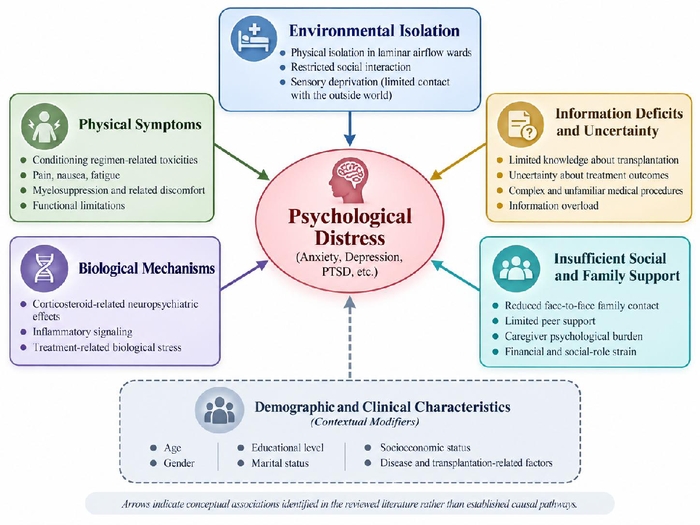
Figure 1: Author-developed conceptual framework of factors associated with psychological distress in HSCT patients under protective isolation. The framework was derived from the narrative synthesis and integrates environmental isolation, physical symptoms, biological mechanisms, information deficits and uncertainty, and insufficient social and family support, with demographic and clinical characteristics considered as contextual modifiers. Arrows indicate conceptual associations identified in the reviewed literature rather than established causal pathways. Please click here to view a larger version of this figure.
| Instrument | Main domain assessed | Format | Relevance to HSCT practice | |
| Distress Thermometer (DT) and Problem List | Global psychological distress and distress-related problems | Single 0–10 distress rating with a problem checklist | A brief screening approach suitable when treatment burden limits completion of longer questionnaires. Bevans et al. [15] supported its validity for distress screening in allogeneic HSCT patients and identified a score of 5 as a useful screening threshold. | |
| Hospital Anxiety and Depression Scale (HADS) | Anxiety and depressive symptoms | 14 items: 7 anxiety and 7 depression items | Seo et al. [16] used HADS prospectively before HSCT, on the transplantation day, and on days 7 and 14 after transplantation to assess changes in anxiety and depression. | |
| Self-Rating Anxiety Scale (SAS) / Self-Rating Depression Scale (SDS) | Anxiety and depressive symptoms | 20 items for each scale | Used in Chinese HSCT nursing research. Su et al. [17] used SAS and SDS to evaluate emotional outcomes during transplantation and before discharge. | |
| PTSD Checklist for DSM-5 (PCL-5) | Post-traumatic stress symptoms | 20 items | Liang et al. [18] used the PCL-5 to assess PTSD symptomatology among adult hematopoietic cell transplant recipients during survivorship. | |
| Brief Symptom Inventory-18 (BSI-18) | Somatization, depression, anxiety, and global psychological distress | 18 items | Provides a broader multidimensional assessment of psychological distress and has been used as a comparator in validation of the Distress Thermometer in HSCT patients [15]. | |
Table 1: Representative instruments for assessing emotional states in HSCT patients. The table summarizes the principal assessment domains, formats, and relevance to HSCT practice for the Distress Thermometer and Problem List, the Hospital Anxiety and Depression Scale, the Self-Rating Anxiety Scale/Self-Rating Depression Scale, the PTSD Checklist for DSM-5, and the Brief Symptom Inventory-18.
| Strategy | Main approach | Evidence summarized in this review | Interpretation |
| Communication and psychoeducation | Structured information, clarification of misconceptions, repeated education, and emotional support | Nakano et al. [24]: 18 patients; uncertainty decreased, but anxiety and depression did not significantly change. Cioce et al. [25]: randomized educational intervention with improved patient knowledge and psychological-distress management | Supportive empirical evidence, but further studies are needed |
| Symptom management integrated with emotional care | Control of nausea, vomiting, and other physical symptoms while monitoring psychological status | Su et al. [17]: 100 patients; lower symptom burden and improved anxiety/depression scores at selected assessment points | Preliminary empirical support |
| Family and social connection | Family communication, telephone/video contact, and supportive involvement | Observational and review-level evidence links social support with psychological outcomes [19,22,23] | Clinically relevant, but direct intervention evidence remains limited |
| Palliative-care integration | Specialist symptom and psychosocial support during hospitalization | El-Jawahri et al. [26]: multisite randomized trial showing benefits for quality of life and psychological outcomes | Direct randomized evidence |
| Relaxation and music | Relaxation training combined with music-based intervention | Xia et al. [27]: 62 patients; significant reduction in depression, but not anxiety | Promising but limited evidence |
| Digital psychosocial intervention | VR-delivered psychoeducation, coping, acceptance, and supportive strategies | Amonoo et al. [28]: pilot randomized trial demonstrating feasibility and preliminary benefits | Emerging evidence |
| Art and recreational activities | Drawing, painting, music, crafts, and meaningful recreation | Dantanus Hickey et al. [29]: integrative review of 16 studies with heterogeneous effects | Supportive adjunct; efficacy not uniformly established |
Table 2: Nursing and supportive strategies for emotional well-being during HSCT. The table distinguishes empirically evaluated interventions from supportive or practice-oriented strategies and summarizes the strength of the evidence reviewed.
Dichiarazioni
No competing interests are reported in the current manuscript.
Ringraziamenti
The authors acknowledge the contributions of the investigators whose published work formed the evidence base for this narrative review. During manuscript revision, ChatGPT (OpenAI) was used to assist with language editing, manuscript organization, and formatting. The authors reviewed the final content and take responsibility for the manuscript. No specific external funding is reported for this narrative review.
Riferimenti
- Balassa K, Danby R, Rocha V. Haematopoietic stem cell transplants: principles and indications. Br J Hosp Med (Lond). 2019;80(1):33-39.
- Lee RS, Halliday LE. The psychological effects of protective isolation on haematological stem cell transplant patients: an integrative, descriptive review. Support Care Cancer. 2025;33(2):133.
- Martynowicz J, Gutch S, Capitano M. The interplay between physical and mental health and its impact on outcomes for hemopoietic stem cell transplant patients. Curr Opin Hematol. 2025;32(4):187-192.
- Prieto JM, et al. Role of depression as a predictor of mortality among cancer patients after stem-cell transplantation. J Clin Oncol. 2005;23(25):6063-6071.
- Amonoo HL, et al. Psychological considerations in hematopoietic stem cell transplantation. Psychosomatics. 2019;60(4):331-342.
- Qin M, et al. Trends and influencing factors of anxiety and depression in patients during hematopoietic stem cell transplantation. J Xuzhou Med Univ. 2022;42(7):520-527.
- Chen Q, et al. Navigating isolation—barriers and multidimensional support needs in symptom self-management for HSCT patients within laminar airflow rooms: a descriptive qualitative study. BMC Palliat Care. 2026;25:73.
- Mohamadifard Z, et al. Survival protection of patients undergoing hematopoietic stem cell transplantation: grounded theory. Support Care Cancer. 2023;31(7):381.
- Liu S, et al. Psychological experience of patients with hematopoietic stem cell transplantation: a meta-synthesis. Chinese Nursing Management. 2021;21(7):1057-1063.
- Amonoo HL, et al. Beyond depression, anxiety and post-traumatic stress disorder symptoms: qualitative study of negative emotional experiences in hematopoietic stem cell transplant patients. Eur J Cancer Care (Engl). 2020;29(5):e13263.
- Amonoo HL, et al. Positive psychological experiences in allogeneic hematopoietic stem cell transplantation. Psychooncology. 2019;28(8):1633-1639.
- Parisek M, et al. “This Graft-vs.-Host Disease Determines My Life. That's It.”—A qualitative analysis of the experiences and needs of allogenic hematopoietic stem cells transplantation survivors in Germany. Front Public Health. 2021;9:687675.
- Zhou X, et al. Changes in post-traumatic stress disorder status among children receiving hematopoietic stem cell transplantation: the influencing factors. J Nurs Sci. 2023;38(23):77-79,94.
- Wiener L, et al. Psychosocial assessment practices for hematopoietic stem cell transplantation: a national survey study. Bone Marrow Transplant. 2023;58(12):1314-1321.
- Bevans M, et al. Distress screening in allogeneic hematopoietic stem cell caregivers and patients. Psychooncology. 2011;20(6):615-622.
- Seo HJ, et al. Anxiety and depression of the patients with hematological malignancies during hospitalization for hematopoietic stem cell transplantation. Psychiatry Investig. 2019;16(10):751-758.
- Su JL, Shan YH, Zhou T. Construction and application of a non-vomiting management mode in laminar flow ward for hematopoietic stem cell transplantation patients. Chinese Journal of Integrative Nursing. 2024;10(9):28-34.
- Liang J, et al. Rates and risk factors for post-traumatic stress disorder symptomatology among adult hematopoietic cell transplant recipients and their informal caregivers. Biol Blood Marrow Transplant. 2019;25(1):145-150.
- Wen J, Tang J, Wu F, Sun A. Analysis of the current situation and factors influencing psychological distress of hematopoietic stem cell transplant patients in the laminar flow ward. HemaSphere. 2023;7(Suppl 3):e857496a.doi:10.1097/01.HS9.0000977452.85749.6a.
- Nakamura ZM, et al. Psychiatric care in hematopoietic stem cell transplantation. Psychosomatics. 2019;60(3):227-237.
- Nelson AM, et al. Inflammatory cytokines and depression symptoms following hematopoietic cell transplantation. Brain Behav Immun. 2023;112:11-17.
- Amonoo HL, et al. Sharing and caring: the impact of social support on quality of life and health outcomes in hematopoietic stem cell transplantation. Cancer. 2021;127(8):1260-1265.
- Yang X, et al. Psychosocial situation, burden, and unmet needs among informal caregivers prior to hematopoietic stem cell transplantation: a systematic review of quantitative and qualitative data. Support Care Cancer. 2025;33(2):119.
- Nakano K, et al. A nursing pre-transplant intervention to reduce patients' uncertainty about allogeneic hematopoietic stem cell transplantation. Blood Cell Ther. 2024;7(1):14-24.
- Cioce M, et al. Impact of educational interventions on psychological distress during allogeneic hematopoietic stem cell transplantation: a randomised study. Mediterr J Hematol Infect Dis. 2020;12(1):e2020067.
- El-Jawahri A, et al. Multisite randomized trial of inpatient palliative care intervention for patients undergoing hematopoietic stem cell transplantation. J Clin Oncol. 2025;43(24):2700-2711.
- Xia H, et al. Effects of relaxation training combined with music-based intervention on anxiety and depression in patients undergoing hematopoietic stem cell transplantation: a quasi-experimental study. Support Care Cancer. 2025;33(11):935.
- Amonoo HL, et al. A virtual reality psychosocial intervention for patients undergoing bone marrow transplantation (BMT-VR): pilot randomized clinical trial. J Natl Compr Canc Netw. 2026;24(8):e267024.
- Dantanus Hickey K, Farrington N, Townsend K. Psychosocial interventions with art and music during stem cell transplantation: an integrative review. J Clin Nurs. 2023;32(13-14):2998-3014.
- Schaefer DA, et al. Financial toxicity, psychological well-being, and quality of life in hematopoietic stem cell transplantation. Transplant Cell Ther. 2025;31(11):936.e1-936.e10.