このビブリオメトリック解析では、CiteSpaceを用いて2016年から2025年における中国の薬剤耐性研究のトレンドと新興のホットスポットをマッピングしています。分析結果から、新規治療法やテクノロジーを活用したアプローチへの注目が高まっていること、またMRSAとCRKPの耐性トレンドに対照的な傾向があることが明らかになり、継続的な監視と標的を絞った抗菌薬適正使用支援(アンチマイクロビアル・スチュワードシップ)の必要性が強調されています。
この記事について
サマリー
要約
ビブリオメトリクス視覚化手法を用いて、2016年から2025年までの中国における薬剤耐性(AMR)の研究状況を体系的に分析し、ホットスポットの特定および新たなトレンドの検出を行う。Web of Science Core Collection(Science Citation Index Expanded、SCI-Eを含む)および中国国家知識インフラストラクチャ(CNKI)から3,096件の論文を収集した。CiteSpaceを使用し、共著者ネットワーク分析、キーワード共起マッピング、および対数尤度比(LLR)アルゴリズムを用いたクラスター分析を実施した。Kleinbergのアルゴリズムによるバースト検出で研究の最前線を特定し、モジュラリティQ(>0.3)とシルエット係数によってネットワーク構造の妥当性を検証した。論文数は2016年の357件から2022年には365件に増加し、2019年から2022年の期間を経て成長が加速した。構造的な妥当性が高く(モジュラリティQ = 0.8108)、6つの主要な研究クラスターが出現した。バースト分析により、可動性コリチン耐性-1(mcr-1、バースト強度 9.12)およびカルバペネマーゼ(8.52)が最も強力な新興シグナルとして特定された。耐性サーベイランスでは対照的な傾向が明らかになり、カルバペネム耐性 Klebsiella pneumoniae は5.6%から20.0%へと著しく増加した一方、メチシリン耐性黄色ブドウ球菌は48.8%から25.8%に減少した。著者ネットワーク分析では、地域間連携が限定的な、非常に中心集権的な構造が明らかになった。抗菌ペプチド、ファージセラピー、機械学習の応用を含む新規治療法が、顕著な台頭を示した。全体として、ビブリオメトリクスのパターンは、中国におけるAMR研究が記述的なサーベイランスからメカニズムの解明へと進化し、革新的な介入策への注目が高まっていることを示唆している。メチシリン耐性 Staphylococcus aureus の減少とカルバペネム耐性病原体の増加という対照的な結果は、継続的な国家サーベイランス、地域間連携の強化、標的を絞った抗菌薬適正使用の推進、および新興技術の慎重な臨床応用への移行の必要性を強調している。
概要
薬剤耐性(AMR)は世界の公衆衛生にとって重大な脅威となっており、世界保健機関(WHO)はこれを人類が直面している上位10の健康脅威の一つとして特定しています1。AMRによる経済的負担は甚大であり、現在の傾向が続けば、2050年までに耐性感染症によって世界中で年間1,000万人が死亡する可能性があると予測されています2。細菌における薬剤耐性の根本的なメカニズムには、酵素による薬剤修飾、標的部位の改変、排出ポンプの過剰発現、バイオフィルム形成などの複雑な遺伝的および表現型的な適応が含まれており、これらが集約的に既存の治療手段の有効性を脅かしています3。最近の世界的な評価により、この課題の広範な範囲がさらに強調されており、薬剤耐性は現在、ヒトの健康、動物農業、および環境セクターにわたる協調的な行動を必要とする複雑な生態学的現象であると認識されています4。また、AMRは環境および社会経済的目標を含む、持続可能な開発に対しても広範な影響を及ぼします5。この課題は、マラリア、HIV、および結核の耐性対策において特に深刻であり、多剤耐性株が感染症制御における数十年の進歩を脅かしています6。中国におけるAMR疫学の歴史的分析では、医療慣行や抗菌薬の消費パターンによって形成された特有の耐性遺伝子プロファイルや伝播動態など、欧米の集団と比較して特徴的な特性が記録されています7。
中国は、人口が多く抗菌薬の消費量が相当に多いため、特に深刻なAMRの課題に直面しています。中国の一人当たりの抗菌薬使用量は、多くの欧州諸国よりも依然として著しく高く、それが耐性獲得を促進する選択圧となっています8。この危機の深刻さを認識し、中国政府は「薬剤耐性菌抑制のための国家行動計画(2016–2020, 2022–2025)」を実施し、全国的な耐性パターンのモニタリングを行う中国薬剤耐性監視システム(CARSS)を構築しました9。地域的な視点からは、東南アジアがAMRの研究および拡散における重要なホットスポットとなっており、ビブリオメトリクス分析により、中国の軌跡に並行して研究成果が急速に増加していることが明らかになっています10。世界的な傾向と予測によれば、決定的な介入が行われない限り、AMRによる死亡負荷は中所得国に不均衡に影響を及ぼし、一部の予測では、今世紀半ばまでにアジア太平洋地域が耐性に関連する全死亡者のほぼ半分を占める可能性があるとされています11。これらの深刻な予測は、抗菌薬適正使用( antimicrobial stewardship)への国際的な取り組みを加速させましたが、世界的に政策策定と臨床現場での実施との間には依然として乖離が存在します12。これらの取り組みにより、耐性の疫学、分子メカニズム、および臨床転帰に関する広範なデータが生成され、ビブリオメトリクス分析のための豊富な情報源となっています。したがって、近年のOne Healthフレームワークでは、抗菌薬適正使用と迅速診断技術に裏打ちされた、ヒトの健康、動物の健康、農業、および環境セクターにわたる協調的な介入が強調されています13。
出版された文献を定量的に分析するために数学的および統計的な手法を用いるビブリオメトリクス分析により、研究者は研究のホットスポットを明らかにし、進化の軌跡を追跡し、将来の方向性を予測することが可能になります14。CiteSpaceなどの視覚化ツールは、複雑な引用データを直感的なナレッジマップに変換し、科学文献に隠れたパターンを明らかにします15。これまでのビブリオメトリクス研究では、世界的な抗真菌薬耐性研究を含む、特定のAMR領域における研究トレンドがマッピングされてきました16。しかし、中国におけるAMRに関する中国語および英語の研究を統合した包括的なビブリオメトリクス分析は依然として限られています。特定のAMR領域に焦点を当てた従来のビブリオメトリクス分析とは異なり、本研究では中国語のCNKIと英語のWeb of Scienceの記録を統合し、国家的なCARSSサーベイランスのトレンドを用いてビブリオメトリクスの知見を個別に文脈化します。本研究は、CiteSpaceソフトウェアを用いてナレッジマップを生成することで、2016年から2025年までの中国におけるAMR研究の体系的なビブリオメトリクス分析を提供し、将来の研究優先事項と政策策定のためのエビデンスに基づいた推奨事項を提示することを目的としています。この複合的な設計により、研究状況をバイリンガルの視点から捉えることができると同時に、ビブリオメトリクスのトレンドを国家的な耐性サーベイランスデータと並行して、かつ独立して解釈することが可能になります。
プロトコル
データソース
中国に関連するAMR研究をグローバルに網羅するため、国際および国内の両データベースを用いて包括的な文献検索を実施した。国際的な文献については、2016年1月1日から2025年12月31日までの期間を対象に、Web of Science Core Collection(Science Citation Index Expanded、SCI-Eを含む)および中国国家知識インフラ(CNKI)を体系的に検索した。SCI-Eにおける正確なブールクエリは、TS = ((“antimicrobial resistance” OR “antibiotic resistance” OR “drug resistance”) AND (“China” OR “Chinese” OR “Mainland China”)) とした。CNKIでは、主題フィールドにおいて「抗生物質耐性」、「薬剤耐性」、「薬剤耐性」に相当する中国語の用語を「中国」と組み合わせて検索した。CiteSpace分析の前に、正式なキーワードの類義語統合やシソーラスに基づく前処理は行わなかった。2025年12月31日までに発行された論文がデータベースに十分に索引付けされる時間を確保するため、最終的な検索は2026年4月28日に実行した。データベースの出版年フィルターは2016~2025年に制限した。スクリーニング中にEarly Accessと表記されたレコードをさらに確認し、オンラインでの初版発行日が2026年である論文は分析から除外した。本文、表、図における用語の一貫性を確保するため、キーワードラベルを元のCiteSpace出力と照らし合わせて確認した。
CNKIでの検索では、北京大学核心期刊(PKU Core)から983件、中国科学引用データベース(CSCD)から802件、そしてWorld Journal Clout Index(WJCI)から462件のレコードが抽出されました。1つの論文が複数のカテゴリーに索引付けされている可能性があるため、これらの数値はカテゴリー別の抽出件数であり、相互に排他的な出版数ではありません。そのため、適格性スクリーニングの前に、これら3つのレコードセットを統合しました。重複エントリーは、まずDOIの完全一致によって特定しました。DOIのないレコードについては、正規化した論文タイトルを、第一著者の名前および出版年と共に照合しました。メタデータが不完全または不整合なレコードについては、手動で確認を行いました。同一の論文が2つ以上のCNKI索引カテゴリーに現れた場合は、索引付けされたカテゴリー数に関わらず、統合されたCNKIデータセット内で1回のみ保持しました。CNKI内での重複排除と適格性スクリーニングの結果、1,096件の固有の中国語論文が保持されました。本研究の目的は、ジャーナルの権威によってコーパスを制限することではなく、AMR研究の全体的な概況を特徴付けることであったため、ジャーナルのインパクトファクターによる閾値は適用しませんでした。また、本研究の目的は、個々の研究レベルのメソッドの質を評価することではなく、書誌学的な全体像を特徴付けることであったため、個々の論文に対する形式的なメソッドの質またはバイアスリスクの評価は実施しませんでした。
SCI-EおよびCNKIにおいて、最初に5,286件のレコードが特定されました。その後、CNKIとWeb of Scienceのデータセット間で重複する可能性があるものを特定するため、DOI、タイトル、著者、および出版年に基づく同一の基準を適用しました。重複排除および適格性スクリーニングを通じて、合計2,190件のレコードが除外され、最終的に3,096件の論文を分析対象としました。文献の特定、スクリーニング、および採択の全プロセスは、付録図1に示しています。
組み入れ基準は、中国における細菌のAMR(薬剤耐性)に焦点を当てた研究、耐性率、分子疫学、臨床転帰、または介入戦略を報告している論文、および2016年1月1日から2025年12月31日までに発表された出版物とした。重複レコード、2026年以降の出版物、独自のデータセットを持たないレビューまたはメタ解析、およびヒトの健康に関する要素を含まない獣医学的または環境的なAMRのみに限定した研究は除外した。レビューおよび新しい一次データセットを伴わないメタ解析を除外したのは、本解析が原著研究の成果を特徴づけるように設計されているためである。エビデンス統合論文は先行研究を集約しており、引用数やキーワードのプロファイルが大幅に異なる可能性があるため、コーパスを原著研究に限定することで、出版数、共著パターン、キーワード頻度、および引用関連指標を含むビブリオメトリクス指標の比較可能性を向上させた。データベース間の重複を削除し、タイトルと抄録をスクリーニングした結果、計3,096件の出版物がビブリオメトリクス解析の対象となり、その内訳は中国語論文1,096件(35.4%)および英語論文2,000件(64.6%)であった。
分析方法
文献計量分析にはCiteSpace(Drexel University, Philadelphia, PA, USA)17を使用した。期間は2016~2025年とし、タイムスライス(slice length)は1年とした。ノードタイプは、著者、機関、キーワードの分析ごとに個別に選択した。ノードの選択にはg-index(k = 10)を用いた。また、表示設定としてLRF = 2.5、L/N = 10、LBY = 5、e = 1.0を適用した。冗長なリンクを削減しつつ主要なネットワーク構造を維持するため、著者、キーワード、およびクラスターネットワークにパスファインダー法(Pathfinder pruning)による剪定を適用した。10年間の研究期間における年次変化を保持するため、1年のタイムスライスを選択した。
主に4つの分析モジュールが活用された。著者および機関間の共同研究ネットワークをマッピングするための共著分析、研究テーマとその関係性を特定するためのキーワード共起分析、自動ラベル付けを伴うテーマ別クラスターを抽出するための対数尤度比(LLR)アルゴリズムを用いたクラスター分析、および新興トレンドと研究フロンティアを特定するためのKleinbergのアルゴリズムを用いたバースト検出である。クラスターの質を評価するために、モジュラリティ Q および平均シルエット S を含むネットワーク指標が用いられた。モジュラリティ Q の値が 0.3 を超えると有意義なコミュニティ構造であることを示し、平均シルエット値が 0.7 を超えるとクラスター内の整合性が高く、信頼性の高いクラスター割り当てであることを示す18。
耐性傾向の統計解析
主要な病原体の耐性率の傾向は、全国の参加センチネル病院からのデータを集計した中国薬剤耐性監視システム(CARSS)の年次報告書(2016–2025年)から導出されました。これらの監視データは、計量書誌学的コーパスとは独立して分析されており、CiteSpace分析に使用した3,096件のWeb of ScienceおよびCNKIの出版物から抽出されたり、それらと統合されたり、あるいはそれらに含まれたりしたものではありません。
各病原体と抗菌薬の組み合わせについて、年間の耐性率(指定された薬剤に耐性を持つ非重複分離株の割合)、検査した分離株の総数(分母)、およびデータを提供した監視病院の数を抽出しました。薬剤感受性試験は、標準化された微量液体希釈法またはディスク拡散法を用いて実施し、臨床・検査標準協会(CLSI)のガイドライン(M100文書、2016~2025年版)に基づいて判定しました。
経時的な傾向を評価するため、耐性率を従属変数、年を独立変数として、10年間の全期間(2016年~2025年)にわたる線形回帰分析を実施した。各病原体と抗菌薬の組み合わせについて、回帰係数(β)および決定係数(R2)を算出した。監視範囲の潜在的な変動(例:2016年の1,398施設から2025年の2,349施設への拡大)を考慮し、各年の耐性率を参加施設数の逆数および報告施設の地理的分布で加重した感度分析も併せて行った。これらの加重モデルによる傾向の方向性と有意水準は、非加重分析の結果と一致したため、簡潔さと解釈可能性を優先し、非加重の結果を提示する。すべての統計解析は、R version 4.3.2(R Foundation for Statistical Computing, Vienna, Austria)を用いて行った。両側p値 <0.05 を統計的に有意とした。
結果
Publication trends
A total of 3,096 publications were included in the analysis. Total annual output increased from 357 publications in 2016 to a peak of 365 in 2022 and subsequently declined continuously to 146 in 2025 (Figure 1). English-language output increased from 130 publications in 2016 to 295 in 2022 before decreasing to 69 in 2025. Chinese-language output decreased from 227 publications in 2016 to 93 in 2019, increased during 2020–2021, and ended at 77 in 2025 (Figure 1).
The linguistic distribution revealed interesting patterns: while Chinese-language publications dominated overall (63.6%) in 2016, English publications showed faster relative growth, increasing from merely 130 papers (36.4%) in 2016 to 295 papers (80.8%) in 2022. This shift reflects enhanced international collaboration and the growing global impact of Chinese AMR research.
Author and institutional collaboration networks
Network analysis identified the principal authors and collaboration patterns in the co-authorship network (Figure 2). Table 1 presents the 10 most prolific authors. Wang Juan from South China Agricultural University and Yue Min from Zhejiang University were tied for the highest publication output, with 44 publications each. Xu Xuebin from the Shanghai Municipal Center for Disease Control and Prevention and Wu Qingping from the Guangdong Academy of Sciences each published 42 papers, followed by Zhang Jumei from the Guangdong Academy of Sciences with 41 papers. Two authors from the same institution (Wu Qingping and Zhang Jumei at the Institute of Microbiology, Guangdong Academy of Sciences) are among the top five, indicating strong institutional research activity at this center. Publication count was interpreted as an indicator of research productivity, whereas betweenness centrality was interpreted separately as an indicator of an author’s bridging role within the collaboration network. Their betweenness centrality values were 0.01 and 0.04, respectively.
The author collaboration network comprised 248 nodes and 420 links, with a density of 0.0137. This low density indicates that only a small proportion of all possible author pairs were connected, suggesting that collaborations were concentrated within a limited number of research groups rather than broadly distributed across the network. Notably, cross-institutional collaborations were less frequent than intra-institutional partnerships, suggesting potential for enhanced inter-hospital cooperation. The leading institutions were concentrated primarily in major eastern metropolitan and research centers, particularly Beijing, Shanghai, Hangzhou, Guangzhou, and Yangzhou.
Institutional analysis showed that Zhejiang University ranked first, with 195 publications and 10,660 citations, followed by South China Agricultural University with 112 publications and China Agricultural University with 99 publications (Table 2). Among the top 10 institutions, five were located in Beijing, two in Shanghai, and one each in Yangzhou, Hangzhou, and Guangzhou. No formal East/Central/West China publication-output analysis was performed.
Research hotspots and keyword analysis
Keyword co-occurrence analysis identified 257 keyword nodes with 932 co-occurrence connections (Figure 3). The network density was 0.0283, with an average of approximately 7.3 connections per keyword, indicating moderate thematic coherence. Table 3 lists the top 10 high-frequency keywords. “Antimicrobial Resistance” appeared as the central node with 285 occurrences in the co-occurrence matrix and a centrality of 0.92, followed by “Carbapenem” (192 occurrences, centrality 0.78) and “ESBL” (extended-spectrum β-lactamase; 168; 0.72). The discrepancy between co-occurrence counts and total occurrence counts in Table 3 arises because Table 3 reports raw term frequencies from the full corpus, whereas the network co-occurrence matrix counts only co-occurrences within the same document; both metrics are reported for completeness.
The keyword network revealed distinct thematic clusters. Pathogen-specific keywords (K. pneumoniae, A. baumannii, P. aeruginosa) clustered tightly with resistance mechanisms (carbapenemases, biofilm), while clinical management terms (stewardship, combination therapy) formed a separate but connected cluster. This structure suggests that research has evolved from descriptive pathogen studies toward mechanistic understanding and intervention strategies.
Cluster analysis using the LLR algorithm identified 15 keyword clusters with a modularity Q of 0.8108 and a mean silhouette S of 0.9388 (Figure 4). The six principal clusters highlighted in the timeline were #0 “virulence gene,” #2 “Klebsiella pneumoniae,” #4 “antimicrobial resistance genes,” #5 “antibiotic resistance,” #6 “molecular epidemiology,” and #7 “Escherichia coli.” The timeline shows that broad antibiotic-resistance, pathogen-surveillance, and molecular-epidemiology themes were prominent during the earlier years, while virulence genes, antimicrobial-resistance genes, and Klebsiella pneumoniae remained active into the later period. The temporal overlap among the clusters indicates cumulative diversification of research themes rather than a strictly sequential replacement of one theme by another.
The high betweenness centrality of “Carbapenem” and “ESBL” indicates that β-lactam resistance served as an important connecting theme across the bibliometric network. This thematic prominence was consistent with, but analytically independent from, the external CARSS surveillance data presented below, which showed increasing carbapenem resistance in Klebsiella pneumoniae and persistently high carbapenem resistance in Acinetobacter baumannii.
Resistance trends and epidemiological patterns
In a separate analysis, the external CARSS surveillance data provided epidemiological context for the bibliometric prominence of carbapenem- and β-lactam-resistance topics and revealed divergent pathogen-specific resistance trends (Table 4). MRSA demonstrated a consistent and significant decline from 48.8% in 2016 to 25.8% in 2025 (β = –2.43% per year, R2 = 0.94, p < 0.001), representing a 47.1% relative reduction. The decline in MRSA was temporally consistent with the implementation of active surveillance, contact precautions, decolonization protocols, and antimicrobial-stewardship measures in Chinese hospitals19, although the present ecological analysis cannot attribute the trend to any single intervention. Previous nationwide studies have reported associations between the use of carbapenems and third-generation cephalosporins and resistance among Gram-negative pathogens20, providing a possible explanatory context for the observed trends. However, antimicrobial-consumption data were not directly analyzed in the present study.
Conversely, carbapenem resistance in Gram-negative pathogens showed alarming increases. CRKP rose dramatically from 5.6% (2016) to 20.0% (2025) (β = +1.61% per year, R2 = 0.97, p < 0.001), representing a 3.6-fold increase. carbapenem-resistant Acinetobacter baumannii (CRAB) maintained high-level epidemic status throughout the period, increasing from 56.0% to 76.5% (β = +2.35% per year, R2 = 0.92, p < 0.001), with some regions reporting rates exceeding 80%. vancomycin-resistant enterococci (VRE), though starting from a low baseline (1.5%), showed a consistent upward trend reaching 6.5% in 2025 (β = +0.56% per year, R2 = 0.89, p < 0.001). In contrast to the marked decline in MRSA, carbapenem-resistant Pseudomonas aeruginosa (CRPA) showed only a modest decrease from 25.0% to 19.9%. Overall, the resistance trajectories were pathogen-specific rather than uniform: MRSA and CRPA declined, whereas CRKP, CRAB, and VRE increased during the study period.
Emerging research frontiers
Burst detection identified the 10 keywords with the strongest burst signals (Table 5 and Figure 5). Mobilized colistin resistance-1 (mcr-1) showed the strongest burst (9.12; 2016–2022), whereas carbapenemase showed a slightly lower but longer-lasting burst (8.52; 2016–2024). The mcr-1 hotspot primarily represented a gene-centered research trajectory, progressing from the identification and molecular characterization of plasmid-mediated colistin resistance toward surveillance of its dissemination. In contrast, the longer carbapenemase burst reflected sustained attention extending from enzyme and resistance-gene mechanisms to molecular epidemiology, clinical transmission, and infection-control concerns. Because burst detection identifies the temporal concentration of research attention rather than discrete internal stages, separate subperiod boundaries were not assigned within each burst interval.
Antimicrobial peptides (burst strength 7.92; 2019–2024), phage therapy (6.54; 2020–2024), machine learning (5.83; 2021–2024), and clustered regularly interspaced short palindromic repeats (CRISPR; 4.92; 2022–2024) all showed sustained burst intervals ending in 2024. Their progressively later onset years indicate the sequential emergence of alternative therapeutic and technology-enabled research topics. Because separate annual keyword-frequency growth rates were not calculated, these terms are described as burst-detected research frontiers rather than as topics with demonstrated year-on-year growth.
DATA AVAILABILITY:
The bibliographic records analyzed in this study were retrieved from the Web of Science Core Collection and the China National Knowledge Infrastructure (CNKI) under their respective database access and licensing conditions. These source records are subject to database licensing restrictions and cannot be redistributed by the authors. The search strategy and screening procedures are reported in the manuscript and Supplementary Figure 1, while annual publication counts are provided in Supplementary Table 1. The bibliographic records of the 3,096 publications included in the final analysis are provided in Supplementary Table 2, comprising 2,000 Web of Science Core Collection records and 1,096 CNKI records. The antimicrobial-resistance surveillance data were derived from publicly available China Antimicrobial Resistance Surveillance System (CARSS) annual reports.
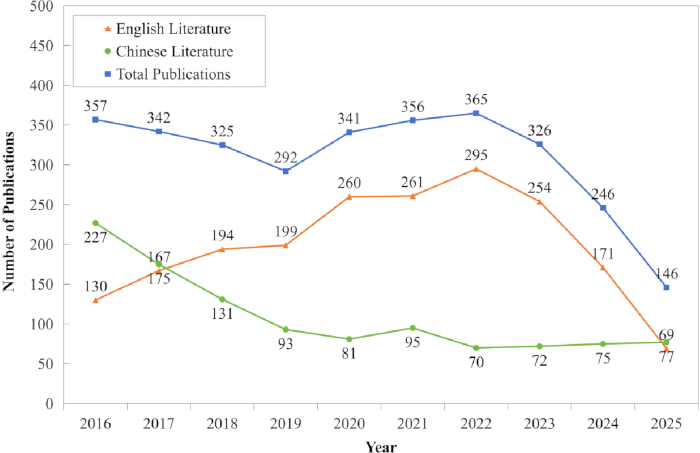
Figure 1: Annual publication output of antimicrobial resistance research in China from 2016 to 2025 (n = 3,096 publications). The figure presents annual English-language, Chinese-language, and total publication counts. English-language output increased from 130 publications in 2016 to 295 in 2022 and declined to 69 in 2025. Please click here to view a larger version of this figure.
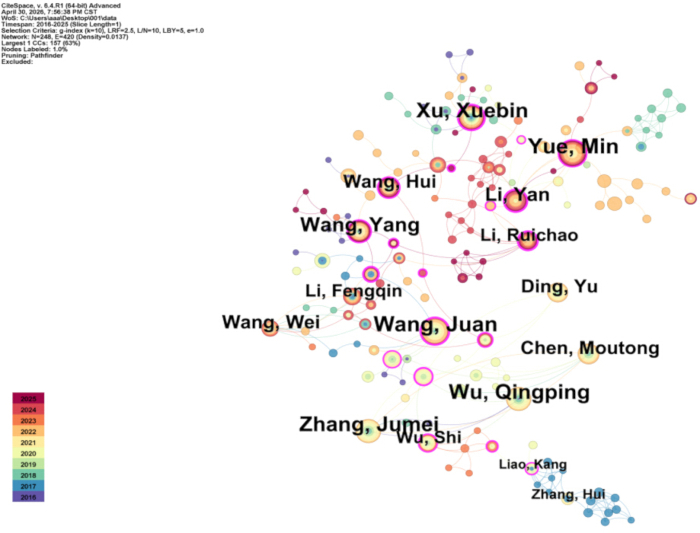
Figure 2: Author collaboration network generated from the 2,000 SCI-E publications on antimicrobial resistance in China included in the analysis (2016–2025). The network visualizes co-authorship relationships among authors publishing on AMR in China. Node size represents publication count; line thickness indicates collaboration frequency. Node colors follow the CiteSpace default time-zone gradient: purple nodes represent the earliest publications (2016–2017); blue nodes represent the middle period (2018–2021); and red/orange nodes represent the recent publications (2022–2025). Centrality is not explicitly encoded in node color; instead, nodes with high betweenness centrality (>0.1) are highlighted with an outer ring in the visualization. The network comprises 248 author nodes and 420 collaboration links (density = 0.0137). Prominent authors include Wang Juan, Yue Min, Xu Xuebin, Wu Qingping, and Zhang Jumei. The largest connected component contains 157 authors (63% of the network). Pruning was performed using the Pathfinder algorithm to enhance structural clarity. The relatively low network density indicates limited cross-institutional collaboration, with research activities concentrated within a few major research groups. Data source: Web of Science Core Collection; analyzed using CiteSpace. Please click here to view a larger version of this figure.
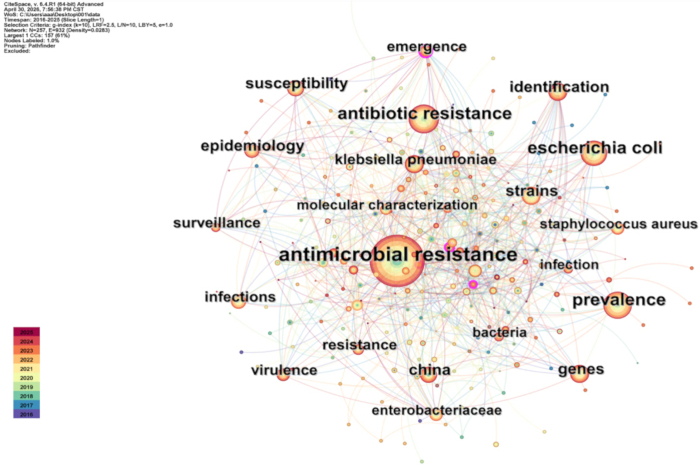
Figure 3: Keyword co-occurrence network generated from the 2,000 SCI-E publications included in the keyword analysis (2016–2025). Node size represents keyword frequency; line thickness indicates co-occurrence strength. Colors follow the CiteSpace time-zone gradient from purple (2016) through blue (2018–2021) to red/orange (2022–2025). Centrality values are not displayed as colors; instead, node labels are sized proportionally to betweenness centrality, with larger labels indicating greater bridging importance. The network comprises 257 keyword nodes and 932 co-occurrence links (density = 0.0283). The largest connected component contains 157 keywords (61% of the network). High-frequency keywords include “antimicrobial resistance,” “Klebsiella pneumoniae,” “Escherichia coli,” “Staphylococcus aureus,” “prevalence,” and “molecular characterization,” reflecting the dominant research themes of resistance surveillance and molecular epidemiology. The network demonstrates stronger interconnectivity compared to the author collaboration network, indicating thematic coherence across different research topics. Data source: Web of Science Core Collection; analyzed using CiteSpace. Please click here to view a larger version of this figure.
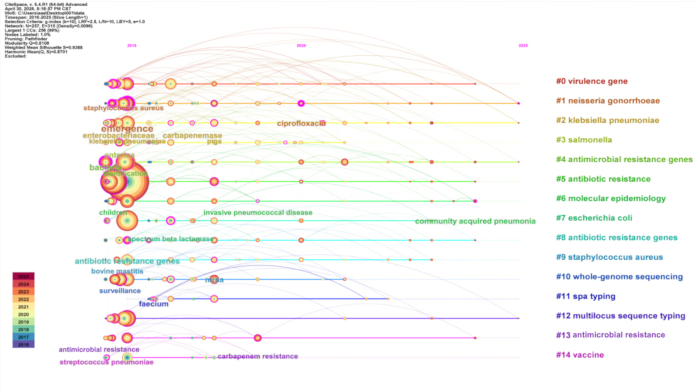
Figure 4: Keyword cluster timeline generated from the 2,000 SCI-E publications included in the keyword analysis (2016–2025). Each horizontal line represents a research cluster (#0–#14), with nodes indicating individual keywords appearing in that year. Node size represents keyword frequency. The clustering analysis was performed using the Log-Likelihood Ratio (LLR) algorithm, yielding 15 distinct clusters with excellent structural validity (modularity Q = 0.8108, mean silhouette S = 0.9388). The six major clusters discussed in the text represent the most prominent clusters (#0, #2, #4, #5, #6, #7). The timeline view reveals temporal shifts in research focus: early clusters (2016–2018) concentrated on surveillance and molecular epidemiology, while later-emerging clusters incorporated advanced genomic tools. The network comprises 257 keyword nodes and 315 co-occurrence links (density = 0.0096), with the largest connected component containing 256 nodes (99% of the network). Data source: Web of Science Core Collection; analyzed using CiteSpace. Please click here to view a larger version of this figure.
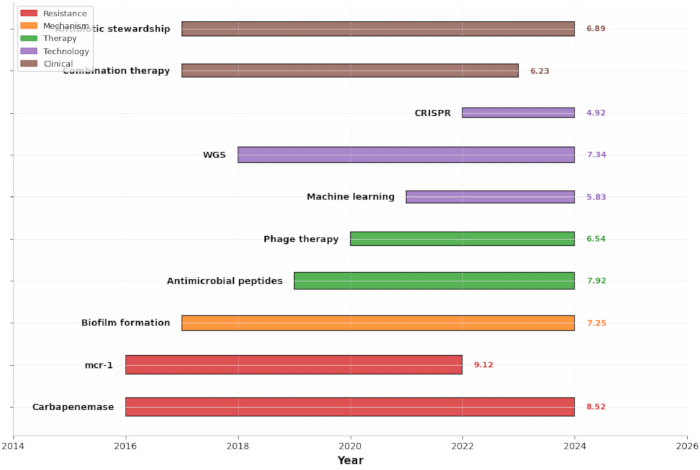
Figure 5: Top 10 burst keywords detected from the SCI-E publication dataset on antimicrobial resistance in China (2016–2025). Each bar represents a keyword with its burst strength (numerical value). Red segments indicate the detected burst intervals, and blue segments indicate years without a detected burst. The horizontal time axis covers the complete study period from 2016 to 2025. The beginning and ending years of each red segment correspond exactly to the “Begin” and “End” values reported in Table 5. The strongest bursts were observed for mcr-1 (9.12, 2016–2022) and carbapenemase (8.52, 2016–2024), reflecting their sustained dominance as research drivers. Burst keywords are categorized into five thematic groups: Resistance genes (mcr-1); Resistance mechanisms (carbapenemase, biofilm formation); Novel therapies (antimicrobial peptides, phage therapy); Clinical management (antimicrobial stewardship, combination therapy); and Technologies (WGS, machine learning, CRISPR). Keywords with burst strength >3.0 are considered significant. Data source: Web of Science Core Collection; analyzed using CiteSpace. Please click here to view a larger version of this figure.
| Rank | Author | Institution | Papers | Centrality |
| 1 | Wang Juan | South China Agricultural University | 44 | 0.2 |
| 2 | Yue Min | Zhejiang University | 44 | 0.15 |
| 3 | Xu Xuebin | Shanghai Municipal Center for Disease Control and Prevention | 42 | 0.2 |
| 4 | Wu Qingping | Institute of Microbiology, Guangdong Academy of Sciences | 42 | 0.01 |
| 5 | Zhang Jumei | Institute of Microbiology, Guangdong Academy of Sciences | 41 | 0.04 |
| 6 | Wang Yang | China Agricultural University | 35 | 0.11 |
| 7 | Li Yan | Zhejiang University | 30 | 0.23 |
| 8 | Wang Wei | China National Center for Food Safety Risk Assessment | 26 | 0.03 |
| 9 | Chen Moutong | Institute of Microbiology, Guangdong Academy of Sciences | 25 | 0.07 |
| 10 | Wang Hui | Peking University People's Hospital | 24 | 0.12 |
Table 1: Top 10 Most Prolific Authors in AMR Research (2016-2025). Publication count represents author productivity. Betweenness centrality measures the extent to which an author connects otherwise separate parts of the collaboration network; higher values indicate a stronger bridging role. Publication count and centrality were interpreted as separate bibliometric indicators.
| Rank | Institution | City | Publications | Total citations |
| 1 | Zhejiang University | Hangzhou | 195 | 10,660 |
| 2 | South China Agricultural University | Guangzhou | 112 | 7,496 |
| 3 | China Agricultural University | Beijing | 99 | 7,275 |
| 4 | Yangzhou University | Yangzhou | 97 | 2,227 |
| 5 | Shanghai Jiao Tong University | Shanghai | 94 | 3,437 |
| 6 | Chinese Academy of Medical Sciences - Peking Union Medical College | Beijing | 91 | 3,138 |
| 7 | Chinese Center for Disease Control & Prevention | Beijing | 84 | 2,657 |
| 8 | Chinese Academy of Sciences | Beijing | 84 | 4,903 |
| 9 | Chinese Academy of Agricultural Sciences | Beijing | 79 | 1,988 |
| 10 | Fudan University | Shanghai | 78 | 3,392 |
Table 2: Top 10 Research Institutions by Publication Output (2016-2025). Publication count and total citations are as of April 28, 2026. Geographic distribution shows Beijing (5 institutions in top 10: China Agricultural University, Chinese Academy of Medical Sciences – Peking Union Medical College, Chinese Center for Disease Control and Prevention, Chinese Academy of Sciences, and Chinese Academy of Agricultural Sciences), Shanghai (2: Shanghai Jiao Tong University and Fudan University), and one each in Hangzhou (Zhejiang University), Guangzhou (South China Agricultural University), and Yangzhou (Yangzhou University). The institutional network demonstrated clear geographic clustering, with Beijing and Shanghai accounting for 7 of the top 10 institutions, indicating a concentration of research capacity in eastern metropolitan regions.
| Rank | Keyword | Frequency | Centrality | Category |
| 1 | Antimicrobial Resistance | 1167 | 0.92 | General AMR concept |
| 2 | Carbapenem | 467 | 0.78 | Antimicrobial class |
| 3 | ESBL | 168 | 0.72 | Resistance mechanism/phenotype |
| 4 | MRSA | 156 | 0.68 | Resistant clinical pathogen |
| 5 | Biofilm | 134 | 0.65 | Resistance mechanism |
| 6 | CRE | 128 | 0.62 | Resistance phenotype/pathogen group |
| 7 | P. aeruginosa | 108 | 0.58 | Clinical pathogen |
| 8 | A. baumannii | 102 | 0.55 | Clinical pathogen |
| 9 | K. pneumoniae | 98 | 0.52 | Clinical pathogen |
| 10 | E. coli | 95 | 0.5 | Clinical pathogen |
Table 3: Top 10 High-Frequency Keywords in AMR Research (2016–2025). The category indicates the primary semantic role of each keyword in the antimicrobial-resistance literature. Keywords were classified as general AMR concepts, antimicrobial classes, resistance genes or mechanisms, resistance phenotypes, clinical pathogens, treatment or management terms, or surveillance and epidemiology terms, where applicable. In the present top-10 list, the represented categories were general AMR concepts, antimicrobial classes, resistance mechanisms or phenotypes, and clinical pathogens.
| Organism | 2016 | 2018 | 2022 | 2025 | Trend | p-value |
| MRSA | 48.80% | 35.80% | 27.20% | 25.80% | Declining | <0.001 |
| CRKP | 5.60% | 15.20% | 22.80% | 20.00% | Increasing | <0.001 |
| CRPA | 25.00% | 27.20% | 21.50% | 19.90% | Declining | 0.003 |
| CRAB | 56.00% | 64.50% | 76.80% | 76.50% | High-level | <0.001 |
| VRE | 1.50% | 2.90% | 5.20% | 6.50% | Increasing | <0.001 |
Table 4: Trends of Antimicrobial Resistance in Major Pathogens (2016–2025). Each horizontal line represents one of the 15 LLR-generated clusters (#0–#14), and each node represents a keyword appearing in the corresponding year. Node size represents keyword frequency. The six principal clusters discussed in the text are #0 “virulence gene,” #2 “Klebsiella pneumoniae,” #4 “antimicrobial resistance genes,” #5 “antibiotic resistance,” #6 “molecular epidemiology,” and #7 “Escherichia coli.” The clustering solution had a modularity Q of 0.8108 and a mean silhouette S of 0.9388.
| Rank | Keyword | Burst | Begin | End | Category |
| 1 | mcr-1 | 9.12 | 2016 | 2022 | Resistance gene |
| 2 | Carbapenemase | 8.52 | 2016 | 2024 | Resistance mechanism |
| 3 | Antimicrobial peptides | 7.92 | 2019 | 2024 | Novel therapy |
| 4 | Biofilm formation | 7.25 | 2017 | 2024 | Resistance mechanism |
| 5 | WGS | 7.34 | 2018 | 2024 | Molecular typing |
| 6 | Antibiotic stewardship | 6.89 | 2017 | 2024 | Clinical management |
| 7 | Phage therapy | 6.54 | 2020 | 2024 | Novel therapy |
| 8 | Combination therapy | 6.23 | 2017 | 2023 | Treatment strategy |
| 9 | Machine learning | 5.83 | 2021 | 2024 | Technology |
| 10 | CRISPR | 4.92 | 2022 | 2024 | Technology |
Table 5: Top 10 Burst Keywords Indicating Research Frontiers (2016–2025). Burst strength and burst duration were used as the quantitative indicators of frontier activity. Separate annual keyword-frequency growth rates were not calculated. Burst strength was calculated using CiteSpace burst detection algorithm (Kleinberg's algorithm) with default parameters (γ = 1.0, minimum duration = 2 years). Keywords with burst strength >3.0 are considered significant. “Begin” and “End” indicate the first and last year of the burst period, as visualized in Figure 5. The category column reflects the thematic classification of each burst keyword. The strongest bursts were observed for mcr-1 (9.12, 2016–2022) and carbapenemase (8.52, 2016–2024), indicating their central roles as research drivers. Notably, novel therapeutic approaches (antimicrobial peptides, phage therapy) and emerging technologies (machine learning, CRISPR) showed sustained burst activity through 2024, signaling a paradigm shift toward innovation-driven AMR research. The analytical time window was 2016–2025. A burst ending in 2024 indicates that no significant burst was detected for that keyword in 2025; it does not indicate that the overall analytical time window ended in 2024.
Supplementary Figure 1: PRISMA-style flow diagram of literature identification, screening, and inclusion. A total of 5,286 database records were initially identified, including 3,043 records from the Web of Science Core Collection Science Citation Index Expanded (SCI-E), 983 records from the Peking University Core Journals category of the China National Knowledge Infrastructure (CNKI), 802 records from the Chinese Science Citation Database category, and 462 records from the World Journal Clout Index category. Because the three CNKI categories were overlapping, category-specific records were consolidated before screening. Duplicate records were identified using DOI matching where available, followed by comparison of article titles, first-author names, and publication years, with manual review of uncertain matches. After combined deduplication and eligibility screening, 2,190 records were removed, and 3,096 publications were included, comprising 2,000 English-language SCI-E publications and 1,096 Chinese-language CNKI publications.Please click here to download this file.
Supplementary Table 1: Annual publication output of antimicrobial resistance research in China from 2016 to 2025. Annual numbers of English-language and Chinese-language publications included in the bibliometric analysis are presented together with the total publication count for each year. The final dataset comprised 3,096 publications.Please click here to download this file.
Supplementary Table 2: Bibliographic records of publications included in the final bibliometric analysis. The table lists the 3,096 publications included in the final analytical dataset, comprising 2,000 English-language records from the Web of Science Core Collection and 1,096 Chinese-language records from the China National Knowledge Infrastructure (CNKI). Please click here to download this file.
ディスカッション
ビブリオメトリクスのパターンは、中国におけるAMR研究が、記述的なサーベイランスや病原体の特性評価から、耐性メカニズム、ゲノムアプローチ、および介入志向の研究へと徐々に拡大したことを示唆している。キーワードクラスターの重複とバースト期間は、3つの独立した排他的な段階ではなく、累積的なテーマの多様化が起きたことを示している。これらの変化の時期は、関連する政策的背景を提供する「薬剤耐性抑制のための国家アクションプラン(2016–2020年および2022–2025年)」と重なっているが、本ビブリオメトリクス分析では、政策の発表が論文テーマの観察された変化を引き起こしたことを立証することはできない。出版数の増加は、AMR危機の深刻化(2019–2021年)と、この課題への取り組みに対する政府および機関のコミットメントの強化の両方を反映している。したがって、提案された研究テーマの進化は記述的に解釈されるべきであり、マイルストーン論文や段階別の高引用論文分析を用いて独立して検証されたものではない。グローバルな文脈で見ると、中国の研究出力の軌跡は、耐性負荷の増大に応じてAMRの出版量が高指数関数的に拡大している新興経済国全体で見られる広範なパターンと一致している21。
2022年のピーク後の論文出版数の減少は、「薬剤耐性対策国家行動計画(2022〜2025年)」の実施期間と一致しており、一方でそれ以前の増加は第1次行動計画(2016〜2020年)に続いていた。この時間的な一致は、単なるAMR研究活動の減少ではなく、連続する政策フェーズにおける研究の優先順位、資金配分、および出版パターンの変化を反映している可能性がある。しかし、出版から索引登録までのタイムラグ、データベースの網羅性、および本研究の適格基準も、特に後半の年における見かけ上の減少に寄与した可能性がある。したがって、本ビブリオメトリクス分析では、国家行動計画と論文出版数のいずれの間にも因果関係を立証することはできない。
共著ネットワーク分析により、Wang Juan、Yue、Min、および浙江大学が地域研究センターを繋ぐ重要なハブとして機能する、高度に中心化された構造が明らかになりました。しかし、地域間の連携が限定的であること(ネットワーク密度 = 0.0137)は、研究グループ間の接続性が低いことを示唆していますが、東部・中部・西部という地域別の出版分析は正式には行われていません。実行可能な地域間連携の枠組みとしては、CARSSを国家的な監視およびデータ調整の基盤とし、地域医療コンソーシアムを検体収集、感受性試験手順、および多施設共同臨床検証を調和させる単位とし、大学の研究プラットフォームをゲノムシーケンシング、バイオインフォマティクス、および手法開発の中心とする構成が考えられます。共通のデータディクショナリー、匿名化された相互運用可能なデータセット、定期的な地域間ベンチマーク、および共同早期警戒プロジェクトを導入することで、監視シグナルを研究の優先事項や地域に適応したスチュワードシップ活動へと変換することが可能になります。この提案された枠組みは、本研究で直接評価された介入策ではなく、ネットワーク分析の結果から導き出された実装経路を示すものです。
本研究で特定された耐性傾向の乖離は、臨床的に極めて重要な意味を持っています。MRSAの劇的な減少(48.8%→25.8%;β = –2.43%/年, p < 0.001)は、義務的なサーベイランス、手指衛生キャンペーン、および抗菌薬スチュワードシップを含む国家的な協調介入が、耐性病原体への対策に有効であることを示しています22。
このような軌跡の相違は、抗菌薬の選択圧、耐性メカニズム、生態学的持続性、伝播ダイナミクス、および感染管理策への反応性における病原体間の差異を反映していると考えられる。MRSAの減少は、サーベイランスおよび感染管理プログラムの広範な実施に関連している可能性がある一方で、CRKPおよびCRABにおける耐性の増加または持続的な高止まりは、カルバペネム耐性決定因子の継続的な拡散や、多剤耐性グラム陰性菌の制御の困難さを反映している可能性がある。CRPAの緩やかな減少は、耐性の傾向をすべてのカルバペネム耐性病原体に一般化できないことを示している。同様に、比較的低いベースラインからのVREの増加については、継続的なモニタリングが必要である。これらの要因は直接的に測定されたものではないため、実証された因果メカニズムではなく、妥当な解釈として捉えるべきである。
バースト分析の結果と同様に、mcr-1およびカルバペネマーゼは主要な研究テーマであり続け、可動性コリスチン耐性とカルバペネム耐性菌への継続的な関心が反映されている。抗菌ペプチドやファージ療法の出現は、従来の抗菌薬に代わる手法への関心の高まりを示しており、一方で全ゲノム解析、機械学習、CRISPRは、ゲノムサーベイランス、耐性予測、および遺伝子標的アプローチへの注目が高まっていることを示している。近年の研究では、AMRサーベイランス、耐性マーカーの同定、バイオフィルム解析、診断、および新規抗菌薬の探索における人工知能の潜在的な応用がさらに強調されている12,23,24,25。
しかし、これらの用語が研究の最前線として検出されたからといって、直ちに臨床的な適用準備が整っていることを示すわけではありません。機械学習モデルには、標準化された多施設共同データセット、外部および前方視的検証、モデルの解釈可能性、そして検査および臨床ワークフローへの統合が必要です。ファージ療法は、菌株特異性、製造の整合性、品質管理、耐性の進化、および規制の標準化に関する課題に直面しており、一方でCRISPRベースの抗菌戦略は、デリバリー効率、オフターゲット効果、バイオセーフティ、および封じ込め要件による制約を受けています。国際的な研究では、多施設共同検証、標準化された製造、および規制経路がますます重視されており、中国で行われている研究のトランスレーショナルな成熟度を評価する際にも、これらの側面を考慮すべきです。本研究では国内と海外の臨床開発段階を定量的に比較していないため、この解釈は定性的なものに留まります。
多様な臨床集団および感染症の設定で行われた研究により、病原体の分布および薬剤耐性プロファイルに大幅な変動があることが示されている26,27,28,29,30,31,32,33,34,35,36,37,38。総括すると、これらの報告は、耐性パターンが患者の特性、感染部位、抗菌薬への曝露、および地域の疫学によって影響を受けることを示唆している。カルバペネム耐性グラム陰性病原体は、多くの設定において継続的な懸念事項となっており、経験的治療は地域のサーベイランスおよび標準化された感受性試験に基づいて行うべきである。また、併用療法、β-ラクタム/β-ラクタマーゼ阻害剤配合剤、テトラサイクリン誘導体、およびその他の代替治療に関するエビデンスは、キーワード分析およびバースト分析によって特定された治療テーマに臨床的な背景を与えている30,39。
キーワードおよびクラスターの分析結果と一致して、バイオフィルム形成は抗菌剤耐性と治療失敗に寄与する重要な表現型メカニズムであり続けています。Cutibacterium acnesの研究では、構造化された微生物コミュニティが物理的バリアや微小環境の変化を通じて、どのように耐性を強化できるかが示されています40。また、Acinetobacter baumanniiにおける耐性遺伝子発現の潜在的な調節因子として、非コードRNAが注目されています41。並行して、次世代β-ラクタマーゼ阻害剤、テトラサイクリン誘導体、および併用療法により、カルバペネム耐性菌に対する治療オプションの研究が拡大しています42。国家監視データで報告されているKlebsiella pneumoniaeおよびAcinetobacter baumanniiの持続的な高レベル耐性を考慮すると、これらの進展は臨床的に極めて重要であり続けています43。
薬剤耐性に対する医療従事者の視点、特に慢性呼吸器疾患などの専門的な文脈においては、スチュワードシップを成功させるために人間行動学的要因が極めて重要であることが強調されています44。さらに、臨床的な薬剤耐性に関連する要因の全国的な分析により、抗菌薬消費密度が主要な要因であることが特定されており、カルバペネム系および第三世代セファロスポリン系抗菌薬の使用量増加が、Pseudomonas aeruginosaおよびその他のグラム陰性病原体における耐性の拡大に直接的に相関していることが確認されています45。
いくつかの制限を認める必要がある。第一に、データベースの網羅性、インデックス作成の手法、フィールド構造、および中国語と英語の用語の違いにより、検索バイアスが生じた可能性があり、意味的に同等なレコードの完全な照合が妨げられた可能性がある。本研究では、中国語と英語のコーパスについて個別のテーマ分析を行っていないため、研究の重点における言語固有の違いを定量的に評価することはできなかった。第二に、ビブリオメトリクス指標では、個々の研究のメソッド上の質やバイアスのリスクを直接評価することはできず、引用ベースの指標は、古くからある研究や、認知度が高い研究、あるいは国際的にインデックス化された出版物を優先する可能性がある。第三に、明示的なヒトの健康に関する構成要素を持たない獣医および環境研究を除外したこと、および会議録、機関報告書、論文、その他のグレーリテラチャーの網羅性が限定的であったことにより、特に地域社会や農村部からのエビデンスなど、より広範なOne Health AMRの状況を十分に代表できていない可能性がある。また、新しい一次データセットを含まない系統的レビューやメタ解析を除外したことで、エビデンス合成がホットスポット形成に寄与している面を十分に代表できていない可能性がある。第四に、出版およびインデックス作成のラグにより、研究期間の終盤に発表された研究の代表性が低下した可能性がある。第五に、キーワードが短期的または散発的な時間的変動を示す場合、Kleinbergのバースト検出アルゴリズムは偽陽性のシグナルを生成する可能性がある。加えて、CiteSpaceのパラメータ設定に関する正式な感度分析は行われていないため、代替的なCiteSpaceパラメータの選択におけるネットワーク、クラスタリング、およびバースト結果の堅牢性は評価されていない。正式な類義語の統合を行わなかったため、意味的に同等なキーワードが断片化し、キーワード頻度およびネットワークの推定値に影響を及ぼした可能性がある。また、中国の東部・中部・西部に関する正式な出版分析を行わなかったため、出版量の地域差を定量的に評価することはできなかった。
今後の研究では、代替のバースト感度パラメータや最小期間しきい値の検証、透過性のある類義語辞書の適用、独立したデータベース間での結果の比較、および年次キーワード頻度や専門家によるレビューを用いたバースト信号のトライアンギュレーションを行うべきである。引用数の極めて多い上位論文に特化した分析は実施しなかったため、今後の研究においてマイルストーン論文の分析を取り入れることで、AMR研究テーマの時間的変化をさらに特徴付け、独立して検証できる可能性がある。また、デュアルマップオーバーレイ分析は本研究の範囲外であったが、ジャーナルレベルの引用経路を特徴付けるために今後の課題として検討されるべきである。
書誌学的パターンから、中国におけるAMR研究は、記述的なサーベイランスからメカニズムの解明および革新的な介入法の開発へと、次第に移行していることが示唆される。包括的なスチュワードシップを通じてMRSAの制御には大きな進展が見られた一方で、カルバペネム耐性グラム陰性病原体は依然として重大な脅威であり、早急な対応が必要である。AI駆動の予測モデル、ファージ療法、およびCRISPRベースの介入法の登場は、AMRへの対処に向けた将来的な機会を提供し得るが、研究室レベルの研究から臨床現場への移行には依然として課題が残っている。これらの知見は、継続的なサーベイランス、地域間の連携強化、ならびに従来の抗菌薬と新たな治療戦略の両方に対する持続的な研究の重要性を裏付けている。
開示事項
著者らは、本原稿の作成において、以下のように生成AIツールを使用したことを宣言します。最終原稿の草案における言語の推敲および文法修正にGrammarly(バージョン1.2.3)を使用しました。また、ビブリオメトリックスデータのクリーニングおよびデータ前処理のための初期Pythonスクリプトの作成に、OpenAIのChatGPT(GPT-4、2026年3月15日にAPI経由でアクセス)を使用しました。科学的知見の生成、結果の解釈、または結論の策定にAIツールは使用していません。すべての図および表は、AIによる生成を経ず、CiteSpaceおよびR 4.3.2の出力から直接作成されました。著者らは、AIの支援を受けて生成されたすべての内容を確認・検証しており、本原稿の正確性と完全性について全責任を負います。
謝辞
著者らは、本原稿を完成させるために必要な管理的および技術的支援を提供してくださった寧波大学附属人民病院(鄞州人民病院)感染症科に心より感謝いたします。
本研究は、Ningbo Medical and Health Leading Academic Discipline Project(助成金番号:2026-A42)の資金提供を受けて実施されました。
材料
| 名前 | 会社 | カタログ番号 | コメント |
|---|---|---|---|
| CiteSpace | Drexel University, Philadelphia, PA, USA | version 6.4.R1 | 共著分析、キーワード共起分析、クラスター分析、およびバースト検出を含む包括的なビブリオメトリクス分析を行うため。 |
| China National Knowledge Infrastructure (CNKI) | China National Knowledge Infrastructure | 該当なし | 中国国内のソースから提供される研究論文を収集するため。 |
| R | R software | version 4.3.2 | |
| Web of Science Core Collection (SCI-E) | Web of Science | 該当なし | 国際的な文献を系統的に検索および回収するため。 |
参考文献
- World Health Organization. Global action plan on antimicrobial resistance. World Health Organization; Geneva; 2015.
- O’Neill J. Tackling drug-resistant infections globally: Final report and recommendations. 2016.
- Bockstael K, Van Aerschot A. Antimicrobial resistance in bacteria. Open Med. 2009;4(2):141–155.
- Okeke IN, de Kraker MEA, Van Boeckel TP. The scope of the antimicrobial resistance challenge. Lancet. 2024;403(10442):13.
- Bhattacharya R, et al. Impact of antimicrobial resistance on sustainable development goals and the integrated strategies for meeting environmental and socio-economic targets. Environ Prog Sustain Energy. 2024;43(1):e14320.
- Duffey M, Shafer RW, Timm J. Combating antimicrobial resistance in malaria, HIV and tuberculosis. Nat Rev Drug Discov. 2024;23(6):19.
- Xiao YH, et al. Epidemiology and characteristics of antimicrobial resistance in China. Drug Resist Updat. 2011;14(4):236–241.
- Yin X, et al. A systematic review of antibiotic utilization in China. J Antimicrob Chemother. 2013;68(11):2445–2452.
- National Health Commission of the People’s Republic of China. National action plan to contain antimicrobial resistance (2022–2025). 2022.
- Borromeo AS, Manaloto AM, Antonio RP. Southeast Asian landscape of antimicrobial resistance research (2014–2024): A bibliometric analysis. J Glob Antimicrob Resist. 2025;45(c):125–132.
- Fekadu A, Woldeamanuel Y, Hailu A. Global trends and projections in antimicrobial resistance. Lancet. 2025;(10493):405.
- Selvaraj V, Sudhakar S, Sekaran S. Global trends and projections in antimicrobial resistance. Lancet. 405(10493):413–414.
- Bhattacharya R, et al. A One health plan to combat antimicrobial resistance for improving global health through sustainable development. Discov Public Health. 2025;22(1):521.
- Chen C, Leydesdorff L. Patterns of connections and movements in dual-map overlays: A new method of publication portfolio analysis. J Assoc Inf Sci Technol. 2014;65(2):334–351.
- Persson O, Danell R, Schneider JW. Using the BIBLIOMETRIX package for bibliometric analysis. Scientometrics. 2009;80(2):253–275.
- Bhattacharya R, et al. Bibliometric assessment of the global research trends in antimicrobial resistance for fungal species. Ind Biotechnol. 2024;20(5):212–224.
- Zhu J, Zhou Y, Ding YQ. Visualization analysis of hotspots and trends of drug control institutions in China based on bibliometrics. Chin J Mod Appl Pharm. 2023;40(18):2591–2599.
- Chen C. Science mapping: A systematic review of the literature. J Data Inf Sci. 2017;2(2):1–40.
- Wang S, Shen J, Yang Y. MRSA in China: Epidemiology, resistance mechanisms, and control strategies. Chin J Antibiot. 2021;46(9):837–844.
- Zhou W, Wen Z, Zhu W. Factors associated with clinical antimicrobial resistance in China: A nationwide analysis. Infect Dis Poverty. 2025;14:27.
- Sweileh WM, Al-Jabi SW, Zyoud SH. Global research output in antimicrobial resistance among uropathogens: A bibliometric analysis (2002–2016). J Glob Antimicrob Resist. 2017;11:230–238.
- Cui L, Li Y, Cheng L. Effectiveness of an antimicrobial stewardship program in reducing antimicrobial use and microbial resistance in a tertiary hospital in China. J Glob Antimicrob Resist. 2019;17:168–174.
- Yang Y, Li Y, Wang Z. Machine learning-enabled prediction of antimicrobial resistance from whole-genome sequencing data. J Clin Microbiol. 2021;59(10):e00821-21.
- Bhattacharya R, et al. Artificial intelligence for sustainable solutions in combating antimicrobial resistance through data driven health innovations. Discov Public Health. 2026;23(1):10.
- Yosef I, Manor M, Kiro R. Temperate and lytic bacteriophages programmed to sensitize and kill antibiotic-resistant bacteria. Proc Natl Acad Sci U S A. 2015;112(23):7267–7272.
- Shou TJ, Cheng XQ, Gong S. Analysis of antimicrobial use strategy in childhood perforated appendicitis based on bacterial resistance changes. Chin Gen Pract. 2020;23(24):3070–3074.
- China Antimicrobial Resistance Surveillance System. Surveillance of antimicrobial resistance in bacteria isolated from cerebrospinal fluid specimens from 2020 to 2024. Chin J Infect Chemother. 2026;26(2):196–205.
- Gao YH, Ma XY, Wang DB. Distribution and drug resistance of pathogens causing acute bacterial conjunctivitis in children. J Pathog Biol. 2024;19(10):1194–1197.
- Zhang Y, Fan YY, Yao LH. Drug resistance and risk factors of multidrug-resistant bacteria in neonatal pneumonia. J Pathog Biol. 2020;15(11):1340–1343.
- Duan MB, He XZ, Qi JY. Research progress on anti-multidrug resistant bacteria drugs. J Shenyang Pharm Univ. 2023;40(12):1680–1690.
- Zhou LC, Li GQ, Xu BY. Distribution and drug resistance of pathogens in acute, delayed and chronic periprosthetic joint infections. Chin J Surg. 2021;59(6):484–490.
- Zhang XX, Ge W, Yang M. Analysis of resistance of 137 Neisseria gonorrhoeae strains to 5 antimicrobial agents. Chin J Dermatovenereol. 2022;36(2):199–203.
- Zhang XY, Han Y, Wang YM. Correlation analysis between antimicrobial resistance of Pseudomonas aeruginosa and antimicrobial use density. J Hebei Univ Nat Sci Ed. 2021;41(2):188–194.
- China Antimicrobial Resistance Surveillance System. Antimicrobial resistance surveillance report of common clinical isolates from elderly patients from 2014 to 2019. Chin J Infect Control. 2021;20(2):112–123.
- Ruan ZH, Huang AX, Wang XJ. Overview of CLSI, EUCAST and Chinese drug resistance judgment standards. Biotechnol Bull. 2022;38(9):47–58.
- Liu L, Feng CX, Wang Y. Analysis of bacterial resistance in the First Hospital of Qiqihar in 2016. Chin J Antibiot. 2021;46(12):1143–1147.
- Zhang XH, Chen JY, Yang H. Distribution and antimicrobial resistance of pathogens in early infection after lung transplantation in respiratory intensive care unit. Chin J Infect Control. 2020;19(9):785–790.
- Wang SS, Wu ZW, Zhao JP. Research progress on hospital infection, drug resistance and treatment of carbapenem-resistant Klebsiella pneumoniae. Chin J Antibiot. 2020;45(5):428–432.
- Lv YF, Xue M, Huang XY. Research progress on antimicrobial peptides combined with traditional antibiotics against bacterial resistance. Chin J Infect Control. 2023;22(10):1266–1273.
- Ma Y, Liu Y, Jiang M. Correlation analysis between biofilm formation and antimicrobial resistance of Cutibacterium acnes. Chin J Infect Chemother. 2021;21(6):703–707.
- Peng Q, Ling BD. Regulatory non-coding RNAs and antimicrobial resistance in Acinetobacter baumannii. Chin J Infect Control. 2021;20(12):1174–1178.
- Qin XH, Hao M, Wang MG. Research progress on new antimicrobial agents. Chin J Infect Chemother. 2024;24(4):489–496.
- Guo Y, Ding L, Hu FP. CHINET surveillance of bacterial resistance in China in 2024. Chin J Infect Chemother. 2025;25(6):597–607.
- Ananth S, Adeoti A, Ray A. Healthcare worker views on antimicrobial resistance in chronic respiratory disease. Eur Respir J. 2024;64(68):2.
- Holt KE. Microbial genomics for antimicrobial resistance ecology and action. Nat Rev Genet. 2026;27(1):7–8.