本研究では、ネットワーク薬理学と分子ドッキングを用い、線維筋痛症におけるCorydalis yanhusuoの予測メカニズムを調査した。
研究記事
Corydalis yanhusuoの線維筋痛症に対するマルチターゲットメカニズム:ネットワーク薬理学および分子ドッキング研究
この記事について
サマリー
要約
線維筋痛症(FMS)は、治療選択肢が限られている慢性的疼痛疾患である。本研究では、ネットワーク薬理学と分子ドッキングを用いて、Corydalis yanhusuoのFMSに対するマルチターゲットメカニズムを予測することを目的とした。経口バイオアベイラビリティ(OB)が30%以上、かつ薬物らしさ(DL)が0.18以上の活性成分を、Traditional Chinese Medicine Systems Pharmacology Database and Analysis Platform(TCMSP)から抽出した。疾患ターゲットはGeneCardsから取得した。重複するターゲットを用いて、タンパク質-タンパク質相互作用(PPI)、ジーン・オントロジー(GO)、およびKyoto Encyclopedia of Genes and Genomes(KEGG)解析を行った。分子ドッキングにはCB-Dock2を使用した。その結果、計49種類の活性成分と53個の重複ターゲットが特定された。ハブターゲットには、腫瘍壊死因子(TNF)、インターロイキン-6(IL6)、インターロイキン-1β(IL1B)、エストロゲン受容体1(ESR1)、およびプロスタグランジン-エンドペルオキシダーゼ合成酵素2(PTGS2)が含まれていた。KEGG解析により、インターロイキン-17(IL-17)、TNF、核内因子カッパB(NF-κB)、および神経活性リガンド-受容体相互作用経路が明らかになった。予測されるドッキングスコアは−10.1から−6.5 kcal/molの範囲であり、ムスカリン性コリン受容体3(CHRM3)に対してスティグマステロールが最も低い予測結合エネルギー(−10.1 kcal/mol)を示した。これらの知見は、C. yanhusuoがマルチコンポーネント、マルチターゲット、マルチパスウェイのメカニズムを通じて、特に神経炎症と神経伝達物質シグナリングを調節することで、潜在的な抗FMS効果を発揮する可能性を示唆している。今後、実験的な検証が必要である。
概要
線維筋痛症(FMS)は、世界人口の約2~4%に影響を及ぼす慢性疼痛疾患である1,2,3。主に女性に発症し、広範な筋骨格系疼痛、疲労感、睡眠障害、および認知機能障害を呈する4,5,6。また、線維筋痛症は関節リウマチや全身性エリマトーデスを含む様々な疾患の合併症として発症することが多い7,8,9。数十年にわたる研究にもかかわらず、その病因は完全には解明されていない10,11。現在のエビデンスは、中枢神経系内での疼痛信号の異常な増幅を伴う中枢性感作を核心的なメカニズムとして示している12。このプロセスは、セロトニン、ドーパミン、ノルエピネフリンなどの神経伝達物質の不均衡に加え、慢性的神経炎症、酸化ストレス、および遺伝的感受性によってさらに調節される13,14,15。このような多面的な病態生理は、臨床症状の著しい不均一性を説明するだけでなく、通常単一の分子経路を標的とする従来の薬物療法の有効性が限定的である理由にもなっている。抗うつ薬、抗てんかん薬、オピオイドなどの薬剤は、多くの場合、わずかな緩和しか得られず、しばしば副作用を伴う16,17,18,19。したがって、複数の病原性標的を同時に調節できる新しい薬物療法の開発が必要とされている。
ネットワーク薬理学は、薬物-標的-疾患ネットワーク解析を統合し、多成分療法の相乗的メカニズムを体系的に解明するための強力なシステム生物学的アプローチである20,21。従来の還元主義的な戦略とは異なり、この手法を用いることで、潜在的な活性成分、対応する標的タンパク質、およびそれらが集団的に調節する生物学的パスウェイの予測が可能となり、生薬のメカニズムを探索するための合理的枠組みが提供される22,23,24。相補的なin silicoツールである分子ドッキングは、予測されたリガンド-標的相互作用および低分子化合物とその標的との潜在的な結合様式をさらに評価し、ネットワークに基づく予測の信頼性を大幅に向上させる25。 C. yanhusuoは、コリダリンやデヒドロコリダリンなどのイソキノリンアルカロイドを豊富に含む周知の鎮痛薬であり、疼痛関連疾患に対して有望な効果を示しているが、FMSに対する具体的なメカニズムは依然として大部分が未解明である26,27。本研究では、ネットワーク薬理学と分子ドッキングを組み合わせて、FMS治療における C. yanhusuo の多成分、多標的、多パスウェイによるメカニズムを体系的に調査し、その臨床応用の理論的根拠を提供するとともに、複雑な慢性疼痛症候群に対する多標的薬物探索への知見を提供することを目的とした。
プロトコル
Acquisition of active ingredients and targets
The Traditional Chinese Medicine Systems Pharmacology Database and Analysis Platform (TCMSP) (https://www.tcmsp-e.com, accessed August 2, 2026)28 was searched using the herb name "yanhusuo" to retrieve all available ingredients, along with their corresponding IDs, names, molecular weights, oral bioavailability (OB), drug-likeness (DL), and structural formulas. Ingredients with OB ≥30% and DL ≥0.18 were screened as key ingredients for subsequent construction of a regulatory network29,30. Subsequently, the targets associated with these key ingredients were obtained from the TCMSP database. The obtained target proteins were then standardized to official gene symbols using the UniProt database (version 2025_01; https://www.uniprot.org; accessed August 2, 2026)31. After removing duplicate entries, the remaining targets were designated as drug-related.
Acquisition of disease-related targets
The GeneCards database (https://www.genecards.org/, accessed August 2, 2026)32 was searched using the keyword “fibromyalgia”. All retrieved targets were downloaded and used for subsequent intersection analysis without additional threshold filtering.
Construction of the “drug-key ingredients-targets-disease” regulatory network
The drug- and disease-related targets were intersected, and the overlapping genes were identified as the therapeutic targets of C. yanhusuo against fibromyalgia. Associations were established in spreadsheets among C. yanhusuo and its key ingredients, between the key ingredients and the therapeutic targets, and between the therapeutic targets and fibromyalgia, respectively. These association data were then converted into text (TXT) files. Subsequently, Cytoscape software (version 3.7.2, https://cytoscape.org/) was employed to visualize the network, in which drugs, key ingredients, targets, and diseases were distinguished by different colors and symbols, and their interconnections were graphically displayed33.
Protein-protein interaction (PPI) network analysis
The STRING database (https://cn.string-db.org/, accessed August 2, 2026)34 was accessed, and the therapeutic targets of C. yanhusuo against fibromyalgia were pasted into the "Multiple Proteins" search field, with "Homo sapiens" selected as the organism. Upon retrieval of the PPI network, the active interaction sources were set to include Textmining, Experiments, Databases, Co-expression, Neighborhood, Gene Fusion, and Co-occurrence, while the minimum required interaction score was set to the medium confidence threshold (0.400). The resulting PPI network associations were exported as a TSV file and subsequently imported into Cytoscape software. After data loading, a comprehensive topological analysis was performed using the Network Analyzer tool, and all nodes were sorted in descending order by Degree values35. Finally, the top 20 targets with the highest connectivity in the PPI network were visualized using a bar chart.
GO and KEGG enrichment analysis
The therapeutic targets of C. yanhusuo against fibromyalgia were uniformly mapped and converted to their corresponding Entrez IDs using the National Center for Biotechnology Information (NCBI) database. Gene Ontology (GO) enrichment analysis was performed on these targets using the clusterProfiler package in R software (version 4.3.1, https://www.r-project.org/), covering biological process (BP), cellular component (CC), and molecular function (MF) terms36,37. The enrichment results were visualized using bar charts and GO circular plots. For Kyoto Encyclopedia of Genes and Genomes (KEGG) pathway enrichment analysis, the enrichKEGG() function within the clusterProfiler package was applied to the same target set. Enrichment significance was set at p < 0.05, and raw p-values were used for visualization. The obtained KEGG pathway terms were filtered to exclude the two broad categories of "Human Diseases" and "Metabolism", which lack direct biological relevance in this context. Subsequently, the top 15 signaling pathways (ranked by significance) were selected and visualized using bubble plots. Furthermore, the associations between targets and pathways were extracted and imported into Cytoscape software for network visualization.
Molecular docking target selection
The docking targets were selected from the “drug–active ingredient–target–disease” regulatory network rather than from the PPI network. Specifically, all target nodes in the regulatory network were ranked by degree, and the top 10 nodes with the highest connectivity were selected for molecular docking. These 10 targets were PTGS2, PTGS1, KCNH2, ADRB2, CHRM3, OPRM1, OPRD1, SLC6A4, SLC6A3, and ESR1.
Molecular docking
The two-dimensional (2D) structures of the active ingredients were retrieved from the PubChem database (https://pubchem.ncbi.nlm.nih.gov/, accessed August 3, 2026)38 using the PubChem CIDs listed in Supplementary Table 1, and saved in Structure Data File (SDF) format for use as docking ligands. The three‑dimensional (3D) structures of the top 10 core targets from the regulatory network were retrieved and downloaded from the AlphaFold Protein Structure Database (https://alphafold.ebi.ac.uk/, accessed August 3, 2026)39 using the AlphaFold DB entry IDs listed in Supplementary Table 2 in Protein Data Bank (PDB) format to serve as docking receptors. Although experimental crystal structures are available for some of these targets, AlphaFold models were used uniformly for all 10 targets to ensure methodological consistency, as several targets lack complete or high-resolution experimental structures, and mixed structural sources could introduce bias. Before docking, no manual structural modification was performed on either the ligands or the receptors. Each ligand was paired with each receptor and submitted to the online blind docking platform CB‑Dock2 (https://cadd.labshare.cn/cb-dock2/, accessed August 3, 2026) for molecular docking calculations. CB-Dock2 automatically performed the necessary preparation steps, including removing co-crystallized water molecules, adding hydrogen atoms, assigning charges, and converting to docking-ready formats. This platform, which is based on the AutoDock Vina algorithm40, automatically identifies and encloses potential binding pockets on the protein surface to predict docking conformations between small molecules and proteins. After docking, a summary table of all ligand–receptor combinations was exported, containing the lowest binding energy values for each pair. For each ligand–receptor pair, the pose with the lowest predicted binding energy was selected as the representative binding mode. The resulting docking data were organized and visualized using a heatmap. For 3D visualization, the docking output file and the receptor file were imported simultaneously into ChimeraX (version 1.1). The ligand small molecule was selected, and the "Contact/H-bonds" tool under "Structural Analysis" was used with the option "Limit by selection: with at least one end selected" to reveal the atoms of interacting residues and log the interactions. The command "cartoon suppress false" was then entered to display residue atoms when interactions were connected to the protein ribbon. Finally, the command "label @@display" was used to display the residue names. Two‑dimensional interaction diagrams were generated using LigPlus (version 2.3.1) to comprehensively display molecular interactions, including hydrogen bonds and hydrophobic interactions.
結果
線維筋痛症に対するC. yanhusuoの重複遺伝子の取得
TCMSPデータベースの検索により、~から77個の成分が抽出された。 C. yanhusuoOB ≥30%およびDL ≥0.18の基準でさらにスクリーニングを行った結果、49種類の活性成分が得られた(表1)。計177個のターゲットを C. yanhusuo TCMSPおよびGeneCardsデータベースから、それぞれ有効成分と線維筋痛症に関連する485個のターゲットを抽出した。これら2つのターゲットセットの交差分析により、53個の共通ターゲットが得られ、これらを~の治療ターゲットとした。 C. yanhusuo 線維筋痛症のための(図1).
「薬物-活性成分-標的-疾患」調節ネットワークの構築
さらに「薬物-活性成分-ターゲット-疾患」の調節ネットワークを構築するため、1種類の伝統的な中薬(C. yanhusuo)、49種類の活性成分、53種類の潜在的ターゲット、および1種類の疾患(線維筋痛症)をネットワークに組み込んだ(図 2)。各活性成分に関連するターゲット数をスクリーニング基準として用い、上位10個のコア活性成分を特定した。具体的には、quercetin、isocorypalmine、hyndarin、(R)-canadine、leonticine、(S)-scoulerine、fumarine、clarkeanidine、stigmasterol、およびcryptopinである。
PPIネットワーク解析
線維筋痛症に対する C. yanhusuo の治療標的に 대해PPIネットワーク解析を行った結果、53個のノードと480本の相互作用エッジからなるネットワークが得られた(図3A)。上位20位の標的は、TNF、IL6、IL1B、ESR1、PTGS2、CXCL8、CCL2、IL1A、MMP9、ICAM1、IL10、IFNG、CRP、MYC、VCAM1、IL2、SERPINE1、CXCL10、ERBB2、およびMMP1であった(図3B)。
GO機能濃縮分析
線維筋痛症治療における C. yanhusuo の潜在的なターゲットについて、GO濃縮分析を実施した。濃縮された生物学的プロセス(BP)には、外来物質刺激への応答、エタノールへの応答、モノアミントランスポート、リポ多糖への細胞応答、ホスホリパーゼC活性化Gタンパク質共役受容体シグナル伝達経路、細菌由来分子への細胞応答、リポ多糖への応答、ドーパミン作動性シナプス伝達、血液循環、および一酸化窒素代謝プロセスが含まれていた。細胞成分(CC)では、後シナプス膜、シナプス膜、前シナプス膜、神経細胞体、神経細胞の緻密コア小胞、緻密コア顆粒、Gタンパク質共役受容体複合体、シナプス小胞膜、エキソサイトーシス小胞膜、およびシナプス小胞が濃縮されていた。分子機能(MF)において濃縮された用語には、サイトカイン活性、サイトカイン受容体結合、成長因子受容体結合、モノアミン膜貫通トランスポーター活性、カテコールアミン結合、アミン結合、ナトリウム:クロリド共輸送体活性、酸素を受容体とする供与体のCH‑NH₂基に作用する酸化還元酵素活性、ケモカイン活性、および単原子アニオン:ナトリウム共輸送体活性が含まれていた(図 4A,B)。
KEGG濃縮解析
C. yanhusuo と線維筋痛症の重複遺伝子のKEGG濃縮解析により、102個の濃縮されたシグナル伝達経路が同定された。ヒト疾患および一般代謝に関連する経路を除外した後、生物学的調節意義が明確な39個の経路が保持された。上位15個の経路は、IL-17シグナル伝達経路、神経活性リガンドシグナル伝達、TNFシグナル伝達経路、サイトカイン-サイトカイン受容体相互作用、ウイルスタンパク質とサイトカインおよびサイトカイン受容体との相互作用、NF-κBシグナル伝達経路、セロトニン作動性シナプス、ホルモンシグナル伝達、C型レクチン受容体シグナル伝達経路、神経活性リガンド-受容体相互作用、Toll様受容体シグナル伝達経路、IgA産生のための腸管免疫ネットワーク、細胞老化、JAK-STATシグナル伝達経路、およびHIF-1シグナル伝達経路であった(図 5A)。その後、ターゲット-経路ネットワークを構築したところ、上位10個のターゲットはIL6、TNF、IL1B、CXCL8、PTGS2、IL10、IL2、CXCL10、CCL2、およびIFNGであった(図 5B)。
分子ドッキング
「薬物-活性成分-標的-疾患」調節ネットワークから抽出した上位10種の活性成分と上位10種のコア標的との間で、分子ドッキングを実施した。これら10種の標的は、PTGS2、PTGS1、KCNH2、ADRB2、CHRM3、OPRM1、OPRD1、SLC6A4、SLC6A3、およびESR1であった。すべてのドッキング組み合わせにおいて、予測結合エネルギーは -5 kcal/mol を超えず、総合スコアの分布をヒートマップとして可視化した(図6A)。すべてのペアモデルの中で、stigmasterolとCHRM3の間の予測結合エネルギーが最小値(–10.1 kcal/mol)であった。したがって、この複合体をさらなる可視化の対象として選択し、三次元的な立体構造および主要な残基間の相互作用を示す二次元結合モード図を作成した(図6B)。これらの値は、実験的に決定された結合親和性ではなく、予測ドッキングスコア/エネルギーを表している。選択したstigmasterol–CHRM3複合体において、予測結合モードは主に、残基Thr215、Ser227、Asp518、Pro217、Leu226、Glu220、Asn514、Phe222、Lys523、Trp526、Tyr128、およびAsn527との疎水性接触によって安定化されていた。このドッキングポーズにおいて、明らかな水素結合は検出されなかった。これらの相互作用は、stigmasterolがCHRM3上の特定の予測ポケットを占有していることを示唆しているが、既知のオルソステリック結合部位またはアロステリック結合部位との関係については独立して検証されていない。
データの利用可能性:
本研究の結果を裏付けるデータは、Science Data Bank(https://doi.org/10.57760/sciencedb.013nm)にて公開されています。詳細については、合理的な要求があれば責任著者から入手可能です。
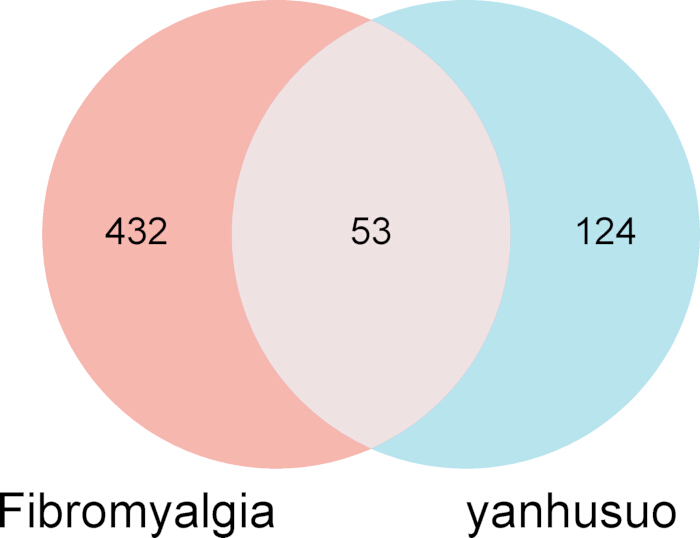
図1: C. yanhusuoの有効成分標的と線維筋痛症の疾患標的の交差を示すベン図。左側の円は線維筋痛症に関連する標的を、右側の円はC. yanhusuoの有効成分の標的を表す。重複領域は53個の共通標的に相当する。こちらをクリックして、この図の拡大版を表示してください。
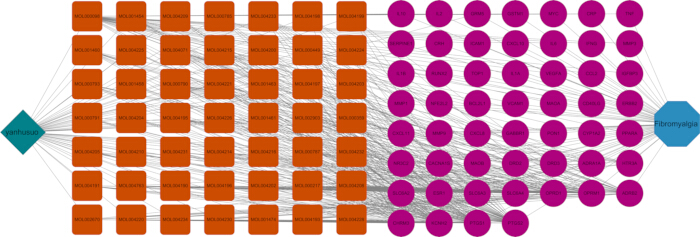
図2: 「薬物―有効成分―標的―疾患」の調節ネットワーク。ノードは薬物、有効成分、標的、および疾患を表し、それぞれ異なる色と形状で区別されている。エッジはノード間の関連性を表す。こちらのリンクをクリックして、この図の拡大版を表示してください。
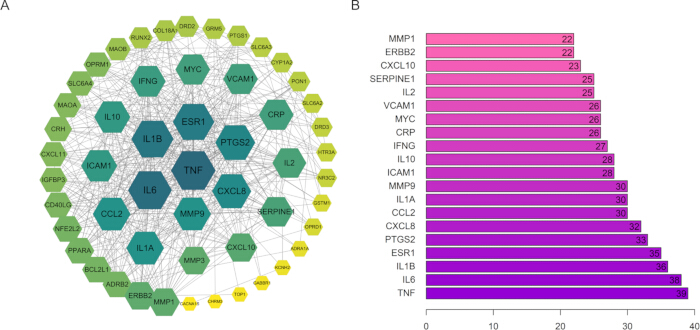
図3: 治療標的のタンパク質–タンパク質相互作用ネットワーク解析。(A) Cytoscapeを用いて可視化した、線維筋痛症に対するC. yanhusuoの重複する53個の治療標的のPPIネットワーク。53個の標的すべてがネットワークにマッピングされ、保持された。ノードはタンパク質を、エッジはタンパク質–タンパク質相互作用を表す。(B) 次数中心性によってランク付けされた上位20個の標的。x軸は次数値を、y軸は標的遺伝子シンボルを表す。略語:PPI = タンパク質–タンパク質相互作用。こちらのリンクをクリックして、この図の拡大版を表示してください。
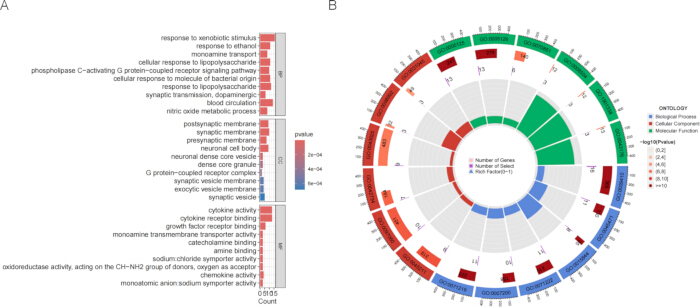
図 4から得られた有効成分のターゲットに対するGO機能濃縮解析 C. yanhusuo および線維筋痛症の標的。 (A) 最も濃縮されたGO用語を示す棒グラフ。x軸は遺伝子数、y軸はGO用語を表す。(B) GO濃縮解析の結果を可視化したサーキュラープロット。GO用語は生物学的プロセス (BP)、細胞成分 (CC)、分子機能 (MF) にグループ化されている。カラースケールは生の値を表す。 p-値。略語:GO = ジーンオントロジー、BP = 生物学的プロセス、CC = 細胞成分、MF = 分子機能。 この図の拡大版を表示するには、ここをクリックしてください。
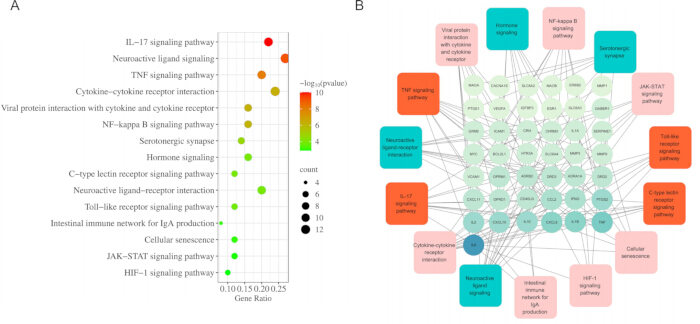
図 5: C. yanhusuoの有効成分の標的および線維筋痛症の標的に関するKEGG濃縮分析。 (A) 上位15個のシグナル伝達経路。x軸は遺伝子比率、y軸は経路名を示す。ドットの大きさは遺伝子数、ドットの色は生のp値を示す。 (B) 上位15個のシグナル伝達経路と標的との関連性。(B)において、ノードは経路カテゴリーに応じて色分けされており、赤/オレンジのノードは炎症/免疫経路を、青のノードは神経シグナル伝達経路を表す。そのうち、IL-17、TNF、Toll様受容体、およびC型レクチン受容体シグナル伝達経路が上流のトリガーとして作用し、NF-κB、サイトカイン-サイトカイン受容体相互作用、Janusキナーゼ-シグナル伝達剤および転写活性化因子(JAK-STAT)、低酸素誘導因子1(HIF-1)、細胞老化、およびIgA産生のための腸管免疫ネットワークが下流のエフェクターとして作用し、神経活性リガンドシグナリング、神経活性リガンド-受容体相互作用、セロトニン作動性シナプス、およびホルモンシグナリングが中枢性感作の増幅器として機能している。こちらをクリックして、この図の拡大版を表示してください。
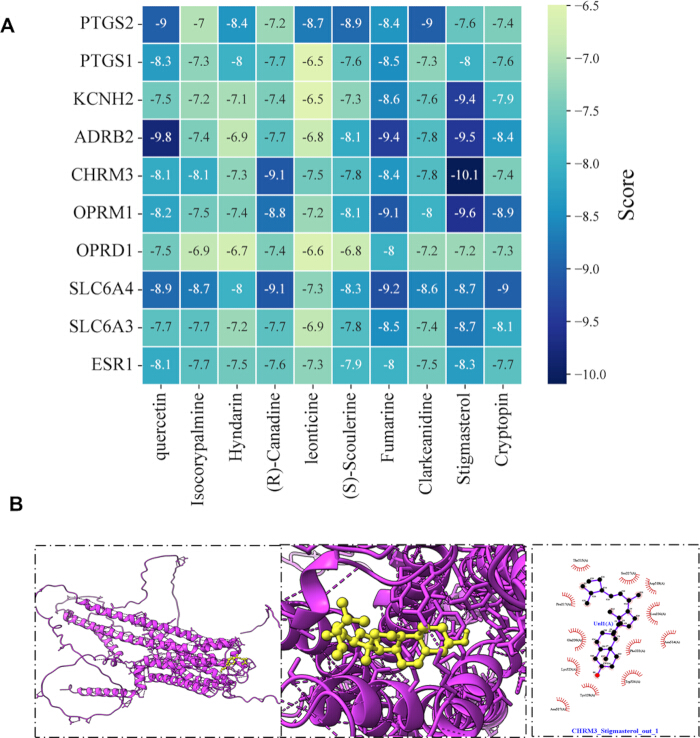
図6: 主要有効成分と標的タンパク質の分子ドッキング解析。(A) 「薬物-有効成分-標的-疾患」調節ネットワークから抽出した上位10種の有効成分と上位10種の主要標的(PTGS2、PTGS1、KCNH2、ADRB2、CHRM3、OPRM1、OPRD1、SLC6A4、SLC6A3、およびESR1)との間で予測された分子ドッキング結合エネルギーのヒートマップ。(B) stigmasterolとCHRM3の3次元(3D)および2次元(2D)結合モード図。ここをクリックして、この図の拡大版を表示してください。
| 分子ID | 分子名 | 分子量 | OB(%) | DL |
| MOL004193 | Clarkeanidine | 327.41 | 86.65 | 0.5 |
| MOL001460 | Cryptopin | 369.45 | 78.74 | 0.7 |
| MOL004234 | 2,3,9,10-tetramethoxy-13-methyl-5,6-dihydroisoquinolino[2,1-b]isoquinolin-8-one | 381.46 | 76.77 | 0.7 |
| MOL004071 | Hyndarin | 355.47 | 73.94 | 0.6 |
| MOL000791 | bicuculline | 367.38 | 69.67 | 0.9 |
| MOL004195 | CORYDALINE | 369.5 | 65.84 | 0.7 |
| MOL000785 | palmatine | 352.44 | 64.6 | 0.7 |
| MOL004191 | Capaurine | 371.47 | 62.91 | 0.7 |
| MOL004200 | methyl-[2-(3,4,6,7-tetramethoxy-1-phenanthryl)ethyl]amine | 355.47 | 61.15 | 0.4 |
| MOL001463 | Dihydrosanguinarine | 333.36 | 59.31 | 0.9 |
| MOL000787 | Fumarine | 353.4 | 59.26 | 0.8 |
| MOL004232 | tetrahydroprotopapaverine | 329.43 | 57.28 | 0.3 |
| MOL002903 | (R)-Canadine | 339.42 | 55.37 | 0.8 |
| MOL004226 | 24240-05-9 | 353.4 | 53.75 | 0.8 |
| MOL004196 | Corydalmine | 340.45 | 52.5 | 0.6 |
| MOL004230 | stylopine | 323.37 | 48.25 | 0.9 |
| MOL000793 | C09367 | 325.39 | 47.54 | 0.7 |
| MOL004203 | Dehydrocorybulbine | 352.44 | 46.97 | 0.6 |
| MOL000098 | quercetin | 302.25 | 46.43 | 0.3 |
| MOL004198 | 18797-79-0 | 367.43 | 46.06 | 0.9 |
| MOL004215 | leonticine | 327.46 | 45.79 | 0.3 |
| MOL004190 | (-)-alpha-N-methylcanadine | 354.46 | 45.06 | 0.8 |
| MOL004210 | (1S,8'R)-6,7-dimethoxy-2-methylspiro[3,4-dihydroisoquinoline-1,7'-6,8-dihydrocyclopenta[g][1,3]benzodioxole]-8'-ol | 369.45 | 43.95 | 0.7 |
| MOL004205 | Dehydrocorydalmine | 338.41 | 43.9 | 0.6 |
| MOL000449 | Stigmasterol | 412.77 | 43.83 | 0.8 |
| MOL004228 | saulatine | 396.47 | 42.74 | 0.8 |
| MOL004204 | dehydrocorydaline | 366.47 | 41.98 | 0.7 |
| MOL004220 | N-methyllaurotetanine | 341.44 | 41.62 | 0.6 |
| MOL004216 | 13-methylpalmatrubine | 352.44 | 40.97 | 0.6 |
| MOL004214 | isocorybulbine | 368.51 | 40.18 | 0.7 |
| MOL004763 | Izoteolin | 327.41 | 39.53 | 0.5 |
| MOL004202 | dehydrocavidine | 351.43 | 38.99 | 0.8 |
| MOL004208 | demethylcorydalmatine | 327.41 | 38.99 | 0.5 |
| MOL004225 | pseudocoptisine | 320.34 | 38.97 | 0.9 |
| MOL004199 | Corynoloxine | 365.41 | 38.12 | 0.6 |
| MOL001474 | sanguinarine | 332.35 | 37.81 | 0.9 |
| MOL004197 | Corydine | 341.44 | 37.16 | 0.6 |
| MOL000359 | sitosterol | 414.79 | 36.91 | 0.8 |
| MOL001454 | berberine | 336.39 | 36.86 | 0.8 |
| MOL004209 | 13-methyldehydrocorydalmine | 352.44 | 35.94 | 0.6 |
| MOL000790 | Isocorypalmine | 341.44 | 35.77 | 0.6 |
| MOL002670 | Cavidine | 353.45 | 35.64 | 0.8 |
| MOL004231 | Tetrahydrocorysamine | 337.4 | 34.17 | 0.9 |
| MOL001461 | Dihydrochelerythrine | 349.41 | 32.73 | 0.8 |
| MOL000217 | (S)-Scoulerine | 327.41 | 32.28 | 0.5 |
| MOL004233 | ST057701 | 341.44 | 31.87 | 0.6 |
| MOL001458 | coptisine | 320.34 | 30.67 | 0.9 |
| MOL004221 | norglaucing | 341.44 | 30.35 | 0.6 |
| MOL004224 | pontevedrine | 381.41 | 30.28 | 0.7 |
表 1:TCMSPより同定されたC. yanhusuoの有効成分およびその薬物動態パラメータ。 MW:分子量、OB:経口バイオアベイラビリティ、DL:薬物らしさ。OB ≥30% および DL ≥0.18 の成分を、その後のネットワーク構築における主要成分として保持した。
補足表1:分子ドッキングに使用したPubChemリガンドドッキングリガンドとして使用した10種類の活性成分について、その名称、PubChem CID、および分子式を記載します。すべてのリガンド構造は、記載されたCIDを用いてPubChemからSDF形式で取得しました。こちらのリンクからファイルをダウンロードしてください。
付録表 2: 分子ドッキングに使用したAlphaFold受容体構造。ドッキング受容体として使用した10種類の標的タンパク質を、遺伝子シンボル、UniProtアクセッション番号、およびAlphaFold DBエントリーIDとともに記載している。すべての受容体構造は、AlphaFold Protein Structure DatabaseからPDB形式でダウンロードした。こちらのリンクからファイルをダウンロードしてください。
ディスカッション
本研究では、ネットワーク薬理学の手法に分子ドッキングを組み合わせて、FMS(線維筋痛症)の潜在的な治療における C. yanhusuo のマルチターゲットメカニズムを体系的に予測しました。in silicoでの解析結果から、FMSに対する C. yanhusuo の潜在的な治療効果は、49種類の活性成分、53個の共通ターゲット、および複数のシグナル伝達経路を含む複雑な調節ネットワークを介して行われることが予測されました。この包括的な分析は、鎮痛ハーブとしての C. yanhusuo の伝統的な用法と一致するだけでなく、FMSの多面的な症状を管理するための潜在的なメカニズムについて、予測に基づく予備的な分子レベルの知見を提供するものです。
「薬物-有効成分-ターゲット-疾患」の調節ネットワークを構築した結果、ターゲットへの接続度に基づき、quercetin、isocorypalmine、hyndarin、(R)‑canadine、leonticine、(S)‑scoulerine、fumarine、clarkeanidine、stigmasterol、およびcryptopinが上位10個のコア有効成分として特定されました。Quercetinは一般的なフラボノイド化合物であり、抗酸化、抗炎症、および免疫調節作用を含む重要な生物学的活性を有しています41。実験薬理学的研究において、quercetinの投与は、レセルピン誘発線維筋痛症モデルラットにおける筋痛覚過敏、触覚アロディニア、および冷覚アロディニアを著しく改善させることが報告されています42。動物モデルにおいて、stigmasterolは、レセルピン誘発線維筋痛症マウスモデルにおける機械的および冷覚アロディニア、熱誘発性熱痛覚過敏、眼窩周囲の機械的アロディニア、筋力低下、および情動・動機付けに関連する痛み行動を、用量依存的に軽減させることが報告されています43。これらのin vivoでの知見は、線維筋痛症モデルにおけるこれらの化合物の潜在的な関連性を薬理学的に間接的に支持するものですが、本研究で予測された特定の分子ターゲットを検証するものではありません。Isocorypalmine、hyndarin、(R)‑canadine、leonticine、(S)‑scoulerine、fumarine、clarkeanidine、およびcryptopinは C. yanhusuoに含まれるアルカロイドであり、これらのアルカロイドは、イオンチャネル遮断、神経伝達物質の調節、およびシクロオキシゲナーゼ-2 (COX-2) 阻害を介して鎮痛効果をもたらすことが報告されています。
PPIネットワーク解析により、TNF、IL6、IL1B、ESR1、およびPTGS2が上位のハブターゲットとして予測され、FMSの病態生理において神経炎症と免疫調節が重要な役割を果たしている可能性が示唆されました。単純なランキングにとどまらず、既知の生物学的機能とネットワーク接続性に基づき、これらのハブターゲットを3つの機能モジュールに分類しました。すなわち、炎症性サイトカインモジュール(TNF、IL6, IL1B, CXCL8)、神経伝達物質受容体モジュール(CHRM3, ADRB2, ESR1)、およびシグナル伝達モジュール(PTGS2, MMP9)です。これらのモジュールは、単独で機能するのではなく、協調的にFMSにおける「末梢免疫活性化 → 中枢性感作」という悪循環を駆動している可能性があります。慢性的な低グレード炎症は、FMSの根底にある中核メカニズムである中枢性感作の寄与因子として認識されるようになっています。TNFおよびIL-1βは主要な前炎症性サイトカインであり、グリア細胞を活性化させ、痛みの処理に関与する脊髄および脳領域におけるシナプス興奮性を高めることで、疼痛シグナルを増幅させます44,45,46。予測されたネットワークは、quercetinやstigmasterolなどのC. yanhusuoの複数の活性成分が、これらの炎症性メディエーターを同時に標的にする可能性を示唆しており、広範な抗神経炎症効果を持つ可能性が考えられます47,48,49。これは、pregabalinやduloxetineなどの従来の薬物療法が、主に神経伝達物質レベルの調節を目的として設計されており、FMSの炎症成分を直接的に標的にしていないことを踏まえると、特に重要な知見です。
GO濃縮分析により、C. yanhusuoが調節する可能性のある生物学的プロセスがさらに予測され、異物刺激への反応、モノアミントランスポート、ドーパミン作動性シナプス伝達、およびリポ多糖への細胞反応などの主要な用語が抽出された。これらの予測結果は、痛みの調節および気分調節におけるドーパミンとセロトニンの既知の役割と一致しており、これらはいずれもFMS患者において頻繁に乱れているものである。KEGGパスウェイ濃縮分析では、C. yanhusuoの潜在的な標的が、主にIL-17シグナリングパスウェイ、神経活性リガンド-受容体相互作用、TNFシグナリングパスウェイ、サイトカイン-サイトカイン受容体相互作用、およびNF-κBシグナリングパスウェイに関与していることが予測された。
IL-17シグナル伝達経路は、炎症性および自己免疫性疾患における慢性疼痛の重要な駆動因子として浮上しており、好中球の動員を媒介し、TNFやIL-6などの前炎症性サイトカインの放出を促進します50,51,52。C. yanhusuoがこの経路を標的にしていることは、本生薬が末梢の免疫活性化およびそれに続く中枢神経炎症を減弱させる可能性を示唆しており、これらは線維筋痛症(FMS)の症状増悪の要因としてますます認識されています。さらに、神経活性リガンド-受容体相互作用経路は、グルタミン酸作動性、GABA作動性、およびコリン作動性シグナル伝達を含む複数の神経伝達物質系の収束点となっており、これらすべてがFMSにおける疼痛処理および認知機能障害に関与しています50,51,52,53,54,55。C. yanhusuoによるこの経路の調節は、疼痛だけでなく、FMSに伴う疲労、睡眠障害、および気分障害をも調節するという、本生薬に予測される潜在的な効果を部分的に説明できる可能性があります。
分子ドッキングの結果から、「薬剤-有効成分-ターゲット-疾患」調節ネットワークにおける上位10個の有効成分と上位10個のコアターゲット(PTGS2、PTGS1、KCNH2、ADRB2、CHRM3、OPRM1, OPRD1, SLC6A4, SLC6A3, および ESR1)との間の潜在的な結合相互作用がin silicoで予測された。特筆すべき点として、すべてのリガンド-受容体ペアの予測結合エネルギーは-5 kcal/mol未満であり、中程度から強力な結合が予測された。予測ドッキングスコアが最も低かったのはstigmasterol–CHRM3(-10.1 kcal/mol)であり、次いでquercetin–ADRB2(-9.8 kcal/mol)、stigmasterol–OPRM1(-9.6 kcal/mol)であった。植物由来のフィトステロールであり、以前に~で同定されたstigmasterolは、 C. yanhusuo、さまざまな疾患モデルにおいて抗炎症および抗酸化活性を示すことが実証されている56,57,58CHRM3およびADRB2への強力な結合が予測されることから、アルカロイドに加えて非アルカロイド成分も、~の治療 efficacy に寄与している可能性が示唆されています。 *C. yanhusuo* 自律神経系の調節および疼痛調節に不可欠なコリン作動性およびアドレナリン作動性シグナル伝達を調節することにより。スティグマステロールがCHRM3およびADRB2に強く結合すると予測されることは、伝統的な「理気止痛」の特性に関連している可能性がある。 *C. yanhusuo*非ステロイド性抗炎症薬(NSAIDs)とは異なり、 C. yanhusuo 炎症性メディエーターと自律神経作動性神経伝達物質受容体の両方を介して作用している可能性があり、二重のメカニズムが存在することが示唆される。コリン作動性抗炎症経路と古典的なTNF/IL-6経路の相対的な寄与については、今後実験的な検証が必要である。主要成分のうち、クエルセチンは広範囲の抗炎症成分として作用し、一方でスティグマステロールはCHRM3やADRB2などの特定のターゲットに対して比較的強い予測ドッキング相互作用を示す可能性がある。この「広範なカバー範囲 + 高い精度」というパターンが、線維筋痛症(FMS)の不均一な疼痛特性に適合していると考えられる。
予測から制限事項への展開
ネットワーク薬理学は予測的な手法であるため、得られた結果の解釈には注意が必要です。予測に基づくと、C. yanhusuoにおいて臨床的に最も有望な画分は、混合物全体ではなく、クエルシチンおよびスチグマステロールを濃縮した特定の抽出物であるという仮説が立てられます。この仮説には実験的な検証が必要です。今後の研究では、予測されたターゲットおよびパスウェイを確認するため、このような濃縮画分を単離し、in vitroおよびin vivoで試験することに焦点を当てるべきです。
結論
本研究は、C. yanhusuoが複数の成分、標的、および経路を含む相乗的なメカニズムを通じて線維筋痛症症候群に対して治療効果を発揮し、その核心的な作用は神経炎症の抑制と神経調節に集中している可能性が高いことを示唆している。ネットワーク薬理学と分子ドッキングの統合解析により、クエルセチンやスティグマステロールなどの主要な活性成分が、重要な炎症メディエーターおよび神経活性シグナル伝達経路を共同で調節し、それによって末梢免疫活性化と中枢感作の両方を調節する可能性があることが予測された。これらの知見は、FMSにおけるC. yanhusuoの今後の実験的調査および潜在的な臨床応用のための、予測に基づいた予備的な根拠を与えるものであり、複雑な慢性疼痛疾患に対する仮説主導のマルチターゲット創薬に寄与する可能性がある。これらの予測を確定させるには、実験的な検証が必要である。
制限事項:
本研究は、in silicoのネットワーク薬理学および分子ドッキング予測のみに基づいており、実験的および臨床的な検証が行われていない。OB ≥30%およびDL ≥0.18の閾値はネットワーク薬理学において標準的である。しかし、これにより一部の鎮痛アルカロイドなど、OB値は低いが活性を持つ可能性のある化合物が除外されている可能性がある。分子ドッキングに実験的な結晶構造ではなくAlphaFold予測構造を用いたことは制限事項である。今後のドッキング研究では、可能な限り利用可能なPDB構造を用いてこれらの予測を検証する必要がある。今後の調査では、同定されたターゲットおよびパスウェイを検証するためのin vitroおよびin vivo実験を行い、続いて線維筋痛症患者におけるC. yanhusuo抽出物の治療効果と安全性を評価するための臨床試験を行う予定である。最終的には、線維筋痛症症候群の臨床応用のための標準化されたC. yanhusuo製剤の開発を目指している。
開示事項
著者は利益相反がないことを宣言します。
AI利用に関する開示:本論文の作成にあたり、著者は言語の推敲および文法チェックにDeepseekを使用しました。AIによる支援を受けたすべてのコンテンツは著者によって確認および修正されており、出版に関する全責任は著者が負います。
謝辞
著者らは、本研究および/またはその出版にあたり、資金提供を受けていないことを宣言しました。
材料
| 名前 | 会社 | カタログ番号 | コメント |
|---|---|---|---|
| AlphaFold Protein Structure Database | DeepMind & EMBL-EBI | https://alphafold.ebi.ac.uk/ | ドッキング受容体として、主要ターゲットタンパク質の3D構造(PDB)をダウンロードした。 |
| CB-Dock2 | オンライン・ブラインドドッキングプラットフォーム | https://cadd.labshare.cn/cb-dock2/ | AutoDock Vinaベースのブラインドドッキングを実施し、結合ポケットの特定、コンフォメーションの予測、および最低結合エネルギーの出力を行った。 |
| ChimeraX | UCSF Resource for Biocomputing, Visualization, and Informatics | https://www.cgl.ucsf.edu/chimerax/ | タンパク質–リガンド複合体の3D結合コンフォメーションを可視化した。Version 1.1 |
| Cytoscape | Cytoscape Consortium | https://cytoscape.org/ | 薬物–成分–ターゲット–疾患およびPPIネットワークを構築し可視化した。Network Analyzerを用いてトポロジー解析(次数ランキング)を実施した。Version 3.7.2 |
| GeneCards | Weizmann Institute of Science, Israel | https://www.genecards.org/ | キーワード“fibromyalgia”を用いて線維筋痛症関連のターゲットを検索した。検索されたすべてのターゲットを、追加の閾値フィルタリングなしで保持した。 |
| LigPlus | 該当なし | http://www.ebi.ac.uk/thornton-srv/software/LigPlus/ | 水素結合および疎水性相互作用を示す2D相互作用図を作成した。Version 2.3.1 |
| PubChem | National Library of Medicine (NCBI), USA | https://pubchem.ncbi.nlm.nih.gov/ | ドッキングリガンドとして、上位10個の有効成分の2D構造(SDF)を取得した。 |
| R | R Foundation for Statistical Computing | https://www.r-project.org/ | clusterProfilerを用いてGOおよびKEGG濃縮分析を実施し、「Human Diseases」および「Metabolism」パスウェイを除外した。Version 4.3.1 |
| STRING | STRING Consortium (EMBL, SIB, etc.) | https://string-db.org/ | PPIネットワーク(Homo sapiens, confidence ≥0.400)を構築し、Cytoscape用のTSVファイルを出力した。 |
| TCMSP | Northwest A&F University, China | https://www.tcmsp-e.com/ | C. yanhusuoの全成分を取得し、有効成分(OB≥30%, DL≥0.18)をスクリーニングし、対応するターゲットタンパク質を得た。 |
| UniProt | UniProt Consortium (EBI, SIB, PIR) | https://www.uniprot.org/ | ターゲットタンパク質を公式の遺伝子シンボル(Homo sapiens)に変換した。Version 2025_01 |
参考文献
- Winslow BT, Vandal C, Dang L. Fibromyalgia: diagnosis and management. Am Fam Physician. 2023;107(2):137-144.
- Kocyigit BF, Akyol A. Fibromyalgia syndrome: epidemiology, diagnosis and treatment. Reumatologia. 2022;60(6):413-421.
- Berwick R, Barker C, Goebel A; Guideline Development Group. The diagnosis of fibromyalgia syndrome. Clin Med (Lond). 2022;22(6):570-574.
- Carrasco-Querol N, et al. Nutrition and chronobiology as key components of multidisciplinary therapeutic interventions for fibromyalgia and associated chronic fatigue syndrome: a narrative and critical review. Nutrients. 2024;16(2):182.
- Ughreja RA, Venkatesan P, Balebail Gopalakrishna D, Singh YP. Effectiveness of myofascial release on pain, sleep, and quality of life in patients with fibromyalgia syndrome: a systematic review. Complement Ther Clin Pract. 2021;45:101477.
- Favretti M, Iannuccelli C, Di Franco M. Pain biomarkers in fibromyalgia syndrome: current understanding and future directions. Int J Mol Sci. 2023;24(13):10443.
- Minhas D, Murphy A, Clauw DJ. Fibromyalgia and centralized pain in the rheumatoid arthritis patient. Curr Opin Rheumatol. 2023;35(3):170-174.
- Monteiro JAM, et al. Fibromyalgia comorbidity in systemic lupus erythematosus patients: assessing impact on quality of life. Adv Rheumatol. 2024;64(1):90.
- Chen G, Yan Z, Wang Y, Tao Q. Rheumatoid arthritis and fibromyalgia syndrome: a bibliometric and bioinformatics perspective on comorbidity research. J Multidiscip Healthc. 2025;18:6811-6827.
- Jurado-Priego LN, Cueto-Ureña C, Ramírez-Expósito MJ, Martínez-Martos JM. Fibromyalgia: a review of the pathophysiological mechanisms and multidisciplinary treatment strategies. Biomedicines. 2024;12(7):1543.
- Paroli M, Gioia C, Accapezzato D, Caccavale R. Inflammation, autoimmunity, and infection in fibromyalgia: a narrative review. Int J Mol Sci. 2024;25(11):5922.
- Marino Y, et al. Role of mitochondrial dysfunction and biogenesis in fibromyalgia syndrome: molecular mechanism in central nervous system. Biochim Biophys Acta Mol Basis Dis. 2024;1870(7):167301.
- Malik A, et al. Serotonin and norepinephrine reuptake inhibitors (SNRIs) for treatment of fibromyalgia: a comprehensive clinical review. Psychopharmacol Bull. 2025;55(2):24-40.
- García-Domínguez M. Fibromyalgia and inflammation: unrevealing the connection. Cells. 2025;14(4):271.
- Assavarittirong C, Samborski W, Grygiel-Górniak B. Oxidative stress in fibromyalgia: from pathology to treatment. Oxid Med Cell Longev. 2022;2022:1582432.
- Giorgi V, et al. Pharmacological treatment of fibromyalgia syndrome: a practice-based review. Curr Pain Headache Rep. 2024;28(12):1349-1363.
- Migliorini F, et al. Duloxetine for fibromyalgia syndrome: a systematic review and meta-analysis. J Orthop Surg Res. 2023;18(1):504.
- Moore A, et al. Effectiveness of pharmacological therapies for fibromyalgia syndrome in adults: an overview of Cochrane Reviews. Rheumatology (Oxford). 2025;64(5):2385-2394.
- Lum G, et al. Current pharmacological management, treatment challenges, and potential future treatment options for fibromyalgia syndrome. Expert Opin Pharmacother. 2025;26(18):2013-2025.
- Zhang P, et al. Network pharmacology: towards the artificial intelligence-based precision traditional Chinese medicine. Brief Bioinform. 2024;25(1):bbad518.
- Wang Y, El-Kott AF, El-Kenawy AE, Xue L. Decorated CuO nanoparticles over chitosan-functionalized magnetic nanoparticles: investigation of its anti-colon carcinoma and anti-gastric cancer effects. Arabian J Chem. 2021;14(7):103201.
- Zeng Y, et al. Fisetin micelles precisely exhibit a radiosensitization effect by inhibiting PDGFRβ/STAT1/STAT3/Bcl-2 signaling pathway in tumor. Chin Chem Lett. 2025;36(2):109734.
- Chen GY, et al. Mechanisms of total glucosides of paeony in alleviating methotrexate-induced liver injury. Drug Des Devel Ther. 2025;19:3407-3423.
- Chen GY, et al. Prediction of Rhizoma Drynariae targets in the treatment of osteoarthritis based on network pharmacology and experimental verification. Evid Based Complement Alternat Med. 2021;2021:5233462.
- Aguiar C, Camps I. Molecular docking in drug discovery: techniques, applications, and advancements. Curr Med Chem. 2025;32(28):5924-5938.
- Wu L, et al. Processing and compatibility of Corydalis yanhusuo: phytochemistry, pharmacology, pharmacokinetics, and safety. Evid Based Complement Alternat Med. 2021;2021:1271953.
- Alhassen L, et al. The analgesic properties of Corydalis yanhusuo. Molecules. 2021;26(24):7498.
- Ru J, et al. TCMSP: a database of systems pharmacology for drug discovery from herbal medicines. J Cheminform. 2014;6:13.
- Chen GY, et al. Integrating network pharmacology and experimental validation to explore the key mechanism of Gubitong recipe in the treatment of osteoarthritis. Comput Math Methods Med. 2022;2022:7858925.
- Jin Q, et al. Network and experimental pharmacology to decode the action of Wendan decoction against generalized anxiety disorder. Drug Des Devel Ther. 2022;16:3297-3314.
- UniProt Consortium. UniProt: the Universal Protein Knowledgebase in 2025. Nucleic Acids Res. 2025;53(D1):D609-D617.
- Stelzer G, et al. The GeneCards Suite: from gene data mining to disease genome sequence analyses. Curr Protoc Bioinformatics. 2016;54:1.30.1-1.30.33.
- Otasek D, et al. Cytoscape Automation: empowering workflow-based network analysis. Genome Biol. 2019;20(1):185.
- Szklarczyk D, et al. The STRING database in 2025: protein networks with directionality of regulation. Nucleic Acids Res. 2025;53(D1):D730-D737.
- Majeed A, Mukhtar S. Protein-protein interaction network exploration using Cytoscape. Methods Mol Biol. 2023;2690:419-427.
- Yu G, Wang LG, Han Y, He QY. clusterProfiler: an R package for comparing biological themes among gene clusters. OMICS. 2012;16(5):284-287.
- Feng S, et al. Harnessing gene editing technology for tumor microenvironment modulation: an emerging anticancer strategy. Chemistry. 2024;30(62):e202402485.
- Kim S, et al. PubChem in 2021: new data content and improved web interfaces. Nucleic Acids Res. 2021;49(D1):D1388-D1395.
- Varadi M, et al. AlphaFold Protein Structure Database: massively expanding the structural coverage of protein-sequence space with high-accuracy models. Nucleic Acids Res. 2022;50(D1):D439-D444.
- Eberhardt J, Santos-Martins D, Tillack AF, Forli S. AutoDock Vina 1.2.0: new docking methods, expanded force field, and Python bindings. J Chem Inf Model. 2021;61(8):3891-3898.
- He L, et al. Shape-based virtual screen for the discovery of novel CDK8 inhibitor chemotypes. Bioorg Med Chem Lett. 2019;29(4):549-555.
- Quinto-Ortiz YE, et al. Pharmacological interaction of quercetin derivatives of Tilia americana and clinical drugs in experimental fibromyalgia. Metabolites. 2022;12(10):916.
- Perazzio AC, et al. Stigmasterol attenuates nociplastic pain and fatigue-like symptoms in a reserpine-induced fibromyalgia model in mice. Inflammopharmacology. 2026;34(1):509-523.
- Ji RR, et al. Neuroinflammation and central sensitization in chronic and widespread pain. Anesthesiology. 2018;129(2):343-366.
- Biltz RG, Sawicki CM, Sheridan JF, Godbout JP. The neuroimmunology of social-stress-induced sensitization. Nat Immunol. 2022;23(11):1527-1535.
- Ahmed I, et al. Oral and gut health, (neuro)inflammation, and central sensitization in chronic pain: a narrative review of mechanisms, treatment opportunities, and research agenda. Int J Mol Sci. 2026;27(1):114.
- Wu J, et al. The role of quercetin in NLRP3-associated inflammation. Inflammopharmacology. 2024;32(6):3585-3610.
- Xiong QQ, et al. Hypericum aqueous extract promotes skin wound healing by modulating the PI3K/Akt signaling pathway. Food & Medicine Homology. 2026;3(4):9420125.
- Sun M, et al. Stigmasterol from Prunella vulgaris L. alleviates LPS-induced mammary gland injury by inhibiting inflammation and ferroptosis. Phytomedicine. 2025;137:156362.
- McNamee KE, et al. IL-17 induces hyperalgesia via TNF-dependent neutrophil infiltration. Pain. 2011;152(8):1838-1845.
- Jiang X, et al. Interleukin-17 as a potential therapeutic target for chronic pain. Front Immunol. 2022;13:999407.
- Gao SJ, et al. Interleukin-17: a putative novel pharmacological target for pathological pain. Curr Neuropharmacol. 2024;22(2):204-216.
- Yang Y, et al. Inhibition of neuroactive ligand-receptor interaction pathway can enhance immunotherapy response in colon cancer: an in silico study. Expert Rev Anticancer Ther. 2023;23(11):1205-1215.
- Li QR, et al. Unveiling the mechanism of Cibotium barometz in the treatment of rheumatoid arthritis: a study based on network pharmacology and experimental validation. Curr Med Chem. In press. https://www.eurekaselect.com/article/158465
- Chan RJ, et al. Perturbations in the neuroactive ligand-receptor interaction and renin angiotensin system pathways are associated with cancer-related cognitive impairment. Support Care Cancer. 2025;33(4):254.
- Cao W, et al. Structural elucidation of an active polysaccharide from Radix Puerariae lobatae and its protection against acute alcoholic liver disease. Carbohydr Polym. 2024;325:121565.
- Tong Y, et al. Stigmasterol exerts antioxidant effects through activation of the Keap1/Nrf2 signaling pathway in Parkinson's disease model. J Transl Med. 2026;24:9.
- Ohara Y, Osada K. Effect of dietary oxidized stigmasterol on the antioxidant system in mice. J Oleo Sci. 2024;73(12):1493-1503