Retinyl acetate is usually labeled with two 13C when gas chromatography-combustion-isotope ratio mass spectrometry is used for serum and breast milk analysis. This paper describes the synthesis of 13C2-retinyl acetate and the preparation of doses for retinol isotope dilution tests to be delivered by a positive displacement pipette or tuberculin syringe.
Method Article
Synthesis of 13C2-Retinyl Acetate and Dose Preparation for Retinol Isotope Dilution Tests
Opens in a new tab
In This Article
Summary
Loading...
$$\rightleftharpoonup{xx}$$
$$\longleftharp{xx}$$,
$$\longrightharp{xx}$$,
Abstract
Loading...
$$\rightleftharpoonup{xx}$$
$$\longleftharp{xx}$$,
$$\longrightharp{xx}$$,
The retinol isotope dilution (RID) test is the most sensitive method to assess vitamin A status by estimating total liver reserves, considered the reference standard. For gas chromatography-combustion-isotope ratio mass spectrometry detection, 13C is added to the retinol moiety. The synthetic procedure for 13C-retinyl acetate begins with the naturally occurring β-ionone. Briefly, C18-tetraene ketone is synthesized from β-ionone and purified. If a 13C4-retinyl acetate is desired, the carbanion of 13C2-labeled triethylphosphonoacetate can be used to add two 13C's to the β-ionone moiety before adding acetone's three carbons to synthesize the C18-tetraene ketone. If a 13C3-retinyl acetate is desired, the three carbons of the acetone could be labeled with 13C.
For the most commonly used 13C2-retinyl acetate for future analysis by gas-chromatography-combustion isotope ratio mass spectrometry, a modified Wittig-Horner procedure is used, and unlabeled C18 tetraene ketone is reacted with the carbanion of 13C2-labeled triethylphosphonoacetate to add two-13C's to the 14 and 15 positions of the retinol molecule. The resulting ethyl ester is reduced to the alcohol and esterified to 13C2-retinyl acetate with acetic anhydride. The all-trans isomer is purified on 8%-water-deactivated alumina using relatively innocuous, highly volatile, solvents-hexanes and diethyl ether-which are removed by rotary evaporation and sonification of oil doses. The product is characterized by ultraviolet-visible (UV-Vis) spectroscopy, thin layer chromatography (TLC), and high-pressure liquid chromatography (HPLC) against analytical standards. The concentrated dose is stored dissolved in soybean oil at -80 °C. Final doses are diluted in soybean oil (~200 µL/dose) and quantified by UV-Vis spectroscopy against the vehicle soybean oil. Doses are measured for delivery to humans with a positive displacement pipette or tuberculin syringes for the RID test. Using appropriate assumptions, total body stores are calculated, and total liver reserves are estimated.
Introduction
Loading...
$$\rightleftharpoonup{xx}$$
$$\longleftharp{xx}$$,
$$\longrightharp{xx}$$,
Retinol isotope dilution (RID) is the only biomarker of vitamin A status that measures total body vitamin A stores (TBS) quantitatively and with appropriate assumptions, can estimate total liver reserves (TLR). It is the most sensitive way to measure vitamin A status and the impact of interventions containing either preformed retinol or provitamin A carotenoids. Although technically challenging, RID is accurate and minimally invasive because it only requires blood samples as opposed to liver biopsies1. The RID test involves the administration of deuterated or 13C-labeled retinyl acetate, depending on the mass spectrometer platform. Prior to dose administration, a baseline blood sample is collected, which is essential when using 13C-labels, but can be done on a randomly selected subgroup. A second sample is collected after the 13C-labeled retinyl acetate has been mixed with TBS1.
Vitamin A interventions to prevent deficiency include food fortification, biofortification, dietary diversification, and supplementation. However, in some countries, there have been overlapping interventions targeting the same people, leading to hypervitaminosis A2, thereby requiring a monitoring framework to assess program outcomes. As such, methods that quantitatively measure vitamin A status are needed. Working with member states, the International Atomic Energy Agency (IAEA) promotes the peaceful use of isotopes in research and evaluations, which supports the application of the RID test. The RID test is gaining momentum and may soon be used in large population surveys to assess vitamin A status from deficiency to excess in countries implementing vitamin A interventions3.
Previously, 10,11,14,15-13C4-retinyl acetate was synthesized using modifications from Bergen et al. for deuterated retinyl acetate4,5. This compound was used in rat6 and human experiments with gas chromatography-combustion-isotope ratio mass spectrometry (GCCIRMS) adapted for analysis7. From these valuable experiments, we determined that GCCIRMS was so sensitive that four 13C's were not required for the RID test using GCCIRMS. Therefore, the expense of the tracer is reduced by using only two 13C's in the 14 and 15 positions of the retinol molecule (Figure 1). This modification decreases the costs associated with the synthesis and leads to increased yields due to the synthetic pathway. Herein, a scaled-up protocol for its synthesis is described.
GCCIRMS is more sensitive than other types of mass spectrometry for the measurement of stable isotopes8 and can respond to changes in diet and natural 13C-enrichment changes in serum retinol. This was described in gerbils9 and humans10consuming maize, and in humans enrolled in a vegetable intervention11. Indeed, the natural abundance of 13C varies among different populations and needs to be determined in subjects enrolled in RID evaluations12. However, small subgroups have been used for natural enrichment measurement with the RID in Ghanaian and Thai children13,14 and Thai women15. Individual baseline 13C enrichment should be determined for the most accurate determination of TBS at the individual level12.
Protocol
Loading...
$$\rightleftharpoonup{xx}$$
$$\longleftharp{xx}$$,
$$\longrightharp{xx}$$,
NOTE: When enrolling human subjects for research, interventions, or evaluative studies, Institutional Review Board (IRB) approval must be pursued with appropriate informed consent procedures.
1. Synthesis of 13C2 -retinyl acetate (Figure 2)
NOTE: All synthetic procedures and quantification are performed under gold fluorescent lighting to prevent compound degradation and isomerization.
- Synthesize β-ionyl acetate in a large batch from commercially available β-ionone. For example, cover sodium hydride (NaH) (4 g, 0.16 mole) with 100 mL of ether. Add unlabeled triethylphosphonoacetate (36 g, 0.16 mole) in 100 mL of ether dropwise and stir for 2 h. H2 is released and the initial suspension becomes clear and amber.
CAUTION: Sodium hydride (NaH) is a strong reducing agent that is useful in a wide range of chemical reactions. However, laboratory fires can occur because of its highly exothermic reaction with water in atmosphere16,17. Accessing a Safety Data Sheet is recommended; additional guidelines for handling moderately pyrophoric solids such as NaH have been published18. Keep it suspended in oil or non-reactive solvent while handling, flushing reaction vessels, and storage containers with inert gas (such as nitrogen or argon), cooling the reaction vessel, and storing in sealed containers kept in a dry environment. In our lab, NaH is transferred in small quantities (~1 g) under a nitrogen environment to vials and then stored in a sealed desiccator until use. - Add β-ionone (21 g, 0.12 mole) in 40 mL of ether and react overnight (~15 h at 20 °C). On day 2, quench the reaction with water and extract the ethyl-β-ionylidene acetate into hexanes and wash repeatedly with water in a series of separatory funnels to maximize recovery. Dry the organic layer (anhydrous MgSO4), filter, and concentrate
NOTE: Thin layer chromatography (TLC) usually detects only minor impurities at this stage of the synthesis. This can be stored for an extended period at -80 °C before proceeding to the next steps. - React ethyl-β-ionylidene acetate (28 g, 0.11 mole) with 120 mL of 1 molar lithium aluminum hydride (LiAlH4) in diethyl ether. Submerge the reaction vessel into a dry-ice acetone bath and stir the solution continuously to yield β-ionylidene ethanol.
CAUTION: Lithium aluminum hydride (LiAlH4) is a strong reducing agent. Access a Safety Data Sheet, and refer to additional guidelines for handling moderately pyrophoric solids such as LiAlH418,19. The primary goal of most safety precautions is to minimize the risk of exposure of LiAlH4 to atmosphere and preventing runaway reactions. This generally involves keeping these compounds suspended in oil or non-reactive solvent while handling, flushing reaction vessels, and storage containers with inert gas (such as nitrogen or argon), cooling the reaction vessel, and storing LiAlH4 in sealed containers kept in a dry environment. In our laboratory, lithium aluminum hydride is purchased in sealed 1 molar bottles instead of the powdered form, with required volumes removed with a syringe and the bottle's atmosphere replaced with nitrogen. - Dissolve 28 g (0.12 mole) of β-ionylidene ethanol in 300 mL of hexanes. Add approximately 50 g per day of 90% MnO2 over 3 days (51 g, 52 g, and 54 g) and stir the reaction mixture for more time (often 2 days at 20 °C). Finally, add 35 g of MnO2 and leave overnight for approximately 15 h; the reaction is approximately 90% complete. Filter and wash the β-ionylidene acetaldehyde from the MnO2 with dichloromethane.
- Dissolve crude β-ionylidene acetaldehyde (22 g, 0.10 mole) in 150 mL of acetone with constant stirring, and add 10 mL of 1 N sodium hydroxide dropwise. Leave the reaction for 6 h.
- Extract the C18 tetraene ketone with hexanes and wash repeatedly with water using a series of separatory funnels to maximize recovery. Dry the resultant solution with a rotary evaporator to yield crude cis-trans C18 tetraene ketone. Because the trans isomer is most desirable for human studies, purify the mixture on 4% water-deactivated silica gel (300 g) using a slow gradient of 0-10% ethyl acetate in hexane.
- Stir NaH (1.2 g, 0.05 mole) with 50 mL of ether. Add 13C2-triethylphosphonoacetate (11 g, 0.049 mole) dissolved in 50 mL of ether dropwise and stir for 2 h. Dissolve C18 tetraene ketone (12 g, 0.044 mole) in 50 mL of ether and react overnight for approximately 15 h at 20 °C.
- Quench the reaction with water and extract the 14,15-13C2-retinoic acid ethyl ester with hexanes and wash with water in a separatory funnel. Dry the organic layer with anhydrous MgSO4 and concentrate; purify on 8% water-deactivated neutral alumina (400 g) with a slow 0 to 3% diethyl ether in hexane gradient to yield cis/trans isomers.
NOTE: Often, the first purification has contaminants as judged by TLC. Contaminants are visualized by reacting the TLC plate with iodine vapor. When contaminants are present, it is crucial to repurify on 400 g of 8% water deactivated neutral alumina with 100% hexanes to result in pure 14,15-13C2-retinoic acid ethyl ester. - Reduce 14,15-13C2-retinoic acid ethyl ester (3.7 g) with 15 mL of 1 molar lithium aluminum hydride in a dry-ice acetone bath while stirring to yield 14,15-13C2-retinol (Figure 1).
- Dissolve 14,15-13C2-retinol (3.5 g) in 20 mL of triethylamine. While stirring the solution, mix 3.5 mL of acetic anhydride with 7 mL of triethylamine and add dropwise to the flask. Leave the flask overnight in the refrigerator for the formation of the 14,15-13C2-retinyl acetate (approximately 15 h).
- Extract 3.9 g of crude 14,15-13C2-retinyl acetate into hexanes, dry, concentrate, and purify on 500 g of 8% water-deactivated neutral alumina with a slow 0-3% diethyl ether in hexane gradient. Monitor fractions with an ultraviolet visible (UV-Vis) spectrophotometer at 325 nm. Remove all remaining solvents with a roto-evaporator. Evaluate the final product with HPLC and photodiode detection to determine the cis/trans ratio. An example of an advanced gradient system to separate the cis/trans profile using ultra-pressure liquid chromatography is available in Supplemental Figure S1.
NOTE: The cis/trans ratio is usually >95% all-trans at this stage. - For storage, dissolve all-trans 14,15-13C2-retinyl acetate in food-grade soybean oil with no other additives and store in amber glass flushed with nitrogen at -80 °C and label as concentrated stock.
2. Dose preparation of oily solutions of stable isotope-labeled retinyl acetate
NOTE: Isotopically labeled retinyl acetate has been administered in capsules20 or in oil solutions delivered with a 250 µL positive displacement pipette21 or medical syringe22 (Figure 3). We have tested the stability of capsules (Figure 4), described below.
- Directly after synthesis, dissolve the labeled retinyl acetate into ~15 mL of unfortified vegetable oil (e.g., food grade soybean oil) before it begins to crystallize and store in a 24 mL amber vial at -30 to -80 °C until ready to prepare final doses.
- If the labeled retinyl acetate has been purchased, carefully snap off the top of the vacuum-sealed ampule by scoring with a file or break the seal on a screw-top bottle. Depending on the mass needed, put a weighed amount in a 24 mL brown amber bottle and add a small amount of vegetable oil (10 mL will likely be sufficient). Sonicate the mixture until it becomes a clear solution.
- Estimate the amount of final oil needed by multiplying the number of subjects by 200 µL. For example, if 60 subjects are to be enrolled, make up approximately 70 doses to have enough for wastage (approximately 10-20%). Thus, 70 × 200 µL is 14 mL.
NOTE: Do not rely on the mass of the synthetic oil or crystals. You must use a spectrophotometer to quantify the doses. All synthetic vitamin A contains residual solvents. These can be dissipated by sonification or under a gentle stream of nitrogen but are the main reason why mass alone cannot be used to determine isotope doses.
If the labeled retinyl acetate solutions are kept for a very long time in the freezer without being used, they should be reanalyzed to determine if substantial degradation has occurred. - To quantify retinyl acetate:
- Turn on the UV-Vis spectrophotometer (scanning double-beam spectrophotometer preferred) and the attached computer, if applicable. Start the UV-Vis spectrophotometer following the manufacturer's instructions. Allow the spectrophotometer to warm up for at least 30 min prior to reading.
- Set up two 25 mL volumetric flasks and caps and fill each with 25 mL of hexanes almost up to the line. Label one flask "Oil" or "Blank" and the other "Vitamin A" or "Dose"; then, set aside the vitamin A flask until after the blanks are run.
- Pour some pure soybean oil into a disposable plastic cup and add 20-40 µL to the Oil flask to blank the system.
NOTE: We often use 20 µL, but as long as the blank and isotope dose volume are the same, one can use more. - Invert 4-5x to mix the oil and hexanes, then rinse both spectrophotometer quartz cuvettes with this solution, and fill both ~75% full.
- Put both cuvettes into the spectrophotometer, being careful not to touch the clear front and back (handle by the frosted sides only). For best accuracy, face the numbered front of each matched cuvette towards the user.
- Close the light-blocking door over the samples.
- Click the Blank or Baseline function and allow the system to measure the baseline absorbance of oil and hexanes. This corrects for the absorption of the Oil Blank hexanes solution. Scan from 260 to 400 nm; confirm that the reading is "zero" at 400 nm after this process has finished. If not, hit the zero button and rerun the scan. Once complete, the system is ready to measure the retinyl acetate dose absorbance.
- Discard the contents of the sample cuvette and fill with the Dose hexanes solution. Place the sample in the appropriate spot and scan the spectra. Select the peak and read the absorbance. Pure retinyl acetate only has one lambda maximum at 325 nm.
NOTE: If you have more than one peak or have one at 280 nm, the retinyl acetate has degraded and should not be used for dosing.
- Calculations for step 2.3
NOTE: The E 1%, 1 cm for retinol is 1,810 at 325 nm in hexanes. You will be quantifying the retinyl acetate in retinol equivalents.- Divide the absorbance by 0.181 to get the µg/mL of solution.
- Multiply by 25 mL to get the µg in 20 microliters of oil solution.
NOTE: Example: Absorbance of 20 µL of oil in 25 mL of hexanes is 0.295.
0.295/0.181 = 1.630 µg/mL × 25 mL = 40.75 µg in 20 µL of oil
If you need 286 µg for the dose, that is 140.4 µL. This is 1 µmole, but 288 µg of 13C2-retinol will be made in the gut because of the label. You may want to make a dilution to get closer to the 200 µL dose amount and redo the above quantification.
- Preparation of capsules to test stability
- Separate capsules into the larger white bottom and smaller blue caps.
- Place white capsule bottoms into pipet tip boxes (96 capsules per box) and close to prevent dust from entering the capsules and put blue caps into a zippered plastic bag overnight. Discard capsules that are cracked.
- Let the retinyl acetate oil solution come to room temperature. Pour a small amount (~5 mL) into a small unused plastic cup.
- Prepare a repeater pipette by loading the 5 mL syringe (where 1 = 100 µL) and setting it to "2" to dispense 200 µL per trigger press.
- Load the retinyl acetate oil into the repeater pipette by drawing up the loading arm. Dispense at least 4 x 200 µL aliquots back into the cup to clear air bubbles from the tip.
- Dispense 1 x 200 µL aliquot per white capsule bottom by lightly touching the tip of the pipette to the inside wall of the capsule and pressing the trigger.
- Once the repeater pipette is close to empty, draw up more oil.
- After completing an entire set of 96 capsules, dispense the oil back into the cup and then begin lightly sliding the blue caps onto each white bottom, being careful not to crack the caps.
- After all of the caps are on the capsules, lift each capsule out, lightly make sure that the cap is on securely, then replace it in the tip box.
- Store the capsules at chosen temperatures and conditions. Darkness can be achieved by storing the capsules in racks under aluminum foil. Below are examples:
a. in the freezer: -20 °C in the dark
b. in the refrigerator: 4 °C in the dark
c. on the bench: 20 °C (room temperature) in the dark
d. on the bench but left out: 20 °C (room temperature) exposed to standard fluorescent lighting
e. in an oven, replicating higher ambient temperatures in other locations: 37 °C in the dark
3. Dose administration
NOTE: The positive displacement pipette has been compared directly with tuberculin syringes to determine accuracy and precision among technicians (Figure 5).
Doses are administered using 250 µL Rainin positive displacement pipettes or 1 mL tuberculin syringes.
- Thaw the frozen doses or place them in a cooler with ice packs if going to the field site. During transport, the doses usually thaw.
- Remove the amber glass vial from the cooler and open. Keep the vial in a "mug" or beaker to prevent it from tipping over.
- Insert the pipette tip or tuberculin syringe into the oil and draw up a small amount. Depress the plunger quickly to displace any bubbles that may have formed. Slowly draw the amount of volume needed into the pipette or syringe. Make sure that there are no bubbles.
- Wipe the outside of the tip with a tissue. Do not touch the end of the pipette tip or syringe because this will draw out the liquid.
- Put the tip into the mouth of the participant, release the oil into their mouth, and instruct the person to close their mouth and swallow.
NOTE: It is helpful if participants can tip their head back slightly for dosing. - After the dose, administer a "chaser" or a fatty snack providing at least 10 g of fat. For young children, administer 1 mL of unfortified oil delivered on a plastic spoon as a chaser. For older children and adults, half a peanut butter sandwich, fried white potato, or a baguette with chocolate spread are good follow-up snacks.
NOTE: Informative research should be conducted to determine what snack is locally acceptable.
Results
Loading...
$$\rightleftharpoonup{xx}$$
$$\longleftharp{xx}$$,
$$\longrightharp{xx}$$,
Starting with commercially available β-ionone, 28 g of ethyl-β-ionylidene acetate was synthesized. After reduction, 22 g β-ionylidene acetaldehyde was reacted with acetone under basic conditions to yield C18-tetraene ketone; 12 g of purified C18-tetraene ketone was obtained, which was ~90% all-trans. This was subsequently reacted with the carbanion of 13C2-triethylphosphonoacetate using a modified Wittig-Horner procedure to add two 13C's at positions 14, 15 of the retinol molecule. The resulting ethyl ester (3.7 g yield) was reduced to the alcohol and esterified to 13C2-retinyl acetate with acetic anhydride dissolved in triethylamine. The synthetic vitamin was purified on 8%-water-deactivated alumina using highly volatile organic solvents-hexanes and diethyl ether. The resulting preparation was characterized using UV-Vis spectroscopy, TLC, and HPLC. For long-term storage, the labeled retinyl acetate is stored dissolved in soybean oil at -80 °C.
The successful synthetic scheme for 14,15-13C2-retinyl acetate described above is depicted in Figure 2. The total pathway beginning with β-ionone is made up of seven steps. The first yield was 0.9 g of all-trans 14,15-13C2-retinyl acetate. Cis/trans isomer fractions (1.2 g) were combined and repurified on 300 g of 8% water-deactivated neutral alumina to result in an additional 0.3 g of all-trans 14,15-13C2-retinyl acetate.
To determine the stability of retinyl acetate in capsules, retinyl acetate (1 g ) was dissolved in hexanes and purified by open column chromatography using 300 g of 8% water-deactivated alumina with hexanes as the solvent. The retinyl acetate was monitored by TLC and UV-Vis spectroscopy, and only the pure fractions were used. This process is identical to that used in the synthesis and purification of 13C2-retinyl acetate in the Tanumihardjo laboratory for the RID test as described above. The purified retinyl acetate was dissolved in soybean oil, the organic solvent removed by rotary evaporator, and more oil added to a final concentration of 7.5 µM (to yield 1.5 µmole per 200 µL, the midpoint between the dose for an adult and child for the RID test when GCCIRMS is used for analysis). The concentration was determined by UV-Vis spectroscopy as described above.
An aliquot of 200 µL of the oil was distributed into size 3 cellulose capsules (maximum volume 300 µL) for the stability study. The capsules of each dose were stored under five conditions. Darkness was achieved by storing the capsules in racks under aluminum foil. Capsules (150) were prepared for each condition for a total of 750 capsules: i) in the freezer: -20 °C in the dark; ii) in the refrigerator: 4 °C in the dark; iii) on the bench: 20 °C (room temperature) in the dark; iv) on the bench but left out: 20 °C (room temperature) exposed to standard fluorescent lighting; v) in an oven, replicating higher ambient temperatures in other locations: 37 °C in the dark.
In the capsule stability study, three capsules from each condition were measured at each timepoint (-20 °C, 4 °C, room temperature dark, room temperature light, 37 °C). All capsules were allowed to come to room temperature (room temperature capsules were analyzed first); temperature variation causes absorbance variation. Capsules were measured out to 480 days. Capsules remained stable through nine months at -20 °C and 4 °C (Figure 4).
A method comparison was conducted to compare single-use tuberculin syringes to the Rainin positive displacement pipettes as the reference standard. The Rainin positive displacement pipette was calibrated with water, accounting for local temperature and pressure, and then tested with three tips in triplicate to determine the target oil volume dispensed at the 200 µL setting onto a tared weigh boat. The dispensing protocol was conducted by 10 technicians ranging in experience level. For each technician, eight syringes were tested in triplicate and compared to the pipette reference. The pipette sides were wiped with tissue, and the oil dispensed into the weigh boat at an angle, ensuring maximal oil was released. Technicians were blinded to the results of dispensed mass throughout the protocol; the oil mass was recorded by a separate technician. The process was repeated with 200 µL of soybean oil using eight tuberculin (e.g., Norm-Ject) syringes.
R statistical software was used to fit a variance component model (FitVCA)22 (Figure 5). Factors of variability measured included technician, syringe within technician, and replicate error. The mean (95% CI) normalized syringe delivery value when compared to pipette delivery volume was 0.996 (0.912, 1.08). Variance from replicate error accounted for 64.8% of total variance, indicating the largest source of variability was from repeat measurements within the same syringe. Percent variance from technician and syringe within technician was much lower, contributing 22.9% and 12.3%, respectively.
Subgroup analysis was performed by splitting technicians into two groups (n = 5/group) based on experience. The mean normalized syringe delivery was similar among both groups, but the 95% CI was narrower for technicians with more experience; 1.001 (0.939, 1.063) and 0.998 (0.900, 1.100), respectively. Within more experienced technicians, most variance came from syringe within technician (57.0%) and replicate error (42.9%), while for less experienced technicians, most variance came from technician (32.7%) and replicate error (67.2%).
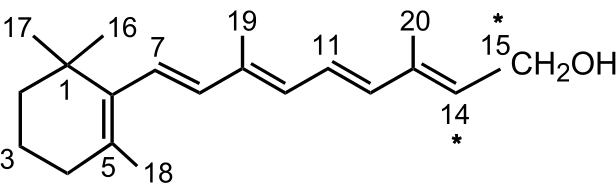
Figure 1: The structure of retinol with the carbons numbered. The 13C's are usually added in the 14 and 15 positions for use with gas chromatography-combustion mass spectrometry. Please click here to view a larger version of this figure.
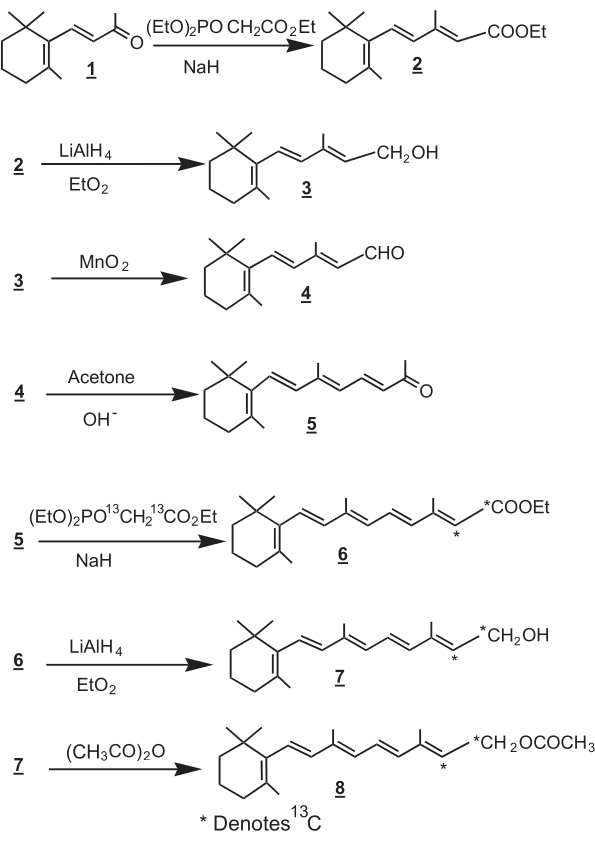
Figure 2: The synthetic scheme of 14,15-13C2-retinyl acetate used in retinol isotope dilution tests when gas chromatography-combustion-isotope ratio mass spectrometry is used for serum or breast milk analysis. Please click here to view a larger version of this figure.
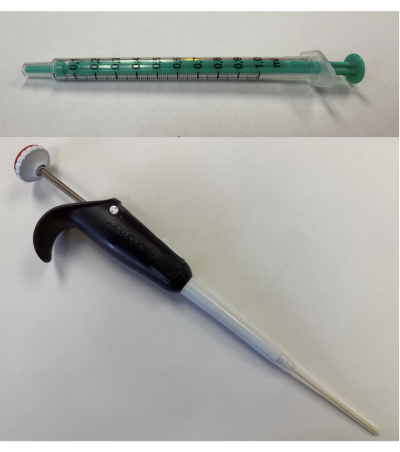
Figure 3: A 1 mL tuberculin syringe with no dead volume at the tip and the 250 µL positive displacement pipette used for dosing in tracer studies. Please click here to view a larger version of this figure.
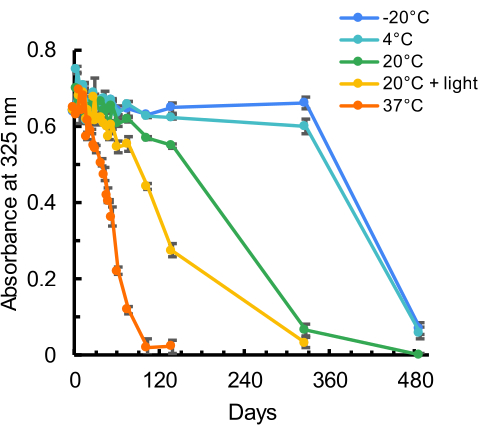
Figure 4: Degradation curves of retinyl acetate stored in capsules in five different conditions. The conditions are -20 °C, 4 °C, 20 °C (room temperature) in the dark, 20°C (room temperature) under standard fluorescent light, and 37 °C. Please click here to view a larger version of this figure.
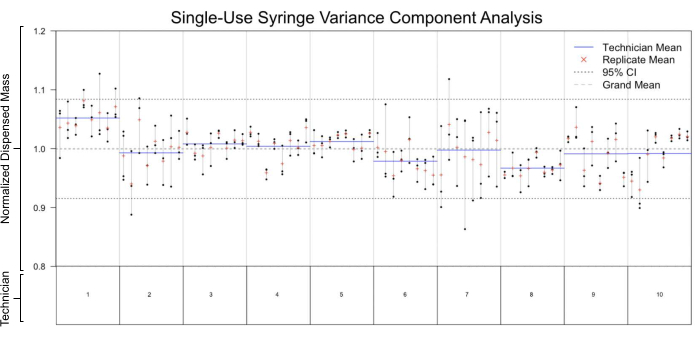
Figure 5: Variance component analysis of dose delivery amount comparing 1 mL tuberculin syringes to a 250 µL positive displacement pipette among 10 technicians blinded to results during the evaluation. Values are dispensed oil mass (200 µL) from syringes normalized to the positive displacement pipette. Please click here to view a larger version of this figure.
Supplemental Figure S1: An example of the final purity check of the 14,15-13C-retinyl acetate by ultra-pressure liquid chromatography. The corresponding spectra are characteristic of the cis/trans forms of the vitamin. The UPLC conditions were Solvent A 70:25:5 (acetonitrile:water:isopropanol) with 10 mM ammonium acetate and Solvent B was 75% acetonitrile, 25% isopropanol. The column used was an Acquity UPLC, BEH C18 1.7 µM, 2.1 x 100 mm column. The column was set at 29 °C, and the flow rate was 0.4 mL/min. The gradient began with 100% Solvent A and held for 5.0 min, followed by a transition to 98% Solvent B by 7 min and held for 8 min before transitioning back to 100% Solvent A over 1 min and held for 4-min equilibration. Please click here to download this File.
Discussion
Loading...
$$\rightleftharpoonup{xx}$$
$$\longleftharp{xx}$$,
$$\longrightharp{xx}$$,
While there are commercial sources of deuterated and 13C-labeled retinyl acetate, there are multiple synthetic pathways for retinol in the literature for skilled organic chemists. We chose a synthetic path for deuterated retinyl acetate to follow and made appropriate adjustments to add 13C to the backbone of the retinol moiety, which are outlined above. The synthesis of 14,15-13C2-retinyl acetate was accomplished using a seven-step procedure beginning with commercially available β-ionone. β-Ionone is a naturally occurring plant component and contributes to fragrances, such as from roses. The most crucial step in the synthetic pathway is the formation of the C18 tetraene ketone. This intermediate compound needs to be at least 90% pure for the subsequent steps to produce good yields.
Labeling was performed by using a modified Wittig-Homer procedure with commercially available 13C2-triethylphosphonoacetate. The labeled compounds are used in the RID test to determine TBS and estimate TLR. The method utilizes GCCIRMS for analysis of retinol purified from serum or breast milk of individuals who have been dosed with physiological levels of the labeled compounds. The most common doses are 1 µmole for children and 2 µmole for adults. While GCCIRMS analysis is sensitive for isotope enrichment, the serum analysis requires a minimum of 400 µL of serum to obtain enough retinol mass for introduction onto the GC.
The 13C-RID test has been used in clinical studies23,24 and in groups of African children25 with future plans to make it accessible for population-based work. We performed the experiments with capsules and syringes to investigate whether these modifications are suitable for population work. The capsules needed to be in an upright position or they leaked; we quickly discarded the idea that they could be stored in regular amber pill bottles for field use. The capsules were only stable for ~9 months at refrigerator and freezer temperatures. Production of sealed capsules may improve stability by reducing minor exposure to atmosphere during storage. Use of capsules should be tested and validated by user groups before implementation.
The final oil solutions are stable at room temperature for ~2 months, but once they start degrading, the degradation continues quickly. There is no partial activity acceptable for RID tests as the amount dosed is used in the calculation of TBS. It is best to keep the solutions on ice packs in the field during use and refreeze them as soon as possible after the dosing is completed. It is best to only bring a few doses more than needed for the day and keep the rest frozen. Freezing and thawing do not affect these solutions because the oil itself has antioxidants in it. The oil solutions are more robust than blood samples but still need to be kept in the dark at all times and frozen when not in use.
Doses are administered using 250 µL Rainin positive displacement pipettes or 1 mL tuberculin syringes. Air displacement pipettes are not suitable for doses that are dissolved in oil. Our laboratory has experimentally compared these two methods (see Representative Results). Administration with the pipette or syringe is similar with a few deviations. Rainin positive displacement pipettes are recommended for research or clinical studies, but syringes can be used for population-based work. Syringes with little dead volume in the tip are recommended to maximize dose precision (e.g., Norm-Ject).
Calculations for the RID test include the amount of dose administered, and error in the amount of dose administered is proportional to the error in the resulting estimate of TBS. For use of tuberculin syringes versus positive displacement pipettes, the mean normalized syringe delivery was close to 1, indicating that syringes can provide accurate dose delivery for population studies. The 95% confidence limits were approximately ± 8% of the target dose delivery. Technicians with more prior experience with the syringes had a narrower 95% CI (± 6%) and lower variance contribution from technician compared with technicians with less experience (± 10%). This suggests that a training protocol and validation using vehicle oil should be performed prior to implementation in the field. These results merit further validation in each laboratory that wants to use single-use tuberculin syringes as a cost-effective and time-saving delivery method to administer the doses in dose-response and RID tests in population-based studies.
We have opted for the positive displacement pipette for research and clinical studies using the RID test to maximize individual-level accuracy, as their reported accuracy and precision are ≤1%. In comparison, the modified relative dose response test is qualitative, and no calculations are based on the amount of dose given1. Therefore, we have recommended using syringes for the test in population-based surveys and that the dose be dissolved in approximately 0.7 mL of vehicle.
The RID test is a sensitive method to quantify TBS and estimate TLR, which is the reference standard to evaluate vitamin A status. It has been used in many research applications using either deuterium or 13C labeling. Current and future applications will use the RID test in clinical settings and population subgroups in surveys. Simplification of dosing will be important for these applications.
Disclosures
Loading...
$$\rightleftharpoonup{xx}$$
$$\longleftharp{xx}$$,
$$\longrightharp{xx}$$,
The authors have no conflicts of interest with the content of this manuscript.
Acknowledgements
Loading...
$$\rightleftharpoonup{xx}$$
$$\longleftharp{xx}$$,
$$\longrightharp{xx}$$,
This work was funded by NIH-R01 DC019357 and the IAEA Coordinated Research Project E43035. We thank Nicholas Keuler from the Statistical Consulting group at the University of Wisconsin-Madison for assistance in the analysis of the single-use syringe method comparison.
Materials
| Name | Company | Catalog Number | Comments |
|---|---|---|---|
| acetic anhydride | Sigma Aldrich | 242845 | |
| acetone | Sigma Aldrich | 179124 | |
| aluminum oxide | Sigma Aldrich | 199974 | |
| beakers | Any | Any glass supply company | |
| beta-ionone | Sigma Aldrich | W259500 | |
| ether | Sigma Aldrich | 673811 | |
| glass pasteur pipettes | Any | Any glass supply company | |
| hexanes | Sigma | 178918 | |
| labeled triethylphosphonoacetate | Sigma Aldrich | 293202 | |
| lithium aluminum hydride solution | Acros organics | 199511000 | |
| manganese oxide | Sidma Aldrich | 310700 | |
| positive displacement pipettes | Rainin | 17008579 | |
| retinyl acetate | Sigma Aldrich | R4632 | |
| separatory funnels | Any | Any glass supply company | |
| silica gel | Sigma Aldrich | 1.07734 | |
| sodium hydride | Aldrich | 223441 | |
| sodium hydroxide | Fisher Scientific | S318-100 | |
| spectrophotometer | Any scanning | Double beam is preferred | |
| triethylamine | Sigma Aldrich | 471283 | |
| triethylphosphonoacetate | Aldrich | T61301 | |
| tuberculin syringe | Norm-Ject | 19G334 | |
| vegetable oil | soybean | Grocery store | |
| volumetric flasks (25 mL) | Any | Any glass supply company |
References
Loading...
$$\rightleftharpoonup{xx}$$
$$\longleftharp{xx}$$,
$$\longrightharp{xx}$$,
- Biomarkers of nutrition for development (BOND) - Vitamin A review. J Nutr. 146 (9), 1816S-1848S (2016).">Tanumihardjo, S. A., et al. Biomarkers of nutrition for development (BOND) - Vitamin A review. J Nutr. 146 (9), 1816S-1848S (2016).
- Overlapping vitamin A interventions in the United States, Guatemala, Zambia, and South Africa: case studies. Annals NY Acad Sci. 1446 (1), 102-116 (2019).">Tanumihardjo, S. A., Kaliwile, C., Boy, E., Dhansay, M. A., van Stuijvenberg, M. E. Overlapping vitamin A interventions in the United States, Guatemala, Zambia, and South Africa: case studies. Annals NY Acad Sci. 1446 (1), 102-116 (2019).
- Use of stable isotopes to evaluate bioefficacy of provitamin A carotenoids, vitamin A status, and bioavailability of iron and zinc. Adv Nutr. 9 (5), 625-636 (2018).">Sheftel, J., Loechl, C., Mokhtar, N., Tanumihardjo, S. A. Use of stable isotopes to evaluate bioefficacy of provitamin A carotenoids, vitamin A status, and bioavailability of iron and zinc. Adv Nutr. 9 (5), 625-636 (2018).
- Synthesis of tri-, tetra-, and penta-deuterated forms of vitamin A. J Labelled Cpd Radiopharm. 25 (1), 11-21 (1988).">Bergen, H. R., Furr, H. C., Olson, J. A. Synthesis of tri-, tetra-, and penta-deuterated forms of vitamin A. J Labelled Cpd Radiopharm. 25 (1), 11-21 (1988).
- Synthesis of 10, 11, 14, 15-13C4- and 14, 15-13C2-retinyl acetate. J Labelled Cpd Radiopharm. 44 (5), 365-372 (2001).">Tanumihardjo, S. A. Synthesis of 10, 11, 14, 15-13C4- and 14, 15-13C2-retinyl acetate. J Labelled Cpd Radiopharm. 44 (5), 365-372 (2001).
- Vitamin A status assessment in rats using 13C4-retinyl acetate and gas chromatography-combustion isotope ratio mass spectrometry (GCCIRMS). J Nutr. 130 (1), 2844-2849 (2000).">Tanumihardjo, S. A. Vitamin A status assessment in rats using 13C4-retinyl acetate and gas chromatography-combustion isotope ratio mass spectrometry (GCCIRMS). J Nutr. 130 (1), 2844-2849 (2000).
- Duration of retinol isotope dilution studies with compartmental modeling affects model complexity, kinetic parameters, and calculated vitamin A stores in US women. J Nutr. 148 (8), 1387-1396 (2018).">Gannon, B. M., Valentine, A. R., Davis, C. R., Howe, J. A., Tanumihardjo, S. A. Duration of retinol isotope dilution studies with compartmental modeling affects model complexity, kinetic parameters, and calculated vitamin A stores in US women. J Nutr. 148 (8), 1387-1396 (2018).
- Existing and emerging technologies for measuring stable isotope labelled retinol in biological samples: isotope dilution analysis of body retinol stores. Int J Vitam Nutr Res. 84 (Suppl 1), 30-39 (2014).">Preston, T. Existing and emerging technologies for measuring stable isotope labelled retinol in biological samples: isotope dilution analysis of body retinol stores. Int J Vitam Nutr Res. 84 (Suppl 1), 30-39 (2014).
- 13C natural abundance of serum retinol is a novel biomarker for evaluating provitamin A carotenoid-biofortified maize consumption in male Mongolian gerbils. J Nutr. 146 (7), 1290-1297 (2016).">Gannon, B. M., et al. 13C natural abundance of serum retinol is a novel biomarker for evaluating provitamin A carotenoid-biofortified maize consumption in male Mongolian gerbils. J Nutr. 146 (7), 1290-1297 (2016).
- Provitamin A-biofortified maize consumption increases serum xanthophylls and 13C-natural abundance of retinol in Zambian children. Exp Biol Med. 242 (15), 1508-1514 (2017).">Sheftel, J., Gannon, B. M., Davis, C. R., Tanumihardjo, S. A. Provitamin A-biofortified maize consumption increases serum xanthophylls and 13C-natural abundance of retinol in Zambian children. Exp Biol Med. 242 (15), 1508-1514 (2017).
- 13C natural abundance in serum retinol acts as a biomarker for increases in dietary provitamin A. Exp Biol Med. 234 (2), 140-147 (2009).">Howe, J. A., Valentine, A. R., Hull, A. K., Tanumihardjo, S. A. 13C natural abundance in serum retinol acts as a biomarker for increases in dietary provitamin A. Exp Biol Med. 234 (2), 140-147 (2009).
- Comparison of total body vitamin A stores using individual versus population 13C-natural abundance of serum retinol in preschool children and women residing in 6 diverse African countries. J Nutr. 153 (4), 949-957 (2023).">Gannon, B. M., et al. Comparison of total body vitamin A stores using individual versus population 13C-natural abundance of serum retinol in preschool children and women residing in 6 diverse African countries. J Nutr. 153 (4), 949-957 (2023).
- Vitamin A status and body pool size of infants before and after consuming fortified home-based complementary foods. Arch Public Health. 74, 10(2016).">Newton, S., et al. Vitamin A status and body pool size of infants before and after consuming fortified home-based complementary foods. Arch Public Health. 74, 10(2016).
- Triple-fortified rice containing vitamin A reduced marginal vitamin A deficiency and increased vitamin A liver stores in school-aged Thai children. J Nutr. 144 (4), 519-524 (2014).">Pinkaew, S., et al. Triple-fortified rice containing vitamin A reduced marginal vitamin A deficiency and increased vitamin A liver stores in school-aged Thai children. J Nutr. 144 (4), 519-524 (2014).
- Breast milk retinol concentrations reflect total liver vitamin A reserves and dietary exposure in Thai lactating women from urban and rural areas. J Nutr. 152 (12), 2689-2698 (2023).">Nimmannun, K., et al. Breast milk retinol concentrations reflect total liver vitamin A reserves and dietary exposure in Thai lactating women from urban and rural areas. J Nutr. 152 (12), 2689-2698 (2023).
- https://ehs.stanford.edu/reference/campus-laboratory-fire-involvinglithium- aluminum-hydride (2025).">A campus laboratory fire involving lithium aluminum hydride. , https://ehs.stanford.edu/reference/campus-laboratory-fire-involvinglithium- aluminum-hydride (2025).
- Lessons learned− lithium aluminum hydride fires. ACS Chem. Health Saf. 29 (4), 362-365 (2002).">Merlic, C. A., Ferber, C. J., Schroder, I. Lessons learned− lithium aluminum hydride fires. ACS Chem. Health Saf. 29 (4), 362-365 (2002).
- A safety guidance document for lithium aluminum hydride (LAH) reduction: A resource for developing specific SOPs on LAH manipulations. ACS Chemical Health & Safety. 31 (2), 162-171 (2024).">Chandra, T., Zebrowski, J. P. A safety guidance document for lithium aluminum hydride (LAH) reduction: A resource for developing specific SOPs on LAH manipulations. ACS Chemical Health & Safety. 31 (2), 162-171 (2024).
- https://ehs.ucsc.edu/programs/research-safety/documents/ucla-pyrophoric-solid.pdf (2025).">Procedures for safe use of pyrophoric solids accessed. , https://ehs.ucsc.edu/programs/research-safety/documents/ucla-pyrophoric-solid.pdf (2025).
- Green and yellow vegetables can maintain body stores of vitamin A in Chinese children. Am J Clin Nutr. 70 (6), 1069-1076 (1999).">Tang, G., et al. Green and yellow vegetables can maintain body stores of vitamin A in Chinese children. Am J Clin Nutr. 70 (6), 1069-1076 (1999).
- Biofortified orange maize is as efficacious as a vitamin A supplement in Zambian children even in the presence of high liver reserves of vitamin A: a community-based, randomized placebo-controlled trial. Am J Clin Nutr. 100 (6), 1541-1550 (2014).">Gannon, B., et al. Biofortified orange maize is as efficacious as a vitamin A supplement in Zambian children even in the presence of high liver reserves of vitamin A: a community-based, randomized placebo-controlled trial. Am J Clin Nutr. 100 (6), 1541-1550 (2014).
- R Foundation for Statistical Computing. , R Foundation for Statistical Computing. Vienna, Austria. (2024).">R Core Team. R: A Language and Environment for Statistical Computing. R Foundation for Statistical Computing. , R Foundation for Statistical Computing. Vienna, Austria. (2024).
- Vitamin A isotope dilution predicts liver stores in line with long-term vitamin A intake above the current Recommended Dietary Allowance for young adult women. Am J Clin Nutr. 98 (5), 1192-1199 (2013).">Valentine, A. R., Davis, C. R., Tanumihardjo, S. A. Vitamin A isotope dilution predicts liver stores in line with long-term vitamin A intake above the current Recommended Dietary Allowance for young adult women. Am J Clin Nutr. 98 (5), 1192-1199 (2013).
- Findings in 3 clinical trials challenge the accuracy of the Institute of Medicine's estimated average requirements for vitamin A in children and women. Am J Clin Nutr. 113 (5), 1322-1331 (2021).">Sheftel, J., et al. Findings in 3 clinical trials challenge the accuracy of the Institute of Medicine's estimated average requirements for vitamin A in children and women. Am J Clin Nutr. 113 (5), 1322-1331 (2021).
- Association between biomarkers of inflammation and total liver vitamin A reserves estimated by 13C-retinol isotope dilution among preschool children in five African countries. J Nutr. 153 (3), 622-635 (2023).">Suri, D., et al. Association between biomarkers of inflammation and total liver vitamin A reserves estimated by 13C-retinol isotope dilution among preschool children in five African countries. J Nutr. 153 (3), 622-635 (2023).
Reprints and Permissions
Request permission to reuse the text or figures of this JoVE article
Request Permission