7.6
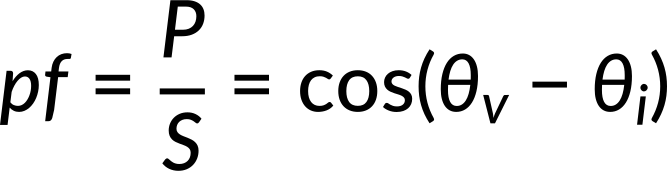
역률은 피상 전력에 대한 평균(또는 유효) 전력의 비율로 정의됩니다.
괄호 안의 용어(θ_v - θ_i)는 코사인이 역률을 생성하는 각도를 나타내므로 역률 각도라고 합니다. V가 부하에 걸리는 전압을 나타내고 Ⅰ이 이를 통해 흐르는 전류를 나타내는 경우 역률 각도는…
역률은 피상 전력에 대한 유효 전력의 비율입니다.
이는 전압과 전류 사이의 위상차에 의해 결정되며, 이는 회로에 반응 소자의 존재로 인해 발생합니다.
커피 한 잔에 비유할 수 있는데, 여기서 커피는 유용한 유효 동력을 상징하고 거품은 실제 작업을 수행하지 않음에도 불구하고 특정 기기에 사용되는 무효 전력을 나타냅니다.
비용은 전체 유리를 포함합니다. 최대값을 얻으려면 무효 전력을 줄여 역률을 통일성에 가깝게 만들어야 합니다.
순수 저항 부하의 경우 동위상 전압 및 전류는 피상 전력이 유효 전력과 동일한 단일 역률을 생성합니다.
순전히 무효 부하의 경우 역률은 0이며 이는 유효 전력이 0임을 의미합니다.
이러한 극단 사이에서 역률은 선행하거나 후행합니다. 선행 역률은 전류가 전압을 주도한다는 것을 나타내며 이는 용량성 부하를 의미합니다.
지연되는 역률은 전류가 전압보다 뒤처져 있음을 의미하며 유도 부하를 나타냅니다.
View the full transcript and gain access to JoVE Core videos
Q1: What is power factor and how is it calculated?
Power factor is the ratio of active power to apparent power in an AC circuit. It equals the cosine of the phase difference between voltage and current, ranging from zero to one. For a purely resistive load with in-phase voltage and current, the power factor equals unity, meaning all apparent power converts to useful active power.
Q2: Why does power factor matter for electricity costs?
Utility companies charge for apparent power, which includes both active and reactive power. A lower power factor means more reactive power is wasted without performing real work, increasing electricity bills. Reducing reactive power to bring the power factor closer to unity maximizes value and lowers costs for consumers.
Q3: What is the difference between leading and lagging power factor?
A leading power factor occurs when current leads voltage, indicating a capacitive load. A lagging power factor occurs when current lags behind voltage, indicating an inductive load. Both represent phase differences between voltage and current that reduce the power factor below unity.
Q4: How does load type affect power factor?
Purely resistive loads produce a unity power factor of one, with voltage and current in phase. Purely reactive loads produce a zero power factor with no active power. Real circuits contain combinations of resistive and reactive elements, resulting in power factors between zero and one depending on the load impedance angle.
Q5: What does the power factor angle represent?
The power factor angle is the phase difference between voltage and current, equal to the angle of the load impedance. Its cosine yields the power factor value. This angle determines whether the power factor is leading or lagging and directly influences how much active power the circuit delivers.
Q6: How can the coffee and foam analogy explain power factor?
In this analogy, coffee represents useful active power that performs real work, while foam represents reactive power that does not perform real work but is utilized by certain appliances. The entire glass represents apparent power, which utilities charge for. Reducing foam (reactive power) maximizes the value of what you pay for.
Q7: What happens to power factor in purely reactive circuits?
In purely reactive circuits, the phase difference between voltage and current is 90 degrees, resulting in a power factor of zero. This means active power is zero, and all power is reactive. No useful work is performed, though reactive power is essential for maintaining voltage levels in power systems.