이 프로토콜은 낙상 심각도 스크리닝, Morse Fall Scale, FRAIL 노쇠 스크리닝 및 다요인 평가를 통합하여 표준화된 위험 분류를 지원하고 위험 요인 맞춤형 중재를 안내하는, 입원 노인을 위한 3단계 낙상 위험 평가 경로를 설명합니다.
이 콘텐츠를 보려면 JoVE 구독이 필요합니다. 로그인하거나 오늘 무료 평가판을 시작하세요.
이 논문에서
요약
초록
고령자의 낙상은 여러 요인의 상호작용으로 인해 발생하므로, 단일 평가 도구만으로는 낙상 위험을 종합적으로 식별하기 어렵습니다. 본 연구는 입원한 고령자를 대상으로 점진적인 낙상 위험 식별과 표준화된 위험 분류를 지원하기 위해 포괄적 노인 평가를 기반으로 한 3단계 낙상 위험 평가 프로토콜을 설명합니다. 전향적으로 수집된 임상 데이터를 바탕으로 151명의 입원 고령자를 대상으로 단일 센터 소급적 기술 분석을 수행하였습니다. 1단계에서는 Morse 낙상 척도(MFS)와 낙상 심각도 선별 검사를 결합하여 시행하였습니다. 2단계에서는 1단계에서 저위험군으로 분류된 대상자를 대상으로 FRAIL 척도를 사용하여 보충적인 노쇠 선별 검사를 수행하였습니다. 3단계에서는 1단계에서 중등도 또는 고위험군으로 분류된 대상자와 2단계에서 전노쇠 또는 노쇠로 판명된 대상자를 대상으로 다요인 낙상 위험 평가를 적용한 후 최종 위험 분류를 수행하였습니다. 1단계에서 94명(62.2%)은 저위험군으로, 57명(37.7%)은 중등도 또는 고위험군으로 분류되었으며, 17명(11.3%)은 낙상 심각도 선별 검사에서 양성 반응을 보였습니다. 2단계로 진입한 94명의 대상자 중 23명(15.2%)이 FRAIL 척도 결과에서 이상을 보였습니다. 총 80명의 대상자가 3단계로 진행하였습니다. 최종 위험 분류 결과 80명(53.0%)은 저위험군, 22명(14.6%)은 중등도 위험군, 49명(32.5%)은 고위험군으로 식별되었습니다. FRAIL 척도 결과가 비정상이었던 23명의 대상자 중 15명은 3단계 평가 후 중등도 또는 고위험군으로 분류되었습니다. 이러한 결과는 본 프로토콜이 과소 식별을 줄이면서 중등도 및 고위험군 입원 고령자의 식별률을 향상시킬 수 있음을 시사하나, 그 성능에 대해서는 추가적인 검증이 필요합니다.
서론
낙상은 노인에게 발생하는 가장 흔한 안전 사고 중 하나이며, 부상, 장애, 사망 및 의료 자원 이용 증가와 관련이 있습니다1,2. 따라서 낙상 위험 평가는 낙상 예방의 핵심 요소입니다1. 여러 국제 가이드라인에서 다요인 평가와 개별화된 중재를 권장하고 있음에도 불구하고, 낙상은 여전히 노인들에게 주요한 안전 문제로 남아 있습니다2,3,4,5. 낙상은 생리학적, 임상적, 약물 관련, 기능적, 행동적 및 환경적 요인의 상호작용으로 인해 발생합니다. 단일 위험 평가 도구는 낙상 위험이 높은 일부 개인을 빠르게 식별할 수 있지만, 단일 도구만으로 낙상과 관련된 다수의 위험 요인을 종합적으로 평가하기는 어렵습니다6,7,8. 따라서 체계적인 다단계 낙상 위험 평가 접근 방식을 확립하는 것은 노인의 낙상 예방 및 관리에 있어 여전히 중요한 과제로 남아 있습니다.
모든 입원 고령 환자에게 포괄적 평가를 적용하는 것은 자원 소모가 클 수 있으며, 반면 단일 스크리닝 점수에만 의존할 경우 관련 위험 요인을 충분히 평가하지 못할 수 있습니다. 단일 평가 도구에 기반한 접근 방식과 달리, 제안된 3단계 방법은 신속한 1차 스크리닝, 보완적인 노쇠 스크리닝, 그리고 추가 평가가 필요한 개인을 위한 표적 다요인 평가를 결합합니다. 이러한 단계적 접근 방식은 1차 스크리닝의 효율성을 유지하는 동시에, 필요한 경우 더 포괄적인 평가를 가능하게 하려는 목적을 가지고 있습니다. 점진적 스크리닝과 표적 평가를 통합함으로써, 본 프로토콜은 체계적인 위험 식별과 최종 위험 분류를 지원하며 위험 요인 기반의 중재를 안내하는 표준화된 워크플로우를 제공합니다.
~에 근거하여 고령자를 위한 낙상 예방 및 관리에 관한 세계 가이드라인3, 포괄적 노인 평가 및 임상 실무를 바탕으로, 본 연구는 입원 노인 환자를 위한 3단계 낙상 위험 평가 방법 및 운영 프로토콜을 개발하였습니다. 이 프로토콜의 전반적인 목표는 점진적인 낙상 위험 식별, 최종 위험 분류 및 위험 요인 중심의 층화 중재를 위한 표준화되고 재현 가능한 워크플로우를 제공하는 것입니다. 모든 입원 노인 환자에게 포괄적 평가를 적용하거나 단일 스크리닝 도구에만 의존하는 것과 비교하여, 이 단계별 프로토콜은 추가 평가가 필요한 경우에만 표적화된 포괄적 평가를 수행함으로써 평가 효율성과 정밀 평가 사이의 균형을 맞추고자 합니다. 본 프로토콜은 숙련된 평가자와 필요한 평가 도구를 갖춘 입원 노인 간호 및 기타 병원 환경에서 사용하도록 설계되었습니다.
액세스가 제한되었습니다. 이 콘텐츠를 보려면 로그인하거나 체험판을 시작하세요.
프로토콜
본 프로토콜 및 분석은 항저우 우윈산 병원(항저우 건강 증진 연구소) 의료윤리위원회(윤리 승인 번호: 2023 Medical Research Review No. 007)의 승인을 받았습니다. 등록 전 모든 참여자 또는 그들의 법정 대리인으로부터 서면 동의서를 얻었습니다. 기밀 유지를 위해 참여자의 신원 정보는 연구 데이터 세트와 별도로 저장되었습니다. 모든 방법은 1964년 헬싱키 선언 및 이후 수정 사항을 포함한 관련 지침과 윤리 표준에 따라 수행되었습니다. 본 연구는 국가 의료 연구 등록소(MR-33-23-035548)에 등록되었습니다.
1. 피험자 준비
- 선정 기준
- 다음 기준을 모두 충족하는 경우에만 대상자로 선정한다: (1) 연령 ≥65세, (2) 의식이 명료하며 단독으로 또는 간병인의 도움을 받아 평가를 완료할 수 있는 능력, (3) 낙상 위험 평가 및 관련 중재 관리를 받는 것에 동의함.
- 제외 기준
- 다음 조건 중 어느 하나라도 해당하는 경우 대상자에서 제외한다: (1) 평가 완료를 방해하는 심각한 급성 질환 또는 위중한 상태, (2) 평가 협조를 불가능하게 하는 심각한 인지 장애 또는 비정상적 정신 행동, (3) 필수 데이터 누락.
2. 1단계: 초기 위험 스크리닝
- 모든 대상 가능 참가자를 대상으로 보편적인 1차 스크리닝 도구로 Morse 낙상 척도(MFS)를 사용하십시오. 낙상 이력이 확인되면 낙상 심각도 스크리닝을 실시하십시오.
Morse 낙상 척도(MFS)- 모든 대상 가능 참가자에게 MFS를 실시하십시오. 총점을 계산하고 경로 규칙을 적용하기 전에9 6가지 MFS 항목을 모두 평가하고 기록하십시오.
- 지표 1인 낙상 이력을 평가하십시오. 참가자가 지난 3개월 동안 낙상한 적이 있는지 확인하십시오. 그렇다면 25점, 아니면 0점을 부여합니다. 단계 2.2에 기술된 낙상 심각도 스크리닝을 위해 지난 1년 동안 발생한 모든 낙상 사례를 기록하십시오.
- 지표 2인 이차 의학적 진단을 평가하십시오. 하나 이상의 의학적 진단이 기록되어 있는지 확인하십시오. 그렇다면 15점을 부여하고, 그렇지 않으면 0점을 부여합니다.
- 지표 3인 보행 보조기구 사용 여부를 평가하십시오. 참가자가 목발, 지팡이 또는 워커를 사용하는지 질문하고 관찰하십시오. 이러한 기구 중 어느 하나라도 사용하면 15점을 부여합니다. 참가자가 가구에 의지해 걷는 경우 30점을 부여합니다.
- 지표 4인 정맥 요법을 평가하십시오. 참가자가 정맥 라인을 보유하고 있거나 정맥 주입을 받고 있는지 확인하십시오. 그렇다면 20점을 부여하고, 그렇지 않으면 0점을 부여합니다.
- 지표 5인 보행 및 가동성을 평가하십시오. 안전한 가동 중에 참가자의 보행을 관찰하십시오. MFS 정의에 따라 보행이 약한 경우 10점, 보행이 장애가 있는 경우 20점을 부여합니다.
- 지표 6인 제한 사항에 대한 인식도를 평가하십시오. 참가자가 개인적인 가동성 제한과 도움의 필요성을 인식하고 있는지 확인하십시오. 참가자가 개인적 제한 사항을 과대평가하거나 잊어버린 경우 15점을 부여하고, 그렇지 않으면 0점을 부여합니다.
- 낙상 심각도 스크리닝
- 지난 1년 동안 한 번 이상의 낙상을 보고한 참가자를 대상으로 낙상 심각도 스크리닝을 수행하십시오10.
- 참가자가 지난 1년 동안 두 번 이상의 낙상을 경험했는지 확인하십시오.
- 낙상으로 인해 의료적 처치가 필요한 부상이 발생했는지 확인하십시오.
- 낙상 후 참가자가 스스로 일어날 수 없어 타인의 도움이 필요했는지 확인하십시오.
- 낙상 중 의식 소실 또는 실신 의심 사례가 있었는지 확인하십시오.
- 단계 2.2.2~2.2.5의 기준 중 어느 하나라도 충족되면 낙상 심각도 스크리닝 결과를 양성으로 기록하십시오. 그렇지 않으면 음성으로 기록하십시오.
- MFS 점수 계산 및 경로 규칙 적용
- 6가지 MFS 항목을 모두 완료한 후 MFS 총점을 계산하십시오.
- MFS 점수가 0–24점이면 저위험군, 25–44점이면 중위험군, 45점 이상(≥45)이면 고위험군으로 분류하십시오9.
- 표준 MFS 위험 범주를 기록한 후, 사전 정의된 3단계 경로 규칙을 적용하십시오.
- MFS 총점이 25점 이상(≥25)이거나 낙상 심각도 스크리닝이 양성인 경우 참가자를 3단계로 배정하십시오.
- MFS 총점이 25점 미만(<25)이고 낙상 심각도 스크리닝이 음성인 경우 참가자를 2단계로 배정하십시오.
3. 2단계: 노쇠 보충 선별 검사
- MFS 총점이 다음인 참여자에게 2단계(Second Level)를 적용하십시오. <25세이며 낙상 심각도 스크리닝 결과가 음성임.
- FRAIL 노쇠 척도
- Wei 등이 번역 및 검증한 FRAIL 척도의 중국어 버전을 실시하십시오.11 총점을 계산하기 전 다섯 가지 항목을 모두 평가하고 기록하십시오. 각 항목은 0 또는 1로 점수를 매깁니다. 측정 장비를 사용하지 않고 참여자의 자기 보고를 바탕으로 평가하십시오.
- 지표 1: 피로도를 평가하십시오. 참여자가 지난 한 주 동안 대부분의 시간 또는 모든 시간 동안 피로감을 느꼈는지 질문하십시오. '예'라고 답한 경우 1점을 부여하십시오.
- 지표 2: 저항성(계단 오르기)을 평가합니다. 대상자가 보조 기구 사용, 타인의 도움 또는 중간 휴식 없이 계단 한 층을 오르는 데 어려움이 있는지 확인하십시오. 그렇다고 답한 경우 1점을 부여합니다.
- 지표 3: 보행을 평가하십시오. 대상자가 보조 기구나 타인의 도움 없이 한 블록(100m)을 걷는 데 어려움이 있는지 확인하십시오. 그렇다고 답한 경우 1점을 부여하십시오.
- 지표 4: 질환 상태를 평가하십시오. 단계 2.1.3에 기록된 검증된 진단 목록을 사용하고, 이미 기록되지 않은 의사 진단 질환에 대해서만 질문하십시오. 참여자가 다음 질환 중 5가지 초과로 보유하고 있는지 확인하십시오: 고혈압, 당뇨병, 심근경색, 뇌졸중, 경미한 피부암을 제외한 암, 울혈성 심부전, 천식, 관절염, 만성 폐질환, 신장 질환 또는 협심증. 참여자가 5가지 초과의 질환을 보유한 경우 1점을 부여하십시오.
- 지표 5: 체중 감소를 평가하십시오. 대상자가 지난 1년 또는 그보다 짧은 기간 동안 체중이 5% 이상 감소했는지 확인하십시오. '예'인 경우 1점을 부여하십시오.
- FRAIL 점수 계산 및 경로 결정
- 다섯 가지 평가 항목을 모두 완료한 후 총 FRAIL 점수를 계산하십시오.
- FRAIL 점수가 0점이면 비노쇠, 1~2점이면 노쇠 전단계, 3~5점이면 노쇠로 참가자를 분류하십시오.11.
- FRAIL 점수가 0점인 참가자는 직접 저위험 경로에 유지하십시오.
- FRAIL 점수가 1~5점으로 나타나 전frailty(prefrailty) 또는 노쇠(frailty) 상태인 참여자를 3단계 다요인 낙상 위험 평가로 안내하십시오.
4. 세 번째 단계: 다요인 위험 평가
- 낙상 심각도 스크리닝 결과가 양성인 경우, 해당 참가자를 3단계(Third Level)에 배정하십시오.
- 낙상 심각도 선별 검사 결과가 음성이고 총 MFS 점수가 25점 이상인 경우, 해당 참여자를 3단계(Third Level)에 배치하십시오.
- 낙상 심각도 스크리닝 결과가 음성이며, 전체 MFS 점수가 [값]인 경우 참가자를 3단계(Third Level)에 배정하십시오. <25세이며, FRAIL 점수는 1~5점입니다.
- 노인을 위한 다요인 낙상 위험 평가
- Chen 등이 개발하여 발표한 중국어판 노인 낙상 위험 평가 척도를 실시하십시오.12.
- 총점을 계산하기 전에 10가지의 모든 1차 지표와 36가지의 2차 지표를 평가하십시오.
참고: 본 도구는 입원한 200명의 고령자를 대상으로 평가되었습니다. 원저 논문에서 보고된 Cronbach’s α 값은 0.714~0.789, S-CVI/Ave 값은 0.962~1.000, KMO 값은 0.698~0.791이었으며, Bartlett 검정 결과는 유의미하였습니다(P<0.001). < 0.001)12.
- 평가 시 주의사항
- 평가자 자격 검증
- 수간호사 이상의 직위를 보유하고 10년 이상의 임상 경력을 가진 정규 간호사 4명을 대상으로 한다.
- 평가 시작 전 재활의학과 수간호사가 진행하는 3일 교육 프로그램을 제공하십시오.
- MFS, FRAIL 척도, 노인 낙상 위험 평가 척도, 체질량 지수(BMI), 악력, 종아리 둘레, 5회 앉았다 일어서기 검사, 3m Timed Up and Go 검사 및 서서 균형 잡기 검사에 대한 교육을 포함하십시오.
- 교육 과정 전반에 걸쳐 표준 작업 절차서(SOP)와 시연 영상을 활용하십시오.
- 각 평가자가 실기 시험에 합격하고, 평가 절차 및 채점에 대해 교육 책임자와의 일치성을 입증하도록 요구하십시오.
- 짝지은 평가 및 표준화된 지침 사용
- 각 참가자를 평가하기 위해 두 명의 간호사를 배정하십시오.
- 인터뷰 및 기록 기반 평가를 수행할 간호사 한 명을 배정하십시오.
- 두 번째 간호사가 도구 기반 평가를 수행하도록 배정하십시오.
- 최종 위험 수준을 할당하기 전에 종합 평가 결과를 검토하십시오.
- 모든 참가자에게 동일한 표준 지침 및 운영 절차를 적용하십시오.
- 안전성 및 참여자 내약성 유지
- 기기 기반 평가를 수행하기 전에 모든 인터뷰 및 관찰 평가를 완료하십시오.
- 안전을 위해 보호자가 근처에 머무는 것은 허용하되, 테스트 완료 과정에 도움을 주는 것은 허용하지 마십시오.
- 평가 전 과정 동안 낙상 예방 주의 사항을 준수하십시오.
- 30분 이내에 평가를 완료하십시오.
- 신체적 제한으로 인해 참여자가 도구 기반 평가를 완료할 수 없는 경우 그 사유를 기록하고, 결과를 결측 데이터로 처리하는 대신 사전 정의된 점수를 부여하십시오.
- 평가자 자격 검증
- 평가 자료
- 신장 및 체중계, 악력계, 줄자, 팔걸이가 있는 표준 의자 1개, 팔걸이가 없는 표준 의자 1개(좌석 높이: 46cm, 팔걸이 높이: 21cm), 3m 보행로 마커, 타이머, 평가 양식, 종이 및 펜을 사용하십시오.
- 제조업체, 모델, 사양 및 액세스 정보는 다음의 내용을 참조하십시오. 재료 목록.
- 다요인 평가를 수행하십시오
- 진단 기반 항목의 경우, 전문의 기록을 바탕으로 주치의가 내린 진단을 사용하며, 이번 입원 기간 동안 이를 재확인하십시오.
- 참가자의 보고 내용이 의료 기록과 다를 경우, 검증된 의료 기록을 채점 기준으로 사용하십시오.
- 지표 1: 연령 (최대 6점)
- 임상 기록을 통해 참여자의 연령을 확인하십시오.
- 65~74세 연령의 참가자에게 2점을 부여하십시오.
- 75~84세의 참가자에게는 4점을 배정하십시오.
- 85세 이상의 참가자에게 6점을 배정하십시오.
- 지표 2: 낙상 이력 (최대 10점)
- 단계 2.1.2에서 기록된 검증된 낙상 이력을 사용하십시오.
- 참가자가 한 차례 낙상을 경험한 경우 5점을 부여하십시오.
- 참가자가 2회 이상의 낙상을 경험한 경우 10점을 부여하십시오.
- 지표 1: 연령 (최대 6점)
- 지표 3: 인지 기능 (최대 8점)
- 단계 2.1.7에 기록된 평가 결과를 사용하여 참가자가 개인의 능력을 과대평가하는지 또는 개인적 한계를 망각하는지 결정하십시오.
- 두 조건 중 어느 하나라도 충족되면 4점을 부여하십시오.
- 다음에서 설명하는 현지 적응형 중국어 Mini-Cog 절차를 실시하십시오. 표 113.
- Mini-Cog 점수가 3점 이하인 경우 6점을 부여하십시오.
- 전문의의 진단 기록을 바탕으로 주치의가 치매를 진단하고 이번 입원 기간 중 재확인한 경우에는 대신 8점을 부여하십시오.
- 지표 4: 정신적/심리적 상태 (최대 6점)
- “낙상에 대한 두려움이 있으십니까?”라고 질문하십시오.
- 참가자가 "예"라고 답한 경우 2점을 부여하십시오.
- “쉽게 정서적으로 동요된다고 느끼십니까?”라고 질문하십시오.
- 참가자가 "예"라고 응답한 경우 2점을 부여하십시오.
- “지난 한 달 동안, 자주 우울하거나 낙담하거나 희망이 없다고 느끼셨습니까?”라고 질문하십시오.
- “지난 한 달 동안, 일상적인 일들에 대해 흥미나 즐거움을 거의 느끼지 못한 적이 자주 있었습니까?”라고 질문하십시오.
- 참가자가 두 질문 모두에 "예"라고 답한 경우 2점을 부여하십시오.
- 전문의 기록을 바탕으로 주치의가 우울증을 진단하고, 이번 입원 기간 동안 이를 재확인한 경우에만 진단 기반 점수를 부여하십시오.
- 지표 5: 질환 관련 증상 (최대 20점)
- “어지러움이나 현기증을 경험하십니까?”라고 질문하십시오.
- “자세를 바꿀 때(예: 쪼그려 앉아 있다가 일어설 때) 어지러움, 현기증 또는 시야가 어두워지는 증상을 경험하십니까?”라고 질문하십시오.
- 참가자가 두 질문 중 어느 하나라도 "예"라고 답하면 5점을 부여하십시오.
- “지난 한 주 동안, 대부분의 시간 또는 거의 모든 시간에 피로감을 느끼셨습니까?”라고 질문하십시오.
- “낮 시간의 절반 이상을 침대에 누워 있거나 의자에 앉아 지내야 합니까?”라고 질문하십시오.
- 두 조건 중 어느 하나라도 충족되면 5점을 부여하십시오.
- 또는 10개 항목, 100점 만점으로 구성된 중국식 바델 지수(Chinese Barthel Index)를 실시하십시오.12,14 ~에 기술된 바와 같이 표 2.
- Barthel Index 점수가 70점 이하인 경우 5점을 배정하십시오.
- “하지에 감각 저하, 떨림 또는 경직이 있습니까?”라고 질문하거나, 양측 하지에 기형, 편마비, 장애 또는 보행 불안정 증상이 있는지 관찰하십시오.
- 이상 소견이 있는 경우 4점을 배정하십시오.
- “설사나 빈뇨(주간) 증상이 있습니까?”라고 질문하십시오. >6회), 긴급뇨, 또는 야간뇨 증가(2회 이상)가 있습니까?”
- 어떠한 조건이라도 존재하는 경우 2점을 부여하십시오.
- “잠들기가 어렵거나, 조기 각성, 반복적인 각성, 과도한 낮 졸음 또는 수면 부족을 경험하십니까?”라고 질문하십시오.
- 어떤 조건이라도 존재하는 경우 2점을 부여하십시오.
- 전문의의 기록을 바탕으로 주치의가 수면 장애를 진단하고, 이번 입원 기간 중 이를 재확인한 경우에만 진단 기반 점수를 부여하십시오.
- 통증 평가
- “통증이 있으신가요?”라고 질문하십시오.
- 참가자가 통증을 호소하는 경우 0~10 숫자 등급 척도(NRS-11)를 실시하십시오.15참조하십시오. 표 3 NRS-11을 위해.
- “0이 통증이 없는 상태이고 10이 상상할 수 있는 가장 심한 통증이라면, 환자분의 통증을 가장 잘 나타내는 숫자는 무엇입니까?”라고 질문하십시오.
- NRS-11 점수가 3점 이상인 경우 2점을 부여하십시오.
- 6 지표 6: 청각 및 시각 기능 (최대 6점)
- 시력 평가
- “신문의 작은 글씨가 명확하게 보이시나요?”라고 물으십시오.
- “안경을 쓰시나요?”라고 물으십시오.
- 참가자가 안경을 착용하고 있는 경우, “안경을 쓴 상태에서 명확하게 보이십니까?”라고 질문하십시오.
- 다음에서 설명하는 세계보건기구(WHO)의 시각 장애 분류 기준을 적용하십시오. 표 416.
- 편측 시각 장애에 대해 2점을 할당하십시오.
- 양측 시각 장애에 대해 4점을 부여하십시오.
- 참가자가 양안 시각 장애 기준을 충족하는 경우, 추가적인 단안 점수를 부여하지 마십시오.
- 2 청력 평가
- “제 목소리가 명확하게 들리시나요?”라고 질문하십시오.
- “보청기를 착용하십니까?”라고 질문하십시오.
- 속삭이는 말하기를 이용하여 일상적인 의사소통 중의 청력을 평가하며, 이때 다음에서 설명하는 연구 특정적 의사소통 평가를 참조한다. 표 517속삭이는 말소리를 듣는 데 어려움이 있는 것을 청각 장애의 증거로 간주하십시오.
- 일측성 청력 손실에 대해 1점을 부여하십시오.
- 양측성 청력 손실에 대해 2점을 부여하십시오.
- 참가자가 양측성 청력 손실 기준을 충족하는 경우, 추가적인 단측성 점수를 부여하지 마십시오.
- 지표 7: 약물 요인 (최대 6점)
- 참가자의 약물 기록에서 진정-수면제, 항경련제, 항정신병 약물, 마약성 진통제, 이뇨제, 항고혈압제, 항부정맥제, 항당뇨제, 완하제 또는 산동제 복용 여부를 확인하십시오.
- 약물군 하나를 식별한 경우 2점을 부여하십시오.
- 두 가지 이상의 약물 계열이 확인되면 6점을 부여하십시오.
- 8 지표 8: 개인적 및 환경적 요인 (최대 12점)
- 1 신발 및 의류 평가
- 참가자의 신발과 의복이 낙상 방지 요건을 충족하는지 관찰하십시오.
- 요구 사항이 충족되지 않은 경우 3점을 부여하십시오.
- 2 카테터, 배액관 및 정맥관 평가
- 참여자가 유치 도뇨관, 배액관, 중심정맥관을 삽입하고 있는지 또는 정맥 수액 요법을 받고 있는지 확인하십시오.
- 이 중 어느 하나라도 존재하는 경우 3점을 부여하십시오.
- 3 보조기기 사용 평가
- 대상자가 지팡이, 보행기 또는 휠체어를 사용하는지 확인하십시오.
- 이동 보조 기구를 사용하는 경우 3점을 부여하십시오.
- 4 주거 상황 및 간병인 지원 평가
- 참가자가 단독 가구인지 확인하십시오.
- 참가자에게 보호자가 없는지 확인하십시오.
- 참가자의 간병인이 지식, 기술, 신체적 능력 또는 심리적 능력의 부족으로 인해 적절한 일상적 돌봄이나 안전 지원을 제공할 수 없는 상태인지 판단하십시오.
- 단계 4.7.8.4.1~4.7.8.4.3의 조건 중 어느 하나라도 충족되면 3점을 부여하십시오.
- 지표 9: 영양 및 신체 기능 (최대 20점)
- 1 BMI 측정
- 피험자의 신장과 체중을 측정하십시오.
- 체질량지수(BMI)를 체중(kg)/신장(m)²으로 계산하십시오.2.
- BMI가 다음과 같을 경우 2점을 부여하십시오. >25 kg/m2 또는 체중이 <44 kg12.
- 2 악력 측정
- 악력계를 사용하여 악력을 측정하십시오.
- 피험자를 팔을 뻗고 손목이나 팔꿈치를 굽히지 않은 상태로 똑바로 세웁니다.
- 피험자에게 최대 악력을 발휘하도록 지시하십시오.
- 양손을 각각 한 번씩 측정하고 더 높은 수치를 기록하십시오.
- 참가자가 협조하지 못하는 경우 측정을 중단하십시오.
- 악력 수치가 다음인 경우 2점을 부여하십시오. <남성의 경우 28 kg 또는 <여성 18 kg12,18.
- 3 종아리 둘레 측정
- 피험자를 좌석 높이가 46 cm인 표준 의자에 앉힙니다.
- 고관절과 슬관절을 다음 각도로 위치시킵니다. 90°.
- 줄자를 사용하여 각 종아리의 최대 둘레를 측정하십시오.
- 더 큰 측정값을 기록하십시오.
- 종아리 둘레가 다음과 같을 경우 2점을 부여하십시오. <남성의 경우 34cm 또는 <여성의 경우 33 cm12,18.
- 4 하지 근력 평가
- 5회 앉았다 일어서기 검사를 완료하는 데 걸리는 시간을 측정하십시오.
- 안전 보호 조치는 허용하되, 다른 사람이 이동을 돕는 것은 허용하지 마십시오.
- 완료 시간이 11초 이상이거나, 신체적 제한으로 인해 참가자가 테스트를 완료할 수 없는 경우 4점을 부여하십시오.12.
- 참조하십시오 표 6 상세 테스트 절차를 위하여.
- 5 이동성 평가
- 3m Timed Up and Go (TUG) 테스트를 완료하는 데 소요되는 시간을 측정하십시오.
- 완료 시간이 12초 이상이거나, 참가자가 불안정한 보행을 보이거나, 신체적 제한으로 인해 테스트를 완료할 수 없는 경우 5점을 부여하십시오.12.
- 참조하십시오 표 7 상세 시험 절차를 위하여.
- 6 균형 능력 평가
- 피험자가 양발을 모으고 서 있을 수 있는 시간을 측정하십시오.
- 방치 시간이 다음과 같을 경우 5점을 부여하십시오. <10초 또는 신체적 제한으로 인해 피험자가 테스트를 완료할 수 없는 경우12.
- 참조하십시오 표 8 상세 시험 절차를 위하여.
- 10 낙상 관련 건강 역량 (최대 6점)
- 1 낙상 위험 요인에 대한 이해도 평가
- “낙상으로 이어질 수 있는 위험 요인이 무엇인지 알고 계십니까?”라고 질문하십시오.
- 참가자가 정확하게 식별한 개인적 위험 요인의 비율을 계산하십시오.
- 참가자가 "모르겠습니다"라고 답하거나 식별하는 경우 2점을 부여하십시오. <평가 과정에서 확인된 위험 요인의 60%.
- 정확하게 식별된 위험 요인의 비율을 (정확하게 식별된 개인별 위험 요인의 수 ÷ 평가된 전체 개인별 위험 요인의 수) × 100%로 계산하십시오.
- 계산된 비율이 [값]일 경우, 해당 참여자를 이해도 부족으로 분류하십시오. <60%.
- 2 낙상 예방 조치에 대한 이해도 평가
- “낙상을 예방하는 방법을 알고 계십니까?”라고 질문하십시오.
- 참가자가 식별한 적용 가능한 낙상 예방 조치의 비율을 계산하십시오.
- 참가자가 "모르겠습니다"라고 답하거나 식별하는 경우 2점을 부여하십시오. <참여자의 확인된 위험 요인에 적용 가능한 예방 조치의 60%.
- 3 낙상 후 응급 대응 지식 평가
- “넘어졌을 때 어떻게 해야 하는지 알고 있나요?”라고 질문하십시오.
- 참가자의 구두 답변을 아래에 나열된 5가지의 사전 정의된 지식 포인트와 비교하십시오. 표 9실물 시연을 요구하지 마십시오.
- 참가자가 "모른다"라고 답하거나, 5가지 지식 항목 중 3가지 미만을 식별한 경우 2점을 부여하십시오.<60%).
| 시험 항목 | 투여 | 점수 산정 |
| 기억 | 서로 관련 없는 세 단어(예: 빨간색, 깃발, 나무)를 선택하십시오. 해당 단어들을 소리 내어 읽고, 참가자에게 즉시 따라 말하게 한 뒤 나중에 회상할 수 있도록 기억하라고 지시하십시오. | 즉각 단어 재생은 점수에 포함되지 않습니다. |
| 시계 그리기 검사 | 참가자에게 빈 종이에 지정된 시간(예: 11시 10분)을 나타내는 시계를 그리도록 요청하십시오. | 시계의 전체 형태가 완성된 경우 1점, 모든 숫자가 정확한 위치에 배치된 경우 1점, 시침과 분침이 정확한 위치에 배치된 경우 1점을 부여합니다. |
| 지연 회상 | 시계 그리기 과제를 완료한 후, 참가자에게 이전에 제시된 세 개의 단어를 회상하도록 요청하십시오. | 단어를 하나도 회상하지 못한 경우 0점, 1~2개를 회상한 경우 1점, 3개 단어를 모두 회상한 경우 2점을 부여합니다. 지연 회상 점수와 시계 그리기 점수를 합산하여 0~5점의 총점을 산출합니다. |
표 1: 표준화된 Mini-Cog 실시 및 채점. 본 프로토콜에 사용된 지역 맞춤형 중국어 Mini-Cog 절차의 실시 과정 및 채점 기준. 채점 방법은 해당 연구 병원에서 시행한 버전을 반영하였으며, 표준 Mini-Cog 알고리즘과는 차이가 있다. 총점은 다요인 평가 중에 사용되었다.
| 번호 | 활동 | 완전 독립적 | 약간의 도움 필요 | 상당한 도움 필요 | 완전 의존적 |
| 1 | 식사 | 10 | 5 | 0 | — |
| 2 | 목욕 | 5 | 0 | — | — |
| 3 | 몸단장 | 5 | 0 | — | — |
| 4 | 옷 입고 벗기 | 10 | 5 | 0 | — |
| 5 | 장 조절 | 10 | 5 | 0 | — |
| 6 | 방광 조절 | 10 | 5 | 0 | — |
| 7 | 화장실 이용 | 10 | 5 | 0 | — |
| 8 | 침대에서 의자로 이동 | 15 | 10 | 5 | 0 |
| 9 | 평지 걷기 | 15 | 10 | 5 | 0 |
| 10 | 계단 오르내리기 | 10 | 5 | 0 | 0 |
표 2: 중국식 바델 지수(10항목, 100점 버전). 기능적 의존도를 평가하는 데 사용된 중국식 10항목, 100점 바델 지수이다. 총점은 0점에서 100점까지이며, 점수가 높을수록 독립성이 더 높음을 나타낸다. 본 프로토콜에서는 다요인 평가 중 바델 지수 점수가 70점 이하인 참가자에게 낙상 위험 점수 5점을 부여하였다. 이 사전 지정된 연구 특이적 컷오프 값은 지속적인 피로감 및 장기간의 침상 또는 의자 휴식에 관한 주관적 질문의 객관적인 대안으로 사용되었는데, 이는 일부 참가자가 자기 보고 시 쇠약, 피로 또는 기능적 제한의 심각성을 과소평가한다는 임상적 관찰 결과에 따른 것이다. 이는 표준 바델 의존도 범주 컷오프로 해석되어서는 안 된다. 사용된 중국어 버전은 Hou 등이 보고한 검증된 10항목, 100점 바델 지수이다14.
| 점수 | 통증 강도 |
| 0 | 통증 없음 |
| 1–3 | 경미한 통증 |
| 4–6 | 중등도 통증 |
| 7–10 | 심한 통증 |
표 3: 중국어 숫자 통증 척도 (NRS-11). 현재 통증 강도를 평가하는 데 사용된 중국어판 11점 숫자 통증 척도(NRS-11)이다. 참여자는 현재 통증 정도를 0(통증 없음)부터 10(상상할 수 있는 가장 심한 통증)까지로 평가한다. 본 프로토콜에서는 다요인 평가 중 NRS-11 점수가 3점 이상인 참여자에게 낙상 위험 점수 2점을 할당하였다. 이 평가는 Hjermstad 등이 기술한 표준화된 NRS-1115을 기반으로 하였다.
| 시력 등급 | 시력이 더 좋은 눈의 최대 교정 시력 | 시야 (우세안) | 기능적 영향 |
| 경미한 시각 장애 | <6/12 (0.5) 미만이나 ≥6/18 (0.3) | 제한 없음 | 미세 활동의 경미한 손상 (예: 작은 글씨 읽기) |
| 중등도 시각 장애 | <6/18 (0.3)이나 ≥6/60 (0.1) | 제한 없음 | 일상 활동(예: 요리 및 이동)의 손상 |
| 심각한 시각 장애 | <6/60 (0.1)이나 ≥3/60 (0.05) | ≤20° | 자기관리 능력의 심각한 제한 |
| 실명 | <3/60 (0.05) | ≤10° | 도움이나 보조 기구 없이는 독립적인 생활이 불가능함 |
표 4: 세계보건기구의 시각 장애 분류. 교정 시력이 더 좋은 쪽 눈의 수치와 해당되는 경우 시야 기준을 사용한 세계보건기구(WHO) 분류에 따른 시각 장애 분류 기준이다. 본 프로토콜에서는 단측 또는 양측 시각 장애를 식별하기 위해 WHO 분류를 사용하였다. 단측 시각 장애가 있는 참가자에게는 낙상 위험 점수 2점을, 양측 시각 장애가 있는 참가자에게는 낙상 위험 점수 4점을 부여하였다. 이러한 낙상 위험 점수는 본 연구에 특정한 운영 기준이며 WHO 분류의 일부가 아니다.
| 청력 등급 | 더 좋은 청력을 가진 귀의 평균 청력 역치(dB HL) | 연구별 일상 소통에 미치는 영향 |
| 정상 청력 | <20 | 청취 어려움이 없거나 매우 제한적임. |
| 경도 난청 | 20까지 <35 | 작은 목소리나 소음이 많은 환경에서의 대화를 듣는 데 어려움이 있을 수 있습니다. |
| 중등도 청력 손실 | 35에서 <50 | 일상적인 대화 소리를 듣는 데 어려움이 있음. |
| 중등도-고도 난청 | 50 ~ <65 | 증폭 장치 없이는 대화 참여에 어려움을 겪음. |
| 고도 난청 | 65까지 <80 | 보통 청력이 더 좋은 쪽의 귀로 큰 소리의 말소리만 들을 수 있습니다. |
| 심도 난청 | 80까지 <95 | 말소리에 대한 지각 능력이 매우 제한적임. |
| 완전(전) 청각 상실 | ≥95 | 언어 음성 인식 불가. |
표 5: 세계보건기구(WHO) 청력 손실 범주 및 연구 특정 의사소통 설명. 청력 손실 범주와 역치 범위는 세계보건기구 분류를 기준으로 합니다.17 의사소통 설명은 연구팀에 의해 조정되었으며 WHO 정의가 아닙니다. 순음청력검사는 수행되지 않았습니다. 본 프로토콜에서는 일측성 청각 장애에 낙상 위험 점수 1점, 양측성 청각 장애에 낙상 위험 점수 2점을 할당했습니다. 이러한 낙상 위험 점수는 연구 특정 운영 기준으로, WHO 분류의 일부가 아닙니다.
| 시험 요구 사항 | 주의사항 |
| 1. 팔걸이가 없는 의자에 피험자를 앉히고, 몸통은 최대한 곧게 세우며, 고관절과 슬관절은 약 [수치]도 정도로 굴곡시킵니다. 90°양손을 각각 반대편 어깨 위에 얹어 팔을 가슴 위로 교차합니다. 2. 참가자에게 완전히 일어섰다가 가능한 한 빠르게 다시 앉는 동작을 5회 연속으로 반복하도록 지시하십시오. 3. 시작 신호 후 참가자의 둔부가 좌석에서 떨어지는 순간부터 시간을 측정하십시오. 4. 참여자가 5회 반복을 마치고 완전히 선 자세가 되었을 때 측정을 중단하십시오. | 1. 좌석 높이가 46 cm인 팔걸이 없는 의자를 사용하십시오. 2. 참가자가 일어서기 위해 신체적 도움이 필요하거나 안전하게 절차를 완료할 수 없는 경우 테스트를 중단하십시오. 3. 기록된 시간이 10~11초인 경우, 1분간 휴식 후 테스트를 1회 반복하여 더 좋은 결과를 기록하십시오. |
표 6: 5회 앉았다 일어서기 검사 절차. 하체 기능적 근력을 평가하기 위한 5회 앉았다 일어서기 검사(FTSST)의 표준화된 절차이다. 측정 시간은 시작 신호 후 대상자의 둔부가 좌석에서 떨어지는 시점에 시작하여, 대상자가 다섯 번째 일어서기 동작을 완료하는 시점에 종료된다. 본 프로토콜에서 완료 시간이 ≥11 s인 경우, 하체 근력 저하 및 낙상 위험 증가를 나타낸다. 10–11 s의 반복 검사 기준을 포함한 검사 절차는 Chen 외12가 보고한 방법을 따른다.
| 테스트 요구 사항 | 주의 사항 |
| 1. 참가자에게 평소 신는 신발을 착용하도록 안내하십시오. 보행 시 평소 보조 기구가 필요하다면 사용할 수 있습니다. 2. 피험자를 팔걸이가 있는 표준 의자에 앉히고, 등받이에 등을 기대게 합니다. 3. 시작 명령 후 참가자의 둔부가 좌석에서 떨어지는 시점부터 시간을 측정하십시오. 4. 참여자에게 3m 지점까지 가능한 한 빠르고 안전하게 걷도록 안내하고, 양발이 모두 선을 넘은 후 회전하여 의자로 돌아와 앉도록 지시하십시오. 5. 피험자가 다시 앉은 자세로 돌아오면 측정을 중단합니다. | 1. 팔걸이가 있고, 좌석 높이가 46 cm, 팔걸이 높이가 21 cm인 의자를 사용하십시오. 2. 피험자가 협조하지 못하거나 절차를 안전하게 완료할 수 없는 경우 테스트를 중단하십시오. 3. 기록된 시간이 11~12초인 경우, 1분간 휴식 후 테스트를 한 번 더 반복하고 더 좋은 결과를 기록하십시오. |
표 7: 3미터 TUG(Timed Up and Go) 검사 절차. 기능적 가동성과 낙상 위험을 평가하기 위한 3미터 TUG(Timed Up and Go) 검사의 표준화된 절차. 측정 시간은 시작 명령 후 참가자의 둔부가 좌석에서 떨어지는 순간부터 시작하여, 참가자가 다시 앉은 자세로 돌아오는 순간에 종료된다. 본 프로토콜에서는 완료 시간이 12 s 이상일 경우 낙상 위험이 증가한 것으로 간주한다. 11–12 s 반복 테스트 기준을 포함한 검사 절차는 Chen 등이 보고한 방법을 따랐다12.
| 시험 요구 사항 | 주의사항 |
| 1. 양발 모으기 검사: 피험자에게 양발을 모아 나란히 서게 하고, 이 자세를 최대 10초 동안 유지하도록 지시하십시오. 2. 세미 탠덤 자세(Semi-Tandem Stand): 한쪽 발의 안쪽 가장자리가 반대쪽 발의 엄지발가락에 닿도록 서 있게 하고, 이 자세를 최대 10초 동안 유지하도록 안내한다. 3. 탠덤 서기(Tandem Stand): 앞발의 뒤꿈치가 뒷발의 발가락에 닿도록 한 발을 다른 발 바로 앞에 일직선으로 배치한 뒤, 해당 자세를 최대 10초 동안 유지하도록 피험자에게 지시합니다. | 1. 낙상 방지를 위해 평가 전 과정 동안 대상자 옆에 머무르십시오. 2. 안전함이 확인된 경우에만 보행 보조 기구를 제거하십시오. 3. 테스트 시간을 측정하는 동안 신체적 도움을 제공하지 마십시오. 4. 참여자가 협조하지 못하거나 보조 기구 없이 안전하게 서 있을 수 없는 경우 평가를 중단하십시오. |
표 8: 점진적 기립 균형 검사 절차. 점진적으로 더 어려운 기립 자세를 사용하여 정적 기립 균형을 평가하는 표준화된 절차입니다. 평가는 양발 모으기, 세미 텐덤(Semi-Tandem), 텐덤(Tandem) 기립 자세로 구성됩니다. 본 프로토콜에서는 어떤 검사 자세라도 10 s 동안 유지하지 못할 경우 균형 장애 및 낙상 위험 증가로 간주합니다. 평가 전 과정 동안 검사자는 낙상을 방지하기 위해 참여자 옆에 대기합니다. 보행 보조 기구는 안전하다고 판단될 때만 제거할 수 있으며, 테스트 시간을 측정하는 동안에는 신체적 도움을 제공해서는 안 됩니다. 절차 및 해석은 Chen 등12의 연구를 수정하여 적용하였습니다.
| 추락 후 자가 구조 지식 포인트 | 도움 요청 지식 포인트 |
| 1. 대상자가 일어나려고 시도하는 시점을 인지하십시오. 이동에 어려움이 없고 통증이 없다면, 대상자는 스스로 구조되거나 보조를 받아 일어날 수 있습니다. 2. 참가자가 일어나려고 시도해서는 안 되는 상황을 인지하십시오: 움직임이 어렵거나 통증이 있는 경우, 참가자는 원래 자세를 유지하고 불필요한 움직임을 피하며, 도움을 기다리는 동안 도움을 요청해야 합니다. 3. 안전하게 일어나는 방법 설명: 6단계 자가 구조 절차는 다음과 같습니다: (1) 낙상 후 굴곡 자세 유지하기; (2) 서서히 굴러 엎드린 자세로 전환하기; (3) 안정적인 의자나 손잡이 찾기; (4) 지지물을 이용하여 천천히 일어나기; (5) 의자에 앉기; (6) 도움 요청하기. | 4. 도움 요청의 필요성 인식: 참가자는 안전하게 일어날 수 없거나, 움직임이 어렵거나 통증이 있을 때 도움을 요청해야 합니다. 5. 해당 상황에서의 도움 요청 방법을 설명하십시오: (1) 가정: 가족, 이웃 또는 지역사회 복지사에게 도움을 요청합니다. (2) 지역사회 또는 공공장소: 가족, 주변 사람들, 경찰 또는 응급 의료 서비스에 도움을 요청합니다. (3) 병원: 의료 전문가, 간병인 또는 주변 환자에게 도움을 요청합니다. |
표 9: 낙상 후 응급 대응 지식 평가. 다요인 평가 과정 중 참가자의 낙상 자가 구조 및 도움 요청에 대한 이해도를 평가하는 데 사용된 연구 특정 응급 대응 지식 항목입니다. 이 표는 낙상 후 권장되는 자가 구조 행동과 가정, 지역사회 및 병원 환경에서 적절한 도움 요청 방법을 요약한 것입니다. 참가자들은 구두로 응답하였으며, 신체적 시연은 요구되지 않았습니다. 이 표는 평가 과정 중 교육 도구로 사용되지 않았습니다. 이러한 절차는 연구 프로토콜과 병원 응급 대응 절차를 바탕으로 개발되었으며, 표준화되었거나 독립적으로 검증된 평가 척도의 일부가 아닙니다.
5. 최종 위험 수준 할당 및 중재 설정
- 최종 위험 수준 할당
- 낙상 중증도 스크리닝 결과가 음성이고, 전체 MFS 점수가 <25점이며, FRAIL 점수가 0점인 경우 참가자를 저위험군으로 분류합니다.
- 낙상 중증도 스크리닝 결과가 음성이고, 3단계 다요인 평가 점수가 0–20점인 경우 참가자를 저위험군으로 분류합니다.
- 낙상 중증도 스크리닝 결과가 음성이고, 3단계 다요인 평가 점수가 21–40점인 경우 참가자를 중위험군으로 분류합니다.
- 낙상 중증도 스크리닝 결과가 양성인 경우 참가자를 고위험군으로 분류합니다.
- 3단계 다요인 평가 점수가 ≥41점인 경우 참가자를 고위험군으로 분류합니다.
- 서로 다른 평가 기준이 서로 다른 위험 수준을 나타내는 경우, 참가자를 더 높은 위험 수준으로 할당합니다3,10,12.
- 중재 구성
- 참가자의 최종 위험 수준에 따라 중재 강도를 결정합니다.
- 3단계 다요인 평가 중에 확인된 구체적인 위험 요인에 따라 중재 구성 요소를 선택합니다.
- 모든 참가자에게 기초 낙상 예방 교육을 제공합니다.
- 모든 참가자에게 운동 지도를 제공합니다.
- 모든 참가자에게 환경 안전 지도를 제공합니다.
- 중위험군으로 분류된 참가자에게는 표적 중재를 제공합니다.
- 고위험군으로 분류된 참가자에게는 다학제적 관리를 제공합니다.
- 전체 최종 위험 분류 알고리즘은 그림 1을 참조하십시오.
- 각 최종 위험 수준에 해당하는 중재 전략은 표 10을 참조하십시오
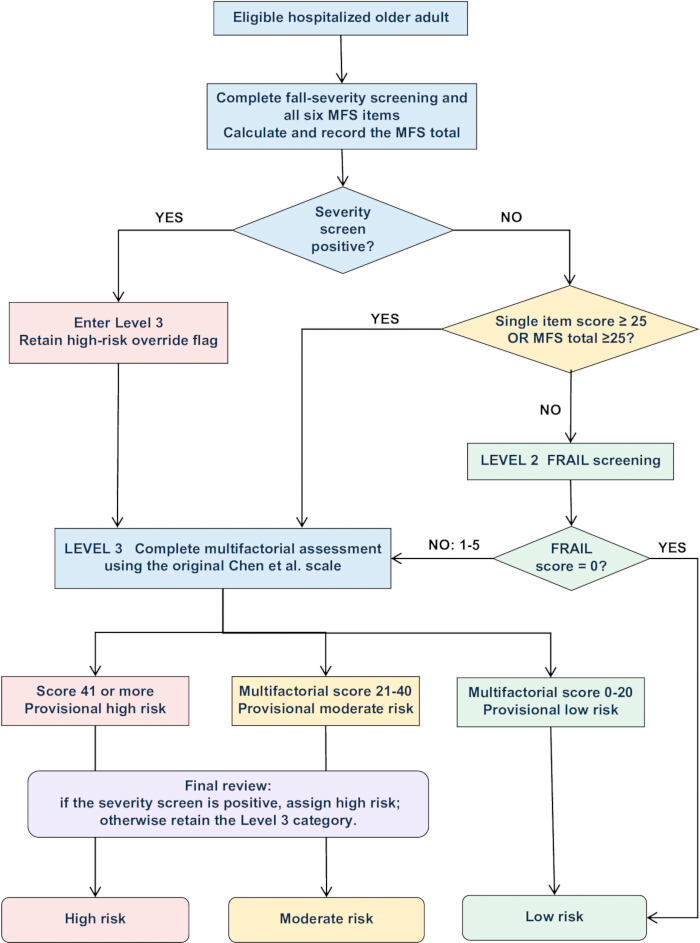
그림 1. 3단계 낙상 위험 평가 및 분류 알고리즘. 여기를 클릭하여 이 그림의 더 큰 버전을 확인하십시오.
입원한 고령자의 3단계 낙상 위험 평가 경로를 보여주는 흐름도. 적격 대상자는 먼저 Morse Fall Scale(MFS)을 사용하여 낙상 중증도 스크리닝 및 평가를 받는다. 낙상 중증도 스크리닝 결과가 양성이거나 MFS 총점이 25점 이상인 대상자는 즉시 3단계 다요인 평가로 진행한다. 낙상 중증도 스크리닝 결과가 음성이며 MFS 총점이 <25명은 FRAIL(피로, 저항력, 보행, 질환 및 체중 감소) 선별 검사를 받습니다. FRAIL 점수가 0점인 참가자는 저위험군으로 분류하며, FRAIL 점수가 1~5점인 참가자는 3단계 다요인 평가를 진행합니다. 최종 위험 분류는 다요인 평가 점수를 기준으로 하며, 낙상 심각도 선별 검사 결과가 양성인 경우 다른 분류보다 우선하여 해당 참가자를 고위험군으로 분류합니다. 약어: FRAIL, 피로, 저항력, 보행, 질환 및 체중 감소; MFS, Morse 낙상 척도.
| 단계 | 조건 | 작용 | 최종 위험 영향 |
| 레벨 1 | 낙상 심각도 스크리닝 양성 | 레벨 3 진입 | 고위험 오버라이드(High-risk override)가 적용됩니다. |
| 낙상 중증도 스크리닝 음성 및 단일 MFS 항목 점수 ≥25 또는 누적 MFS 점수 ≥25 | 레벨 3 진입 | 더 높은 우선순위의 규칙이 적용되지 않는 한, 레벨 3 평가 후 결정된 최종 위험 범주. | |
| 낙상 중증도 스크리닝 음성, 개별 MFS 항목 점수 25점 미만 및 누적 MFS 점수 <25 | 레벨 2(FRAIL 선별 검사)로 진행하십시오. | 위험 범주가 아직 결정되지 않았습니다. | |
| 레벨 2 | FRAIL 점수 = 0 | 탈출 경로 | 저위험군으로 할당하십시오. |
| FRAIL 점수 = 1~5 | 레벨 3 진입 | FRAIL은 추가 평가 대상 여부를 결정하지만, 최종 위험 범주를 결정하지는 않습니다. | |
| 레벨 3 | 다요인 평가 점수 0–20 | 저위험군으로 지정 | 고위험 오버라이드(high-risk override)에 의해 대체되지 않는 한 최종 분류입니다. |
| 다요인 평가 점수 21–40 | 중등도 위험으로 지정 | 고위험 오버라이드(high-risk override)에 의해 대체되지 않는 한 최종 분류로 적용함. | |
| 다요인 평가 점수 ≥41 | 고위험군으로 지정 | 최종 분류 | |
| 최종 검토 | 두 가지 이상의 위험 기준이 충족됨 | 더 높은 위험 범주를 적용하십시오. | 고위험 원칙을 따르십시오. |
표 10: 3단계 라우팅 및 최종 위험 층화 알고리즘. 본 프로토콜에서 사용된 3단계 낙상 위험 평가 경로를 요약한 결정 알고리즘이다. 참가자들은 먼저 낙상 심각도 스크리닝(1단계)을 거친다. 낙상 심각도 스크리닝 결과가 양성인 경우, 다요인 평가(3단계)로 직접 진행하며 고위험군 오버라이드(high-risk override)가 적용된다. 낙상 심각도 스크리닝 결과가 음성인 참가자들은 Morse Fall Scale(MFS) 및 FRAIL 평가에 따라 경로가 지정된다. MFS의 6개 항목을 모두 완료해야 한다. 단일 MFS 항목에서 25점 또는 30점을 기록하면 누적 MFS 점수가 이미 해당 임계값에 도달한 것이므로 ≥25점 라우팅 임계값을 충족하며, 그렇지 않은 경우에는 누적 MFS 점수가 사용된다. 이 라우팅 임계값은 표준 MFS 점수 체계 내에서 연구 특성에 맞게 설정된 운영 결정 규칙이며, 별도의 MFS 위험 범주 컷오프를 나타내는 것은 아니다. 표준 MFS 범주는 0–24(저위험), 25–44(중위험), ≥45(고위험)이다. 낙상 심각도 스크리닝 양성은 지난 1년 동안 2회 이상의 낙상, 의료적 처치가 필요한 낙상 관련 부상, 낙상 후 도움 없이 일어날 수 없음, 또는 의식 소실이나 실신 의심으로 정의된다. 이 알고리즘은 연구 프로토콜을 기반으로 개발되었으며 Chen 등12의 연구를 수정하여 적용하였다.
6. 낙상 위험의 동적 재평가
- 모든 고령자를 대상으로 최소 연 1회 낙상 위험 스크리닝 및 평가를 수행하십시오.
- 고위험군으로 분류된 지역사회 거주 고령자는 최소 6개월마다 재평가하십시오.
- 대상자가 병원에 처음 입원하거나 시설에 처음 입소했을 때 낙상 위험 스크리닝 및 평가를 수행하십시오.
- 고위험군으로 분류된 대상자를 매일 모니터링하십시오.
- 고위험군으로 분류된 대상자를 1개월 이내에 재평가하십시오.
- 낙상 발생 후 24 h 이내에 대상자를 재평가하십시오.
- 질환 상태에 유의미한 변화가 있은 후 24 h 이내에 대상자를 재평가하십시오.
- 관련 약물을 조정한 후 24 h 이내에 대상자를 재평가하십시오.
- 재평가 결과에 따라 중재 프로그램을 수정하십시오.
- 그림 1에 제시된 재평가 프로세스를 따르십시오.
액세스가 제한되었습니다. 이 콘텐츠를 보려면 로그인하거나 체험판을 시작하세요.
결과
연구 설계 및 참가자 특성
본 연구는 2023년 6월 1일부터 2024년 12월 31일 사이의 경로 구현 과정에서 전향적으로 수집된 임상 데이터를 분석한 단일 센터 소급적 기술 분석 연구였습니다. 원천 모집단은 입원 환자 350명으로 구성되었습니다. 분석을 위해 152건의 기록을 편의 표집하였습니다. 이 중 개인 정보 및 기초 정보가 불완전한 기록 1건을 제외하여, 최종적으로 151건의 완전한 기록을 분석에 사용하였습니다. 참여자의 평균 연령은 77.66 ± 10.58세였으며, 남성 106명(70.2%)과 여성 45명(29.8%)이 포함되었습니다. 평균 체질량 지수(BMI)는 23.36 ± 3.14 kg/m2였으며, 평균 총 입원 기간은 20.91 ± 17.79일이었습니다. 평가는 입원 후 1.10 ± 0.43일(범위, 1–4일)에 수행되었습니다. 참여자들은 외래 서비스를 통해 노년내과 또는 재활의학과로 입원하였습니다. 주요 진단...
액세스가 제한되었습니다. 이 콘텐츠를 보려면 로그인하거나 체험판을 시작하세요.
토론
본 연구에서 설명한 3단계 낙상 위험 평가 방법은 몇 가지 운영적 특성과 실용적 장점을 가지고 있습니다. 첫째, 이는 MFS, FRAIL 척도 및 CGA 기반의 다요인 낙상 위험 평가 척도를 2022년의 낙상 중증도 선별 검사와 체계적으로 결합합니다. 고령자를 위한 낙상 예방 및 관리 세계 가이드라인그리하여 점진적인 평가 경로를 구축하였습니다. 둘째, 단일 낙상 위험 스크리닝 도구에 기반한 접근 방식과 달리, 초기 위험 스크리닝, 보충적 노쇠 스크리닝, 그리고 최종 위험 계층화를 포함한 다요인 평가로 구성된 명확하게 정의된 워크플로를 제공합니다. 셋째, 본 프로토콜은 주요 평가 절차를 표준화함으로써 절차적 일관성과 재현성을 향상시킵니다. 이 경로는 입원한 고령층을 대상으로 예비 적용되었으며, 대표적인 결과들은 이것이 잠재적인 과소 식별을 줄이면서 중등도 및 고위험 낙상 대상자의 식별력을 향상시킬 수 있음을 시사합니다. 다만, 진단 성능과 임상적 유용성에 대해서는 추가적인 전향적 검증이 필요합니다.
액세스가 제한되었습니다. 이 콘텐츠를 보려면 로그인하거나 체험판을 시작하세요.
공개 사항
저자들은 상충하는 이해관계가 없음을 밝힙니다.
감사의 글
본 연구는 Hangzhou Health Science and Technology Plan(그랜트 번호 ZD20230125)의 지원을 받아 수행되었습니다.
액세스가 제한되었습니다. 이 콘텐츠를 보려면 로그인하거나 체험판을 시작하세요.
재료
| 이름 | 회사 | 카탈로그 번호 | 댓글 |
|---|---|---|---|
| 팔걸이가 있는 안락의자 | 현지 공급 병원 가구 | 해당 없음 | 좌석 높이 46cm, 팔걸이 높이 21cm. 3m Timed Up and Go 검사에 사용됨. |
| 바델 지수, 중국어판 | 해당 사항 없음 | 중국어 10문항, 100점 버전 (Hou et al., 2012) | 기능적 의존도를 평가하는 데 사용됨. |
| 팔걸이 없는 의자 | 현지 공급 병원 가구 | 해당 사항 없음 | 좌석 높이 46 cm. 5회 앉았다 일어나기 검사에 사용됨. |
| 노인 낙상 위험 평가 척도, 중국어 버전 | 해당 사항 없음 | Chen 외 (2024) | 3단계 평가에 사용된 기출판 평가 도구. |
| FRAIL 척도, 중국어판 | 해당 사항 없음 | Wei 등 (2018), 중국어판 | 2차 단계의 노쇠 선별 검사에 사용됨. |
| 악력계 | 이우 화주 | HJ-101 | 악력 측정에 사용됨. 양손 중 더 높은 값을 기록함. |
| 신장 및 체중계 | Zhejiang Qida | QD-602 | BMI 계산을 위한 신장 및 체중 측정에 사용됨. |
| 측정 양식 (평가 기록지) | 연구 병원 (현지 공급) | 지류 평가 기록지; 참가자당 1부; 버전 번호 또는 개정일 없음 | 프로토콜 전반에 걸친 평가 결과 기록에 필요함. |
| 미니-코그(Mini-Cog), 중국어판 | 연구 병원 | 병원 종합 노인 평가에서 사용된 중국어 현지 버전; 별도의 버전 번호는 기록되지 않음 | 즉각 단어 등록은 점수를 매기지 않았습니다. 지연 회상은 0점에서 2점까지, 시계 그리기는 0점에서 3점까지 점수를 매겼으며, 총점은 0점이었습니다.–5점. |
| 모스 낙상 척도(Morse Fall Scale, MFS), 중국어판 | 해당 사항 없음 | Zhou Jungui(2010)가 번역한 중국어 버전이며, 이후 2012년에 검증됨 | 국소적 수정 없이 사용된 6개 항목의 낙상 위험 선별 도구. |
| 수치 평가 척도 (NRS-11), 중국어판 | 해당 사항 없음 | 0–10점 숫자 평가 척도 | 현재 통증 강도를 평가하는 데 사용됩니다. |
| 논문 | 연구 병원 (현지 공급) | 해당 없음 | 평가 결과 기록에 사용됨. |
| 펜 | 연구 병원 (현지 공급) | 해당 사항 없음 | 평가 결과 기록용으로 사용됨. |
| 줄자 | Deli Group | JDDLXC1412 | 종아리 둘레 측정에 사용되는 비탄력성 테이프. |
| 타이머 (디지털 초시계) | 심천 이성 | YS-802 | 5회 앉았다 일어서기 검사, TUG(Timed Up and Go) 검사 및 서기 균형 검사에 사용됩니다. |
| 보행로 표시 (3 m) | 현지 공급 | 해당 사항 없음 | 3m Timed Up and Go 검사 거리를 표시하는 데 사용됩니다. |
| WHO 청각 장애 분류 | 세계보건기구 | 세계 청각 보고서 (2021) | 평가 중 청력 분류를 위해 사용됨. |
| WHO 시각 장애 분류 | 세계보건기구 | ICD-11 / WHO (2023) | 평가 중 시각 분류를 위해 사용됨. |
참고문헌
- World Health Organization. World report on ageing and health. World Health Organization; Geneva; 2015. Available from: https://www.who.int/publications/i/item/9789241565042.
- World Health Organization. WHO global report on falls prevention in older age. World Health Organization; Geneva; 2008. Available from: https://www.who.int/publications-detail-redirect/9789241563536.
- Montero-Odasso M, et al. World guidelines for falls prevention and management for older adults: a global initiative. Age Ageing. 2022;51(9):afac205. doi:10.1093/ageing/afac205.
- Kim KI, et al. Evidence-based guidelines for fall prevention in Korea. Korean J Intern Med. 2017;32(1):199-210. doi:10.3904/kjim.2016.218.
- Panel on Prevention of Falls in Older Persons, American Geriatrics Society and British Geriatrics Society. Summary of the updated American Geriatrics Society/British Geriatrics Society clinical practice guideline for prevention of falls in older persons. J Am Geriatr Soc. 2011;59(1):148-57. doi:10.1111/j.1532-5415.2010.03234.x.
- Strini V, Schiavolin R, Prendin A. Fall risk assessment scales: a systematic literature review. Nurs Rep. 2021;11(2):430-43. doi:10.3390/nursrep11020041.
- Glass A, Mendelson G, Ben Natan M. Comparison of two fall-risk assessment tools used in a long-term care facility. Int J Health Care Qual Assur. 2020;33(3):237-46. doi:10.1108/IJHCQA-03-2019-0065.
- Morris ME, et al. Divesting from a scored hospital fall risk assessment tool (FRAT): a cluster randomized non-inferiority trial. J Am Geriatr Soc. 2021;69(9):2598-604. doi:10.1111/jgs.17125.
- Morse JM, Black C, Oberle K, Donahue P. A prospective study to identify the fall-prone patient. Soc Sci Med. 1989;28(1):81-6. doi:10.1016/0277-9536(89)90309-2.
- Wu Y, et al. Interpretation of the 2022 edition of the "World Guidelines: Prevention and Management of Falls in Older Adults." Chinese General Practice. 2023;26(10):1159-63, 1171. doi:10.12114/j.issn.1007-9572.2022.0842.
- Wei Y, et al. Reliability and validity of the Chinese version of the FRAIL Scale for older inpatients. Chin J Pract Nurs. 2018;34(20):1526-30. doi:10.3760/cma.j.issn.1672-7088.2018.20.002.
- Chen X, et al. Construction and validation of a fall risk assessment scale for older adults based on comprehensive geriatric assessment. J Nurs Rehabil. 2024;23(8):26-30.
- Borson S, et al. The Mini-Cog: a cognitive "vital signs" measure for dementia screening in multi-lingual elderly. Int J Geriatr Psychiatry. 2000;15(11):1021-7. doi:10.1002/1099-1166(200011)15:11<1021::AID-GPS234>3.0.CO;2-6.
- Hou D, et al. Reliability and validity of the Chinese version of the Barthel Index. Clin Focus. 2012;27(3):219-21.
- Hjermstad MJ, et al. Studies comparing numerical rating scales, verbal rating scales, and visual analogue scales for assessment of pain intensity in adults: a systematic literature review. J Pain Symptom Manage. 2011;41(6):1073-93. doi:10.1016/j.jpainsymman.2010.08.016.
- Fang IM, Fang YJ, Hu HY, Weng SH. Association of visual impairment with cognitive decline among older adults in Taiwan. Sci Rep. 2021;11(1):17593. doi:10.1038/s41598-021-97095-9.
- World Health Organization. World report on hearing. World Health Organization; Geneva; 2021. Available from: https://www.who.int/publications/i/item/9789240020481.
- Chen LK, et al. Asian Working Group for Sarcopenia: 2019 consensus update on sarcopenia diagnosis and treatment. J Am Med Dir Assoc. 2020;21(3):300-307.e2. doi:10.1016/j.jamda.2019.12.012.
- Haines TP, Hill K, Walsh W, Osborne R. Design-related bias in hospital fall risk screening tool predictive accuracy evaluations: systematic review and meta-analysis. J Gerontol A Biol Sci Med Sci. 2007;62(6):664-72. doi:10.1093/gerona/62.6.664.
- Kim J, Lee W, Lee SH. A systematic review of the guidelines and Delphi study for the multifactorial fall risk assessment of community-dwelling elderly. Int J Environ Res Public Health. 2020;17(17):6097. doi:10.3390/ijerph17176097.
- Aranda-Gallardo M, et al. Instruments for assessing the risk of falls in acute hospitalized patients: a systematic review and meta-analysis. BMC Health Serv Res. 2013;13:122. doi:10.1186/1472-6963-13-122.
- Chen M, et al. A systematic review of wearable sensor-based technologies for fall risk assessment in older adults. Sensors (Basel). 2022;22(18):6752. doi:10.3390/s22186752.
액세스가 제한되었습니다. 이 콘텐츠를 보려면 로그인하거나 체험판을 시작하세요.
재인쇄 및 허가
이 논문이 게재되었습니다
동영상 곧 제공