This review article presents molecular mechanisms underlying ABCB1-mediated olaparib resistance in cervical cancer and discusses pharmaceutical strategies developed to overcome multidrug resistance.
리뷰 논문
ABCB1-Mediated Olaparib Resistance in Cervical Cancer: Molecular Mechanisms and Therapeutic Strategies
이 논문에서
요약
초록
Globally, cervical cancer is the fourth most common cancer among women and the second most common cancer in India after breast cancer, with the highest burden occurring in low- and middle-income countries. Although platinum-based chemotherapy and concurrent chemoradiotherapy improve outcomes in early-stage disease, multidrug resistance (MDR) remains a major cause of treatment failure in persistent, recurrent, and metastatic cervical cancer. Olaparib, a poly(ADP-ribose) polymerase inhibitor (PARPi), has emerged as a promising targeted therapeutic agent; however, it is not currently approved as a standard treatment for cervical cancer, and acquired resistance limits its long-term efficacy. One of the principal mechanisms underlying olaparib resistance is the overexpression of ATP-binding cassette subfamily B member 1 (ABCB1), also known as P-glycoprotein (P-gp), which actively exports olaparib from cancer cells, thereby reducing intracellular drug accumulation and therapeutic efficacy. Emerging evidence indicates that ABCB1-mediated resistance is regulated by gene amplification, dysregulated signaling pathways, epigenetic modifications, microRNA-mediated regulation, and human papillomavirus (HPV)-associated oncogenic signaling. This review summarizes the molecular mechanisms underlying ABCB1-mediated olaparib resistance in cervical cancer and highlights current and emerging therapeutic strategies, including selective ABCB1 inhibitors, natural phytochemicals, alternative PARP inhibitors with reduced P-glycoprotein-mediated efflux, nanotechnology-based drug delivery systems, receptor-targeted nanocarriers, co-delivery approaches, and gene-silencing technologies. These strategies may overcome multidrug resistance, enhance the therapeutic efficacy of olaparib, and support the development of personalized treatment approaches for cervical cancer.
서론
Cervical cancer remains one of the most prevalent malignancies affecting women globally and continues to be a major cause of cancer-related mortality, particularly in low and middle-income countries where exposure to cutting-edge treatments and HPV vaccination levels are limited1. Although early-stage cervical cancer can be treated effectively with surgery or chemoradiation, locally advanced and metastatic disease still shows poor long-term survival due to recurrence, therapy resistance, and systemic dissemination2. Standard systemic treatment for persistent, recurrent, or metastatic cervical cancer commonly consists of platinum-based chemotherapy, typically cisplatin or carboplatin, administered in combination with paclitaxel (PTX). An alternative regimen includes paclitaxel plus topotecan (TPT), particularly in selected patients with recurrent disease. In eligible patients, these chemotherapy regimens may be combined with bevacizumab, a monoclonal antibody targeting vascular endothelial growth factor (VEGF), or pembrolizumab, a monoclonal antibody against programmed cell death protein 1 (PD-1), to improve progression-free and overall survival. Because paclitaxel is a well-established substrate of ATP-binding cassette subfamily B member 1 (ABCB1), also known as P-glycoprotein (P-gp), prolonged exposure may induce ABCB1 overexpression, thereby promoting multidrug resistance (MDR) and reducing the intracellular accumulation and therapeutic efficacy of other ABCB1 substrate drugs, including the poly(ADP-ribose) polymerase inhibitor (PARPi) olaparib. In contrast, cisplatin is not considered an ABCB1 substrate, whereas topotecan is susceptible to ATP-binding cassette transporter-mediated efflux. Consequently, ABCB1-mediated drug transport represents a clinically important mechanism contributing to chemotherapy resistance and may also compromise the effectiveness of subsequent PARP inhibitor-based therapeutic strategies in cervical cancer3. However, even when an initial response is observed, many patients relapse due to acquired resistance, reflecting the adaptive ability of cancer cells to survive cytotoxicity4.
Drug resistance in cervical cancer is not a single event but rather a dynamic, multifactorial process involving genomic instability, epigenetic reprogramming, altered tumor microenvironment, immune evasion, and drug effluxing5. Despite these resistance mechanisms, one of the most well-known causes of chemotherapy failure is multidrug resistance (MDR), which is mediated by ATP-binding cassette (ABC) transporters. By actively exporting structurally diverse anticancer drugs from the cell, ABC transporters reduce intracellular drug accumulation below the cytotoxic threshold6. ABCB1, also called P-glycoprotein (P-gp) and encoded by the MDR1 gene, is one of the most investigated efflux transporters7. Numerous clinically significant anticancer medications, such as paclitaxel, doxorubicin, vincristine, etoposide, and other targeted medicines, have been identified as substrates of ABCB17,8. In a number of malignancies, overexpression of ABCB1 has been associated with poor treatment response, increased tumor aggressiveness, and worse overall survival9.
The development of tailored therapy has created new treatment options in combination with chemotherapy. Among these approaches, poly(ADP-ribose) polymerase inhibitors (PARPi) have attracted considerable attention, especially olaparib, which has shown substantial clinical benefit in treating ovarian and breast malignancies with homologous recombination deficiency (HRD) or BRCA1 (Breast Cancer Susceptibility Gene 1) and BRCA2 (Breast Cancer Susceptibility Gene 2) mutations. These genes are tumor suppressor genes involved in DNA repair10. PARP inhibitors primarily cause severe genomic damage and death by interfering with DNA repair pathways and exploiting synthetic lethality in cancer cells that already lack homologous recombination repair (HRR)11. The evidence of DNA repair system modifications in cervical cancers, such as disruptions in BRCA-related pathways, ATM/ATR signaling, and replication stress responses, has raised interest in PARP inhibitors even though they are not approved as standard therapy for cervical cancer12,13.
Preclinical studies have demonstrated substantial sensitivity of BRCA1-deficient tumors to PARP inhibition, supporting the therapeutic rationale for exploiting homologous recombination repair defects with PARP inhibitors14. However, restoration of BRCA1/2 function through secondary somatic mutations represents an important mechanism of acquired resistance to platinum agents and PARP inhibitors15. Emerging evidence suggests ABCB1-mediated drug efflux plays a critical role in the development of acquired resistance to olaparib. This mechanism is particularly important because it also contributes to the development of cross-resistance to taxanes and other chemotherapeutic agents. This limits therapy choices by causing cancer cells to develop a clinically problematic phenotype where they simultaneously become resistant to several medication types16. This review focuses on the molecular and cellular basis of ABCB1-mediated olaparib resistance, with particular attention to its relevance to cervical cancer biology, the mechanisms underlying ABCB1 overexpression, clinical implications, and emerging pharmaceutical approaches, such as transporter-targeted combination therapies and nanotechnology-based formulations.
A comprehensive literature search was conducted using PubMed, Scopus, Web of Science, ScienceDirect, and Google Scholar to identify relevant studies on ABCB1-mediated olaparib resistance in cervical cancer. The search strategy included combinations of the keywords "cervical cancer," "ABCB1," "P-glycoprotein," "MDR1," "multidrug resistance," "olaparib," "poly(ADP-ribose) polymerase inhibitors," "PARP inhibitors," "DNA repair," "homologous recombination deficiency," "drug efflux," "nanoparticles," and "drug delivery." Original research articles, review articles, preclinical studies, translational studies, and clinical studies published in English were included. Duplicate publications, conference abstracts without full-text availability, editorials, opinion articles, non-English publications, and studies unrelated to the review topic or lacking sufficient experimental evidence were excluded. A total of 118 studies were screened, of which 55 of the most relevant references were selected and critically evaluated for inclusion in this review.
리뷰 및 관점
Olaparib and the DNA damage response: therapeutic rationale and mechanism of action
Maintenance of genomic integrity is essential for cell survival and depends on efficient DNA damage repair mechanisms. Cancer cells frequently exhibit defects in DNA repair pathways, creating therapeutic vulnerabilities that can be exploited using targeted therapies. Poly(ADP-ribose) polymerase 1 (PARP1) and PARP2 are key enzymes involved in the detection of single-strand DNA breaks (SSBs) and initiate DNA repair by catalyzing poly(ADP-ribosylation) and recruiting repair proteins, including X-ray repair cross-complementing protein 1 (XRCC1) and DNA ligase III11. Olaparib, a potent poly(ADP-ribose) polymerase inhibitor (PARPi), inhibits PARP catalytic activity, preventing SSB repair. During DNA replication, unrepaired SSBs are converted into double-strand breaks (DSBs) following replication fork collapse. Under normal physiological conditions, DSBs are repaired through homologous recombination repair (HRR), a high-fidelity DNA repair pathway involving proteins such as breast cancer gene 1 (BRCA1), breast cancer gene 2 (BRCA2), RAD51, and partner and localizer of BRCA2 (PALB2)10,11.
In addition to catalytic inhibition, olaparib exerts cytotoxic effects by trapping PARP proteins at sites of DNA damage, thereby obstructing DNA replication and transcription. PARP trapping is considered a major determinant of the cytotoxic efficacy of PARP inhibitors and contributes substantially to their antitumor activity. Among clinically available PARP inhibitors, olaparib demonstrates considerable PARP-trapping potency, although the extent of trapping varies between different agents. Furthermore, olaparib induces replication stress and activates the ataxia telangiectasia and Rad3-related/checkpoint kinase 1 (ATR/CHK1) signaling pathway, resulting in cell-cycle arrest or apoptosis depending on the DNA repair capacity of the affected cancer cells17,18.
Several preclinical and early clinical studies support the potential of poly(ADP-ribose) polymerase inhibitors (PARPis) for the treatment of cervical cancer. Persistent infection with high-risk human papillomavirus (HPV), particularly HPV16 and HPV18, promotes cervical carcinogenesis through the expression of the viral oncoproteins E6 and E7, which inactivate the tumor suppressor proteins p53 and retinoblastoma (Rb), resulting in genomic instability and increased dependence on DNA damage response pathways. In addition, genomic alterations affecting breast cancer gene 1 (BRCA1)-associated pathways, ataxia telangiectasia mutated (ATM)/ataxia telangiectasia and Rad3-related (ATR) signaling, and homologous recombination repair (HRR) contribute to homologous recombination deficiency (HRD)-like phenotypes in a subset of cervical cancers, providing a biological rationale for investigating PARP inhibition. However, olaparib is not currently approved by the U.S. Food and Drug Administration (FDA) or other major regulatory agencies as a standard treatment for cervical cancer. Nevertheless, it has been investigated in preclinical studies and early-phase clinical trials involving patients with persistent, recurrent, or metastatic cervical cancer, both as monotherapy and in combination with systemic anticancer therapies. Although these studies have demonstrated promising antitumor activity, the development of acquired resistance remains a major challenge. Among the proposed resistance mechanisms, ATP-binding cassette subfamily B member 1 (ABCB1)-mediated drug efflux has emerged as an important pharmacokinetic mechanism that may reduce intracellular olaparib accumulation and compromise therapeutic efficacy19,20.
ABCB1 (P-Glycoprotein): Efflux mechanism, function, and structure
ATP-binding cassette subfamily B member 1 (ABCB1) belongs to the ATP-binding cassette (ABC) transporter superfamily, a large family of transmembrane proteins that transport xenobiotics and endogenous metabolites across biological membranes. Structurally, ABCB1 consists of two homologous halves, each comprising one cytoplasmic nucleotide-binding domain (NBD) responsible for adenosine triphosphate (ATP) binding and hydrolysis, and six transmembrane helices that together form the substrate-binding pocket (Figure 1)7,21. The remarkable flexibility of this substrate-binding pocket enables ABCB1 to recognize and transport a wide range of structurally diverse hydrophobic and amphipathic compounds, thereby accounting for its broad substrate specificity and central role in multidrug resistance (MDR)7,21.
The ABCB1-mediated efflux cycle is initiated when a substrate diffuses into the lipid bilayer and binds to the substrate-binding pocket within the transmembrane domains. Substrate binding promotes ATP binding to the nucleotide-binding domains (NBDs), leading to NBD dimerization and conformational changes that convert the transporter from an inward-facing to an outward-facing state. Subsequent ATP hydrolysis provides the energy required for substrate translocation and release into the extracellular space, whereas the release of adenosine diphosphate (ADP) restores ABCB1 to its inward-facing conformation, enabling another transport cycle21,22. Although stimulation of ABCB1 ATPase activity is consistent with substrate interaction, it only suggests interaction with the substrate-binding cavity and does not, by itself, demonstrate direct binding or active transport, since both transported substrates and non-transported inhibitors may stimulate ATPase activity. This ATP-dependent efflux mechanism effectively lowers intracellular drug concentrations and reduces accumulation of drugs at intracellular targets, including nuclear poly(ADP-ribose) polymerase (PARP) enzymes, thereby diminishing pharmacological efficacy21,22.
Under physiological conditions, ABCB1 is highly expressed in the intestinal epithelium, hepatocytes, renal tubular epithelial cells, placental trophoblasts, and the endothelial cells of the blood-brain barrier, where it limits systemic exposure to xenobiotics and protects sensitive tissues from potentially harmful compounds23. In contrast, pathological overexpression of ABCB1 in cancer cells promotes the efflux of numerous chemotherapeutic agents, resulting in reduced intracellular drug accumulation and diminished therapeutic response. Consequently, ABCB1-mediated drug efflux contributes to widespread cross-resistance to structurally unrelated anticancer agents, a hallmark of multidrug resistance (MDR). Increasing evidence also suggests that elevated ABCB1 expression may reduce the intracellular accumulation of PARP inhibitors (PARPis), including olaparib, thereby contributing to therapeutic resistance. This mechanism is particularly relevant in cervical cancer, where ABCB1 overexpression has been associated with poor treatment response and represents a potential therapeutic target for overcoming drug resistance.
ABCB1 expression in cervical cancer and its role in multidrug resistance
ATP-binding cassette subfamily B member 1 (ABCB1) expression is significantly increased in clinical cervical cancer tissues and drug-resistant cervical cancer cell lines. Elevated P-glycoprotein (P-gp) expression has been associated with poor responses to chemotherapy and radiotherapy, suggesting that ABCB1 contributes to treatment failure, disease recurrence, and unfavorable clinical outcomes24,25. The multidrug resistance (MDR) phenotype in cervical cancer commonly develops following repeated exposure to chemotherapeutic agents, particularly taxanes and platinum-based drugs, which exert selective pressure favoring the survival of tumor cells with enhanced drug efflux capacity. In current clinical practice, paclitaxel is administered in combination with cisplatin or topotecan for the treatment of persistent, recurrent, or metastatic cervical cancer and may be further combined with bevacizumab, an anti-vascular endothelial growth factor (VEGF) monoclonal antibody, or pembrolizumab, an anti-programmed cell death protein 1 (PD-1) monoclonal antibody, in selected patients. Since paclitaxel is a well-established ABCB1 substrate, prolonged exposure can induce ABCB1 overexpression, leading to acquired paclitaxel resistance26. Consequently, tumors that become resistant to paclitaxel may also exhibit cross-resistance to other ABCB1 substrates, including olaparib, thereby limiting the effectiveness of PARP inhibitor-based therapy.
Beyond its established role in multidrug resistance, increasing evidence suggests that ABCB1 overexpression contributes to cervical cancer progression and metastasis. Elevated P-gp expression has been associated with enhanced cancer stem cell survival, increased invasiveness, and the acquisition of epithelial-to-mesenchymal transition (EMT) characteristics, all of which promote tumor progression and therapeutic resistance27. Furthermore, resistance phenotypes in cervical cancer have been linked to stemness-associated markers, including cluster of differentiation 44 (CD44), aldehyde dehydrogenase 1 (ALDH1), and SRY-box transcription factor 2 (SOX2), indicating that ABCB1 may contribute to the maintenance of drug-resistant cancer stem cell populations28.
In addition, the cervical tumor microenvironment plays a crucial role in regulating ABCB1 expression. Persistent inflammation induced by high-risk human papillomavirus (HPV) infection stimulates the production of inflammatory cytokines, including tumor necrosis factor-alpha (TNF-α) and interleukin-6 (IL-6), which activate the nuclear factor kappa B (NF-κB) and signal transducer and activator of transcription 3 (STAT3) signaling pathways. These pathways are well-recognized regulators of ABCB1 gene transcription and contribute to sustained transporter overexpression in cervical cancer29. Collectively, these findings suggest that therapy-induced selective pressure, HPV-associated inflammation, and oncogenic signaling cooperate to promote persistent ABCB1 overexpression, thereby facilitating multidrug resistance and reducing the efficacy of PARP inhibitors such as olaparib. Conversely, PARP inhibitors with lower susceptibility to P-gp-mediated transport, including pamiparib, may represent promising alternatives for overcoming ABCB1-mediated drug resistance and warrant further investigation in cervical cancer.
The clinical efficacy of olaparib depends on achieving and maintaining adequate intracellular drug concentrations to inhibit poly(ADP-ribose) polymerase (PARP) activity and promote PARP trapping at sites of DNA damage. However, overexpression of ATP-binding cassette subfamily B member 1 (ABCB1) significantly reduces intracellular olaparib accumulation by actively exporting the drug from cancer cells through an ATP-dependent efflux mechanism19,20. Consequently, reduced intracellular olaparib concentrations impair PARP inhibition, decrease PARP trapping, and facilitate the restoration of DNA repair processes, thereby reducing the cytotoxic effects of treatment. Increasing evidence indicates that ABCB1-mediated drug efflux represents an important pharmacokinetic mechanism of acquired resistance to olaparib in several malignancies and is likely to contribute to treatment failure in cervical cancer, particularly in tumors exhibiting elevated ABCB1 expression following prolonged chemotherapy exposure19,20. Although olaparib has demonstrated encouraging activity in preclinical studies and early clinical investigations in persistent, recurrent, and metastatic cervical cancer, its therapeutic efficacy may be compromised by ABCB1 overexpression, underscoring the need for strategies to enhance intracellular drug retention or circumvent transporter-mediated efflux.
Mechanistic basis of efflux-mediated PARP inhibitor resistance: Proof that olaparib is a substrate of ABCB1
Numerous pharmacological and experimental studies support olaparib's classification as an ABCB1 substrate. Olaparib can increase ABCB1 ATPase activity in vitro, as indicated by transporter studies, indicating direct contact with the drug-binding pocket and active transport across membranes14,30. Furthermore, compared with parental-sensitive cells, ABCB1-overexpressing cells have substantially lower intracellular olaparib concentrations, as determined by drug accumulation assays. Intracellular olaparib levels rise in response to the introduction of ABCB1 inhibitors such as tariquidar or elacridar, reinstating cytotoxicity14,16. This offers functional proof that ABCB1 effluxes olaparib.
In ovarian cancer models, where acquired olaparib resistance often correlates with ABCB1 overexpression, the clinical significance of ABCB1 in olaparib resistance has been well demonstrated. Ovarian cancer cell lines selected for paclitaxel resistance exhibited cross-resistance to olaparib, and Vaidyanathan et al. demonstrated that this trait was primarily driven by ABCB1 overexpression. Crucially, olaparib sensitivity was restored by ABCB1 suppression, supporting the efflux-based resistance mechanism16. Similar findings have been documented in prostate cancer, where ABCB1 blockage resensitized resistant cells, and ABCB1 overexpression contributed to cross-resistance to taxanes and olaparib31. These findings provide strong proof that ABCB1-mediated efflux is a conserved resistance mechanism that may manifest in various cancer forms, including cervical cancer.
Additional evidence for the transporter role in olaparib distribution comes from animal research. Efflux transporters limit olaparib bioavailability and tissue penetration, as seen by studies assessing olaparib pharmacokinetics in mutant mice lacking ABCB1 and ABCG2, which showed enhanced tissue distribution and higher plasma concentrations32. These results demonstrate that ABCB1 affects both systemic pharmacokinetics and tumor cell resistance, which is therapeutically significant because transporter expression in the intestine and liver can decrease oral absorption and boost drug clearance (Figure 2).
Cervical cancer ABCB1 overexpression: Molecular mechanisms
Gain in copy number and gene amplification: Gene amplification is one of the principal mechanisms for ABCB1 overexpression. Increased ABCB1 gene copy numbers can come from chromosomal changes, which also increase mRNA transcription and P-gp protein expression. Drug-resistant cancers have been shown to exhibit ABCB1 gene amplification, which is often linked to chemotherapy exposure and suggests clonal selection under drug pressure33. ABCB1 gene amplification has been observed often in olaparib-resistant cancer models, indicating that efflux pump upregulation represents a persistent genetic adaptation rather than a temporary reaction15. Although direct evidence of ABCB1 gene amplification in cervical cancer remains limited, genomic instability induced by persistent high-risk human papillomavirus (HPV) infection may promote chromosomal alterations that increase ABCB1 expression.
Transcription factors regulating signaling pathways
Numerous transcription factors, such as Nuclear factor kappa B (NF-κB), Activator protein 1 (AP-1), Signal transducer and activator of transcription 3 (STAT3), Hypoxia-inducible factor-1 alpha (HIF-1α), and p53-associated pathways, control ABCB1 transcription34. NF-κB activation is frequently seen in cervical cancer as a result of HPV oncoprotein signaling and persistent inflammation. P-gp expression and efflux activity can be increased by NF-κB binding to ABCB1 promoter areas and enhancing transcription29,34. Moreover, STAT3, which is triggered by IL-6 signaling, supports survival pathways that strengthen resistance and aid in ABCB1 induction29. Another important factor influencing ABCB1 expression is hypoxia. HIF-1α is stabilized by tumor hypoxia and upregulates genes related to treatment resistance and survival. ABCB1 transcription has been shown to be upregulated by HIF-1α, especially in solid tumors where oxygen transport is restricted35. Particularly in later stages, cervical cancers are frequently hypoxic, which may promote both ABCB1-mediated drug resistance and radioresistance, contributing to poor therapeutic outcomes. Persistent HPV infection promotes chronic activation of the NF-κB and STAT3 pathways, providing a mechanistic link between viral oncogenesis and ABCB1 overexpression in cervical cancer.
Epigenetic regulation of ABCB1 expression
The evolution of drug resistance is largely influenced by epigenetic modifications. ABCB1 expression is influenced by histone modifications and DNA methylation patterns. While histone acetylation promotes open chromatin architecture, which permits transcription factor binding, hypomethylation of ABCB1 promoter regions may result in enhanced transcription36. ABC transporter expression has been shown to be modulated by histone deacetylase inhibitors, indicating epigenetic modulation as a potential therapeutic target36.
Post-transcriptional regulation and miRNA
Short non-coding RNAs known as microRNAs (miRNAs) bind to target mRNAs and either inhibit translation or promote mRNA degradation to control gene expression. ABCB1 expression has been found to be regulated by a number of miRNAs, including miR-27a, miR-451, miR-298, and miR-331-5p37. Efflux-based resistance may arise from increased ABCB1 translation caused by downregulation of ABCB1-suppressing miRNAs. Because HPV-mediated transcriptional interference frequently results in dysregulated miRNA profiles in cervical cancer, miRNA-based regulation is a likely mechanism of ABCB1 overexpression38.
Indirect ABCB1 induction and HPV oncoproteins
HPV oncoproteins E6 and E7 cause cell cycle progression and genomic instability by interfering with tumor suppressors p53 and Rb. Drug resistance mechanisms are indirectly impacted by these changes. Increased survival signals and altered ABC transporter expression have been linked to the loss of p53 function. Furthermore, HPV infection causes oxidative stress and chronic inflammation, which can activate transcription factors that induce ABCB1 expression, such as AP-1 and NF-κB19,29. Thus, an efflux-dominant phenotype in cervical cancer may be influenced by HPV-mediated oncogenic signaling. Collectively, these findings suggest that HPV-driven oncogenic signaling not only promotes cervical carcinogenesis but also establishes a molecular environment favorable for persistent ABCB1 overexpression, thereby contributing to multidrug resistance and potentially reducing the efficacy of PARP inhibitors such as olaparib (Figure 3).
ABCB1-mediated Olaparib resistance as an "efflux-dominant" phenotype
The cancer cell exhibits efflux-driven resistance, with reduced intracellular drug retention upon upregulation of ABCB1. Olaparib may still be absorbed into cells in these situations, but transporter activity rapidly lowers intracellular concentrations, thereby limiting long-term PARP inhibition. Consequently, PARP trapping is greatly decreased, and PARP catalytic inhibition becomes incomplete. Cancer cells can continue to replicate and survive in the absence of adequate PARP trapping because replication fork collapse is reduced and DNA damage accumulation remains sublethal17,31. Because efflux-driven resistance doesn't require a mutation in the drug target, it is very hazardous. ABCB1 overexpression is a pharmacokinetic resistance mechanism that may confer resistance to several medications simultaneously, in contrast to PARP1 mutations or restoration of homologous recombination repair15. Efflux serves as the initial line of defense against cytotoxicity in this complicated multidrug-resistant phenotype5,15. Crucially, overexpression of ABCB1 may help cancer stem-like subpopulations survive. These cells often have an abundance of ABC transporters, are quiescent, and are resistant to apoptosis. Thus, stem-like cells with increased efflux capability and high regeneration potential may become concentrated in olaparib-resistant malignancies, raising the risk of recurrence28.
ABCB1'S clinical importance in cervical cancer and therapy response
ABCB1 expression has been studied as a prognostic biomarker in a number of cancer types. Reduced response to chemotherapy, poor progression-free survival, and lower overall survival have all been linked to high ABCB1 expression9. Research has shown that P-gp expression in cervical cancer may be associated with higher recurrence rates and a poor response to cisplatin-based treatment24,25. Evidence from ovarian and prostate cancer strongly supports ABCB1 as a predictive biomarker for PARP inhibitor resistance, despite the lack of substantial clinical datasets directly connecting ABCB1 to olaparib response in cervical cancer16,31.
Drug distribution is also impacted by ABCB1 expression. Patients with high ABCB1 activity may exhibit altered olaparib pharmacokinetics, including decreased oral bioavailability and increased clearance, thereby lowering systemic exposure because ABCB1 is expressed in the intestine and liver23,32. This suggests that ABCB1 affects resistance at the systemic and tumor-cell levels.
Moreover, combination therapy is complicated by ABCB1-driven resistance. Paclitaxel is one of many medications used to treat cervical cancer that are substrates of ABCB1. Cross-resistance may render subsequent olaparib use less effective if ABCB1 is upregulated during paclitaxel treatment, resulting in a sequential resistance cycle16. This is clinically significant since treatment for cervical cancer sometimes entails multi-drug regimens, where transporter activation by one medication may lessen the effectiveness of another.
Therapeutic strategies to overcome ABCB1-mediated olaparib resistance
Given the significant contribution of ATP-binding cassette subfamily B member 1 (ABCB1) to olaparib resistance, several therapeutic strategies have been investigated to restore drug sensitivity and improve treatment outcomes. These approaches aim to inhibit ABCB1-mediated drug efflux, enhance intracellular olaparib accumulation, or bypass transporter-mediated resistance through alternative drug delivery systems and rational combination therapies. Although many of these strategies remain at the preclinical or early clinical stages, they offer promising opportunities to overcome multidrug resistance and improve the therapeutic efficacy of poly(ADP-ribose) polymerase inhibitors (PARPis) in cervical cancer and other malignancies.
Direct inhibitors of ABCB1
Direct pharmacological inhibition of ATP-binding cassette subfamily B member 1 (ABCB1) is among the most extensively investigated approaches to overcoming multidrug resistance39. Small-molecule ABCB1 inhibitors, including tariquidar, elacridar, and zosuquidar, block transporter-mediated drug efflux, thereby increasing intracellular concentrations of chemotherapeutic agents and restoring drug sensitivity14,16. Preclinical studies have demonstrated that ABCB1 inhibition significantly increases intracellular olaparib accumulation and resensitizes resistant cancer cells to treatment14,16. In ovarian cancer models, pharmacological inhibition or genetic suppression of ABCB1 successfully restored olaparib sensitivity, highlighting the critical role of transporter-mediated efflux in acquired resistance. Although clinical evidence in cervical cancer remains limited, these findings suggest that combining olaparib with selective ABCB1 inhibitors may represent a promising strategy for overcoming resistance in patients with ABCB1-overexpressing tumors.
Natural phytochemicals targeting ABCB1
Natural phytochemicals have emerged as promising adjunctive agents to overcome ATP-binding cassette subfamily B member 1 (ABCB1)-mediated multidrug resistance, as they can modulate multiple signaling pathways involved in drug efflux while exhibiting relatively low systemic toxicity. Polyphenols and flavonoids, including curcumin, quercetin, apigenin, epigallocatechin gallate (EGCG), and resveratrol, have been reported to inhibit P-glycoprotein (P-gp) function by suppressing ATPase activity, reducing ABCB1 expression, and modulating oncogenic signaling pathways such as nuclear factor kappa B (NF-κB), phosphoinositide 3-kinase/protein kinase B (PI3K/Akt), and Wnt/β-catenin40,41. In addition, several phytochemicals target cancer stem cell-associated pathways, thereby enhancing the sensitivity of resistant tumor cells to chemotherapy and targeted therapies. Although most evidence comes from preclinical studies, these compounds may provide a safe and cost-effective adjunct to PARP inhibitor-based treatment strategies. Future investigations should evaluate their efficacy in combination with olaparib and other PARP inhibitors in cervical cancer models and clinical studies.
Nanotechnology-based drug delivery systems
Nanotechnology-based drug delivery systems have emerged as a promising strategy for overcoming ATP-binding cassette subfamily B member 1 (ABCB1)-mediated drug efflux by enhancing intracellular drug delivery and improving tumor-specific accumulation. Nanocarriers, including poly(lactic-co-glycolic acid) (PLGA) nanoparticles, solid lipid nanoparticles (SLNs), liposomes, polymeric micelles, and lipid-based nanocarriers, can bypass transporter-mediated efflux through endocytic uptake, thereby increasing intracellular olaparib concentrations42–45. Several preclinical studies have demonstrated that nanoparticle-mediated delivery improves drug stability, prolongs systemic circulation, enhances tumor retention through the enhanced permeability and retention (EPR) effect, and restores therapeutic efficacy in multidrug-resistant tumors. Furthermore, co-delivery of olaparib with ABCB1 inhibitors or ABCB1-targeting small interfering RNA (siRNA) represents a promising approach to simultaneously suppress drug efflux and enhance PARP inhibitor activity46. Although these strategies remain largely at the experimental stage, they hold considerable potential for improving the treatment of ABCB1-overexpressing cervical cancer and warrant further preclinical and clinical investigation.
Alternative PARP inhibitors with reduced P-glycoprotein susceptibility
Not all poly(ADP-ribose) polymerase inhibitors (PARPis) exhibit the same susceptibility to P-glycoprotein (P-gp)-mediated efflux. Although olaparib, rucaparib, and talazoparib are recognized substrates of ABCB1 to varying degrees, pamiparib has demonstrated minimal interaction with P-gp and retains intracellular accumulation in ABCB1-overexpressing cells. Consequently, pamiparib may maintain antitumor activity in tumors that have acquired resistance through ABCB1 overexpression. The development and clinical evaluation of PARP inhibitors with reduced susceptibility to ABCB1-mediated transport may therefore provide an effective strategy to overcome multidrug resistance and improve therapeutic outcomes in cervical cancer.
Combination therapy and future therapeutic approaches
Combination therapy represents a promising strategy for overcoming ATP-binding cassette subfamily B member 1 (ABCB1)-mediated resistance while enhancing the antitumor efficacy of poly(ADP-ribose) polymerase inhibitors (PARPis). In patients with persistent, recurrent, or metastatic cervical cancer, standard systemic treatment commonly includes paclitaxel combined with cisplatin or topotecan, with the addition of bevacizumab or pembrolizumab in appropriately selected patients according to current clinical guidelines47,48. PARP inhibitors have emerged as an important class of targeted therapies in gynecologic malignancies49. Although olaparib is not currently approved as a standard treatment for cervical cancer, preclinical studies and early-phase clinical trials have investigated its use as monotherapy and in combination with chemotherapy, radiotherapy, anti-angiogenic agents, and immune checkpoint inhibitors to enhance antitumor activity and overcome therapeutic resistance50–54. Combination strategies may increase DNA damage, augment replication stress, inhibit complementary DNA repair pathways, and improve treatment response while delaying the development of acquired resistance. Future research should focus on identifying predictive biomarkers, optimizing patient selection, and validating these combination approaches in large, well-designed clinical trials to establish the role of PARP inhibitors in cervical cancer management.
Future directions: Personalized therapy and clinical translation challenges
Despite substantial advances in understanding ABCB1-mediated olaparib resistance, several challenges remain before these findings can be translated into routine clinical practice. Future studies should prioritize identifying reliable biomarkers that predict ABCB1 expression and response to PARP inhibitors (PARPis), including investigation of minimally invasive biomarker approaches such as liquid biopsy55. The development of selective ABCB1 inhibitors with acceptable safety profiles, next-generation PARP inhibitors with reduced susceptibility to P-glycoprotein (P-gp)-mediated efflux, and innovative nanotechnology-based drug delivery systems may further improve therapeutic efficacy. In addition, integrating genomic, transcriptomic, and proteomic analyses with prospective clinical trials will facilitate patient stratification and optimize combination therapies. Collectively, these approaches have the potential to overcome multidrug resistance and expand the clinical utility of PARP inhibitors in cervical cancer.
결론
ATP-binding cassette subfamily B member 1 (ABCB1)-mediated drug efflux is a major mechanism of acquired resistance to poly(ADP-ribose) polymerase inhibitors (PARPis), reducing intracellular olaparib concentrations and limiting their therapeutic efficacy. Although most mechanistic evidence has been generated in ovarian and other solid tumors, accumulating preclinical and early clinical findings support the biological relevance of this resistance pathway in cervical cancer. Persistent human papillomavirus (HPV)-associated genomic instability, chronic inflammation, and activation of oncogenic signaling pathways may further promote ABCB1 overexpression, contributing to multidrug resistance and disease progression. Several promising strategies have been explored to overcome ABCB1-mediated resistance, including selective ABCB1 inhibitors, alternative PARP inhibitors with reduced susceptibility to P-glycoprotein (P-gp)-mediated efflux, natural phytochemicals, nanotechnology-based drug delivery systems, and rational combination therapies. Although these approaches have shown encouraging results in preclinical studies, their clinical translation remains limited by safety concerns, insufficient cervical cancer-specific evidence, and the need for prospective clinical validation. Importantly, olaparib is not currently approved as a standard treatment for cervical cancer, and its clinical use remains investigational. Future research should focus on identifying predictive biomarkers of treatment response, developing safer and more selective ABCB1-targeted therapies, and conducting well-designed clinical trials to evaluate PARP inhibitor-based combination strategies in patients with cervical cancer. A deeper understanding of ABCB1-mediated resistance mechanisms will facilitate the development of personalized therapeutic approaches and may ultimately improve outcomes for patients with recurrent or treatment-resistant cervical cancer.
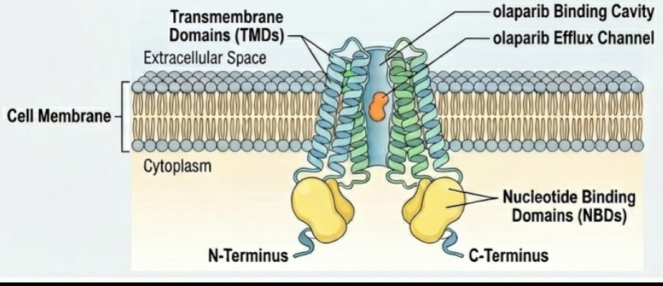
Figure 1: Structure of ABCB1 efflux pump. Schematic representation of ATP-binding cassette transporter B1 showing transmembrane domains, nucleotide-binding domains, ATP-dependent transport mechanism, and olaparib efflux pathway. Please click here to view a larger version of this figure.
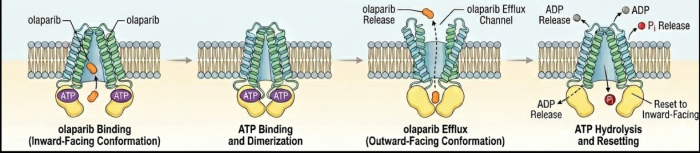
Figure 2: General mechanism of ABCB1-mediated olaparib efflux. Illustration showing ATP binding, conformational changes, substrate transport, and extracellular drug release. Please click here to view a larger version of this figure.
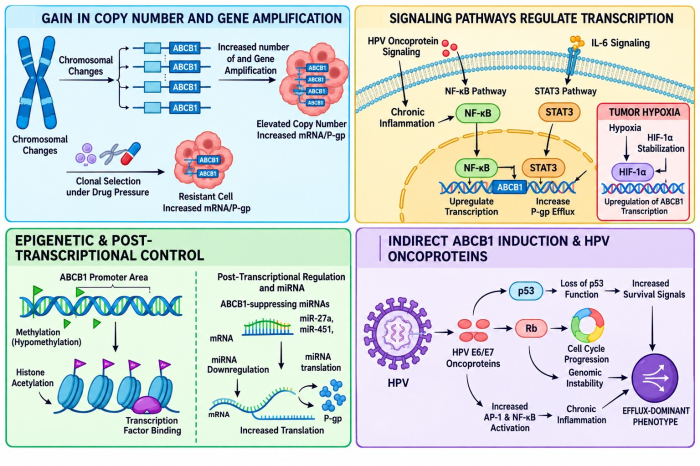
Figure 3: Molecular mechanisms contributing to ATP-binding cassette subfamily B member 1 (ABCB1) overexpression in cervical cancer. Schematic illustration showing gene amplification, transcriptional regulation by nuclear factor kappa B (NF-κB), signal transducer and activator of transcription 3 (STAT3), activator protein-1 (AP-1), and hypoxia-inducible factor-1 alpha (HIF-1α), together with epigenetic regulation, microRNA-mediated modulation, and human papillomavirus (HPV)-associated oncogenic signaling. Please click here to view a larger version of this figure.
공개 사항
The authors have no conflicts of interest to declare.
감사의 글
The authors would like to thank PSG College of Pharmacy for their constant support and encouragement.
참고문헌
- Sung H, et al. Global Cancer Statistics 2020: GLOBOCAN Estimates of Incidence and Mortality Worldwide for 36 Cancers in 185 Countries. CA Cancer J Clin. 2021;71(3):209-249.
- Cohen PA, Jhingran A, Oaknin A, Denny L. Cervical cancer. Lancet. 2019;393(10167):169-182.
- Tewari KS, et al. Improved survival with bevacizumab in advanced cervical cancer. N Engl J Med. 2014;370(8):734-743.
- Longley DB, Johnston PG. Molecular mechanisms of drug resistance. J Pathol. 2005;205(2):275-292.
- Holohan C, Van Schaeybroeck S, Longley DB, Johnston PG. Cancer drug resistance: an evolving paradigm. Nat Rev Cancer. 2013;13(10):714-726.
- Robey RW, et al. Revisiting the role of ABC transporters in multidrug-resistant cancer. Nat Rev Cancer. 2018;18(7):452-464.
- Gottesman MM, Fojo T, Bates SE. Multidrug resistance in cancer: role of ATP-dependent transporters. Nat Rev Cancer. 2002;2(1):48-58.
- Szakács G, et al. Targeting multidrug resistance in cancer. Nat Rev Drug Discov. 2006;5(3):219-234.
- Choi YH, Yu AM. ABC transporters in multidrug resistance and pharmacokinetics, and strategies for drug development. Curr Pharm Des. 2014;20(5):793-807.
- Lord CJ, Ashworth A. PARP inhibitors: synthetic lethality in the clinic. Science. 2017;355(6330):1152-1158.
- Murai J, et al. Trapping of PARP1 and PARP2 by clinical PARP inhibitors. Cancer Res. 2012;72(21):5588-5599.
- Ojesina AI, et al. Landscape of genomic alterations in cervical carcinomas. Nature. 2014;506(7488):371-375.
- Cancer Genome Atlas Research Network. Integrated genomic and molecular characterization of cervical cancer. Nature. 2017;543(7645):378-384.
- Rottenberg S, et al. High sensitivity of BRCA1-deficient mammary tumors to PARP inhibition. Proc Natl Acad Sci U S A. 2008;105(44):17079-17084.
- Kondrashova O, et al. Secondary somatic mutations restoring BRCA1/2 predict resistance to platinum and PARP inhibitors. J Clin Oncol. 2017;35(14):1650-1657.
- Vaidyanathan A, et al. ABCB1 induction defines a common resistance mechanism in paclitaxel- and olaparib-resistant ovarian cancer cells. Br J Cancer. 2016;115(4):431-441.
- Murai J, et al. Rationale for poly(ADP-ribose) polymerase (PARP) inhibitors in combination therapy. Cancer Treat Rev. 2014;40(5):612-620.
- Kim H, et al. Targeting the ATR/CHK1 axis with PARP inhibition results in tumor regression in BRCA-mutant models. Cancer Res. 2017;77(18):5073-5085.
- Moody CA, Laimins LA. Human papillomavirus oncoproteins: pathways to transformation. Nat Rev Cancer. 2010;10(8):550-560.
- Lheureux S, et al. Long-term responders on olaparib maintenance in high-grade serous ovarian cancer: clinical and molecular characterization. Ann Oncol. 2019;30(4):551-557.
- Aller SG, et al. Structure of P-glycoprotein reveals a molecular basis for polyspecific drug binding. Science. 2009;323(5922):1718-1722.
- Higgins CF, Linton KJ. The ATP switch model for ABC transporters. Nat Struct Mol Biol. 2004;11(10):918-926.
- Schinkel AH. P-Glycoprotein, a gatekeeper in the blood-brain barrier. Eur J Pharm Sci. 1999;8(2):113-124.
- Zhu H, Luo H, Shen Z, Hu X, et al. Transforming growth factor-β1 induces P-glycoprotein expression in human cervical carcinoma cells. Oncol Lett. 2013;6(2):379-382.
- Wang Y, et al. ABCB1 expression predicts poor prognosis in cervical cancer patients. Cancer Biomark. 2018;21(3):543-550.
- Katayama R, et al. Acquisition of multidrug resistance through ABCB1 overexpression in paclitaxel-selected cancer cells. Cancer Sci. 2007;98(7):1061-1066.
- Saxena M, Stephens MA. Pathways connecting epithelial-mesenchymal transition and multidrug resistance in cancer. Mol Cancer. 2011;10:130.
- Phi LTH, et al. Cancer stem cells (CSCs) in drug resistance and their therapeutic implications in cancer treatment. Stem Cells Int. 2018;2018:5416923.
- Xia CQ, Smith PG. Drug transporters and multidrug resistance in cancer chemotherapy. Drug Resist Updat. 2012;15(1-2):1-19.
- Durmus S, et al. Breast cancer resistance protein (BCRP/ABCG2) and P-glycoprotein (ABCB1) restrict the oral availability and brain penetration of the PARP inhibitor olaparib. Clin Cancer Res. 2015;21(4):760-768.
- Riganti C, Contino M, Kopecka J, et al. ABC transporters and resistance to PARP inhibitors in prostate cancer. Front Oncol. 2020;10:80.
- Durmus S, Hendrikx JJMA, Schinkel AH. ABCB1 and ABCG2 limit the efficacy and tissue distribution of olaparib. Mol Cancer Ther. 2015;14(6):1495-1502.
- Patch AM, et al. Whole-genome characterization of chemoresistant ovarian cancer. Nature. 2015;521(7553):489-494.
- Scotto KW. Transcriptional regulation of ABC drug transporters. Oncogene. 2003;22(47):7496-7511.
- Comerford KM, et al. Hypoxia-inducible factor-1-dependent regulation of the multidrug resistance (MDR1) gene. Cancer Res. 2002;62(12):3387-3394.
- Baker EK, Johnstone RW, Zalcberg JR, El-Osta A. Epigenetic changes to the MDR1 locus in response to chemotherapeutic drugs. Oncogene. 2005;24(54):8061-8075.
- Zhu H, et al. Role of MicroRNA miR-27a and miR-451 in the regulation of MDR1/P-glycoprotein expression in cancer cells. Cancer Res. 2008;68(18):7424-7432.
- McKenna DJ, McDade SS, Patel D, et al. MicroRNA dysregulation in HPV-associated cervical carcinogenesis. Oncogene. 2010;29(31):4363-4374.
- Callaghan R, Luk F, Bebawy M. Inhibition of the multidrug resistance P-glycoprotein: time for a change of strategy? Drug Metab Dispos. 2014;42(4):623-631.
- Kunnumakkara AB, et al. Curcumin mediates anticancer effects by modulating multiple signaling pathways. Cancer Lett. 2017;390:145-159.
- Nabekura T. Overcoming multidrug resistance by flavonoids. Biol Pharm Bull. 2010;33(12):2013-2017.
- Wang AZ, Langer R, Farokhzad OC. Nanoparticle delivery systems for cancer therapy. Annu Rev Med. 2012;63:185-198.
- Torchilin VP. Multifunctional nanocarriers for drug delivery. Nat Rev Drug Discov. 2014;13(11):813-827.
- Danhier F, et al. PLGA-based nanoparticles: an overview. J Control Release. 2012;161(2):505-522.
- Zhou J, et al. Novel delivery strategies for cancer therapeutics. Cancer Nanotechnol. 2021;12(1):1-24.
- Chen Y, Gao DY, Huang L. In vivo delivery of nucleic acids and nanomedicine for cancer therapy. Adv Drug Deliv Rev. 2015;81:128-141.
- Cibula D, et al. ESGO/ESTRO/ESP Guidelines for the management of patients with cervical cancer – Update 2023. Int J Gynecol Cancer. 2023;33(5):649-666.
- Abu-Rustum NR, et al. Cervical Cancer, Version 2.2026, NCCN Clinical Practice Guidelines in Oncology. J Natl Compr Canc Netw. 2025;23(12):549-573.
- Lightfoot M, Montemorano L, Bixel K. PARP inhibitors in gynecologic cancers: What is the next big development? Curr Oncol Rep. 2020;22(3):29.
- Jiao S, et al. PARP inhibitor upregulates PD-L1 expression and enhances cancer-associated immunosuppression. Clin Cancer Res. 2017;23(14):3711-3720.
- Tomao F, et al. Targeting cervical cancer: Is there a role for poly(ADP-ribose) polymerase inhibition? J Cell Physiol. 2020;235(6):5050-5058.
- Bianchi A, et al. PARP-1 activity (PAR) determines the sensitivity of cervical cancer to olaparib. Gynecol Oncol. 2019;155(1):144-150.
- Gross M, Spencer RJ. Recurrent cervical cancer treated successfully with single-agent PARP-inhibitor, olaparib. Case Rep Obstet Gynecol. 2022;2022:6579715.
- Elayapillai SP, et al. ATR inhibition increases reliance on PARP-mediated DNA repair revealing an improved therapeutic strategy for cervical cancer. Gynecol Oncol. 2024;191:182-193.
- Wan JCM, et al. Liquid biopsies come of age. Nat Rev Cancer. 2017;17(4):223-238.