The study reveals the evolutionary trend of prostate cancer mitochondrial research from basic functions to metabolic reprogramming and therapeutic strategies over the past decade.
연구 논문
A Bibliometric Analysis of Mitochondrial Research in Prostate Cancer: Global Research Trends and Emerging Hotspots (2016–2025)
이 논문에서
요약
초록
Prostate cancer remains a major malignancy worldwide, with mitochondrial dysfunction playing a critical role in metabolic reprogramming, therapy resistance, and disease progression. However, a systematic bibliometric analysis of the intersection between prostate cancer and mitochondrial research is lacking. Publications from 2016 to 2025 were retrieved from the Web of Science Core Collection. Bibliometric analyses were performed using CiteSpace and VOSviewer, including publication and citation trends, country/institution collaboration networks, keyword co-occurrence and cluster analysis, reference co-citation, and burst detection. Annual publication output remained stable, while cumulative citations increased 76-fold, indicating growing academic impact. China and the United States were the leading contributors, with China leading in volume but lagging in citations per publication. Keyword analysis revealed a clear evolutionary trajectory from basic mitochondrial functions dominated by apoptosis and oxidative stress to metabolic reprogramming, mitochondrial dynamics with dynamin-related protein 1 (DRP1) as a key player, and therapy-related topics including photodynamic therapy and tumor hypoxia. Clusters including “cancer metabolism”, “tricarboxylic acid (TCA) cycle”, “mitochondrial dysfunction”, and “reactive oxygen species” highlighted the dual role of mitochondria in prostate cancer. Reference co-citation and burst analyses confirmed the shift from fundamental mitochondrial metabolism toward clinical translation and comprehensive assessment. This first bibliometric mapping of prostate cancer and mitochondrial research over the past decade identifies major research forces, collaboration patterns, and knowledge evolution. DRP1-mediated mitochondrial fission, metabolic adaptation in castration-resistant prostate cancer (CRPC), and mitochondria-targeted therapeutic strategies represent emerging frontiers. The findings provide an objective reference for future research directions in prostate cancer and mitochondrial research.
서론
Prostate cancer is one of the most common malignancies in men worldwide1. Its pathogenesis is complex with significant heterogeneity, and therapy resistance along with disease progression remain core clinical challenges2. In recent years, the renewed understanding of mitochondrial biological functions has opened new dimensions for prostate cancer research3. Mitochondria are no longer viewed merely as the energy factories of cells. They are deeply involved in metabolic reprogramming, apoptosis evasion, redox homeostasis regulation, and the development of therapeutic resistance in tumor cells4,5,6. From the early androgen-dependent growth of prostate cancer to the malignant progression into castration-resistant stages, mitochondrial dynamics, biogenesis, and functional adaptations play critical roles7,8,9,10. Targeted intervention strategies against mitochondrial electron transport chain, substrate utilization, and mitophagy are gradually becoming cutting-edge approaches to overcome conventional therapy resistance and inhibit tumor progression11,12,13. Given the central role of mitochondrial dysfunction in prostate cancer progression, a systematic bibliometric analysis is expected to reveal global research trends, collaborative networks, and emerging hotspots in this field over the past decade. However, the past decade has witnessed a surge in research output in this field, accompanied by fragmented knowledge structures. A systematic macrolevel scientific interpretation of research hotspots and evolutionary trajectories is still lacking.
Bibliometrics, as a quantitative analysis tool based on mathematical and statistical methods, can objectively map and visualize large-scale literature data in a specific research field14,15. It reveals collaboration networks among countries, institutions, and authors, identifies highly influential publications and core topics, and detects the evolutionary trends of emerging hotspots16. Although bibliometric studies have been conducted on prostate cancer as a whole or on certain signaling pathways, a systematic analysis specifically focusing on the role of mitochondria in prostate cancer is still absent17,18. Importantly, previous reviews have largely focused on prostate cancer or mitochondrial biology separately, and no comprehensive bibliometric study has specifically mapped the intersection of these two fields using integrated CiteSpace and VOSviewer analyses with a ten-year longitudinal perspective. This study, based on relevant literature published over the past decade, employs bibliometric methods to comprehensively analyze the current status, developmental trends, and emerging frontiers of global mitochondrial research in prostate cancer. By constructing scientific knowledge maps, this study aims to answer the following key questions, namely, what the major research forces and collaboration patterns are in this field, and what stagewise thematic evolution has taken place. The findings will provide an objective overview of the research landscape and strategic references for future research on mitochondrial research in prostate cancer.
프로토콜
This study involved only the analysis of publicly available bibliometric data from the Web of Science Core Collection and did not involve human subjects, animal experiments, or any confidential information. Therefore, formal ethical approval was not required.
Literature search and collection strategy
The data for this study were sourced from the Web of Science Core Collection (WOSCC), with the search restricted to the Science Citation Index Expanded (SCI-EXPANDED) and Social Sciences Citation Index (SSCI) sub-databases. An advanced search mode was employed, using Boolean logical operators to construct the following topic search query covering relevant studies: TS = ((mitochondri* OR “mitochondrial function” OR “mitochondrial metabolism” OR “oxidative phosphorylation” OR “electron transport chain” OR “mitochondrial biogenesis”)) AND TS = ((“prostate cancer” OR “prostate neoplasm” OR “prostate carcinoma” OR “prostatic neoplasm*”) OR (“castration-resistant prostate cancer” OR “CRPC” OR “metastatic prostate cancer” OR “hormone refractory prostate cancer”) OR (“androgen receptor” AND prostate)). We manually verified the relevance of the retrieved records by reviewing titles and abstracts to confirm that they fell within the defined scope of prostate cancer–mitochondria research. The search time span was from January 1, 2016, to December 31, 2025, with the final data retrieval performed on March 15, 2026. The initial search yielded 1,933 documents. After screening (document types limited to article and review article; language limited to English), 1,846 documents were finally included to form the analytical dataset, comprising 1,492 research articles and 354 review articles. The records were exported and saved in Tab-delimited file format and plain text file format, respectively. The flowchart of the bibliometric analysis is shown in Figure 1.
Annual publication volume analysis
In the Web of Science Core Collection, the built-in “Analyze Results” function was used to count the final 1,846 documents by the “Publication Year” field, obtaining the annual publication volume data. The statistical results were exported as an Excel file. In Excel, a combination chart was inserted with year as the horizontal axis and publication volume as the vertical axis. A bar chart was used to represent annual publication volume, with a line chart overlaid to indicate cumulative citation counts over time. For derived metrics, cumulative citations were calculated by summing the annual citation counts for each publication over the analysis period, with the total representing the cumulative citation count up to the data retrieval date. Citations per publication were computed by dividing the total number of citations received by all publications in each group by the total number of publications in that group.
Analysis of countries/regions and institutions
Documents containing fields for countries/regions and institutions were exported from the Web of Science Core Collection in Tab-delimited file format. The country/region and institutional information of the authors for each document were extracted. Different English names referring to the same country/region were merged, including the unification of “USA,” “U.S.A.,” and “United States” as “USA”; the consolidation of “UK,” “England,” “Scotland,” and “Wales” as “UK”; and the unification of “Peoples R China,” “P R China,” “PR China,” and “China” as “China.” Different name variants of the same institution were also standardized. VOSviewer was used to construct a country/region collaboration network map, using full counting as the counting method, with association strength as the normalization method, and the default clustering resolution of 1.00. In the map, node size represents the number of publications, and link thickness represents collaboration intensity. Excel was also used to separately calculate the top 10 most productive countries/regions and the top 10 most productive institutions.
Journal and author analysis
In VOSviewer, document records were imported to construct a journal co-citation network with journals as the unit of analysis. Nodes represent journals, and links represent co-citation relationships. For the co-citation analyses, full counting was applied with association strength normalization, and the minimum cluster size was set to 10 with the default resolution of 1.00. Source publication information for each document was exported from the Web of Science Core Collection. Excel was used to calculate the top 10 journals by number of publications and the top 10 journals by number of citations. For the aforementioned journals, their impact factors and JCR quartiles were obtained from the 2025 edition of the Journal Citation Reports (JCR), which is based on citation data from the calendar year 2024. The analysis unit was set to the authors, and an author collaboration network analysis was performed. For author name disambiguation, we relied primarily on the unique author identifier assigned by the Web of Science Core Collection to distinguish authors with identical names. Where the same author appeared under different name variants, we manually merged these entries based on institutional affiliation, publication history, and co-author networks. The resulting files were exported, and Excel was used to display the top 10 authors by publication volume and the top 10 authors by citation count.
Keyword analysis
Document records exported from the Web of Science Core Collection in Plain text file format were imported into CiteSpace software. In the data preprocessing stage, the “Data” menu was clicked, “Import/Export” was selected, and data deduplication and format cleaning were performed according to the “WoS” format to generate project files that could be directly analyzed by CiteSpace. Before analysis, we manually inspected the preliminary keyword network and used the alias function in CiteSpace to merge synonyms, abbreviations, and singular and plural variants into unified terms. The cleaned files were loaded into a CiteSpace project to construct a keyword co-occurrence network. The time slicing was set from 2016 to 2025, with one year per slice. Titles, abstracts, author keywords, and Keywords Plus were selected as term sources. The g-index with k = 25 was adopted as the node selection criterion. The Log-Likelihood Ratio (LLR) algorithm was used for cluster label extraction. For network pruning, we applied pathfinder network scaling while also pruning sliced networks and the merged network. The minimum occurrence threshold for keywords was set to 5. After running the analysis, a keyword co-occurrence map was obtained, displaying the overall research framework of the field. The “Clustering” function was used to perform cluster analysis on keywords, identifying the research themes represented by each cluster to facilitate further analysis of the field’s sub-topics. In the visualization view, the display mode was switched to “Timezone View” or “Timeline View,” showing the evolution trajectory of keywords along the year axis, thereby clarifying the temporal development of the field.
Reference analysis
In CiteSpace, the analysis type was switched to “Cited Reference”. The time slice parameter settings were kept consistent with those used in the keyword analysis, covering the period from 2016 to 2025 with one year per slice. The g-index with k = 25 was maintained as the selection criterion, and the same pruning strategy was applied. The minimum cited frequency for references was set to 5. The analysis was run to generate a reference co-citation network map. The LLR algorithm was used to extract cluster labels from the keywords or titles of the cited references, in order to identify the main knowledge clusters and the research themes they represent in the field. After the analysis, the co-occurrence map and the cluster map of the co-citation network were exported separately. In the visualization view, the node label display was set to show the top 20 cited references (by citation count), which were exported as a hot-topic reference list. For each reference in this list, the publication year, journal, citation count, and cluster label were recorded. Based on these data, the annual distribution of hot topics was analyzed, and the core themes and knowledge base carried by each hot-topic reference were further explored.
결과
Annual trends in publication and citation volume
Between 2016 and 2025, the annual number of publications showed a generally fluctuating but relatively stable trend (Figure 2). The highest number of publications (229) occurred in 2017, and the lowest (159) in 2019. In the remaining years, the publication count ranged from 162 to 200, with no clear sustained increase or decrease. The cumulative annual citation count steadily rose from 155 in 2016 to 11,809 in 2025, an approximately 76-fold increase over the decade. In the interdisciplinary field of prostate cancer and mitochondria, the annual output remained relatively stable, while the academic impact continued to accumulate. The steady accumulation of citations despite stable annual output indicates that the field has maintained consistent research activity while steadily building its knowledge base.
Analysis of country/region collaboration networks
To clarify the global geographical distribution and collaboration patterns in prostate cancer and mitochondrial research, this study performed statistical and network analyses on the countries/regions of the included publications. The country collaboration network constructed using VOSviewer comprised five clusters. Cluster 1 contained seven European countries: Austria, France, Germany, Italy, Spain, Switzerland, and Turkey, forming a collaboration cluster centered on Western and Southern Europe. Cluster 2 included seven countries: Australia, Belgium, Brazil, Poland, Portugal, Turkey, and the United Kingdom, exhibiting intercontinental collaboration characteristics. Cluster 3 comprised six Asian and Middle Eastern countries: Egypt, India, Iran, Japan, Malaysia, and Saudi Arabia, indicating close ties within Asia and with the Middle East. Cluster 4 contained four countries: China, Norway, South Korea, and the United States. Among them, China and the United States were the two most productive countries. Although this cluster was small in size, it had a notable impact. Cluster 5 included only Canada, forming a single-country cluster (Figure 3A). Among the top 10 most productive countries, China (651 publications) and the United States (494 publications) far exceeded the others, constituting the two major output cores in this field. In terms of total citation frequency, the United States (19,820 citations) was slightly higher than China (17,768 citations), and the two countries together accounted for over 70% of all citations. Regarding citations per publication, Italy (53 citations/publication) and Canada (44 citations/publication) stood out, while China had 27 citations/publication. The United States had the highest total link strength (295), followed by China (158), the United Kingdom (109), etc. (Table 1).
Figure 3B shows the annual publication changes of the top 10 most productive countries from 2016 to 2025. China maintained a relatively high output in most years, peaking at 74 publications in 2017, thereafter fluctuating but always remaining above 55 publications, and rebounding to 76 publications in 2025. The United States maintained around 65 publications per year between 2016 and 2018, followed by a slow decline, dropping to 24 publications in 2023, with a slight recovery in 2024–2025. India and South Korea had relatively stable publication volumes, with India ranging from 8 to 18 publications per year and South Korea from 6 to 19 per year. Most European countries, such as Italy, the United Kingdom, and Germany, fluctuated around 10 publications per year, with no obvious growth or decline. Japan and Saudi Arabia had lower publication volumes, though Saudi Arabia showed a modest increase in 2021–2022.
The country collaboration chord diagram further intuitively demonstrates the collaboration intensities among major countries. The thickest link was between China and the United States, indicating the closest collaboration. In addition, China also had strong collaborative links with the United Kingdom, Germany, and Canada. Besides its close cooperation with China, the United States also collaborated frequently with European countries such as Italy, Germany, and the United Kingdom. The links between India and countries within Cluster 3 (e.g., Saudi Arabia, Egypt) were particularly prominent, reflecting the regional characteristics of intra-Asian collaboration (Figure 3C). In summary, China and the United States dominate global research output in this field, while collaboration patterns show a clear regional structure with Europe, Asia, and the Americas forming interconnected but distinct clusters.
Institutional collaboration network and output analysis
An analysis was conducted on the leading institutions in the field of prostate cancer and mitochondrial research. Figure 4A presents the top 10 most productive institutions along with their publication counts. Shanghai Jiao Tong University ranked first with 29 publications, followed by Sun Yat-sen University, Guangzhou Medical University, and Jilin University, each with 27 publications (tied for second). Shandong University ranked fifth with 26 publications, Southern Medical University sixth with 24 publications, China Medical University and Zhengzhou University tied for seventh with 23 publications each, and Nanjing Medical University and Taipei Medical University tied for ninth with 22 publications each.
Figure 4B shows the top 10 institutions by total citation count and their country affiliations. Shanghai Jiao Tong University ranked first with 1,352 citations, followed by the Chinese Academy of Sciences (1,215 citations), King Saud University (1,163 citations), Sun Yat-sen University (1,047 citations), and China Medical University (966 citations). Notably, King Saud University is from Saudi Arabia, MD Anderson Cancer Center from the United States, the University of Sydney from Australia, and McGill University from Canada, indicating that the distribution of high-impact institutions is more diverse than that of the top 10 by publication volume. Overall, Chinese institutions dominate in terms of output scale, but some European, American, and Middle Eastern institutions perform more prominently in citations per publication.
The institutional collaboration network analysis included 50 research institutions with no fewer than 12 publications (Figure 4C). From a geographical perspective, Chinese institutions accounted for the vast majority, with more than 40 institutions from mainland China and the Taiwan region, reflecting a high concentration of prostate cancer and mitochondrial research in China. The collaboration network exhibits a multi-center characteristic, in which Guangzhou Medical University, South China University of Technology, Shanghai Jiao Tong University, and Southern Medical University show high link strength, indicating their extensive collaborative reach in this field. Although U.S. institutions such as Harvard Medical School and MD Anderson Cancer Center have relatively few publications, they also possess high node centrality. Chinese institutions dominate in terms of both output volume and citation impact at the institutional level, whereas institutions from the United States and other countries, despite their smaller publication numbers, demonstrate notable network centrality and international influence.
Journal output and impact analysis
A total of 35 journals with no fewer than 9 publications were included in this study. The top 10 most productive journals, along with their impact factors, total citation counts, and JCR quartiles, demonstrate the influence of these journals (Table 2). Among them, the International Journal of Molecular Sciences ranked first with 70 publications and 1,773 citations; this journal is in JCR Q1. Cancers (49 publications, 1,066 citations, Q2) and Frontiers in Oncology (35 publications, 912 citations, Q2) ranked second and third, respectively. In terms of impact factor, Biomedicine & Pharmacotherapy (IF = 7.5) and Oncogene (IF = 7.3) were the highest, although their publication counts were 19 and 22, respectively. Oncology Letters had the lowest impact factor (IF = 2.2) and was in JCR Q3. Overall, the impact factors of the top 10 most productive journals span a wide range, reflecting that results in this field are published across a broad spectrum from specialty journals to high-impact general journals.
Figure 5A shows the impact factors of the top 10 most productive journals. All of these journals had impact factors above 2.0. Among them, Biomedicine & Pharmacotherapy (IF = 7.5) and Oncogene (IF = 7.3) were the highest, while Oncology Letters (IF = 2.2) was the lowest. Figure 5B presents the top 10 journals by citation count and their JCR quartiles. Oxidative Medicine and Cellular Longevity ranked first with 2,099 citations (JCR Q2); this journal did not appear among the top 10 most productive journals, indicating its high per-publication impact. Cell Death & Disease (1,219 citations, Q1), Cancer Letters (1,161 citations, Q1), and Nature Communications (1,028 citations, Q1) were all in Q1. Overall, highly cited journals are mostly concentrated in Q1 and Q2, indicating that high-impact results in this field are primarily published in medium-level and above journals.
Figure 5C shows the journal co-citation network, in which node size represents the number of publications and links represent co-citation relationships. The International Journal of Molecular Sciences occupied a central position in the network, with a total link strength of 107; Cancers, Frontiers in Oncology, and Scientific Reports also had high centrality. Although Nature Communications had only 15 publications, its link strength reached 57, reflecting its role as a high-impact journal serving as a bridge in knowledge dissemination. The journal landscape shows that the field's knowledge is disseminated across a wide range of journals, with high-impact journals such as Nature Communications and Cancer Letters serving as key bridges in the co-citation network.
Author collaboration network and output analysis
The top 10 most productive authors and their country affiliations are shown in Figure 6A. Among them, South Korean scholars dominated: Lim Whasun and Song Gwonhwa tied for first with 12 publications each. Ahn Soon-Cheol, Kim Kwang-Youn, Kim Sang-Hun, and Lee Sang-Han each published 8–9 articles, also from South Korea. Kumar Rahul from the United States published 11 articles, Audet-Walsh Etienne from Canada published 10, and Chinese scholar Zhong Weide published 10. Overall, South Korea has formed a stable group of highly productive authors in this field.
The top 10 authors by citation count and their country affiliations are shown in Figure 6B. Lim Whasun and Song Gwonhwa tied for first with 630 citations each. They were followed by French scholar Prevarskaya Natalia (559 citations), American scholar Bazer Fuller W. (501 citations), and Chinese scholar Wang Wei (472 citations). Italian scholars Chiarugi Paola, Giannoni Elisa, Ippolito Luigi, and Morandi Andrea each had 455 citations, demonstrating the collective impact of the Italian research team in this field. Canadian scholar Audet‑Walsh Etienne ranked tenth with 399 citations.
The author collaboration network identified seven clusters (Figure 6C). Clusters 1 and 2 were composed mainly of Chinese scholars, including Chen Wei, Guo Qinglong, Li Jie, Liu Jianjun, etc., indicating close collaborative teams within China. Cluster 3 centered on Lu Junxuan and Wu Jason Boyang. Cluster 4 mainly involved international collaborators Suo Zhenhe and Nesland Jahn M. Cluster 5 centered on Shi Changhong and Wang Cong. Cluster 6 included Huang Jiaoti, Liang Chaozhao, and others. Cluster 7 included Gao Allen C., Wu Boyang Jason, and others. In terms of network structure, Chinese scholars occupy central positions in multiple clusters, whereas South Korean scholars such as Lim Whasun and Song Gwonhwa form their own system with high link strength and have cross-team collaborations with some scholars in Cluster 7. Overall, the field exhibits an East Asian research cluster dominated by China and South Korea, while European and American scholars are integrated into the network through international collaborations, reflecting a balanced global collaboration structure with distinct regional hubs.
Keyword co-occurrence and cluster analysis
Keyword co-occurrence analysis was used to reveal the research hotspots and thematic structure in the field of prostate cancer and mitochondria (Figure 7A). Table 3 lists the top 10 keywords by frequency and by betweenness centrality. The most frequent keyword was “prostate cancer” (1,016 times), followed by “expression” (314 times), “apoptosis” (257 times), “oxidative stress” (221 times), and “activation” (172 times); these high-frequency terms reflect the core concerns within the field. In terms of betweenness centrality, “cancer therapy” (centrality 0.59), “cancer metabolism” (0.40), “cancer cells” (0.32), “drp1” (0.30), and “acid” (0.27) ranked highest. High-centrality keywords, though not necessarily the most frequent, serve as important bridges in the network, connecting different research topics. Notably, ‘drp1’ had high betweenness centrality (0.30), indicating its bridging role within the keyword network. DRP1 appeared as a keyword in 47 publications, with a marked increase from 4 publications between 2016 and 2019 to 43 publications between 2020 and 2025. Burst detection analysis revealed a burst strength of 6.38 spanning from 2021 to 2025. “Photodynamic therapy” (0.22) and “tumor hypoxia” (0.22) also exhibited relatively high betweenness centrality, indicating that cross‑disciplinary research on photodynamic therapy and tumor hypoxia with mitochondrial function is increasingly becoming a connecting node.
Keyword cluster analysis was performed using CiteSpace, and a total of 14 clusters were identified (Figure 7B). The cluster analysis yielded a modularity Q of 0.836 and a mean silhouette of 0.879, indicating well-defined and coherent clusters. Cluster #0 “cancer metabolism” and Cluster #9 “TCA cycle” represent directions in metabolic reprogramming. “Cancer metabolism” includes keywords such as aerobic glycolysis, metabolic reprogramming, and downregulation, reflecting the traditional view that prostate cancer cells enhance glycolysis and suppress mitochondrial oxidative phosphorylation through metabolic reprogramming. However, recent studies have found that castration-resistant prostate cancer (CRPC) cells become re-dependent on the TCA cycle and oxidative phosphorylation; the keyword fatty acid synthase in the “TCA cycle” cluster also suggests cross-talk between fatty acid synthesis and mitochondrial metabolism. Clusters #1 “apoptosis”, #3 “mitochondrial dysfunction”, #5 “reactive oxygen species”, and #13 “oxidative stress” constitute a thematic group on mitochondrial dysfunction and oxidative stress. “Mitochondrial dysfunction” covers endoplasmic reticulum stress, benign prostatic hyperplasia, and “reactive oxygen species,” which is associated with the NF-κB signaling pathway. Together, these clusters depict the dual role of mitochondria in regulating cell survival and death. Clusters #2 “oncogenesis”, #4 “invasion”, and #11 “pathways” reflect directions in tumor progression and signaling pathways. “Oncogenesis” involves metastasis, androgen deprivation therapy, and angiogenesis; “invasion” is closely linked to progression and proliferation; “pathways” include redox‑related pathways such as NF-κB and glutathione. Cluster #7 “androgen receptor” is linked to photodynamic therapy and tumor hypoxia, suggesting cross-talk between AR signaling and mitochondrial responses to hypoxia and photodynamic therapy. In addition, Cluster #6 “Warburg effect”, traditionally seen as a marker of glycolysis, includes keywords such as carcinoma and oxidative phosphorylation, reflecting a re-examination of the Warburg effect in this field. Cluster #12 “anticancer activity” involves biological evaluation and is a methodologically oriented cluster.
According to the timeline view (Figure 7C), the early hotspots from 2016 to 2018 centered on “apoptosis”, “oxidative stress”, and “Warburg effect”. From 2019 to 2021 onwards, “cancer metabolism”, “mitochondrial dysfunction”, and “TCA cycle” gradually became active and continued until 2025. Recently emerging keywords such as “drp1”, “photodynamic therapy”, and “tumor hypoxia” represent cutting-edge directions, including mitochondrial dynamics, photodynamic therapy, and tumor microenvironment hypoxia. Overall, this field has gradually expanded from basic mitochondrial function research to integrative studies of metabolic reprogramming, mitochondrial dynamics, and therapeutic response mechanisms. The thematic evolution indicates increasing research attention to cancer metabolism, mitochondrial dynamics, and tumor microenvironment interactions alongside established topics such as apoptosis and oxidative stress.
Reference co-citation analysis
Reference co-citation analysis was used to identify the knowledge base and research frontiers in this field. A total of 314 references were included in the reference co-citation network (Figure 8A). In terms of citation frequency, the global cancer statistics article by Sung H et al. (2021, CA: A Cancer Journal for Clinicians) ranked first with 129 citations; articles by Siegel RL et al. (2020), Schöpf B et al. (2020), and Bray F et al. (2018) each received 43 citations, tying for second place19,20,21,22. Among the highly cited references, the study by Bader DA et al. (2019, Nature Metabolism) with 37 citations and the review by Pavlova NN et al. (2016, Cell Metabolism) with 36 citations both focus on tumor metabolism and mitochondrial function, constituting an important knowledge base in this field23,24. In terms of betweenness centrality, the article by Beltran H et al. (2016, Nature Medicine) had the highest centrality (0.38); this article discusses the molecular characteristics of neuroendocrine prostate cancer. The articles by Mamouni K et al. (2021) (0.36) and Robinson D et al. (2015) (0.35) also showed high centrality, indicating that these references serve as key bridges between different research themes25,26,27. Notably, metabolism-related references such as Audet-Walsh E et al. (2017) (0.26) and DeBerardinis RJ et al. (2016) (0.24) also exhibited relatively high betweenness centrality, suggesting that metabolic reprogramming and mitochondrial dysfunction are core hubs connecting multiple research directions in prostate cancer28,29.
Reference cluster analysis revealed 17 clusters. The modularity Q was 0.862, and the mean silhouette was 0.912, reflecting strong internal coherence of the identified knowledge clusters. Cluster #2 (mitochondrial pyruvate carrier) and cluster #5 (metabolic rewiring) directly involve mitochondrial metabolic regulation; cluster #3 (Warburg effect) and cluster #7 (c-myc) are closely related to energy metabolic reprogramming; cluster #1 (zinc) and cluster #14 (lipoic-acid) reflect the roles of trace elements and antioxidants in mitochondrial function; cluster #11 (epigenetic) suggests that cross-talk between epigenetic modification and mitochondrial function is receiving increasing attention (Figure 8B). Figure 8C shows the top 20 references with the strongest citation bursts. The article with the strongest burst was by Sung H et al. (2021, CA: A Cancer Journal for Clinicians), with a burst strength of 21.03 from 2022 to 2025. Next was the article by Bray F et al. (2018, CA: A Cancer Journal for Clinicians), with a burst strength of 13.14 from 2020 to 2021. Other highly burst references include: the review by Pavlova NN et al. (2016, Cell Metabolism) with a burst strength of 9.29 from 2017 to 2020; the study by LeBleu VS et al. (2014, Nature Cell Biology) with a burst strength of 9.65 from 2016 to 2019; and the review by Rebello RJ et al. (2021, Nature Reviews Disease Primers) with a burst strength of 8.76 from 2023 to 20252,24,30. From a temporal perspective, references that burst from 2016 to 2019 mainly focused on fundamental mechanisms of mitochondrial metabolism, such as studies by Viale A et al. (2014) and DeBerardinis RJ et al. (2016). References that spanned from 2020 to 2021 were primarily global cancer statistics and preclinical studies29,31. References that burst from 2022 to 2025 are concentrated on epidemiological updates, prostate cancer reviews, and mechanisms of treatment resistance, suggesting that recent research hotspots are shifting from basic metabolism toward clinical translation and comprehensive assessment. The knowledge base of this field has progressively evolved from fundamental metabolic mechanisms toward clinical translation and treatment resistance, with recent citation bursts concentrated on epidemiological surveillance and therapeutic strategies, indicating a maturation of the research landscape.
Over the past decade, the field of prostate cancer mitochondrial research has demonstrated stable publication output alongside steadily accumulating citation impact, with China and the United States emerging as the dominant forces in both production and collaboration networks. At the institutional level, Chinese universities lead in publication volume, whereas institutions from the United States, Europe, and the Middle East exhibit stronger citation impact per publication. The journal and author landscapes reveal a well-distributed knowledge dissemination system, with high-impact journals and highly productive authors from South Korea, China, and Europe playing pivotal roles. Thematic evolution analysis indicates a clear transition from early focal points on apoptosis and oxidative stress toward emerging topics such as cancer metabolism, mitochondrial dynamics, and tumor microenvironment interactions, with DRP1, photodynamic therapy, and tumor hypoxia representing the most recent research frontiers. The knowledge base has progressively shifted from fundamental metabolic mechanisms toward clinical translation and treatment resistance, reflecting the evolving research landscape of this field.
DATA AVAILABILITY:
The datasets generated and analyzed during this study, including the raw data retrieved from the Web of Science Core Collection, the complete search records, the thesaurus mapping files, the software configuration files, and the source datasets for all figures, have been deposited in the Science Data Bank and are publicly available at https://doi.org/10.57760/sciencedb.010gw.
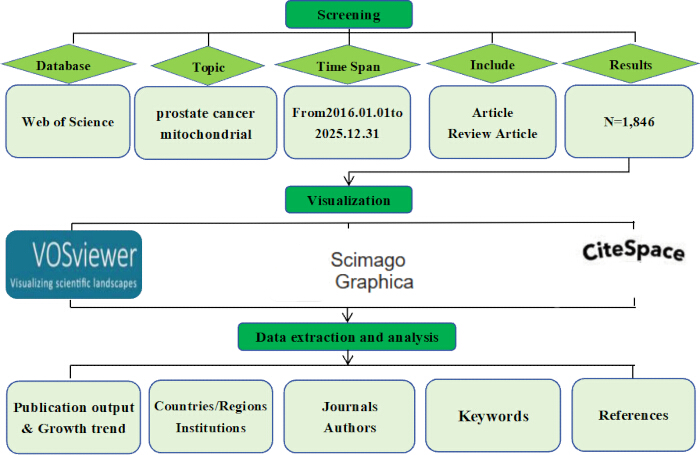
Figure 1: Study flowchart of bibliometric analysis. The flowchart illustrates the key steps of literature retrieval, screening, data preprocessing, bibliometric analysis, and final outputs. Please click here to view a larger version of this figure.
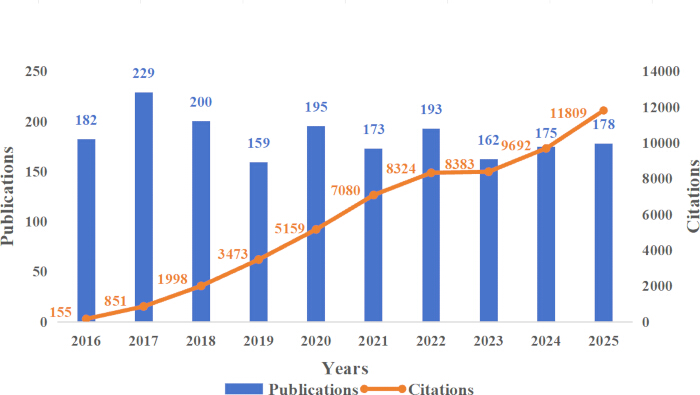
Figure 2: Annual publication volume and cumulative citation counts. The bar series shows the annual number of publications, and the line series shows the cumulative citation counts. The horizontal axis indicates the study years from 2016 to 2025. Please click here to view a larger version of this figure.
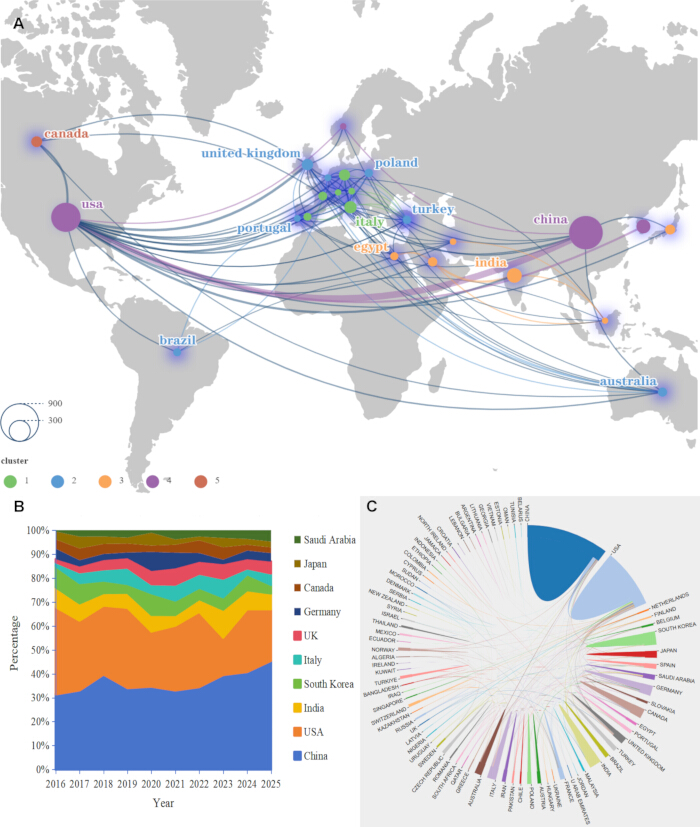
Figure 3: Country collaboration network and publication trends. (A) Country collaboration network. (B) Annual proportional distribution of publications among the top 10 most productive countries from 2016 to 2025. (C) Chord diagram of international collaboration. Node size represents publication volume, link thickness reflects collaboration intensity, cluster colors distinguish different regional groups, and chord widths indicate the strength of collaborative relationships. Please click here to view a larger version of this figure.
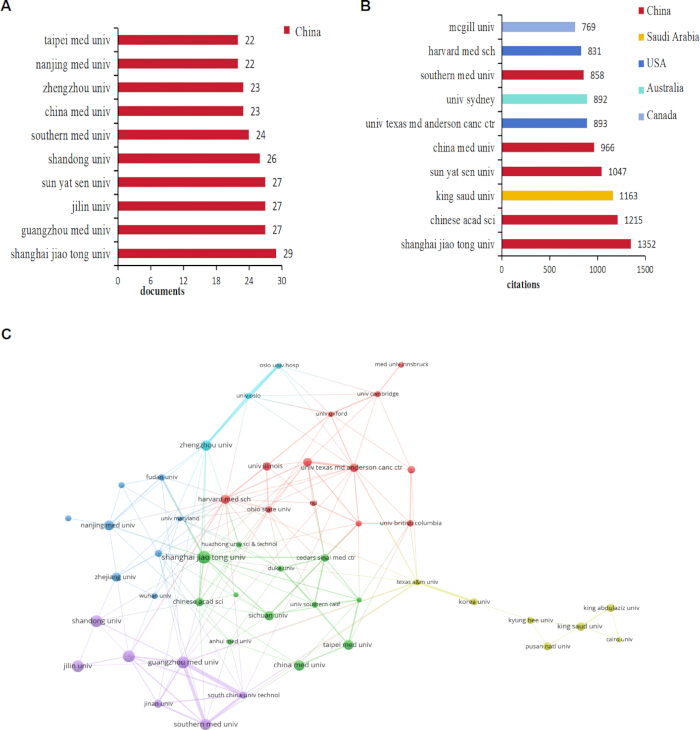
Figure 4: Institutional output and collaboration network. (A) Top 10 research institutions by publication volume. (B) Top 10 research institutions by citation counts. (C) Institutional collaboration network. The figure shows the top 10 research institutions by publication volume, the top 10 by citation counts, and the institutional collaboration network. Please click here to view a larger version of this figure.
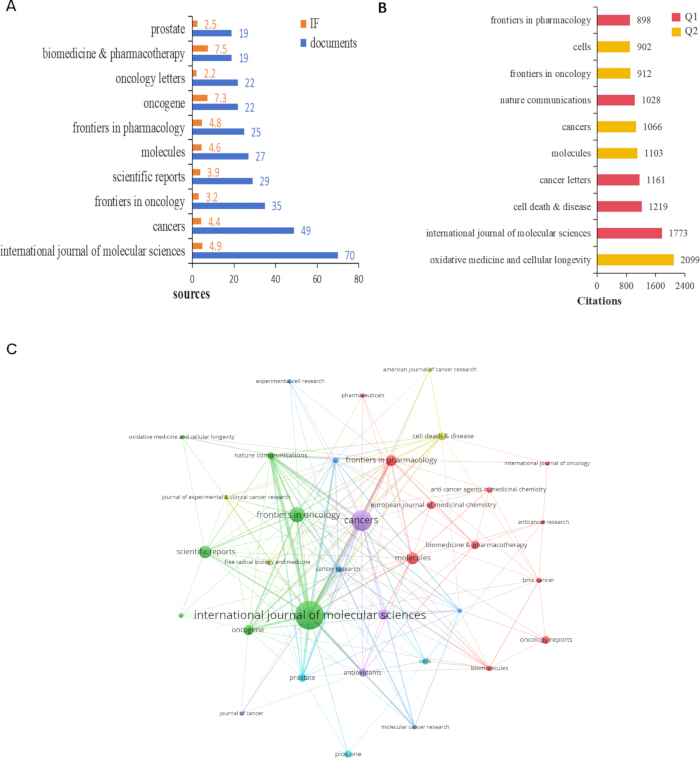
Figure 5: Journal impact, quartile distribution, and co-citation network. (A) Impact factors of the top 10 journals by publication volume. (B) JCR quartiles of the top 10 journals by citation counts. (C) Journal co-citation network. The figure displays the three journal-level analyses. In panel A, blue bars indicate publication volume and orange bars indicate impact factor; in panel B, bar length indicates citation count and color indicates JCR quartile; in panel C, node size reflects publication volume and link thickness reflects co-citation strength. Please click here to view a larger version of this figure.
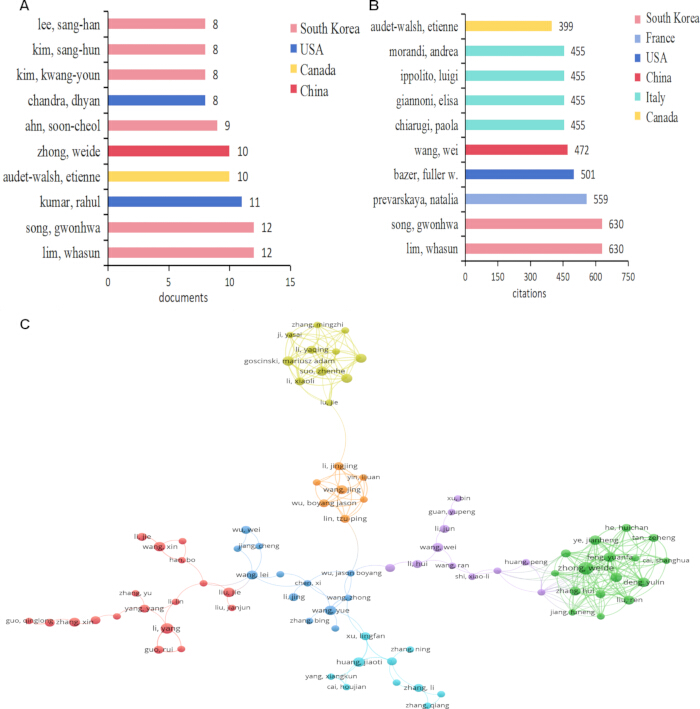
Figure 6: Author output and collaboration network. (A) Top 10 authors by publication volume. (B) Top 10 authors by citation counts. (C) Author collaboration network. The figure illustrates the top 10 authors by publication volume, the top 10 authors by citation counts, and the author collaboration network. Please click here to view a larger version of this figure.
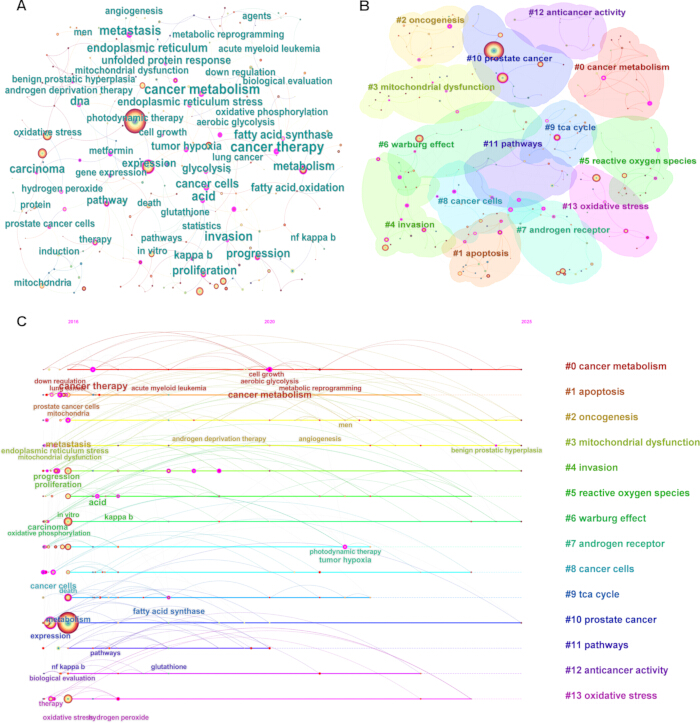
Figure 7: Keyword co-occurrence, clustering, and temporal evolution. (A) Keyword co-occurrence network. (B) Keyword clustering map. (C) Keyword timeline visualization. The figure depicts the keyword co-occurrence network, keyword clustering map, and keyword timeline visualization. Please click here to view a larger version of this figure.
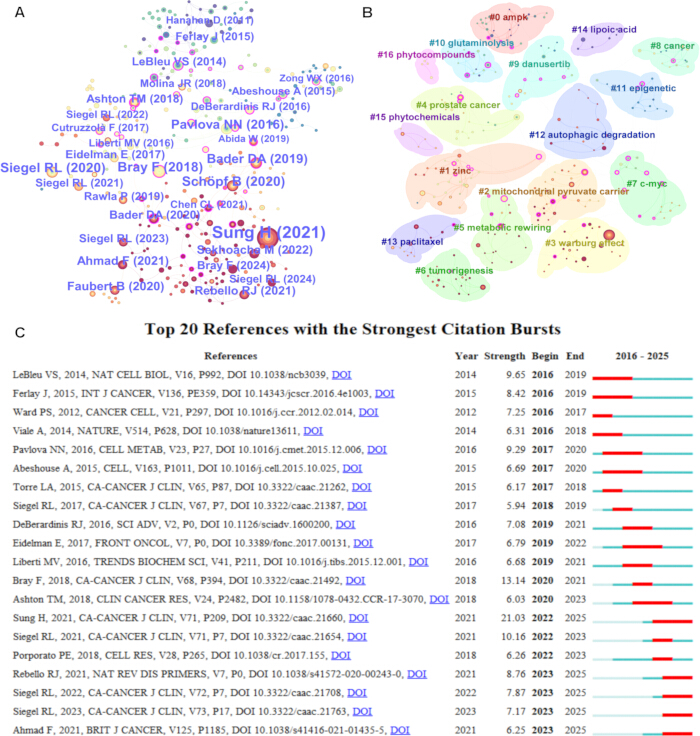
Figure 8: Reference co-citation network, clustering, and citation bursts. (A) Reference co-citation network. (B) Reference clustering map. (C) Top 20 references with the strongest citation bursts. The figure presents the reference co-citation network, reference clustering map, and the top 20 references with the strongest citation bursts. In panel C, red bars indicate burst periods. Please click here to view a larger version of this figure.
| Rank | Country | Documents | Citations | Average citation per paper | Total link strength |
| 1 | China | 651 | 17768 | 27 | 158 |
| 2 | United States | 494 | 19820 | 40 | 295 |
| 3 | India | 124 | 3123 | 25 | 67 |
| 4 | South Korea | 113 | 3840 | 34 | 36 |
| 5 | Italy | 87 | 4640 | 53 | 89 |
| 6 | United Kingdom | 74 | 2438 | 33 | 109 |
| 7 | Germany | 72 | 2319 | 32 | 81 |
| 8 | Canada | 69 | 3007 | 44 | 58 |
| 9 | Japan | 58 | 1273 | 22 | 23 |
| 10 | Saudi Arabia | 50 | 1976 | 40 | 60 |
Table 1: Publication and citation performance of the top 10 most productive countries. The table lists the publication volume, total citation count, citations per publication, and total link strength for the top 10 most productive countries.
| Rank | Source | Documents | IF | Citations | JCR |
| 1 | international journal of molecular sciences | 70 | 5 | 1773 | Q1 |
| 2 | cancers | 49 | 4 | 1066 | Q2 |
| 3 | frontiers in oncology | 35 | 3 | 912 | Q2 |
| 4 | scientific reports | 29 | 4 | 342 | Q1 |
| 5 | molecules | 27 | 5 | 1103 | Q2 |
| 6 | frontiers in pharmacology | 25 | 5 | 898 | Q1 |
| 7 | oncogene | 22 | 7 | 860 | Q1 |
| 8 | oncology letters | 22 | 2 | 632 | Q3 |
| 9 | biomedicine & pharmacotherapy | 19 | 8 | 821 | Q1 |
| 10 | prostate | 19 | 3 | 238 | Q2 |
Table 2: Top 10 most productive journals with impact factor, total citations, and JCR quartile. The table lists the top 10 most productive journals along with their impact factors, total citations, and JCR quartiles.
| Rank | Keywords | Count | Keywords | Centrality |
| 1 | prostate cancer | 1016 | cancer therapy | 0.59 |
| 2 | expression | 314 | cancer metabolism | 0.4 |
| 3 | apoptosis | 257 | cancer cells | 0.32 |
| 4 | oxidative stress | 221 | drp1 | 0.3 |
| 5 | activation | 172 | acid | 0.27 |
| 6 | cells | 170 | metastasis | 0.23 |
| 7 | growth | 168 | promotes | 0.23 |
| 8 | breast cancer | 162 | photodynamic therapy | 0.22 |
| 9 | in vitro | 137 | tumor hypoxia | 0.22 |
| 10 | inhibition | 135 | invasion | 0.21 |
Table 3: Top 10 keywords by frequency and top 10 keywords by betweenness centrality. The table lists the top 10 keywords by frequency and the top 10 keywords by betweenness centrality.
토론
Based on the Web of Science Core Collection, this study employed bibliometric methods to systematically review the research landscape, collaboration patterns, and knowledge evolution in the interdisciplinary field of prostate cancer and mitochondria from 2016 to 2025. The results showed that the annual number of publications remained relatively stable over the decade, while the cumulative annual citation count rose from 155 to 11,809, an approximately 76-fold increase. This contrast indicates that although the output scale has stabilized, the academic impact is accelerating, with research findings receiving increasing attention and citations. This phenomenon may be closely related to the deepening understanding of mitochondrial biology in prostate cancer32. From early concerns about mitochondrial energy metabolism and apoptosis regulation to recent foci on metabolic reprogramming, mitochondrial dynamics, and mechanisms of therapy resistance, the field has continuously produced high-impact breakthroughs, thereby driving the sustained increase in overall academic influence.
In terms of global collaboration patterns, China and the United States constitute the two major output cores in this field, together contributing more than 60% of publications and over 70% of total citations. Notably, China has surpassed the United States in publication volume, but its citations per publication still lag behind countries such as Italy and Canada. This discrepancy suggests that while China has established a preliminary advantage in research scale, there remains room for improvement in innovation depth and academic impact. At the institutional level, the same trend is observed: Chinese institutions account for the majority of the top ten most productive institutions, while the distribution of highly cited institutions is more diverse, including King Saud University, MD Anderson Cancer Center, and the University of Sydney. This reflects that Chinese institutions demonstrate strong output vitality in prostate cancer mitochondrial research, but high-quality, high-impact research still needs to be further cultivated. In the country collaboration network, the thickest link is between China and the United States, indicating that bilateral cooperation has become the main channel for knowledge flow in this field. China also has close collaborations with the United Kingdom, Germany, and Canada, while intra-Asian collaborations represented by India, Saudi Arabia, and Egypt exhibit regional characteristics. This multi-center collaboration pattern facilitates complementary advantages among different research systems and accelerates the dissemination and translation of cutting-edge findings.
Keyword co-occurrence and cluster analysis revealed the evolutionary trajectory of research hotspots in the field. High-frequency keywords such as “apoptosis”, “oxidative stress”, and “expression” reflect early interests in basic mitochondrial functions33. High-centrality keywords such as “cancer metabolism”, “drp1”, “photodynamic therapy”, and “tumor hypoxia” indicate a shift in research focus in recent years. Among them, “drp1”, a hub role in prostate cancer mitochondrial research, has high betweenness centrality, suggesting that mitochondrial dynamics are becoming a core node connecting multiple research themes. Cluster analysis identified two metabolism-related clusters, “cancer metabolism” and “TCA cycle”, which align with the changing understanding of metabolic reprogramming in prostate cancer. Traditionally, prostate cancer cells were thought to rely mainly on aerobic glycolysis. The presence of “breast cancer” among the top keywords in Table 3 reflects the interconnected nature of cancer metabolism research, as many publications addressing mitochondrial mechanisms are relevant across multiple cancer types and include prostate cancer in their analyses. However, recent studies have found that castration-resistant prostate cancer can reactivate the TCA cycle and oxidative phosphorylation to support its survival and progression. Prostate cancer exhibits substantial metabolic heterogeneity, and the balance between glycolysis and oxidative phosphorylation varies across subtypes and disease stages. Therefore, the trends identified in this bibliometric analysis reflect growing research attention to these topics rather than a universal metabolic transition. In addition, the “mitochondrial dysfunction” and “reactive oxygen species” clusters together depict the dual role of mitochondria in tumor cell fate determination, i.e., moderate oxidative stress promotes proliferation, whereas excessive reactive oxygen species induce apoptosis34. The “androgen receptor” cluster is connected to “photodynamic therapy” and “tumor hypoxia”, suggesting cross‑talk between androgen receptor signaling and mitochondrial responses to hypoxia and photodynamic therapy. From the timeline view, hotspots from 2016 to 2018 centered on “apoptosis”, “oxidative stress”, and “Warburg effect”; from 2019 to 2021, “cancer metabolism” and “mitochondrial dysfunction” gradually emerged; from 2022 to 2025, “drp1”, “photodynamic therapy”, and “tumor hypoxia” became frontiers. This evolutionary path indicates that prostate cancer mitochondrial research has moved from a single focus on functional description to a new stage that integrates mechanistic understanding and therapeutic strategy development.
The above keyword evolution is supported by a growing body of mechanistic evidence. Researchers have shifted from a traditional focus solely on mitochondrial energy metabolism and apoptosis regulation to a greater emphasis on the role of the mitochondrial dynamics protein DRP1 in prostate cancer invasion, metastasis, and drug resistance35. DRP1 overactivation leads to mitochondrial fragmentation, promotes metabolic reprogramming and redox adaptation, and thereby enhances tumor cell survival under stress conditions36. In terms of metabolic reprogramming, the traditional view holds that prostate cancer cells mainly rely on aerobic glycolysis, whereas castration-resistant prostate cancer can reactivate the tricarboxylic acid cycle and oxidative phosphorylation37,38. Through upregulating pathways such as PGC1α, glutamine metabolism, and fatty acid oxidation, cancer cells restore their dependence on mitochondrial respiration, providing a theoretical basis for inhibiting electron transport chain complexes39,40. The dual role of reactive oxygen species has also been increasingly recognized. Low-to-moderate levels of mitochondrial reactive oxygen species can activate signaling pathways such as NFκB and HIF1α, promoting proliferation and angiogenesis. Once the threshold is exceeded, they induce apoptosis or ferroptosis41,42. Precisely regulating the redox balance has become a challenging yet promising therapeutic direction43. Targeting the mitochondrial unfolded protein response (UPRmt) has recently emerged as a more rational therapeutic strategy, as cancer cells, including prostate cancer cells, appear to be highly reliant on this stress response pathway for survival44. The crosstalk between androgen receptor signaling and mitochondrial function is attracting growing attention. Androgen deprivation therapy can induce adaptive changes in mitochondrial metabolism, promoting oxidative phosphorylation‑dependent survival. Combining the inhibition of the androgen receptor and its downstream metabolic regulators may improve therapeutic outcomes45,46. The intersection of photodynamic therapy and tumor hypoxia is moving from phenomenological description toward mechanistic application. Mitochondria are both the primary target of photosensitizers and a central sensor of hypoxic signals47. Developing novel mitochondria-targeted photosensitizers combined with hypoxia modulators holds promise for overcoming the oxygen-dependency limitation of conventional photodynamic therapy.
Reference co-citation analysis further reinforced the above findings. Highly cited references include both foundational epidemiological literature (global cancer statistics) and specialized studies on tumor metabolism and mitochondrial function, such as the study by Bader DA et al. in Nature Metabolism and the review by Pavlova NN et al. in Cell Metabolism. These references constitute an important knowledge base for the field. High-centrality references, such as the study by Beltran H et al. on molecular characteristics of neuroendocrine prostate cancer, serve as key bridges connecting different topics. Burst reference analysis showed that references that burst from 2016 to 2019 mainly focused on basic mechanisms of mitochondrial metabolism, whereas references that burst from 2022 to 2025 concentrated on epidemiological updates, prostate cancer reviews, and mechanisms of therapy resistance. This shift confirms the trend revealed by the keyword evolution, i.e., the field is moving from basic metabolic research toward clinical translation and comprehensive assessment. Notably, the presence of clusters such as “mitochondrial pyruvate carrier”, “metabolic rewiring”, “zinc”, and “lipoic-acid” suggests that cross-talk between micronutrients and mitochondrial metabolism is becoming a new knowledge growth point. Moreover, the “epigenetic” cluster indicates that the regulatory role of epigenetic modifications on mitochondrial function is receiving increasing attention, providing a new perspective for understanding the upstream mechanisms of mitochondrial adaptation in prostate cancer.
This study has several limitations. First, the data source was limited to the Web of Science Core Collection. Literature from other databases, such as Scopus and PubMed, was not included, which may introduce selection bias. In addition, citation counts for recent publications, particularly those from 2025, may be underestimated due to their shorter citation accumulation period. Second, the document types were restricted to Articles and Review Articles, excluding conference papers, letters, and book chapters, which may have omitted some recent or non-traditional research outputs. Third, the language was restricted to English, potentially underestimating important contributions from non-English-speaking countries. Finally, bibliometric methods focus on quantitative analysis of existing literature and are unable to deeply assess the quality or risk of bias of the original studies. Despite these limitations, this study is the first to systematically outline the overall knowledge landscape of prostate cancer mitochondrial research over the past decade, to identify the major research forces and collaboration patterns, and to reveal the evolutionary path from basic functional exploration to metabolic reprogramming and then to integrated therapeutic strategies. Looking forward, several directions merit close attention. The specific mechanisms by which mitochondrial dynamics-related proteins such as DRP1, MFN1, and OPA1 contribute to prostate cancer development, progression, and drug resistance require further elucidation. The development and clinical translation of mitochondria-targeted nano-delivery systems hold promise as an important breakthrough for improving therapeutic efficacy48,49. The crosstalk between mitochondrial metabolism and the tumor immune microenvironment may offer new strategies for sensitizing immunotherapy50. Mitochondrial functional typing based on individual metabolic profiles will facilitate precision treatment decisions. The objective data and strategic reference provided by this study may serve as useful guidance for researchers and policymakers in their future planning and decision-making in this field.
공개 사항
The authors declare no conflicts of interest.
AUTHOR CONTRIBUTION:
Q.R.L. conducted the literature search, performed the bibliometric analysis, and drafted the original manuscript. P.W. conceptualized and supervised the study, provided methodological guidance, and critically revised the manuscript.
감사의 글
This work was supported by the Youth Project of China-Japan Friendship Hospital (No. 2020-1-QN-8) and the Scientific Research Fund of Aerospace Center Hospital (No. YN202530). No AI tools were used in the preparation of this manuscript or in the generation of figures.
재료
| 이름 | 회사 | 카탈로그 번호 | 댓글 |
|---|---|---|---|
| CiteSpace | Chaomei Chen, Drexel University | version 6.4.R1 | Used for constructing reference co-citation networks, keyword co-occurrence and clustering, timeline view generation, and burst detection. |
| GraphPad Prism | GraphPad Software | version 10.1, RRID:SCR_002798 | Used for auxiliary statistical visualization and for refining the presentation of figures and charts. |
| Microsoft Excel | Microsoft Corporation | Office 2023, RRID:SCR_016137 | Used for descriptive statistical analyses and for creating combination charts. |
| Scimago Graphica | SCImago Lab | version 1.0.25 | Specifically used for generating the chord diagram of international collaboration and for enhancing the visual layout of country/regional collaboration networks. |
| VOSviewer | Centre for Science and Technology Studies (CWTS), Leiden University | version 1.6.20, RRID:SCR_023516 | Used for building and visualizing collaboration networks of countries/regions, institutions, and authors, and the journal co-citation network |
| Web of Science Core Collection (WOSCC) | Clarivate Analytics | N/A (SCI-EXPANDED & SSCI) | Primary literature database for data acquisition; used to execute the search strategy and export full records (Tab-delimited and plain text formats) including titles, abstracts, and cited references. |
참고문헌
- Kratzer TB, et al. Prostate cancer statistics, 2025. CA Cancer J Clin. 2025;75(6):485-497.
- Rebello RJ, et al. Prostate cancer. Nat Rev Dis Primers. 2021;7(1):9.
- Kopinski PK, et al. Mitochondrial DNA variation and cancer. Nat Rev Cancer. 2021;21(7):431-445.
- Pandey S, Anang V, Schumacher MM. Mitochondria driven innate immune signaling and inflammation in cancer growth, immune evasion, and therapeutic resistance. Int Rev Cell Mol Biol. 2024;386:223-247.
- Du H, et al. Mitochondrial metabolism and cancer therapeutic innovation. Signal Transduct Target Ther. 2025;10(1):245.
- Chen B, Lyssiotis CA, Shah YM. Mitochondria-organelle crosstalk in establishing compartmentalized metabolic homeostasis. Mol Cell. 2025;85(8):1487-1508.
- Yang J, et al. VSTM2L protects prostate cancer cells against ferroptosis via inhibiting VDAC1 oligomerization and maintaining mitochondria homeostasis. Nat Commun. 2025;16(1):1160.
- Amantakul A, et al. Targeting mitochondria and programmed cell death as potential interventions for metastatic castration-resistant prostate cancer. Clin Transl Oncol. 2025;27(7):2852-2875.
- Dai Y, et al. Malonyl-CoA promotes prostate cancer progression and castration resistance by enhancing lipogenesis and Ran activation. Cancer Res. 2025;85(22):4504-4520.
- Xiong Z, et al. Cancer-associated fibroblasts regulate mitochondrial metabolism and inhibit chemosensitivity via ANGPTL4-IQGAP1 axis in prostate cancer. J Adv Res. 2025;75:663-678.
- Buttari B, et al. NRF2: A crucial regulator for mitochondrial metabolic shift and prostate cancer progression. Front Physiol. 2022;13:989793.
- Ou Y, et al. Overcoming resistance in prostate cancer therapy using a DZ-simvastatin conjugate. Mol Pharm. 2024;21(2):873-882.
- Cong Y, et al. PDHA1 enhances resistance to ferroptosis in anoikis-resistant prostate cancer by upregulating AIFM2. Cell Death Discov. 2026;12(1):105.
- Wang Y, et al. Research trends and hotspots in JAK inhibitors for ulcerative colitis: A bibliometric analysis from 2015 to 2024. J Multidiscip Healthc. 2025;18:6755-6771.
- Chen G, Yan Z, Wang Y, Tao Q. Rheumatoid arthritis and fibromyalgia syndrome: A bibliometric and bioinformatics perspective on comorbidity research. J Multidiscip Healthc. 2025;18:6811-6827.
- Wang YF, et al. Global trends and hotspots of artificial intelligence in pain management: A bibliometric analysis. Digit Health. 2026;12:20552076261460708.
- Zhu Z, et al. Research trends and hotspots in prostate cancer associated exosome: A bibliometric analysis. Front Oncol. 2023;13:1270104.
- Guo S, et al. Metabolic-related gene prognostic index for predicting prognosis, immunotherapy response, and candidate drugs in ovarian cancer. J Chem Inf Model. 2024;64(3):1066-1080.
- Sung H, et al. Global cancer statistics 2020: GLOBOCAN estimates of incidence and mortality worldwide for 36 cancers in 185 countries. CA Cancer J Clin. 2021;71(3):209-249.
- Siegel RL, Miller KD, Jemal A. Cancer statistics, 2020. CA Cancer J Clin. 2020;70(1):7-30.
- Schöpf B, et al. OXPHOS remodeling in high-grade prostate cancer involves mtDNA mutations and increased succinate oxidation. Nat Commun. 2020;11(1):1487.
- Bray F, et al. Global cancer statistics 2018: GLOBOCAN estimates of incidence and mortality worldwide for 36 cancers in 185 countries. CA Cancer J Clin. 2018;68(6):394-424.
- Bader DA, et al. Mitochondrial pyruvate import is a metabolic vulnerability in androgen receptor-driven prostate cancer. Nat Metab. 2019;1(1):70-85.
- Pavlova NN, Thompson CB. The emerging hallmarks of cancer metabolism. Cell Metab. 2016;23(1):27-47.
- Beltran H, et al. Divergent clonal evolution of castration-resistant neuroendocrine prostate cancer. Nat Med. 2016;22(3):298-305.
- Mamouni K, Kallifatidis G, Lokeshwar BL. Targeting mitochondrial metabolism in prostate cancer with triterpenoids. Int J Mol Sci. 2021;22(5):2466.
- Robinson D, et al. Integrative clinical genomics of advanced prostate cancer. Cell. 2015;161(5):1215-1228.
- Audet-Walsh É, et al. Androgen-Dependent Repression of ERRγ Reprograms Metabolism in Prostate Cancer. Cancer Res. 2017 Jan 15;77(2):378-389.
- DeBerardinis RJ, Chandel NS. Fundamentals of cancer metabolism. Sci Adv. 2016;2(5):e1600200.
- LeBleu VS, et al. PGC-1α mediates mitochondrial biogenesis and oxidative phosphorylation in cancer cells to promote metastasis. Nat Cell Biol. 2014;16(10):992–1003, 1-15.
- Viale A, et al. Oncogene ablation-resistant pancreatic cancer cells depend on mitochondrial function. Nature. 2014;514(7524):628-632.
- Zhang J, Lou C. Mitochondrial involvement in PC: Improving therapeutic strategies. Front Pharmacol. 2025;16:1710923.
- Ji W, et al. Macrophages in systemic lupus erythematosus: A bibliometric analysis of research trends and emerging frontiers. J Vis Exp. 2026;(234):72238.
- Beier AK, et al. Metabolic changes during prostate cancer development and progression. J Cancer Res Clin Oncol. 2023;149(5):2259-2270.
- Sami Alkafaas S, et al. Novel insight into mitochondrial dynamin-related protein-1 as a new chemo-sensitizing target in resistant cancer cells. Bioorg Chem. 2024;150:107574.
- Yu XB, et al. Chondroprotective effects of Gubitong recipe via inhibiting excessive mitophagy of chondrocytes. Evid Based Complement Alternat Med. 2022;2022:8922021.
- Bootsma S, van Neerven SM, Vermeulen L. Exploiting KRAS-mediated metabolic reprogramming as a therapeutic target. Nat Genet. 2021;53(1):9-10.
- Liu Z, et al. Targeting immunosenescence for improved tumor immunotherapy. MedComm (2020). 2024 Oct 28;5(11):e777.
- Li K, et al. Antiandrogen therapy induces mitochondrial oxidative phosphorylation to promote castration resistance in prostate cancer. Free Radic Biol Med. 2026;253:463-477.
- Feng S, et al. Harnessing gene editing technology for tumor microenvironment modulation: An emerging anticancer strategy. Chem Eur J. 2024;30:e202402485.
- Miller DR, et al. Dynamics of antioxidant heme oxygenase-1 and pro-oxidant p66Shc in promoting advanced prostate cancer progression. Free Radic Biol Med. 2022;193(Pt 1):274-291.
- Chen L, et al. AMPK signaling in osteoarthritis: From mechanisms to targeted therapeutics. Front Pharmacol. 2025;16:1681610.
- Wang Y, El-Kott AF, El-Kenawy AE, Xue L. Decorated CuO nanoparticles over chitosan-functionalized magnetic nanoparticles: Investigation of its anti-colon carcinoma and anti-gastric cancer effects. Arab J Chem. 2021;14:103201.
- Kumar R, et al. A mitochondrial unfolded protein response inhibitor suppresses prostate cancer growth in mice via HSP60. J Clin Invest. 2022;132(13):e149906.
- Crowell PD, et al. MYC is a regulator of androgen receptor inhibition-induced metabolic requirements in prostate cancer. Cell Rep. 2023;42(10):113221.
- Kumar R, et al. Androgen receptor drives polyamine synthesis, creating a vulnerability for prostate cancer. Cancer Res. 2026;86(5):1148-1165.
- Zeng Y, et al. Fisetin micelles precisely exhibit a radiosensitization effect by inhibiting PDGFRβ/STAT1/STAT3/Bcl-2 signaling pathway in tumor. Chin Chem Lett. 2025;36:109734.
- Ashokan A, et al. Cell specific mitochondria targeted metabolic alteration for precision medicine. Nanoscale. 2025;17(3):1260-1269.
- Yang L, et al. Cancer cell membrane camouflaged metal-organic framework for enhanced multi-model therapies of prostate tumor via cisplatin prodrug delivery. Colloids Surf A Physicochem Eng Asp. 2025;725:137603.
- Wang Y, et al. Boosting sono-immunotherapy of prostate carcinoma through amplifying domino-effect of mitochondrial oxidative stress using biodegradable cascade-targeting nanocomposites. ACS Nano. 2024 Feb 8.