언어: 의미 부조화의 N400

0 조회수·13:37 분
1. 참가자 모집
- 실험을 위해 20명의 참가자를 모집합니다.
- 참가자가 연구 절차에 대해 완전히 통보받고 모든 적절한 동의 양식에 서명했는지 확인하십시오.
2. 데이터 수집
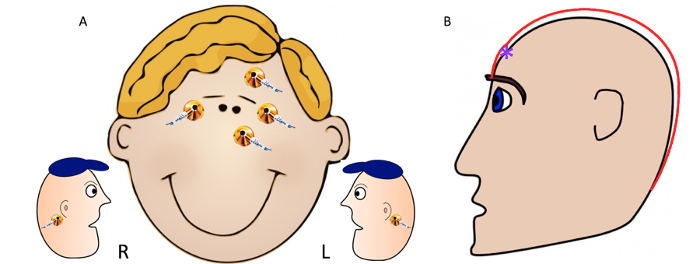
그림 1: 전극 배치. 얼굴 전극을 배치하여 EOG 아티팩트를 감지하고 마스토이드 이동(A)을 기록합니다. 눈썹 사이에 직접 측정의 다이어그램은 머리 뒤쪽의 범프 바로 아래에 있습니다. 이 측정의 10%는 중간 눈 마크 위에 측정되며, 이것은 캡의 FPZ 전극이 배치되는 곳(B)입니다.
- EEG 준비 (참고: 이 단계는 Synamps 2 앰프와 64 채널 빠른 캡신경증 4.3 시스템과 함께 사용하기 위한 것입니다.)
- EEG 연구에 참여한 참가자는 참여 하기 전에 그들의 머리에 어떤 머리 제품(예를 들어,젤, 마우스, 또는 잎-인 컨디셔너)이 없어야합니다.
- 전도성 전극 젤(즉,퀵 젤)으로 2-4, 10ml 주사기를 채웁니다. 기포를 방출하기 위해 그것을 사용하기 전에 젤을 저어하는 것이 좋습니다.
- 모발과 두피를 철저히 닦습니다(약 5분).
- 알코올과 면 거즈와 깨끗한 머리. 또한 전극의 배치를 위한 피부를 청소하십시오: 두 개의 마스토이드(각 귀 뒤), 왼쪽 눈 VEO(수직 전기 안구) 아래 및 위, 각 눈 HEO(수평 전기 안구)의 먼 면; 그림 1,왼쪽).
- 양면 접착제 디스크를 사용하여 전극을 배치합니다.
- 정면에서 머리를 측정 (눈썹 사이, 눈 중간 눈) 이온 (뒤쪽의 머리의 범프 아래)에. 이 거리는 캡의 크기(소형, 중간 또는 큰)를 결정합니다. 캡을 배치하려면 측정된 거리의 10%를 이마에 표시하고 중간 전두엽 전극(FPz)이 표시된 지점에 배치되는지 확인합니다.
- 캡의 각 코드에 얼굴 전극을 부착합니다.
- 무딘 바늘 끝을 사용하여 전극을 젤로 채우기 시작하여 전극 아래에 머리카락을 긁어 주므로 전극이 두피와 직접 접촉합니다. 피부를 손상시키지 않도록 주의하십시오.
- 전극을 조금 들어 올리면 젤을 삽입하기가 더 쉬워집니다. 대부분의 경우 전극 아래에 머리카락이 있을 것입니다. 길에서 그것을 이동하면 더 나은 임피던스가 허용됩니다.
- 참가자를 방음실로 데리고 캡과 개별 전극을 연결합니다.
- 전극 두피 연결의 임피던스를 확인하여 10 KΩ 미만으로 유지하십시오. 임피던스가 높은 경우 전극에 전도성 젤이 있고 두피와 접촉하고 있는지 확인하십시오.
- 임피던스는 교대 전류의 흐름을 방해하는 경향이있다. 임피던스가 높을수록 데이터 소음이 증가할 수 있으며 연구가 시작되기 전에 최소화해야 합니다.
- 대부분의 경우, 머리는 전극의 길에 있다. 방해에서 그것을 이동하는 것은 더 나은 임피던스를 얻을 한다.
- 임피던스가 모든 전극에 허용되고 EEG 추적이 노이즈가 없는 경우 데이터 수집이 시작될 수 있습니다.
- EEG 데이터 수집
- 참가자가 작업을 수행할 수 있도록 준비합니다.
- 참가자를 컴퓨터 화면에서 75cm 의자에 놓고, 소리와 감쇠된 방(음향 및 전기적으로 차폐됨)에 놓습니다.
- 참가자에게 일곱 단어문장을 읽고, 한 번에 한 단어를 스크린 앞에서 한 마디 제시할 것이라고 말하십시오. 그들은 실험의 끝에 문장의 내용에 대한 질문에 대답하기 위해 각 문장을 읽을 수 있습니다.
- 문장의 일곱 단어의 각각은 각 단어 사이에 1000 ms 상호 자극 간격으로, 100 ms에 대해 개별적으로 표시됩니다.
- 실험 중 눈의 움직임을 최소화하기 위해 화면 중앙에 한 번에 하나씩 단어가 표시됩니다.
- 참가자는 먼저 10 개의 연습 문장을 봅니다.
- 120 문장의 두 가지 프리젠 테이션에서 임의순서로 240 자극을 표시합니다. 문장의 3분의 1은 마지막 단어가 나머지 문장과 일치하는 일반 문장입니다. 문장의 3분의 1은 부조리한 문장으로, 마지막 단어는 나머지 문장과 일치한다. 문장의 3분의 1은 마지막 단어가 문장의 나머지 부분보다 더 큰 글꼴로 표시되는 일반 문장입니다.
- 문장의 일곱 단어의 각각은 각 단어 사이에 1000 ms 상호 자극 간격으로, 100 ms에 대해 개별적으로 표시됩니다.
- 참가자가 작업을 수행할 수 있도록 준비합니다.
- 시스템을 시작하고 기능 적 작업의 프리젠 테이션 을 통해 EEG의 연속 기록을 가지고있다.
- EEG는 1024의 이득과 0.01-100 Hz의 대역 패스로 증폭됩니다.
- 눈 깜박임및 유물 거부(시험의 약 15%)에 의해 오염된 시험은 오프라인에서 제거됩니다.
3. 데이터 분석
- 오프라인, 평균 마스토이드에 대한 참조 데이터.
- Epochs는 자극의 개시 전에 획기적인 200 ms를 사용하여 교정기준입니다.
- 모션 아티팩트를 수정하려면 평균 EEG 전극에서 150 μV를 초과하는 신호 변경으로 획기적인 것을 제외합니다.
- 데이터를 오프라인으로 디지털 필터링합니다(밴드패스 0.05-20Hz).
- 각 문장의 시간 과정에 대해 Pz 기록 사이트에서 표시되는 ERP 평균을사용합니다(그림 2).
- 정수리 N400의 피크(진폭 및 대기 시간)는 모든 전극에서 자동으로 얻어진다.
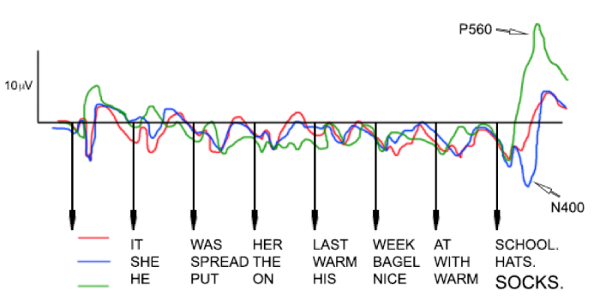
그림 2: 의미 체계 위화 작업의 결과. 참가자는 한 번에 한 단어의 문장으로 표시됩니다. 각 단어는 100ms에 표시하고 빈 화면1s가 나타납니다. 참가자는 부조리한 문장(빨간색), 부조리한 문장(파란색), 마지막 단어가 더 큰 크기(녹색)로 표시되는 문장을 봅니다. 부조리한 문장만 마지막 단어가 제시될 때 N400 응답을 생성합니다. 마지막 단어가 위화롭지만 크기가 크면 나중에 P560 응답이 있습니다.
- 통계 분석
- 합치성, 부화도 및 비정상적인 크기 조건에 대한 정수리 Pz 전극에서 ERP 평균을 플롯합니다.
- 최대 진폭과 대기 중의 경우 각 대기 시간 범위에 대한 F 테스트를 사용하여 대상과 제어 자극 사이에 차이가 있는지 여부를 결정합니다.
이 동영상의 챕터
0:00
개요
2:07
실험 설계
6:24
실험 수행
8:23
대표 결과
10:32
응용 분야
12:58
요약
저작권 © 2026 MyJoVE Corporation. 모든 권리 보유.