사건후기억상실

0 조회수·11:26 분
1. 참가자를 모집합니다.
- 내측 측두엽 손상을 가진 환자를 모집하십시오.
- 수술에서 바이러스 성 질환 및 기타 퇴행성 조건에 이르기까지 내측 측두엽 손상의 몇 가지 원인이 있습니다. 이 연구에서 우리는 간질을 위한 외과 치료의 일환으로 제거된 해마의 부분 및 주변 측두엽의 부분이 있던 헨리 Molaison와 유사한 환자를 시험할 것입니다.
- 다양한 형태의 메모리에 관여하는 뇌 구조에 대한 결론을 도출하기 위해 신경 이미징을 수행하여 손상된 구조의 정도를 식별하고 설명하십시오.
- 건강한 두뇌와 신경병의 아무 역사를 가진 15개의 나이 일치하는 통제 과목을 모집합니다.
- 참가자의 동의를 얻습니다.
2. 단기 기억 테스트: 숫자 범위.3
- 참가자에게 지침을 제공합니다.
- 참가자에게 일련의 숫자를 들을 때, 실험자가 숫자를 나열하는 즉시 순서대로 그들을 기억하고 실험자에게 다시 말하도록 지시합니다.
- 앞으로 숫자 범위 테스트를 수행합니다.
- 약 1/s의 속도로 환자에게 숫자 목록을 말하십시오. 숫자는 임의숫자 목록에서 가져온 것입니다.
- 네 자리의 시퀀스로 시작합니다. 네 자리의 세 가지 시험을 수행합니다. 참가자가 오류 없이 네 자리의 세 가지 시퀀스 중 중 어느 것을 올바르게 반복하면 적절한 순서로 5자리 시퀀스로 이동합니다.
- 참가자가 계열 중 하나를 올바르게 반복할 때마다 숫자 시퀀스의 길이가 증가합니다. 참가자가 세 계열 중 어느 것도 올바르게 반복하지 않으면 테스트가 수행됩니다. 참가자가 성공적으로 반복할 수 있었던 최대 시퀀스 길이를 기록합니다.
- 역자릿수 스팬 테스트를 수행합니다.
- 참가자가 역순으로 숫자를 다시 반복하라는 요청을 제외하고 프로시저는 앞으로 숫자 범위와 정확히 동일합니다. 예를 들어, 실험자가 5, 6, 1, 4를 말하는 경우 올바른 반응은 4, 1, 6, 5입니다.
- 참가자가 위와 동일한 절차를 사용하여 반복할 수 있는 최대 시퀀스 길이를 찾습니다.
3. 노골적인 메모리 테스트: 구두 페어링 어소시에이트 학습. 4
- 참가자에게 지침을 제공합니다.
- 이 시험에서 그들은 일련의 단어 쌍을 들을 것이고, 함께 가는 단어를 기억하려고 노력해야 한다고 말합니다. 참가자에게 모든 단어 쌍을 듣고 나면 한 마디가 주어지며 그 쌍을 생각해 볼 것으로 예상된다고 말하십시오. 참가자에게 예를 들어, "예를 들어, 당신은 단어 코끼리 책상을들을 수 있습니다. 나중에, 내가 코끼리를말할 때, 나는 당신이 책상에회신 할 것으로 예상됩니다."
- 연구 단계를 제시한다.
- 한 번에 하나씩 참가자에게 15단어 쌍을 읽습니다. 15 단어 쌍은 Uttl 외의목록에서 가져온다 ., 2002. 4 약 5s마다 한 쌍의 단어를 읽습니다.
- 테스트 단계를 제시합니다.
- 연구 단계가 완료되면 3 분 기다립니다. 그런 다음 각 단어 쌍의 첫 번째 단어를 읽고 참가자에게 원래 목록에서 페어링된 단어를 생성하라는 메시지를 표시합니다. 참가자가 10s로 응답하지 않거나 모르는 경우 해당 평가판이 잘못 된 것으로 간주됩니다.
4. 암시적 메모리 테스트: 미러 드로잉. 5
- 참가자에게 지침을 제공합니다.
- 참가자에게 그들은 가능한 한 많은 라인 내에 머물, 그들 앞에 종이조각에 다섯 개의 뾰족한 그림의 윤곽을 추적할 수 있다고 말한다. 그들이 그들의 손을 직접 볼 수 없을 것이라고 설명한다. 그들의 손은 거울 반사를 통해서만 볼 수 있습니다.
- 미러 드로잉 테스트를 수행합니다.
- 참가자의 손을 거울 드로잉장치(그림 1)에넣습니다. 이 장치는 참가자가 거울 반사를 통해서만 자신의 손을 볼 수 있게 합니다.
- 참가자에게 시작 화살표에서 별 모양을 추적하도록 지시합니다.
- 참가자가 한 번의 드로잉을 완료하면 5분 동안 기다렸다가 새로운 별 그림으로 다시 시작합니다.
- 미러 드로잉 작업의 10번의 시험을 완료합니다.
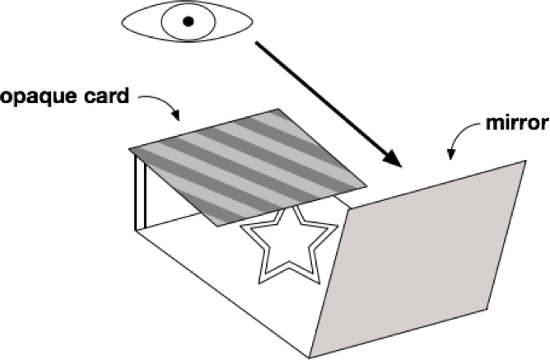
그림 1: 미러 드로잉 장치입니다. 이 장치는 참가자가 거울 반사를 통해서만 자신의 손을 볼 수 있게 합니다. 목표는 라인을 건드리지 않고 별 모양의 이중 선 내에서 추적하는 것입니다. 거울의 시각적 피드백이 손에서 감각 및 모터 피드백과 충돌하기 때문에 이것은 어려운 작업입니다.
이 동영상의 챕터
0:00
개요
1:13
실험 설계
4:32
실험 수행
7:51
대표 결과
9:58
응용
10:53
요약
저작권 © 2026 MyJoVE Corporation. 모든 권리 보유.