냉장 소개

0 조회수·12:09 분
주의: 이 실험은 고농도에서 독성이 있을 수 있는 높은 압력 및 냉매의 사용에 있는 시스템을 관련시킵니다. 합리적인 안전 예방 조치를 따르고 적절한 PPE를 착용하십시오. 냉매로 작업 할 때 적절한 환기를 보장합니다.
1. 냉장 시스템 제작 (다이어그램 및 사진 참조, 도 3)
- 먼저 이중 동작 공압 실린더의 한 포트를 파이프 피팅 티에 연결하여 증기 압축기를 구성합니다. 공압 실린더의 다른 포트에 슈라이더 밸브를 설치합니다. 티의 다른 두 포트에 단방향(체크) 밸브를 설치하고, 하나는 안쪽을 가리키고, 하나는 바깥쪽을 가리킵니다. 이를 통해 냉매를 증발기에서 끌어내고 고압으로 응축기로 추방될 수 있습니다.
- 두 개의 파이프 피팅 티를 사용하여 압축기의 상류 및 하류에 압력 게이지를 설치합니다.
- 고압 자전거 바닥 펌프는 압축기를 작동시키기 위해 사용됩니다. 자전거 펌프 배관에서 고무 비드(체크 밸브 구성 요소)를 제거합니다. 이렇게 하면 압축기가 펌핑 스트로크 사이에 냉매로 확장하고 그릴 수 있습니다. 자전거 펌프 호스를 압축기의 슈라이더 밸브에 연결합니다.
- 얇은 (3.2 mm 외부 직경) 알루미늄 튜브 코일을 형성하여 응축기 역할을합니다. 프로토타입 시스템(도 3)에서 코일은 4회전(~50cm 길이)에 대해 직경 2.5cm의 경질 고무 튜브 코어 주위의 알루미늄 튜브를 헬로 래핑하여 형성하였다. 응축기 코일 길이는 이 소규모 실험에 중요하지 않습니다.
- 압축 피팅(McMaster Inc.part #5272K291 제안)을 사용하여 압력 게이지의 하류에 피팅 하는 파이프 피팅 티 하류의 오픈 포트에 응축기 코일의 한쪽 끝을 연결합니다.
- 두 개의 감소 파이프 팔꿈치에 짧은 명확한 PVC 파이프를 설치합니다. 이 구성 요소는 고압 냉매 저장소 역할을합니다. 저수지를 응축기 튜브의 콘센트에 연결합니다.
- AN/SAE 플레어 피팅 커넥터가 있는 파이프 티에 볼 밸브를 설치합니다. 이것은 충전 포트가 될 것입니다. 파이프 티의 한쪽에 바늘 유량 계를 연결합니다. 이 확장 장치가 될 것입니다. 좁은 알루미늄 튜브를 사용하여 파이프 티의 다른 포트를 냉매 저장소의 낮은 지점에 연결합니다.
- 증발기 역할을 하는 두 번째 알루미늄 튜브 코일을 형성합니다. 바늘 밸브 콘센트와 압축기 입구 사이에 연결합니다.
- 충전 포트를 통해 압축 공기 (사용 가능한 경우 550 kPa)로 시스템을 채웁니다. 비눗물 스프레이를 사용하여 배관 누출을 식별하고 필요에 따라 수리하십시오.
- 온도 측정을 위해 열전대를 응축기 및 증발기 코일에 연결합니다.
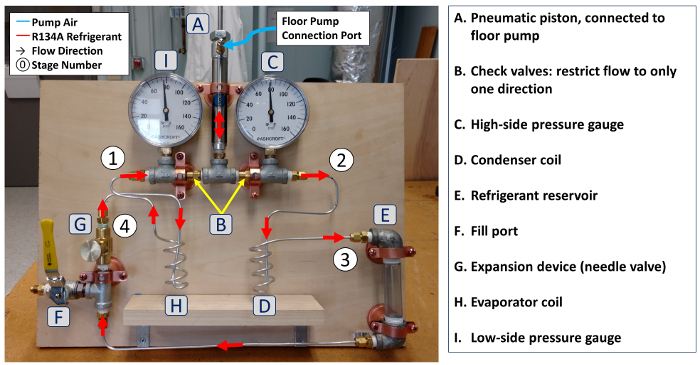
그림 3: a. 실험 증기 압축 냉장 시스템에서 구성 요소 및 연결의 다이어그램. 이 그림의 더 큰 버전을 보려면 여기를 클릭하십시오.

도 4: T - s (a) 및 P - h (b) 실험 R-134a 증기 압축 냉장 주기에 대한 다이어그램.
2. 냉장 시스템 충전
- 냉장고의 충전 포트에 냉매 충전 매니폴드의 중간 포트를 연결합니다. 진공 펌프를 매니폴드의 저압 포트에 연결하고 냉매 캔을 고압 포트에 연결합니다. R134a는 가장 일반적으로 사용할 수 있는 냉매이며 여기에서 사용됩니다. R1234ze(E)는 낮은 포화 압력으로 압축기 작동이 용이하고 GWP가 낮으면 누출로 인한 환경적 영향을 줄일 수 있기 때문에 더 나은 옵션이 될 수 있습니다.
- 진공 펌프를 실행하고 점차적으로 모든 시스템 밸브를 열어 모든 공기를 제거합니다. 냉장 캐니스터 밸브를 잠깐 열어 어셈블리에서 공기를 제거합니다.
- 진공이 발생하면 진공 펌프를 분리하고 냉매 충전 매니폴드의 저압 포트를 닫습니다. 냉매 캐니스터를 반전시키고 고압 저수지의 레벨이 바늘 밸브 수준보다 약간 높을 때까지 액체 냉매를 시스템에 주입하십시오.
3. 작동
- 바늘 밸브가 거의 열리지 때까지 조정합니다.
- 압축기 공압 실린더에 연결된 자전거 펌프를 펌핑하여 냉장고를 작동합니다.
- 정상 상태 조건에 도달할 때까지 고측 및 저측 압력 및 증발기 및 응축기 온도를 추적합니다. 이러한 압력 및 온도 값을 기록합니다. 대부분의 압력 게이지는 게이지 압력을 보고합니다. 이는 약 101kPa를 추가하여 절대 압력으로 변환할 수 있습니다.
- 상태 점(1-4)을 나타내고 T-s 및 P-h 다이어그램(도 4)에 대한 대략적인 연결 곡선을 나타냅니다.
이 동영상의 챕터
0:06
Overview
0:52
Principles of Refrigeration and the Vapor Dome
4:04
Constructing the Hand-pump Refrigerator
7:40
Charging and Operating the Refrigerator
9:17
Results
10:48
Applications
11:45
Summary
저작권 © 2026 MyJoVE Corporation. 모든 권리 보유.