광전 효과

0 조회수·08:38 분
1. 이 실험에 필요한 구성 요소 획득
- 전기스코프(도1)를획득하여 전기스코프에 연결된 금속판의 전하를 모니터링하는 장치입니다. 전하 사이의 쿨롬 반발력으로 인해, 전하 내부의 바늘은 플레이트에 더 많은(이하) 충전이 있는 경우 더 많은(이하) 편향되며, 요금이 부과되지 않으면 움직이지 않습니다.
- 획득 아연 금속 플레이트. 사포를 사용하여 표면을 연마하십시오 (이것은 금속 표면의 산화 아연을 제거하고 광전 효과를 통해 전자를 쉽게 잃을 수 있습니다).
- 아연 플레이트를 전기스코프 의 상단과 직접 접촉하고 배치합니다(도1).
- 300nm 이하의 파장 구성 요소와 가시광선을 제공하는 일반 램프가 있는 UV 광원을 확보하십시오. 자외선 차단 기능이 있는 선글라스를 구하십시오.
- 아크릴 막대와 일반적으로 충전을 생산하는 데 사용되는 모피 조각을 가져옵니다. 막대를 모피로 문지르면 막대에 전자가 추가되어 막대가 음전하됩니다.
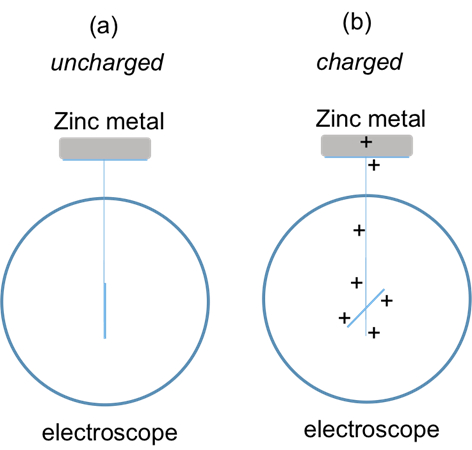
도 1: 충전되지 않은(a)및 충전(b)(바늘의편향에 의해 표시) 전기 스코프를 보여주는 다이어그램, 아연 금속 판에 배치및 상단 플레이트에 연결. (b에 대한 청구 된 상황은 예를 들어 긍정적 인 요금에 대해 그려집니다. 음전하 전경에도 유사한 관측이 있습니다.
2. 음하 아연에 대한 광전 효과
- 막대를 furfive 번 문지릅니다. 이렇게 하면 막대가 음전을 올 수 있습니다.
- 막대를 건드리지 않고 아연 플레이트 에 가까이 가져옵니다. 다른 손을 사용하여 아연 플레이트를 잠깐 만지도록 합니다. 이것은 아연 플레이트를 유도를 통해 양호하게 충전됩니다 (음전하 막대는 손에서 아연 금속에 약간의 긍정적 인 전하를 끌어 들이고, 양전한 전하는 손과의 접촉이 제거 된 후 아연 금속에 남아 있습니다). 전기스코프의 바늘은 금속판이 연결된 전기스코프의 모든 부품과 함께 충전되었음을 나타내기 위해 편향되어야한다(도 2a). 필요한 경우 단계2.1 및 2.2를 반복하여 플레이트에 더 많은 충전을 추가합니다.
- 보이는 램프를 켜고 감판(그림2b)에빛을 비추기 위해 전기스코프에 가까이 가져온다. 전기 스코프의 반응을 관찰한다.
- 일반 램프를 끄고 이제 자외선 보호 선글라스를 착용하십시오. UV 광을 켜고 전기 스코프에 가까이 가져. 아연금속(도 2c)에자외선을 비추습니다. 주의: 자외선을 눈에서 멀리 가리키고 자외선으로부터 눈을 보호하는 UV 라이트를 직접 들여다보지 마십시오. 전기 스코프의 반응을 관찰한다. 그런 다음 UV 라이트를 끕니다.

도 2: 다이어그램 표시(a)유도를 통해 음전하 막대에 의해 아연 금속을 양적으로 충전; 및(b)일반 램프 광 및(c)UV 광은 아연의 전하 상태에 미치는 영향을 관찰하기 위해, 그것에 연결된 전기 스코프에 의해 모니터링된다.
3. 양충전 아연에 대한 광전 효과
- 다시 furfive 번 막대를 문질러. 이렇게 하면 막대가 음전을 올 수 있습니다.
- 아연 금속 판과 직접 접촉하는 막대를 가져와 서 접시에 막대를 5 번 문지릅니다. 이것은 전기 스코프(도 3a)의바늘의 편향에 의해 표시된 아연에 일부 음전하를 전달합니다.
- 막대를 버리고 손이나 다른 물체를 사용하여 아연 금속을 만지지 마십시오.
- 일반(보이는) 램프를 켜고 전기스코프에 가까이 가져와 아연 플레이트(그림3b)에빛을 비추십시오. 전기 스코프의 반응을 관찰한다.
- 일반 램프를 끄고 이제 UV 광을 켜고 아연 금속(도 3c)에UV 빛을 비추기 위해 전기 스코프에 가까이 가져. 주의: 자외선을 눈에서 멀리 가리키고 자외선으로부터 눈을 보호하기 위해 자외선을 직접 들여다보지 마십시오. 전기 스코프의 반응을 관찰한다. 그런 다음 UV 라이트를 끕니다.

도 3: 다이어그램 표시(a)직접 접촉을 통해 음전하 막대에 의해 아연 금속을 음수 충전; 및(b)일반 램프 광 및(c)UV 광은 아연의 전하 상태에 미치는 영향을 관찰하기 위해, 그것에 연결된 전기 스코프에 의해 모니터링된다.
이 동영상의 챕터
0:06
개요
0:51
광전효과의 원리
2:44
광전효과 프로토콜
5:20
데이터 분석 및 결과
6:45
응용 분야
8:02
요약
저작권 © 2026 MyJoVE Corporation. 모든 권리 보유.