
Guest Editors

Justin Maire
University of Melbourne, School of Biosciences
<p>Dr. Justin Maire is currently a postdoctoral fellow at the University of Melbourne with Prof Madeleine van Oppen. He obtained his PhD in 2018 from Institut National des Sciences Appliquées de Lyon, France, on symbiotic interactions between insects and bacteria and their impact on host immunity and development. In 2019, he moved to the University of Melbourne, where his research is focused on coral-bacteria associations. He specifically focuses on closely associated symbionts, e.g., intracellular, vertically transmitted symbionts, and their potential use as bacterial probiotics and microbiome engineering as an approach for the mitigation of coral bleaching and coral reef conservation. This includes characterizing the taxonomy, localization, and functions of symbionts of interest. His technical expertise includes molecular biology, fluorescence and electron microscopy, microbiology, and analysis of sequencing data.</p>
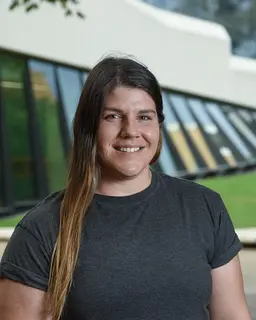
Ashley M. Dungan
University of Melbourne, School of Biosciences
<p>Ashley M. Dungan is currently a Research Fellow at The University of Melbourne (UoM), working under Profs. Madeleine van Oppen and Linda Blackall. Her research interests are in the functional roles of bacteria in symbiosis with coral and harnessing these functions in microbiome engineering approaches. Microbiome engineering has been proposed as a strategy to facilitate adaptation to changing environmental conditions by enhancing the coral holobiont with the metabolic capabilities of the introduced bacteria. Using the coral model, <em>Acropora loripes</em>, which has a naturally occurring low biodiversity microbiome, she is modeling metabolic exchanges between the coral host and their bacterial symbionts to characterize bacterial functions and identify potential bacterial candidates for microbiome engineering.</p> <p>She advocates for equity in science for women, members of the LGBTQIA+ community, people of color, Indigenous community members, minorities, people with disabilities, and anyone else who has ever felt that they do not belong. She serves as co-Chair of the BioSciences Early Career Academics Committee (UoM), is a member of the People and Culture Committee (UoM), and serves as a member of the International Society for Microbial Ecology (ISME) Early Career Scientist Committee.</p> <p>Outside of science, she is a volunteer for Seeing Eye Dogs, Vision Australia, and cares for two gorgeous girls, Kelly and Ocean. She is also an avid CrossFitter and specializes in lifting heavy weights fast. She hopes to be a role model for young women to see that strength is never a weakness, and that gender can never define what you are capable of.</p>
Collection Overview
Coral reefs are some of the most magnificent ecosystems in the world, harboring incredible marine biodiversity and underpinning a range of ecosystem goods and services that contribute to the well-being of millions of people. Climate change is threatening coral reefs as elevated sea temperatures, and marine heatwaves trigger coral bleaching - the loss of symbiotic microalgae (Symbiodiniaceae) from coral tissue - leading to coral starvation, higher prevalence of disease, and death. This ultimately leads to coral reef deterioration and a loss of ecosystem function. Thus, it is urgent to increase our fundamental knowledge of coral functioning and develop novel approaches to mitigate coral bleaching until climate change is halted. Besides Symbiodiniaceae, corals associate with a myriad of microorganisms, including numerous prokaryotes such as bacteria and archaea. The functions of these prokaryotes range from nutrient cycling to defense against pathogens. However, much work is still left to uncover the roles of such diverse communities. Therefore, this collection aims to provide protocols for cutting-edge methods to advance further our understanding of coral-associated prokaryotes and their potential application in coral reef conservation and restoration. Authors are encouraged to propose: (i) methods for the visualization, identification, and functional characterization of prokaryotic coral symbionts; (ii) methods to specifically study closely associated symbionts of corals, e.g., tissue-associated, intracellular, vertically transmitted; (iii) innovative approaches for coral microbiome manipulation destined to increase coral fitness (including, but not limited to, climate resilience, protection against disease).
Abstracts
<p>Quantifying biofilm formation of coral associated bacteria on coral mucus</p>
Lone Høj1,
Callaway Thatcher*2
1The Australian Institute of Marine Science,
2James Cook University, The Australian Institute of Marine Science