Guest Editors

Adam Farsheed
Salk Institute for Biological Studies
Dr. Adam Farsheed is a postdoctoral fellow in Professor Rusty Gage's Laboratory of Genetics at the Salk Institute for Biological Studies, where he is leveraging 3D printing and biomaterial design to engineer hydrogel-based models of neurodevelopment and neurodegeneration. He received his PhD in bioengineering from Rice University in 2024, where he developed Multidomain Peptide (MDP) hydrogels for 3D bioprinting applications and to direct anisotropic cell growth. Prior to this, he received his B.S. in Mechanical Engineering from Northwestern University in 2017. Dr. Farsheed’s research interests span biomaterials, tissue engineering, fabrication techniques, and in vitro cell models.
Michelle Huang
University of California San Francisco
Dr. Michelle Huang is currently a postdoctoral scholar in Professor Zev Gartner’s Laboratory at the University of California, San Francisco, where she is leveraging principles from developmental biology and bioprinting to guide in vitro tissue morphogenesis towards reproducible and physiologically relevant tissue structures. She received her PhD in chemical engineering from Stanford University, where she engineered cell-instructive biomaterials to define cell–matrix interactions within the neural microenvironment. Prior to this, she received her B.S. in Chemical Engineering from MIT. Dr. Huang’s research interests span biomaterials, tissue morphogenesis, organoids, and developmental bioengineering.
Collection Overview
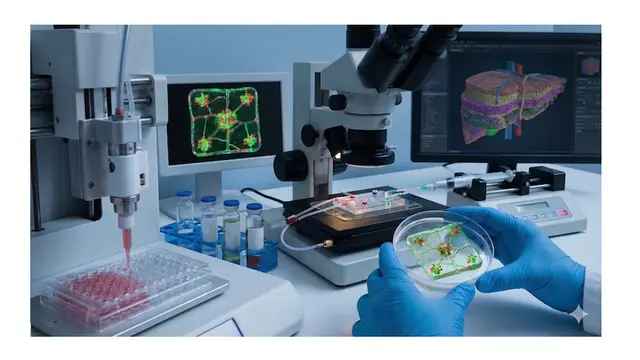
The development of physiologically relevant human in vitro models represents one of the most significant frontiers in biomedical research, offering the potential to reduce reliance on animal models while accelerating therapeutic discovery. Despite rapid advances in the field, a lack of standardized methodologies spanning biomaterial synthesis, characterization, and model fabrication limits reproducibility and cross-laboratory standardization. This Topical Collection aims to consolidate cutting-edge methods and best practices, serving as a comprehensive resource for researchers working across the full tissue engineering pipeline.
This collection encompasses three interconnected focus areas. First, it addresses biomaterial development, including the synthesis, purification, and preparation of both naturally-derived and synthetic materials. Second, it covers mechanical and chemical characterization techniques essential for quality control and batch-to-batch consistency. Third, it focuses on model fabrication strategies, including the encapsulation of cells within three-dimensional hydrogels, 3D bioprinting of architecturally complex scaffolds, and organoid-based model systems, all designed to recapitulate in vivo biology with greater fidelity.
By uniting these methodological domains under a single collection, we aim to achieve two primary objectives: to facilitate knowledge exchange among research groups employing diverse tissue engineering approaches, and to drive standardization of protocols across laboratories. Ultimately, this resource will support the broader scientific community in developing more reproducible, biologically accurate in vitro models for the study of human disease.
Abstracts
Matched Light Dose Photopolymerization and Real-Time Mechanical Characterization of Stiffness-Tunable, Cell-Laden GelMA Hydrogels
Nikolaos Pipis1,
Andrew Lu2,
Rameshwar Rao*1
1Ben Towne Center for Childhood Cancer and Blood Disorders Research, Seattle Children’s Research Institute, Seattle, WA, 98101, USA,
2Department of Bioengineering, University of Washington, Seattle, WA, 98105, USA