Hier wordt de studie van verschillende DNA-letselsherkenningsbenaderingen via enkele molecuul AFM-beeldvorming gedemonstreerd met het nucleotide-excisiereparatiesysteem als voorbeeld. De procedures van DNA- en eiwitmonstervoorbereidingen en experimentele evenals analytische details voor de AFM-experimenten worden beschreven.
Een abonnement op JoVE is vereist om deze inhoud te bekijken. Log in of start vandaag met uw gratis proefperiode.
Methodenartikel
Atomic Force Microscopy Onderzoek naar DNA Lesion Recognition in Nucleotide Excision Repair
* These authors contributed equally
In dit artikel
Samenvatting
Samenvatting
AFM-beeldvorming is een krachtige techniek voor de studie van eiwit-DNA-interacties. Deze enkele molecuulmethode maakt de gelijktijdige resolutie van verschillende moleculen en moleculaire assemblages in een heterogeen monster mogelijk. In de specifieke context van eiwitsystemen die met DNA interageren, kunnen verschillende eiwitcomplexvormen en hun overeenkomstige bindingsposities op doelsites die DNA-fragmenten bevatten, dus worden onderscheiden. Hier wordt een toepassing van AFM gepresenteerd voor de studie van DNA-lesieherkenning in de prokaryote en eukaryote nucleotide-excisie DNA-reparatie (NER) systemen. De procedures voor DNA- en eiwitmonstervoorbereidingen worden beschreven en experimentele evenals analytische details van de experimenten worden verstrekt. De gegevens maken belangrijke conclusies mogelijk over de strategieën waarmee doelplaatsverificatie kan worden bereikt door de NER-eiwitten. Interessant is dat ze verschillende benaderingen van lesieherkenning en -identificatie voor het eukaryote NER-systeem aangeven, afhankelijk van het type lesie. Verder resulteren en verklaren verschillende structurele eigenschappen van de twee verschillende helicasen die betrokken zijn bij prokaryote en eukaryote NER de verschillende strategieën die voor deze twee systemen worden waargenomen. Belangrijk is dat deze experimentele en analytische benaderingen niet alleen kunnen worden toegepast op de studie van DNA-reparatie, maar ook zeer vergelijkbaar op andere eiwitsystemen die met DNA interageren, zoals die welke betrokken zijn bij replicatie- of transcriptieprocessen.
Inleiding
Atomische krachtmicroscopie (AFM) is een krachtige techniek voor de analyse van eiwit-DNA-interacties 1 , 2 , 3 , 4 , 5 , 6 , 7 , 8 , 9 . Het vereist slechts lage hoeveelheden monstermateriaal om heterogene monsters rechtstreeks te visualiseren met een resolutie op het molecuulniveau. Heterogeniteit kan resulteren uit verschillende conformatieve of oligomere toestanden van een eiwit. In het bijzonder kunnen eiwitcomplexen in het kader van eiwit-DNA-monsters verschillende stoichiometrieën en / of conformaties veroorzaken die geïnduceerd zijn door DNA-binding in het algemeen of aan een specifieke doelplaats in DNA binden. Heterogene monsters kunnen ook twee (of meer) verschillende soorten eiwitten bevatten en een ander eiwitcomplexVormen (bijvoorbeeld bestaande uit slechts één type eiwit versus heteromeer complexen) kunnen verschillen met DNA. De hier beschreven studies maken gebruik van AFM-beeldvorming in lucht op statische, gedroogde monsters van DNA-reparatie-eiwitten die gebonden zijn aan lange (~ 900 basisparen, bp) DNA-fragmenten die een letsel bevatten, die een doelstelling voor deze eiwitten vertegenwoordigt. De hoge moleculaire resolutie van AFM maakt het onderscheid mogelijk tussen verschillende typen eiwitcomplexen en om de bindingsposities van de eiwitten op de DNA-fragmenten te bepalen. Het is belangrijk dat de laesies in de DNA-substraten worden ingevoerd bij goed gedefinieerde posities. Omdat de positie van de laesieplaats in het DNA bekend is, geven de verdelingen van eiwitten die gebonden zijn aan DNA inzicht in (verschillende) laesieherkenningseigenschappen van de (verschillende) eiwitcomplexen, bijvoorbeeld hoe goed ze een bepaald type laesie herkennen (vergeleken Naar niet beschadigd DNA) 2 , 3 , 4 , 5 , 6 . Hun posities op het DNA maken het onderscheid mogelijk tussen eiwitcomplexen die specifiek gebonden zijn aan de laesies en complexen die niet specifiek gebonden zijn elders op het DNA. Afzonderlijke karakterisering van deze verschillende complexe typen (complexen die specifiek zijn gebonden aan de lesie versus niet-specifieke complexen) kunnen potentiële conformatieve veranderingen onthullen in de complexen die zijn geïnduceerd bij de identificatie van de doelplaats.
De DNA-herstellingsproteïnen die hierop gericht zijn, zijn helicasen die verantwoordelijk zijn voor de herkenning van de laesie in de nucleotide-excisie-reparatie (NER) -weg. Bij bacteriën wordt NER bereikt door de eiwitten UvrA, UvrB en UvrC. UvrA is verantwoordelijk voor het aanvankelijke letselsensor in een UvaA 2 / UvrB 2 DNA-scanningskomplex. Bij laesieverificatie door UvrB converteert dit complex naar monomere UvrB gebonden op de lesion site en dit specifieke complex kan dan de pRokaryotische NER endonuclease UvrC. UvrC exciseert een korte (12-13 nt) streep van enkelstrengs DNA (ssDNA) dat de laesie bevat. Het ontbrekende rek wordt dan door DNA-polymerase opgevuld. Ten slotte sluit DNA ligase de nieuw gesynthetiseerde rek met het originele DNA 9 , 10 . In eukaryoten zijn de meeste eiwitten van de NER-cascade onderdeel van het grote, multimere transcriptiefactor II H (TFIIH) complex. Na aanvankelijke letselsensor via het trimerische CEN2-XPC-HR23B-complex, wordt TFIIH aangeworven op de DNA-doelplaats. Wanneer XPD binnen het complex de aanwezigheid van een NER-targetletsel verifieert, worden de eukaryote NER-endonucleasen XPG en XPF aangeworven om een korte (24-32 nt) streep van ssDNA die de letsel 9 , 10 bevat , te accijnzen. Hierbij werden specifiek de helicasen UvrB en XPD van respectievelijk prokaryotische en eukaryote NER bestudeerd. Deze helicasen vereisen een ongeparkeerde regio in deDNA (een DNA-bubble) om op een van de twee DNA-enkele strengen te treden en vervolgens te verplaatsen langs deze streng, die door ATP-hydrolyse wordt aangevuurd. Naast de DNA-laesies werd derhalve een DNA-bubble geïntroduceerd in de substraten die fungeren als laadplaats voor de eiwitten.
De werkwijze voor de bereiding van specifieke lesion-DNA-substraten is eerder beschreven 11 . Het vereist een cirkelvormig DNA-construct (plasmide) met twee dicht gespannen restrictieplaatsen voor een nickase. In het kader van deze studie werd het plasmide pUC19N (2729 bp) gebruikt (gecreëerd door S. Wilson's laboratorium, NIEHS). Dit plasmide bevat drie nauw gespecificeerde restrictieplaatsen voor de nickase Nt.BstNBI die een 48 nucleotide (nt) rek vormt. Na incubatie met de nickase kan de streep van ssDNA tussen deze plaatsen verwijderd en vervangen worden door een oligonucleotide dat elke doelstelling bevat. Na elke stap wordt complete enzymatische vertering getest via agarosegelelektroforese. Gesneden cirkelvormig DNA kan onderscheiden worden door zijn lagere elektroforetische mobiliteit in vergelijking met het oorspronkelijke supercoiled plasmide. Gapping van het DNA en vervanging van de verwijderde rek door het specifieke substraat oligonucleotide kan worden geëvalueerd via digestie met een restrictie-enzym dat het substraat uitsluitend binnen het gebied tussen de nicks inciseert. Linearisatie van het cirkelvormige plasmide door het enzym zal derhalve worden onderdrukt voor het gapped DNA en hersteld na insertie van het specifieke oligonucleotide. Tenslotte maken twee endonuclease restrictieplaatsen (ideaal single cutters) de mogelijkheid tot het genereren van een lineair DNA-substraat, met de gewenste lengte en met de specifieke doelplaats in een gedefinieerde positie, evenals een DNA-bubble op een afstand van de laesie, ook in 5 'Of 3' richting.
Erkenning van de laesies door de NER helicases kan worden onderzocht via AFM beeldvorming. Verstoppelde DNA-translocatie van de helicasen bij tZijn lesion site is zichtbaar als een piek in de eiwit positie verdeling op het DNA en geeft aan dat er lesie herkenning is. Omdat DNA-translocatie van deze helicasen verder gericht is, met 5'-tot-3'-polariteit, geeft de afhankelijkheid van laesieherkenning op de positie van de laadplaats (DNA-bubbel stroomopwaarts of stroomafwaarts van de laesie) ook aan of de lesion bij voorkeur herkend wordt Op de getransloceerde of op de tegenovergestelde, niet-getranslodeerde ssDNA-streng 5 , 9 . In de volgende paragrafen worden de gebruikte methoden ingevoerd en worden de belangrijkste bevindingen van deze experimenten kort besproken. Belangrijk, analoog aan het voorbeeldige werk op DNA-reparatie hier getoond, kan AFM beeldvorming worden toegepast op de studie van verschillende DNA-interactie systemen, zoals DNA replicatie of transcriptie 8 , 12 , 13 , 14 .
Toegang beperkt. Log in of start een proefperiode om deze inhoud te bekijken.
Protocol
1. Voorbeeld Bereiding
- Bereiding van DNA-substraten 11
- Het genereren van een ssDNA-kloof in het plasmide
- Volledig verteer een monster van het plasmide (hier: gemodificeerd pUC19, pUC19N) in een reactiebuis met een gepaste nickase (hier: Nt.BstNBI) gevolgd door enzym-inactivatie onder gebruikmaking van condities volgens het protocol van de fabrikant (zie Figuur 1 voor een schematische presentatie). Begin met ~ 50 μL en ~ 500 nM plasmide voor een voldoende opbrengst.
- Verifieer plasmide nicking door agarosegel elektroforese op verdunde monsters (~ 20 nM) 15 . Draag handschoenen voor bescherming tegen de DNA bindende kleurstof die wordt gebruikt voor DNA visualisatie.
OPMERKING: Verschillende elektroforetische mobiliteiten maken onderscheid tussen nicked (relaxed) en supercoiled circulaire plasmide DNA ( Figuur 1 ). - Verwijder de gesneden ssDNA-rek (tussen de nick sites) van het plasmide doorIncubatie met een 10-voudige overmaat van het complementaire oligonucleotide (oligonucleotide 1 in tabel 1 ), schudden bij 30 minuten bij 300 ° C bij de smeltemperatuur van het oligonucleotide (hier: 68 ° C voor pUC19N) in een warmteblok ( Figuur 1 ).
- Scheid de gapped plasmide uit de kleinere DNA-fragmenten met behulp van een 50 kDa molecuulgewicht afgesneden (MWCO) filter door centrifugeren gedurende 10 minuten bij 10.000 xg in een tafelsentrifuge ( Figuur 1 ). Om het geconcentreerde DNA uit het filter te extraheren, draai het filter in en plaats in een nieuwe 1,5 ml reactiebuis. Centrifugeer gedurende 3 minuten bij 1000 x g.
- Vul het resulterende geconcentreerde DNA-monster op 500 μl met gedeïoniseerd, gefilterd water, voeg een extra 5-voudige overmaat complementair oligonucleotide toe en herhaal stap 1.1.1.3 en 1.1.1.4 ten minste 3 keer.
- Test voor volledige gapping van het DNA door incubatie met een geschikt restrictie-enzym (hier: XhoI of BglII) onder gebruikmaking van conditiOns volgens de beschrijving van de fabrikant. Gebruik verdunde (nicked versus gapped) DNA monsters (~ 20 nM). Doe een agarosegel-elektroforese om onderscheid te maken tussen gelineariseerd plasmide (geen ssDNA-kloof) en niet-ingehakt DNA (gapped DNA) met behulp van het nicked DNA als positieve controle (inclusief een DNA ladder voor referentie, Figuur 1 ). Draag handschoenen.
- Opvullen van de kloof met gemodificeerde ssDNA oligonucleotiden
- Anneal het gapped plasmide via incubatie met een 25-voudige overmaat van een 5'-gefosforyleerd oligonucleotide dat de gewenste specifieke doelplaats (en) bevat, incubatie bij ~ 45 ° C gedurende 4 uur ( Figuur 1 ). Gebruik hier 48 nt ssDNA die een laesie bevat, ofwel een fluoresceine adducted thymine of een cyclobutane pyrimidine dimer (CPD), en bovendien een korte (8 nt) niet-complementaire sequentie om DNA-bubbels te produceren (zie tabel 1 ).
- Kovalent koppel het gegloeide insert aan het plasmide door incubaBinding met T4 DNA ligase 's nachts bij kamertemperatuur volgens het protocol van de fabrikant ( Figuur 1 ). Voor deze reactie voeg ATP met geconcentreerde buffer voorraadoplossing toe om geschikte bufferomstandigheden voor de ligase te produceren ( bv . Gebruik UvrB-reactiebuffer: 50 mM Tris-HCl pH 7,5, 10 mM MgCl2, 50 mM KCl, 5 mM DTT, 1 mM ATP).
- Test voor het inbrengen van het specifieke oligonucleotide in het gapped plasmide door middel van vertering van verdunde monsters met een geschikt restrictie-enzym (hetzelfde als in 1.1.1.6) volgens het protocol van de fabrikant gevolgd door een agarosegel-elektroforese (zoals in 1.1.1.6, Figuur 1 ).
- Bereiding van lineair DNA-substraat
- Digest het gemodificeerde plasmide-DNA met restrictie-enzymen (ideaal met een enkele restrictieplaats in het plasmide) onder gebruik van de omstandigheden zoals aanbevolen door de fabrikant ( Figuur 1 ). Deze stap produceert lineaire fragmenten bevattenDe ingevoegde wijziging op een bepaalde positie invoeren. Gebruik hier SspI- en BspQI-snijden op posities 613 en 255 bp, stroomopwaarts en stroomafwaarts van het inzetstuk, respectievelijk, wat resulteert in een 916 bp DNA fragment dat de specifieke laesieplaats bevat bij ~ 30% van de DNA lengte.
OPMERKING: Voor AFM beeldvormingsexperimenten zoals hier beschreven, zijn DNA fragmenten met lengten tussen ~ 200 bp en ~ 2.000 bp geschikte substraten. - Isoleer het doelfragment via agarosegel-elektroforese en gel-extractie met behulp van een commerciele kit. Draag handschoenen voor bescherming.
- Optioneel, snij agarosegel met een scalpel om de DNA ladder en verdunde monsterbanen (eerste twee rijstroken) van de rijstroken die het geconcentreerde DNA bevatten te scheiden. Laat het geldeel bloot met de eerste twee rijstroken bloot aan UV-bestraling door alleen dit gedeelte van de gel op een UV-tafel te plaatsen.
- Knip de band uit die overeenstemt met het fragment van de keuze met een scalpel. Maak de twee geldelen opnieuw verenigbaar (uit het UV-tabbladle). Gebruik de positie van de uitgesneden band uit het verdunde monster als oriëntatie voor de positie van de band van het gewenste DNA-substraat. Account voor de hogere concentratie door iets bredere plakjes te snijden dan voor de verdunde controle.
OPMERKING: Aangezien hier herkenning van UV-letsels werd onderzocht, werd door deze benadering zorgvuldig vermeden in het DNA-substraat de introductie van extra UV-letsels via UV-bestraling.
- Knip de band uit die overeenstemt met het fragment van de keuze met een scalpel. Maak de twee geldelen opnieuw verenigbaar (uit het UV-tabbladle). Gebruik de positie van de uitgesneden band uit het verdunde monster als oriëntatie voor de positie van de band van het gewenste DNA-substraat. Account voor de hogere concentratie door iets bredere plakjes te snijden dan voor de verdunde controle.
- Bereken de DNA-concentratie c uit de absorptie bij 260 nm, gemeten met een UV-Vis-spectrofotometer met gebruikmaking van de wet van Lambert-Beer met een gemiddelde molaire extinctiecoëfficiënt van dubbelzijdige DNA (dsDNA) van ε 260nm ~ 6.700 M - 1 cm - 1 per bp:
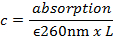
Waar L de padlengte is (lengte van de maatkamer, typisch 1 cm).
- Digest het gemodificeerde plasmide-DNA met restrictie-enzymen (ideaal met een enkele restrictieplaats in het plasmide) onder gebruik van de omstandigheden zoals aanbevolen door de fabrikant ( Figuur 1 ). Deze stap produceert lineaire fragmenten bevattenDe ingevoegde wijziging op een bepaalde positie invoeren. Gebruik hier SspI- en BspQI-snijden op posities 613 en 255 bp, stroomopwaarts en stroomafwaarts van het inzetstuk, respectievelijk, wat resulteert in een 916 bp DNA fragment dat de specifieke laesieplaats bevat bij ~ 30% van de DNA lengte.
- Het genereren van een ssDNA-kloof in het plasmide
- Expressie en zuivering van eiwitten
- Recombinant UvrB uitdrukken in E. coli en zuiveren het eiwit via standaard chitine kraal affiniteit 15 en grootte exclusion chromatografie 15 zoals eerder beschreven 16 .
OPMERKING : Het uvrB- gen van Bacillus caldotenax was gekloneerd in de pTYB1-vector. - Express XPD in E. coli en zuiver het eiwit via standaard nikkel IDA affiniteit 15 en grootte exclusion chromatografie 15 gevolgd door anionuitwisselingschromatografie 15 , zoals eerder beschreven 17 .
OPMERKING : Het gen voor Chaetomium thermophilum Xeroderma pigmentosum groep D eiwit (XPD) was gekloneerd in de pBADM11 vector. C. thermophilum p44 was een vriendelijk cadeau van Caroline Kisker's laboratorium, uitgedrukt en puriFied zoals beschreven 17 .
- Recombinant UvrB uitdrukken in E. coli en zuiveren het eiwit via standaard chitine kraal affiniteit 15 en grootte exclusion chromatografie 15 zoals eerder beschreven 16 .
2. AFM Experiment
- Voorbeeld bereiding
- Optioneel pre-incubeer het DNA-substraat bij 65 ° C gedurende 10 minuten in een warmteblok om potentiële microsoutkristallen te verwijderen die tijdens de opslag in de koelkast kunnen ontstaan.
- Bereid de reactiebuffer (s) op 10-voudige concentratie (10x buffers).
OPMERKING: XPD-reactiebuffer bij 1x concentratie bevatte 20 mM Tris-HCl pH 7,5, 10 mM KCl, 5 mM MgCl2, 1 mM TCEP, 2 mM ATP; 1x UvrB reactiebuffer bevatte 50 mM Tris-HCl pH 7,5, 50 mM KCl, 10 mM MgCl2, 5 mM DTT en 1 mM ATP. - Pre-incubate eiwitten bij een hogere concentratie in geschikte incubatie condities om complexe vorming te verbeteren. Voorspoel een klein volume ( bijv . 1 μL) van de afzonderlijke eiwitten in 1x eiwitreactiebuffer naar de gewenste concentratie en meng kleine hoeveelheden ( bijv . 1 μl) tHij individuele eiwitoplossingen in een 0,5 ml reactiebuis.
- Plaats de buis in een hitteblok voor incubatietemperaturen hoger dan kamertemperatuur. Kies een concentratieratio afhankelijk van de verwachte complexe stoichiometrie, ofwel equimolaire of overeenkomstige concentraties. Hier incubeer 1 μL XPD (20 μM in 1 x XPD reactiebuffer) en 1 μL p44 (20 μM in 1x XPD reactiebuffer) bij 10 μM elk gedurende 10 minuten bij 37 ° C.
- Incubeer monsters bij geschikte eiwit- en DNA-concentraties in eiwitreactiebuffer in een 0,5 ml reactiebuis. Gebruik hier 500 nM UvrB of 1 μM XPD + 1 μM p44 en 100 nM DNA. Pipette kleine volumes om materiaal te besparen, bijvoorbeeld 0,25-0,5 μL eiwit (vooraf verdund tot een 10-voudige incubatieconcentratie) en DNA in een totaal volume van 2,5-5 μl 1x eiwitreactiebuffer. Incubeer hier 30 minuten bij 37 ° C in een warmteblok. Spin kort in een reactiebuis (~ 1 s) in een tafelcentrifugeE om te zorgen voor het mengen van kleine volumes.
- Steekproefafzetting
- Bereid een mica substraat: snijd een ongeveer 1 x 1 cm 2 stuk glimmer uit grotere stroken met een scalpel. Strook de bovenste lagen van het meervoudige mica met meerdere lagen uit met plakband om een schoon, vlak en atoom glad oppervlak te onthullen.
OPMERKING: Het mica-stuk kan opnieuw worden gebruikt voor meerdere experimenten door verdere laag (en) te verwijderen. - Bereid de AFM afzettingsbuffer met gedeïoniseerd, gefilterd water, bijvoorbeeld 25 mM HEPES pH 7,5, 25 mM Na-acetaat, 10 mM Mg-acetaat. Filter door een 0,02 μm spuitfilter.
OPMERKING: Divalente kationen in de afzettingsbuffer dienen de negatief geladen DNA moleculen te cheleren op het mica oppervlak, dat ook negatief geladen is bij neutrale pH. Als de relatief hoge Mg 2+ ionenconcentratie in de afzettingsbuffer een probleem voor een bepaald eiwit-DNA-systeem vormt,Het mica oppervlak kan vooraf worden geladen met aminogroepen met behulp van op silicaat gebaseerde chemie om positieve oppervlaktedata te verschaffen voor het verankeren van 18 . Sample depositie kan dan uitgevoerd worden in een buffer die geen of slechts lage hoeveelheden divalente kationen bevat. - Verdun het monster (zie 2.1) voor onmiddellijke afzetting op mica in afzettingsbuffer. Plaats een klein volume (hier: 20 μL).
OPMERKING: Verdunningsfactoren zijn afhankelijk van de monsterconcentratie. Hier, verdunde monsters 50-100x. Als een vuistregel resulteert ~ 1 nM DNA in een goede oppervlakte dekking voor ~ 1000 bp. - Spoel het monster onmiddellijk drie tot vier keer met een paar milliliter gefilterd, gedeïoniseerd water, ontruim overmaat vloeistof en blaas droog in een zachte stroom stikstof. Het gehele proces van monsterafzetting naar gedroogde monsters kan binnen minder dan 30 s uitgevoerd worden.
- Fix het stuk mica op een microscoopschuif met kleefband aan de randen.
OPMERKING: Verschillende AFM-systemen hebben dEisen voor het vaststellen van het monster op het podium. Andere AFM's beschikken over magnetische fasen en de mica-onderdelen worden op magnetische schijven vastgezet, bijv . Met thermische lijm. Details van het hier gebruikte AFM-systeem vindt u in de Tabel.
- Bereid een mica substraat: snijd een ongeveer 1 x 1 cm 2 stuk glimmer uit grotere stroken met een scalpel. Strook de bovenste lagen van het meervoudige mica met meerdere lagen uit met plakband om een schoon, vlak en atoom glad oppervlak te onthullen.
- AFM beeldvorming
- Plaats het monster (zie 2.2.5) centraal op de AFM-fase en maak de microscoopschuif op het podium met magnetische pads.
- Steek de AFM-tip in de tiphouder. Gebruik cantilevers met een scherpe (<10 nm) AFM sonde die geschikt is voor oscillerende, intermitterende contactmodusbeelden in de lucht. Gebruik AFM-probes, bijvoorbeeld , zoals vermeld in de Tabel . Hier (afhankelijk van AFM), bevestig de tip in de houder onder een klem door de klemschroef vast te draaien (vingerdicht). Steek de tiphouder in de AFM meetkop. Rust de kop op zijn rug voor deze stap.
- Plaats de AFM meetkop bovenop het monster. Details zijn afhankelijk van het AFM-model. Hier, mAke, zeker, het hoofd staat stabiel met zijn benen in de podiumindentaties. Zorg ervoor dat de mica zich bevindt op het podium waar de AFM-tip direct daarboven beweegt. Micrometer schroeven aan de rechterkant van het podium zorgen voor een fijne positionering van het monster.
- Richt de AFM laser op de achterkant van de cantilever voor optimale signaalsterkte van de positiegevoelige fotodetector waarop de laser wordt weerspiegeld. Details zijn afhankelijk van het AFM-model.
- Draai hier de wielen aan de rechterkant en achterkant van de AFM-meetkop om de x- en y-posities van de AFM-laser aan te passen om het centraal op het uiteinde van de cantilever te sturen. Bekijk het reflectiesignaal in het AFM video venster (indien beschikbaar, hier: druk op het camera icoon en selecteer de invoer: Svideo).
- Zodra u eenmaal crudely hebt gepositioneerd, optimaliseer het detectorensignaal (Sum in Sum en Deflection Meter-venster in AFM-software) door de laserpositie met de twee wielen goed af te stemmen (blijf aan het einde van de cantilever, de som signaIk hang af van het AFM en cantilever type, hier: streef naar som> 5).
- Zero het verschilssignaal van de bovenste en onderste diodes van de detector array (hier: afbuigingssignaal in Sum en Deflection Meter venster) door de AFM laser reflectie op het detector centrum te leiden (hier: draai het wiel aan de linkerkant van de AFM meting hoofd).
OPMERKING: Afwijkingen van nul geven de afbuiging van de cantilever aan als gevolg van oppervlakinteracties, die door de AFM in hoogteinformatie worden vertaald. - Bepaal de cantilever resonantie frequentie door middel van een frequentietoets die is geïmplementeerd in de AFM software (hier: commando automatisch afstemmen in het hoofdpaneel / Tune venster). Kies een amplitude die overeenkomt met 1 V ingang voor de piezo die de cantilever-oscillatie aandrijft. Zet de oscillatiefrequentie lichtjes (5%) lager dan de resonantiefrequentie en stel de fase van de oscillatie nul in.
- Benader de tip naar het monsteroppervlak met behulp van de ruwe ingrijpende modE (hier: commando inschakelen in het hoofdpaneel venster) tot de beveiligingsinstelling (instelpunt) is bereikt. Gebruik ~ 2% snijden van de vrije oscillatie amplitude als de setpoint (hier komt u in Set Point 980 mV in het hoofdpaneel).
- Maak de AFM-tip goed met het monsteroppervlak door het instelpunt met behulp van de AFM-software te verlagen. Doel voor afstotende modusbeeldvorming met de cantilever-oscillatiefase (Fase in Sum en Afbuigingsmeter) net onder de vrije-fase fase (voor de ingreep, hier typisch ~ 70). Gebruik hier typische eindinstellingen in de orde van 70-80% van de vrije niveau amplitude (1 V).
- Voordat u scant, kies de signalen voor opname in het hoofdkanaalpaneel. Kies hoogte (Ht) en amplitude (Am).
- Begin het scannen van het monster (hier: commando Doe scan in het hoofdvenster venster). Gebruik een scansnelheid van bijvoorbeeld 2,5 μm / s (opdracht Scansnelheid in het hoofdpaneel) naar beeldoppervlakken van 4 μm x 4 μm of 8 μm x 8 μm (voer de scangrootte in het hoofdvenster inL) met respectievelijk pixelresoluties van 2.048 of 4.096 (scanpunten en scanlijnen in het hoofdpaneel).
- Sla het afbeeldingsbestand op (opslaan Afbeelding opslaan in het hoofdpaneel) zonder aanpassingen aan te passen (kies Geen in het hoofdkanaalpaneel / Bewaar Plane Fit).
- Voor verdere analyse verwerk de opgeslagen afbeelding. Laad de afbeelding (commando Bladeren opgeslagen data in het AFM analyse menu). Open het wijzigingspaneel (druk op M in de bovenste sectie van de afbeelding). Pas een vliegtuigfit in x en y afmetingen toe op het hoogtebeeld (uitbreiding HtR) (commando XY in Planefit venster in Modify Panel, kies Planefit Order 3). Vervolgens platte de afbeelding (opdracht Flatten in Flatten venster in Modify Panel) Flatten Order 3 kiezen.
- Exporteer de afbeelding als een TIFF-bestand (druk op Commands in het bovenste gedeelte van de afbeelding, kies TIFF Export 2x die overeenkomt met 2,048 pixels resolutie) voor verdere analyse.
3. AFM-analyse
- Proteïne complex volume
- Pre-Selecteer relevante eiwit-DNA-complexen door directe visuele inspectie van de afbeeldingen in de AFM-software, met behulp van een geschikt kleurenschema om verschillende verschijningen van verschillende groottecomplexen te maximaliseren (zie verschillende kleuren en maten van verschillende complexen in figuur 2 ; hier: kleurenschema SeaLandAndFire in De AFMsoftware). Voor XPD-monsters omvatten mogelijke complexen XPD / p44-DNA , evenals XPD-DNA en p44-DNA, met duidelijk verschillende maten dankzij de relatief grote, verschillende moleculaire massa's van XPD (~ 95 kDa) en p44 (~ 40 kDa) .
- Meet volumes van individuele eiwitpieken op het DNA om het complexe type te verifiëren. Dit kan worden bereikt met verschillende beeldsoftware (hier: de sectie tool van de AFM software).
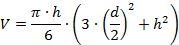
- Meet de hoogte (h) en de diameter (d) van de eiwitpiekafdelingen met de sectievensters. Meet de diameter dicht bij de basis van de deeltjes sectie.
- Bepaal het volume (V) van de erwtKs met behulp van eenvoudige wiskundige modellen, bijvoorbeeld met behulp van de volgende formule, die is gebaseerd op een bolvormig model:
- Vertaal gemeten volumes in een geschatte moleculaire massa van eiwitten.
- Initialen kalibreren van het AFM-systeem voor volume tot molecuulgewicht (MW) omzetting onder toepassing van een bereik van eiwitten met bekend molecuulgewicht (hier: in totaal 12 experimenten met tussen 25 en 851 data punten werden elk uitgevoerd op 5 verschillende eiwitten in monomere, dimeer , Trimeer- of tetramerische toestanden) 4 , 19 , 20 . Depot- en beeldproteïnen (zoals hierboven beschreven in 2.2 en 2.3) en meet hun volumes zoals hierboven beschreven (3.1.2). Plot de volumes over hun bekende moleculaire gewichten. De resulterende grafiek laat een lineaire relatie zien tussen V en MW, waarvan de vergelijking kan worden verkregen doorEen lijn die geschikt is voor de gegevens. Voor het hier gebruikte AFM-systeem werd de volgende relatie verkregen: 19 :
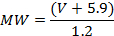
OPMERKING: deze stap hoeft niet voor elke meting te worden herhaald, maar wordt slechts één keer gedaan. Het volume naar MW-kalibratie kan worden toegepast op afbeeldingen die worden verkregen onder vergelijkbare afbeeldingsomstandigheden met AFM-probes met licht wisselende diameters. - Bepaal op basis van hun gemeten volumes (3.1.2) en de V-to-MW-kalibratie (3.1.3.1) de geschatte MW van de eiwitcomplexen 20 , die informatie verschaffen over de moleculaire inhoud ervan. Bijvoorbeeld , voor XPD / p44 monsters, ~ 50 kDa, ~ 100 kDa en ~ 140 kDa werden verkregen, consistent met p44-DNA complexen (of pieken veroorzaakt door blote DNA superstructuur), XPD alleen pieken en respectievelijk XPD / p44 pieken .
- Initialen kalibreren van het AFM-systeem voor volume tot molecuulgewicht (MW) omzetting onder toepassing van een bereik van eiwitten met bekend molecuulgewicht (hier: in totaal 12 experimenten met tussen 25 en 851 data punten werden elk uitgevoerd op 5 verschillende eiwitten in monomere, dimeer , Trimeer- of tetramerische toestanden) 4 , 19 , 20 . Depot- en beeldproteïnen (zoals hierboven beschreven in 2.2 en 2.3) en meet hun volumes zoals hierboven beschreven (3.1.2). Plot de volumes over hun bekende moleculaire gewichten. De resulterende grafiek laat een lineaire relatie zien tussen V en MW, waarvan de vergelijking kan worden verkregen doorEen lijn die geschikt is voor de gegevens. Voor het hier gebruikte AFM-systeem werd de volgende relatie verkregen: 19 :
- Proteïne complexe posities op DNA
- Bepaal het DNAFragmentlengtes.
- Traceer de DNA-fragmenten in de AFM-afbeeldingen, bijv . Met de freehand-lijnfunctie van een geschikte beeldanalysesoftware (zie bijvoorbeeld tabel van materialen) en meet de lengte van de lijn.
OPMERKING: uitsluit DNA-aggregaten, evenals fragmenten die door de beeldmarges worden afgesneden. - Plaats de DNA-lengtes van het gehele experiment in een histogram en plot het met behulp van geschikte data-analyse en grafische software (zie bijvoorbeeld Tabel van Materialen ).
- Pas de lengteverdelingen aan met een Gaussische kromme in de data-analyse en grafische software om de lengte van de DNA-fragmenten te bepalen. Om de positie van de ingevoegde DNA-doelplaats te kunnen zien (zie 1.1), omvatten alleen DNA-fragmenten met de juiste lengte binnen twee standaardafwijkingen van het centrum van de Gauss-kromme (y = y 0 + z exp (-2 (xx c ) 2 / w 2 ), waar z een normfactor is en x c en w zijn het midden enVolledige maximale halve breedte van de Gaussian) in verdere analyses.
OPMERKING: De DNA lengte in het midden van de Gauss-kromme moet dicht bij de theoretische lengte van het DNA-fragment zijn (berekend met behulp van 0,34 nm / bp). Lengtes tot 10% korter dan de theoretische waarde zijn typisch en worden waarschijnlijk veroorzaakt door AFM-resolutie limieten.
- Traceer de DNA-fragmenten in de AFM-afbeeldingen, bijv . Met de freehand-lijnfunctie van een geschikte beeldanalysesoftware (zie bijvoorbeeld tabel van materialen) en meet de lengte van de lijn.
- Bepaal posities van eiwitpieken op DNA-substraten.
- Meet de afstand van de eiwitpieken uit het dichter DNA fragment, zoals beschreven in 3.2.1.1 en verdeel met de totale DNA lengte om afstanden te verkrijgen in eenheden van fractie van DNA lengte.
- Doe de gemeten afstanden in een histogram en plot met behulp van een geschikte data analyse en grafische software (zie bijv . Figuur 3 ). Als vuistregel, kies een bin grootte die ongeveer √n-bakken geeft voor n data-punten.
OPMERKING: Aangezien DNA-eindjes hier niet kunnen worden onderscheiden, plot alleen op fractie van DNA lengte 0,5 (centrum van DNA fragment). Omdat DNA-eindbinding niet de focus van de studie is, sluit de DNA-eindjes uit de analyses uit door de positiegegevens licht na positie 0 te binnen (bijvoorbeeld hier: binning van een DNA-lengte fractie van 0,02).
- Bepaal de specificiteit van de doelplaats van eiwitcomplex positieverdelingen.
- Pas de maximale (verbeterde bindingsgebeurtenissen) in de positieverdeling met een Gauss-kromme zoals in 3.2.1.3 vast maar doe op de hoogte van de achtergrondbinding (zie figuur 3 ).
- Bereken de specificiteit S voor de specifieke site versus de niet-specifieke DNA-achtergrond (eiwitmoleculen gebonden aan niet-specifieke DNA-plaatsen) met de volgende formule 21

Een sp : Aantal specifieke complexen (gebied onder de Gaussische kromme)
Een nsp : Aantal niet-specifieke complexen (gebied van de achtergrond, Dwz (fractie DNA lengte) x (gemiddelde achtergrondhoogte y 0 ); De hier beschreven fractie van DNA lengte is 0,48 voor een histogram dat begint bij 0,02 DNA lengte)
N: aantal mogelijke DNA-bindingsplaatsen (hier: N = 914 exclusief DNA-uiteinden)
- Bepaal het DNAFragmentlengtes.
- DNA-buighoeken
- Met behulp van het hoekgereedschap in een geschikte beeldanalysesoftware, meet de hoek β tussen twee lijnen die centraal langs de DNA-ruggengraat zijn geplaatst en centreren bij de eiwitpiek (zie bijv . Inzet in Figuur 4 ). Meet de hoeken voor een statistisch relevant aantal eiwit-DNA-complexen (> 50, ideaal> 100) 2 , 3 , 5 .
OPMERKING: De DNA-bochthoek wordt gedefinieerd als 180 ° -β 2 , 3 , 5 . - Met behulp van data analyse en grafische software(Zie Tabel van Materialen) een buighoekverdelingshistogram produceren door de DNA-buighoeken te bineren.
- Pas de buighoekverdeling aan met een Gauss-curve. Als er meer dan één maximum zichtbaar is in de verdeling, kies dan meerdere piek Gauss fit. Het middelpunt (en) van de Gaussische kromme (en) geeft de gemiddelde bochthoekstand van de specifieke soort.
- Als een verschuiving in de bochthoek (en) (maxima van Gaussian fit (s)) zichtbaar is voor verdelingen, bijvoorbeeld van verschillende eiwitvarianten of verschillende eiwitcomplexen, dient u een student t-test toe te passen om het significantieniveau van de veranderingen.
- Met behulp van het hoekgereedschap in een geschikte beeldanalysesoftware, meet de hoek β tussen twee lijnen die centraal langs de DNA-ruggengraat zijn geplaatst en centreren bij de eiwitpiek (zie bijv . Inzet in Figuur 4 ). Meet de hoeken voor een statistisch relevant aantal eiwit-DNA-complexen (> 50, ideaal> 100) 2 , 3 , 5 .
Toegang beperkt. Log in of start een proefperiode om deze inhoud te bekijken.
Resultaten
Onderscheid tussen verschillende complexe types op basis van eiwitcomplexvolumes
De helicase activiteit van het prokaryotische NER helicase UvrB wordt gestimuleerd door DNA-binding 22 , 23 . UvrB vereist een ongepaarde regio in het DNA (een DNA-bubble) om correct op een van de twee single ssDNA-strengen te laden. In vivo wordt deze DNA-structuur verschaft door DN...
Toegang beperkt. Log in of start een proefperiode om deze inhoud te bekijken.
Discussie
AFM statistische analyses van bindende posities van eiwitten op lange DNA-fragmenten die specifieke doelstellingsplaatsen bevatten, kunnen interessante details aantonen over de specifieke strategieën die door het eiwit gebruikt worden om deze sites 2 , 3 , 4 , 5 , 6 te herkennen. Om de resulterende positieverdelingen te interpreteren, moeten de posities van d...
Toegang beperkt. Log in of start een proefperiode om deze inhoud te bekijken.
Openbaarmakingen
De auteurs hebben niets te onthullen.
Dankbetuigingen
PUC19N, CPD-bevattende oligonucleotiden en p44 werden vriendelijk verschaft door respectievelijk Samuel Wilson, Korbinian Heil en Thomas Carell, en Gudrun Michels en Caroline Kisker. Dit werk werd ondersteund door subsidies van de Deutsche Forschungsgemeinschaft (DFG) FZ82 en TE-671/4 naar IT.
Toegang beperkt. Log in of start een proefperiode om deze inhoud te bekijken.
Materialen
| Naam | Bedrijf | Catalogusnummer | Opmerkingen |
|---|---|---|---|
| Molecular Force Probe (MFP) 3D | Asylum Research | N/A | atomic force microscope (AFM) |
| Precision 390 | DELL | N/A | computer |
| ThermoMixer en 1,5 mL blok | Eppendorf | 5382000015 | heat block voor DNA-voorbereiding |
| Rotilabo Block-Heater H 250 & blokken voor 0,5 mL buizen | Carl Roth GmbH | Y264.1 & Y267.1 | heat block voor eiwit-DNA-incubaties |
| Mini-Sub Cell GT | Bio-Rad Laboratories GmbH | 1704467 | elektroforesekamer met gelgieter en voeding |
| Power Pac Basic | Bio-Rad Laboratories GmbH | 1645050 | elektroforese-voeding |
| Centifuge 5415 D met rotor | Eppendorf | 2262120-3 | tafelcentrifuge |
| Ultra-Lum elektronische UV transillumonator MEB-15 | Ultralum | 900-1322-02 | UV-belichtingstafel |
| NanoDrop ND-1000 | VWR International / PEQLAB Biotechnologie GmbH | N/A | UV spectrofotometer |
| TKAX-CAD met 0,2 μm capsulefilter | Unity Lab Services | N/A | waterdeïonisatie- en filtereenheid |
| Naam | Bedrijf | Catalogusnummer | Opmerkingen |
| Software | |||
| MFP-software op Igor Pro | Asylum Research | N/A | AFM-software |
| ImageJ (open source Java beeldverwerking) | NIH Image | N/A | Beeldanalysesoftware |
| Excel (Microsoft Office) | Microsoft Corporation | N/A | gegevensanalysesoftware |
| Origin9 / Origin2016 | OriginLab Corporation | N/A | statistische gegevensanalyse en grafieksoftware |
| Naam | Bedrijf | Catalogusnummer | Opmerkingen |
| Materiaal | |||
| OMCL-AC240TS | Olympus | OMCL-AC240TS | AFM cantilevers |
| grade V-5 muscovite | SPI Supplies | 1805 | mica platen |
| Amicon Ultra 0,5 mL 50k Ultracell | Millipore Ireland Ltd. | UFC505096 | centrifugefilters |
| NucleoSpin Extract II | Macherey-Nagel GmbH | 740 609.250 | Agarose gel extractiekit |
| Rotilabo cellulose papier type 111A | Carl Roth GmbH | AP59.1 | AFM depositie blottingpapier |
| Anatop 25 (0,02 μm) | Whatman GmbH | 6809-2102 | spuitfilter |
| SSpI, BspQI | New England Biolabs (NEB) | R0132, R0712 | restrictie-enzymen voor DNA substraatvoorbereiding |
| XhoI, BglII | R0146, R0144 | restrictie-enzymen voor DNA voorbereiding controles | |
| nicking restrictie-enzym Nt.BstNBI | New England Biolabs (NEB) | R0607 | nickase |
| T4 DNA ligase | New England Biolabs (NEB) | M0202S | Ligase |
| Tris, HEPES | Carl Roth GmbH | 4855, 9105 | buffer chemicaliën |
| NaCl, MgCl2, KCl, MgAcetate | Carl Roth GmbH | 3957, HN03, HN02, P026 | zout chemicaliën |
| NaAc | Sigma-Aldrich Chemie GmbH | 32318 | zout chemicaliën |
| DTT, TCEP, EDTA | 6908, HN95, 8040 | chemicaliën/reagentia | |
| agarose, azijnzuur, HCl | Carl Roth GmbH | 2267, 3738, K025 | reagentia |
| ATP | Carl Roth GmbH | K054 | nucleotiden |
| oligonucleïde #1 in Tabel 1 | Biomers | op maat | complementair DNA oligonucleïde |
| oligonucleïden #2, #3 en #6 in Tabel 1 | Integrated DNA Technologies (IDT) | op maat | fluoresceine bevattende oligonucleïden |
| oligonucleïden #4 en #5 in Tabel 1 | privé (beschikbaar bij b.v. TriLink of GlenResearch) | CPD bevattende oligonucleïden | |
| SafeSeal reactiebuisje 0,5 mL en 1,5 mL | Sarstedt | 72.704 en 72.706 | incubatiebuisjes |
| GeneRuler 1 kb | Thermo Scientific | SM0311 | DNA ladder |
| 6x geconcentreerde gel-belastingskleurstof paars | New England Biolabs (NEB) | 51406 | DNA-belastingskleurstof |
| Midori Green | Nippon Genetics Europe GmbH | 999MG28055 | DNA-kleuring |
Referenties
- Janicijevic, A., Ristic, D., Wyman, C. The molecular machines of DNA repair: scanning force microscopy analysis of their architecture. J. Microsc. 212 (3), 264-272 (2003).
- Wang, H., et al. DNA bending and unbending by MutS govern mismatch recognition and specificity. Proc. Natl. Acad. Sci. USA. 100 (25), 14822-14827 (2003).
- Tessmer, I., et al. Mechanism of MutS searching for DNA mismatches and signaling repair. J. Biol. Chem. 283 (52), 36646-36654 (2008).
- Wagner, K., Moolenaar, G., van Noort, J., Goosen, N. Single-molecule analysis reveals two separate DNA-binding domains in the Escherichia coli UvrA dimer. Nucleic Acids Res. 37 (6), 1962-1972 (2009).
- Buechner, C. N., et al. Strand-specific recognition of DNA damages by XPD provides insights into nucleotide excision repair substrate versatility. J Biol. Chem. 289 (6), 3613-3624 (2014).
- Van der Linden, E., Sanchez, H., Kinoshita, E., Kanaar, R., Wyman, C. RAD50 and NBS1 form a stable complex functional in DNA binding and tethering. Nucleic Acids Res. 37 (5), 1580-1588 (2009).
- Fuentes-Perez, M. E., Dillingham, M., Moreno-Herrero, F. AFM volumetric methods for the characterization of proteins and nucleic acids. Methods. 60, 113-121 (2013).
- Shlyakhtenko, L. S., Lushnikov, A. Y., Miyagi, A., Lyubchenko, Y. L. Specificity of binding of single-stranded DNA-binding protein to its target. Biochemistry. 51, 1500-1509 (2012).
- Wirth, N., et al. Conservation and Divergence in Nucleotide Excision Repair Lesion Recognition. J. Biol. Chem. 291 (36), 18932-18946 (2016).
- Kuper, J., Kisker, C. Damage recognition in nucleotide excision DNA repair. Curr. Opin. Struct. Biol. 22, 88-93 (2012).
- Buechner, C. N., Tessmer, I. DNA substrate preparation for atomic force microscopy studies of protein-DNA interactions. J. Mol. Recognit. 26 (12), 605-617 (2013).
- Sun, Z., Tan, H. Y., Bianco, P. R., Lyubchenko, Y. L. Remodeling of RecG Helicase at the DNA Replication Fork by SSB Protein. Sci. Rep. 5, 9625(2015).
- Billingsley, D. J., Bonass, W. A., Crampton, N., Kirkham, J., Thomson, N. H. Single-molecule studies of DNA transcription using atomic force microscopy. Phys. Biol. 9 (2), 021001(2012).
- Maurer, S., Fritz, J., Muskhelishvili, G., Travers, A. RNA polymerase and an activator form discrete subcomplexes in a transcription initiation complex. EMBO J. 25 (16), 3784-3790 (2006).
- Sambrook, J. Molecular Cloning: A Laboratory Manual. 1, 4th ed, Cold Spring Harbor Laboratory Press. Cold Spring Harbor, NY. (2012).
- Theis, K., Chen, P. J., Skorvaga, M., Van Houten, B., Kisker, C. Crystal structure of UvrB, a DNA helicase adapted for nucleotide excision repair. EMBO J. 18 (24), 6899-6907 (1999).
- Kuper, J., et al. In TFIIH, XPD helicase is exclusively devoted to DNA repair. PLoS Biol. 12 (9), e1001954(2014).
- Shlyakhtenko, L. S., et al. Silatrane-based surface chemistry for immobilization of DNA, protein-DNA complexes and other biological materials. Ultramicroscopy. 97, 279-287 (2003).
- Roth, H. M., et al. XPB helicase regulates DNA incision by the Thermoplasma acidophilum endonuclease Bax1. DNA Repair. 11 (3), 286-293 (2012).
- Ratcliff, G. C., Erie, D. A. A Novel Single-Molecule Study to Determine Protein-Protein Association Constants. J. Am. Chem. Soc. 123 (24), 5632-5635 (2001).
- Yang, Y., Sass, L. E., Du, C., Hsieh, P., Erie, D. A. Determination of protein-DNA binding constants and specificities from statistical analyses of single molecules: MutS-DNA interactions. Nucleic Acids Res. 33 (13), 4322-4334 (2005).
- Caron, P. R., Grossman, L. Involvement of a cryptic ATPase activity of UvrB and its proteolysis product, UvrB* in DNA repair. Nucleic Acids Res. 16 (22), 10891-10902 (1988).
- Wang, H., et al. UvrB domain 4, an autoinhibitory gate for regulation of DNA binding and ATPase activity. J. Biol. Chem. 281 (22), 15227-15237 (2006).
- Chammas, O., Billingsley, D. J., Bonass, W. A., Thomson, N. H. Single-stranded DNA loops as fiducial markers for exploring DNA-protein interactions in single molecule imaging. Methods. 60 (2), 122-130 (2013).
- Truglio, J. J., et al. Structural basis for DNA recognition and processing by UvrB. Nat. Struct. Mol. Biol. 13 (4), 360-364 (2006).
- Kuper, J., Wolski, S. C., Michels, G., Kisker, C. Functional and structural studies of the nucleotide excision repair helicase XPD suggest a polarity for DNA translocation. EMBO J. 31 (2), 494-502 (2012).
- Verhoeven, E. E., Wyman, C., Moolenaar, G. F., Goosen, N. The presence of two UvrB subunits in the UvrAB complex ensures damage detection in both DNA strands. EMBO J. 21 (15), 4196-4205 (2002).
- Verhoeven, E. E., Wyman, C., Moolenaar, G. F., Hoeijmakers, J. H., Goosen, N. Architecture of nucleotide excision repair complexes: DNA is wrapped by UvrB before and after damage recognition. EMBO J. 20 (3), 601-611 (2001).
- Moolenaar, G. F., et al. The Role of ATP Binding and Hydrolysis by UvrB during Nucleotide Excision Repair. J. Biol. Chem. 275, 8044-8050 (2000).
Toegang beperkt. Log in of start een proefperiode om deze inhoud te bekijken.
Herprints en machtigingen
