Esta análise bibliométrica de 1.014 publicações sobre a doença pilonidal sacrococcígea (2000–2025) mapeia tendências globais de pesquisa, redes colaborativas, evolução temática e fronteiras emergentes, revelando uma ênfase crescente na pesquisa voltada para técnicas minimamente invasivas e estratégias de prevenção baseadas em evidências.
Artigo de investigação
Análise Bibliométrica e de Mapeamento de Conhecimento da Pesquisa sobre Doença Pilonidal Sacrococcígea (2000–2025)
* These authors contributed equally
Neste artigo
Resumo
Resumo
Sacrococcygeal pilonidal disease (SPD) is an acquired inflammatory condition predominantly affecting young adults and adolescents, with a rising incidence and substantial clinical burden. Despite increasing research activity, the global scientific landscape of SPD, including research output, co-authorship patterns, knowledge diffusion pathways, thematic evolution, and emerging research frontiers, has not been systematically analyzed in the peer-reviewed literature. This study aimed to address this gap using a multitool bibliometric analysis. Bibliometric tools (VOSviewer, CiteSpace, and Pajek) were used to summarize the key features and generate visualizations. Articles and reviews on SPD published between 2000 and 2025 were retrieved from the Web of Science Core Collection. A total of 1,014 papers from 72 countries and 1,387 institutions were included. Research output steadily increased, with a marked acceleration after 2018. Turkey led in publication productivity and citation impact, whereas Germany, England, and the USA were key hubs for international collaboration. The University of Naples Federico II published the most articles, while the Technical University of Munich received the most citations. Dietrich Doll emerged as the most prominent and productive researcher in this field. Diseases of the Colon & Rectum was the most influential journal. Increasing research attention toward minimally invasive techniques, alongside continued interest in conventional surgical approaches, was identified. Current research interests emphasize less invasive strategies, etiological prevention, and evidence synthesis. This study provides valuable information for clinicians and researchers to better understand the current global status of SPD, recognize emerging research themes, and identify potential areas for future investigation and collaboration.
Introdução
A doença pilonidal sacrococcígea (SPD) é uma condição inflamatória adquirida caracterizada por fossas assintomáticas na linha média, abscessos agudos ou tratos sinusais dolorosos, afetando principalmente adolescentes e adultos jovens1,2,3. Sua incidência tem aumentado na prática clínica, particularmente em países europeus4,5,6. Na Alemanha, entre 2005 e 2017, o número médio de episódios hospitalizados de SPD por 100.000 homens aumentou de 43 para 56, e por 100.000 mulheres de 14 para 185. Geralmente, exige intervenção cirúrgica e é uma doença economicamente onerosa, que contribui para perda de produtividade e custos substanciais de tratamento em pacientes em idade ativa, impondo uma carga crescente aos sistemas de saúde em todo o mundo7. Em adolescentes, a SPD impõe consideráveis ônus físicos e psicológicos, com dor interglútea e secreção interrompendo atividades diárias, esportes e frequência escolar, enquanto altas taxas de recorrência e curso crônico reduzem a qualidade de vida e prejudicam o desenvolvimento psicossocial1,8.
Embora opções conservadoras não cirúrgicas, como injeção de fenol, ocupem um lugar significativo no tratamento1,9, a cirurgia permanece uma abordagem padrão para o SPD sintomático, apesar de suas possíveis complicações e risco de recorrência10. A incisão e drenagem são recomendadas para abscesso pilonidal11, e para doenças crônicas do seio sintomáticas, inúmeras modalidades cirúrgicas foram descritas1,10, com a escolha específica dependendo amplamente das características da doença e da experiência do cirurgião4. Historicamente, a excisão com fechamento primário ou cicatrização secundária representou abordagens cirúrgicas comumente utilizadas para SPD crônico, sendo que cada estratégia está associada a vantagens e limitações distintas3,12,13. Procedimentos de fechamento fora da linha média, incluindo retalhos de Karydakis, retalhos de Limberg e elevação da fenda de Bascom, têm sido cada vez mais adotados como opções reconstrutivas quando o fechamento primário é escolhido, devido aos seus resultados favoráveis de cicatrização, menor morbidade da ferida em comparação com o fechamento em linha média e taxas aceitáveis de recorrência4. Na última década, técnicas cirúrgicas minimamente invasivas, incluindo procedimentos de excisão limitada, como sinusectomia (por exemplo, o procedimento de Gips) e abordagens de tratamento endoscópico, têm atraído crescente interesse clínico e de pesquisa como alternativas menos invasivas aos procedimentos excisionais convencionais1,2,14. No entanto, a estratégia cirúrgica ideal para o SPD continua sendo influenciada pelas características da doença, fatores do paciente e preferência do cirurgião, com investigações contínuas sobre a eficácia comparativa entre as abordagens disponíveis.
Apesar desses avanços, a literatura científica sobre DFP apresenta diversos desafios macroscópicos que exigem investigação sistemática. Especificamente, embora a produção científica nesse domínio tenha crescido rapidamente15, as trajetórias evolutivas dos temas de pesquisa e as fronteiras emergentes permanecem insuficientemente caracterizadas sob uma perspectiva quantitativa, e os caminhos de difusão do conhecimento não foram explorados de forma sistemática. Além disso, a produtividade científica varia acentuadamente entre regiões16, e embora a colaboração dentro da área seja crucial para promover a troca científica e o avanço do conhecimento17, a análise abrangente das redes cooperativas entre pesquisadores ainda é limitada. A análise bibliométrica surgiu como uma abordagem robusta capaz de abordar esses desafios e tem sido utilizada para investigar diversas doenças anorretais, incluindo hemorroidas18,19, fístula perianal20 e prolapso retal21. Estudos anteriores relacionados à DFP forneceram insights valiosos sobre aspectos específicos da literatura, incluindo mapeamento de evidências clínicas15, produtividade de publicações16, características de citação22 e tendências metodológicas23. No entanto, essas investigações concentraram-se principalmente em dimensões individuais da pesquisa em DFP, tais como domínios de evidência clínica, produtividade por país, publicações altamente citadas ou características de delineamento dos estudos, enquanto uma avaliação abrangente que integre redes globais de colaboração, estruturas intelectuais e evolução temática ainda é insuficiente. Portanto, este estudo tem como objetivo fornecer uma visão global atualizada da pesquisa em DFP utilizando abordagens bibliométricas e de mapeamento científico, caracterizando especificamente a estrutura do conhecimento, identificando os principais colaboradores, decifrando os padrões de colaboração internacional, detectando pontos quentes emergentes na pesquisa e destacando possíveis direções para investigações futuras. A apresentação deste artigo segue a lista de verificação BIBLIO24.
Protocolo
Fonte de dados
A Coleção Principal do Web of Science (WoS) (fornecida pela Clarivate Analytics) foi utilizada como fonte primária de dados para este estudo. Sendo uma base de dados científica multidisciplinar amplamente utilizada, a Coleção Principal do WoS tem sido frequentemente adotada como fonte de dados para análises bibliométricas25. Os registros recuperados dessa base de dados podem ser exportados em formatos diretamente compatíveis com ferramentas bibliométricas, como o VOSviewer. Foi aplicada uma estratégia abrangente de busca para identificar publicações relacionadas à SPD. A busca foi realizada na Coleção Principal do WoS (consulte a Tabela de Materiais) sem restrição a qualquer índice específico, a fim de maximizar a cobertura da literatura e minimizar o risco de omitir publicações potencialmente relevantes.
Estratégia de busca
Para identificar toda a literatura potencialmente relevante, a Coleção Principal do WoS foi inicialmente pesquisada utilizando o campo Tópico (TS) com a seguinte consulta de busca: TS = (“pilonidal sinus” OR “pilonidal cyst” OR “pilonidal fistula” OR “pilonidal abscess” OR “pilonidal disease” OR “pilonidal tract” OR “sacrococcygeal cyst” OR “sacrococcygeal sinus” OR “sacrococcygeal fistula” OR “sacrococcygeal tract” OR “sacrococcygeal abscess” OR “sacrococcygeal pilonidal disease” OR “pilonidal cyst disease” OR “pilonidal sinus disease” OR “pilonidal fistula disease” OR “pilonidal tract disease” OR “pilonidal abscess disease” OR “jeep disease”). Dois investigadores (LC e WZ) realizaram independentemente a busca bibliográfica em 1º de fevereiro de 2026, de acordo com a estratégia de busca predefinida, com as discrepâncias resolvidas mediante discussão com um terceiro investigador (YL). Após a recuperação inicial, foram aplicados sequencialmente filtros predefinidos para os anos de publicação (2000–2025), idioma (inglês) e tipo de documento (Artigo ou Revisão). Após o processo inicial de filtragem, os registros remanescentes passaram por uma triagem em segundo estágio com base na análise de título e resumo, de acordo com os critérios de elegibilidade predefinidos. Como alguns relatos de caso e séries de casos ainda podem ser indexados como Artigo na Coleção Principal do WoS, esses tipos de publicação foram adicionalmente identificados durante este processo de triagem.
Critérios de elegibilidade
Consideraram-se elegíveis publicações que abordassem a doença pilonidal sacrococcígea e fornecessem informações científicas relevantes relacionadas à DPC, incluindo etiologia, fisiopatologia, epidemiologia, diagnóstico, tratamento cirúrgico ou conservador, desfechos terapêuticos ou transformação maligna. Foram consideradas inelegíveis publicações fora do escopo pré-definido desta análise bibliométrica. Relatos de caso e séries de casos foram excluídos porque este estudo teve como objetivo caracterizar tendências de publicação, padrões de colaboração e estruturas do conhecimento no nível do campo, enquanto publicações baseadas em casos individuais podem ser menos representativas do desenvolvimento geral da pesquisa.
Seleção dos estudos
A busca inicial na Coleção Principal do WoS identificou 2.600 registros potencialmente relacionados à DDP. Após a aplicação dos filtros predefinidos, 1.354 registros foram mantidos para revisão subsequente de título e resumo. Durante esse processo, foram excluídos registros incompatíveis com os critérios de elegibilidade, incluindo estudos envolvendo doença pilonidal em localizações não sacrococcígeas, estudos em cadáveres e publicações retratadas. Um corpus final de 1.014 publicações elegíveis foi incluído para análise bibliométrica subsequente. Os registros completos e as citações das publicações incluídas foram exportados em formato de texto simples (.txt) para processamento e visualização de dados posteriores. O fluxograma detalhado do processo de recuperação e triagem da literatura é apresentado na Figura 1A.
Método analítico
Informações bibliométricas, incluindo títulos, anos de publicação, números de citações, palavras-chave, autores, países/regiões, afiliações, periódicos e listas de referências, foram obtidas a partir das publicações incluídas e dos registros exportados. O Microsoft Excel 2024 foi utilizado para organização dos dados, tabulação e sumarização básica das informações bibliométricas, incluindo contagens anuais de publicações e tendências de publicação. A taxa média de crescimento anual foi calculada como: taxa média de crescimento anual = (número final de artigos / número inicial de artigos)^(1/n) − 1. Três ferramentas analíticas foram empregadas para análise e visualização bibliométrica: VOSviewer (versão 1.6.20)26, CiteSpace (versão 6.3.R3)27e Pajek (versão 6.02)28. Antes da construção da rede, as variações e duplicatas entre nomes de países, nomes de instituições, nomes de autores, nomes de periódicos e palavras-chave foram revisadas e padronizadas manualmente com base nos registros exportados do WoS e nas informações originais das publicações. Para a harmonização das palavras-chave, termos com significados equivalentes ou pequenas diferenças de formatação, incluindo variantes ortográficas, diferenças de hifenização, variações no singular/plural, abreviações e expressões estreitamente relacionadas, foram agrupados em termos unificados. Os procedimentos detalhados de harmonização das palavras-chave e as alterações correspondentes são fornecidos em Tabela Suplementar 1.
O VOSviewer foi utilizado para construir redes de colaboração entre países, instituições e autores, e para visualizar redes de citação de periódicos contribuintes e redes de co-citação de referências citadas. Foram aplicadas contagem completa e normalização por força de associação em todas as análises do VOSviewer. Em redes de coautoria, a força do vínculo foi definida como o número de publicações conjuntas entre dois itens conectados, refletindo a intensidade da colaboração direta. A força total do vínculo (TLS) representa a força cumulativa do vínculo de um item com todos os demais itens conectados na rede e foi utilizada para avaliar a intensidade colaborativa geral de países, instituições e autores. O agrupamento da rede foi realizado utilizando o algoritmo de agrupamento do VOSviewer com um parâmetro de resolução de 1,0. Foram incluídos itens que atendiam a limiares mínimos predefinidos de publicações para visualização, com limiares estabelecidos em ≥ 10 publicações para países, ≥ 5 publicações para instituições e periódicos, e ≥ 2 publicações para autores. Para a visualização de referências citadas, foram incluídas referências com ≥ 50 citações. O CiteSpace foi utilizado para agrupamento de palavras-chave, visualização de linha do tempo e detecção de explosão de citações de palavras-chave e referências citadas. O período de análise foi definido de janeiro de 2000 a dezembro de 2025, com intervalos de um ano. As análises de palavras-chave e de referências citadas foram realizadas utilizando um critério de seleção top N de 20. Foram aplicadas poda por caminho mínimo (pathfinder), poda de redes fatiadas e poda da rede mesclada para otimizar as estruturas das redes. Os agrupamentos de palavras-chave foram identificados utilizando o algoritmo da razão de verossimilhança logarítmica (LLR). A detecção de explosão de citações foi realizada utilizando o modelo padrão de detecção de explosão de Kleinberg do CiteSpace, com duração mínima da explosão de 2 anos. Finalmente, o software Pajek foi utilizado para refinar o layout gráfico das redes geradas pelo VOSviewer, a fim de melhorar a qualidade e a interpretabilidade da visualização.
Resultados
Bibliometric analysis of global publication output
Based on a predefined search strategy and inclusion criteria, 1,014 relevant publications were retrieved from the WoS Core Collection database, originating from 255 peer-reviewed journals. These comprised 916 articles and 98 reviews, with a total of 18,036 citations and an average of 17.79 citations per publication. In total, 3,942 authors from 72 countries and 1,387 institutions contributed to publications on SPD. Figure 1B illustrates the annual and cumulative publication output in this field from 2000–2025, with publication counts rising from nine in 2000 to a peak of 87 in 2025, a nearly tenfold increase, indicating a growing research interest in this topic. A compound annual growth rate of 9.52% was calculated using the geometric mean approach. From 2018 onwards, annual publication output has increased noticeably, while cumulative output has followed a stable upward trajectory, reaching 1,014 publications by 2025, indicating a robust and persistent expansion of research output in this area.
Contributions and collaboration of countries/regions
A total of 72 countries (and regions) contributed to the field of SPD from 2000 to 2025. Table 1 shows the top 10 most productive countries ranked by publications. Among these, Turkey leads with 294 publications (28.99%), followed by the United States (114, 11.24%), England (80, 7.89%), Germany (76, 7.50%), and Italy (76, 7.50%). In terms of total citations, Turkey ranked first with 5,282 citations, with an average of 17.97 citations per publication, followed by the United States (1,996, 17.51), Germany (1,783, 23.46), England (1,548, 19.35), and Italy (1,488, 19.58). Notably, Scotland achieved an outstanding average of 66.80 citations per publication despite having only 10 publications, indicating relatively high-impact research from this country. A network visualization of 21 countries (each with at least 10 publications) was generated using VOSviewer (Figure 2A). In this network, node size reflects publication volume, line thickness indicates link strength between connected countries, and colors denote clusters of similar collaboration patterns. Despite Turkey’s leading productivity, cooperation occurred more frequently between the United States and several European countries (e.g., Germany, England, Italy, Switzerland, and the Netherlands). Regarding TLS, a measure of collaborative intensity in co-authorship networks, Germany ranked first (TLS = 46), followed by the United States (TLS = 38), England (TLS = 33), Italy (TLS = 29), and Switzerland (TLS = 29), reflecting their central position in international collaboration.
Contributions and collaboration of institutions
In this analysis, a total of 1,387 institutions were involved in research pertaining to SPD, with 68 institutions contributing five or more articles. Table 2 presents the top 10 most prolific and most collaborative institutions. Regarding publication volume, the University of Naples Federico II is the leading contributor to SPD research with 28 publications and 615 citations, followed by Technical University of Munich (17, 674) and University of Bern (15, 608). As for collaborative intensity, the University of Sheffield has the strongest inter‑institutional collaboration (TLS = 70), followed by the University of Bern (TLS = 66) and St Mark’s Hospital (TLS = 61). Notably, six of the top 10 institutions by TLS are located in England, highlighting its central role in collaborative networks. A network of key institutions and their collaborative relationships is illustrated using VOSviewer (Figure 2B).
Contributions and collaboration of authors
Overall, 3,942 authors contributed to studies on SPD in this analysis. Table 3 offers an overview of the top 10 authors ranked by publication count, total citations, and TLS. Notably, Dietrich Doll from Germany ranks highest in publication volume, total citations, and collaborative intensity during the study period (2000–2025). With respect to publication output, following Doll (48 papers), other highly prolific authors are Marco Milone (18 papers) from Italy and Markus M. Luedi (16 papers) from Switzerland. Regarding total citations, Sven Petersen (660 citations), Markus M. Luedi (620 citations), and Iain J. D. McCallum (574 citations) also demonstrate strong scholarly impact. Figure 3A depicts collaborative relationships among authors with more than one publication, where node size represents publication volume, node color denotes cluster affiliation, and line thickness reflects link strength between connected authors. Most collaborative ties are concentrated among European researchers, particularly from Germany, Italy, and England. However, among the 544 authors who published at least two articles, only 132 formed large‑scale collaborations, represented as nodes scattered across 11 clusters of different colors in the network. The network shows several core collaborative groups, whereas many authors remained isolated or belonged to smaller collaborative teams.
Analysis of contributing journals
From 2000–2025, 255 academic journals have published articles in the realm of SPD. Table 4 lists the top 10 contributing journals with the most publications. The most prolific journal is Diseases of the Colon & Rectum from the United States, ranking first with 55 papers and 2,667 citations. This journal, with an impact factor (IF) of 3.7 and a Q1 Journal Citation Reports (JCR) ranking, has consistently served as the leading journal and is ranked among the major journals in colorectal surgery. Other productive journals include Techniques in Coloproctology (42 papers, 945 citations, IF 2.9, Q1), Colorectal Disease (41 papers, 829 citations, IF 2.7, Q1), and International Journal of Colorectal Disease (34 papers, 942 citations, IF 2.3, Q2), all of which have a strong reputation in this domain. In addition, the Journal of Pediatric Surgery has a considerable number of publications (33 papers, 781 citations, IF 2.5, Q1), highlighting current attention to the pediatric population affected by this disease.
A citation network of journals (Figure 3B) was constructed using VOSviewer software, with each node representing a journal, and the link strength between two journals reflecting the number of times that one journal has cited articles from the other. Nodes with higher link strength indicate journals that are heavily cited by others and play a central role in knowledge dissemination. A total of 50 journals with at least five papers were included in this network, and the above productive journals occupied central positions and were highly interconnected with other sources. Figure 3C presents an overlay visualization of the journal citation network, where node colors indicate the average publication year of relevant articles in each journal. In this overlay map, a color gradient ranging from white to red is used, with white nodes representing journals with earlier average years. For instance, Diseases of the Colon & Rectum and American Journal of Surgery have earlier average years than 2010, highlighting their foundational significance in this research period.
Analysis of keywords
Supplementary Table 2 lists the top 30 most frequently occurring keywords in SPD research from 2000–2025. Apart from the core terms “pilonidal sinus” and “disease”, keywords such as “primary closure”, “excision”, and “surgery” also appeared prominently in the literature, highlighting the importance of surgical treatment in this condition. The CiteSpace software to generate a keyword clustering network and timeline map to identify research topics and their evolution in SPD research. The parameter settings were as follows: the time slicing was from January 2000 to December 2025 with one-year intervals per slice, and the node type was “keyword”. To simplify the network structure and concentrate on core hotspots, the selection criterion was set to the top 20 items per slice. Network pruning and clustering were performed according to the predefined CiteSpace settings. The resulting network comprised 231 nodes and 1,011 links, forming 15 clusters labeled by the log likelihood ratio (LLR) method. The modularity Q value was 0.8134, indicating a significant clustering structure ( > 0.3), and the weighted mean silhouette S value was 0.9203, suggesting reliable clustering results ( > 0.7). Figure 4A presents the keyword clustering network generated by CiteSpace, while Figure 4B shows the timeline visualization of keyword clustering results, illustrating the temporal progression of focal topics in this research area. A total of 10 major clusters were retained in the clustering network, each labeled by a cluster number (0–9) and its top LLR term, representing distinct research themes in the SPD literature. As shown in Supplementary Table 3, the largest clusters are Cluster 0 “pilonidal disease” (size = 31, S = 0.984), followed by Cluster 1 “recurrence rate” (26, 0.861), Cluster 2 “Limberg flap” (20, 0.814), and Cluster 3 “Karydakis flap” (19, 0.777). Notably, seven clusters have S values above 0.9 (Cluster 0, 4–9), indicating high internal homogeneity and strong alignment with their assigned thematic labels. Supplementary Table 4 displays all keywords and their frequency of occurrence in each cluster. In the timeline map, each horizontal line corresponds to a keyword cluster, with its color indicating the cluster identity. The nodes on each line represent individual keywords, and their positions along the line indicate the year when the keyword first appeared in the literature.
Figure 5 shows the top 25 keywords with the strongest citation bursts, which reflect the thematic evolution and research hotspots in this field. The leftmost side of the dark blue bars in the map corresponds to the year when the keyword first appeared, while the red bars represent the duration of keyword bursts. The keyword with the highest burst strength was “minimally invasive treatment” (strength 14.35, 2019–2025), followed by “risk factors” (12.60, 2019–2025) and “video-assisted ablation” (10.63, 2017–2023). Research on this topic has experienced a two-phase trajectory. In the early period (2000–2013), bursts were mainly associated with surgical techniques such as “rhomboid flap”, “y‑advancement flap”, “z‑plasty”, “transposition”, and “follicle removal”, along with the keyword “randomized trial”, suggesting that the initial focus likely centered on evaluating a variety of asymmetric closure and full‑thickness flap techniques (also referred to collectively as “flattening procedures”) through clinical trials. In the latter period (2014–2025), keywords such as “video-assisted ablation”, “crystallized phenol”, and “minimally invasive treatment” experienced strong and relatively recent bursts, indicating an evolving research focus with increasing attention toward less invasive techniques. Furthermore, the most recent and ongoing hotspots include “risk factors”, “hair”, “guidelines”, and “society”, reflecting growing interest in etiological and preventive aspects, as well as increasing attention toward evidence synthesis and guideline-related research.
Analysis of cited references
Table 5 lists the top 10 most cited publications in this analysis. The most frequently cited article is “Easy and successful treatment of pilonidal sinus after explanation of its causative process” published in ANZ Journal of Surgery by Karydakis GE in 1992. Karydakis also authored the paper “New approach to the problem of pilonidal sinus,” published in The Lancet in 1973, which is the earliest publication in this list. The second most cited article is “Patient characteristics and symptoms in chronic pilonidal sinus disease,” published in the International Journal of Colorectal Disease by Sondenaa K in 1995. Of note, although all other highly cited references were published before 2010, the article “Common surgical procedures in pilonidal sinus disease: A meta-analysis, merged data analysis, and comprehensive study on recurrence” (Scientific Reports, Stauffer VK et al, 2018) ranks seventh with 165 citations.
Figure 6A displays the top 25 references with the strongest citation bursts, where the red bars correspond to the duration of reference bursts. Among these publications, the article by Stauffer VK et al published in Scientific Reports in 2018 exhibits the highest burst strength (40.61), reflecting its influence within the field. Figure 6B presents the co-citation network visualization of cited references, comprising 83 articles that met the 50-citation threshold. In the network, nodes represent cited references, and their sizes reflect citation frequency. Connections between nodes indicate that the two references have been co‑cited by the same later publication, with thicker lines representing stronger co‑citation relationships. Node colors indicate cluster membership, with nodes sharing the same color belonging to the same thematic cluster.
DATA AVAILABILITY:
The datasets generated and analyzed during the current study are included in this article as supplementary materials. The bibliographic records used for this analysis were retrieved from the Web of Science Core Collection, and the relevant search strategy and screening process are described in the manuscript. All data necessary to reproduce the analyses and interpret the findings are provided within this article and its Supplementary Tables 1–4 and Supplementary File 1.
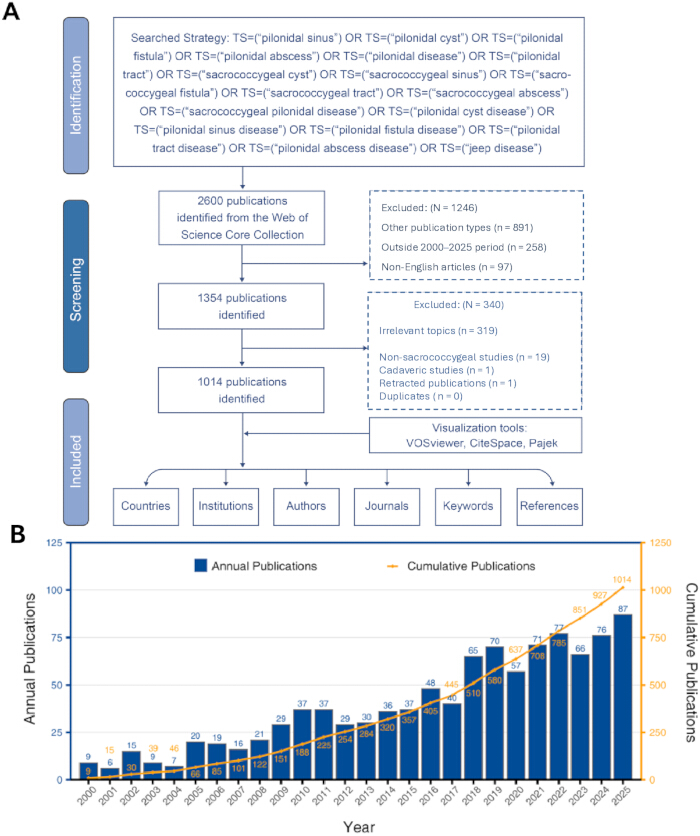
Figure 1: Study selection and publication trends. (A) Flow diagram illustrating the stepwise screening and inclusion process based on the WoS Core Collection, resulting in a final curated dataset of 1,014 original English-language publications on SPD. (B) Annual and cumulative numbers of publications on sacrococcygeal pilonidal disease between 2000 and 2025. Please click here to view a larger version of this figure.
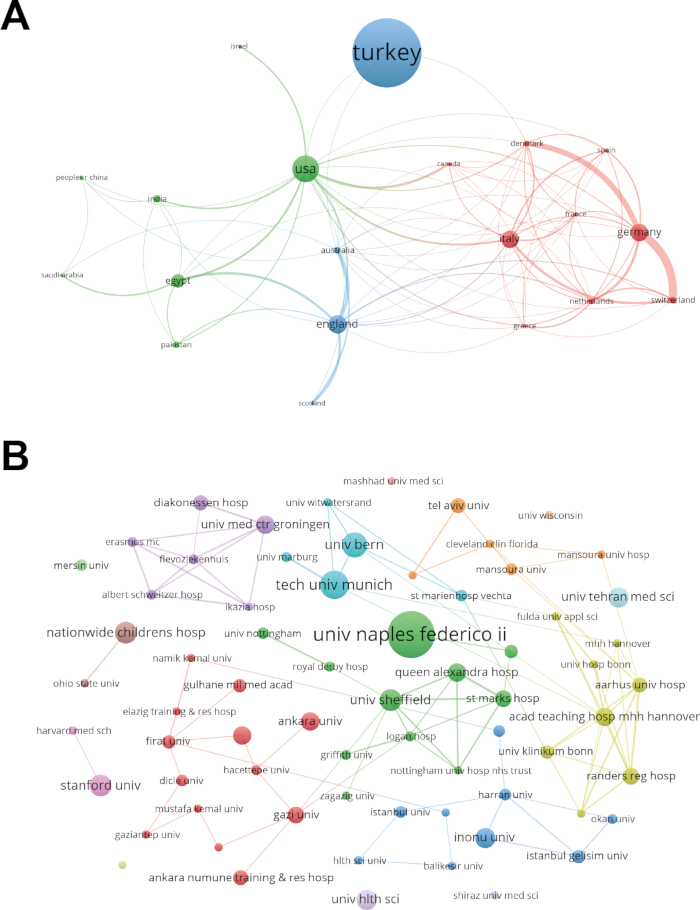
Figure 2: Network maps of the productive countries and institutions. (A) Collaborative network of countries. (B) Collaborative network of institutions. In both networks, larger nodes represent higher publication volume, node colors indicate different clusters, and thicker lines indicate stronger links between connected nodes. Please click here to view a larger version of this figure.
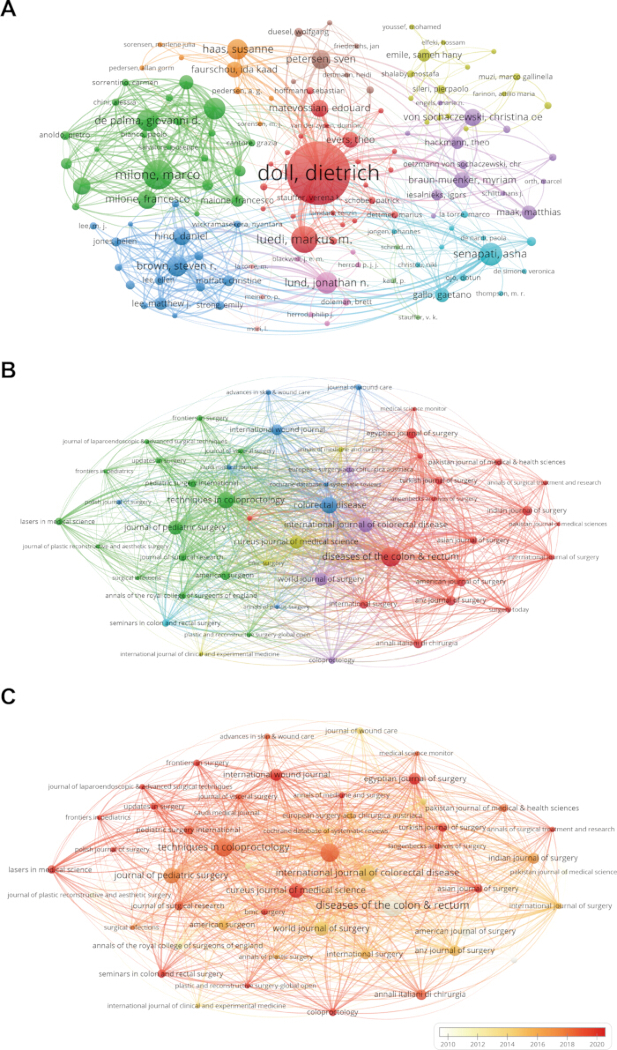
Figure 3: Network maps of prolific authors and journals. (A) Collaborative network visualization of authors. (B) Citation network visualization of contributing journals. (C) Overlay visualization of contributing journals. In (A) and (B), larger nodes represent higher publication volume, node colors indicate different clusters, and thicker lines indicate higher link strength between connected items. In (C), node colors indicate the average publication year of articles in each journal, using a gradient from white (earlier years) to red (later years). Please click here to view a larger version of this figure.
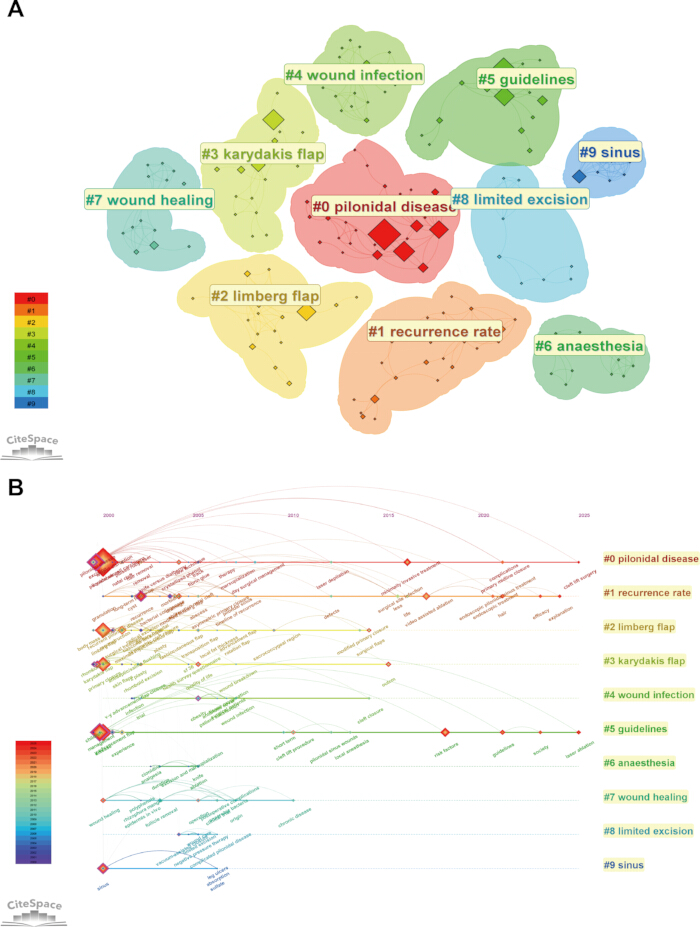
Figure 4: Keyword clustering and temporal evolution. (A) Keyword clustering network generated by CiteSpace, with clusters labeled by the log likelihood ratio (LLR) method. (B) Timeline visualization of keyword clustering analysis, showing the temporal progression of research topics from 2000–2025. Please click here to view a larger version of this figure.
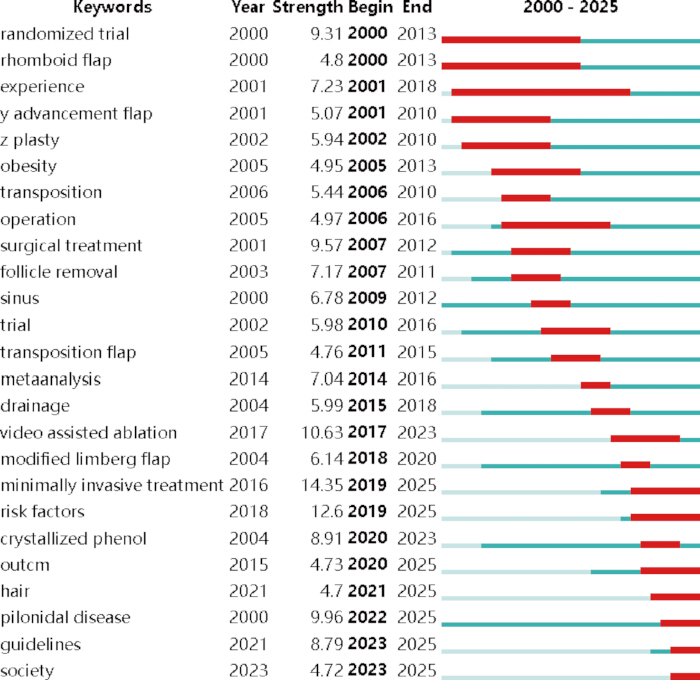
Figure 5: Top 25 keywords with the strongest citation bursts. The dark blue bars indicate the temporal distribution of each keyword, and the red bars denote burst duration. Please click here to view a larger version of this figure.
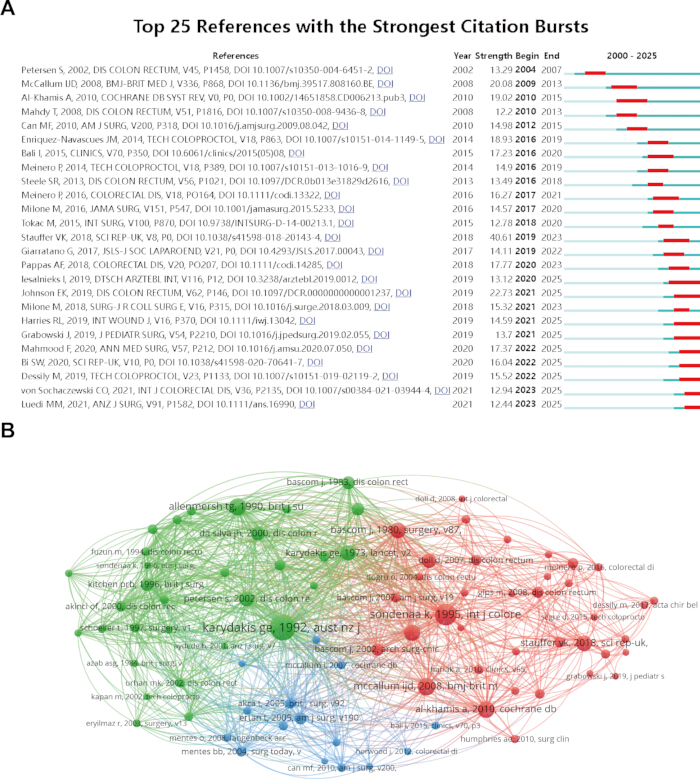
Figure 6: Visualization of references. (A) Top 25 references with the strongest citation bursts. (B) Co-citation network visualization of cited references. In this network, each node represents a cited reference; node size reflects citation frequency; line thickness denotes co‑citation strength; and colors represent thematic clusters. Please click here to view a larger version of this figure.
Table 1: Top 10 most productive countries in SPD research. This table presents country rankings by publication count, total citations, and total link strength. Abbreviations: ACPP = average citations per publication; TC = total citations; TLS = total link strength. Please click here to download this file.
Table 2: Top 10 most prolific institutions in SPD research. This table presents the top 10 institutions ranked according to total citations and total link strength, respectively. Abbreviations: TC = total citations; TLS = total link strength. Please click here to download this file.
Table 3: Top 10 highest-impact authors in SPD research. This table presents the top 10 authors ranked by publication count, total citations, and total link strength. Abbreviations: TC = total citations; TLS = total link strength. Please click here to download this file.
Table 4: Top 10 most productive journals. This table presents the top 10 journals ranked by publication count, with corresponding total citations, average citations per publication, Journal Citation Reports quartile, and impact factor. Abbreviations: ACPP = average citations per publication; IF = impact factor; JCR = Journal Citation Reports; TC = total citations. Please click here to download this file.
Table 5: Top 10 most cited references. This table presents the top 10 references ranked by citation count, including title, first author, journal, and publication year. Please click here to download this file.
Supplementary Table 1: Keywords harmonization. Keyword harmonization and standardization are applied during bibliometric data preprocessing.Please click here to download this file.
Supplementary Table 2: Keywords. The top 30 most frequently occurring keywords in SPD research from 2000 to 2025. Keywords with a greater log-likelihood ratio are more representative of the clusters. Abbreviations: LLR, log-likelihood ratio. Please click here to download this file.
Supplementary Table 3: Keyword clusters. The 10 largest keyword clusters and the top 5 label terms (by log-likelihood ratio) for each cluster.Please click here to download this file.
Supplementary Table 4: Frequency of keywords. All keywords and their frequency of occurrence in each cluster.Please click here to download this file.
Supplementary File 1: Completed BIBLIO checklist for reporting bibliometric reviews.
The checklist details the manuscript page, line, and section corresponding to each BIBLIO reporting item.Please click here to download this file.
Discussão
Esta síntese bibliométrica abrangente de 1.014 publicações delineia a trajetória da pesquisa em DFP ao longo do primeiro quarto do século XXI, revelando um campo com atividade publicacional crescente, diversidade temática ampliada e interesses de pesquisa em evolução. Este estudo propõe um framework quantitativo macroscópico para não apenas mapear a expansão da produção científica, mas, mais criticamente, para desconstruir a arquitetura intelectual subjacente, as dinâmicas colaborativas e os temas de pesquisa em evolução que caracterizam a pesquisa moderna em DFP16,22. Indo além das estatísticas descritivas, esta abordagem bibliométrica multifuncional — integrando análise de desempenho, mapeamento científico e detecção de explosão temática — fornece uma síntese única e sistemática de uma literatura vasta e fragmentada. Ao visualizar a rede do conhecimento, caracterizamos os principais contribuidores, a centralidade de periódicos específicos29 e a estrutura heterogênea das redes de colaboração global30, fornecendo assim uma referência útil para compreender as tendências de pesquisa e possíveis direções para futuras colaborações. Esta metodologia, já comprovada como eficaz em outras áreas anorretais18,19,20,21, permite uma avaliação objetiva das tendências de pesquisa, oferecendo insights sobre a evolução de estudos predominantemente focados em técnicas cirúrgicas para investigações mais amplas que incorporam prevenção, síntese de evidências e desfechos centrados no paciente1,31.
Os resultados revelam uma evolução temática substancial, com aumento da atenção da pesquisa voltada para técnicas minimamente invasivas e prevenção etiológica, juntamente com a investigação contínua de abordagens cirúrgicas convencionais. As análises de agrupamento de palavras-chave e detecção de explosões fornecem evidências de mudanças nas prioridades de pesquisa nessa área1,2,14, com explosões de alta intensidade sustentadas para termos como “tratamento minimamente invasivo” e “ablação assistida por vídeo” nos últimos anos. O surgimento dessas abordagens menos invasivas pode refletir o crescente interesse em reduzir a carga do tratamento e melhorar os desfechos centrados no paciente14,30,31. No entanto, os achados bibliométricos indicam principalmente mudanças nas prioridades de pesquisa, e não evidência definitiva de superioridade clínica entre as técnicas cirúrgicas disponíveis. Simultaneamente, o aumento de palavras-chave como “fatores de risco”, “cabelo” e “diretrizes” indica um cenário de pesquisa em amadurecimento que explora cada vez mais fatores etiológicos, como o papel da inserção de cabelo no desenvolvimento da doença32,33, ao mesmo tempo em que reflete a crescente atenção à síntese de evidências e ao desenvolvimento futuro de diretrizes4,34. Essa diversificação temática indica que a pesquisa em DPV está se expandindo cada vez mais além das técnicas operatórias, incorporando perspectivas etiológicas, preventivas e de síntese de evidências.
A análise revela variações nos padrões de colaboração internacional na área de pesquisa em DTP, destacando oportunidades para fortalecer a conectividade internacional dentro da comunidade científica que atua nesse campo. Embora a Turquia domine em volume de publicações16, os padrões de colaboração internacional variaram substancialmente entre países, com diversos países da Europa Ocidental demonstrando vínculos colaborativos transfronteiriços mais fortes. Essas diferenças destacam a estrutura heterogênea das redes globais de colaboração na pesquisa em DTP. Essa distribuição desigual das redes de colaboração enfatiza os benefícios potenciais de uma cooperação multinacional mais ampla para a geração futura de evidências30. Análises metodológicas anteriores relataram que a área ainda depende de coortes retrospectivas realizadas em centros únicos e metanálises de dados heterogêneos, com uma proporção preocupantemente decrescente de ensaios clínicos randomizados (ECRs)23. Pesquisas futuras podem se beneficiar de uma colaboração internacional maior e de estudos prospectivos bem delineados, capazes de comparar diferentes abordagens cirúrgicas em populações diversas e em diferentes contextos de saúde34.
As implicações potenciais dessas descobertas são duplas: elas fornecem aos pesquisadores e clínicos uma visão estruturada do cenário atual da pesquisa em DPE e podem ajudar a identificar lacunas de conhecimento, temas emergentes e áreas potenciais para investigações futuras. A identificação de periódicos centrais29 e autores influentes também pode ajudar os pesquisadores a reconhecer os principais contribuintes do conhecimento e possíveis redes colaborativas dentro da área. Para pesquisadores e organizações científicas, o surgimento de palavras-chave em destaque, como “diretrizes” e “sociedade”, destaca áreas de crescente interesse científico e sugere possíveis direções para investigações futuras, incluindo síntese de evidências e estudos multicêntricos11,34. As direções futuras da pesquisa podem se beneficiar ao avançar além de séries cirúrgicas descritivas, rumo a estudos colaborativos orientados por hipóteses. As prioridades potenciais sugeridas pelo atual panorama da literatura incluem: (1) realizar ensaios clínicos randomizados com poder estatístico adequado comparando as técnicas minimamente invasivas mais promissoras com os procedimentos convencionais de retalho lateral, utilizando a recorrência em 5–10 anos como desfecho primário34; (2) desenvolver e validar medidas padronizadas de desfechos relatados pelos pacientes, que capturem o impacto completo do tratamento na qualidade de vida e no bem-estar psicossocial, especialmente em populações adolescentes1,8; e (3) investigar o papel de intervenções profiláticas, como a depilação a laser, em populações de alto risco, por meio de estudos de coorte robustos e de longo prazo, para avaliar sua eficácia custo-benefício na prevenção da doença primária e recorrente.
Devem-se reconhecer as limitações metodológicas desta síntese para contextualizar esses achados. Primeiramente, a dependência de uma única base de dados (Coleção Principal do WoS) e a restrição a publicações em língua inglesa podem ter excluído inadvertidamente pesquisas significativas publicadas em outras bases científicas importantes ou em idiomas diferentes do inglês. Em segundo lugar, como ocorre em todas as análises bibliométricas, as métricas de citação são influenciadas pelo acúmulo natural de citações ao longo do tempo, o que favorece inerentemente publicações mais antigas e pode não capturar plenamente o impacto contemporâneo de inovações recentes. Por fim, as contagens de citações e a frequência de publicações são marcadores indiretos de atenção científica e atividade, não medidas diretas de rigor metodológico ou utilidade clínica. Estudos futuros poderiam atenuar essas limitações incorporando múltiplas bases de dados e utilizando altmétricas para captar um impacto social e clínico mais amplo, complementando assim a análise tradicional baseada em citações e fornecendo uma visão mais abrangente da evolução do campo.
Esta análise bibliométrica de 1.014 publicações fornece uma visão abrangente e sistemática da pesquisa sobre a doença pilonidal sacrococcígea de 2000 a 2025, mapeando o panorama global, as redes colaborativas, a evolução temática e as fronteiras emergentes. O campo apresentou um aumento acentuado e sustentado na produção de pesquisas, com a Turquia surgindo como o país mais produtivo, enquanto Alemanha, Inglaterra e Estados Unidos demonstraram papéis relativamente proeminentes nas redes de colaboração internacional. O professor Dietrich Doll destaca-se como o pesquisador mais produtivo e mais citado na área. A evolução temática revela uma ênfase crescente na pesquisa de técnicas minimamente invasivas, ao lado da investigação contínua de abordagens cirúrgicas convencionais, com a recorrência permanecendo como uma medida de desfecho central na literatura. Temas emergentes de pesquisa — destacados por palavras-chave em destaque, como “tratamento minimamente invasivo”, “fatores de risco”, “cabelo” e “diretrizes” — indicam um interesse crescente em estratégias menos invasivas, prevenção etiológica e síntese de evidências. Ao integrar padrões de produtividade global, estruturas colaborativas e evolução temática, este estudo fornece um referencial quantitativo para identificar lacunas de conhecimento, prioridades emergentes de pesquisa e potenciais oportunidades colaborativas na pesquisa sobre DPC.
Divulgações
Os autores declaram que não têm interesses concorrentes. Ferramentas de inteligência artificial não foram utilizadas para coleta de dados, análise de dados, interpretação dos resultados ou preparação de figuras. O ChatGPT (OpenAI) foi utilizado apenas para edição linguística e aprimoramento do manuscrito.
Agradecimentos
Os autores não têm agradecimentos a declarar.
Materiais
| Nome | Empresa | Número de catálogo | Comentários |
|---|---|---|---|
| CiteSpace | Universidade Drexel | versão 6.3.R3 | https://citespace.podia.com/ |
| Microsoft Excel | Microsoft Corporation | versão 2024 | https://www.microsoft.com/microsoft-365/excel |
| Pajek | Universidade de Liubliana | versão 6.02 | https://mrvar.fdv.uni-lj.si/pajek/ |
| VOSviewer | Universidade de Leiden | versão 1.6.20 | https://www.vosviewer.com/ |
| Coleção Principal do Web of Science | Clarivate | N/A | https://www.webofscience.com/ |
Referências
- Gil LA, Deans KJ, Minneci PC. Management of Pilonidal Disease: A Review. JAMA Surg. 2023;158(8):875-883.
- Di Castro A, Guerra F, Levi Sandri GB, Ettorre GM. Minimally invasive surgery for the treatment of pilonidal disease. The Gips procedure on 2347 patients. Int J Surg. 2016;36(Pt A):201-205.
- McCallum IJ, King PM, Bruce J. Healing by primary closure versus open healing after surgery for pilonidal sinus: systematic review and meta-analysis. BMJ. 2008;336(7649):868-871.
- Wiinblad IM, Ulrichsen J, Brandstrup B. Outcome After Surgical Treatment for Chronic Pilonidal Sinus Disease: A Systematic Review of Common Surgical Techniques. Dis Colon Rectum. 2025;68(5):515-529.
- Oetzmann von Sochaczewski C, Gödeke J. Pilonidal sinus disease on the rise: a one-third incidence increase in inpatients in 13 years with substantial regional variation in Germany. Int J Colorectal Dis. 2021;36(10):2135-2145.
- Faurschou IK, Erichsen R, Doll D, Haas S. Time trends in incidence of pilonidal sinus disease from 1996 to 2021: A Danish population-based cohort study. Colorectal Dis. 2024;27(1):e17227.
- Brown SR et al. Real-world practice and outcomes in pilonidal surgery: Pilonidal Sinus Treatment Studying The Options (PITSTOP) cohort. Br J Surg. 2024;111(3):znae009.
- Salimi-Jazi F et al. Burden of pilonidal disease and improvement in quality of life after treatment in adolescents. Pediatr Surg Int. 2022;38(10):1453-1459.
- Calikoglu I et al. Phenol Injection Versus Excision With Open Healing in Pilonidal Disease: A Prospective Randomized Trial. Dis Colon Rectum. 2017;60(2):161-169.
- Walker H, Hamid O, Ramirez J, Glancy D. Diagnosis and management of sacrococcygeal pilonidal disease in primary care. BMJ. 2023;382:e071511.
- Johnson EK, Vogel JD, Cowan ML, Feingold DL, Steele SR. Clinical Practice Guidelines Committee of the American Society of Colon and Rectal Surgeons. The American Society of Colon and Rectal Surgeons’ Clinical Practice Guidelines for the Management of Pilonidal Disease. Dis Colon Rectum. 2019;62(2):146-157.
- Vartanian E, Gould DJ, Lee SW, Patel KM. Pilonidal Disease: Classic and Contemporary Concepts for Surgical Management. Ann Plast Surg. 2018;81(6):e12-e19.
- Al-Khamis A, McCallum I, King PM, Bruce J. Healing by primary versus secondary intention after surgical treatment for pilonidal sinus. Cochrane Database Syst Rev. 2010;2010(1):CD006213.
- Tien T, Athem R, Arulampalam T. Outcomes of endoscopic pilonidal sinus treatment (EPSiT): a systematic review. Tech Coloproctol. 2018;22(5):325-331.
- Kumar M, Clay WH, Lee MJ, Brown SR, Hind D. A mapping review of sacrococcygeal pilonidal sinus disease. Tech Coloproctol. 2021;25(6):675-682.
- Doll D, Stauffer V, Diekann M, Van Wyk P, Luedi MM. Turkey is leading in the 21st century pilonidal sinus disease research. Turk J Surg. 2020;36(3):284-290.
- Dhole S, Mahakalkar C. Advancements and Innovations in the Surgical Management of Sacrococcygeal Pilonidal Sinus: A Comprehensive Review. Cureus. 2024;16(5):e61141.
- Chen X. Global knowledge mapping and technological evolution in hemorrhoid therapy: a multi-tool bibliometric analysis. Updates Surg. 2025. doi:10.1007/s13304-025-02460-2.
- Wang Z et al. Top 100 most-cited articles on hemorrhoids: A bibliometric analysis and visualized study. Front Surg. 2022;9:1021534.
- Chen Q, Li Y, Wang X, Li H. Hot topics in global perianal fistula research: A SCOPUS-based bibliometric analysis. Medicine (Baltimore). 2020;99(17):e19659.
- Feng L, Wang M, Li X, Yang Q. A bibliometric analysis of surgical treatment for rectal prolapse. Medicine (Baltimore). 2025;104(32):e43763.
- Şahin A, Şimşek G. The One Hundred Most Cited Articles from Turkey about Pilonidal Disease: A Bibliometric Study. Turk J Colorectal Dis. 2022;32:123-133.
- Doll D et al. One century of pilonidal sinus research: trends in study size and the declining share of randomized controlled trials. Coloproctology. 2025;47:353-359.
- Montazeri A et al. Preliminary guideline for reporting bibliometric reviews of the biomedical literature (BIBLIO): a minimum requirements. Systematic Reviews. 2023;12(1):239.
- Thelwall M. Bibliometrics to webometrics. J Inf Sci. 2008;34(4):605-621.
- van Eck NJ, Waltman L. Software survey: VOSviewer, a computer program for bibliometric mapping. Scientometrics. 2010;84(2):523-538.
- Chen C. Searching for intellectual turning points: progressive knowledge domain visualization. Proc Natl Acad Sci U S A. 2004;101 Suppl 1(Suppl 1):5303-5310.
- Mrvar A, Batagelj V. Analysis and visualization of large networks with program package Pajek. Complex Adapt Syst Model. 2016;4:6.
- Becerra AZ et al. A New Bibliometric Index: The Top 100 Most Disruptive and Developmental Publications in Colorectal Surgery Journals. Dis Colon Rectum. 2022;65(3):429-443.
- Wagner CS, Leydesdorff L. Network structure, self-organization, and the growth of international collaboration in science. Res Policy. 2005;34(10):1608-1618.
- Esposito C et al. Quality of life of pediatric patients operated for pilonidal sinus disease. Eur J Pediatr. 2023;182(1):25-30.
- Halleran DR et al. Recurrence of Pilonidal Disease: Our Best is Not Good Enough. J Surg Res. 2018;232:430-436.
- Karydakis GE. Easy and successful treatment of pilonidal sinus after explanation of its causative process. Aust N Z J Surg. 1992;62(5):385-389.
- Stauffer VK et al. Common surgical procedures in pilonidal sinus disease: A meta-analysis, merged data analysis, and comprehensive study on recurrence. Sci Rep. 2018;8(1):3058.