
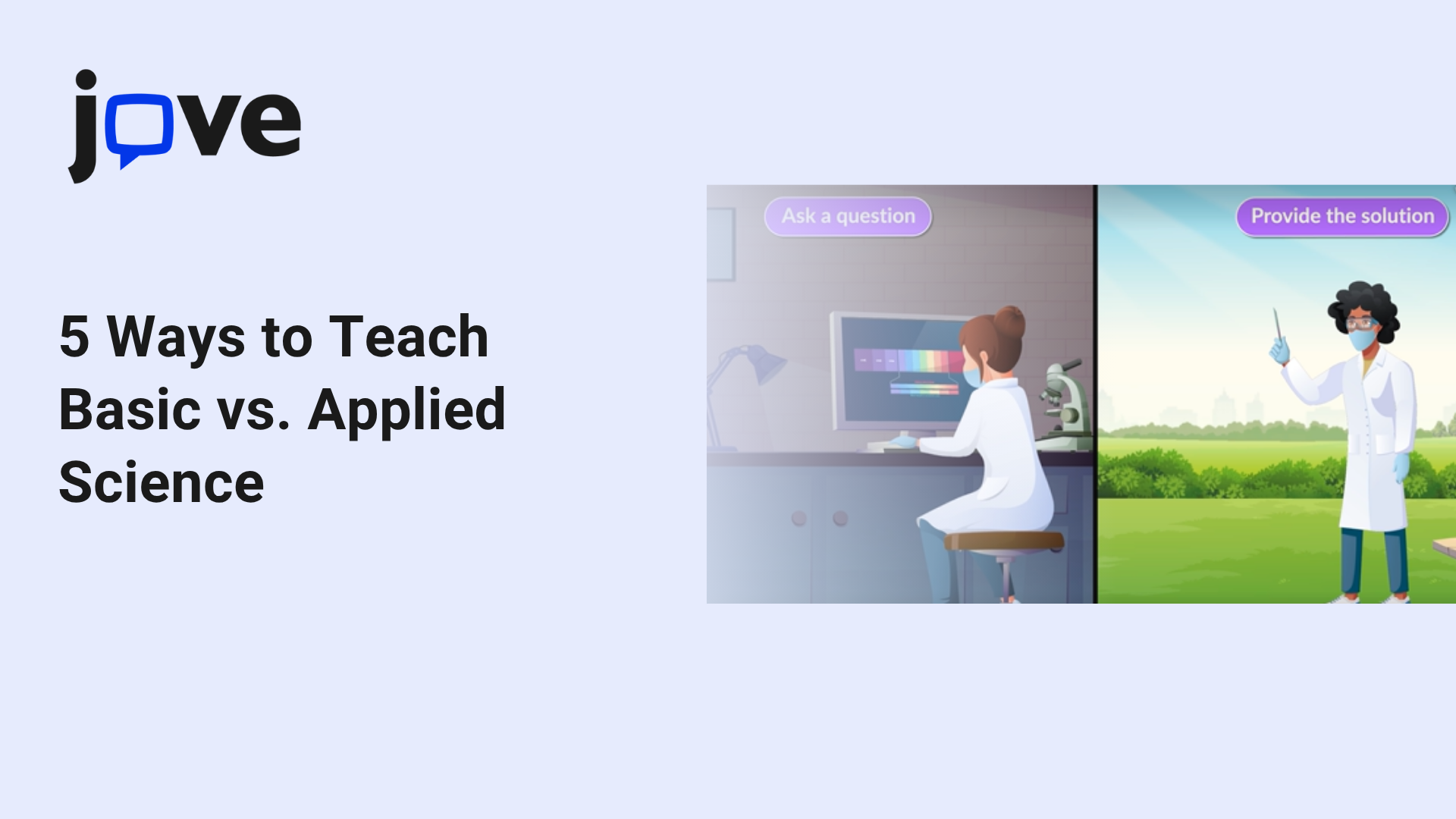
5 Ways to Teach Basic vs. Applied Science (and Why It Matters)
When students ask, ‘Why do we need to learn this?’ , that’s your cue to explore the difference between basic vs applied science. Helping middle schoolers understand this distinction not only improves comprehension but also connects science to the real world.
JoVE’s Basic and Applied Science video is a great visual introduction for your class. It clarifies how theoretical discoveries (basic science) eventually lead to practical tools and technologies (applied science).
Below are five creative strategies to teach the difference between basic and applied science with examples your students will understand.
1. Define the Two Types Clearly
Start with simple definitions
- Basic science (or pure science) seeks to understand how the world works.
- Applied science uses that knowledge to solve real-world problems.
Use clear comparisons:
- A scientist studying gravity = basic science
- Engineers using gravity to design roller coasters = applied science
This anchors the concept in everyday examples right from the start.
2. Use ‘What If’ Scenarios
Create interactive classroom discussions
Pose questions like:
- What happens if you study a new virus but don’t know how it spreads?
- How would a company use that info to create a vaccine?
These scenarios reinforce the connection between basic research vs applied research. Students begin to see how one builds on the other.
3. Connect to Real-World Science Examples
Show relevance
JoVE’s videos offers perfect visuals, but go further with:
- Using weather predictions (applied) based on climate models (basic)
- Smartphones using physics principles from basic science research
This approach helps you connect classroom science to real life examples that students care about.
4. Assign a Two-Column Sorting Activity
Make it visual and hands-on
Ask students to sort examples into two categories:
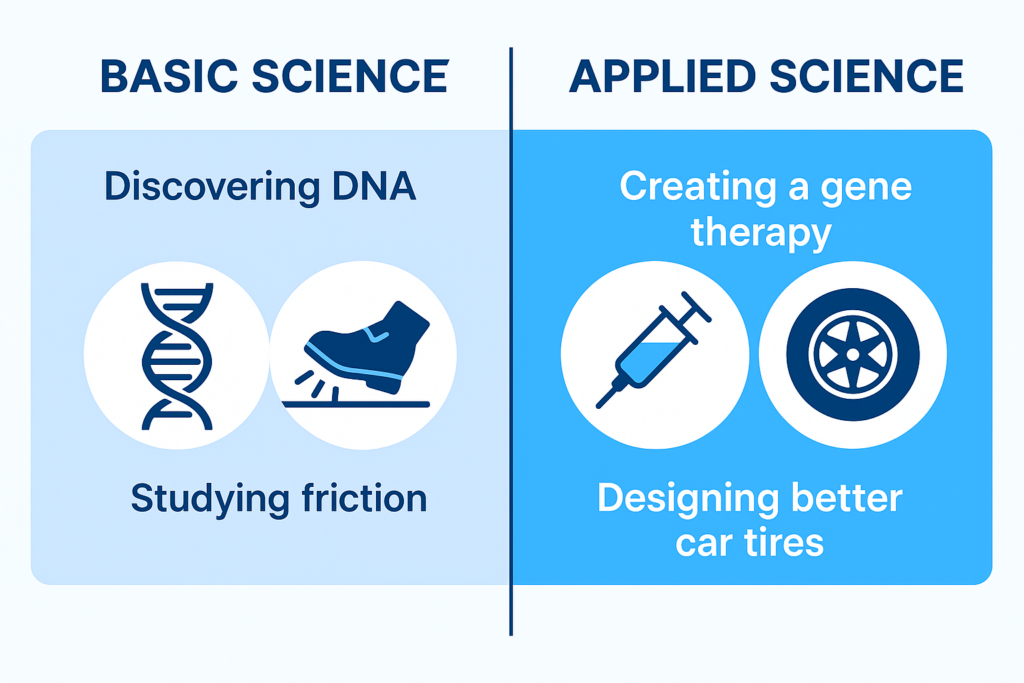
This reinforces learning through active classification.
5. Reinforce with Careers in Science
Inspire future scientists
Talk about jobs that rely on both types of science:
- A researcher in a lab studying chemical reactions
- A materials scientist creating eco-friendly packaging
Show students how understanding the difference between basic and applied science can lead to exciting career paths.
FAQ: Teaching Basic vs. Applied Science
Basic science seeks knowledge (e.g., studying atoms). Applied science uses it (e.g., developing nuclear energy).
Use real-life examples, classroom discussions, and visual tools like JoVE videos.
It builds relevance, deepens understanding, and sparks student interest in STEM careers.
Conclusion: Help Students See the Bigger Picture
Teaching basic vs applied science isn’t just about definitions — it’s about showing students how science shapes the world. With visual tools like JoVE’s videos and hands-on activities, students begin to see that science is both a quest for understanding and a toolkit for solving problems.
Bring real-world science to your classroom – sign up for a free JoVE trial by booking a demo and access engaging videos that connect theory and application in middle school science.
JoVE’s science video library starts at just $2 per student*. Explore funding options now.
*Pricing based on 1,500 students

