
Exploring DNA Mutations Through Visual Science Clips
DNA mutations are changes in the genetic code that can alter how an organism looks, functions, or survives.
It sounds complex — and to be fair, it is. But with the right visuals and analogies, middle school students can understand what mutations are, why they happen, and how they shape everything from eye color to inherited diseases. In this article, you’ll get DNA mutations explained in simple terms, backed by engaging science clips and NGSS-aligned teaching strategies.
What Is a DNA Mutation and How Does It Happen?
A DNA mutation is a change in the sequence of base pairs (A, T, C, G) in an organism’s DNA. These changes can occur during DNA replication or be caused by external factors like UV radiation or chemicals.
Some mutations have no effect. Others change traits in small or significant ways. So, what is a DNA mutation and how does it happen?
Two Main Pathways:
- Spontaneous mutations: Errors that occur naturally when cells divide.
- Induced mutations: Caused by external agents, such as sunlight, smoking, or pollution.
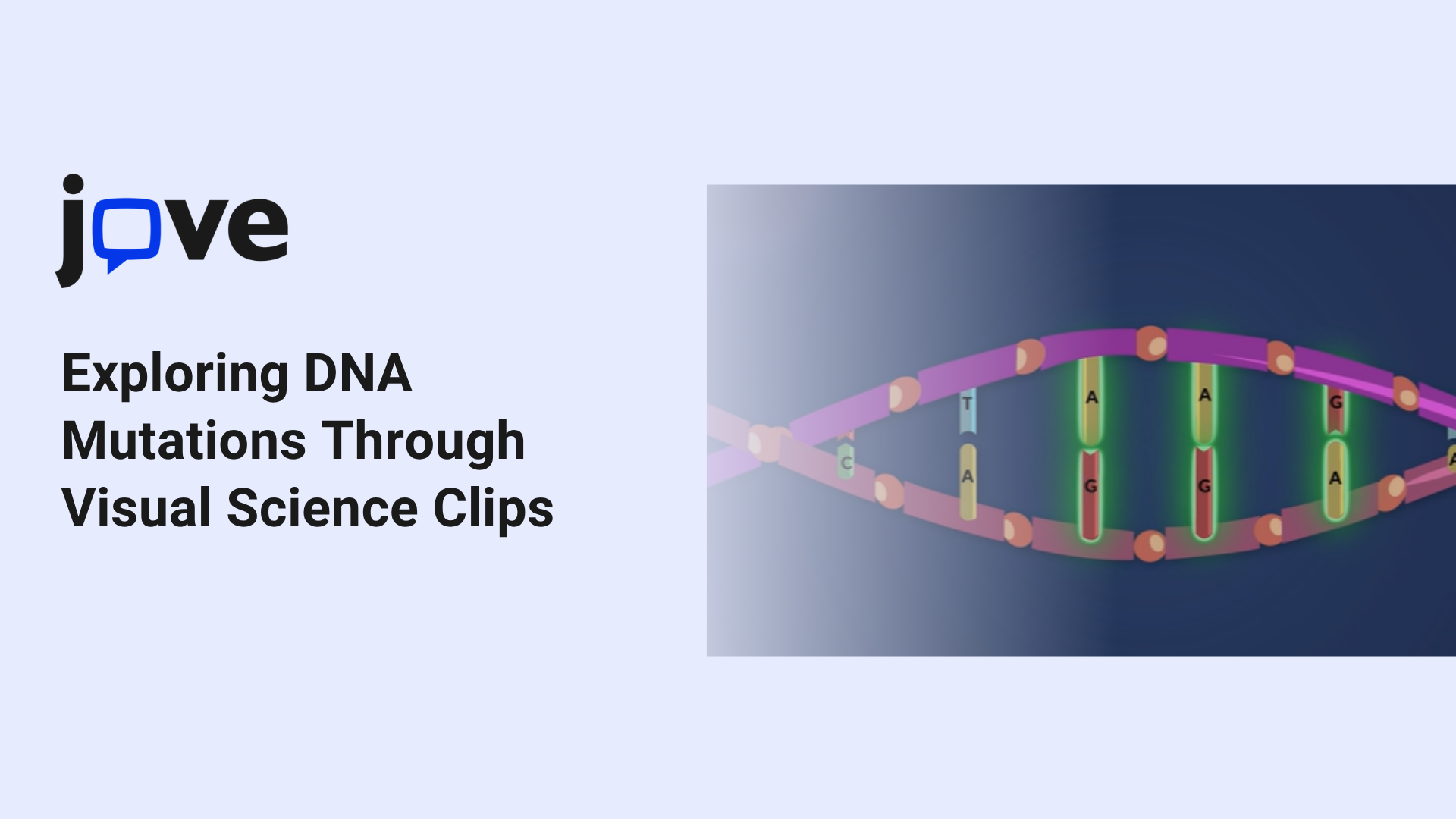
🎥 JoVE’s animations show these mutations in action — zooming into the DNA strand as bases are swapped, deleted, or inserted. This level of clarity is crucial when teaching abstract molecular changes.
Types of DNA Mutations
There are several types of DNA mutations students should know, and visualizing each one helps solidify understanding.
- Substitution – One base is swapped for another (e.g., A for G).
- Insertion – An extra base is added.
- Deletion – A base is removed.
- Frameshift – Insertions or deletions shift how the entire sequence is read.
- Duplication – Sections of DNA are copied.
Use color-coded diagrams or animated JoVE clips to illustrate these. Students can model them using beads, string, or paper DNA templates.
What Causes DNA Mutations?
What causes mutations in DNA can be broken into two categories: internal and external.
Internal Causes:
- Mistakes during DNA replication
- Cell division errors (like during meiosis)
External Causes:
- UV radiation (sunlight)
- Chemical exposure (e.g., tobacco smoke)
- Viruses
These examples tie directly into real-world science: sunscreen use, environmental toxins, and even cancer research. JoVE videos break down these concepts into age-appropriate clips perfect for middle school.
How Do Mutations Affect Traits in Organisms?
Not all mutations are harmful. Some are neutral or even helpful. But how do mutations affect traits in organisms?
- Beneficial mutations: Lead to helpful traits like disease resistance.
- Harmful mutations: Can cause disorders or make organisms less fit.
- Neutral mutations: Don’t noticeably affect the organism at all.
Pair this with genetic mutation examples, like:
- Sickle cell trait (a mutation with both risks and benefits)
- Albino animals (mutation in pigment genes)
- Bacteria developing antibiotic resistance
Teaching Inherited and Acquired Traits with Examples
To deepen understanding, contrast inherited traits (passed through DNA) with acquired traits (developed over time).
Inherited Trait Examples:
- Eye color
- Blood type
- Hair texture
Acquired Trait Examples:
- Language skills
- Scars
- Muscle tone from exercise
Teaching inherited and acquired traits with examples makes it easier for students to grasp the impact of mutations — which only affect inherited traits passed on through reproduction.
Simple Classroom Activities to Teach Mutations
Here’s an easy way to get DNA mutations explained through hands-on learning.
Classroom Activity: DNA Mutation Simulation
Materials: Colored paper strips (representing DNA bases), scissors, tape
What to Do:
- Have students build a short DNA sequence (e.g., ATG-CGA-TAC).
- Introduce mutations (e.g., substitute one base, insert a base).
- Translate the “before and after” sequences into traits or imaginary proteins.
Simple classroom activities to teach mutations like this allow students to model frameshift or substitution effects directly.
🧬 Pair with JoVE’s mutation animations for reinforcement. Visualizing real cellular processes makes these models even more impactful.
Why DNA Mutations Matter in Today’s Science Classroom
From tracking pandemics to studying cancer treatments, understanding mutations is more relevant than ever.
By using JoVE videos and inquiry-based activities, teachers can get DNA mutations explained in a way that sticks — not just with visuals, but with context. You’re not just teaching genetics; you’re helping students connect biology to the world they live in.
Conclusion: Make Genetic Science Memorable with JoVE
DNA mutations aren’t just a science standard — they’re a key to unlocking how life changes, adapts, and evolves. With JoVE, students can see it happen in real time.
🎓 Book a Free Demo to access JoVE’s full genetics video collection, complete with NGSS alignment, hands-on activity guides, and interactive student support.
Bring JoVE to your classroom starting as low as $2 per student.*
Explore funding resources to learn how your school can start using JoVE’s complete STEM video library today.
*Pricing based on 1,500 students.

