This video demonstrates the procedure for transferring an F plasmid from donor to recipient E. coli cells using a rescue plasmid and selecting transconjugants through dual antibiotic resistance. The process includes mixing bacterial cultures, incubation without shaking, disrupting mating pairs, and plating on selective media to confirm successful plasmid transfer.
A subscription to JoVE is required to view this content. Sign in or start your free trial.
Method Article
F Plasmid Transfer and Dual Antibiotic Selection in E. coli
720 views
⸱
September 26th, 2025
In This Article
Abstract
Protocol
1. Conjugative Mating Assay from XK1200 Donors to MC4100 Recipients
- Prepare an O/N culture of XK1200 pOX38-Tc Δgene::Cm + pK184-gene cells in 20 mL of sterile Lysogeny broth (LB) with 20 μg/mL chloramphenicol (Cm), 50 μg/mL kanamycin (Km) and MC4100 cells in 5 mL LB with 50 μg/mL streptomycin (Sm) using cells from a glycerol stock or single colony on an agar plate and sterile pipette or loop. Grow cultures at 37 °C with 200 rpm shaking.
- Make 1:70 dilutions from each O/N culture separately in 2 mL of sterile LB with the same antibiotics. Add glucose to a final concentration of 100 mM to all donor cells. Grow cells to mid-log phase (OD600 0.5-0.7) at 37 °C with shaking at 200 rpm.
- Centrifuge (4,000 x g for 5 min at 4 °C) to pellet cells, discard supernatant, wash once with cold sterile LB to remove antibiotics, and resuspend cells in 2 mL cold sterile LB.
- In duplicate, aliquot 100 μL of each culture into 800 μL of sterile LB media and allow them to mate at 37 °C for 1 h without shaking.
- Vortex the cells for 30 s to disrupt the mating pairs and place them on ice for 10 min to prevent further mating.
- Using the vortexed mixture and fresh sterile LB, prepare 6 dilutions (10-2 to 10-7) of the transconjugants. Select for the transconjugant MC4100 pOX38-Tc Δgene::Cm cells by spotting 10 μL aliquots of each dilution on each half of agar plates containing 50 μg/mL Sm and 20 μg/mL Cm, as in Figure 1. Repeat for both duplicate mixtures. Keep the area sterile and work near a flame. Incubate plates O/N at 37 °C.
Access restricted. Please log in or start a trial to view this content.
Results
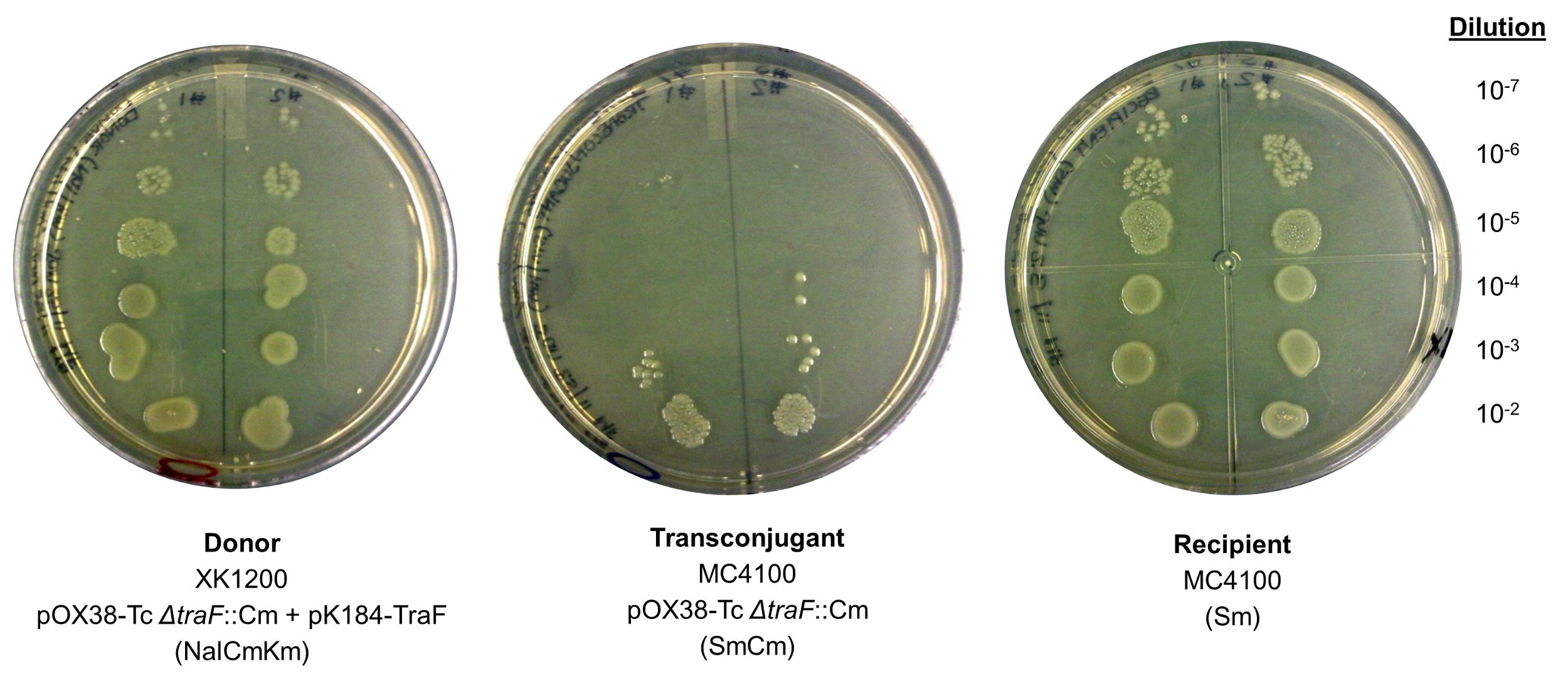
Figure 1: Mating assay to assess the target gene's function in conjugation. <...
Access restricted. Please log in or start a trial to view this content.
Materials
| Name | Company | Catalog Number | Comments |
|---|---|---|---|
| Petri Dishes | Fisher Scientific | FB0875713 | |
| Antibiotics | Final Concentrations | ||
| Chloramphenicol (Cm) | Fisher Scientific | BP904-100 | 20 µg/mL |
| Kanamycin (Km) | BioBasic Inc. | DB0286 | 50 µg/mL |
| Streptomycin (Sm) | Fisher Scientific | BP910-50 | 50 µg/mL |
