This video demonstrates rats pre-treated with beneficial bacteria or phosphate-buffered saline (PBS) and exposed to heat stress to evaluate gut barrier integrity. Fewer gut-derived bacterial colonies from the liver of treated rats, in contrast to numerous colonies in control rats, indicate an intact epithelial barrier and minimal bacterial translocation.
A subscription to JoVE is required to view this content. Sign in or start your free trial.
Method Article
Evaluating the Effect of Beneficial Bacteria on Gut Microbial Translocation in Heat-Stressed Rats
402 views
⸱
October 30th, 2025
In This Article
Abstract
Protocol
All procedures involving animal models have been reviewed by the local institutional animal care committee and the JoVE veterinary review board.
1. Experimental Design
- Start the treatment of animals by oral gavage, after 2 days of acclimatization. Use a syringe with the oral gavage needle. Treat 16 rats with Bacillus subtilis BSB3 suspension (1 ml per rat) twice a day for two days (B. subtilis group). Treat 16 rats with phosphate-buffered saline, PBS (1 ml per rat), twice a day for two days (PBS group) (Figure 1).
- After treatment, subdivide each group (8 rats per group): Group 1-control (PBS/no stress), Group 2-B. subtilis (B. subtilis /no stress), Group 3-stress (PBS/heat stress) and Group 4- B. subtilis + stress (B. subtilis/heat stress).
- Measure each rat's rectal temperature using an electronic digital thermometer. Keep rats of groups 1 and 2 at room temperature for 25 min. Place animals of groups 3 and 4 in a climate chamber at 45 °C and 55% relative humidity for 25 min.
- Afterwards, measure the rectal temperature of each rat in all groups using an electronic digital thermometer. Place all animals at room temperature for 4 hr.
- Anesthetize rats with isoflurane (2 - 4%) in a sealable anesthesia jar and observe until the rats are deeply anesthetized (absence of response to toe pinch). Euthanize rats by rapid decapitation with a guillotine.
- Collect trunk blood from each rat (15 - 16 ml) with the apyrogenic pipettes into apyrogenic tubes to obtain serum, and immediately take samples of blood (7 µl from each rat) with a pipette for microscopic examination.
- Put the tubes with the blood in a refrigerator for at least 30 min to allow clotting. Centrifuge the tubes at 20 °C, 7,000 x g for 10 min, and quickly remove the serum with a pipette. Aliquot the serum obtained from each rat into 50 µl volumes and store at -20 °C until the assay.
2. Surgical Procedure
- Cut/trim all fur from the abdomen and thorax of the underside of the carcass with electric shears. Place the carcass in a sterile cabinet and treat the shaved surface of the carcass with 70% alcohol.
- Use a sterile scalpel to create a midline incision of the abdomen. Remove liver, mesenteric lymph nodes, spleen and small intestine from each rat using sterile tweezers.
3. Analysis of Bacterial Translocation
- Place each sample of liver, mesenteric lymph nodes, and spleen into pre-weighed sterile tubes and weigh. Calculate the weight of the sample as the difference between the weight of a tube with a sample and the weight of an empty tube.
- Add sterile PBS to the tube to obtain a 1:10 dilution (weight per volume, w/v) of the sample and homogenize each sample with a sterile glass tissue homogenizer to obtain a homogeneous suspension.
- Make serial dilutions (10-1 to 10-4) of each sample in sterile PBS. Plate 0.1 ml of all dilutions of each tissue onto the surface of MacConkey's and 5% blood agar and Brucella blood agar with hemin (0.005 g/L) and vitamin K1 (0.01 g/L) plates.
- Incubate MacConkey's and 5% blood agar plates aerobically and Brucella blood agar plates under anaerobic conditions at 37 oC.
- Count colonies of aerobic bacteria after 24 hr, and colonies of anaerobic bacteria after 48 hr of incubation using a colony counter. Express the results as the number of colony-forming units (CFU) in a gram of tissue.
Access restricted. Please log in or start a trial to view this content.
Results
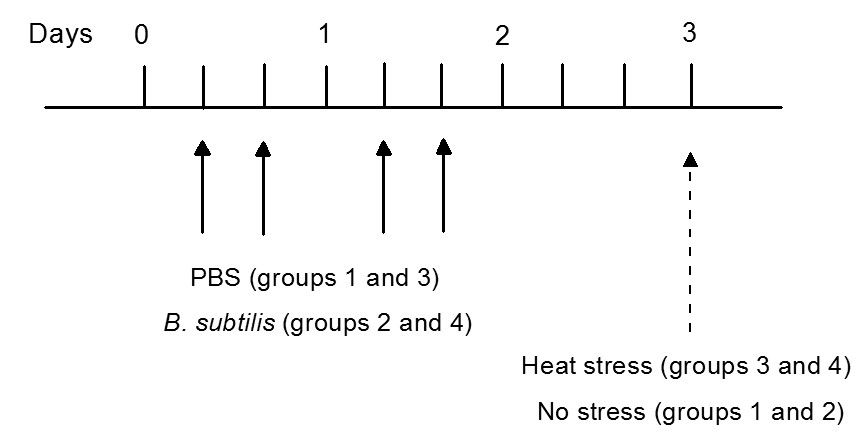
Figure 1. Study Design. Two groups of rats (16 rats in each group) were treated by...
Access restricted. Please log in or start a trial to view this content.
Materials
| Name | Company | Catalog Number | Comments |
|---|---|---|---|
| Phosphate buffered saline (PBS) | Sigma-Aldrich, St. Louis, MO | P4417 | |
| Ethyl Alcohol | Pharmco products Inc. Brookfield, CT, USA | 64-17-5 | |
| Agar | VWR | 97064-334 | |
| MacConkey agar plates | VWR | 470180-742 | |
| 5% Blood agar plates | VWR | 89405-024 | |
| Brucella blood agar plate with Hemin, and Vitamin K | VWR | 89405-032 | |
| Environmental chamber 6020-1 | Caron, Marietta, OH, USA | 6020-1 | |
| Centrifuge | Beckman Coulter, Indianapolis, IN, USA | Optima L-90K | |
| Colony counter | Fisher Scientific , Pittsburgh, PA, USA | RE-3325 | |
| Freezer | Haier, Brooklyn, NY, USA | HCMO50LA | |
| Pipettes | Gilson, Pipetman, France | P100, P200, P1000 | |
| Petri dishes (100 mm x 15 mm) | Fisher Scientific, Pittsburgh, PA, USA | 875713 | |
| SterilGard III Advance | The Baker Company, Sanford, ME, USA | SG403 | |
| Tissue homogenizer, Dounce | VWR | 71000-518 |
