This video demonstrates the purification of a polyhistidine-tagged recombinant protein using nickel-based affinity chromatography. It outlines key steps, including bacterial lysis by sonication, clarification and filtration of the lysate, and selective binding and elution of the target protein using imidazole.
A subscription to JoVE is required to view this content. Sign in or start your free trial.
Method Article
An Affinity Chromatography Technique for the Purification of a Recombinant Bacterial Protein
1.2K views
⸱
November 28th, 2025
In This Article
Abstract
Protocol
1. Purification of His-tagged RTA via Affinity Chromatography
- Sonicate cells on ice using the following protocol: 15 s pulse (20 microns), 30 s pause. Repeat this step five times.
- Centrifuge cell lysate at 21,000 x g and 4 °C for 15 min and filter supernatant using a sterile syringe filter system (0.2 µm pore size).
NOTE: Cell pellets of successfully sonicated samples show transparent borders. - Use an automated purification system equipped with a 5 mL Ni2+-based affinity column to purify the His-tagged RTA fraction from the sterile-filtered E. coli supernatant. In general, use an elution speed of 1 mL/min and cool the whole purification system to prevent inefficient toxin binding and loss of toxin activity.
NOTE: Parameters for efficient RTA purification are listed in Table 1.- Briefly, equilibrate the affinity column with 20 mL of binding buffer to remove the storage buffer. Apply sterile-filtered supernatant onto the affinity column using a syringe.
- Wash the column with 25-35 mL of binding buffer to remove the unbound proteins from the column. Perform the washing step until the UV absorbance at 280 nm is close to the initial UV value.
- Elute bound RTA fraction in 20-35 mL of elution buffer (500 mM imidazole, 500 mM NaCl, 20 mM KH2PO4, pH = 7.2) and keep the sample on ice (Figure 1A and Figure 1B).
NOTE: Elution of the RTA fraction is marked by an increase in UV absorption. Please note to exclusively collect this fraction to prevent contamination with nonspecific bound proteins.
Table 1: Parameters used for column-based affinity purification and desalting. List of all relevant column settings (e.g., flow rate, elution buffer concentration, equilibration and washing step duration) and measured parameters (e.g., conductance or UV absorption).
| Affinity chromatography parameter | ||
| Measuring parameters | UV (280 nm), Elution buffer concentration, Conductance | |
| Settings | Variable/Unit | Value |
| Flow rate | mL/min | 1 |
| Maximum column pressure | MPa | 0.35 |
| Wavelength | nm | 280 nm |
| Binding buffer | Pump position | A |
| Elution buffer | Pump position | B |
| Starting concentration elution buffer | % | 0 |
| System volume compensation | mL | 10 |
| Column equilibration | mL | 20 |
| Sample injection over superloop/syringe | mL | cell lysate volume |
| Washing step | mL | 20-35 |
| Elution step | mL | 20-35 |
| Concentration elution buffer during elution | % | 100 |
| Recalibration of column with 20% EtOH | mL | 50 |
| Desalting parameter | ||
| Measuring parameters | UV (280 nm), Conductance | |
| Settings | Variable/Unit | Value |
| Flow rate | mL/min | 4 |
| Maximum column pressure | MPa | 0.35 |
| Wavelength | nm | 280 nm |
| Binding buffer | Pump position | A |
| Elution buffer | Pump position | B |
| Starting concentration elution buffer | % | 0 |
| System volume compensation | mL | 10 |
| Column equilibration | mL | 20 |
| Sample injection over superloop/syringe | mL | cell lysate volume |
| Desalting buffer injection (0.8 M sorbitol) | mL | 100 |
| Recalibration of column with 20% EtOH | mL | 50 |
Access restricted. Please log in or start a trial to view this content.
Results
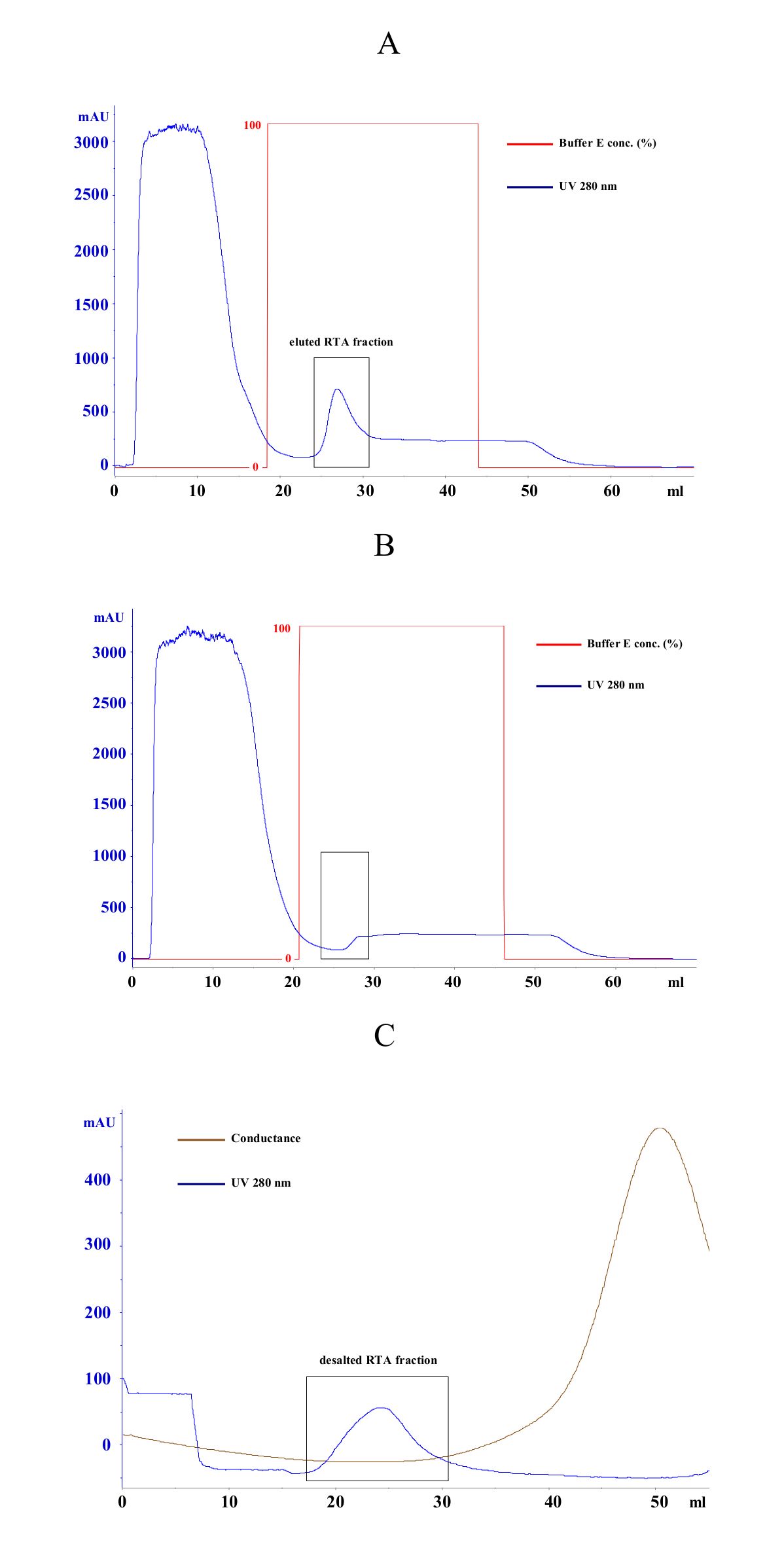
Figure 1: Representative affinity chromatography and desalting results of E. coli
Access restricted. Please log in or start a trial to view this content.
Materials
| Name | Company | Catalog Number | Comments |
|---|---|---|---|
| Spectrophotometer Ultrospec 2100 pro | Amersham | ||
| Soniprep 150 | MSE | old model, other models available | |
| Fluoroskan Ascent | Thermo Scientific | 5210470 | old model, not available anymore |
| ÄKTAPurifier | Thermo Scientific | 28406266 | Product is discontinued and replaced |
| HisTRAP HP column | GE Healthcare | 17-5248-02 | |
| HiTRAP desalting column | GE Healthcare | 11-0003-29 | |
| Midisart sterile filter | Sartorius | 16534K | 0.2 µm pore size |
| BCA protein assay kit | Pierce | 23225 | |
| 660 nm assay kit | Thermo Scientific | 22660 | |
| 96 well plates | Thermo Scientific | 260860 |
