This video demonstrates the loop-mediated isothermal amplification (LAMP) technique for detecting a target bacterial gene by amplifying DNA at a constant temperature. The reaction mixture is prepared by adding an isothermal master mix, specific primers for the target gene, and samples containing DNA templates. The amplification is initiated in a LAMP instrument, and real-time fluorescence is monitored to confirm the presence of the target gene.
A subscription to JoVE is required to view this content. Sign in or start your free trial.
Method Article
Loop-Mediated Isothermal Amplification for Bacterial Gene Detection
985 views
⸱
November 28th, 2025
In This Article
Abstract
Protocol
NOTE: A loop-mediated isothermal amplification (LAMP) reaction mix contains DNA polymerase, buffer, magnesium sulfate (MgSO4), deoxynucleotide triphosphates (dNTPs), primers, DNA template, and water. The first four reagents are contained in an isothermal master mix (Table of Materials). Primers are premixed in-house to become a primer mix (10x). DNA templates can be prepared from enrichment broths of animal food samples for screening purposes or from cultures of presumptive Salmonella isolates for confirmation purposes. In addition, a positive control (DNA extracted from any Salmonella reference strains, e.g., Salmonella enterica serovar Typhimurium ATCC 19585 [LT2]) and a no-template control (NTC; sterile molecular grade water) are included in every LAMP run.
1. Preparation of DNA templates
- To prepare DNA templates from animal food enrichments, follow these steps.
- Aseptically weigh 25 g of animal food sample (e.g., dry cat food, dry dog food, cattle feed, horse feed, poultry feed, and swine feed) into a sterile filter bag (Table of Materials), or equivalent. Place the bag into a large container or rack for support during incubation.
- Add 225 mL of sterile buffered peptone water (BPW). Mix well by swirling and brief hand-massage. Let stand at room temperature for 60 ± 5 min.
- Mix well by swirling and determine pH with a test paper. Adjust pH, if necessary, to 6.8 ± 0.2 with sterile 1 N sodium hydroxide (NaOH) or 1 N hydrochloric acid (HCl). Incubate at 35 ± 2 °C for 24 ± 2 h.
- Mix well by swirling the bag containing animal food enrichment broths. Transfer 1 mL from the filtered side of the bag to a microcentrifuge tube. Vortex briefly.
- Extract DNA using a sample preparation reagent (Table of Materials) as follows.
- Centrifuge at 900 x g for 1 min to remove large particles and transfer supernatant to a new microcentrifuge tube.
- Centrifuge at 16,000 x g for 2 min and discard supernatant.
- Suspend the pellet in 100 µL of the sample preparation reagent and heat at 100 ± 1 °C for 10 min in a dry heat block.
- Cool to room temperature and store the sample DNA extracts at -20 °C.
- To prepare DNA templates from presumptive Salmonella cultures, follow these steps.
- Obtain presumptive Salmonella isolates from culture isolation in all foods following the FDA’s BAM Chapter 5, Salmonella section D: Isolation of Salmonella.
- Inoculate presumptive Salmonella isolates on a nonselective agar plate (e.g., blood agar, nutrient agar, and trypticase soy agar) and incubate at 35 ± 2 °C for 24 ± 2 h.
- Transfer several single colonies to 5 mL of trypticase soy broth (TSB) or brain heart infusion (BHI) broth and incubate at 35 ± 2 °C for 16 ± 2 h.
NOTE: This step can be optional if the presumptive Salmonella culture is pure. In that case, DNA templates can be prepared by suspending several single colonies in 5 mL of TSB and heating 500 μL of the suspension at 100 ± 1 °C for 10 min in a dry heat block. Continue with step 5 below. - Transfer 500 µL of the overnight culture to a microcentrifuge tube and heat at 100 ± 1 °C for 10 min in a dry heat block.
- Cool to room temperature and store isolated DNA extracts at -20 °C.
- To prepare positive control DNA, follow similar steps as above for preparing DNA templates from presumptive Salmonella cultures with one extra dilution step.
- Inoculate S. Typhimurium ATCC 19585 (LT2) or any Salmonella reference strains on a nonselective agar plate (e.g., blood agar, nutrient agar, and trypticase soy agar) and incubate at 35 ± 2 °C for 24 ± 2 h.
- Transfer several single colonies to 5 mL of TSB or BHI broth and incubate at 35 ± 2 °C for 16 ± 2 h to reach ~109 CFU/mL.
- Serially dilute the overnight culture in 0.1% peptone water to obtain ~107 CFU/mL.
- Transfer 500 µL of this dilution to a microcentrifuge tube and heat at 100 ± 1 °C for 10 min in a dry heat block.
- Cool to room temperature and store positive control DNA at -20 °C.
2. Preparation of primer mix (10x)
- Obtain commercially synthesized LAMP primers (Sal4-F3, Sal4-B3, Sal4-FIP, Sal4-BIP, Sal4-LF, and Sal4-LB) with standard desalting purification (Table 1). Prepare stock solutions of each primer (100 µM) by rehydrating the primer with an appropriate amount of sterile molecular-grade water. Mix well by vortexing for 10 s and store at -20 °C (-80 °C for long-term storage).
- Prepare the primer mix (10x) according to a worksheet (Table 2). Add appropriate volumes of primer stock solutions and sterile molecular-grade water into a microcentrifuge tube. Mix all reagents well by vortexing for 10 s. Aliquot the 10x primer mix to 500 µL per microcentrifuge tube and store at -20 °C.
3. Assembly of a LAMP reaction
NOTE: To prevent cross-contamination, it is highly recommended to physically separate the areas used for preparing the LAMP master mix and adding DNA templates. Figure 1 is a LAMP diagram.
- Preparation and run setup
- Clean bench with isopropanol and a DNA- and DNase-degrading solution (Table of Materials). Clean pipettes and tube strip holders (Table of Materials) with the DNA- and DNase-degrading solution.
- Thaw the isothermal master mix, primer mix (10x), molecular grade water, positive control DNA, and DNA templates at room temperature.
- Turn on the LAMP instrument (Table of Materials) and tap the opening screen to access the home screen. Follow these steps to create a run.
NOTE: One model of the LAMP instrument has 2 blocks (A and B) with 8 samples in each block, and another model has a single block that accommodates 8 samples (Table of Materials).- Tap LAMP+Anneal and select Edit to enter sample information.
NOTE: The default LAMP run profile consists of amplification at 65 °C for 30 min and an anneal phase from 98 °C to 80 °C with a 0.05 °C decrement per second. - Tap each sample row to activate the cursor and enter relevant sample information, using the AB block icon to switch between the two LAMP instrument blocks.
- Tap the Check icon when all sample information has been entered.
NOTE: Optionally, the run setup (termed “Profile,” which contains sample information along with the default LAMP run profile) may be saved for later use. Tap the Save icon and give the profile a unique name. When testing this same set of samples next time, a new run can be initiated using the saved profile. Tap the Folder icon at the bottom left of the home screen and select Profile to load saved profiles.
- Tap LAMP+Anneal and select Edit to enter sample information.
- LAMP reaction assembly
NOTE: When using both LAMP instrument blocks (A and B, a total of 16 samples), prepare the LAMP master mix for 18 samples. If using only one LAMP instrument block (8 samples total), prepare the LAMP master mix for 10 samples. For other sample numbers, adjust the volume accordingly to accommodate pipetting loss. Always include a positive control and an NTC in every LAMP run. Duplicate testing of each sample in independent LAMP runs is recommended.- Prepare the LAMP master mix according to a worksheet (Table 3). Add appropriate volumes of the isothermal master mix, primer mix, and molecular-grade water into a microcentrifuge tube and vortex gently for 3 s. Centrifuge briefly.
- Place the tube strip in the strip holder and distribute 23 µL of the LAMP master mix to each well.
- Vortex all DNA templates and centrifuge briefly. Add 2 µL of DNA template to the appropriate well and cap tightly.
- Remove the tube strip from the holder and flick the wrist to ensure all reagents have pooled at the bottom of the tube.
- Load the tube strip into the LAMP instrument block(s), ensuring caps are secure before closing the lid.
4. LAMP Run
NOTE: During a LAMP run, fluorescence readings are acquired using the FAM channel. The time-to-peak values (Tmax; min) are determined automatically by the instrument for the time point when the fluorescence ratio reaches the maximum value of the amplification rate curve. The Tm (°C) is the melting/annealing temperature of the final amplified product.
- Click on the Run icon at the upper right of the screen and select the block(s) containing tube strip(s) to start the LAMP run.
- Optionally, while the reaction is in progress, tap the Temperature, Amplification, and Anneal tabs to see dynamic changes of various parameters during the LAMP run.
- Once the run is complete, tap the Amplification and Anneal tabs to see complete amplification and anneal curves, and tap the Results tab to view the results.
- Optionally, for record keeping, record the run number located at the top left of the screen, using the format of “instrument serial number_run number,” e.g., “GEN2-2209_0030.”
Table 1: LAMP primers for screening Salmonella in animal food and confirming Salmonella from culture isolation. The primers are designed based on the Salmonella invA sequence (GenBank accession number M90846).
| Primer name | Description | Sequence (5´-3´) | Length (bp) |
| Sal4-F3 | Forward outer primer | GAACGTGTCGCGGAAGTC | 18 |
| Sal4-B3 | Backward outer primer | CGGCAATAGCGTCACCTT | 18 |
| Sal4-FIP | Forward inner primer | GCGCGGCATCCGCATCAATA-TCTGGATGGTATGCCCGG | 38 |
| Sal4-BIP | Backward inner primer | GCGAACGGCGAAGCGTACTG-TCGCACCGTCAAAGGAAC | 38 |
| Sal4-LF | Loop forward primer | TCAAATCGGCATCAATACTCA-TCTG | 25 |
| Sal4-LB | Loop backward primer | AAAGGGAAAGCCAGCTTTACG | 21 |
Table 2: Worksheet for preparing the LAMP primer mix (10x). The primers are listed in Table 1.
| Component | Stock conc. (µM) | Primer mix conc. (µM) | Volume (µL) |
| Sal4-F3 primer | 100 | 1 | 10 |
| Sal4-B3 primer | 100 | 1 | 10 |
| Sal4-FIP primer | 100 | 18 | 180 |
| Sal4-BIP primer | 100 | 18 | 180 |
| Sal4-LF primer | 100 | 10 | 100 |
| Sal4-LB primer | 100 | 10 | 100 |
| Molecular grade water | N/A | N/A | 420 |
| Total | N/A | N/A | 1000 |
Table 3: Worksheet for preparing the LAMP reaction mix. The primer mix (10x) is prepared according to Table 2 using stock solutions of primers listed in Table 1.
| Component | Working conc. | Final reaction conc. | Volume per sample (µL) | Volume for 18 samples (µL) | Volume for 10 samples (µL) |
| ISO-001 isothermal master mix | 1.67x | 1x | 15 | 270 | 150 |
| Primer mix | 10x | 1x | 2.5 | 45 | 25 |
| Molecular-grade water | N/A | N/A | 5.5 | 99 | 55 |
| Master mix subtotal | N/A | N/A | 23 | 414 | 230 |
| DNA template | N/A | N/A | 2 | N/A | N/A |
Access restricted. Please log in or start a trial to view this content.
Results
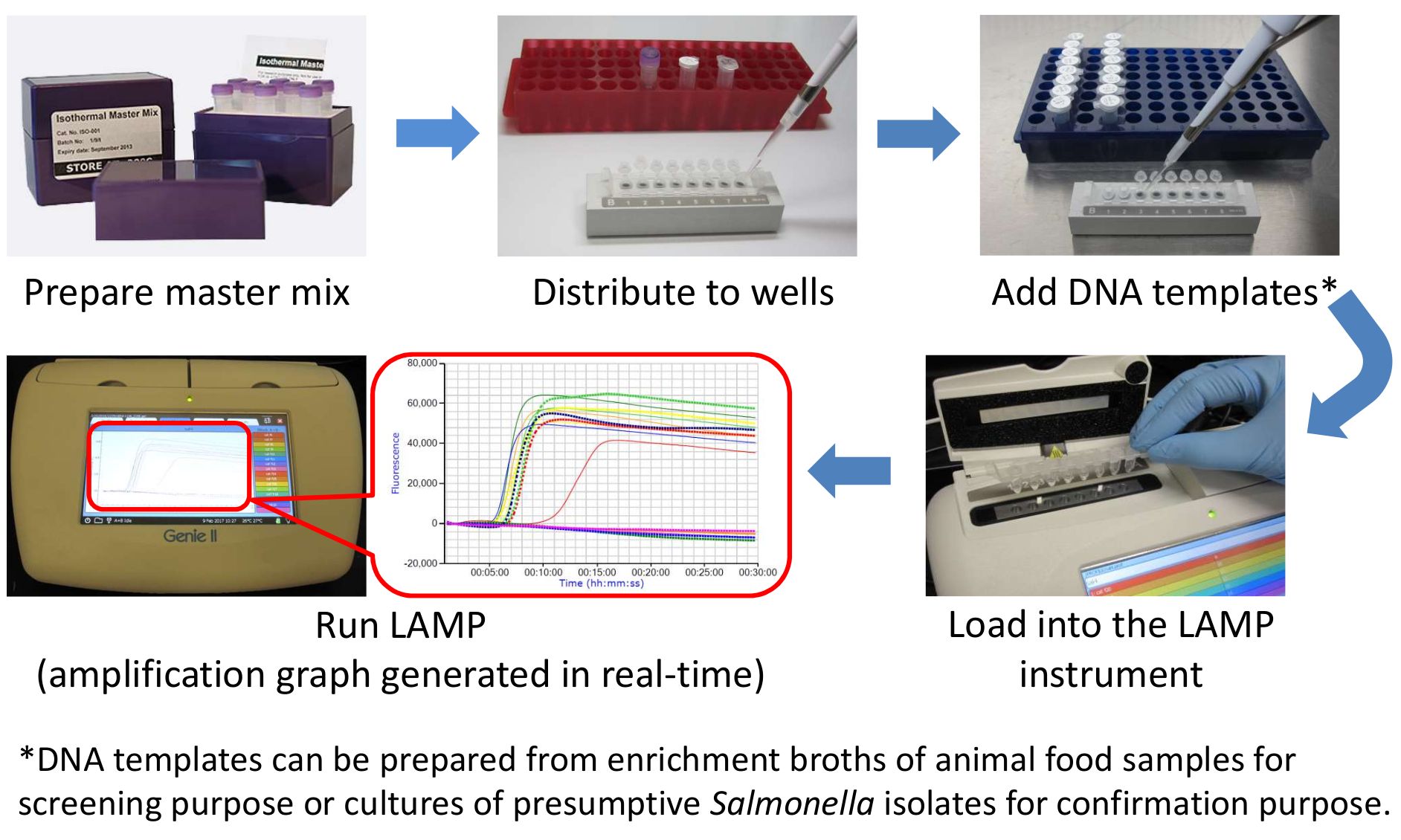
Figure 1: A schematic diagram of the Salmonella LAMP workflow.<...
Access restricted. Please log in or start a trial to view this content.
Materials
| Name | Company | Catalog Number | Comments |
|---|---|---|---|
| Brain heart infusion (BHI) broth | BD Diagnostic Systems, Sparks, MD | 299070 | Liquid growth medium used in the cultivation of Salmonella. |
| Buffered peptone water (BPW) | BD Diagnostic Systems, Sparks, MD | 218105 | Preenrichment medium for the recovery of Salmonella from animal food samples. |
| DNA AWAY | Thermo Fisher Scientific, Waltham, MA | 7010 | Eliminates unwanted DNA and DNase from laboratory bench, glassware, and plasticware without affecting subsequent DNA samples. |
| Genie Explorer software | OptiGene Ltd., West Sussex, United Kingdom | Version 2.0.6.3 | Supports remote operation of Genie instruments including LAMP runs and data analysis. |
| Genie II or Genie III (LAMP instrument) | OptiGene Ltd., West Sussex, United Kingdom | GEN2-02 or GEN3-02 | A small instrument capable of temperature control up to 100 °C with ± 0.1 °C accuracy and simultaneous fluorescence detection via the FAM channel. Genie II has 2 blocks (A and B) with 8 samples in each block. Genie III has a single block that accommodates 8 samples. |
| Genie strip | OptiGene Ltd., West Sussex, United Kingdom | OP-0008 | 8-well microtube strips with integral locking caps and a working volume of 10 to 150 µl. |
| Genie strip holder | OptiGene Ltd., West Sussex, United Kingdom | GBLOCK | Used to hold Genie strips when setting up a LAMP reaction, the aluminum holder can also be used as a cool block. |
| Hydrochloric acid (HCl) solution, 1 N | Thermo Fisher Scientific, Waltham, MA | SA48-500 | Adjusts pH of animal food samples after adding BPW and prior to overnight enrichment. |
| Heat block | Thermo Fisher Scientific, Waltham, MA | 88-860-022 | Heats samples at 100 ± 1 °C for DNA extraction. |
| Incubator | Thermo Fisher Scientific, Waltham, MA | 3960 | Standard laboratory incubator. |
| ISO-001 isothermal master mix | OptiGene Ltd., West Sussex, United Kingdom | ISO-001 | An optimized master mix to simplify the assembly of a LAMP reaction, containing a strand-displacing GspSSD DNA polymerase large fragment from Geobacillus spp., thermostable inorganic pyrophosphatase, reaction buffer, MgSO₄, dNTPs, and a double-stranded DNA binding dye (FAM detection channel). |
| Isopropanol | Thermo Fisher Scientific, Waltham, MA | A416 | Disinfects work surfaces. |
| LAMP primers | Integrated DNA Technologies Inc., Coralville, IA | Custom | LAMP primers with detailed information in Table 1. |
| Microcentrifuge | Eppendorf North America, Hauppauge, NY | 22620207 | MiniSpin plus personal microcentrifuge. |
| Microcentrifuge tubes | Thermo Fisher Scientific, Waltham, MA | 05-408-129 | Standard microcentrifuge tubes. |
| Molecular grade water | Thermo Fisher Scientific, Waltham, MA | AM9938 | Used in making primer stocks, primer mix, and LAMP reaction mix. |
| Sodium hydroxide (NaOH) solution, 1 N | Thermo Fisher Scientific, Waltham, MA | SS266-1 | Adjusts pH of animal food samples after adding BPW and prior to overnight enrichment. |
| Nonselective agar (e.g., blood agar, nutrient agar, and trypticase soy agar) | Thermo Fisher Scientific, Waltham, MA | R01202 | Solid growth medium used in the cultivation of Salmonella. |
| Peptone water | BD Diagnostic Systems, Sparks, MD | 218071 | Dilutes overnight Salmonella cultures to make positive control DNA. |
| Pipettes and tips | Mettler-Toledo Rainin LLC, Oakland CA | Pipet Lite LTS series | Standard laboratory pipettes and tips. |
| PrepMan Ultra sample preparation reagent | Thermo Fisher Scientific, Waltham, MA | 4318930 | A simple kit used for the rapid preparation of DNA templates for use in a LAMP reaction. |
| Salmonella reference strain LT2 | ATCC, Manassas, VA | 700720 | Salmonella reference strain used as positive control. |
| Trypticase soy broth (TSB) | BD Diagnostic Systems, Sparks, MD | 211768 | Liquid growth medium used in the cultivation of Salmonella. |
| Vortex mixer | Scientific Industries, Inc., Bohemia, NY | SI-0236 | Standard laboratory vortex mixer. |
| Whirl-pak filter bag | Nasco Sampling Brand, Fort Atkinson, WI | B01318 | Filter bags to hold animal food samples for preenrichment. |
