This video demonstrates the induction of lytic replication in a prophage integrated into the bacterial genome and the capture of gene expression changes through timed sampling for transcriptomic analysis.
Method Article
Inducing the Prophage Lytic Replication for Transcriptomic Analysis
72 views
⸱
September 30th, 2026
In This Article
Abstract
Protocol
1 . Preparation of uninduced and induced lysogen cultures for RNA (Ribonucleic acid) extraction
- Set up a fresh overnight culture by inoculating a single colony of the lysogen in 5 mL of LB, and incubate at 37 °C with shaking (180 rpm (revolutions per minute)) for 18–24 h.
- Subculture the overnight culture in 80 mL of LB(Lysogeny broth) at a ratio of 1:100 in eight 250 mL flasks.
- Label the first flask as “un-induced” and the others as “induced”, along with the time points when each sample should be harvested (i.e., “induced t = 0”, “induced t = 10 min”, “induced t = 20 min”, etc.; (Figure 1).
- After 90 min of incubation, when the OD (Optical density) 600 is between 0.1– 0.2, or at the time of minimal spontaneous induction (see the discussion), add 4 µL of 1% glacial acetic acid (v/v) to the un-induced flask (Figure 1).
NOTE: As the inducing agent in this work was made using 1% glacial acetic acid as the solvent, the same amount of solvent was added alone as a control step. Alternative controls may be considered depending on the preparation of different inducers. - Add the 80 mL culture from the un-induced flask to 720 mL of sterile LB, and immediately add the stop solution (ice-cold 5% [v/v] phenol, pH 4.3, 95 % [v/v] ethanol) using a volume that is 20% of the culture volume (160 mL), and incubate on ice for a minimum of 30 min and no longer than 2 h to stabilize the RNA transcripts. This is the uninduced sample.
- Induce the remaining cultures in seven 250 mL flasks (Figure 1) with the FMIC (Final minimal inhibitory concentration) of an appropriate inducing agent (in this case, 25 mg·mL−1 norfloxacin, prepared in 1% glacial acetic acid [w/v], used at a final concentration of 1 µg·mL−1), mix well, and incubate at 37 °C and with shaking at 180 rpm for 1 h.
NOTE: This step will force the lysogen culture into a more coordinated state of lytic replication. Most cells in the culture will begin to undergo lytic production of infective phage particles. - Allow the cells to recover by adding 80 mL of culture from the induced flask to 720 mL of sterile LB, which effectively dilutes the inducing agent. Harvest the bacterial cells from each flask every 10 min from time 0 until 1 h by adding a stop solution, as mentioned in step 1.5.
NOTE: The stop solution stabilizes the RNA for up to 2 h. However, to enhance the sample stability, perform all the further steps at 4 °C. - Harvest by centrifugation at 10,000 x g for 15 min at 4 °C as soon as possible, not exceeding 2 h post-treatment to avoid RNA degradation.
- Discard the supernatant, and gently resuspend the bacterial pellets in the residual liquid using an adjustable automatic pipette before transferring each sample to a 1.5 mL microfuge tube.
- Centrifuge the microfuge tubes at high speed (13,000 x g) in a microfuge at 4 °C for 1 min, and discard the residual supernatant.
- Flash-freeze the pellets by plunging each sealed microfuge tube into liquid nitrogen. This will aid the efficient lysis of the cells for RNA extraction.
- Add TRIzol (1 mL) to each frozen pellet, and homogenize the suspension by pipetting (do not vortex). Store at −80 °C until ready to perform RNA extraction for all the samples.
NOTE: The protocol can be paused at this point. - Repeat steps 1.1–1.13 with three biological replicates.
Results
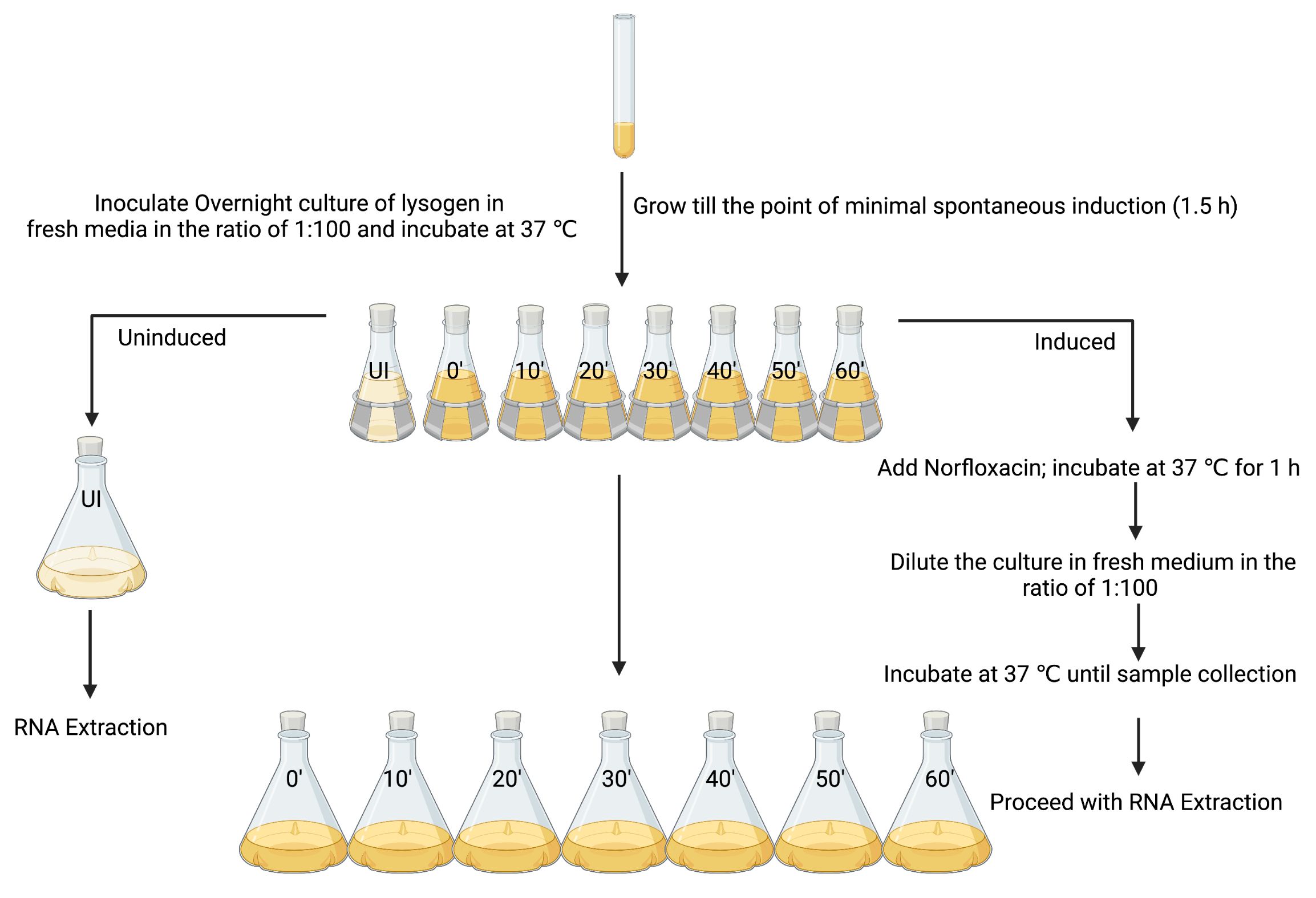
Figure 1: The experimental design for sampling induced and uninduced cultures for RNA isolation.
Materials
| Name | Company | Catalog Number | Comments |
|---|---|---|---|
| LES phages | Induced and purified from LESB58 using Norfloxacin. | This study | |
| Lysogeny Broth (LB) | Merck | 1.10285.500 | |
| Lysogeny Broth (LB) Agar | Merck | 1.10283.500 | |
| Agar Agar | Fisher | A/1080/53 | |
| Top Agar | 0.4 g Agar Agar+2.5 g LB Broth in 100 mL water; autoclave and use. | - | |
| Rifampicin | Sigma (Stock: 50 mg/mL in Methanol- Mix well and use 0.22µm filter to sterilize and store it in -20°C until use) | R3501 | |
| Glacial Acetic Acid | Fisher 1% (v/v) in water | 10060000 | |
| Norfloxacin | Sigma (Stock: 25 mg/mL of 1% Glacial Acetic Acid-Mix well and use 0.22µm filter to sterilize and store it in -20°C until use;To avoid freeze thaw cycles, store as small aliquotes) | N9890 | |
| Phenol saturated with citrate buffer pH 4.3 | Sigma | P-4682 | |
| Molecular Biology grade Ethanol | Fisher | 16695992 | |
| TRIzol | Invitrogen | 12044977 | |
| Chloroform | Fisher | 11398187 | |
| Isopropanol | Fisher | 17150576 | |
| Nuclease-free water | Invitrogen | 10526945 |
