It is unclear how top-down signals from the ventral visual stream affect movement. We developed a paradigm to test motor behavior towards a target on a 3D depth inversion illusion. Significant differences are reported in both deliberate, goal-directed movements and automatic actions under illusory and veridical viewing conditions.
A subscription to JoVE is required to view this content. Sign in or start your free trial.
Method Article
Methods to Explore the Influence of Top-down Visual Processes on Motor Behavior
In This Article
Summary
Abstract
Kinesthetic awareness is important to successfully navigate the environment. When we interact with our daily surroundings, some aspects of movement are deliberately planned, while others spontaneously occur below conscious awareness. The deliberate component of this dichotomy has been studied extensively in several contexts, while the spontaneous component remains largely under-explored. Moreover, how perceptual processes modulate these movement classes is still unclear. In particular, a currently debated issue is whether the visuomotor system is governed by the spatial percept produced by a visual illusion or whether it is not affected by the illusion and is governed instead by the veridical percept. Bistable percepts such as 3D depth inversion illusions (DIIs) provide an excellent context to study such interactions and balance, particularly when used in combination with reach-to-grasp movements. In this study, a methodology is developed that uses a DII to clarify the role of top-down processes on motor action, particularly exploring how reaches toward a target on a DII are affected in both deliberate and spontaneous movement domains.
Introduction
Vision-for-Perception vs. Vision-for-Action
In order to successfully navigate the environment, information from the visual system is utilized to help coordinate human movement. How visual information is selected and prioritized to influence motor actions remains unclear. Two major anatomical projections arise from the primary visual cortex to form the ventral ("what", or "vision for perception") pathway, extending to the temporal area, and the dorsal ("where", or "vision for action") pathway, to the parietal lobe1-2. The ventral stream is implicated in utilizing visual information for perceptual processes such as object rec....
Access restricted. Please log in or start a trial to view this content.
Protocol
1. Building the Stimulus Apparatus
- Construct a moveable platform on a sliding track. Each stimulus will be placed on the moveable platform depending on the type of trial called for.
- Secure the track onto a table at an appropriate height that allows for the stimulus platform to be at eye-level with the participant to be seated in front of the table.
- Attach a retractable spring mechanism to the stimulus platform. Connect the input to the spring mechanism to a circuit board.
- Place a set of lamps behind the participant's seat, facing the stimulus platform. It is important to illuminate the stimulus platform evenly because uneven l....
Access restricted. Please log in or start a trial to view this content.
Results
1. Hand Path Trajectories
Results are shown for Representative Subject VT. The Wilk's Lambda Test Statistic allows for the reduction of our three-dimensional space data into a scalar value by the use of determinants. The Wilk's lambda statistic uses the likelihood ratio test 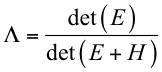 , in which the 'within'.......
Access restricted. Please log in or start a trial to view this content.
Discussion
Our methods provide a platform to test the validity of perception-action models by analyzing the entire unfolding of movement in relation to the experimental task. The paradigm can be modified to test other types of visual stimuli to broaden this area of research. For example, other 3D DIIs can be tested on the apparatus to see how interactions between top-down and bottom-up processes translate to various stimuli. The methods can also be tailored to test clinical populations that may have perturbations in perception and .......
Access restricted. Please log in or start a trial to view this content.
Disclosures
The authors declare no competing financial interests.
Acknowledgements
The authors would like to acknowledge the members of the Laboratory of Vision Research and the Sensory-Motor Integration Laboratory for helping run participants in this study, Polina Yanovich, Joshua Dobias, and Robert W. Isenhower for help in the initial design phase, and Tom Grace for his help in building the stimulus. This work was supported by the following sources: the NSF Graduate Research Fellowship Program: Award #DGE-0937373, the NSF CyberEnabled Discovery and Innovation Type I (Idea): Grant #094158, and the Rutgers-UMDNJ NIH Biotechnology Training Program: Grant # 5T32GM008339-22.
....Access restricted. Please log in or start a trial to view this content.
Materials
| Name | Company | Catalog Number | Comments |
|---|---|---|---|
| Laboratory bench | |||
| Slidable Track with Retractable Spring | built in-house | ||
| Retractable Spring | |||
| Adjustable Lamps | |||
| Switch Box | |||
| Circuit Board | |||
| Arduino | Smart Projects, Italy | ||
| MATLAB | The MathWorks Inc., Natick, MA, USA | ||
| Randot-dot Stereo Test | |||
| Reverse-Perspective Stimulus | built in-house | ||
| Proper-Perspective Stimulus | built in-house | ||
| Training Stimuli | built in-house | ||
| Polhemus Motion Capture System | Liberty, Colchester, VT, USA | ||
| The Motion Monitor Motion-Tracking Software | Innovative Sports Training, Inc., Chicago, IL | ||
| Sport Sweatbands | |||
| De-Focusing Lens |
References
- Schneider, G. E. Two visual systems. Science. 163, 895-902 (1969).
- Ingle, D., Goodale, M. A., Mansfield, R. J. W. Analysis of visual behavior. , MIT Press. (1982).
- Goodale, M. A., Milner, A. D. Sepa....
Access restricted. Please log in or start a trial to view this content.
Reprints and Permissions
