Primary human umbilical vein endothelial cells (HUVECs) were grown to confluence within a microfluidic network device. The endothelial cell junction and F-actin distributions were illustrated and the changes in intracellular calcium concentration and nitric oxide production in response to adenosine triphosphate (ATP) were quantified in real-time at individual cell levels.
A subscription to JoVE is required to view this content. Sign in or start your free trial.
Method Article
Development and Characterization of In Vitro Microvessel Network and Quantitative Measurements of Endothelial [Ca2+]i and Nitric Oxide Production
* These authors contributed equally
In This Article
Summary
Abstract
Endothelial cells (ECs) lining the blood vessel walls in vivo are constantly exposed to flow, but cultured ECs are often grown under static conditions and exhibit a pro-inflammatory phenotype. Although the development of microfluidic devices has been embraced by engineers over two decades, their biological applications remain limited. A more physiologically relevant in vitro microvessel model validated by biological applications is important to advance the field and bridge the gaps between in vivo and in vitro studies. Here, we present detailed procedures for the development of cultured microvessel network using a microfluidic device with a long-term perfusion capability. We also demonstrate its applications for quantitative measurements of agonist-induced changes in EC [Ca2+]i and nitric oxide (NO) production in real time using confocal and conventional fluorescence microscopy. The formed microvessel network with continuous perfusion showed well-developed junctions between ECs. VE-cadherin distribution was closer to that observed in intact microvessels than statically cultured EC monolayers. ATP-induced transient increases in EC [Ca2+]i and NO production were quantitatively measured at individual cell levels, which validated the functionality of the cultured microvessels. This microfluidic device allows ECs to grow under a well-controlled, physiologically relevant flow, which makes the cell culture environment closer to in vivo than that in the conventional, static 2D cultures. The microchannel network design is highly versatile, and the fabrication process is simple and repeatable. The device can be easily integrated to the confocal or conventional microscopic system enabling high resolution imaging. Most importantly, because the cultured microvessel network can be formed by primary human ECs, this approach will serve as a useful tool to investigate how pathologically altered blood components from patient samples affect human ECs and provide insight into clinical issues. It also can be developed as a platform for drug screening.
Introduction
Endothelial cells (ECs) lining the blood vessel walls in vivo are constantly exposed to flow, but cultured ECs are often grown under static conditions and exhibit a pro-inflammatory phenotype1,2. The microfluidics technology enables a precisely controlled fluid through a geometrically constrained microscale (sub-millimeter) channels3, which provides the opportunity for cultured cells, especially for vascular ECs, to grow under desired flow conditions. These features make the cell culture conditions closer to in vivo than the conventional, static 2D cell cultures. They are extremely important when the microfluidic devices are used to model different types of vasculatures and to study EC responses to mechanical and/or chemical stimulations.
Despite the advantages demonstrated by the microchannel network over a static cell culture, the adaptation and application of microfluidics in the biomedical field remain limited. Reported by a recent review, the majority of the publications of this field (85%) are still in engineering journals4. The performance of microfluidic devices has not been convincing enough for most biologists to switch from current techniques such as the Transwell assay and the macro-scale culture dish/glass slide to this miniaturized device. Microfluidics is a multidisciplinary field, which requires interdisciplinary collaborations to move this field forward. The objective of this technical article is to reduce the knowledge gaps between disciplines and make the fabrication procedures understandable by biologists, while providing biological application and functional validation of the microfluidic microvessels. The visualized experimental protocols include fabrication of both microfluidic devices and their biological utilities, which represents a close collaboration between engineers and biologists.
We recently reported some biological applications using the in vitro microvessel network with microfluidic device5. In order to appropriately design the dimensions of the microchannel network and apply the desired shear stress, a numerical model was built with computational fluid dynamic software to closely estimate the flow profile. Primary human umbilical vein endothelial cells (HUVECs) that were seeded into the microchannels reached confluence, i.e. covered the entire inner surfaces of the microchannel, in 3-4 days with continuous perfusion. The proper barrier formation was demonstrated by VE-cadherin staining and compared with those formed under static cell culture conditions and in intact microvessels. By applying the experimental protocols developed in individually perfused intact microvessels6-8, we quantitatively measured the changes in EC [Ca2+]i and nitric oxide (NO) production in response to adenosine triphosphate (ATP) with fluorescent indicators and confocal and conventional fluorescence microscopy. The agonist-induced increases in EC [Ca2+]i and NO production have been reported as necessary intracellular signals for inflammatory mediator-induced increases in microvessel permeability6-15. Although some previous studies showed images of DAF-2 DA loaded microfluidic devices16,17, appropriate resolution and data analysis had not yet achieved18. To our knowledge, this study demonstrates the first quantitative measurements of agonist-induced dynamic change in endothelial [Ca2+]i and NO production utilizing microfluidic based system.
Microfabrication techniques have the flexibility to fabricate microchannels down to a few microns and enable the development of complex patterns to mimic the geometries of in vivo microvasculature. Here we presented a typical microchannel network with three levels of branching. This network is fabricated by the combination of photolithography which is performed in a microfabrication cleanroom and soft lithography.
Access restricted. Please log in or start a trial to view this content.
Protocol
1. Microfluidic Device Fabrication
- Standard Photolithography Fabrication of a SU-8 50 Master Mold
- Clean the silicon wafer before spin-coating. Rinse a bare 2 inch silicon wafer with acetone for 15 min followed by isopropyl alcohol (IPA) for 15 min. Dehydrate the wafer by placing it on a hotplate at 150 °C for 1 hr. After dehydration, cool the wafer at room temperature.
- Spin-coat the silicon wafer with SU-8 photoresist. Add 2 ml SU-8 photoresist onto the wafer. Ramp the wafer to 500 rpm at 100 rpm/sec acceleration for 10 sec, followed by 1,000 rpm at 300 rpm/sec acceleration for 30 sec. (see Supplemental Video 1)
- Pre-bake the wafer on a hot plate at 65 °C for 10 min, then soft bake at 95 °C for 30 min.
- Use UV exposure to transform the designed pattern from a film mask to the spin-coated photoresist. Print the pattern on a thin transparent film as a film mask. Place the film mask on top of the spin-coated photoresist and expose to UV with a dose of 300 mJ/cm2. (see Supplemental Video 2)
Note: In this protocol, the microchannel network pattern (159 µm wide mother channels branching into four 100 µm wide daughter channels) is designed with CAD software. The pattern on the film shows as a clear field and the rest of the film is covered by black ink. Because SU-8 is a negative photoresist, the portion of the photoresist that is exposed to UV will be crosslinked and become insoluble to the solvent during the mold development (step 1.1.6). After the development, this insoluble portion will replicate the designed network pattern and serve as a master mold. - Post-bake the exposed wafer on a hot plate at 65 °C for 1 min, then 95 °C for 10 min.
- Develop the master mold. Use SU-8 developer as the solvent to remove the un-crosslinked photoresist. Immerse the wafer in SU-8 developer for 3 min and rinse with IPA for 1 min.
- Repeat this developing cycle 2-3 times until there is no white streak formation (residue of non-cured photoresist) after the IPA rinse. Gently dry the wafer with nitrogen gas and examine the small features of the pattern under a microscope. Repeat additional developing cycles if necessary.
- Hard bake the wafer on a hot plate at 150 °C for 15 min.
- Soft Lithography
- Manually mix the two parts (base and curing agent) of polydimethylsiloxane (PDMS) elastomer at a wt. ratio of 10:1.
- De-gas the PDMS mixture with a desiccator connected with a house vacuum for 15 min. Cast the PDMS solution on the photoresist master mold. The thickness of the PDMS needs to be over 3 mm to provide a stable holding of the inlet/outlet tubing. De-gas the PDMS again for 15 min, and remove the remaining air bubbles with nitrogen gas if necessary. Cure the casted PDMS in an oven at 65 °C for 3 hr.
- Clean the surface of the glass coverslip with a scotch tape and a plasma cleaner (30 sec plasma treatment). Spin-coat un-cured PDMS (0.5 ml) on the glass coverslip by ramping to 4,000 rpm at 500 rpm/sec acceleration rate for 30 sec. Cure the PDMS spin-coated coverslip in an oven at 65 °C for at least 30 min.
- Cut and release the cured PDMS from the master mold. Then create an inlet and an outlet with a 1 mm diameter hole puncher at the distal end of the mother channels.
- Bond the device to the PDMS spin-coated glass coverslip. Oxidize the surfaces of the PDMS and coverslip with a plasma cleaner for 1 min. After the oxygen plasma treatment, place a droplet of deionized water (DI water) at the bonding surface, and place the two parts together. Bake the device in an oven at 65 °C for 30 min to achieve a permanent bonding.
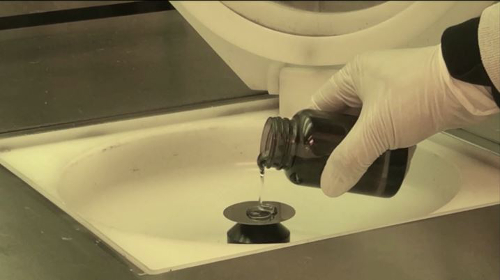
Supplemental Video 1 (Right click to download).
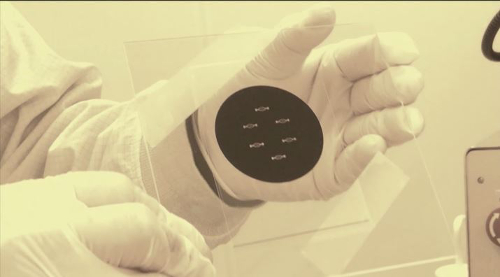
Supplemental Video 2 (Right click to download).
2. Endothelial Cell Seeding and Culture
- Device Sterilization and Fibronectin Coating
- Preserve the hydrophobic property of the PDMS surface around the inlet/outlet from oxidation. Cover the PDMS surface around the inlet and outlet with small stripes of scotch tape to prevent oxidation. This procedure can prevent DI water from spreading all over the top surface of the device during the filling step (2.1.3).
- Treat the PDMS device with oxygen plasma for 5 min to change the surface to be hydrophilic, thus facilitate fluid flow through the microchannel and prevent the bubble trapping in the filling procedure (2.1.3).
- Use either a syringe with a needle attached or a pipette to fill the device with DI water from the inlet. Continue the filling until there is a droplet of DI water (30-50 µl) accumulated at the outlet. Examine the device under a microscope to check if there are bubbles trapped inside the microchannel. Remove the excessive water droplet at the inlet and outlet with a paper tissue.
- Sterilize the device in a petri dish with UV for a minimum of 3 hr in a laminar biosafety hood. To prevent evaporation, cover the inlet/outlet with a thin piece of PDMS, put a wet paper tissue inside the dish, and wrap the dish with Parafilm.
- Coat the device with fibronectin. Rinse the device first with phosphate-buffered saline (PBS), then coat it with 100 µg/ml fibronectin overnight in a refrigerator (4 °C). Place a droplet of solution at the inlet, and then create a negative pressure at the outlet with a house vacuum, a syringe with a needle or a pipette.
- Fill the device with cell culture media. Rinse the device with PBS manually for 3 times before loading the cell culture media. Warm up the device in an incubator at 37 °C.
- ECs Seeding and Long-term Perfusion
Note: Comparing with conventional static 2D EC culture, the in vitro microvessel network model with continuous perfusion made the cell culture environment closer to the in vivo conditions. The in vitro microvessel network demonstrated in this protocol can be maintained up to two weeks. The well-controlled perfusion will continuously replenish nutrients, remove wastes, and prevent over-confluence of the EC monolayer. Therefore, it can be extended to a longer term studies, mimicking the cellular and hemodynamic environment under different physiological and pathological conditions.- Mix primary HUVECs in HUVEC culture media (MCDB 131) with 8% dextran (mol wt 70,000). The dextran is used to increase the viscosity of the loading media and achieve a better cell seeding result. The recommended cell density is about 2-4 x 10⁶ cells/ml.
- Seed the cells into the device. Place a 10-20 µl droplet of cells over the inlet. Introduce a gentle flow by either tilting the device, or capillary action using a glass Pasteur pipette at the outlet. The key for a successful cell loading is to control the flow velocity less than 1 mm/sec within the smallest channels.
- Check the cell seeding. After the initial seeding, incubate the device for 15-20 min (humidified atmosphere of 5% CO2 at 37 °C) before checking the seeding status under the microscope. If necessary, perform additional cell loading to achieve a desired cell density.
- Gently rinse the device with cell culture medium (37 °C) to remove the dextran. Culture the device in the absence of flow for the first 6 hr in an incubator (5% CO2 at 37 °C).
- Set up the tubing connection for long-term perfusion. Tape the device into a petri dish to prevent movement. Create small holes on the lid of the Petri dish for inlet and outlet tubing insertions. Connect the inlet tubing to a syringe with a needle for the cell culture media perfusion. Connect the outlet tubing to a waste collector.
Note: Place the device and the waste collector in a cell culture incubator, while placing a perfusion pump outside of the incubator and connect it with the device by the long inlet tubing. The perfusion rate is determined by the experimental design. In the present device, use a perfusion rate of 0.35 μl/min and a shear stress range between 1-2 dyne/cm2. Under this perfusion condition, the HUVECs reach confluence in about 3-4 days.
3. Immunofluorescent Staining
- Fix the ECs in the device by perfusion of 2% paraformaldehyde for 30 min at 4 °C, followed by 1x PBS rinsing at room temperature for 15 min, and 1% BSA blocking for 30 min. Use a perfusion rate that is the same as that used for cell culture.
- Permeabilize the fixed ECs for antibody staining with 0.1% Triton X-100. Perfuse the device with Triton for 5-7 min to label VE-cadherin, and 3 min to label F-actin.
- Load the antibodies into the device. Perfuse the device with 1x PBS for 15 min to wash out the previous solutions. Manually load the primary antibody against VE-cadherin (anti-goat) into the device at the concentration of 2 µg/ml (the total volume is 20-50 µl). Keep the device in a refrigerator at 4 °C overnight. Perfuse the secondary antibody (donkey anti-goat) by a syringe pump at the concentration of 7 µg/ml for 45-60 min.
- Label EC F-actin with phalloidin. Perfuse the device with 1x PBS for 15 min before manually loading phalloidin (10 µg/ml) for 7-10 min.
- Label EC nuclei (see Materials List).
- Rinse the device with 1x PBS, and maintain it at 4 °C until imaging.
4. Fluorescence Imaging of Endothelial [Ca2+]i
- Perfuse the device with albumin (10 mg/ml)-Ringer's solution for 15 min at 37 °C. Use the same perfusion rate as that used for cell culture. The concentrations of all components of albumin-Ringer's solution are described in the Materials List.
- Set up confocal system for EC [Ca2+]i imaging with fluo-4 AM. Use a confocal microscopic system for Ca2+ imaging. Use an argon laser (488 nm) for excitation and set the emission band as 510-530 nm. Collect the images with a 25X objective (water immersion, NA: 0.95) at 512 x 512 scan format. Use a z-step of 2 µm and a scanning interval for each stack of images of 20 sec.
- Perfuse the device with fluo-4 AM (5 µM) for 40 min at 37 °C, then wash out the lumen fluo-4 AM with albumin-Ringer's solution.
- Acquire images of fluo-4 loaded microvessels. Collect the baseline images for 10 min. Perfuse the device with ATP (10 µM) and record the changes of fluorescence intensity (FI) for 20 min.
5. Fluorescence Imaging of Nitric Oxide Production
- Perfuse the device with albumin-Ringer's solution for 15 min. Use a perfusion rate that is the same as that used for cell culture.
- Set up the fluorescence imaging system to measure ATP-induced nitric oxide production. Use a microscope equipped with a 12-bit digital CCD camera and a computer-controlled shutter for nitric oxide measurement. Use a 75 W xenon lamp as the light source.
Note: Select the excitation and emission wavelength for DAF-2 DA by an interference filter (480/40 nm) and a dichroic mirror (505 nm) with a band-pass barrier (535/50 nm). Use a 20X objective lens (NA: 0.75) to collect the images. To minimize photobleaching, position a neutral density filter (0.5 N) in front of the interference filter and limit the exposure time to 0.12 sec. - Load the cells with DAF-2 DA (5 µM). Perfuse the device with DAF-2 DA for about 35-40 min at 37 °C. Record the baseline of DAF-2 fluorescence intensity (FIDAF) after the initial loading.
Note: DAF-2 DA is continuously present in the perfusate throughout the experiment7. - Collect DAF-2 images. Record the baseline of FIDAF for 5 min. Perfuse the device with ATP (10 µM) and collect the images for 30 min with 1 min intervals. Collect all of the images from the same group of cells at the same focal plane.
6. Data Analysis
- Manually select the region of interests (ROIs) from the collected images at individual cell level. Each ROI covers the area of one individual cell which can be indicated by the fluorescence outline.
- Subtract background fluorescence and calculate the mean FI of each ROIs.
- Measure ATP-induced changes in EC [Ca2+]i and NO production. Quantify ATP-induced changes in EC [Ca2+]i by calculating the changes in Fluo-4 FI (FI/FI0*100, where FI0 is the average baseline FI during albumin-Ringer perfusion before adding ATP) minus the measured background. Quantify NO production rate by conducting the first differential conversion of the FIDAF over time.
Note: The time course of FIDAF represents a cumulative NO production with time. Therefore, NO production rate is calculated based on the profile of FIDAF under both basal and ATP stimulated conditions. Details of data analysis and experimental procedures have been described in a previous publication7.
Access restricted. Please log in or start a trial to view this content.
Results
This section shows some of the results obtained with the cultured microvessel network developed with this protocol. The microchannel pattern is a three level branching network (Figure 1A). In this design, a 159 µm wide mother channel branches into two 126 µm wide channels, and branches again into four 100 µm wide daughter channels. A 3D numerical simulation was performed to estimate the shear stress distributions under the flow rate of 0.35 µl/min (Figure 1B
Access restricted. Please log in or start a trial to view this content.
Discussion
In this article, we present detailed protocols for the development of cultured microvessel network, the characterization of EC junctions and cytoskeleton F-actin distribution, and the quantitative measurements of EC [Ca2+]i and NO production using a microfluidic device. The perfused microfluidic device provides an in vitro model that allows a close simulation of the in vivo microvascular geometries and shear flow conditions. Since the cultured microvessel network can be formed by p...
Access restricted. Please log in or start a trial to view this content.
Disclosures
The authors have no competing interests or conflicting interests to disclose.
Acknowledgements
This work was supported by National Heart, Lung, and Blood Institute grants HL56237, National Institute of Diabetes and Digestive and Kidney Diseases Institute DK97391-03, National Science Foundation (NSF-1227359 and EPS-1003907).
Access restricted. Please log in or start a trial to view this content.
Materials
| Name | Company | Catalog Number | Comments |
|---|---|---|---|
| ATP | Sigma-Aldrich | A2383 | |
| Acetone | Fisher Scientific | A929 | |
| Biopsy punch | Miltex | 33-31 AA | |
| Bovine Albumin | MP Biomedicals | 810014 | |
| Bovine Brain Extract (BBE) | Lonza | CC-4098 | |
| Cover-slip | Fisher Scientific | 12-542C | |
| DAF-2 DA | Calbiochem | 251505 | |
| Dextran | Sigma-Aldrich | 31390 | |
| Donkey anti-Goat IgG (H+L) Secondary Antibody | Life technologies | A-11055 | |
| DPBS, no calcium, no magnesium | Gibco | 14190-250 | |
| DRAQ5 (nuclei staining) | Cell Signaling Technology | 4084 | |
| Endothelial Cell Growth Supplement (ECGS) | Sigma-Aldrich | E2759-15MG | |
| Fetal Bovine Serum | Gibco | 16000-044 | |
| Fibronectin | Gibco | PHE0023 | |
| Fluo-4 AM | Life technologies | F-14201 | |
| Gelatin from porcine skin | Sigma-Aldrich | G1890-100G | |
| Gentamicin (50 mg/ml) | Gibco | 15750-078 | |
| Glass coverslip | Fisher Scientific | 12-548B | |
| Glass Pasteur pippette | VWR | 14672 | |
| Heparin sodium salt from porcine intestinal mucosa | Sigma-Aldrich | H3393-10KU | |
| HEPES Buffered Saline Solution | Lonza | CC-5024 | |
| Human umbilical vein endothelial cells (HUVECs) | Lonza | CC-2517 | |
| Isopropyl alcohol (IPA) | VWR | 89125 | |
| L-Glutamine (200 mM) | Gibco | 25030-081 | |
| Mammalian Ringer Solution Ingredient | |||
| NaCl (132 mM) | Fisher Scientific | S671-3 | |
| KCl (4.6 mM) | Fisher Scientific | P217-500 | |
| CaCl2 · 2H2O (2.0 mM) | Fisher Scientific | C79-500 | |
| MgSO4 ·7H2O (1.2 mM) | Fisher Scientific | M63-500 | |
| Glucose (5.5 mM) | Fisher Scientific | BP350-1 | |
| NaHCO3 (5.0 mM) | Fisher Scientific | S233-500 | |
| Hepes Salt (9.1 mM) | Research Organics | 6007H | |
| Hepes Acid (10.9 mM) | Research Organics | 6003H | |
| MCDB 131 Culture Medium | Life technologies | 10372-019 | |
| Paraformaldehyde | Electron Microscopy Sciences | 15710 | |
| Phalloidin (F-actin staining) | Sigma-Aldrich | P1951 | |
| Phosphate Buffered Saline | Life technologies | 14040-133 | |
| Polydimethylsiloxane (PDMS) | Dow Corning Corporation | Sylgard 184 | |
| Scalpel | Exel Int | 29552 | |
| Scotch tape | 3M | 34-8711-3070-3 | |
| Silicon wafer | VWR | 14672 | |
| SU-8 photoresist | MicroChem | SU-8 2050 Y111072 | |
| SU-8 developer | MicroChem | Y020100 | |
| tissue culture flasks | Sigma-Aldrich | Z707503-100EA | |
| Triton X-100 | Chemical Book | T6878 | |
| Trypsin Neutralizer solution | Gibco | R-002-100 | |
| Trypsin/EDTA Solution (TE) | Gibco | R-001-100 | |
| Tubing | Cole-Parmer | PTFE microbore tubing, 0.012" ID x 0.030" OD | |
| VE-cadherin | Santa Cruz Biotechnology | SC-6458 | |
| Name of Equipment | Company | Catalog Number | Comments/Description |
| Biosafety Laminar hood | NuAire | NU-425 Class II, Type A2 | |
| CCD camera | Hamamatsu | ORCA | |
| Confocal microscope | Leica | TCS SL | |
| Desiccator | Bel-Art | F42022 | |
| Hotplate | Wenesco | HP-1212 | |
| Incubator | Forma Scientific | 3110 | |
| Isotemp oven | Barnstead | 3608-5 | |
| Lithography bench | Karl Suss | MA6 Contact Lithography | |
| Optical microscope | Nikon | L200 ND & Diaphod 300 | |
| Shutter for the CCD camera | Sutter Instrument | Lambda 10-2 | |
| Plasma cleaner | PVA TePla/Harrick plasma | M4L/PDC-32G | |
| Spin coater | Brewer Science | Cee 200X | |
| Syringe pump system | Harvard Apparatus | 703005 | |
| Name of Software | Company | Catalog Number | Comments/Description |
| CAD software | Autodesk | AutoCAD 2015 | |
| CFD simulation software | COMSOL | COMSOL Multiphysics 4.0.0.982 | |
| Images acquire and analyse for NO production | Universal Imaging | Metafluor |
References
- Curry, F. R. E., Adamson, R. H. Vascular permeability modulation at the cell, microvessel, or whole organ level: towards closing gaps in our knowledge. Cardiovasc Res. 87, 218-229 (2010).
- Michel, C. C., Curry, F. E. Microvascular permeability. Physiol Rev. 79, 703-761 (1999).
- Rogers, J. A., Nuzzo, R. G. Recent progress in soft lithography. Mater Today. 8, 50-56 (2005).
- Sackmann, E. K., Fulton, A. L., Beebe, D. J. The present and future role of microfluidics in biomedical research. Nature. 507, 181-189 (2014).
- Li, X., Xu, S., He, P., Liu, Y. In vitro recapitulation of functional microvessels for the study of endothelial shear response, nitric oxide and [Ca2+]I. PLoS One. 10, 0126797(2015).
- He, P., Pagakis, S. N., Curry, F. E. Measurement of cytoplasmic calcium in single microvessels with increased permeability. Am J Physiol. 258, 1366-1374 (1990).
- Zhou, X., He, P. Improved measurements of intracellular nitric oxide in intact microvessels using 4,5-diaminofluorescein diacetate. Am J Physiol-Heart C. 301, 108-114 (2011).
- Yuan, D., He, P. Vascular remodeling alters adhesion protein and cytoskeleton reactions to inflammatory stimuli resulting in enhanced permeability increases in rat venules. Journal of Applied Physiology. 113, 1110-1120 (2012).
- He, P., Zhang, X., Curry, F. E. Ca2+ entry through conductive pathway modulates receptor-mediated increase in microvessel permeability. Am J Physiol. 271, 2377-2387 (1996).
- Zhou, X., He, P. Endothelial [Ca2+]i and caveolin-1 antagonistically regulate eNOS activity and microvessel permeability in rat venules. Cardiovasc Res. 87, 340-347 (2010).
- Zhu, L., He, P. Platelet-activating factor increases endothelial [Ca2+] i and NO production in individually perfused intact microvessels. Am J Physiol-Heart C. 288, 2869-2877 (2005).
- He, P., Curry, F. E. Depolarization modulates endothelial cell calcium influx and microvessel permeability. Am J Physiol. 261, 1246-1254 (1991).
- He, P., Curry, F. E. Endothelial cell hyperpolarization increases [Ca2+]i and venular microvessel permeability. J Appl Physiol. 76 (1985), 2288-2297 (1994).
- Xu, S., Zhou, X., Yuan, D., Xu, Y., He, P. Caveolin-1 scaffolding domain promotes leukocyte adhesion by reduced basal endothelial nitric oxide-mediated ICAM-1 phosphorylation in rat mesenteric venules. Am J Physiol Heart Circ Physiol. 305, 1484-1493 (2013).
- Zadeh, M. H., Glass, C. A., Magnussen, A., Hancox, J. C., Bates, D. O. VEGF-Mediated Elevated Intracellular Calcium and Angiogenesis in Human Microvascular Endothelial Cells In Vitro are Inhibited by Dominant Negative TRPC6. Microcirculation. 15, 605-614 (2008).
- Tsai, M., et al. In vitro modeling of the microvascular occlusion and thrombosis that occur in hematologic diseases using microfluidic technology. The Journal of clinical investigation. 122, 408-418 (2012).
- Kim, S., Lee, H., Chung, M., Jeon, N. L. Engineering of functional, perfusable 3D microvascular networks on a chip. Lab Chip. 13, 1489-1500 (2013).
- D'Amico Oblak, T., Root, P., Spence, D. M. Fluorescence monitoring of ATP-stimulated, endothelium-derived nitric oxide production in channels of a poly(dimethylsiloxane)-based microfluidic device. Analytical chemistry. 78, 3193-3197 (2006).
- Zhou, X. P., Yuan, D., Wang, M. X., He, P. N. H2O2-induced endothelial NO production contributes to vascular cell apoptosis and increased permeability in rat venules. Am J Physiol-Heart C. 304, 82-93 (2013).
- Lee, P. J., Hung, P. J., Rao, V. M., Lee, L. P. Nanoliter scale microbioreactor array for quantitative cell biology. Biotechnol Bioeng. 94, 5-14 (2006).
- Zakrzewicz, A., Secomb, T. W., Pries, A. R. Angioadaptation: Keeping the Vascular System in Shape. Physiology. 17, 197-201 (2002).
- Lipowsky, H. H., Kovalcheck, S., Zweifach, B. W. The distribution of blood rheological parameters in the microvasculature of cat mesentery. Circulation Research. 43, 738-749 (1978).
- Pisano, M., Triacca, V., Barbee, K. A., Swartz, M. A. An in vitro model of the tumor-lymphatic microenvironment with simultaneous transendothelial and luminal flows reveals mechanisms of flow enhanced invasion. Integr Biol (Camb). 7, 525-533 (2015).
- McCann, J. A., Peterson, S. D., Plesniak, M. W., Webster, T. J., Haberstroh, K. M. Non-uniform flow behavior in a parallel plate flow chamber : alters endothelial cell responses. Ann Biomed Eng. 33, 328-336 (2005).
- Curry, F. E. Modulation of venular microvessel permeability by calcium influx into endothelial cells. FASEB J. 6, 2456-2466 (1992).
- Kojima, H., et al. Detection and imaging of nitric oxide with novel fluorescent indicators: diaminofluoresceins. Anal Chem. 70, 2446-2453 (1998).
- Whitesides, G. M. The origins and the future of microfluidics. Nature. 442, 368-373 (2006).
- Lamberti, G., et al. Bioinspired microfluidic assay for in vitro modeling of leukocyte-endothelium interactions. Anal Chem. 86, 8344-8351 (2014).
- Myers, D. R., et al. Endothelialized microfluidics for studying microvascular interactions in hematologic diseases. J Vis Exp. , (2012).
- Smith, A. M., Prabhakarpandian, B., Pant, K. Generation of Shear Adhesion Map Using SynVivo Synthetic Microvascular Networks. Jove-J Vis Exp. , e51025(2014).
- Booth, R., Kim, H. Characterization of a microfluidic in vitro model of the blood-brain barrier (iBBB). Lab on a Chip. 12, (vol 12, pg 1784, 2012) 5282-5282 (2012).
- Shao, J. B., et al. Integrated microfluidic chip for endothelial cells culture and analysis exposed to a pulsatile and oscillatory shear stress. Lab on a Chip. 9, 3118-3125 (2009).
- Yeon, J. H., et al. Reliable permeability assay system in a microfluidic device mimicking cerebral vasculatures. Biomed Microdevices. 14, 1141-1148 (2012).
- Golden, A. P., Tien, J. Fabrication of microfluidic hydrogels using molded gelatin as a sacrificial element. Lab Chip. 7, 720-725 (2007).
- Zheng, Y., et al. In vitro microvessels for the study of angiogenesis and thrombosis. Proc Natl Acad Sci U S A. 109, 9342-9347 (2012).
- Baker, B. M., Trappmann, B., Stapleton, S. C., Toro, E., Chen, C. S. Microfluidics embedded within extracellular matrix to define vascular architectures and pattern diffusive gradients. Lab Chip. 13, 3246-3252 (2013).
Access restricted. Please log in or start a trial to view this content.
Reprints and Permissions
![Development and Characterization of In Vitro Microvessel Network and Quantitative Measurements of Endothelial [Ca2+]i and Nitric Oxide Production](/_next/image?url=https%3A%2F%2Fcloudfront.jove.com%2FCDNSource%2Fteasers%2F54014.jpg&w=3840&q=75)