Here we present a fluorophore based imaging technique to detect cell viability on a non-transparent titanium scaffold as well as to detect glimpses of the scaffold impurities. This protocol troubleshoots the drawback of imaging cell-cell or cell-metal interactions on non-transparent scaffolds.
A subscription to JoVE is required to view this content. Sign in or start your free trial.
Method Article
Imaging Cell Viability on Non-transparent Scaffolds — Using the Example of a Novel Knitted Titanium Implant
In This Article
Summary
Abstract
Intervertebral disc degeneration and disc herniation is one of the major causes of lower back pain. Depletion of extracellular matrix, culminating in nucleus pulposus (NP) extrusion leads to intervertebral disc destruction. Currently available surgical treatments reduce the pain but do not restore the mechanical functionality of the spine. In order to preserve mechanical features of the spine, total disc or nucleus replacement thus became a wide interest. However, this arthroplasty era is still in an immature state, since none of the existing products have been clinically evaluated.
This study intends to test the biocompatibility of a novel nucleus implant made of knitted titanium wires. Despite all mechanical advantages, the material has its limits for conventional optical analysis as the resulting implant is non-transparent. Here we present a strategy that describes in vitro visualization, tracking and viability testing of osteochondro-progenitor cells on the scaffold. This protocol can be used to visualize the efficiency of the cleaning protocol as well as to investigate the biocompatibility of these and other non-transparent scaffolds. Furthermore, this protocol can be used to show adherence pattern of cells as well as cell viability and proliferation rates on/in the scaffold. This in vitro biocompatibility testing assay provides a propitious tool to analyze cell-material interaction in non-transparent and opaque scaffolds.
Introduction
Chronic back pain is a multifactorial disease. The interest in a minimally invasive treatment option for the degenerative disc disease has grown since the 1950s. Until today, multi-segmental fusion of the spinal column is the most widely used treatment. Since, this method often leads to limitations in the mobility of the affected segment1,2, exploration of the arthroplasty era became a wide interest. Significant advancements in total disc replacement and nucleus replacement has become a good alternative to treat chronic back pain1. Despite the huge progress, none of the methods has been clinically evaluated. The less rigid nucleus implants represent a promising alternative to total disc replacement, provided that the annulus fibrosus is intact3,4. However, the currently present nucleus implants on the market are often associated with complications like changes in vertebral body, dislocation, vertical height loss of the disc and the lack of necessary associated mechanical rigidity5. In order to overcome the current drawbacks, a novel nucleus implant made of knitted titanium wires has been successfully developed6. Due to the unique knitted structure, this newly developed scaffold has shown distinguished biomechanical characteristics, e.g., damping feature, pore size, loading capacity and reliability7. Aiming to test the biocompatibility of this novel nucleus implant, depicted severe limitations in the (optical) analysis techniques attributed to the non-transparent nature of the implant.
In order to test the biocompatibility, cell-metal interaction plays a prominent role8-10. An interaction between the cells and the scaffold is necessary for the stabilization and hence for the better implant integration within the host system. However, an increasing ingrowth depth might alter the mechanical properties of the scaffold. Aiming to investigate whether the scaffold surface provides a base for cell attachment, proliferation and differentiation or whether the metal affects cell viability, it is important to troubleshoot the common well-known problem of imaging cells on/in non-transparent and opaque scaffolds. In order to overcome this limitation several fluorescent based techniques were explored. Companies provide a large range of fluorophores to visualize living cells, cellular compartments, or even specific cellular states11. Fluorophores for this experiment were chosen with the help of the online tool spectral viewer in order to best fit our fluorescent microscope.
The developed strategy for the analysis of the adherent cells behavior on/in the non-transparent knitted titanium scaffold involves the following: 1) fluorescent (green fluorescent protein/GFP) labeling of the osteochondro-progenitor cells to allow tracking of the cells on the scaffold, 2) measuring the viability (mitochondrial activity) of the cells, and 3) visualizing cell-cell and cell-material interactions within the scaffold. The procedure has the advantage that it can be easily transferred to other adherent cells and other non-transparent or opaque scaffold. Furthermore, viability and ingrowth pattern can be monitored over several days, thus it can be used with limited amounts of scaffold material or cells.
The present study demonstrates the successful use of our current protocol to measure the cell viability and visualize in-growth pattern of osteochondro-progenitor cells on/in the non-transparent knitted titanium scaffold. Furthermore, the developed protocols might be used in order to determine the scaffold impurities and to check cleaning protocols.
Access restricted. Please log in or start a trial to view this content.
Protocol
NOTE: Immortalized human mesenchymal stromal precursor cells (SCP-1 cells) were used for the experiments. SCP-1 cells were provided by Prof. Matthias Schieker12.
1. Expansion of SCP-1 Cells
- Prior to working with the SCP-1 cells, properly clean the working area (designated biosafety cabinet I) with 70% ethanol (v/v) wearing gloves.
- In the cleaned biosafety cabinet prepare an appropriate volume of cell culture medium by mixing the required components as indicated in Table 1. In order to maintain sterility of the basal medium, add supplements by passing through sterile filters with a pore size of 0.22 µm.
- To prevent contamination, prepare medium at least 24 hr before use. In order to test its sterility, incubate 1 ml medium in a cell culture plate without cells in the standard cell culture incubator: 37 °C, 5% CO2, 20% O2 and 90% humidity. After 24 hr, check medium microscopically using a magnification of at least 200X.
- Maintain SCP-1 cells in a standard cell culture incubator with supportive condition: 37 °C, 5% CO2, 20% O2 and 90% humidity.
- For maintenance and expansion, grow the SCP-1 cells until they reach 80-90% confluency. During this time period culture, change medium every 2-3 days. Upon reaching 80-90% confluency, split SCP-1 cells (in general a 1:2 ratio) to the next passage for expansion or plate for the experiments (as indicated).
- For splitting the SCP-1 cells, warm the culture medium at 37 °C and thaw trypsin/EDTA using a water bath at 37 °C.
- Completely aspirate the culture medium from the 80-90% confluent cells and discard it into a waste container.
- Wash the cells at least twice with DPBS (Dulbecco's Phosphate buffered saline without magnesium and calcium, pH 7.2).
- Pipette an appropriate volume of DPBS onto the cells (5 ml DPBS for a T75 culture flask and 12 ml for a T175 culture flask).
- Aspirate DPBS carefully and discard it into a waste container.
- Pipette an appropriate volume of 0.25% trypsin/EDTA onto the cells (1 ml DPBS for a T75 culture flask and 2 ml for a T175 culture flask) and incubate for 5-10 min at 37 °C in the standard cell culture incubator with 5% CO2, 20% O2 and 90% humidity.
- Dislodge the cells by tapping the vessel and ensure all cells are detached from the culture plastic (trypsinization) by observing the floating cells under the microscope.
- Inactivate the trypsin reaction by adding 10 ml of culture medium. Mix the trypsin and cells with the medium carefully by repeated pipetting.
- Transfer the cell suspension into a reaction tube and centrifuge at 600 x g for 10 min at room temperature.
- Aspirate the supernatant and resuspend the cell pellet in 10 ml culture medium.
- Count the cells by Trypan Blue exclusion method as described in protocol 2.
- Seed the cells depending on the experimental design.
2. Counting of SCP-1 Cells
- Perform a viable cell count (Trypan Blue exclusion method) of the resuspended cells using a hemocytometer.
- Prior to the cell count, clean the hemocytometer using tap water. Dry the hemocytometer components using a lint free tissue. Assemble it by moistening the cover glass and pressing it inversely onto the two glass runners on each side of the counting area. Ensure that Newtonian rings are seen on the glass runners (Figure 1).
- Take 10 µl of the resuspended cells and mix with 10 µl of 0.1% Trypan Blue solution to obtain a dilution factor of 2.
- Load 10 µl of the total sample on the pre-cleaned and assembled hemocytometer chamber.
- Count the number of live (white/transparent cells) and dead (blue nuclei) cells on the 4x4 squares (see Figure 1B).
- Calculate the total number of cells following the given formula:

3. GFP Transfection of SCP-1 Cells
NOTE: In order to observe SCP-1 cell growth on and into the knitted titanium scaffold over a certain culture period we marked the cells with green fluorescent protein (GFP). Overexpression of GFP is achieved by infection with adenovirus particles coding for GFP. Replication incompetent (-E1/-E3) adenovirus particles coding for green fluorescent protein (GFP) were used to infect SCP-1 cells. The virus particles were obtained from Prof. Steven Dooley13 by collecting culture supernatant of recombinant adenovirus (Ad5-GFP) transfected HEK293T cells (Biosafety lab II). Three repeated freeze (-80 °C) and thaw (37 °C in the water bath) cycles ensured that no HEK293T cells remain viable to produce new virus particles. Using this adenovirus seed stock can efficiently infect the SCP-1 cells without producing new virus particles. Thus, the infected cells can be handled in a Biosafety Lab I.
- Resuspend the target cells (SCP-1 cells) with a seeding density of 50,000 cells/ml in culture medium. Pipette 2 ml per well into a 6-well tissue culture plate.
- Incubate at 37 °C in the standard cell culture incubator; 5% CO2, 20% O2 and 90% humidity, till SCP-1 cells reach a confluency of 70-80%.
NOTE: Confluency depends on the seeding density of the cells. For above stated conditions, SCP-1 cells reach a confluency of 70-80% in 1.5-2 days. - At a confluency of 70-80%, without aspirating the culture medium add 100 µl of the adenovirus seed stock per 1 ml of culture medium.
- Determine the concentration range individually depending on the amount of virus particles in each virus seed stock preparation. In case the infection efficiency is too low, purify and concentrate virus particles using various commercially available kits.
- Incubate for an hour in the standard cell culture incubator at 37 °C (5% CO2, 20% O2 and 90% humidity).
- Remove the culture medium containing the virus seed stock and collect it for disposal. Add fresh culture medium 2 ml per well of a 6-well-culture-plate to replenish.
- Make sure that prior to disposal, virus particle containing medium is autoclaved.
- Evaluate the intracellular GFP expression (infection efficiency) 24 hr after the infection using a fluorescence microscope with a GFP LED cube/filter set.
- Observe the cell morphology (Figure 2). Cells detaching from the culture plastic can give false positive results.
4. Cleaning of Knitted Titanium Scaffolds
- Place up to 5 scaffolds into a 50 ml reaction tube.
- Wash the scaffold (6-7 mm thickness) three times with 30 ml distilled-deionized water for 20 min at room temperature, using rotor conditions (8 x g).
- Replace the distilled-deionized water with 30 ml 1% (w/v) Triton-X-100 solution (dissolved in distilled-deionized water) and then wash the scaffolds once for 20 min at room temperature, using rotor conditions (8 x g).
- Discard the Triton-X-100 solution followed by washing with 30 ml distilled-deionized water twice (5 min each at room temperature) maintaining rotor conditions (8 x g).
- Replace the distilled-deionized water. Rinse the scaffolds sequentially with reagent grade 99% acetone, 99% isopropanol and 99% ethanol (30 ml each) for 2 x 5 min each in an ultrasonic bath (~ 50 Hz, 50 W, 220-240 V).
- Wash again three times with 30 ml distilled-deionized water for 5 min, keeping the ultrasonic bath treatment constant.
- Place the scaffolds on a lint-free tissue in order to air dry overnight at room temperature.
- Autoclave the scaffold for 15 min at 121 °C with 15 psi.
- Confirm the cleaning protocol by indirect fluorescence as described in protocol 5.
5. Imaging Scaffold Structures by Indirect Fluorescence
NOTE: The present protocol describes the imaging of scaffold structures by indirect fluorescence using the fluorophore sulforhodamine B which gives a bright red fluorescence at an ex/em wavelength of 565/586 nm. However, the fluorophore can be changed to better fit for given microscope settings or possible auto-fluorescence of the scaffold.
- Prepare the sulforhodamine B staining solution (0.04%) in 1% acetic acid and store at room temperature with protection from light.
- Take a 24-well tissue culture plate and immerse the cleaned scaffold in 500 µl of the sulforhodamine B staining solution by placing it inside the well using forceps.
- Capture the negative images of the scaffold using fluorescence microscope.
- Take pictures with a RFP LED cube/filter set with an excitation wavelength of 531/40 nm and an emission wavelength of 593/40 nm. Alternatively choose the adequate excitation and emission wavelength with the help of the fluorescence spectral viewer20. Sulforhodamine B has its peak excitation at 578 nm and its peak emission at 593 nm.
- In order to visualize the scaffold structure, take pictures at lower magnifications, e.g., 4X or 10X (Figure 3). Using these pictures, determine characteristics, e.g., the pore size and shape with the help of the ImageJ.
- In order to detect scaffold impurities, take pictures at higher magnifications, e.g., 20X or 40X, considering that this will limit the analysis depth. Ensure that dirt particles/substances are not seen (see representative results; Figure 3).
6. In Vitro Biocompatibility Assay
- Pre-warm the culture medium at 37 °C in a water bath.
- Take a 24-well tissue culture plate and using forceps, place the cleaned and sterilized scaffolds in each test well aseptically. Work under the pre-cleaned biosafety cabinet I!
- Soak/incubate the scaffolds with a culture medium for about 15 min (500 µl per well of a 24-well tissue culture plate), in order to remove air from inside of the scaffold.
- Meanwhile, resuspend 500,000 Ad-GFP-infected SCP1 cells in 1 ml of culture medium.
- After 15 min of scaffold soaking, aspirate the medium completely off the scaffold.
- For seeding the cells on the scaffold, dispense 100 µl of cell suspension carefully on the scaffold (which is placed in 24-well plate) surface. Maintain a minimum volume of cell suspension while seeding the cells, so to ensure no medium flows out of the scaffold.
- Incubate the cells for 30 min at 37 °C in the standard cell culture incubator (5% CO2, 20% O2 and 90% humidity).
- Add 500 µl more culture medium and incubate for 24 hr in the standard cell culture incubator (37 °C, 5% CO2, 20% O2 and 90% humidity).
- Evaluate the cell adherence pattern and cell spreading on the scaffold surface using a fluorescence microscope.
- Take pictures with a GFP LED cube/filter set with an excitation wavelength of 470/22 nm and an emission wavelength of 510/42 nm. Alternatively choose the adequate excitation and emission wavelength with the help of the fluorescence spectral viewer. GFP has its peak excitation at 488 nm and its peak emission at 507 nm.
- In order to visualize cell adherence pattern capture pictures at lower magnifications, e.g., 4X or 10X (Figure 4). In order to observe cell spreading a higher magnification (at least 100X) is needed — limiting the focus depth.
- For further evaluating cell spreading on the scaffold surface, fix the cells with 4% formalin and proceed with conventional fluorescence staining of cellular structures, e.g., actin filaments (Phalloidin). However, adapt incubation times and fluorescent labelling of the antibodies in order to fit the individual scaffold characteristics, e.g., diffusion times or auto-fluorescence14.
- The next day, change the culture medium to remove non-adherent cells.
- Calculate the percentage of adherent cells on the scaffold by resazurin conversion measurement as described in protocol 7.
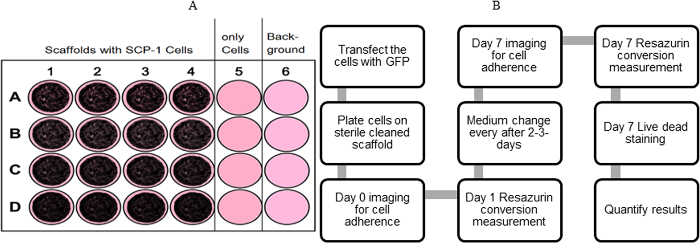
Figure 5: Timeline of in vitro assay. (A) Experimental setup for plating cells. (B) Illustration of procedure, emphasizing importance of beginning protocol and cell functionality validation till day 7. Please click here to view a larger version of this figure.
7. Resazurin Conversion measurement
NOTE: Resazurin conversion assay is used for measuring the mitochondrial activity and thus indirectly cell proliferation. Resazurin reduction to resorufin generates a fluorescent signal, which is based on the mitochondrial activity associated with viable cell numbers (Figure 7A).
- Completely aspirate the culture medium from the SCP-1 cells and discard it into a waste container.
- Wash the SCP-1 cells once with DPBS to remove detached cells. Add 500 µl DPBS per well of the 24-well tissue culture plate containing SCP-1 cells on the scaffold.
- Cover the cells with a required amount of sterile resazurin working solution (0.25% resazurin in culture medium) and incubate at 37 °C in the standard cell culture incubator (5% CO2, 20% O2 and 90% humidity) for 30 min.
- Make a note that; incubation time depends on the cell type and cell density. It can vary between 10 min and 6 hr. Optimized incubation time for SCP-1 cells is 30 min.
- As a background control, include at least one well with the resazurin working solution but without cells, that is incubated at 37 °C in the standard cell culture incubator (5% CO2, 20% O2 and 90% humidity) for the same amount of time.
- Transfer 100 µl conditioned supernatant from each well of the 24-well tissue culture plate into a 96-microwell plate.
- Wash the remaining cells three times with 1 ml DPBS for 5 min at room temperature in order to remove residual resazurin working solution. After the third wash add culture medium to the implants with SCP-1 cells (500 µl per well of the 24-well tissue culture plate) and continue incubation at 37 °C in the standard cell culture incubator (5% CO2, 20% O2 and 90% humidity) for further time course measurements.
- Make sure to set up replicates at this step (2-4) in order to minimize pipetting errors.
- In the meantime, place the 96-microwell plate into the microplate reader and measure the fluorescence of the formed resorufin.
- In order to reduce background signal, measure fluorescence at an excitation wavelength of 545 nm and an emission wavelength of 585 nm.
- Alternatively choose the adequate excitation and emission wavelength with the help of the fluorescence spectral viewer. Resorufin has its peak excitation at 572 nm and its peak emission at 585 nm. The given signal intensity is an average of 25 individual readings (25 flashes per well).
- Measure the fluorescence of formed resorufin in conditioned medium, using a bottom optic.
- Make a note that, the gain depends on the average amount of resazurin converted and can vary between 10 and 4,000. Adjust the gain to the individual microplate reader used by pipetting a resorufin standard curve, such that the fluorescent signal is below 80% of the maximum signal intensity detectable (in this case 20,000). The optimized gain for SCP-1 cells is 800.
- Subtract the background signal (resazurin working solution without cells) from signal of the test samples.
- Depending on the experimental setup/purpose, proceed with further steps:
- Calculate the percentage of viability of the cells on the scaffold using a standard curve. Make an individual standard curve separately for each cell line used.
- Analyze cell growth/proliferation by estimating the relative increase in resazurin conversion throughout the cultivation time. For this calculation, set the resazurin conversion on day 1 as reference. Freshly prepare the resazurin working solution for this kind of analysis. Furthermore, incubation times have to be equal between the different measurements.
- Repeat the entire protocol of resazurin conversion measurement at least three times to get consistent results.
8. Live-dead Staining
- Plate the SCP1 cells on the scaffold with a seeding density of 50,000 cells/scaffold and allow it to grow on the scaffold keeping the standard cell culture conditions (refer to protocol 1 and 2).
- After 24-48 hr completely aspirate the culture medium from the SCP-1 cells and discard it into a waste container.
- Wash the SCP-1 cells once with DPBS to remove detached cells. Add 500 µl DPBS per well of the 24-well tissue culture plate and incubate for 5 min at room temperature.
- Stain SCP-1 using fluorophores (all three stains at the same time):
- From now on keep the scaffolds in the dark in order to protect the fluorophores bleaching from daylight!
- Set an incubation time to 30 min in order to allow equal distribution throughout the scaffold. If transferring to other scaffolds, make sure to optimize the incubation times to fit the individual scaffold characteristics (pore size, scaffold depth, etc.).
- In order to detect viable cells on the scaffold, stain the cells with calcein AM at a final concentration of 2 µM (in culture medium).
- In order to detect all cells on the scaffold, stain the cells with Hoechst 33342 at a final concentration of 0.002 µg/µl (in culture medium).
- In order to detect dead cells, incubate the scaffold with ethidium homodimer at a final concentration of 4 µM (in culture medium).
- After the incubation time, wash the cells 3 times with DPBS (1 ml per well) for each 5 min at room temperature.
- Immediately take pictures by using a fluorescence microscope.
- Take pictures of the calcein (living cells) with a GFP LED cube/filter set (excitation and emission wavelength of 470/22 nm and 510/42 nm, respectively). Alternatively choose an adequate excitation and emission wavelength with the help of the fluorescence spectral viewer. Calcein has its peak excitation at 488 nm and its peak emission at 507 nm. Note: Ensure not to use GFP transfected cells for fluorescence staining with Calcein or other green fluorescent stains.
- Take pictures of the Hoechst 33342 with a DAPI LED cube/filter set with an excitation wavelength of 357/44 nm and an emission wavelength of 447/60 nm. Alternatively choose the adequate excitation and emission wavelength with the help of the fluorescence spectral viewer. Hoechst 33342 has its peak excitation at 347 nm and its peak emission at 483 nm.
- Take pictures of the ethidium homodimer with a RFP LED cube/filter set (excitation and emission wavelength of 531/40 nm and 593/40 nm, respectively). Alternatively choose the adequate excitation and emission wavelength with the help of the fluorescence spectral viewer. Ethidium homodimer has its peak excitation at 530 nm and its peak emission at 618 nm.
Access restricted. Please log in or start a trial to view this content.
Results
Preliminary results showed that the described novel nucleus implant not only has good damping features but also is biocompatible with SCP-1 cells. During the production process of the implant, it comes in contact with strong corrosive and toxic substances (lubricant, mordant, electro-polishing solution). With the help of indirect fluorescent staining techniques we were able to visualize remaining impurities and consequently optimize a cleaning protocol showing significant reduction in sub...
Access restricted. Please log in or start a trial to view this content.
Discussion
The scaffold surface plays an important role in its interaction with surrounding tissue in vivo thereby determining implants functional durability. Thus, the bio-compatibility of the scaffold is studied by in vitro assays using cells (SCP1 cell line), when plated on the scaffolds.
Microscopy techniques that function well with thin and optically transparent scaffolds are poorly suited for non-transparent scaffolds to study the biocompatibility. This is mainly because the non-t...
Access restricted. Please log in or start a trial to view this content.
Disclosures
The authors declare that they have no competing interests. No portion of the work has been or is currently under consideration for publication or has been published elsewhere.
Acknowledgements
Project is partially funded by Zentrales Innovationsprogramm Mittelstand (ZIM) des Bundesministeriums für Wirtschaft und Energie -KF3010902AJ4. The publication fee has been covered by the BG trauma hospital Tübingen, Germany.
Access restricted. Please log in or start a trial to view this content.
Materials
| Name | Company | Catalog Number | Comments |
|---|---|---|---|
| 6/24/48 well plates, T25/ T75 culture flask | Greiner Bio-One GmbH | * | |
| * 24 well plates | Greiner Bio-One GmbH | CELLSTAR 662 160 | |
| * 48 well plates | Corning Incorporated USA | 3548 | |
| * 6 well plates | Falcon | 353046 | |
| * T25 | Greiner Bio-One GmbH | 690 175 | |
| * T75 | Greiner Bio-One GmbH | 658 175 | |
| Acetic acid, purum ≥ 99.0% | Carl Roth | 3738.4 | |
| Acetone | Carl Roth | 5025.1 | |
| Axioplan-2 | Carl Zeiss, Germany | ||
| Biological safety cabinets | Thermo Scientific | safe 2020 | |
| Calcein acetoxymethyl ester (calcein AM) | Sigma | 17783 | |
| Cell Culture Incubtator | Binder, Tuttlingen, Germany | 9040-0078 | |
| Filter unit (0.22 µm) | Millipore, IRL | SLGP033RS | |
| Centrifuges 5810 R And 5417 R | Thermo Fisher Scientific, NY | Megafuge 40R | |
| Dimethylsulfoxid (DMSO) | Carl Roth | 4720.2 | |
| Dulbecco’s PBS without Ca & Mg | Sigma | H15-002 | |
| Ethanol 99% | SAV liquid prod. GmBH | 475956 | |
| Ethidium homodimer | Sigma | 46043 | |
| EVOS Fluorescence imaging system | Life technologies | AMF4300 | |
| Fetal Bovine Serum (FCS) | Gibco | 10270-106 | |
| Hemocytometer | Hausser Scientific, PA, USA | ||
| Hoechst 33342 | Sigma | 14533-100MG | |
| Knitted titanium nucleus implant | Buck co & KG,Germany | ||
| MEM Alpha Modification with Glutamine w/o nucleoside | Sigma | E15-832 | |
| Omega microplate Reader | BMG Labtech,Germany | FLUOstar Omega | |
| Penicillin/Streptomycin | Sigma | P11-010 | |
| Resazurin sodium salt | Sigma | 199303-1G | |
| Sulforhodamine B sodium salt | Sigma | S1402-1G | |
| Test tube rotator | Labinco B.V.,The Netherlands | Model LD-76 | |
| TRIS (hydroxymethyl) aminomethan | Carl Roth | AE15.1 | |
| Triton | Carl Roth | 3051.2 | |
| Trypan Blue 0.5% | Carl Roth | CN76.1 | |
| Trypsin/EDTA | Sigma | L11-004 |
References
- Bridwell, K. H., Anderson, P. A., Boden, S. D., Vaccaro, A. R., Wang, J. C. What's new in spine surgery. J Bone Joint Surg Am. 95, 1144-1150 (2013).
- Adams, M. A., Dolan, P. Intervertebral disc degeneration: evidence for two distinct phenotypes. J Anat. 221, 497-506 (2012).
- Schizas, C., Kulik, G., Kosmopoulos, V. Disc degeneration: current surgical options. Eur Cell Mater. 20, 306-315 (2010).
- Lewis, G. Nucleus pulposus replacement and regeneration/repair technologies: present status and future prospects. J Biomed Mater Res B Appl Biomater. 100, 1702-1720 (2012).
- Cunningham, B. W. Basic scientific considerations in total disc arthroplasty. Spine J. 4, 219-230 (2004).
- Implant for surgical use in humans or vertebrates. US8728164 B2. Google Patents. , (2014).
- Kettler, A., Kaps, H. P., Haegele, B., Wilke, H. J. Biomechanical behavior of a new nucleus prosthesis made of knitted titanium filaments. SAS J. 1, 125-130 (2007).
- Nerurkar, N. L., Elliott, D. M., Mauck, R. L. Mechanical design criteria for intervertebral disc tissue engineering. J Biomech. 43, 1017-1030 (2010).
- Elias, C. N., Lima, J. H. C., Valiev, R., Meyers, M. A. Biomedical applications of titanium and its alloys. JOM. 60, 46-49 (2008).
- Hallab, N., Link, H. D., McAfee, P. C. Biomaterial optimization in total disc arthroplasty. Spine (Phila Pa 1976). 28, 139-152 (2003).
- Gustafsdottir, S. M. Multiplex cytological profiling assay to measure diverse cellular states. PLoS One. 8, e80999(2013).
- Bocker, W., et al. Introducing a single-cell-derived human mesenchymal stem cell line expressing hTERT after lentiviral gene transfer. J Cell Mol Med. 12, 1347-1359 (2008).
- Ehnert, S., et al. Transforming growth factor beta1 inhibits bone morphogenic protein (BMP)-2 and BMP-7 signaling via upregulation of Ski-related novel protein N (SnoN): possible mechanism for the failure of BMP therapy. BMC Med. 10, 101(2012).
- Morgan, S. P., Rose, F. R., Matcher, S. J. Optical Techniques in Regenerative Medicine. , CRC Press. (2013).
- Vielreicher, M., et al. Taking a deep look: modern microscopy technologies to optimize the design and functionality of biocompatible scaffolds for tissue engineering in regenerative medicine. J R Soc Interface. 10, 20130263(2013).
- Curtis, A., Wilkinson, C. Topographical control of cells. Biomaterials. 18, 1573-1583 (1997).
- Niu, G., et al. Fluorescent imaging of endothelial cells in bioengineered blood vessels: the impact of crosslinking of the scaffold. J Tissue Eng Regen Med. , (2014).
- Chan, B. P., Leong, K. W. Scaffolding in tissue engineering: general approaches and tissue-specific considerations. Eur Spine J. 17, Suppl 4 467-479 (2008).
- Navarro, M., Michiardi, A., Castano, O., Planell, J. A. Biomaterials in orthopaedics. J R Soc Interface. 5, 1137-1158 (2008).
- Priyadarshani, P., Li, Y., Yao, L. Advances in biological therapy for nucleus pulposus regeneration. Osteoarthritis Cartilage. , (2015).
- Thermofisher Fluorescence Spectraviewer. , Source: https://www.thermofisher.com/de/de/home/life-science/cell-analysis/labeling-chemistry/fluorescence-spectraviewer.html (2016).
Access restricted. Please log in or start a trial to view this content.
Reprints and Permissions
