The role of assortment (spatial segregation) in evolutionary scenarios can be examined using simple microbial systems in the laboratory that allow controlled adjustment of spatial distribution. By modifying the founder cell density, various assortment levels can be visualized using fluorescently labelled bacterial strains in the colony biofilms of Bacillus subtilis.
Method Article
Monitoring Spatial Segregation in Surface Colonizing Microbial Populations
In This Article
Summary
Abstract
Microbes provide an intriguing system to study social interaction among individuals within a population. The short generation times and relatively simple genetic modification procedures of microbes facilitate the development of the sociomicrobiology field. To assess the fitness of certain microbial species, selected strains or their genetically modified derivatives within one population, can be fluorescently labelled and tracked using microscopy adapted with appropriate fluorescence filters. Expanding colonies of diverse microbial species on agar media can be used to monitor the spatial distribution of cells producing distinctive fluorescent proteins.
Here, we present a detailed protocol for the use of green- and red-fluorescent protein producing bacterial strains to follow spatial arrangement during surface colonization, including flagellum-driven community movement (swarming), exopolysaccharide- and hydrophobin-dependent growth mediated spreading (sliding), and complex colony biofilm formation. Non-domesticated isolates of the Gram-positive bacterium, Bacillus subtilis can be utilized to scrutinize certain surface spreading traits and their effect on two-dimensional distribution on the agar-solidified medium. By altering the number of cells used to initiate colony biofilms, the assortment levels can be varied on a continuous scale. Time-lapse fluorescent microscopy can be used to witness the interaction between different phenotypes and genotypes at a certain assortment level and to determine the relative success of either.
Introduction
In the last decades, microbes have been recognized as social communities associated with various ecosystems on earth1,2. In contrast to planktonic cultures used in general laboratory practice, microbes in the environment show a diverse range of spatial community structures depending on the ecological setting. Simple microbial systems can be utilized to understand the consequence of spatial structures on the evolution of social interactions3,4. Publications in the last 2-3 years using both eukaryotic and prokaryotic model systems highlighted the impact of spatial structures on the stability of cooperation within microbial populations5-8. Additionally, obligate interactions among microbes, e.g. metabolic cross-feeding, might also alter the spatial distribution of interacting partners9-11. The influence of spatial structure in these studies is mostly examined using surface attached sessile cells inhabiting the so-called biofilms or in colonies growing on the surface of an agar medium. Genetic drift resulting in high spatial assortment can be observed in microbial colonies where nutrient depletion at the edge of a cell division mediated expansion results in series of genetic bottlenecks that causes high local fixation probability for certain clonal linages12. Genetic drift can be therefore employed to examine the role of spatial segregation in microbial colonies.
In the environment, biofilms are multispecies communities surrounded by self-produced polymeric matrix13. Biofilm structure, function and stability depend on a complex network of social interactions where bacteria exchange signals, matrix components and resources, or compete for space and nutrients using toxins and antibiotics. Bacillus subtilis is a soil dwelling and root-colonizing bacterium that develops highly organized biofilm communities14. In analogy to social insects, B. subtilis cells employ a division of labor strategy, developing subpopulations of extracellular matrix producers and cannibals, motile cells, dormant spores and other cell types15,16. The differentiation process is dynamic and can be altered by environmental conditions17,18.
Strategies of surface colonization by bacteria can be easily manipulated under laboratory conditions by modifying the agar concentration in the growth media. At low agar levels (0.2-0.3%), bacteria harboring active flagella are able to swim, while semi-solid agar (0.7-1% agar) facilitates flagellum driven community spreading, called swarming19-21. In the absence of flagellum, certain bacterial strains are able to move over semi-solid medium via sliding, i.e. growth dependent population expansion facilitated by exopolysaccharide matrix and other secreted hydrophobin compounds22-24. Finally, bacteria which are capable of biofilm development form architecturally complex colonies on hard agar medium (1.2-2%)14,17,25. While these traits are examined in the laboratory by precisely adjusting the conditions, in natural habitats these surface-spreading strategies might transit gradually from one to another depending on the environmental conditions26. While single cell based motility is critical during initiation of biofilm development at the air-liquid interface in both Gram-positive and -negative bacteria27, complex colony biofilms of B. subtilis are not affected by deletion of flagellar motility28. However, spatial organization during the development of B. subtilis colony biofilms depends on the density of the bacterial inoculum used to initiate the biofilm8.
Here, we use B. subtilis to show that spatial segregation during surface colonization depends on the mechanism of population level motility (i.e. swarming or sliding), and colony biofilm development depends on the founder cell density. We present a fluorescent microscopy tool that can be applied to continuously monitor microbial biofilm growth, surface colonization and assortment at the macro scale. Further, a quantification method is presented to determine the relative strain abundance in the population.
Protocol
1. Preparation of Culture Media, Semi-solid Agar and Biofilm plates, Pre-cultures
- Medium Preparation for Swarming and Sliding
- Dissolve 2 g of Lenox Broth (LB) and 0.7 g of Agar-agar in 100 ml ion-exchanged water and autoclave for 20 min at 120 °C. Use small volumes (50-200 ml) to improve reproducibility between experiments.
- Immediately after sterilization, close the cap of the medium bottle to reduce evaporation and place in a 55 °C incubator for at least 2 hr.
- After the medium temperature has tempered to 55 °C, pour 20 ml agar LB medium into a 90 mm diameter polystyrene Petri dish under a laboratory sterile hood. For time-lapse experiments, pour 5 ml agar LB medium per 35 mm diameter polystyrene Petri dish.
- Close the petri dish immediately after pouring, stack no more than 4 plates on top of each other and let the agar medium solidify for at least 1 hr.
- 2xSG Medium Preparation for Colony Biofilms
- Dissolve 1.6 g of Nutrient Broth, 0.2 g of KCl, 0.05 g of MgSO47H2O, and 1.5 g of Agar-agar in 100 ml ion-exchanged water and autoclave for 20 min at 120 °C. Use small volumes (50-200 ml) to improve reproducibility between experiments.
- Immediately after sterilization, close the cap of the medium bottle to reduce evaporation and place the bottle in a 55 °C incubator for at least 2 hr.
- After the medium temperature has self-adjusted to 55 °C, add 0.1 ml filter sterilized 1M Ca(NO3)2 solution, 0.1 ml filter sterilized 100 mM MnCl2 solution, 0.1 ml filter sterilized 1 mM FeSO4 solution, and 0.5 ml sterile 20% glucose solution.
- In a laboratory sterile hood, pour 20 ml agar 2x SG medium per 90 mm diameter polystyrene Petri dish. For time-lapse experiments, pour 5 ml agar LB medium per 35 mm diameter polystyrene Petri dish.
- Close the petri dish immediately after pouring, stack the plate on top of each other, but not more than 4 plates, and let the agar medium to solidify for at least 1 hr.
- Preparation of Starter Cultures
NOTE: The B. subtilis 168, NCIB 3610 derivative strains used in the methods described below constitutively produce green- or red-fluorescence proteins and were described before8,27. Strains are stored routinely in the -80 °C freezer.- Inoculate starter cultures from -80 °C stocks in 3 ml LB medium and incubate overnight (16-18 hr) at 37 °C with horizontal shaking (225 rpm). Do not incubate the culture longer than 18 hr as wild isolates of B. subtilis are mostly prone to aggregate and form a biofilm in the test tube.
2. Co-inoculation of Fluorescently Labelled Bacterial Strains for Surface Spreading
- Drying of Semi-solid Agar Plates for Swarming and Sliding of B. subtilis.
- Dry agar plates for swarming and sliding for 20 min prior to inoculation. Dry plates uncovered in a laminar flow hood (see Figure 1).
NOTE: Bacterial swarming and sliding depends on the dryness of the semi-solid agar medium. Insufficient drying allows water accumulation on the agar medium resulting in flagellum-mediated swimming. Prolonged drying time results in lack of swarming.
- Dry agar plates for swarming and sliding for 20 min prior to inoculation. Dry plates uncovered in a laminar flow hood (see Figure 1).
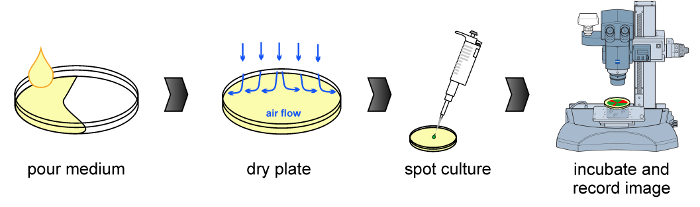
Figure 1: Experimental workflow. The common procedure is depicted in the figure, including preparation of the culturing medium, drying the plate, inoculation and fluorescence microscopy detection (from left to right). Please click here to view a larger version of this figure.
- Co-inoculation of Bacterial Cultures for Swarming and Sliding
- Determine the optical densities of the overnight starter cultures at 600 nm and mix density normalized green- and red-fluorescent protein producing strains of B. subtilis NCIB 3610 or its Δhag derivative in a 1.5 ml reaction tube. For example, mix 100 μl of strain 1 with (100*[OD600 of overnight culture of strain 1]/[OD600 of overnight culture of strain 2]) μl of strain 2. Mildly vortex (3 sec at max speed) for homogenous distribution.
NOTE: B. subtilis NCIB 3610 strains are inoculated to observe swarming, while their Δhag derivatives are used for sliding. - Spot 2 μl of mixed culture on the middle of a pre-dried plate (see Figure 1) and further dry the plate for 10 min after inoculation.
- Incubate plates at 37 °C upright to allow excess moisture to condense on the lid and not on the agar surface.
NOTE: Incubation time for B. subtilis swarming is typically between 8-16 hr. Generally, the edge of the swarm reaches the side of the 90 mm Petri dish in 8 hr. Sliding is a slower process and requires at least 16 to 42 hr of incubation. After 36 hr, the sliding front reaches the side of the 90 mm Petri dish. - For time-lapse experiments, place the 35 mm diameter Petri dishes in a preheated stage incubation chamber set at 37 °C. Ensure that the lid of the Petri dish remains removed throughout the duration of the experiment. Set the cover of the stage incubator to 40 °C to circumvent moisture formation on the top of the incubator.
- Determine the optical densities of the overnight starter cultures at 600 nm and mix density normalized green- and red-fluorescent protein producing strains of B. subtilis NCIB 3610 or its Δhag derivative in a 1.5 ml reaction tube. For example, mix 100 μl of strain 1 with (100*[OD600 of overnight culture of strain 1]/[OD600 of overnight culture of strain 2]) μl of strain 2. Mildly vortex (3 sec at max speed) for homogenous distribution.
3. Co-inoculation of Fluorescently Labelled Bacterial Strains with Different Initial Cell Densities
- Drying of Agar Plates for Colony Biofilm Formation of B. subtilis.
- Dry the plates for colony biofilm development without cover in a laminar flow hood for 15 min prior to inoculation.
NOTE: Insufficient drying results in increased humidity and swimming or swarming may be possible29. Drying too long results in small biofilm colonies.
- Dry the plates for colony biofilm development without cover in a laminar flow hood for 15 min prior to inoculation.
- Preparation of 10-fold Diluted Starter Cultures for Colony Biofilms
- Mix 100 μl of green- and red-fluorescent protein producing overnight starter cultures of B. subtilis 168 in a 1.5 ml reaction tube and mildly vortex for homogenous distribution. Prepare 10-fold dilution series in LB medium.
- Spot 2 μl of non-diluted or 101, 102, 103, 104 diluted mixed cultures on the plate containing biofilm-inducing medium.
NOTE: 6 to 9 biofilm colonies can be initiated on a single 90 mm Petri dish taking into account that the colonies are separated at equal distance from each other. - Incubate plates at 30 °C upright to allow excess moisture to condense on the lid and not on the agar surface.
NOTE: The incubation time for B. subtilis biofilm is between 1 to 3 days. Generally, the colony biofilm of B. subtilis reaches its average size and complex structure in 2 days. - For time-lapse experiments, place a single inoculum in the middle of a 35 mm diameter Petri dish and place the dish in a preheated stage incubation chamber set at 30 °C. Ensure that the top of the Petri dish remains removed throughout the duration of the experiment. Set the cover of the stage incubator to 35 °C to circumvent moisture formation on the top of the incubator.
4. Fluorescent Microscopy Detection of Labelled Strains
- Equipment Description for Imaging.
- To detect surface colonization and fluorescence signal, use a motorized fluorescence stereo zoom microscope (see detailed list in Materials Table) equipped with a 0.5X PlanApo Objective, two LED Cold-light sources (one for fluorescence detection and one for the visible light), filter sets for GFP (excitation at 470/40 nm and emission at 525/50 nm) and mRFP (excitation at 572/25 nm and emission at 629/62 nm), and a high resolution monochrome camera.
- Perform image acquisition and processing with appropriate software available for the stereo zoom microscope including multichannel and time-lapse modules. For time lapse experiment, use a standard heating stage incubator mounted to the stereo zoom microscope with an adapter.
- Imaging of Swarming and Sliding Expansion
- Use the lowest magnification to capture the biggest possible area of the 90 mm plate. Set the origin of inoculation (middle of the 90 mm Petri dish) to the corner of the visible field for monitoring radial bacterial expansion and fluorescence.
- Adjust optimal exposure time depending on the strength of the fluorescence signal.
NOTE: For constitutively expressed fluorescence genes in B. subtilis, green- and red-fluorescence with 1.5 and 3 sec exposure times can be used, respectively. Additionally, 10 msec exposure time is appropriate for visible light.
- Use the magnification that allows the detection of the whole biofilm colony and adjust the colony in the middle of the field of view.
NOTE: As for swarming and sliding expansions, the optimal exposure times to detect the fluorescence signals in the biofilm colonies depends on the expression level of the fluorescent protein coding genes. For the representative results below, green- and red-fluorescence was detected using 1 and 3 sec exposure intervals, respectively. - For time-lapse imaging, obtain images at certain intervals using constant exposure times.
- Save the fluorescence stereomicroscope recorded images in a file format that is recognized by ImageJ software for quantitative data analysis.
5. Data Analysis
- To analyze the area occupied by each differently labelled fluorescent strain, open the file of interest in ImageJ software expanded with a BioVoxxel plugin.
- When a window called "Bio-Formats Import Options" appears where only the options "Open all series" and "Autoscale" are selected, open the file by clicking "OK".
NOTE: The files are displayed as a stack of three images, one for each channel used to record an image in the microscope (green-, red-fluorescence and bright-field images). - Separate the stack into individual channel images by selecting "Image" - "Stacks" - "Stack to Images" in the ImageJ control panel.
NOTE: Images appear and are numbered as 1/3 (green channel), 2/3 (red channel) and 3/3 (bright-field). Here, the bright-field image is excluded from the analysis.
- When a window called "Bio-Formats Import Options" appears where only the options "Open all series" and "Autoscale" are selected, open the file by clicking "OK".
- To analyze the images, transform each into an 8-bit image by selecting "Image" - "Type" - "8-bit".
- To determine the occupied area in pixel2, reset the scale of the images using "Analyze" - "Set Scale". When a window pops up with different scale options, reset the scale by selecting "Click to Remove Scale". Check the option "Global" to remove the scale for all open images.
- To remove the background, draw an oval area (region of interest, ROI) outside the fluorescent area using the "Oval" tool in the ImageJ control panel.
- To ensure that the size of the background oval is the same for all analyzed images, add it to the ROI manager via the [t] character of the keyboard. A ROI Manager window comes up where the background oval ROI can be saved via "More" - "Save" options.
- If the background oval ROI is visible on the image, measure the intensity of the area by choosing "Analyze" - "Measure".
NOTE: A results window appears where amongst others the mean fluorescence intensity is displayed in the column labelled "Mean". - Subtract the value of the mean background fluorescence intensity from the image by unselecting the background oval ROI, clicking "Process" - "Math" - "Subtract" and inserting the measured value.
- Apply a threshold to the image via the "Image" - "Adjust" - "Threshold" option. Select the method Otsu and black & white (B&W). Check the "Dark background" option and employ the threshold by clicking "Apply".
NOTE: The image changes to a binary image where the area above the threshold is shown in white and that below the threshold is shown in black. - Select everything above the threshold via the "Analyze" - "Analyze Particles" option. In the window with the settings, keep the default options and keep the "Display results" and "Summarize" options checked. Click "OK" to display the summary in the results window and the display the occupied area in the column labelled "Total Area".
Results
Laboratory systems of bacterial populations provide an appealing approach to explore ecological or evolutionary questions. Here, three surface colonization modes of B. subtilis were used to examine the appearance of population assortment, i.e. the segregation of genetically identical, but fluorescently different labelled strains. Swarming, which is a flagellum dependent collective surface movement of B. subtilis, results in a highly mixed population. In these swarming colonies, the green- and red-fluorescent bacteria colonized areas were overlapping (see Figure 2A). The rapid surface colonization can be followed in time (Video Figure 1). During swarming of B subtilis, a thin layer of cells expands from the inoculation center after a few hours of incubation (see Figure 2B).
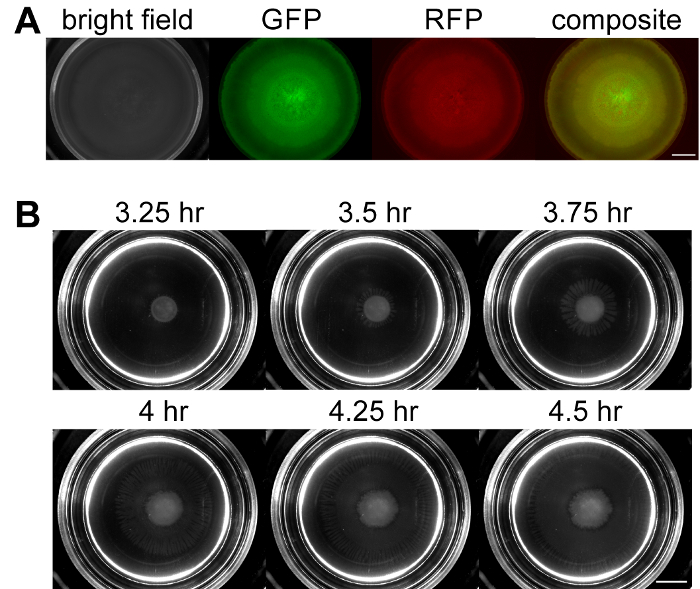
Figure 2: Swarming expansion of B. subtilis. The swarming colony contains green- and red-fluorescent strains that were mixed 1:1 before inoculation. (A) After 15 hr, the green- and red-fluorescence (GFP and RFP, respectively) were detected with appropriate fluorescence filters. (B) Images of thin layer of swarming B. subtilis are shown at selected time points extracted from Video Figure 1. Scale bar = 5 mm. Please click here to view a larger version of this figure.
However, when B. subtilis strains, that are lacking functional flagella but are able to spread with the help of produced exopolysaccharide, hydrophobin and surfactin, were spotted on semi-solid agar medium, the differently labelled strains were separated in certain defined sectors (see Figure 3A). The development of the sliding colony can be recorded in time (see Figure 3B or Video Figure 2).
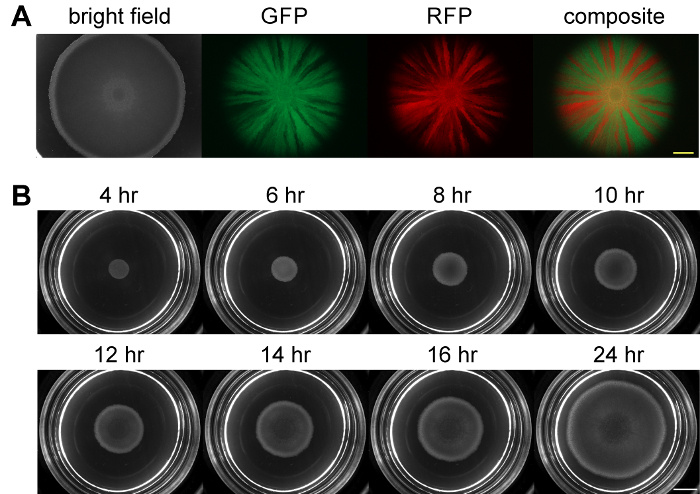
Figure 3: Sliding colony of B. subtilis. The colony contains green- and red-fluorescent strains that were mixed 1:1 before inoculation. (A) After 24 hr, the green- and red-fluorescence (GFP and RFP, respectively) were detected with appropriate fluorescence filters. (B) Images of the B. subtilis sliding disk are shown at selected time points extracted from Video Figure 2. Scale bar = 5 mm. Please click here to view a larger version of this figure.
While the assortment levels of swarming and sliding expanding colonies could not be modified, the spatial segregation of differently labelled fluorescent strains in the colony biofilm could be influenced by the starting cell densities. When a colony biofilm of B. subtilis was initiated with high cell density of the mixed populations, the green- and red-fluorescent strains showed minor or no spatial assortment (see Figure 4). On the contrary, when the cell density to initiate the biolfilm was low, clear green- and red-fluorescence sectors could be detected by fluorescence microscopy. The assortment level was clearly dependent on the dilution level of the biofilm initiating population. Video Figure 3 and 4 present the colony expansion for the lowest and highest dilution of the inoculated strains.
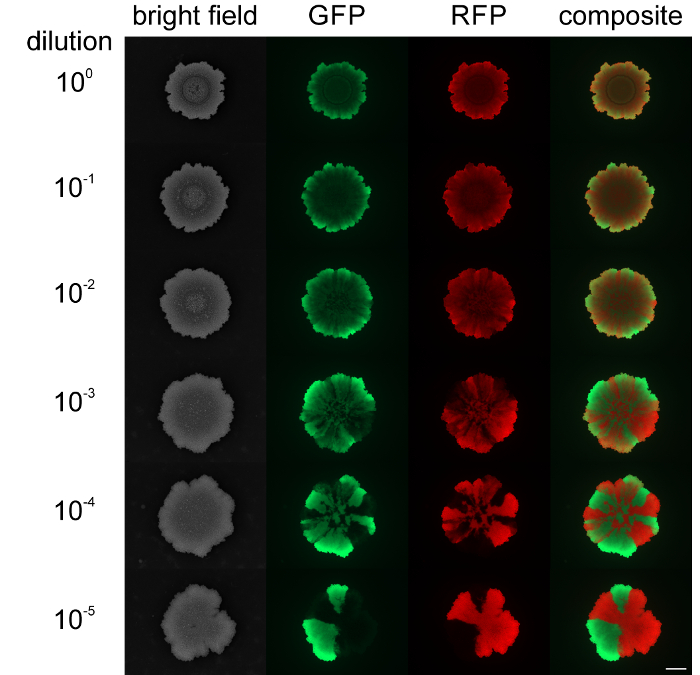
Figure 4: Assortment level in colony biofilms of B. subtilis at various initial cell densities. The colony biofilms of green- and red-fluorescence strains are shown after 2 days that were inoculated with different initial cell densities (from above to below: non-diluted to 105 times diluted initiating cultures, respectively). Scale bar = 5 mm. Please click here to view a larger version of this figure.
The ratio of green- and red-fluorescent strains can be further quantified using ImageJ software that allows the quantitative characterization of population structure and competiveness of the strains used for the experiments.
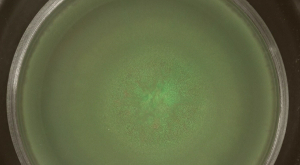
Video Figure 1: Time lapse images of swarming B. subtilis initiated with 1:1 mix of green- and red-fluorescent strains. (Right click to download.) The video shows a time course of 10 hr. Scale bar = 7 mm.
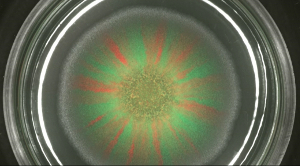
Video Figure 2: Time lapse images of sliding B. subtilis initiated with 1:1 mix of green- and red-fluorescent strains. (Right click to download.) The video shows a time course of 24 hr. Scale bar = 5 mm.
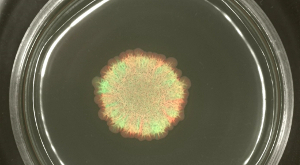
Video Figure 3: Time lapse images of B. subtilis colony biofilms initiated with 1:1 mix of green- and red-fluorescent strains at high cell densities. (Right click to download.) The video shows a time course of 48 hr. Scale bar = 5 mm.
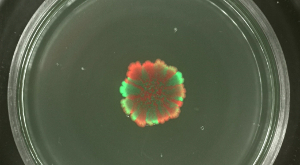
Video Figure 4: Time lapse images of B. subtilis colony biofilms initiated with 1:1 mix of green- and red-fluorescent strains at low cell densities. (Right click to download.) The video shows a time course of 48 hr. Scale bar = 5 mm.
Discussion
The availability of a fluorescent toolbox for bacteria facilitates not only the study of heterogeneous gene expression30,31 and protein localization32, but also the analysis of spatial distribution of strains within a population8. Fluorescent markers with sufficiently different excitation and emission wavelengths allow to distinctly localize two strains that otherwise are indistinguishable from each other when mixed. The described protocol can be employed for observing the population dynamics in mixed cultures, e.g. competition experiments or synergism between strains or species. The ability to determine the relative abundances of fluorescently labelled strains in a mixed population is not restricted to surface attached swarming, sliding, or biofilm colonies, but can also be used for other multicellular biofilm systems, including submerged, flow cell or air-medium interface biofilms27,33-35.
While the presented technique is a powerful tool to detect spatial distribution of strains and design competition experiments, it also allows following gene expression heterogeneity in expanding colonies. The culturing conditions described here apply for B. subtilis and the exact parameters for expansion on agar media might require optimization for other species or strains20. Placing the samples in an incubation chamber while imaging permits the experimenter to follow the population dynamics in time, although attention should be given to the humidity level within the chamber during the incubation.
The techniques described here also require the genetic modification of the examined bacterial strains so that the strains express fluorescent markers which can be distinguished from each other. Moreover, besides having distinct excitation and emission spectra, it is recommended that the two chosen fluorescent markers have similar quantum yields (i.e. ratio of absorbed photons that are emitted) and are expressed in a comparable level. In addition, relative intensity changes in time can be measured and normalized to an early time-point of an experiment. The relative increase or decrease can be then compared between different fluorophores with different quantum efficiencies. For the presented experimental system, different green- and red-fluorescent proteins were tested previously36,37 to select for the most optimal fluorescent pairs that can be detected in B. subtilis. The optimal exposure time should be determined for each fluorescent protein and sample. Certain cell densities or multiple layers of cells might be required to detect the signal efficiently within the population. Certain fluorescent proteins might have low intensities in the bacterial cells due to inefficient expression and/or translation of the protein and thus low quantum yield. Such inefficient fluorescent markers could reduce the sensitivity of the system and extend the time needed to detect the bacterial strains possibly resulting in cytotoxicity by the excitation light. The fluorescent intensities can be accordingly modified by altering the promoter used to express the fluorescent reporter coding gene. An expression level that is too high could result in unnecessary overproduction of the fluorescent protein leading to detrimental fitness costs for the bacterium. When performing competition experiments, one should consider the cost of particular fluorescent protein production in the cells. Control experiments, where the fluorescent markers are swapped between competed strains or where two isogenic strains differing only in their fluorescent markers are competed against each other, are always required to determine any bias toward one marker. The lifetimes of the fluorescent proteins within the cells might also affect the measured intensity. In addition, the autofluorescence of certain bacterial species might require the use of different fluorescent markers other than described here.
To precisely determine the spatial distributions and abundances of the distinct bacterial strains, the background signal originating from the first fluorescent protein while using the fluorescence filter for the second fluorescent marker and vice versa should be individually tested on monoculture samples (containing bacteria producing only one marker). This allows the subtraction of overlapping fluorescent signal intensities. Importantly, as the stereomicroscope records the fluorescence signal from above the expanding colony, the presented protocol is convenient to determine the spatial arrangement in two dimensions. The architecture of the expanding bacterial population could result in varying fluorescence levels (i.e. wrinkle-like structures might contain more cells displaying higher local fluorescence intensities). Therefore, the described analysis of the images determines the spatial distribution, but not the abundance of the strains within a certain location. Previous protocols described the sample preparation for swarming20 or fluorescence imaging of population dynamics in bacterial colonies38, but our protocol combines these techniques. Other microscopy techniques that permit the observation of three dimensional resolution of the population structure (e.g. confocal laser scanning microscopy39,40 or structured illumination microscopy41) can be applied for samples with increased structural complexities. These additional techniques also support single cell based detection of the strains31 that is not available using stereomicroscopes.
Disclosures
Open Access for this video-article was paid for by Carl Zeiss Microscopy GmbH.
Acknowledgements
This work was funded by grant KO4741/3-1 from the Deutsche Forschungsgemeinschaft (DFG). Further, the laboratory of Á.T.K. was supported by a Marie Skłodowska Curie career integration grant (PheHetBacBiofilm) and grant KO4741/2-1 from DFG. T.H., A.D., R.G.-M., and E.M. were supported by International Max Planck Research School, Alexander von Humboldt foundation, Consejo Nacional de Ciencia y Tecnologìa-German Academic Exchange Service (CONACyT-DAAD), and JSMC fellowships, respectively.
Materials
| Name | Company | Catalog Number | Comments |
|---|---|---|---|
| Lennox Broth (LB) | Carl Roth GmbH | X964 | |
| Agar-agar, Kobe I | Carl Roth GmbH | 5210 | |
| Petri dish (90 mm diameter) | any | NA | Use Petri dishes without ventillation cams |
| Petri dish (35 mm diameter) | any | NA | Use Petri dishes without ventillation cams |
| Difco Nutrient Broth | BD Europe | 234000 | |
| KCl | any | NA | |
| MgSO,4 7H2O | any | NA | |
| Ca(NO3)2 4H2O | any | NA | |
| MnCl24H2O | any | NA | |
| FeSO4 | any | NA | |
| D-Glucose | any | NA | |
| Fluorescence AxioZoom V16 time-lapse microscope | Carl Zeiss Microscopy GmbH | see bellow detailed description | |
| AxioZoom V16 Microscope body | Carl Zeiss Microscopy GmbH | 435080 9030 000 | |
| Phototube Z 100:0 for Axio Zoom V16 | Carl Zeiss Microscopy GmbH | 435180 9020 000 | without eyepieces |
| Fluar Illuminator Z mot Fluorescence intermediate tube for Axio Zoom.V16 | Carl Zeiss Microscopy GmbH | 435180 9060 000 | |
| Controller EMS 3 | Carl Zeiss Microscopy GmbH | 435610 9010 000 | |
| System Control Panel SYCOP 3 | Carl Zeiss Microscopy GmbH | 435611 9010 000 | |
| Reflector module Z | Carl Zeiss Microscopy GmbH | 435180 9160 000 | For Fluar Illuminator Z mot on Axio Zoom.V16 and SYCOP 3 |
| Filter set 38 HE eGFP shift free (E) | Carl Zeiss Microscopy GmbH | 489038 9901 000 | EX BP 470/40, BS FT 495, EM BP 525/50 |
| Filter set 63 HE mRFP shift free (E) | Carl Zeiss Microscopy GmbH | 489063 0000 000 | EX BP 572/25, BS FT 590, EM BP 629/62 |
| Mount S | Carl Zeiss Microscopy GmbH | 435402 0000 000 | |
| Objektive PlanApo Z 0,5x/0,125 FWD 114 mm | Carl Zeiss Microscopy GmbH | 435280 9050 000 | 164 mm parfocal length; M62x0.75 thread at front |
| Coarse/fine drive with profile column | Carl Zeiss Microscopy GmbH | 435400 0000 000 | 490 mm, 10 kg load capacity, compatible with stand bases 300/450 |
| Stand base 450 | Carl Zeiss Microscopy GmbH | 435430 9902 000 | |
| Cold-light source Zeiss CL 9000 LED CAN | Carl Zeiss Microscopy GmbH | 435700 9000 000 | |
| CAN-bus cable | Carl Zeiss Microscopy GmbH | 457411 9011 000 | 2.5 m length |
| Slit-ring illuminator | Carl Zeiss Microscopy GmbH | 417075 9010 000 | d = 66 mm |
| Flexible light guide 1500 | Carl Zeiss Microscopy GmbH | 417063 9901 000 | 8/1,000 mm |
| Illumination Adapter for light guide | Carl Zeiss Microscopy GmbH | 000000 1370 927 | |
| Lightguide HXP with liquid fill | Carl Zeiss Microscopy GmbH | 000000 0482 760 | ø3 mm x 2,000 mm |
| Camera Adapter 60N-C | Carl Zeiss Microscopy GmbH | 426113 0000 000 | 2/3" 0.63X |
| High Resolution Microscopy Camera AxioCam MRm Rev. 3 FireWire | Carl Zeiss Microscopy GmbH | 426509 9901 000 | |
| AxioCam FireWire Trigger Cable Set | Carl Zeiss Microscopy GmbH | 426506 0002 000 | for direct shutter synchronization |
| ZEN pro 2012 | Carl Zeiss Microscopy GmbH | 410135 1002 120 | Blue edition, requires min. Windows 7 64-bit |
| ZEN Module Time Lapse | Carl Zeiss Microscopy GmbH | 410136 1031 110 | |
| Standard Heating Stage Top Incubator | Tokai Hit | INUL-MS1-F1 | |
| Zeiss Stereo Microscope Base Adapter | Tokai Hit | MS-V12 | |
| Softwares | |||
| ImageJ | National Institute of Health, Bethesda, MD, USA | v 1.49m | |
| BioVoxxel plugin | BioVoxxel | http://www.biovoxxel.de/development/ |
References
- Nadell, C. D., Xavier, J. B., Foster, K. R. The sociobiology of biofilms. FEMS Microbiol Rev. 33 (1), 206-224 (2009).
- West, S. A., Griffin, A. S., Gardner, A., Diggle, S. P. Social evolution theory for microorganisms. Nat Rev Microbiol. 4 (8), 597-607 (2006).
- Kovács, ÁT. Impact of spatial distribution on the development of mutualism in microbes. Front Microbiol. 5, 649(2014).
- Martin, M., Hölscher, T., Dragoš, A., Cooper, V. S., Kovács, ÁT. Laboratory evolution of microbial interactions in bacterial biofilms. J Bacteriol. , (2016).
- Drescher, K., Nadell, C. D., Stone, H. A., Wingreen, N. S., Bassler, B. L. Solutions to the public goods dilemma in bacterial biofilms. Curr Biol. 24 (1), 50-55 (2014).
- Momeni, B., Waite, A. J., Shou, W. Spatial self-organization favors heterotypic cooperation over cheating. Elife. 2, e00960(2013).
- van Dyken, J. D., Müller, M. J., Mack, K. M., Desai, M. M. Spatial population expansion promotes the evolution of cooperation in an experimental Prisoner's Dilemma. Curr Biol. 23 (10), 919-923 (2013).
- van Gestel, J., Weissing, F. J., Kuipers, O. P., Kovács, ÁT. Density of founder cells affects spatial pattern formation and cooperation in Bacillus subtilis biofilms. ISME J. 8 (10), 2069-2079 (2014).
- Momeni, B., Brileya, K. A., Fields, M. W., Shou, W. Strong inter-population cooperation leads to partner intermixing in microbial communities. Elife. 2, e00230(2013).
- Müller, M. J., Neugeboren, B. I., Nelson, D. R., Murray, A. W. Genetic drift opposes mutualism during spatial population expansion. Proc Natl Acad Sci U S A. 111 (3), 1037-1042 (2014).
- Pande, S., et al. Privatization of cooperative benefits stabilizes mutualistic cross-feeding interactions in spatially structured environments. ISME J. 10, 1413-1423 (2016).
- Hallatschek, O., Hersen, P., Ramanathan, S., Nelson, D. R. Genetic drift at expanding frontiers promotes gene segregation. Proc Natl Acad Sci U S A. 104 (50), 19926-19930 (2007).
- Flemming, H. C., Wingender, J. The biofilm matrix. Nat Rev Microbiol. 8 (9), 623-633 (2010).
- Vlamakis, H., Chai, Y., Beauregard, P., Losick, R., Kolter, R. Sticking together: building a biofilm the Bacillus subtilis way. Nat Rev Microbiol. 11 (3), 157-168 (2013).
- Lopez, D., Kolter, R. Extracellular signals that define distinct and coexisting cell fates in Bacillus subtilis. FEMS Microbiol Rev. 34 (2), 134-149 (2010).
- Lopez, D., Vlamakis, H., Kolter, R. Generation of multiple cell types in Bacillus subtilis. FEMS Microbiol Rev. 33 (1), 152-163 (2009).
- Mhatre, E., Monterrosa, R. G., Kovács, ÁT. From environmental signals to regulators: Modulation of biofilm development in Gram-positive bacteria. J Basic Microbiol. , (2014).
- Zhang, W., et al. Nutrient depletion in Bacillus subtilis biofilms triggers matrix production. New J Physics. 16, 015028(2014).
- Kearns, D. B. A field guide to bacterial swarming motility. Nat Rev Microbiol. 8 (9), 634-644 (2010).
- Morales-Soto, N., et al. Preparation, imaging, and quantification of bacterial surface motility assays. J Vis Exp. (98), (2015).
- Angelini, T. E., Roper, M., Kolter, R., Weitz, D. A., Brenner, M. P. Bacillus subtilis spreads by surfing on waves of surfactant. Proc Natl Acad Sci U S A. 106 (43), 18109-18113 (2009).
- Grau, R. R., et al. A Duo of Potassium-Responsive Histidine Kinases Govern the Multicellular Destiny of Bacillus subtilis. MBio. 6 (4), e00581(2015).
- Park, S. Y., Pontes, M. H., Groisman, E. A. Flagella-independent surface motility in Salmonella enterica serovar Typhimurium. Proc Natl Acad Sci U S A. 112 (6), 1850-1855 (2015).
- van Gestel, J., Vlamakis, H., Kolter, R. From cell differentiation to cell collectives: Bacillus subtilis uses division of labor to migrate. PLoS Biol. 13 (4), e1002141(2015).
- Abee, T., Kovács, ÁT., Kuipers, O. P., van der Veen, S. Biofilm formation and dispersal in Gram-positive bacteria. Curr Opin Biotechnol. 22 (2), 172-179 (2011).
- Kovács, ÁT. Bacterial differentiation via gradual activation of global regulators. Curr Genet. 62 (1), 125-128 (2016).
- Hölscher, T., et al. Motility, chemotaxis and aerotaxis contribute to competitiveness during bacterial pellicle biofilm development. J Mol Biol. 427 (23), 3695-3708 (2015).
- Seminara, A., et al. Osmotic spreading of Bacillus subtilis biofilms driven by an extracellular matrix. Proc Natl Acad Sci U S A. 109 (4), 1116-1121 (2012).
- Patrick, J. E., Kearns, D. B. Laboratory strains of Bacillus subtilis do not exhibit swarming motility. J Bacteriol. 191 (22), 7129-7133 (2009).
- de Jong, I. G., Beilharz, K., Kuipers, O. P., Veening, J. W. Live Cell Imaging of Bacillus subtilis and Streptococcus pneumoniae using Automated Time-lapse Microscopy. J Vis Exp. (53), e3145(2011).
- Garcia-Betancur, J. C., Yepes, A., Schneider, J., Lopez, D. Single-cell analysis of Bacillus subtilis biofilms using fluorescence microscopy and flow cytometry. J Vis Exp. (60), (2012).
- Turnbull, L., et al. Super-resolution imaging of the cytokinetic Z ring in live bacteria using fast 3D-structured illumination microscopy (f3D-SIM). J Vis Exp. (91), e51469(2014).
- Barken, K. B., et al. Roles of type IV pili, flagellum-mediated motility and extracellular DNA in the formation of mature multicellular structures in Pseudomonas aeruginosa biofilms. Environ Microbiol. 10 (9), 2331-2343 (2008).
- Oliveira, N. M., et al. Biofilm formation as a response to ecological competition. PLoS Biol. 13 (7), e1002191(2015).
- Wang, X., et al. Probing phenotypic growth in expanding Bacillus subtilis biofilms. Appl Microbiol Biotechnol. 100, 4607-4615 (2016).
- Detert Oude Weme, R. G., et al. Single cell FRET analysis for the identification of optimal FRET-pairs in Bacillus subtilis using a prototype MEM-FLIM system. PLoS One. 10 (4), e0123239(2015).
- Overkamp, W., et al. Benchmarking various green fluorescent protein variants in Bacillus subtilis, Streptococcus pneumoniae, and Lactococcus lactis for live cell imaging. Appl Environ Microbiol. 79 (20), 6481-6490 (2013).
- Stannek, L., Egelkamp, R., Gunka, K., Commichau, F. M. Monitoring intraspecies competition in a bacterial cell population by cocultivation of fluorescently labelled strains. J Vis Exp. (83), e51196(2014).
- Bridier, A., Briandet, R. Contribution of confocal laser scanning microscopy in deciphering biofilm tridimensional structure and reactivity. Methods Mol Biol. 1147, 255-266 (2014).
- Khajotia, S. S., Smart, K. H., Pilula, M., Thompson, D. M. Concurrent quantification of cellular and extracellular components of biofilms. J Vis Exp. (82), e50639(2013).
- Neu, T. R., Lawrence, J. R. Innovative techniques, sensors, and approaches for imaging biofilms at different scales. Trends Microbiol. 23 (4), 233-242 (2015).
Reprints and Permissions
