A study protocol is presented on how to assess associations between music listening and psychobiological stress (as measured by subjective stress levels, salivary cortisol, and salivary alpha-amylase) in daily life. Advice on study design, materials, methods, selection of participants, and statistical handling is provided. Representative results are presented and discussed.
A subscription to JoVE is required to view this content. Sign in or start your free trial.
Method Article
Assessing the Effects of Music Listening on Psychobiological Stress in Daily Life
In This Article
Summary
Abstract
Music listening is associated with stress-reducing effects. However, most of the results on music listening and stress were gathered in experimental settings. As music listening is a popular activity of daily life, it is of utmost importance to study the effects of music listening on psychobiological stress in an everyday, daily-life setting. Here, a study protocol is presented that allows the assessment of associations between music listening and psychobiological stress in daily life by noninvasively measuring salivary cortisol (as a marker of the Hypothalamic-Pituitary-Adrenal (HPA) axis) and salivary alpha-amylase (as a marker of the Autonomic Nervous System (ANS)). The protocol includes advice on the study design (e.g., sampling protocol), the materials and methods (e.g., the assessment of psychobiological stress in daily life, the assessment of music listening, and the manual), the selection of participants (e.g., the approval of the institutional review board and inclusion criteria), and the statistical analyses (e.g., the multilevel approach). The representative results provide evidence for a stress-reducing effect of music listening in daily life. Particularly, specific reasons for listening to music (especially relaxation), as well as the presence of others while doing so, increase this stress-reducing effect. At the same time, music listening in daily life differentially affects the HPA axis and ANS functioning, thus emphasizing the need for a multi-dimensional assessment of stress in daily life.
Introduction
Music listening is associated with stress-reducing effects1,2. However, most previous studies were conducted in experimental settings, investigating highly selective patient populations. In particular, many studies were set in surgical settings, in which music listening occurs either before, during, or after a stressful procedure3. Although some of these studies show beneficial effects of listening to music, the findings remain equivocal. This might be due to a number of methodological reasons (i.e. different study methodologies and different study designs may lead to different results). For example, the artificial setting of a laboratory-based study makes it unclear whether findings from these experimental studies can be transferred to real-life environments. As music listening is a popular activity of daily life4 that is often used for relaxation purposes5,6,7, it is of the utmost importance to study the effects of music listening on psychobiological stress (and its potential underlying mechanisms) in everyday life settings that are characterized by high ecological validity.
Studies set in daily life are often referred to as Ecological Momentary Assessments (EMA), Experience Sampling Methods (ESM), or Ambulatory Assessments (AA)8. Common to all of these approaches is the fact that data is captured repeatedly over time in the real-world environment of the participants. According to Shiffman, Stone, and Hufford9, studies set in daily life thus allow for (a) characterizing individual differences, (b) describing natural history, (c) assessing contextual associations, and (d) documenting temporal sequences. Therefore, it is possible to study dynamic relations among variables of interest with a minimum of recall bias and a maximum of ecological validity9. Although the terms EMA, ESM, and AA are often used interchangeably, certain distinctions must be made8.
Whereas EMA and ESM refer to the assessment of subjective self-reports, AA is defined as the simultaneous assessment of self-reports, behavior records, and/or physiological measurements in daily life while participants are going about their daily routine10. AA studies are characterized by repeated measures of current experiences and behaviors in conjunction with physiological data11. Furthermore, AA allows the measurement of stress in daily life from a psychobiological perspective, as self-reports and physiological markers can be assessed in the natural habitat of the participants. The Hypothalamic-Pituitary-Adrenal (HPA) axis and the Autonomic Nervous System (ANS) are two prominent stress-sensitive systems in the body. The HPA axis is responsible for the endocrine stress response. When experiencing stress, this axis is activated. This activation can be measured by the secretion of the hormone cortisol. The autonomic stress response can be measured via a range of autonomic markers, such as heart rate and skin conductance. A relatively new biomarker reflecting the activity of the ANS is the salivary enzyme alpha-amylase12. Both HPA axis and ANS activity can be noninvasively and concomitantly measured in saliva by means of salivary cortisol and salivary alpha-amylase, respectively13.
Studies set in daily life encompassing both subjective as well as physiological markers of stress are still rare, as most of the studies on music listening in daily life rely on subjective self-reports6,7,14,15,16,17. From these studies, it can be concluded that music listening is a popular activity of daily life15,17 that is associated with beneficial effects for subjective well-being6,7,18. Most interestingly, many studies find that music listening in daily life is associated with subjective feelings of relaxation6,7. Furthermore, relaxation is a common reason for music listening in daily life6. On the other hand, ambulatory assessment studies on the stress-reducing effect of music listening — particularly those encompassing both psychological as well as physiological indicators for stress — are very rare. We have previously shown in two ambulatory assessment studies that music listening is associated with a stress-reducing effect in healthy participants19,20. In contrast to these findings in healthy young adults, we were not able to find a stress-reducing effect of music listening in a patient sample21.
Thus, it is of particular importance to study the effects of music listening in daily life using ambulatory assessment, as this approach allows the examination of a broad variety of situations in which music listening occurs with high temporal resolution (in comparison to an artificial situation in an experiment) and high external validity. By means of ambulatory assessment studies, it is possible to investigate context factors influencing the effects of music listening in daily life. At the same time, the underlying mechanisms can be investigated by means of concomitantly assessing physiological parameters. This approach renders it possible to unravel the complex mechanisms underlying the stress-reducing effect of music listening in daily life.
This protocol demonstrates how to assess the effects of music listening on psychobiological stress in daily life by elaborating on (1) study design, (2) materials and methods, (3) selection of participants, and (4) statistical considerations, based upon the aforementioned studies19,20,21.
Access restricted. Please log in or start a trial to view this content.
Protocol
This protocol follows the guidelines of the local ethics committee of the University of Marburg; for all reported studies19,20,21, approval was obtained. Obtain approval from the Institutional Review Board (IRB), with special attention to potential intrusiveness of study participation on daily-life routines and with special attention to the collection of salivary biomarkers for stress.
1. Study Design: Sampling Protocol
- Decide on the number of days, as most studies involving multiple assessments typically run from 3 d to 3 weeks22. Choose multiple consecutive days (e.g., at least 7 d, to encompass both weekdays and weekend days) in order to gain representative insights into the daily life of the participants.
- Decide on a number of assessments per day. Distribute assessments over the day, spanning representative periods between awakening and bedtime (e.g., 6 assessments/d).
- Decide on the distribution of assessments per day (e.g., assessments can either be event-based, time-based, or a combination of these two designs)9.
NOTE: Keep in mind that current recommendations prefer event-based procedures for the sampling of rare events only, mostly for the reason of compliance and to keep up the motivation of participants. Use a combination of event-based and time-based assessments.- Due to the diurnal rhythm of salivary cortisol and salivary alpha-amylase, use an event-based assessment directly after waking up.
- Relative to this assessment, schedule one subsequent assessment 30 min after waking up and schedule further fixed assessments at 12:00 h (before lunch), 14:00 h, 18:00 h, and 21:00 h (bedtime).
NOTE: The study protocol described here scheduled the following assessments in each study: directly after awakening (event-based), 30 min after awakening, 10.0019,21/11.0020 (fixed), 14.00 (fixed), 18.00 (fixed), 21.00 (fixed).
2. Selection of Participants
- Perform an a priori power analysis, as recommended by Bolger, Stadler, and Laurenceau23, if one has a priori knowledge on the expected effect sizes.
- Cautiously select the study participants and define the following inclusion criteria:
- Ensure that the participants' age range is as narrow as possible (e.g., 18 to 35 years of age) or consider it to be a confound and treat it statistically as such. Participants' Body Mass Index (BMI) should be equal to or lower than 30 (see step 3.1). The participants should either be nonsmokers or should smoke less than five cigarettes per week.
- Make sure to only include participants who do not consume drugs (no consumption of cannabis within the last 2 weeks, no consumption of any other psychotropic substances within the last 4 weeks). Furthermore, ensure that the participant does not take any medication (except for Hormonal Contraceptives (HC) in females, which should be recorded and considered within statistical analyses).
- Only include participants who do not have any chronic somatic or psychiatric disease (according to self-reports based on the Patient Health Questionnaire (PHQ) 24.
NOTE: If interested in the effects of music listening on psychobiological stress in specific patient populations (e.g., patients with fibromyalgia syndrome), please adjust these inclusion criteria (e.g., define inclusion criteria for patients with fibromyalgia syndrome based on the research criteria25,26).
- Assess the following covariates.
NOTE: Covariates should be assessed once using paper-and-pencil questionnaires.- Due to the assessment of biological parameters, control for BMI and gender. Either define inclusion criteria regarding BMI and gender (e.g., include only those subjects who have a BMI equal to or lower than 30, or include only men or women), or statistically control for the influence of BMI and gender.
- Concerning the association between music listening and stress, control for musical expertise and music preference (e.g., by means of the Music Preference Questionnaire (MPQ))27 in order to test hypotheses on differential effects concerning the association between music listening and stress based on personal music preference and expertise.
- Ask participants to complete the Trier Inventory for Chronic Stress28 and/or the Perceived Stress Scale29 to test hypotheses regarding the influence of overall stress levels on the association between music listening and current stress.
3. Meeting with the Participants before the Assessment
- Schedule an introductory session with the participants to familiarize them with the electronic diary device, questionnaires, and saliva collection method.
- Provide participants with a mobile electronic diary device on which they can address the items occurring during the ambulatory assessment
- Familiarize all participants with how to handle the electronic diary device.
- Provide each participant with information on how the mobile electronic diary device is used (e.g., how to turn it on and off, how to mute and unmute the alarm, how to react when an assessment is missed, how frequently to recharge it and how to start the application presenting the items).
- Explain and demonstrate all functions concerning the study.
- Prepare a study manual in which the study material, the items occurring in the ambulatory assessment, and the procedure for the collection of saliva are explained in sufficient detail. In this manual, describe each item in detail by explaining each response option.
NOTE: Make sure to do a trial run and review the manual with each participant. Thus, provide particular instructions to the participant, both face-to-face and written in the manual, before the assessment period starts. - Provide the participant with contact details in case of technical problems.
- Instruct the participant to start the first assessment the day following the introductory session.
- Set a date for the postmonitoring session after completion of data collection.
4. Items on Music Listening
NOTE: All items on music listening are presented via the electronic diary device.
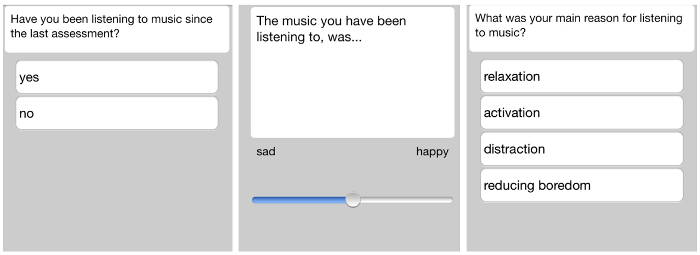
Figure 1: Exemplary Screenshots from Mobile Diary Devices. Using electronic diary devices, participants can be investigated in their daily lives while they go about their daily routines. Please click here to view a larger version of this figure.
- First, use a filter question and ask whether music listening has occurred since the last assessment.
- Define what is meant by music listening by providing examples for music listening in daily life. Distinguish between passive music listening (e.g., background music while shopping) and active or deliberate music listening (e.g., music listening that is in the focus of attention).
- Ask subsequent items (e.g., valence, arousal, and reasons for music listening) that cover a more in-depth characterization of the music listening episode when participants report having listened to music.
- Ask for the perceived valence (ranging from sad to happy on a visual analogue scale) and perceived arousal (ranging from relaxing to energizing on a visual analogue scale) of the music that was listened to.
- Ask the participant to define two qualitative characteristics of the music they listened to using different response scales. On the one hand, ask them to rate whether the experience is sad or happy. On the other hand, ask whether the music is relaxing or energizing.
NOTE: The ratings refer to the participant's subjective experience of the music. - Ask the participant to try to make a rating. If this is not possible, ask the participant to choose the middle of the scale.
- In case the participant listens to more than one piece of music, please ask the participant to make a rating representing the majority of music listened to. That is, if the participant listens to both sad and happy music on the radio, ensure that the classification represents the predominant experience of the music.
- Assess the reasons for music listening by asking the participant to choose the main reason for music listening (among relaxation, distraction, activation, and reducing boredom).
NOTE: We selected the reasons for music listening that have been reported most frequently in previous research5,6. Depending on the research question, other reasons may be chosen as well (e.g., emotion regulation, aesthetic enjoyment, and cognitive stimulation). However, please remember to keep the number of items to a minimum in order to maintain high compliance with the protocol.- Ask the following questions:
- Ask if the participant listened to music in order to relax.
NOTE: This can be due to some prior stressful event or to the general need to relax. - Ask if the participant listened to music for activation.
NOTE: For example, this means that music was chosen to sing along to, to move with, or to activate oneself. - Ask if the participant listened to music for distraction.
NOTE: Meaning, to distract from a certain topic or from certain thoughts. - Ask if the participant listened to music because there were no other alternatives available for reducing boredom.
NOTE: In contrast to distraction as the reason for music listening, here, music is not meant to distract from a certain topic or thoughts. Rather, music is listened to in order to pass time.
- Assess the characteristics of the listening situation.
- Ask the participant who else was present during listening to music.
NOTE: In accordance to Juslin et al.6, ask the participant to choose among the following response options: "I was alone while listening to music," "Friends were present while listening to music," and "Acquaintances were present while listening to music." - Additionally, ask whether the participant was in the presence of strangers while listening to music6.
NOTE: If anyone is specifically interested in the role of social context factors on the stress-reducing effect of music listening, consider asking the participant whether interactions with other people occurred and how these interactions are rated (negative-positive). Furthermore, assess social support/attachment to determine whether these factors moderate the stress-reducing effect of music listening. - Consult the appropriate literature on studies investigating music listening in daily life to learn more about these context variables6,18.
- Ask the participant who else was present during listening to music.
5. Assessment of Psychobiological Stress
NOTE: Stress is a multidimensional phenomenon that is assessed via subjective self-report as well as via physiological markers of stress. At each assessment, both data on subjective stress levels and on physiological markers of stress must be collected.
- Measure subjective stress using a single-item30 indicating how stressed they feel at the moment (e.g., on a five-point Likert scale ranging from "not at all" to "very much").
NOTE: This item should be presented using the electronic diary device. - Immediately after having provided subjective information on music listening and stress, collect saliva samples for the later assessment of salivary cortisol and salivary alpha-amylase as neuroendocrine and autonomic stress markers, respectively, using standard procedures.
NOTE: There are commercially available assays for both analytes, e.g., enzyme linked immunosorbent assays. - Preparation of saliva vials
NOTE: For the concomitant assessment of salivary cortisol and alpha-amylase, use the passive drool method, which controls for the effects of mastication, textual stimulation, or interferences of absorbent material with assay procedures31.- Prelabel the saliva vials. Use a simple, unique code for each vial.
NOTE: This code consists of the study number + participant code + day of sampling + time of day. - Weigh the saliva vials both before and after study participation to determine the salivary flow rate (which is calculated by determining the saliva volume (the post- to pre-weight difference) divided by the collection time (mL/min)).
- Split the samples according to the day of sampling by placing all samples from one day and the corresponding numbers of straws into a small plastic bag.
- Prelabel the saliva vials. Use a simple, unique code for each vial.
- Saliva Collection
- Provide participants with particular instructions for the saliva collection as follows.
- In order to avoid contamination with blood, sugar, or acidity, instruct the participants not to brush their teeth within 30 min prior to saliva sampling or to have dental treatment 24 h before saliva sampling.
NOTE: Major meals should not be consumed within 60 min prior to sampling; snacks and caffeinated or alcoholic beverages should not be consumed within 30 min prior to sampling. - Document the intake of food, drinks, and nicotine by means of the mobile electronic diary device by asking if the participate ate/drank/smoked within the last two hours (0: "no," 1: "yes").
- Instruct the participants to rinse their mouth with tap water 10 min prior to sampling.
- Instruct the participants to document vigorous physical activity 2 h prior to sampling. Ask the participants if they were active. If yes, ask how active they have been during the last 2 h. Instruct the participants to respond with "not at all," "very little," "moderately," or "vigorously."
- Instruct the participant to store the samples at or below -20 °C as soon as possible (on the evening of each day at the latest) to prevent bacterial growth. In case participants do not have immediate access to a freezer, they should be asked to store the samples in a refrigerator in the meantime.
- In order to avoid contamination with blood, sugar, or acidity, instruct the participants not to brush their teeth within 30 min prior to saliva sampling or to have dental treatment 24 h before saliva sampling.
- Collect a saliva sample for demonstration purposes.
- Ask the participant to swallow once. Then, ask the participant to accumulate saliva by not swallowing for the next 2 min.
- Set a timer (2 min are usually sufficient) on the mobile electronic diary device.
- Hold the vial and straw ready. After 2 min, ask the participant to transfer all accumulated saliva into the vial.
NOTE: Participants can either use the straw to transfer all accumulated saliva into the vial, or they can transfer all accumulated saliva without the straw into the vial. - Then, ask the participant to enter the code written on the vial as a compliance check at the end of each assessment time point.
- Provide participants with particular instructions for the saliva collection as follows.
6. Meeting with the Participants after the Assessment
- Ask participants to return to the laboratory to hand over the study equipment after study completion (i.e. the electronic diary device and the saliva samples).
- Conduct a standardized post-monitoring interview asking for any problems that may have occurred during the study, interference of study participation with daily-life routines, and overall satisfaction with the study participation.
7. Statistical Handling
- Prepare the data set by excluding participants with less than 50% of the assessments completed.
- Check the data for a normal distribution. As salivary cortisol and salivary alpha-amylase are usually not normally distributed, transform the data (e.g., using the formula ln(x) + 10).
NOTE: Due to the nested structure of the data (i.e. repeatedly-assessed music listening and psychobiological stress are nested in each person), analyze the data using Hierarchical Linear Modeling (HLM)32 in accordance with the procedure described by Woltman, Feldstain, MacKay, and Rocchi33. Analyses should at least control for the time of day on level-1 and for BMI and gender on level-2. Calculate the amount of explained variance as an indicator for effect size using the formula provided by Singer and Willet34.
Access restricted. Please log in or start a trial to view this content.
Results
This protocol is meant to provide one example of how the effects of music listening on psychobiological stress in daily life can be examined. The procedures are designed to investigate the associations between music listening, subjective stress reports, secretion of salivary cortisol, and activity of salivary alpha-amylase.
The representative results presented are examples from three publications of our work group, published in ...
Access restricted. Please log in or start a trial to view this content.
Discussion
Here, a study protocol is presented on how to investigate the effects of music listening on psychobiological stress in daily life. The advantage of the ambulatory assessment design is that the effects of music listening on stress can be investigated in the natural habitat of the participants while they are going about their daily routine.
As this study protocol assesses past music listening and momentary stress, short-term effects of music listening on stress can be examined. In line with expe...
Access restricted. Please log in or start a trial to view this content.
Disclosures
The authors have nothing to disclose.
Acknowledgements
JS and UMN acknowledge funding by the Volkswagen Foundation (Az. 84905). We thank the University of Marburg for funding participant reimbursements and the Universitaetsstiftung of the University of Marburg for funding the biochemical analyses. Furthermore, we thank Johanna M. Doerr for her contribution to the study design and Nadine Skoluda for her involvement in the analysis of the saliva samples.
Access restricted. Please log in or start a trial to view this content.
Materials
| Name | Company | Catalog Number | Comments |
|---|---|---|---|
| SaliCap Set | IBL International GmbH, a Tecan Group company | RE69985 | Sampling tubes for collection of saliva samples to be used in the IBL Saliva Immunoassays |
| Cortisol Saliva ELISA | IBL International GmbH, a Tecan Group company | RE52611 | Enzyme Immunoassay for the quantitative determination of free cortisol in human saliva |
| Calibrator f.a.s. w/o diluent | Roche Diagnostics | 10759350190 | Ready-for-use calibrator consisting of a buffered description aqueous solution with biological materials added as required to obtain desired component levels. |
| Precinorm U | Roche Diagnostics | 10171743122 | Ready-for-use control |
| Precipath U | Roche Diagnostics | 10171760122 | Ready-for-use control |
| AMY EPS HIT 917 liquid | Roche Diagnostics | 11876473 316 | R1: α-glucosidase; R2: 4,6-ethylidene-(G7) p-nitrophenyl-(G1)-α,D-maltoheptaoside |
| Further materials include typical laboratory utensils, e.g., micropipettes, oribtal shaker, vortex mixer, 8-channel micropipettor, wash bottle, automated or semi-automated microtiter plate washing system, precision scale, microtiter plate reader capable of reading absorbance. | |||
| Apple iPod touch, 8 GB, 5th Generation | Apple Inc. | n/a | mobile diary device |
| iDialogPad | Mutz Elektronik Entwicklung | n/a | software for programming items occuring in the ambulatory assessment |
References
- Pelletier, C. L. The effect of music on decreasing arousal due to stress: a meta-analysis. J Music Ther. 41 (3), 192-214 (2004).
- Chanda, M. L., Levitin, D. J. The neurochemistry of music. Trends Cogn Sci. 17 (4), 179-193 (2013).
- Thoma, M. V., Nater, U. M. Horizons in Neuroscience Research. Costa, A., Villalba, E. 6, Nova Publishers, Inc. (2011).
- North, A. C., Hargreaves, D., Hargreaves, J. J. Uses of music in everyday life. Music Percept. 22 (1), 41-77 (2004).
- Linnemann, A., Thoma, M. V., Nater, U. M. Offenheit für Erfahrungen als Indikator für Offenohrigkeit im jungen Erwachsenenalter? Individuelle Unterschiede und Stabilität der Musikpräferenz. Musikpsychologie. 24, 198-222 (2015).
- Juslin, P. N., Liljeström, S., Västfjäll, D., Barradas, G., Silva, A. An experience sampling study of emotional reactions to music: Listener, music, and situation. Emotion. 8 (5), 668-683 (2008).
- van Goethem, A., Sloboda, J. The functions of music for affect regulation. Music Sci. 15 (2), 208-228 (2011).
- Trull, T. J., Ebner-Priemer, U. W. Using experience sampling methods/ecological momentary assessment (ESM/EMA) in clinical assessment and clinical research: introduction to the special section. Psychol Assess. 21 (4), 457-462 (2009).
- Shiffman, S., Stone, A. A., Hufford, M. R. Ecological Momentary Assessment. Annu Rev Clin Psychol. 4 (1), 1-32 (2008).
- Fahrenberg, J., Myrtek, M., Pawlik, K., Perrez, M. Ambulatory Assessment - Monitoring Behavior in Daily Life Settings. Eur J Psychol Assess. 23 (4), 206-213 (2007).
- Wilhelm, P., Perrez, M., Pawlik, K. Handbook of Reserach Methods for Studying Daily Life. Mehl, M. R., Conner, T. S. , Guilford Press. (2012).
- Nater, U. M., Rohleder, N. Salivary alpha-amylase as a non-invasive biomarker for the sympathetic nervous system: Current state of research. Psychoneuroendocrinology. 34 (4), 486-496 (2009).
- Nater, U. M., Hoppmann, C. A., Scott, S. B. Diurnal profiles of salivary cortisol and alpha-amylase change across the adult lifespan: evidence from repeated daily life assessments. Psychoneuroendocrinology. 38 (12), 3167-3171 (2013).
- Randall, W. M., Rickard, N. S., Vella-Brodrick, D. A. Emotional outcomes of regulation strategies used during personal music listening: A mobile experience sampling study. Music Sci. 18 (3), 275-291 (2014).
- Greasley, A. E., Lamont, A. Exploring engagement with music in everyday life using experience sampling methodology. Music Sci. 15 (1), 45-71 (2011).
- Sloboda, J. A., O'Neill, S. A., Ivaldi, A. Functions of Music in Everyday Life: An Exploratory Study Using the Experience Sampling Method. Music Sci. 5 (1), 9-32 (2001).
- Krause, A. E., North, A. C., Hewitt, L. Y. Music-listening in everyday life: Devices and choice. Psychology of Music . , advance online publication (2013).
- Sloboda, J. A., O'Neill, S. A., Ivaldi, A. Functions of music in everyday life: An exploratory study using the Experience Sampling Method. Music Sci. 5 (1), 9-32 (2001).
- Linnemann, A., Ditzen, B., Strahler, J., Doerr, J. M., Nater, U. M. Music listening as a means of stress reduction in daily life. Psychoneuroendocrinology. 60 (0), 82-90 (2015).
- Linnemann, A., Strahler, J., Nater, U. M. The stress-reducing effect of music listening varies depending on the social context. Psychoneuroendocrinology. , (2016).
- Linnemann, A., et al. The effects of music listening on pain and stress in the daily life of patients with fibromyalgia syndrome. Front Hum Neurosci. 9, 434(2015).
- Conner, T. S., Lehman, B. J. Handbook of Research Methods for Studying Daily Life. Mehl, M. R., Conner, T. S. , Guilford Press. (2012).
- Bolger, N., Stadler, G., Laurenceau, J. P. Handbook of Research Methods for Studying Daily Life. Mehl, M. R., Conner, T. S. , Guilford Press. (2012).
- Löwe, B., Spitzer, R. L., Zipfel, S., Herzog, W. PHQ-D - Gesundheitsfragebogen für Patienten, Komplettversion und Kurzform. [Patient Health Questionnaire, Full and short Version]. , 2nd, Pfizer. (2002).
- Wolfe, F., et al. The American College of Rheumatology Preliminary Diagnostic Criteria for Fibromyalgia and Measurement of Symptom Severity. Arthritis Care Res. 62 (5), 600-610 (2010).
- Wolfe, F., et al. Fibromyalgia criteria and severity scales for clinical and epidemiological studies: a modification of the ACR Preliminary Diagnostic Criteria for Fibromyalgia. J Rheumatol. 38 (6), 1113-1122 (2011).
- Nater, U. M., Krebs, M., Ehlert, U. Sensation Seeking, Music Preference, and Psychophysiological Reactivity to Music. Music Sci. 9 (2), 239-254 (2005).
- Schulz, P., Schlotz, W., Becker, P. Trierer Inventar zum chronischen Stress (TICS) [Trier Inventory for Chronic Stress (TICS)]. , Hogrefe. (2004).
- Cohen, S., Kamarck, T., Mermelstein, R. A Global Measure of Perceived Stress. J Health Soc Behav. 24 (4), 385-396 (1983).
- Elo, A. L., Leppanen, A., Jahkola, A. Validity of a single-item measure of stress symptoms. Scand J Work Environ Health. 29 (6), 444-451 (2003).
- DeCaro, J. A. Methodological considerations in the use of salivary alpha-amylase as a stress marker in field research. Am J Hum Biol. 20 (5), 617-619 (2008).
- Raudenbush, S. W., Bryk, A. S., Congdon, R. HLM 6 for Windows [Computer software]. , Scientific Software International, Inc. (2004).
- Woltman, H., Feldstain, A., MacKay, C. J., Rocchi, M. An introduction to hierarchical linear modeling. Tutor Quant Methods Psychol. 8 (1), 52-69 (2012).
- Singer, J. D., Willett, J. B. Applied Longitudinal Data Analysis: Modeling Change and Event Occurrence: Modeling Change and Event Occurrence. , Oxford University Press, USA. (2003).
- Mehl, M. R., Robbins, M. L., Deters, F. G. Naturalistic Observation of Health-Relevant Social Processes: The Electronically Activated Recorder Methodology in Psychosomatics. Psychosom Med. 74 (4), 410-417 (2012).
- Kudielka, B. M., Gierens, A., Hellhammer, D. H., Wust, S., Schlotz, W. Salivary cortisol in ambulatory assessment--some dos, some don'ts, and some open questions. Psychosom Med. 74 (4), 418-431 (2012).
- Rohleder, N., Nater, U. M. Determinants of salivary α-amylase in humans and methodological considerations. Psychoneuroendocrinology. 34 (4), 469-485 (2009).
- Schlotz, W., et al. Covariance between psychological and endocrine responses to pharmacological challenge and psychosocial stress: a question of timing. Psychosom Med. 70 (7), 787-796 (2008).
- Greasley, A. E., Lamont, A. Exploring engagement with music in everyday life using experience sampling methodology. Music Sci. 15 (1), 45-71 (2011).
- van Goethem, A., Sloboda, J. The functions of music for affect regulation. Music Sci. 15 (2), 208-228 (2011).
- Hodges, D. A. Handbook of Music and Emotion. Juslin, P. N., Sloboda, J. , Oxford University Press. (2011).
- Fancourt, D., Ockelford, A., Belai, A. The psychoneuroimmunological effects of music: A systematic review and a new model. Brain Behav Immun. 36 (0), 15-26 (2014).
- Kreutz, G., Murcia, C. Q., Bongard, S. Music, Health, & Wellbeing. MacDonald, R. A. R., Kreutz, G., Mitchell, L. , Oxford University Press. (2012).
Access restricted. Please log in or start a trial to view this content.
Reprints and Permissions
