A protocol for the synthesis of 1,2-azaborines and the preparation of their protein complexes with T4 lysozyme mutants is presented.
A subscription to JoVE is required to view this content. Sign in or start your free trial.
Method Article
Synthesis of 1,2-Azaborines and the Preparation of Their Protein Complexes with T4 Lysozyme Mutants
In This Article
Summary
Abstract
We describe a general synthesis of 1,2-azaborines using standard air-free techniques and protein complex preparation with T4 lysozyme mutants by vapor diffusion. Oxygen- and moisture-sensitive compounds are prepared and isolated under an inert atmosphere (N2) using either a vacuum gas manifold or a glove box. As an example of azaborine synthesis, we demonstrate the synthesis and purification of the volatile N-H-B-ethyl-1,2-azaborine by a five-step sequence involving distillation and column chromatography for the isolation of products. T4 lysozyme mutants L99A and L99A/M102Q are expressed with Escherichia coli RR1 strain. Standard protocols for chemical cell lysis followed by purification using carboxymethyl ion exchange column affords protein of sufficiently high purity for crystallization. Protein crystallization is performed in various concentrations of precipitant at different pH ranges using the hanging drop vapor diffusion method. Complex preparation with the small molecules is carried out by vapor diffusion method under an inert atmosphere. X-ray diffraction analysis of the crystal complex provides unambiguous structural evidence of binding interactions between the protein binding site and 1,2-azaborines.
Introduction
Boron-nitrogen containing heterocycles (i.e. 1,2-azaborines) have recently drawn significant attention as isosteres of arenes. This isosterism can lead to diversification of existing structural motifs to expand the chemical space2,3,4. Azaborines have potential utility for application in biomedical research5,6,7,8, especially in the area of medicinal chemistry in which chemists carry out synthesis of libraries of structurally and functionally relevant molecules. Significantly, however, while there are numerous well-developed synthetic routes to available arene-containing molecules, only a limited number of methods for the synthesis of azaborines have been reported9,10,11,12,13. This is mainly due to a limited number of options for the boron source and the air- and moisture- sensitive nature of the molecule in the early stage of synthetic sequence.
In the first part of this article, we will describe a multi-gram scale synthesis of N-TBS-B-Cl-1,2-azaborine (3) using standard air-free techniques. This compound serves as a versatile intermediate that can be further functionalized to structurally more complex molecules14,15. Starting from 3, the synthesis and purification of N-H-B-ethyl-1,2-azaborine (5) for use in protein binding studies will be described. Due to the volatility of 5, its efficient isolation requires precise control of reaction temperature, time, and distillation conditions.
In the second part, protocols for protein expression and isolation of T4 lysozyme mutants (L99A and L99A/M102Q)17,18,19,20 will be presented, followed by protein crystallization and preparation of protein-ligand crystal complexes. T4 lysozyme mutants L99A and L99A/M102Q were chosen as biological model systems to examine the hydrogen bonding capability of N-H containing azaborine molecules17. Using a standard molecular biology protocol, the protein is expressed in Escherichia coli RR1 strain and induced with isopropyl-β-D-1-thiogalactopyranoside (IPTG). Protein purification is carried out using ion-exchange column chromatography. Protein crystallization is performed with highly concentrated purified protein solution (>95% purity by gel electrophoresis) using the hanging drop vapor diffusion method. Because of the sensitivity of this study's ligands to oxygen, the protein-ligand complexes are prepared under air-free conditions.
Access restricted. Please log in or start a trial to view this content.
Protocol
NOTE: All oxygen- and moisture-sensitive manipulations were carried out under an inert atmosphere (N2) using either standard air-free techniques or a glove box. THF (tetrahydrofuran), Et2O (diethyl ether), CH2Cl2 (dichloromethane), toluene, and pentane were purified by passing through a neutral alumina column under argon. Acetonitrile was dried over CaH2 (calcium hydride) and distilled under nitrogen atmosphere prior to use. Pd/C (palladium on carbon) was heated under high vacuum at 100 °C for 12 h prior to use. Silica gel (230-400 mesh) was dried for 12 h at 180 °C under high vacuum. Flash chromatography was performed with this silica gel under an inert atmosphere. All other chemicals and solvents were purchased and used as received.
NOTE: Caution, please consult all relevant material safety data sheets (MSDS) before use. Several of the chemicals used in the synthesis are acutely toxic and carcinogenic.
1. Preparation of 1,2-Azaborines
NOTE: Characterization data of all compounds in this study have been previously reported12, 13, 16.
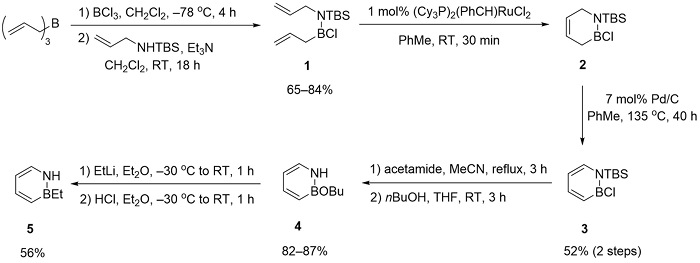
Figure 1: Synthetic scheme of 1,2-azaborines. Detailed protocols for the synthesis of each compound (1-5) are described in the protocol section. Please click here to view a larger version of this figure.
- Preparation of N-allyl-N-TBS-B-allyl chloride adduct (1)
- In a glove box, measure out 6.70 g (50.0 mmol) triallylborane22 into an oven-dried 24/40 1 L round-bottom flask equipped with a stir bar and add 250 mL dichloromethane. Seal the flask with a rubber septum. Outside the box, cool the solution to -78 °C under a nitrogen atmosphere on a vacuum gas manifold.
- Add 100 mL of 1.00 M boron trichloride solution (100 mmol) in hexane to the triallylborane solution at -78 °C via cannula transfer. Let the reaction mixture stir at this temperature for 4 h.
NOTE: Caution, boron trichloride is highly reactive with water. - In a separate 100 mL flask, measure out 25.7 g N-(t-butyldimethylsilyl)-N-allylamine (150 mmol) and add 20.0 mL dichloromethane. To the 1 L reaction flask, add this solution via cannula transfer maintaining the reaction temperature at -78 °C.
- Add 21.0 mL triethylamine (150 mmol) to the reaction. Maintain stirring under a positive flow of nitrogen and allow it to gradually warm to room temperature overnight.
- After 18 h of stirring, remove approximately one-half of the solvent through a vacuum gas manifold using high vacuum (300-500 mTorr) with a liquid nitrogen trap.
- Take the reaction flask into a glove box and filter off the white salt formed in the reaction mixture through an oven-dried medium-porosity frit equipped with a 24/40 vacuum adaptor and a 24/40 500 mL round-bottom flask with a stir bar. Use dichloromethane to transfer all the remaining materials.
- Remove all the remaining volatiles from the filtrate outside the box using a vacuum gas manifold with high vacuum.
- In a glove box, transfer the concentrated reaction mixture into an oven-dried 14/20 100 mL round-bottom flask with a stir bar to prepare for distillation. Cap the flask with a septum.
- Under a flow of nitrogen, quickly open the septum and add 200 mg calcium hydride as a drying agent.
- Set up distillation apparatus by fitting an oven-dried 14/20 distillation head attached with a thermometer, one side with a receiving 14/20 50 mL air-free storage flask and the other side with the 100 mL flask containing crude product. Equip the distillation head with chilled water. (Use grease for all the joints of the distillation apparatus.)
NOTE: The product begins to distill when the vapor temperature reaches 60 °C at 300 mTorr. - Continue collecting the product by raising the temperature of the oil bath until the distillation head thermometer reads 75 °C.
NOTE: The product is a clear colorless liquid. - Stop distillation by removing the heat source and cool the apparatus to room temperature prior to storage. Upon cooling, repressurize the apparatus with nitrogen and tightly close the plug valve on the air-free storage flask. Store the isolated product in a glove box freezer.
NOTE: The yield can vary from 65% to 84%.
- Preparation of N-TBS-B-Cl ring-closed product (2)
- In a glove box, measure out 56.0 g N-allyl-N-TBS-B-allyl chloride adduct (1) (217 mmol) in an oven-dried 24/40 1 L round-bottom flask with a stir bar and add 500 mL toluene.
- Measure out 1.79 g Grubbs 1st generation catalyst (2.17 mmol).
- Add the catalyst portion-wise to the stirring solution of 1 at room temperature in a glove box. Purge the box during the addition to remove ethylene gas formed from the reaction.
NOTE: The reaction is typically complete within 30 min of the cessation of gas evolution. As another indicator of completion, the reaction color will have completely changed from its initial purple to brown. At this point, the product can be isolated using vacuum distillation; see reference 12 for details. In this protocol, a one-pot, two-step procedure for the direct synthesis of 3 is described.
- Preparation of N-TBS-B-Cl-1,2-azaborine (3)
- To the reaction solution of the ring-closed product (2) in toluene, add 14.0 g palladium on carbon (10 wt% Pd, 13.2 mmol).
- Remove the flask from the box and fit it with an oven-dried 24/40 reflux condenser that has been purged with nitrogen and equipped with chilled water.
- Heat the reaction using an oil bath to a vigorous reflux at 135 °C while stirring.
- After maintaining at reflux for 16 h, cool the reaction by removing the flask from the oil bath. Upon cooling to room temperature, withdraw a 0.5 mL aliquot from the reaction mixture using a syringe equipped with an oven-dried Luer lock needle. Transfer the 0.5 mL aliquot to a screw-top NMR tube to analyze via 11B NMR12.
NOTE: The desired product peak appears at ca. 35.5 ppm12, while the starting material peak appears at ca. 42.9 ppm12. Usually at this point 11B NMR indicates the reaction is incomplete, with a minor starting material peak remaining. - If the reaction is incomplete, bring the reaction flask into a glove box and add an additional 3.00 g palladium on carbon (10 wt% Pd, 2.82 mmol).
- Resubject the reaction to reflux conditions as described in 1.3.2 and 1.3.3.
- After an additional 24 h at reflux, analyze another aliquot of the reaction by 11B NMR. At this point, the reaction should be complete.
- Transfer the reaction flask to the glove box and pass the reaction mixture through a disposable flash chromatography column packed with paper wipes. Collect the filtrate by washing with 50.0 mL of toluene.
- Remove all the volatiles from the filtrate outside the box on a vacuum gas manifold equipped with high vacuum.
NOTE: Removal of the volatiles can take 40 min to 90 min depending on the vacuum pressure. When the vacuum gauge reads maximum pressure, it indicates that the removal of solvent is complete. While removing solvent, make sure that the water bath underneath the flask remains at room temperature for heat dissipation. - In a glove box, transfer the concentrated reaction mixture into an oven-dried 24/40 250 mL round-bottom flask with a stir bar. Cap the flask with a septum.
- Quickly remove the septum and add 200 mg calcium hydride as a drying agent.
- Set up distillation apparatus by fitting an oven-dried 24/40 distillation head attached with a thermometer, one side with a receiving 24/40 100 mL air-free storage flask and the other side with the 100 mL flask containing crude product. Equip the distillation head with chilled water. Use grease for all the joints of the distillation apparatus.
NOTE: The product begins to distil when the vapor temperature reaches 65 to 70 °C at 1,000 mTorr with an oil bath temperature between 90-100 °C. The product is a clear colorless liquid. - Stop distillation by removing the heat source and cool the apparatus to room temperature prior to storage. Upon cooling, repressurize the apparatus with nitrogen and tightly close the plug valve on the air-free storage flask. Store the isolated product in a glove box freezer at -30 °C.
NOTE: The yield for the one-pot, two-step procedure is 52%.
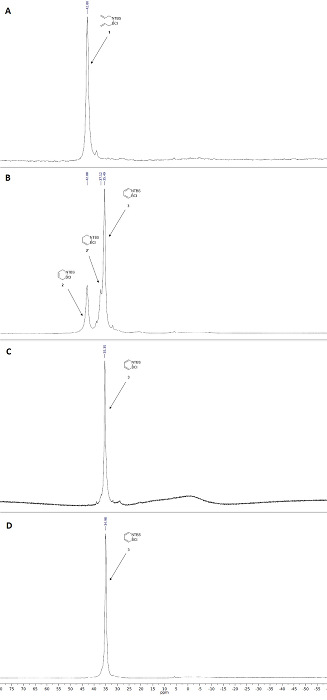
Figure 2: 11B NMR spectra for monitoring formation of N-TBS-B-Cl-1,2-azaborine (3). A) N-Allyl-N-TBS-B-allyl chloride adduct (1), starting material for ring closing metathesis. B) Oxidation after 16 h. (Unreacted N-TBS-B-Cl ring-closed product (2) and isomerized B-vinyl ring-closed product (2') along with N-TBS-B-Cl-1,2-azaborine (3) are shown.) C) Oxidation after additional 24 h. D) Isolated product (3) after purification by vacuum distillation. Please click here to view a larger version of this figure.
- Preparation of N-H-B-OBu-1,2-azaborine (4)
- In a glove box, measure out 4.00 g N-TBS-B-Cl-1,2-azaborine (3) (17.6 mmol) in an oven-dried 100 mL round-bottom flask with a stir bar and add 35 mL acetonitrile. Measure out 1.14 g acetamide (19.3 mmol) and transfer to the reaction flask. Seal the flask with a rubber septum.
- Remove the reaction flask from the box and fit with an oven-dried 24/40 reflux condenser that has been purged with nitrogen and equipped with chilled water.
- Heat the reaction to reflux at 85 °C in an oil bath with stirring.
- After 3 h at reflux, cool the reaction by removing the flask from the oil bath. Upon cooling to room temperature, remove the solvent on a vacuum gas manifold equipped with high vacuum.
- After removing the volatiles under vacuum, redissolve the reaction residue in 15.0 mL THF. To this solution add 3.21 mL of n-butanol (35.1 mmol).
- Stir the reaction at room temperature for 1 h.
- Remove the solvent on a vacuum gas manifold equipped with high vacuum to obtain the crude product.
- In a glove box, isolate the product via silica gel column chromatography, using a mixture of pentane and diethyl ether (5:1) as eluent. Remove volatiles from the product-containing fractions using a vacuum gas manifold equipped with high vacuum to obtain the pure product as a white solid.
NOTE: The yield can vary from 82% to 87%.
- Preparation of N-H-B-ethyl-1,2-azaborine (5)
- In a glove box, measure out 1.00 g N-H-B-OBu-1,2-azaborine (4) (6.62 mmol) in an oven-dried 100 mL round-bottom flask with a stir bar and add 25 mL Et2O. Seal the flask with a rubber septum and place under N2 on a vacuum gas manifold.
- In a separate oven-dried 100 mL round bottom flask, add 26.5 mL of ethyllithium solution (0.5 M in benzene/cyclohexane, 13.2 mmol) under nitrogen atmosphere. Remove the mixture of the solvent (benzene/cyclohexane) from the ethyllithium reagent to avoid issues with isolating the desired azaborine product. Redissolve the solid ethyllithium in 13.0 mL Et2O.
NOTE: Caution: Organolithium reagents are pyrophoric (ignitable on contact with air or water). The desired product (5) is particularly volatile (MW= 106.96). Therefore, removal of benzene/cyclohexane solvent from ethyllithium reagent is required for effective isolation of the pure product due to the similar volatility with the desired product. - Cool the reaction flask containing 4 to -30 °C with a cooling bath.
- Add the ethyllithium solution to the reaction flask via cannula transfer at -30 °C. Keep stirring at this temperature for 1 h and allow it to slowly warm to room temperature.
- Monitor the reaction by 11B NMR. (The desired intermediate peak appears at ca. 39.8 ppm.)
- Upon reaction completion, cool the reaction to -30 °C and add 6.62 mL HCl solution (2.0 M in Et2O, 13.2 mmol). Stir the reaction for 1 h while allowing it to slowly warm to room temperature.
- Remove the solvent on a vacuum gas manifold equipped with low vacuum (20-25 Torr) to obtain the crude product mixture.
- In a glove box, isolate the product via silica gel column chromatography, using 2-methylbutane as eluent. Remove the volatile on a vacuum gas manifold equipped with an attenuated vacuum to obtain the pure product as a colorless liquid.
NOTE: The yield is 56%.
2. Protein Preparation and Crystallization of T4 Lysozyme Mutants
- Protein expression and purification
- Grow E. coli RR1 cells transformed with the subcloned plasmids (L99A or L99A/M102Q)17, 20 in 200 mL LB (lysogeny broth) media supplemented with 40.0 mg ampicillin at 37 °C for 12 h.
NOTE: The composition of LB media is 12 g tryptone, 5 g yeast extract, 10 g sodium chloride, and 1 g glucose per 1 L H2O. - Inoculate 4.00 L LB media (supplemented with 800 mg ampicillin) with 160 mL of the overnight culture and incubate at 37 °C at 240 rpm with a filtered air supply.
- When the optical density reaches 0.7 at 600 nm, cool the bacterial culture to room temperature by removing it from the incubator.
- Measure out 695 mg of isopropyl-β-D-1-thiogalactopyranoside (IPTG) (final concentration of 0.7 mM) in a conical centrifugation tube and add 4 mL LB media to dissolve.
- Add the IPTG solution to the culture to induce protein expression. Incubate the cultures at 110 rpm for 21 h at 25 °C.
- Centrifuge the culture at 4,412 x g for 30 min at 4 °C. Discard the supernatant and resuspend the pellet in 300 mL of 0.1 M sodium phosphate (pH 6.6), 0.2 M NaCl and add 30.0 mL of 0.5 M ethylenediaminetetraacetic acid (EDTA) (pH 8.0). Stir the suspension for 17 h at 4 °C.
- Add 30.0 mL of 1.0 M MgCl2 and 0.500 mL of deoxyribonuclease I (DNase I) to the suspension and stir at room temperature for 8 h.
- Centrifuge the lysed cell suspension at 30,913 x g for 30 min at 4 °C. Collect the supernatant containing expressed protein and discard the pellet.
- Dialyze the lysate against 20 mM sodium phosphate (pH 6.5 for L99A and pH 6.3 for L99A/M102Q) at 4 °C overnight.
- Wash and equilibrate 20.0 mL of carboxymethyl ion exchange beads with equilibration buffer (50 mM Tris, 1 mM EDTA (pH 7.3)) in a column. Load the solution containing protein onto the beads and wash the column with 100 mL of the equilibration buffer. Elute the column with a 600 mL linear gradient of 300 mM NaCl within the equilibration buffer.
- Use a low-pressure chromatography system for the column purification. Use a pump rate of 1 mL/min and collect fractions of 10 mL. Collect the fractions containing pure protein.
NOTE: During elution, monitor the optical density (OD) at 280 nm to verify presence of the protein. Determine the purity of each fraction by SDS-PAGE and collect only the purest fractions.
- Grow E. coli RR1 cells transformed with the subcloned plasmids (L99A or L99A/M102Q)17, 20 in 200 mL LB (lysogeny broth) media supplemented with 40.0 mg ampicillin at 37 °C for 12 h.
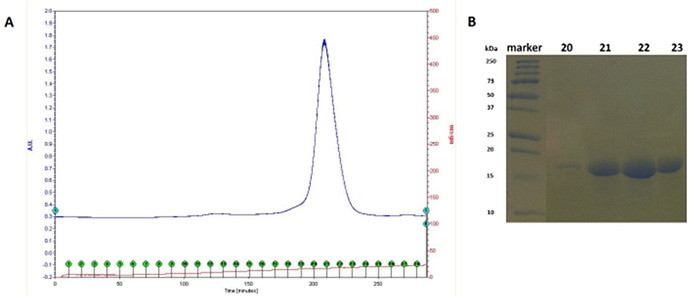
Figure 3: Representative results for the protein purification of T4 lysozyme mutant L99A/M102Q. A) Chromatogram showing the measured UV absorbance in A. U. at 280 nm (blue line) and conductivity in mS/cm (red line). Fractions 20–23 were combined and the purity was determined by SDS-PAGE. B) 15% SDS-PAGE gel showing the presence of purified protein of fractions 20–23 at 18.6 kDa. Please click here to view a larger version of this figure.
- Protein crystallization
- Transfer the purified protein solution to a dialysis membrane tubing (12,000 to 14,000 MWCO). Place the dialysis tubing into a beaker containing 4.00 L of 100 mM sodium phosphate, 550 mM NaCl, 0.02% NaN3 (pH 6.5 for L99A and pH 6.3 for L99A/M102). Stir the 4 L solution overnight at 4 °C.
- Add 2-mercaptoethanol (final concentration of 5 mM) to the dialyzed sample and concentrate to ~40.0 mg/mL using a centrifugal concentrator (10,000 MWCO). Determine the protein concentration by measuring absorption at 280 nm. Remove any precipitate by spinning prior to crystallization.
- Use the vapor-diffusion hanging-drop method for protein crystallization. Mix 5.00 µL of the concentrated protein solution with 5.00 µL of the reservoir solution (2.0-2.2 M sodium/potassium phosphate, pH 6.7-7.1, 50 mM 2-mercaptoethanol, 50 mM 2-hydroxyethyl disulfide) on a siliconized glass cover slide.
- Equilibrate the mixture drop against 1.00 mL of the reservoir solution by placing the cover slide upside down on top of the each well containing reservoir solution. Use grease to tightly seal each well with the slide. Set up various conditions using a 24-well plate with reservoir solution mentioned in 2.2.3. Store the plate at 4 °C for crystal growth.
NOTE: Crystals normally grow within 1-2 weeks in the equilibrated buffer on the cover slide. Immediate precipitation during mixing protein solution with the reservoir solution in step 2.2.3 indicates failure of crystallization.
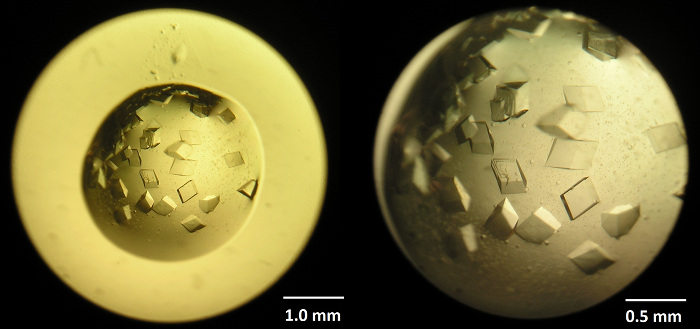
Figure 4: Representative picture of crystals of T4 lysozyme mutant L99A prior to complexation with ligands. Crystals are in the mother liquor (2.1 M sodium/potassium phosphate, pH 6.9, 50 mM 2-mercaptoethanol, 50 mM 2-hydroxyethyl disulfide). Please click here to view a larger version of this figure.
- Complex preparation
- Pick the crystals using a cryogenic tubing shaped into a loop (see Materials List) and place them in a 0.6 mL microcentrifuge tube. Add 50.0 µL of mother liquor to the tube to avoid dryness and preserve the crystals.
NOTE: Single crystal selection is aided by using a microscope. - Transfer the tube containing crystals into a glove box. Take 5.00 µL of the azaborine ligand (5) and place inside of the snap-cap of the tube. Cap and store the tube in a refrigerator (4 °C) inside the glove box for 2-7 days for equilibration by vapor diffusion.
NOTE: The physical properties (high volatility and solubility in aqueous solution) of the azaborine ligand (5) enables the complexation with the preformed protein crystals via vapor diffusion method. - Transfer the crystals using a cryogenic tubing shaped into a loop to a glass slide containing a droplet of N-paratone prior to flash-freezing in liquid nitrogen. Pick the crystal protected with N-paratone and rapidly flash-freeze by plunging the crystal on loop into a dewar containing liquid nitrogen. Mount the crystal on loop by using a cryogenic tong.
- Collect data sets of a single crystal using synchrotron radiation. Perform molecular replacement using published structures20,24; verify the existence of ligand inside the protein binding site by an un-modeled blob of electron density.
- Pick the crystals using a cryogenic tubing shaped into a loop (see Materials List) and place them in a 0.6 mL microcentrifuge tube. Add 50.0 µL of mother liquor to the tube to avoid dryness and preserve the crystals.
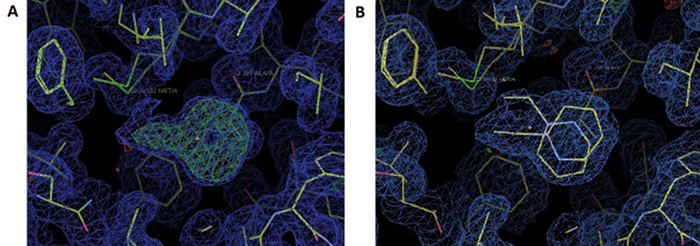
Figure 5: Atomic models of T4 lysozyme mutant L99A binding pocket with electron density. A) L99A cavity with an un-modeled electron density blob in the binding site. B) L99A cavity with the modeled azaborine ligand 5 in two alternative conformers. Please click here to view a larger version of this figure.
Access restricted. Please log in or start a trial to view this content.
Results
The schematic synthetic route for 1,2-azaborines is shown in Figure 1. This protocol applies to the synthesis of five different boron-nitrogen containing molecules. Figure 2 represents 11B NMR spectra measured during the course of step 1.3 to monitor the formation of the desired product (3). Protein purification was performed by using low-pressure chromatography system and a representative chromatogram is shown in Figur...
Access restricted. Please log in or start a trial to view this content.
Discussion
In the first part of this protocol, we described a modified synthesis of 1,2-azaborines based on previously reported methods12, 13. Triallylborane22 was used as a substitute for the routes using allyltriphenyl tin or potassium allyltrifluoroborate to prepare N-allyl-N-TBS-B-allyl chloride adduct (1). This method allows for a more atom-economical and environmentally friendly approach. For the synt...
Access restricted. Please log in or start a trial to view this content.
Disclosures
All authors declare no competing financial interests in this manuscript.
Acknowledgements
This research was supported by the National Institutes of Health NIGMS (R01-GM094541) and Boston College.
Access restricted. Please log in or start a trial to view this content.
Materials
| Name | Company | Catalog Number | Comments |
|---|---|---|---|
| Tetrahydrofuran (THF), inhibitor-free, for HPLC, ≥99.9% | Sigma Aldrich | 34865 | |
| Diethyl ether (Et2O), for HPLC, ≥99.9%, inhibitor-free | Sigma Aldrich | 309966 | |
| Methylene chloride (CH2Cl2), (Stabilized/Certified ACS) | Fisher | D37-20 | |
| Toluene | Fisher | T290-4 | |
| Pentane, HPLC | Fisher | P399-4 | |
| Acetonitrile | Fisher | A21-4 | |
| Calcium hydride (CaH2), reagent grade, 95% | Sigma Aldrich | 208027 | Pyrophoric |
| Palladium on activated carbon (Pd/C), 10 wt% Pd | Strem | 46-1900 | |
| 1.0 M Boron trichloride solution in hexane | Sigma Aldrich | 211249 | Highly toxic/Pyrophoric |
| Triethylamine, ≥99.5% | Sigma Aldrich | 471283 | |
| Grubbs 1st generation catalyst | materia | C823 | |
| Acetamide | Sigma Aldrich | A0500 | |
| n-Butanol, anhydrous, 99.8% | Sigma Aldrich | 281549 | |
| Ethyllithium solution, 0.5 M in benzene/cyclohexane | Sigma Aldrich | 561452 | Highly toxic/ Pyrophoric |
| HCl solution, 2.0 M in Et2O | Sigma Aldrich | 455180 | |
| 2-Methylbutane, anhydrous, ≥99% | Sigma Aldrich | 277258 | |
| Escherichia coli, (Migula) Castellani and Chalmers (ATCC® 31343™) | ATCC | 31343 | |
| T4 lysozyme WT* (L99A) | Addgene | 18476 | |
| T4 lysozyme mutant (S38D L99A M102Q N144D) | Addgene | 18477 | |
| Ampicillin sodium salt | Sigma Aldrich | A0166 | |
| isopropyl-β-D-1-thiogalactopyranoside (IPTG) | Invitrogen | AM9464 | |
| Sodium phosphate monobasic anhydrous | Fisher | BP329 | |
| Sodium Phosphate dibasic anhydrous | Fisher | BP332 | |
| Sodium chloride | Fisher | S642212 | |
| Ethylenediaminetetraacetic acid | Fisher | BP118 | |
| Magnesium chloride | Sigma Aldrich | M4880 | Corrosive |
| Thermo scientific pierce DNaseI | Fisher | PI-90083 | |
| GE Healthcare Sepharose Fast Flow Cation Exchange Media | Fisher | 45-002-931 | |
| Tris-base | Fisher | BP152-500 | |
| Sodium azide | TCI | S0489 | Highly toxic |
| 2-Mercaptoethanol | Fisher | ICN806443 | |
| Sartorius Vivaspin 20 Centrifugal Concentrators | Fisher | 14-558-501 | |
| Potassium phosphate monobasic | Sigma Aldrich | P5379 | |
| 2-Hydroxyethyl disulfide | Sigma Aldrich | 380474 | |
| N-paratone | Hampton Research | HR2-643 | |
| 4 RC Dialysis Membrane Tubing 12,000 to 14,000 Dalton MWCO | Fisher | 08-667E | |
| CryoLoop | Hampton Research | cryogenic tubing shaped into a loop | |
| CryoTong | Thermo Fisher | cryogenic tong | |
| Coot | Electron density images are generated from the software |
References
- Ducruix, A., Giége, R. Crystallization of Nucleic Acids and Proteins, A Practical Approach. , IRL Press. Oxford, UK, New York. (1992).
- Bosdet, M. J. D., Piers, W. E. B-N as a C-C substitute in aromatic systems. Can. J. Chem. 87 (1), 8-29 (2009).
- Campbell, P. G., Marwitz, A. J., Liu, S. -Y. Recent Advances in Azaborine Chemistry. Angew. Chem. Int. Ed. 51 (25), 6074-6092 (2012).
- Wang, X. -Y., Wang, J. -Y., Pei, J. B. N. Heterosuperbenzenes: Synthesis and Properties. Chem. Eur. J. 21 (9), 3528-3539 (2015).
- Zhou, H. -B., et al. Elemental isomerism: a boron-nitrogen surrogate for a carbon-carbon double bond increases the chemical diversity of estrogen receptor ligands. Chem. Biol. 14 (6), 659-669 (2007).
- Ito, H., Yumura, K., Saigo, K. Synthesis, characterization, and binding property of isoelectronic analogues of nucleobases, B(6)-substituted 5-aza-6-borauracils and -thymines. Org. Lett. 12 (15), 3386-3389 (2010).
- Vlasceanu, A., Jessing, M., Kilburn, J. P. BN/CC isosterism in borazaronaphthalenes towards phosphodiesterase 10A (PDE10A) inhibitors. Bioorg. Med. Chem. 23 (15), 4453-4461 (2015).
- Rombouts, F. J., Tovar, F., Austin, N., Tresadern, G., Trabanco, A. A. Benzazaborinines as Novel Bioisosteric Replacements of Naphthalene: Propranolol as an Example. J. Med. Chem. 58 (23), 9287-9295 (2015).
- Culling, G. C., Dewar, M. J. S., Marr, P. A. New Heteroaromatic Compounds. XXIII. Two Analogs of Triphenylene and a Possible Route to Borazarene. J. Am. Chem. Soc. 86 (6), 1125-1127 (1964).
- White, D. G. 2-Phenyl-2,1-borazarene and Derivatives of 1,2-Azaboracycloalkanes. J. Am. Chem. Soc. 85 (22), 3634-3636 (1963).
- Ashe III, A. J., Fang, X. A Synthesis of Aromatic Five- and Six-Membered B−N Heterocycles via Ring Closing Metathesis. Org. Lett. 2 (14), 2089-2091 (2000).
- Marwitz, A. J. V., Matus, M. H., Zakharov, L. N., Dixon, D. A., Liu, S. -Y. A Hybrid Organic/Inorganic Benzene. Angew. Chem. Int. Ed. 48 (5), 973-977 (2009).
- Abbey, E. R., Lamm, A. N., Baggett, A. W., Zakharov, L. N., Liu, S. -Y. Protecting Group-Free Synthesis of 1,2-Azaborines: A Simple Approach to the Construction of BN-Benzenoids. J. Am. Chem. Soc. 135 (34), 12908-12913 (2013).
- Rudebusch, G. E., Zakharov, L. N., Liu, S. -Y. Rhodium-catalyzed boron arylation of 1,2-azaborines. Angew. Chem. Int. Ed. 52 (35), 9316-9319 (2013).
- Brown, A. N., Li, B., Liu, S. -Y. Negishi Cross-Coupling Is Compatible with a Reactive B-Cl Bond: Development of a Versatile Late-Stage Functionalization of 1,2-Azaborines and Its Application to the Synthesis of New BN Isosteres of Naphthalene and Indenyl. J. Am. Chem. Soc. 137 (28), 8932-8935 (2015).
- Knack, D. H. BN/CC Isosteric Compounds as Enzyme Inhibitors: N- and B-Ethyl-1,2-azaborine Inhibit Ethylbenzene Hydroxylation as Non-Convertible Substrate Analogs. Angew. Chem. Int. Ed. 52 (9), 2599-2601 (2013).
- Eriksson, A. E. Response of a Protein Structure to Cavity-Creating Mutations and Its Relation to the Hydrophobic Effect. Science. 255 (5041), 178-183 (1992).
- Eriksson, A. E., Baase, W. A., Wozniak, J. A., Matthews, B. W. A cavity-containing mutant of T4 lysozyme is stabilized by buried benzene. Nature. 355 (6358), 371-373 (1992).
- Morton, A., Baase, W. A., Matthews, B. W. Energetic Origins of Specificity of Ligand Binding in an Interior Nonpolar Cavity of T4 Lysozyme. Biochemistry. 34 (27), 8564-8575 (1995).
- Wei, B. Q., Baase, W. A., Weaver, L. H., Matthews, B. W., Shoichet, B. K. A Model Binding Site for Testing Scoring Functions in Molecular Docking. J. Mol. Biol. 322 (2), 339-355 (2002).
- Lee, H., Fischer, M., Shoichet, B. K., Liu, S. -Y. Hydrogen Bonding of 1,2-Azaborines in the Binding Cavity of T4 Lysozyme Mutants: Structures and Thermodynamics. J. Am. Chem. Soc. 138 (37), 12021-12024 (2016).
- Brown, H. C., Racherla, U. S. Organoboranes. 43. A Convenient, Highly Efficient Synthesis of Triorganylboranes via a Modified Organometallic Route. J. Org. Chem. 51 (4), 427-432 (1986).
- Laemmli, U. K. Cleavage of structural proteins during the assembly of the head of bacteriophage T4. Nature. 227, 680-685 (1970).
- Liu, L., Baase, W. A., Matthews, B. W. Halogenated Benzenes Bound within a Non-polar Cavity in T4 Lysozyme Provide Examples of I.S and I.Se Halogen-bonding. J. Mol. Biol. 385 (2), 595-605 (2009).
Access restricted. Please log in or start a trial to view this content.
Reprints and Permissions
