This paper presents a protocol for the fabrication of a conduction micropump using symmetric planar electrodes on flame-retardant glass-reinforced epoxy (FR-4) copper-clad laminate (CCL) to test the influence of chamber dimensions on the performance of a conduction micropump.
A subscription to JoVE is required to view this content. Sign in or start your free trial.
Method Article
A Performance-testing Platform for a Conduction Micropump with an FR-4 Copper-clad Electrode Plate
In This Article
Summary
Abstract
Here, a conduction micropump with symmetric planar electrode pairs prepared on flame-retardant glass-reinforced epoxy (FR-4) copper-clad laminate (CCL) is fabricated. It is used to investigate the influence of chamber dimensions on the performance of a conduction micropump and to determine the reliability of the conduction pump when acetone is used as the working fluid. A testing platform is set up to evaluate conduction micropump performance under different conditions. When the chamber height is 0.2 mm, the pump pressure reaches its peak value.
Introduction
Micropumps can drive liquid flow on a much smaller scale than most pumps. In recent years, various driving schemes have been applied successfully to microfluidic systems1,2,3,4,5. The electrohydrodynamic (EHD) pump can exert forces directly on the liquid, without any moving parts, which makes it simpler and easier to fabricate6. According to the charge types, EHD pumps can be classified as injection pumps, induction pumps, or conduction pumps. Induction pumps do not work on isothermal liquids, while injection pumps change the liquid conductivity. Because they lack such problems, conduction pumps are more stable and have a wider application.
The conduction pump is based on the mismatch of the dissociation and recombination rates of liquid molecules. Normally, the dissociation and recombination process can be expressed as follows7,8:
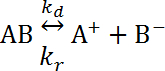
where the recombination rate kr is constant while the dissociation rate kd is a function of the electric field strength. When the electric field strength reaches a certain value, the dissociation rate will exceed the recombination rate. Then, more and more free charges travel to the two electrodes of opposite polarity, and heterocharge layers form. These heterocharge layers are the key to the pump, as the movement of the charges pushes the liquid molecules forward. Therefore, net body force can be generated in the liquid within the chamber using asymmetric electrodes or the mismatch of the mobility of positive and negative ions9,10,11,12.
This work introduces a new way of fabricating a symmetric planar electrode plate for a conduction pump. The electrode plate is prepared on FR-4 CCL, and the pump chamber is prepared by micromachining. The fabrication processes are relatively simpler and more convenient than those of other manufacturing methods, such as nanolithography. A testing platform is set up to investigate the performance of the conduction micropump under different conditions. Furthermore, the reliability of the conduction micropump is also investigated under different circumstances.
Access restricted. Please log in or start a trial to view this content.
Protocol
Caution: Please consult all relevant material safety data sheets (MSDS) before use. Acetone is highly flammable and can cause irritation to the eyes and respiratory tract. The voltage involved is as high as several thousand volts; hence, electrical sparks are expected when conducting the experiment. Carry out the experiments in a room with good ventilation to avoid explosions and fire from the sparks.
1. Fabrication of the Plates and Holder
NOTE: In this work, the electrode plates and holder are fabricated by a production line in a factory. Only the material and the parameters of all parts in this paper will be introduced due to the complicated processes.
- Material and size of the electrode plate
- Fabricate the electrode plates using 1.4 mm FR-4 CCL with a thin copper layer of 35 µm. See Figure 1 for detailed parameters of the electrode plate.
- Parameters of the electrodes
- Order the electrode plates from the factory. See Figure 2 for more details.
- Inspection of the electrode plate
- After the preparation of the electrode plate, use an electron microscope to inspect the electrodes for any noticeable flaws under 100X and 300X magnification. Note that any tiny defects on the surface of the electrodes can cause short-circuiting, as shown in Figure 3.
- Inspect and measure the electrode width and spacing to determine whether the dimension accuracy meets the requirement.
- Test the plate with an amperemeter to see if an electrical short-circuit occurs.
- Preparation of the chamber plate
- Cut some silicone membrane to the same size as the electrode plate, as shown in Figure 4. Choose silicone membranes with different thicknesses to make chamber plates with different heights.
- Use a special punching tool to punch the chamber hole, as shown in Figure 5.
- Processing of the holder
- Order the holder from a factory. The detailed parameters are shown in Figure 6.
- Fabrication of the cover plate
- Drill two holes on the top of the cover plate using a drilling machine to install the inlet and outlet tubes. See Figure 7 for their positions and sizes.
2. Assembly of the Micropump
- Use acetone to wash all the plates, the holder, the inlet and outlet tubes, and other tools used in the experiments. Put these tools and plates inside a beaker and then pour enough 99.5% acetone to immerse them. Put the beaker inside the ultrasonic washer. Turn on the ultrasonic washer and set the timer to 5 min.
- Insert the inlet and outlet stainless-steel tubes into the two holes on the cover plate.
- Place a chamber plate made of silicone membrane on the electrode plate and then cover it with the cover plate.
- Stack and align the cover plate, the chamber plate, and the electrode plate from top to bottom and insert the aligned plates into the holder.
- Use an M5 bolt to fix the plates inside the holder. See the explosion view and normal view of the assembled micropump, as shown in Figure 8 and Figure 9, respectively.
- Press the plates together by tightening the bolts.
NOTE: The tubes and the cavity on the chamber plate will form a passage for the working liquid. The elastic chamber plate can also seal off the gap between plates to prevent liquid from flowing out. See the explosion view and the normal view of the assembled micropump in Figure 8 and Figure 9, respectively.
- Use two polyurethane hoses with external diameters of 4 mm and internal diameters of 2 mm to connect the inlet and outlet stainless-steel tubes.
- Connect an amperemeter, a 500 V DC power source, and the micropump in series. Insert a 1 mA fuse between the amperemeter and the power source to protect the amperemeter in case the micropump is shorted.
- Insert the inlet hose into a 50 mL beaker with 20-30 mL of acetone inside.
NOTE: Figure 10 shows the completed platform.
3. Experimental Procedure
- Preparatory work before the experiment
- Use a cylinder to inject acetone to fill up the micropump. After the liquid level reaches the outlet hose, continue to inject 10 mL of acetone inside until all bubbles are pushed away from the chamber.
NOTE: It is impossible to see if there are any bubbles left inside the chamber because the cover plate and the electrode plate are not transparent. Continuously injecting acetone helps to remove bubbles, but it cannot guarantee that no bubbles are left inside the micropump. Bubbles may block the passage of liquid, or they may short the circuits and cause a micro-explosion inside the micropump, which will burn the electrodes. The effect of bubbles on the pump operation is not totally clear yet, but the breakdowns they cause have been observed several times. - Pour 20-30 mL of acetone into the beaker and put the inlet hose inside the beaker. Ensure that the liquid level is at least 5 mm higher than the inlet so that acetone can flow into the pump and no air can be sucked into the micropump chamber.
- Use a cylinder to inject acetone to fill up the micropump. After the liquid level reaches the outlet hose, continue to inject 10 mL of acetone inside until all bubbles are pushed away from the chamber.
- Static pressure test
- Attach the outlet hose to a small frame so that the hose can remain straight and vertical. Put a ruler alongside the outlet hose to measure the liquid level.
- Connect the micropump to the power source.
- Start the test by pressing the switch and then mark down the initial liquid level.
- After the liquid level becomes stable, record the time, the final liquid level, and the electric current.
- Continue to record the liquid level and the current every 10 s until the micropump breaks down.
- Flow rate test
- Use a large measuring cylinder to collect the liquid coming out of the outlet hose. Be sure to fix the outlet hose so that the end remains at the same altitude as the liquid level in the beaker.
- Connect the micropump to the power source.
- Start the test by pressing the switch and then mark down the initial liquid level.
- As the liquid starts to flow out of the outlet hose, record the volume of acetone inside the measuring cylinder every 10 s. As the experiment goes on, add acetone to the beaker to maintain the liquid level.
- Reliability test
- Use the average working time to evaluate the reliability of the pump. During the flow rate test and the static pressure test, record the operation time before the pump breaks down. Record the detailed phenomena of each breakdown during the experiment and inspect the electrode plate surface afterwards for further analysis.
Access restricted. Please log in or start a trial to view this content.
Results
As shown in Figure 11, the pump pressure and its increasing rate rise when the voltage increases. When the voltage reaches 500 V, the pump pressure reaches 1,100 Pa.
The pump static pressure rises with the pump chamber height increasing when the chamber height is under 0.2 mm. The pump performance reaches its highest point when the chamber height is 0.2 mm. Then, the static pressure drops when the c...
Access restricted. Please log in or start a trial to view this content.
Discussion
One of the critical steps within the protocol is to inspect the electrode plate carefully. Small burrs on the edge of an electrode can result in a short-circuit, and surface integrity can greatly affect pump performance. The cleaning of the electrode plate and holder is also very important. The electrode chamber height is less than 1 mm, so small dust particles may block the working liquid flow and cause a short-circuit. Before the test, injecting acetone into the chamber can remove the bubbles outside of the chamber.
Access restricted. Please log in or start a trial to view this content.
Disclosures
The authors have nothing to disclose.
Acknowledgements
This work was sponsored by the National Natural Science Foundation of China (51375176); the Guangdong Provincial Natural Science Foundation of China (2014A030313264); and the Science and Technology Planning Project of Guangdong Province, China (2014B010126003).
Access restricted. Please log in or start a trial to view this content.
Materials
| Name | Company | Catalog Number | Comments |
|---|---|---|---|
| Amperemeter | - | 85C1-MA | |
| DC high voltage power supply | NanTong Jianuo electric device company | GY-WY500-1 | |
| Fuse | - | - | |
| Ultrasonic cleaner | Derui ultrasonic device company | - | |
| Soldering iron | - | - |
References
- Kazemi, P. Z., Selvaganapathy, P. R., Ching, C. Effect of micropillar electrode spacing on the performance of electrohydrodynamic micropumps. J Electrostat. 68 (4), 376-383 (2010).
- Kano, I., Nishina, T. Effect of electrode arrangements on EHD conduction pumping. IEEE Trans Ind Appl. 49 (2), 679-684 (2013).
- Laser, D. J., Santiago, J. G. A review of micropumps. J Micromech Microeng. 14 (6), R35(2004).
- Fylladitakis, E. D., Theodoridis, M. P., Moronis, A. X. Review on the history, research, and applications of electrohydrodynamics. IEEE Trans Plasma Sci. 42 (2), 358-375 (2014).
- Yazdani, M., Seyed-Yagoobi, J. Effect of Charge Mobility on Electric Conduction Driven Dielectric Liquid Flow. Electrostatics Joint Conf. , (2009).
- Gharraei, R., Esmaeilzadeh, E., Hemayatkhah, M., Danaeefar, J. Experimental investigation of electrohydrodynamic conduction pumping of various liquids film using flush electrodes. J Electrostat. 69 (1), 43-53 (2011).
- Gharraei, R., Esmaeilzadeh, E., Nobari, M. R. H. Numerical investigation of conduction pumping of dielectric liquid film using flush-mounted electrodes. Theor Comp Fluid Dyn. 28 (1), 89(2014).
- Jeong, S. -I., Seyed-Yagoobi, J. Experimental study of electrohydrodynamic pumping through conduction phenomenon. J Electrostat. 56 (2), 123-133 (2002).
- Seyed-Yagoobi, J. Electrohydrodynamic pumping of dielectric liquids. J Electrostat. 63 (6), 861-869 (2005).
- Hojjati, M., Esmaeilzadeh, E., Sadri, B., Gharraei, R. Electrohydrodynamic conduction pumps with cylindrical electrodes for pumping of dielectric liquid film in an open channel. Colloid Surface A. 392 (1), 294-299 (2011).
- Yazdani, M., Seyed-Yagoobi, J. Numerical investigation of electrohydrodynamic-conduction pumping of liquid film in the presence of evaporation. J Heat Trans-T ASME. 131 (1), 011602(2009).
- Vafaie, R. H., Ghavifekr, H. B., Lintel, H., Brugger, J., Renaud, P. Bi-directional AC electrothermal micropump for on-chip biological applications. Electrophoresis. 37 (5-6), 719-726 (2016).
- Pearson, M. R., Seyed-Yagoobi, J. Experimental Study of Linear and Radial Two-Phase Heat Transport Devices Driven by Electrohydrodynamic Conduction Pumping. J Heat Trans-T ASME. 137 (2), 022901(2015).
Access restricted. Please log in or start a trial to view this content.
Reprints and Permissions
