This paper describes nitric oxide (NO) fumigation protocols for postharvest pest control. Fumigation chambers are flushed with nitrogen (N2) to establish ultralow oxygen conditions before NO is injected. At the end, chambers are flushed with N2 to dilute NO before exposing products to ambient air to prevent exposure to NO2.
Method Article
Procedures of Laboratory Fumigation for Pest Control with Nitric Oxide Gas
In This Article
Summary
Abstract
Nitric oxide (NO) is a newly discovered fumigant for postharvest pest control. This paper provides detailed protocols for conducting NO fumigation on fresh products and procedures for residue analysis and product quality evaluation. An airtight fumigation chamber containing fresh fruit and vegetables is first flushed with nitrogen (N2) to establish an ultralow oxygen (ULO) environment followed by injection of NO. The fumigation chamber is then kept at a low temperature of 2 - 5 °C for a specified time period necessary to kill a target pest to complete a fumigation treatment. At the end of a fumigation treatment, the fumigation chamber is flushed with N2 to dilute NO prior to opening the chamber to ambient air to prevent the reaction between NO and O2, which produces NO2 and may damage delicate fresh products. At different times after NO fumigation, NO2 in headspace and nitrate and nitrite in liquid samples were measured as residues. Product quality was evaluated after 2 weeks of post-treatment cold storage to determine effects of NO fumigation on product quality. Keeping O2 from reacting with NO is critical to NO fumigation and is an important part of the protocols. Measuring NO levels is challenging and a practical solution is provided. Possible protocol modifications are also suggested for measuring NO levels in the fumigation chambers as well as residues. NO fumigation has the potential to be a practical alternative to methyl bromide fumigation for postharvest pest control on fresh and stored products. This publication is intended to assist other researchers in conducting NO fumigation research for postharvest pest control and accelerating the development of NO fumigation for practical applications.
Introduction
Nitric oxide is a ubiquitous cell messenger molecule in all biological systems2. It is released in large quantities as a common pollutant of fossil fuel combustion from power plants and motor vehicles and produced in large quantities as an intermediate product in fertilizer production. Intense research on NO in the last 20 years has yielded a large amount of knowledge on its importance, functions, and mechanisms in regulating biochemical and physiological processes in various biological systems. This knowledge has resulted in various medical applications of NO for the treatment of respiratory and cardiac illnesses14,15,16. In agriculture, NO was used over 100 years ago on processed meat products for red pigment preservation3. NO also extends shelf-life and enhances postharvest quality of a wide variety of fresh products11,12,17,18,19,20. More recently, NO was found to be a potent fumigant for postharvest pest control6.
NO has been demonstrated to be effective against all life stages of the insects tested (Figure 1). The pest species tested represent diverse types and life stages of pests and indicate great potential of NO fumigation to control diverse pest species. The efficacy of NO fumigation against insect pests is close to that of methyl bromide fumigation. However, NO fumigation can be conducted at cold storage temperatures. Methyl bromide fumigation requires the warming up of cold stored products and, therefore, may impact product quality. For example, western flower thrips, Frankliniella occidentalis, and lettuce aphid, Nasonovia ribisnigri, can be controlled in 2 and 3 h with 2.0% and 1.0% NO fumigation, respectively, at 2 °C6. NO fumigation is also much faster than phosphine fumigation which is the main methyl bromide alternative treatment and can take over ten days to control some pests4,6,9,10.
Nitric oxide fumigation is effective against both external and internal feeding insects. Spotted wing Drosophila, Drosophila suzukii, larvae in infested cherries are controlled in 8 h with 2.5% NO fumigation9. Larvae of codling moth, Cydia pomonella, in infested apples are completely controlled in a 24 h fumigation with 5% NO at 2 °C9,10. The efficacy of NO fumigation increases with increasing concentration, treatment time, and temperature6. These factors can be used to optimize NO fumigation treatments for different insect species on various commodities.
However, NO reacts with O2 spontaneously to produce NO21. This not only consumes NO but can also cause damages to fresh products such as lettuce (Figure 2). Therefore, NO fumigation must be conducted under ultralow oxygen (ULO) conditions to preserve NO. For fresh products, NO fumigations also need to be terminated by flushing with N2 to dilute NO before exposing fumigated products to ambient air to reduce their exposure to NO2. These stringent requirements increase the complexity and cost of NO fumigation. However, NO fumigation is expected to be technically feasible and cost effective7. All components of large scale NO fumigation are either commercially available or can be made commercially including nitrogen generation equipment, NO supply, monitoring equipment (O2 analyzer, NO meter), and air-tight fumigation chambers. Controlled atmosphere (CA) storage and shipping under low O2 atmosphere have been used commercially. The energy cost of generating N2 for NO fumigation is also modest and will vary depending on location7.
Nitric oxide fumigation is also safe to fresh fruit and vegetables when terminated properly by flushing with N2 to dilute NO first before exposing the products to ambient air8. NO fumigation has been demonstrated to be safe to all fresh fruit and vegetables tested to date including lettuce, broccoli, cucumbers, peppers, tomatoes, strawberries, apples, pears, oranges, and lemons8. A 4 h fumigation with 1% NO at 2 °C for controlling western flower thrips also enhances strawberry quality. One week after fumigation, treated strawberries are firmer and have brighter and richer color and, therefore, better postharvest quality as compared with the control8.
Nitric oxide fumigation also does not leave harmful residues on fumigated fresh products. As NO reacts with O2 to produce NO2, NO fumigation may result in deposition of NO2 on the products due to the 21 °C boiling point of NO2. In the presence of water, NO2 hydrolyzes to form nitric acid (HNO3). Therefore, NO fumigation may potentially result in nitrates (NO3-) and nitrites (NO2-) as residues on treated commodities. When fumigation is terminated with N2 flush, NO fumigation results in no or very little increases in nitrate or nitrite as residues at 24 h after fumigation in fresh commodities9,21.
The reactive nature of NO with O2 also requires stringent procedures to keep out O2 during the process of conducting NO fumigation treatments. The complexity and stringent procedures are best illustrated visually and should be followed and mastered. In this video journal presentation, NO fumigation of fresh products was explained, illustrated, and demonstrated to allow other researchers to conduct NO fumigation research and develop NO fumigation treatments for postharvest pest control. These efforts will help to accelerate commercial use of NO fumigation to control postharvest pests on fresh and stored products.
Protocol
NOTE: Nitric oxide fumigation of fresh products starts by establishing ultralow oxygen conditions in fumigation chambers, followed by injection of NO and holding the fumigation chambers at certain temperatures for the duration of a specific treatment, and then is terminated by flushing with N2 to dilute NO prior to opening the fumigation chambers as illustrated (Figure 3). For measurements of NO2 in the head space of fumigation chambers and nitrate and nitrite in liquid samples using the Model 405 nm NO2/NO/NOx monitor and NOA nitric oxide analyzer, please refer to the user manuals from the manufacturers for detailed operation procedures.
Caution: Nitric oxide is a strong oxidizing agent and will react with oxygen spontaneously to produce nitrogen dioxide. Both nitric oxide and nitrogen dioxide are toxic. Please refer to their MSDS for safe handling and use. For personal safety, all steps of small scale fumigation experiments involving handling and potential exposure to NO or NO2 should be carried out in a fume hood. A personal NO2 alarm should be used to conduct large scale NO fumigation experiments.
1. Preparation of Materials and Instruments
- Instruments, parts, and materials needed for NO fumigation
- Make a foil bag with a tubing outlet for NO.
- Seal the opening of a foil bag around a Polytetrafluoroethylene (PTFE) tube using a heat sealer.
- Then use epoxy glue to seal the seams and joint around the Polytetrafluoroethylene (PTFE) tube to produce the foil bag.
- Add a stopcock at the end of the tube.
NOTE: Foil bags with tubing are not commercially available. But they can be made easily in the lab with foil bags from commercial sources using a heat sealer.
NOTE: Nitrogen: Regular industry nitrogen in compressed cylinders has a purity of ≥99.99% and is suitable for NO fumigation. Two or more cylinders with regulators can be set to have different outlet pressures and connected together. The cylinder with the higher outlet pressure will be used up first before the cylinder with the lower outlet pressure will be used. This will be useful in large fumigation tests.
- Airtight fumigation chambers.
NOTE: Airtightness is critical to NO fumigation because NO will react with O2 leaked into the chamber. This will reduce available NO for pest control and also produce NO2 which may damage fresh products.- Glass jar chambers: Grease the rim of the lid lightly with petroleum jelly. Then seal the jar with the lid that has two outlets after loading objects such as insect infested products into the jar.
NOTE: Each lid of the jar has two outlets and one of the outlets has a plastic tube extended to the bottom of the jar to increase the efficiency of air replacement. - Chambers made of pressure cookers: Grease the rim of the chamber with petroleum jelly. Load products and insects in the chamber and seal it with the lid.
- Large fumigation chambers: Grease the gasket lightly with petroleum jelly. Then load products in the chamber. Close the door. Tighten the clamps if necessary to maintain an airtight seal.
NOTE: NO gas is highly volatile, so there is no need to have a fan in a fumigation chamber to keep air in the chamber mixed.
- Glass jar chambers: Grease the rim of the lid lightly with petroleum jelly. Then seal the jar with the lid that has two outlets after loading objects such as insect infested products into the jar.
- Make a foil bag with a tubing outlet for NO.
2. Establishment of ULO Conditions in Fumigation Chambers
- Connect a chamber to the N2 line and an O2 analyzer.
NOTE: A T-connector with one end goes to the analyzer and the other end equipped with a one-way check valve can be used to release air to avoid high flow to the O2 analyzer. - Release N2 through a flowmeter to flush the chamber to remove oxygen.
- Reduce N2 flow rate to 0.5 - 1 L/min when O2 level is close to 30 ppm.
3. Injection of NO Gas
- Fill the foil bag with NO gas.
- Fill the bag with N2 first and then vacuum the air out to wash out O2 from the bag.
- Then release NO gas into the bag in a fume hood.
- Hang the bag in a fume hood to be used for NO fumigation.
NOTE: After prolonged usage, the bag can become degraded and the tubing can become brittle due to the corrosive effects of NO2. So, the bags will need to be replaced periodically.
- Inject NO into fumigation chambers.
- Wash the syringe and attached tubing with N2 to flush out O2.
- Take a NO sample from the NO foil bag and inject it into fumigation chambers.
- After injection, flush the syringe and attached tubing with N2.
- Place fumigation chambers at 2 °C for the duration of the fumigation treatment.
4. Measure NO Concentration in a Fumigation Chamber
NOTE: NO concentrations in fumigation for pest control may range from 2,000 ppm (0.2%) to 50,000 ppm (5%). This range is "out of range" of current NO monitors. But, NO levels can still be measured in diluted samples or by using a dilution device.
- Small chamber fumigations
- Dilute air samples from treatment jars at the end of fumigation:
- Establish ULO conditions at ≤30 ppm O2 in jars.
- Take gas samples from treatment jars to inject them into the ULO jars.
- Measure NO and NO2 levels in the diluted samples by circulating the air through a flue gas monitor.
- Dilute air samples from treatment jars at the end of fumigation:
- Large chamber fumigations: The procedures are illustrated in Figure 4.
- Set up a dilution system.
- Measure NO and NO2 levels.
- Turn on the flue gas monitor and flush it with N2.
- Turn on the sample gas flow to measure NO and NO2 levels.
- Finish the measurement by turning off the sample gas flow.
5. Terminate NO Fumigation
- Fumigation of insects only
- Place fumigation chambers in a fume hood.
- Open the chambers.
- Retrieve insects for mortality evaluation.
NOTE: Insects are typically held in an environmental chamber overnight after fumigation to allow all live insects to recover before being scored for mortality.
- Fumigation of fresh products
- Move fumigation chambers into a fume hood (for small chambers).
- Flush the fumigation chambers with N2 to allow a specific number air exchange.
- Monitor NO level at the exhaust port.
NOTE: The flue gas monitor can be used to monitor NO levels during the N2 flush. Typically, we flush fumigation chambers to reduce the NO level below 200 ppm before opening the chambers to ambient air. - Retrieve insects for mortality evaluation (if insects are included).
- Store fumigated products for residue analysis and post-treatment quality evaluation.
NOTE: Allow fumigated products enough time in the fume hood for NO and NO2 to dissipate before moving them for storage. Fumigated products are usually stored at a low temperature together with controls in a cooler for a certain period before being evaluated for postharvest quality and possible injuries.
6. Residue Analysis
- Nitrogen dioxide (NO2) measurement using a 405 nm NO2/NO/NOX monitor
- Turn on and allow the 405 nm NO2/NO/NOX monitor to warm up for 20 - 30 min.
- Close the fumigation chamber containing the product.
NOTE: After fumigation, fumigation chambers were open and placed at a certain temperature to allow NO2 to dissipate. At the time when NO2 release is measured, seal the chamber airtight with a lid with two ports equipped with stopcocks. A temperature of 20 °C was used in the procedure demonstration. - Connect the NO2 monitor to the chamber to circulate the air through the NO2 monitor.
- Immediately start logging data on the NO2 monitor and collect data for 1 min.
- Disconnect the chamber from the monitor and keep the chamber sealed.
NOTE: Data logging can be started either via MENU -> Dat -> Log on the NO2 monitor, or via the graphing Software on a computer. - Keep the sealed chambers at 20 °C for 1 h, then repeat the data collection step.
NOTE: The time interval can be adjusted depending on the release rate of NO2 from fumigated products. - Calculate the difference between the two NO2 concentrations and convert the data to mg/kg/h.
- Nitrate and nitrite measurements with a GE Sievers 280i NO Analyzer
NOTE: Please refer to the manual of the manufacturer and the paper21 by Yang and Liu (2017) for detailed information.- Sample preparation
- Homogenize product samples in a blender.
- Transfer 15 g of the homogenized sample from the blender into a vial.
- Add 100 mL of distilled H2O to settle for 10 mins in the vial.
- Filter the sample and store the filtered solution at 2 °C until use.
- Reducing agent preparation for nitrate measurement with nitric oxide analyzer
NOTE: Please refer to the manual of the manufacturer for detailed information.- Add 0.8 g of vanadium chloride (VCl3) in a flask.
- Slowly add 100 mL of 1 M hydrochloride acid (HCl) in the flask with the VCl3, cap the flask, and swirl several times.
- Filter the solution using filter paper and a funnel and seal the filtered solution bottle with aluminum foil and store it in a refrigerator.
- Measurement of both nitrate and nitrite with nitric oxide analyzer
NOTE: Please refer to the manual of the manufacturer for detailed information.- Preheat the water bath to 95 °C. Add 4 - 6 mL of nitrate reducing agent into a purge vessel and adjust the inert gas flow rate to a proper level.
NOTE: The inert gas was He. N2 gas can also be used. - Inject 5 µL of sample solution using a syringe into the purge vessel.
- Proceed to the next sample injection when the sample peak is finished.
- Preheat the water bath to 95 °C. Add 4 - 6 mL of nitrate reducing agent into a purge vessel and adjust the inert gas flow rate to a proper level.
- Nitrite measurement with nitric oxide analyzer
NOTE: Please refer to the manual of the manufacturer for detailed information.- Adjust the valve on the purge vessel to have 1 - 2 psi pressure for the inert gas.
- Add 4 - 6 mL of concentrated acetic acid to fill the first bulb of the purge vessel.
- Weigh 50 mg of sodium iodide (NaI) and dissolve it in 1 - 2 mL H2O.
- Add the NaI solution to the purge vessel and allow mixing for 1 - 2 minutes.
- Increase the inert gas flow rate to a proper level.
- Inject 5 µL of sample solution using a syringe into the purge vessel.
- Proceed to the next sample injection when sample peak is finished.
- Sample preparation
7. Postharvest Quality Evaluation of Fruit and Vegetables
NOTE: Product injuries from NO fumigation may show up immediately after fumigation (Figure 5). However, product quality is usually evaluated after 1 - 2 weeks of post-treatment cold storage. Symptoms of injuries will progress over time and can be better identified in quality evaluation. Procedures for evaluating different fresh products may differ substantially. Only procedures for evaluating lettuce quality are demonstrated here as an example using established procedures5.
- Remove lettuce from cold storage two weeks after fumigation. Remove wraps and inspect surfaces for stains and discoloration for all treatments including controls.
- Score and record external visual quality for all treatments based on established procedures8.
- Cut lettuce into halves and inspect any stains and discolorations for all treatments.
- Score and record internal visual quality scores for all treatments.
Results
Nitric oxide fumigation for fresh products needs to be terminated with an N2 flush to dilute NO before opening fumigation chambers to expose products to ambient air. When a fumigation treatment is terminated by directly opening the chamber to ambient air without an N2 flush, the reaction between NO and O2 will result in NO2 production and exposure of fresh products to NO2 often results in injuries including brown stains, discoloration, and dead tissue spots8. Delicate vegetables and fruits such as lettuce, zucchini, and pears are prone to damage by NO2. When NO fumigation is terminated properly with an N2 flush, the fumigation treatment has been demonstrated to be safe without any injuries to product quality (Figure 6 and Figure 7). In fact, NO fumigation for pest control has been found to enhance postharvest quality of fresh products as compared with unfumigated controls as demonstrated on strawberries. Strawberries fumigated with NO for control of western flower thrips retain a brighter and richer color and are also less soft one week after fumigation as compared with the control8. Lettuce heads wrapped in plastic sleeves may sustain injuries to surface leaves directly underneath ventilation holes of the wraps due to reaction of NO with O2 to produce NO2 if fumigation is not terminated properly.
Flushing with N2 at the end of NO fumigation affected NO2 release from fumigated products. When NO fumigation was terminated with N2 flush, there were no significant differences in NO2 release rate between the treatment and the control. NO fumigation treatment flushed with air at the end of fumigation, however, had a higher NO2 release rate as compared with the control and the release of NO2 declined over time.
For most fresh products including lettuce, broccoli, strawberry, apple, orange, etc., there were no significant differences in NO3- or NO2- levels between the treatment that was terminated with an N2 flush and the control. Only when NO fumigation treatment was terminated by flushing with normal air, there were significantly higher NO3- and NO2- concentrations in all fumigated products than both control and N2 flushed fumigated products. NO2- concentration was generally not detectable in both fumigated and control products (Table 1 and Table 2). Therefore, there were no significant levels of residues from NO fumigated fresh products at 24 h after fumigation when fumigation was terminated properly with nitrogen flushing.
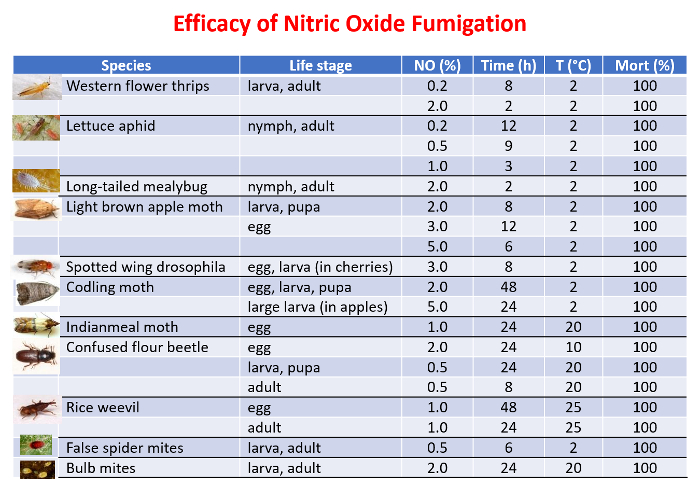
Figure 1: Effects of NO fumigation on insects and mites. Please click here to view a larger version of this figure.

Figure 2: Demonstration of injuries to lettuce by NO2 from the reaction between NO and O2. Please click here to view a larger version of this figure.

Figure 3: Flow chart of NO fumigation procedures. Please click here to view a larger version of this figure.

Figure 4: Method of using a dilution device and a flu gas monitor with NO sensor to measure NO level in a large-scale NO fumigation test. Please click here to view a larger version of this figure.

Figure 5: Compare effects of fumigation treatments terminated by N2 flush and air flush on postharvest quality of fresh fruit and vegetables. Please click here to view a larger version of this figure.
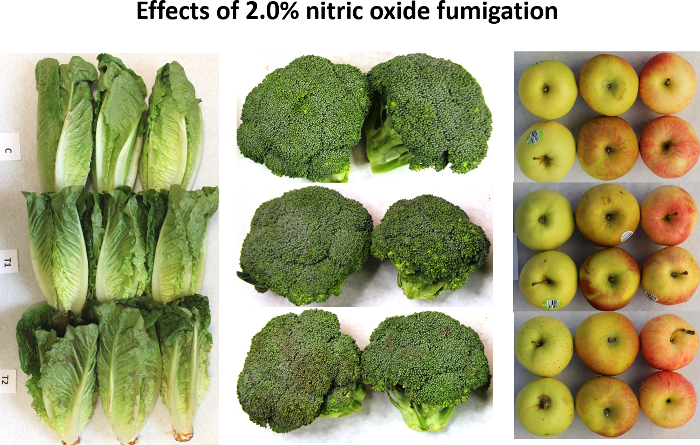
Figure 6: Postharvest quality of lettuce, broccoli, and apples from three treatments (C, T1, T2) 14 days after fumigation with C, T1, and T2 representing control, fumigation terminated with an N2 flush, and fumigation terminated with air flush, respectively. Please click here to view a larger version of this figure.
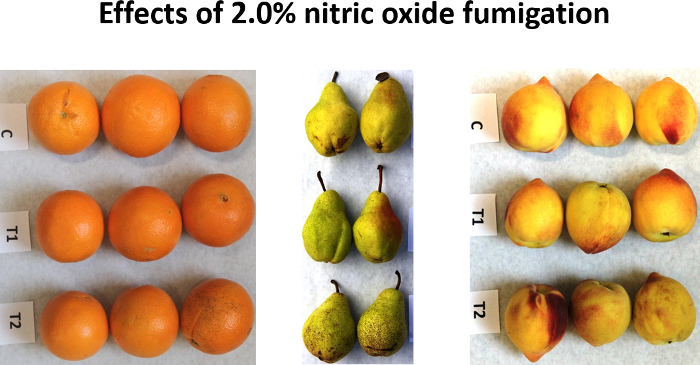
Figure 7: Postharvest quality of oranges, pears, and peaches from three treatments (C, T1, T2) 14 days after fumigation with C, T1, and T2 representing control, fumigation terminated with an N2 flush, and fumigation terminated with air flush, respectively. Please click here to view a larger version of this figure.
| Product | NO (%) | Treatment | NO3- (mg/100 g) | NO2- (mg/100 g) |
| Apple | 5.0 | NO-Air | 1.60±0.12 a | 0.50±0.16 a |
| NO-N2 | 1.36±0.13 ab | 0.03±0.01 b | ||
| Control | 0.76±0.28 b | 0 b | ||
| Apricot | 3.0 | NO-Air | 1.84±0.14 a | 0.21±0.02 a |
| NO-N2 | 0.92±0.17 b | 0 b | ||
| Control | 0.54±0.01 b | 0 b | ||
| Asparagus | 3.0 | NO-Air | 2.19±0.13 a | 0.08±0.04 a |
| NO-N2 | 0.70±0.03 b | 0 a | ||
| Control | 0.84±0.07 b | 0 a | ||
| Blueberry | 3.0 | NO-Air | 2.74±0.46 a | 0.14±0.02 a |
| NO-N2 | 1.24±0.19 b | 0 b | ||
| Control | 1.22±0.15 b | 0 b | ||
| Broccoli | 3.0 | NO-Air | 18.69±3.75 a | 0.17±0.06 a |
| NO-N2 | 18.51±3.42 a | 0 b | ||
| Control | 12.26±2.31 a | 0 b | ||
| Cherry | 3.0 | NO-Air | 1.75±0.11 a | 0 |
| NO-N2 | 0.56±0.09 b | 0 | ||
| Control | 0.65±0.08 b | 0 | ||
| Garlic | 3.0 | NO-Air | 5.05±0.45 a | 0.14±0.02 a |
| NO-N2 | 4.45±0.79 a | 0 b | ||
| Control | 5.01±0.69 a | 0 b | ||
| Grape | 3.0 | NO-Air | 6.32±0.68 a | 0 |
| NO-N2 | 2.38±0.43 b | 0 | ||
| Control | 2.74±0.25 b | 0 | ||
| Pepper | 3.0 | NO-Air | 9.26±0.35 a | 0.71±0.12 a |
| NO-N2 | 6.75±0.68 b | 0.02±0.01 b | ||
| Control | 6.23±0.72 b | 0 b | ||
| Kiwi | 3.0 | NO-Air | 1.66±0.55 a | 0 |
| NO-N2 | 1.25±0.09 a | 0 | ||
| Control | 1.41±0.31 a | 0 | ||
| Lettuce | 2.0 | NO-Air | 112.85±20.17a | 7.99±2.02 a |
| NO-N2 | 38.97±5.87 b | 0.1±0.1 b | ||
| Control | 40.64±10.81b | 0 b | ||
| Orange | 3.0 | NO-Air | 1.22±0.13 a | 0.27±0.05 a |
| NO-N2 | 1.05±0.05 a | 0.02±0.01 b | ||
| Control | 1.24±0.22 a | 0 b | ||
| Plum | 3.0 | NO-Air | 1.04±0.08 a | 0 |
| NO-N2 | 0.63±0.04 b | 0 | ||
| Control | 0.84±0.11 ab | 0 | ||
| Strawberry | 2.5 | NO-Air | 6.01±0.62 a | 0 |
| NO-N2 | 5.30±0.77 a | 0 | ||
| Control | 6.16±1.06 a | 0 |
Table 1: Nitrate and nitrite levels as residues at 24 h after 16 h nitric oxide fumigation on fresh fruit and vegetables. For each product, values followed by different letters are significantly different based on Tukey HSD multiple range test (P ≤0.05). Reprinted from Yang and Liu (2017).
Discussion
Keeping O2 out of the fumigation chamber is critical to successful NO fumigation for pest control. Fumigation chambers need to have airtight seals and connection lines need to be flushed with N2 or other inert gases to remove O2 before being used to release NO gas into fumigation chambers. Another critical aspect of NO fumigation is dilution of NO with an N2 flush at the end of fumigation. This prevents production of excess NO2 and its possible injuries to fresh products. As different fresh products have various levels of tolerance to NO2 exposure, a NO fumigation treatment may require different levels of N2 flush to prevent injuries. Because NO2 has a high boiling point of about 21 °C and also reacts with water for form acids, NO2 production will likely result in increased NO2 on fumigated products as residue and increases of nitrate and/or nitrite that are converted from NO2.
The type of products to be fumigated may also complicate the fumigation process, such as an initial flush with N2 to establish ULO conditions and a final flush with N2 to terminate the fumigation treatment. Large leafy vegetables in perforated plastic wrappings such as wrapped head lettuce represent a great barrier to air ventilation and therefore a challenge to flushing out O2 with N2 at the start of fumigation and flushing out NO with N2 at the end of fumigation. For these products, it is better to use combinations of lower NO concentrations and longer treatment times to control pests because it is safer for product quality.
Monitoring NO levels in fumigation chambers is another challenge in conducting NO fumigation. Most instruments cannot measure the high NO concentrations used in NO fumigations for pest control. There are a few dilution devices which are commercially available, but it is unknown whether they will be suitable for NO fumigation. However, a dilution device can be made as described above and used for NO monitoring using a gas monitor equipped a NO sensor.
More modifications can be made to the procedures for monitoring NO concentrations in fumigation chambers. For example, a sample of the air in a fumigation chamber can be diluted in a foil bag with a certain volume of nitrogen. The diluted air sample can then be circulated through a flue gas monitor equipped with a high concentration NO sensor to measure NO concentration. However, it will be difficult to avoid oxidation of NO in the process and the dilution process will likely result in some losses of NO. Therefore, the NO calculated based on the measurement of the diluted air samples from the fumigation chambers will likely be lower than the actual NO levels in the fumigation chambers.
The process of establishing ULO conditions in fumigation chambers can also be modified based on what types of fumigation chambers are available. For fumigation chambers that can be used under vacuum conditions, ULO conditions can be established by the process of repeated vacuuming followed by filling the chamber with nitrogen gas. This process will be more efficient in establishing ULO conditions than the normal flushing process described above. For stored products, CO2 may also be used instead of N2 for establishing ULO conditions for NO fumigation.
For residue analysis, the 405 nm NO2/NO/NOx monitor was selected to measure NO2 gas release from fumigated samples in the head spaces and the nitric oxide analyzer was set to detect nitrate and nitrite in liquid samples. However, other types of instruments are available with suitable sensitivities and specificities for measuring NO2 in headspaces and measuring nitrate and nitrite in liquid samples. Therefore, the procedures for residue measurements can be modified based on the availability of instruments.
As NO is highly volatile with a boiling point of -152 °C and reacts instantly with O2, it is not expected that NO would remain as a residue on fumigated products after fumigation. Therefore, only NO2 was measured in the headspace of fumigated products. NO2 has a high boiling point of 21 °C and dissipates much more slowly from products and therefore is likely to remain on fumigated products for some time after fumigation.
For leafy vegetables, if NO fumigation is not flushed with N2 at the end, NO would react with O2 to produce NO2 and can result in the persistence of NO2 for some time as fresh products are typically stored at low temperatures. Therefore, from the standing point of shortening the reentering time period after fumigation, NO fumigation should also be flushed with N2 at the end of fumigation. Monitoring NO2 release is, therefore, important to determine how long and how much NO2 will remain on products after fumigation. NO2 levels on fumigated products will potentially affect how the fumigated products will be handled or stored.
Nitrate exists naturally in soil and plants including fruit and vegetables. Some root vegetables can collect high concentrations of nitrates. Vegetables are the biggest dietary source of nitrates. For example, fresh lettuce and spinach have average nitrate levels of 786 - 1,080 and 1,420 - 3,400 mg/kg. The European commission regulation sets the maximum levels of nitrate for lettuce and spinach to 2,500 - 4,500 and 2,000 - 3,000 mg/kg13. Both nitrate and nitrite are also frequently added to processed meats like bacon, ham, sausages, and hot dogs and are consumed as they are used as a preservative in these meat products. Measurements of nitrate and nitrite as residues of NO fumigation were intended to provide information on the extent that NO fumigation can alter their levels in fumigated products and may not have any relevance to food safety. Therefore, measurements of nitrate and nitrite as residues should be considered as optional unless they are required by regulatory agencies in registration of NO as a fumigant or other regulatory processes. Detailed procedures for nitrate and nitrite measurements are also available21.
Nitric oxide fumigation has advantages of high efficacy against all life stages of insects and mites and no harmful residues as compared with most other fumigants, as discussed before6,7,9. Given that there is a critical lack of effective alternatives to methyl bromide fumigation for postharvest pest control and most alternative fumigants leave toxic residues in fumigated products, NO fumigation warrants much expanded research, development, and registration efforts to bring this safe and effective postharvest pest control solution to the market. Yet, because of the complexity and stringent requirement for ULO conditions of fumigation procedures, training may be required for many researchers to start NO fumigation research. It is our intention to provide informative and easy to follow procedures for laboratory NO fumigation treatments for postharvest pest control on fresh and stored agricultural products. The principles of the procedures can be used develop protocols for large scale NO fumigations for practical applications.
Acknowledgements
This research was supported in part by TASC grants from USDA Foreign Agricultural Services.
Materials
| Name | Company | Catalog Number | Comments |
|---|---|---|---|
| Nitric oxide gas | Praxair | UN1660 | 99.5% purity |
| Nitrogen gas | Praxair | UN1066 | Industry grade |
| Fumigation chamber | (custom made) | Size: 30"x30"x30"; made of stainless steel with rubber gaskit along the rim. The chamber is sealed by clampdown its lid to the vaseline greased gaskit. The chamber has multiple ports for flushing the chamber and for taking air samples. | |
| Nitric Oxide Analyzer | GE Scientific | NOA 280i analyzer | Measure NO plus NO2, Nitrate and nitrite |
| Model 405nm NO2/NO/Nox monitor | 2B Technologies Inc | Ranges: NO (0-2ppm), NO2+NO (0-10ppm) | |
| Kane 900+ gas monitor | Kane International | With NO, NO2, CO, O2 sensors | |
| Flowmeter and controllers | Omega Engineering | Flow ranges: 0-1, 0-5, 0-20 LPM | |
| Tubing, connectors, stopcocks | Cole-Parmer | Tubing: nylon and teflon, sizes: 1/8" and 5/32" (4mm); They fit to connectors and stockcocks | |
| Oxygen analyzer | Illinois Instruments | Model 810 | Ziconia sensor, sensitivity: 0.1ppm, range: 0-100% |
| NO2 personal alarm | SENSIT Technologies | Sensit P100 | Should be used in conducting large scale NO fumigations outside a fume hood |
| Flowmeter and controllers | Omega Engineering | Flow ranges: 0-1, 0-5, 0-20 LPM | |
| Gastight syringes | SGE Analytical Science | 10 ml, 100 ml | |
| Gastight syringes | Hamilton Company | 10uL | |
| Tubing, connectors, stopcocks | Cole-Parmer | Tubing: nylon and teflon, sizes: 1/8" and 5/32" (4mm); They fit to connectors and stockcocks | |
| Sodium Iodide | Fisher Chemical | S324-100 | |
| Acetic acid, Glacial | Fisher Chemical | UN2789 | ≥99.7% purity |
| Hydrochloric acid | Cole-Parmer | SA48-500 | 1.0 Normal |
| Vanadium(III) Chloride | Acros Organics | 197000250 | 97% purity |
| Sodium Hydroxide | Fisher Chemical | BPSS266-1 | 1 M |
| SAHARA S3 Stainless-steel heated bath circulator | ThermoFisher Scientific | ||
| SC 100 Digiital Imersion Circulator | ThermoFisher Scientific | ||
| Oxygen | Praxair | *001043 | 99.5-100% purity |
| Hot Jaw | Sorbent Systems | Mylar bag heat sealer | |
| Mylar bags | Sorbent Systems | ||
| Flipmate filtration assemblies | Cole-Parmer | EW-35202-29 | |
| 15 ml polypropylane tube | Falcon | ||
| Filter Paper P5 | Fisher Scientific | ||
| Blender | Waring | Blender 7010G | Model WF2211212 |
| Dilution device | Made in our lab | Combine the ends of four equal length Teflon microtubing into one connector and have a connector for each end of the four microtubing. |
References
- Ashmore, P. G., Burnett, M. G., Tyler, B. J. Reaction of nitric oxide and oxygen. Trans. Faraday Soc. 58, 685-691 (1962).
- Culotta, E., Koshland, D. E. Jr NO news is good news. Sci. 258, 1862-1865 (1992).
- Haldane, J. The red colour of salted meat. J. Hyg. 1, 115-122 (1901).
- Hole, B. D., Bell, C. H., Mills, K. A., Goodship, G. The toxicity of phosphine to all developmental stages of thirteen species of stored product beetles. J. Stored Prod. Res. 12, 235-244 (1976).
- Kader, A. A., Lipton, W. J., Morris, L. L. Systems for scoring quality of harvested lettuce. HortScience. 8, 408-409 (1973).
- Liu, Y. -B. Nitric oxide as a potent fumigant for postharvest pest control. J. Econ. Entomol. 106, 2267-2274 (2013).
- Liu, Y. -B. Nitric oxide as a fumigant for postharvest pest control and its safety to postharvest quality of fresh products. Acta Horticulturae. 1105, 321-327 (2014).
- Liu, Y. -B. Nitric oxide fumigation for control of western flower thrips and its safety to postharvest quality of fresh fruit and vegetables. J. Asia-Pacific Entomol. 19, 1191-1195 (2016).
- Liu, Y. -B., Yang, X. Prospect of nitric oxide as a new fumigant for postharvest pest control. Proc. 10th Intl. Conf. Controlled Atmosphere and Fumigation in Stored Products (CAF2016). Navarro, S., Jayas, D. S., Alagusundaram, K. , CAF Permanent Committee Secretariat. Winnipeg, MB, Canada. 161-166 (2016).
- Liu, Y. -B., Yang, X., Simmons, G. Efficacy of nitric oxide fumigation for controlling codling moth in apples. Insects. 7, 71(2016).
- Manjunatha, G., Lokesh, V., Neelwarne, B. Nitric oxide in fruit ripening: trends and opportunities. Biotechnol. Adv. 28, 489-499 (2010).
- Manjunatha, G., Lokesh, V., Bhagyalashmi, N. Nitric oxide-induced enhancement of banana fruit attributes and keeping quality. Acta Hort. 934, 799-806 (2012).
- Muramoto, J. Comparison of nitrate content in leafy vegetables from organic and conventional farms in California. , UC Santa Cruz. Research project report (1999).
- Ricciardolo, F. L. M., Sterk, P. J., Gaston, B., Folkerts, G. Nitric oxide in health and disease of the respiratory system. Physiol. Rev. 84, 731-765 (2004).
- Roberts, J. D. Jr, Lang, P., Bigatello, L. M., Vlahakes, G. J., Zapol, W. M. Inhaled nitric oxide in congenital heart disease. Circulation. 87, 447-453 (1993).
- Rossaint, R., Falke, K. J., Lopez, F., Slama, K., Pison, U., Zapol, W. M. Inhaled nitric oxide for the adult respiratory distress syndrome. N. Engl. J. Med. 328, 399-405 (1993).
- Saadatian, M., Ahmadiyan, S., Akbari, M., Balouchi, Z. Effects of pretreatment with nitric oxide on kiwifruit storage at low temperature. Adv. Environ. Biol. 6, 1902-1908 (2012).
- Soegiarto, L., Wills, R. B. H. Short term fumigation with nitric oxide gas in air to extend the postharvest life of broccoli, green bean, and bok choy. HortTechnol. 14, 538-540 (2004).
- Wills, R. B. H., Ku, V. V. V., Leshem, Y. Y. Fumigation with nitric oxide to extend the postharvest life of strawberries. Posth. Biol. Technol. 18, 75-79 (2000).
- Wills, R. B. H., Soegiarto, L., Bowyer, M. C. Use of a solid mixture containing diethylenetriamine/nitric oxide (DETANO) to liberate nitric oxide gas in the presence of horticultural produce to extend postharvest life. Nitric Oxide. 17, 44-49 (2007).
- Yang, X., Liu, Y. -B. Residual analysis of nitric oxide fumigation on fresh fruit and vegetables. Posth. Biol. Technol. 132, 105-108 (2017).
Reprints and Permissions
