Here, we present a standardized protocol to measure the nasal potential difference (NPD). Cystic fibrosis transmembrane conductance regulator (CFTR) and epithelial sodium channel (ENaC) function are evaluated by the change in the voltage across the nasal epithelium after superfusion of solutions that modify ion channel activity, providing an outcome measure.
Method Article
Standardized Measurement of Nasal Membrane Transepithelial Potential Difference (NPD)
George M. Solomon1 , Inez Bronsveld2 , Kathryn Hayes3 , Michael Wilschanski4 , Paola Melotti5 , Steven M. Rowe1 , Isabelle Sermet-Gaudelus6,7
1Department of Medicine and the Gregory Fleming James Cystic Fibrosis Center, University of Alabama at Birmingham, 2Department of Pulmonology and Tuberculosis, University Medical Center Utrecht, 3Center for Experimental Medicine, Queens University, Northern Ireland, 4Hadassah Hebrew University Medical Center, Jerusalem, 5Centro Fibrosi Cistica, Azienda Ospedaliera Universitaria Integrata, 6Service de Pneumologie et Allergologie Pédiatriques and Center de Ressources et de Compétence de la Mucoviscidose, Hôpital Necker Enfants Malades, 7INSERM U 1151, Institut Necker Enfants Malades
Opens in a new tab
In This Article
Summary
Loading...
$$\rightleftharpoonup{xx}$$
$$\longleftharp{xx}$$,
$$\longrightharp{xx}$$,
Abstract
Loading...
$$\rightleftharpoonup{xx}$$
$$\longleftharp{xx}$$,
$$\longrightharp{xx}$$,
We describe a standardized measurement of nasal potential difference (NPD). In this technique, cystic fibrosis transmembrane conductance regulator (CFTR) and the epithelial sodium channel (ENaC) function are monitored by the change in voltage across the nasal epithelium after the superfusion of solutions that modify ion channel activity. This is enabled by the measurement of the potential difference between the subcutaneous compartment and the airway epithelium in the nostril, utilizing a catheter in contact with the inferior nasal turbinate.
The test allows the measurement of the stable baseline voltage and the successive net voltage changes after perfusion of 100 µM amiloride, an inhibitor of Na+ reabsorption in Ringer's solution; a chloride-free solution containing amiloride to drive chloride secretion and 10 µM isoproterenol in a chloride-free solution with amiloride to stimulate the cyclic adenosine monophosphate (cAMP)-dependent chloride conductance related to CFTR.
This technique has the advantage of demonstrating the electrophysiological properties of two key components establishing the hydration of the airway surface liquid of the respiratory epithelium, ENaC, and CFTR. Therefore, it is a useful research tool for phase 2 and proof of concept trials of agents that target CFTR and ENaC activity for the treatment of cystic fibrosis (CF) lung disease. It is also a key follow-up procedure to establish CFTR dysfunction when genetic testing and sweat testing are equivocal. Unlike sweat chloride, the test is relatively more time consuming and costly. It also requires operator training and expertise to conduct the test effectively. Inter- and intra-subject variability has been reported in this technique especially in young or uncooperative subjects. To assist with this concern, interpretation has been improved through a recently validated algorithm.
Introduction
Loading...
$$\rightleftharpoonup{xx}$$
$$\longleftharp{xx}$$,
$$\longrightharp{xx}$$,
The overall goal of this method is to measure the nasal potential difference (NPD) which aims to investigate trans-epithelial ion transport in vivo1. This technique allows the measurement of sodium (Na+) and chloride (Cl-) transport. NPD has been used as a research tool since the late 1980s and was accepted in 1998 as a diagnostic procedure by the Cystic Fibrosis Foundation (CFF) consensus statement2 and in 2017 in the Cystic Fibrosis Foundation (CFF) Consensus Diagnostic Guidelines3. Indeed, biological CFTR dysfunction, which is the cause of CF, is evidenced by an increased Na+ absorption at the apical membrane and a defect in Cl- secretion. This functional test provides the advantage of an additional diagnosis tool when genetics is non-conclusive in patients with indeterminate intermediate sweat test results3. Although this information may also be obtained by intestinal current measurement biopsies (ICM), ICM is, however, only available in a few centers globally and needs further standardization. NPD is more available in approximately 60 global centers and, moreover, targets the respiratory epithelium that is the main location of the disease.
Given the information it provides on CFTR activity, it is also used in proof-of-concept studies aiming to assess functional restoration of CFTR protein by modulator therapies4,5,6,7,8. Indeed, data from studies with CFTR mRNA/gene editing, CFTR potentiator, and corrector therapies, highlight significant changes in Cl- and Na+ transport with therapy6,9 and confirms that NPD can be a responsive endpoint in clinical trials. As we lack sensitive clinical endpoints able to detect a subtle change in clinical status of the patient in the short term, this preclinical biomarker might be highly informative. The field of CFTR modulator therapies broadens quickly and we urgently need tests in vivo that are able to quickly decipher active compounds before going to large phase 3 trials10.
The physiological rationale of the technique is based on the measurement of the potential difference between the airway epithelium in the nostril and the subcutaneous compartment. Ion channel activities are explored by measuring the stable maximal baseline potential difference (PD), its changes after blocking the ENaC related Na+ absorption and driving Cl- secretion via different apical Cl- transporters including CFTR. CFTR dysfunction is shown by a minimal change in potential difference upon stimulation of Cl- secretion through a cAMP dependent pathway and an increased ENaC mediated Na+ absorption as detected by a more negative baseline potential difference and an enhanced response to amiloride. The mechanistic basis for CF versus normal PD is summarized in Figure 1.

Figure 1: Summary Figure of Ion Channel Activity. (A) Ion activity in the respiratory epithelium demonstrating balanced activity of ENaC and CFTR in normal subjects and (B) loss of CFTR activity resulting in increased ENaC mediated sodium transport and reduced CFTR dependent chloride transport. ENaC: epithelial sodium channel, Na+: sodium, CFTR: cystic fibrosis transmembrane regulator, CL-: chloride, mV: millivolts, PD: potential difference, min: minute/s Please click here to view a larger version of this figure.
However, this test demonstrates some degree of variability both at repeated measurements within the same patient and among patients with the same genotype. This is of utmost importance to facilitate the interpretation of the changes after modulator treatment. Moreover, we still lack validated thresholds discriminating between CF and healthy subjects. This may be partially due to differences between the availability of clinical facilities and the techniques employed. Therefore, a considerable international effort aimed at standardization of the test is ongoing. Both the US CFF-TDN (Cystic Fibrosis Foundation-Therapeutics Development Network) and the ECFS-CTN (European Cystic Fibrosis Society-Clinical Trials Network) created a NPD Standard Operating Procedure (SOP) for the use in the multicenter and research trials. This recent collaborative work by the CTN and TDN has resulted in a combined, international SOP, bringing together the expertise of the CTN and TDN (2014)11. This paper presents the protocol and test techniques to employ NPD for CF diagnosis or for investigator-initiated proof-of-concept trials. Each center implementing the technique is responsible for the application to its institutional human research ethics committee for approval.
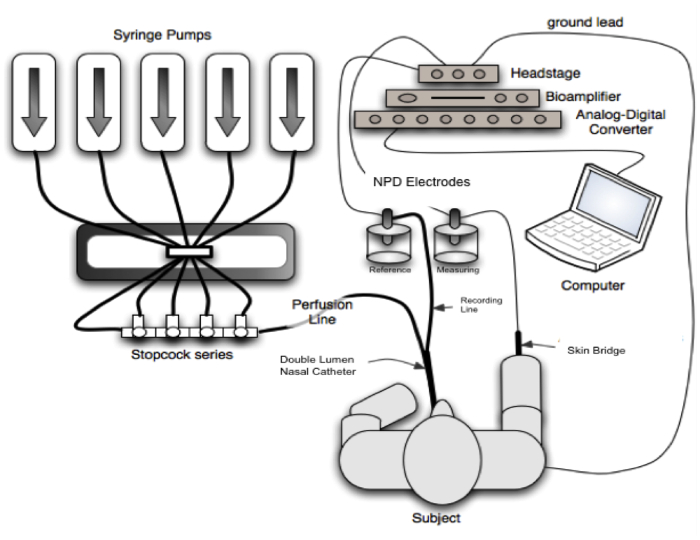
Figure 2: Schematic of entire recommended NPD setup. Note that the recommended setup is shown, including sequential perfusion pumps, and the 4-stop-cock series setup. Specific connections and examples of components are shown in the SOP. (Diagram modified with permission from Solomon, G.M. Chest, 201013) Please click here to view a larger version of this figure.
The general experimental flow is outlined in Figure 2, whereby NPD is measured between the exploring bridge positioned on the epithelium surface and reference bridge placed in the subcutaneous space, both connected to electrodes and a high-impedance voltmeter.
This is ensured by 2 different systems: there are 2 acceptable reference electrode setups: (i) balanced Ag/AgCl electrodes and an electrocardiogram (ECG) cream-filled bridge connected to the subcutaneous space by slight abrasion or (ii) saturated calomel half-cells and an agar filled 22- to 24-gauge needle introduced subcutaneously. The contact to the nasal mucosa is enabled by a double lumen catheter. One lumen is filled with agar or ECG cream and connected to the measuring electrode, the other allows perfusion onto the nasal mucosa of the different solutions.
The tip of the exploring tubing is placed onto the respiratory mucosa under the inferior nasal turbinate (Figure 3).

Figure 3: Placement of exploring tubing onto respiratory mucosa. (A) External view showing placement. (B) Rhinoscopic view demonstrating placement. (C) Diagram indicating the anatomic location for catheter placement. PD: potential difference
To study the response of PD to several drugs, the superfusion solutions are applied via the second lumen of the catheter. There are several key steps regarding preparation and conduct of NPD measurements, which are detailed below in the protocol, from initial preparation through to data analysis.
After preparation of solutions and electrodes, adequate quality testing of the electrodes and catheters allows for the basic conduct of the test. Basal measurements are made along the inferior turbinate, which allows selection of the best place for measurement, usually that with the most negative measurement. Then sequential perfusions determine Na+ (ENaC) and Cl- (CFTR-dependent) ion flux via a change in the voltage across the nasal epithelium.
Protocol
Loading...
$$\rightleftharpoonup{xx}$$
$$\longleftharp{xx}$$,
$$\longrightharp{xx}$$,
The protocol involving human subjects was approved by all participating Institutes' Research Committee. Each center implementing the technique is responsible for the application to its institutional human research ethics committee for approval.
1. Solution Preparation
- Prepare Solutions #1, #2 and #3, which are base solutions, in 1 L batches prior to the procedure and stored on-site (Table 1).
NOTE: Amiloride is light sensitive and must be stored in the dark (see Table 1 for solution composition) (see SOP for detailed solution preparation11).- Buffer all solutions at pH 7.4 and filter with a 0.22 µm bottle-top filter.
- For solution #3, add the phosphate-containing salts first, allow them to ionize to prevent crystallization (See Table 2 for solution composition).
NOTE: The sequence of mixing is critical for solution #3. - Store these solutions at 4 °C (stable for 3 months) or at -20 °C (stable for 6 months).
- Prepare solutions #4 and #5 by adding agents on the day of the NPD test. Isoproterenol is light and oxidation sensitive and it loses its activity at room temperature (demonstrating 4% decay over 4 h at 4–8 °C). Store at 4 °C.
NOTE: ATP is light and oxidation sensitive (see Table 3).
| Compound | Molecular Weight | Concentration (mM) | Composition (g/L) |
| NaCl | 58 | 148 | 8.58 |
| CaCl2 2H2O | 147 | 2.25 | 0.33 |
| KCl | 75 | 4.05 | 0.3 |
| K2HPO4 | 174 | 2.4 | 0.42 |
| KH2 PO4 | 136 | 0.4 | 0.05 |
| MgCl2 6H2O | 203 | 1.2 | 0.24 |
Table 1: Solution Composition.
| Compound | Molecular Weight | Concentration (mM) | Composition (g/L) |
| Na Gluconate | 218 | 148 | 33.26 |
| Ca Gluconate | 430 | 2.25 | 0.97 |
| K Gluconate | 234 | 4.05 | 0.95 |
| K2 HPO4 | 174 | 2.4 | 0.42 |
| KH2 PO4 | 136 | 0.4 | 0.05 |
| MgSO4 7H2O | 246 | 1.2 | 0.24 |
Table 2: Solution Composition.
| Solution | Solution Number | Contents | EDC Mark |
| Ringers injection | Solution #1/A | Buffered ringers for injection | RINGERS |
| Ringers + amiloride | Solution #2/B | Buffered ringers + 100 μM amiloride | AMIL |
| Zero Cl- + amiloride | Solution #3/C | Buffered zero Cl- + 100 μM amiloride | OCL |
| Zero Cl- + amiloride + isoproterenol | Solution #4/D | Buffered zero Cl- + 100 μM amiloride + 10 μM isoproterenol | ISO |
| Zero Cl-+ amiloride + isoproterenol + ATP | Solution #5/E | Buffered zero Cl- + 100 μM amiloride + 10 μM isoproterenol + 100 μM ATP | ATP |
Table 3: Solution List.
2. Catheter
- Use a PVC, sterile, single use, 2 lumens (0.7 mm inner Ø) catheter with a round and smooth extremity (2.5 mm outer Ø), which is specifically designed for NPD.
- Make contacts with the mucosa by a side hole, 2 mm distant to the tip with a hole at the tip for perfusion (see step 10.1).
- Connect one of the two Luer-lock connections of the catheter to the measuring electrode and the other one to the perfusion pump. Use the channel stained in blue as the measuring lumen. Tag the catheter at each 0.5 cm interval for 10 cm.
NOTE: The dead space is 0.3 mL. It is preferable to use the above procedure for the preparation of the catheter if this is not possible follow the next two steps. - Cut equal (~76 cm) lengths of PE50 and PE90 catheter tubing.
- Affix these together in a 1 cm piece of silicon rubber tubing. Insert a 25 G blunt tip needle snuggly into the opposite end of the PE-90 tubing. Insert a 25 G butterfly needle snuggly into the opposite end of the PE50 tubing making sure not to puncture the tubing as it is placed.

Figure 4: Catheter used for NPD measurements. Inset box demonstrates the catheter tip with measuring hole.
3. Preparation of Agar Skin Bridge (Butterfly Needle) and Catheter
NOTE: The manipulation of the melted agar may cause burns, and this should be done with caution.
- Prepare 3% agar by mixing 3 g of agar with 100 mL of solution #1 in a wide-mouth bottle. Melt the agar in the microwave until soluble (transparent).
- Fill the 10 mL syringe with warm agar.
- Connect the syringe subsequently to the butterfly needle (23 G) and to the marked lumen of the catheter. Inject the agar until it appears at the tip.
- Allow it to cool for at least 10 min.
- Ensure that the skin bridge and the catheter are fully filled and visualized to be free of air bubbles.
- Store the bulk skin bridges in solution #1 at 4 °C and do not use after 1 week.
4. If Using ECG cream
- Dilute the ECG cream with solution #1 (1:1, v/v Ringer). Let it rest until free of air bubbles.
- Fill the 10 mL syringe with diluted ECG cream.
- Connect the syringe to the marked lumen of the catheter and slowly inject the ECG cream until it appears at the lower side hole.
- Ensure that the catheter is fully filled and free of air bubbles.
5. Data Acquisition System
NOTE: The general setup of the data acquisition system is shown in Figure 5.
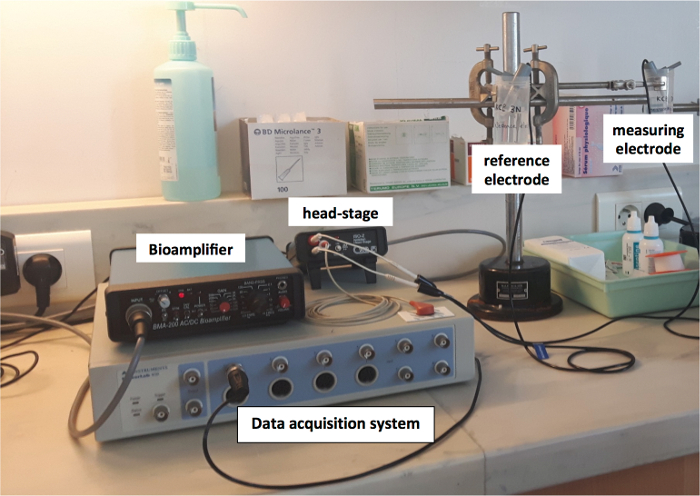
Figure 5: Set up of the data acquisition system. Demonstrating connections of the bioamplifier and headstage to the computer interface as well as the electrode connections to the headstage11. Please click here to view a larger version of this figure.
- Connections
- Connect the computer to the data acquisition system (Table of Materials) with a USB cable.
- To connect the data acquisition system to the bioamplifier, connect the BNC cable from the channel 1 input on the data acquisition system (front) to the output on the bioamplifier (back).
- Connect the bioamplifier to the headstage with a custom cable pre-connected to the headstage screws into the input portion in the front of the bioamplifier.
- Connect the headstage to the electrodes and the ground electrode. Use standard 2 mm female-female connectors to connect the front of headstage to the electrodes.
NOTE: The port is recessed and only fits one direction of the 2 mm cable: Red-measuring electrode to the patient nose (via nasal catheter); Black-Reference electrode to patient skin bridge; White to ECG electrode grounded to subject's skin. - Set the bioamplifier as described: Offset: pull to activate, turn to adjust, leave in pulled position after adjustment; Voltage: DC; 1 mV cal: neutral position; Power: On to collect data, off to charge battery; Gain: set to 10; Band pass: LoFreq (Outer knob): DC; Band pass: HighFreq (Inner knob): 1kHz; Volume: Off.
6. Adjusting the Head-stage Offset
- Connect the laptop and the amplifier in the sequence as indicated in the SOP11. Switch on the data acquisition system and then the laptop (the sequence is important for the software to recognize the apparatus used for data acquisition).
- Adjust the Head-Stage Offset as per the SOP sequence.
7. Offsets
NOTE: There are several offsets to be tested to ensure the stability of the electrical measuring system. (see Figure 6)
- For the Electrode Offset, place the reference (negative) electrode and measuring (positive) electrode together in the diluted ECG cream or the 3 M KCl. Ensure that the potential difference reading between the electrodes is near zero on the headstage.
- For setting the catheter and/or skin bridge offset, place the Luer-lock end of the nasal catheter or the Luer-lock end of the skin bridge into the bath with the measuring (positive) electrode. Place the other end of the catheter in the ECG cream bath or 3 M KCL containing the reference (negative) electrode ensuring that the potential difference is near zero on the headstage.
- To set up a closed loop offset, ensure that the circuit is closed when replacing the nasal catheter in the bath of the electrodes. Check that the closed loop offset reads near 0 mV (='offset'; ±2.5 mV). Adjust the headstage offset knob to bring the offset to 0 mV.
NOTE: This confirms that all connections within the circuit are intact. If this is not the case, the nasal catheter may not be intact (air bubbles in the agar or the ECG cream). Change the agar bridge or push the ECG cream in the setup. The electrode offset must be performed first, followed by the closed system (closed loop offset) with the electrode and the bridge (Figure 6).
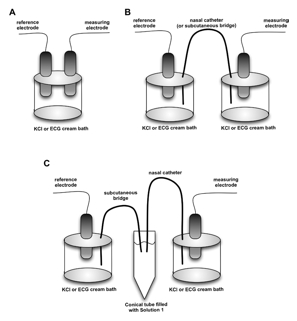
Figure 6: Setup of (A) Electrode offset, (B) Catheter (or bridge) offset, (C) Closed loop offset.
8. Syringe Set-up
NOTE: The following is the recommended set-up.
- Thaw solutions #1, #2 and #3 approximately 1 h before the measurement.
- Connect the extension line to the stopcock closest to the catheter.
- Switch on all pumps and flush the catheter with solution #1 to completely flush off the catheter until stopcocks are clear of bubbles.
9. Placement of the Reference and Measurement Electrode

Figure 7: Subject with measuring electrode and subcutaneous bridge ready for measurements.
- Have the study subject take a seated position facing the NPD operator. For more comfort, place feet on the optional anti-static mat and head on the orthoptic chin rest.
- Connect the ground lead electrode to the ECG pad placed on the subject's arm (Figure 7).
- Either insert the subcutaneous needle into the dorsal forearm (agar system) or apply the reference electrode to the ECG cream on a previously minimally abraded area on the forearm (see points 7 through to 10 below).
- Check the connection to the subcutaneous space by measuring the potential difference with the skin (Finger PD) and asking the subject to close the "measuring hole" by pinching the catheter between the tip of his/her thumb and index finger.
- If the Finger PD is not -30 mV or more negative, check the insertion of the butterfly needle. Repeat the abrasion (for ECG cream set-up) and check bridges.
- Start the solution #1 syringe pump at 80 mL/h. Start with the right nostril.
- Measure the Finger PD as a steady negative voltage (typical range -40 to -80 mV).
- If using the ECG Cream System: dilute the ECG cream 1:1 and fill the catheter after a complete flush off out of the probe hole as previously seen for the Agar.
- Connect the catheter to a 50 mL syringe half-filled with the ECG cream to bathe the electrodes, allowing a check of the electrode offset and the bridge off set.
- Connect the reference Ag/Cl electrode to the subcutaneous space by slight previous minimal abrasion of the skin, the skin will appear ‘pink and shiny’ when the level of the dermis is reached.
- Position the measuring electrode, covered with ECG cream, on the abraded skin. Check the finger PD as previously shown for the Agar system.
10. Measurement of Basal PD
- Insert the nasal catheter into the right nostril using an illuminating rhinoscope (or equivalent) to visualize the inferior turbinate. Using the anterior tip as a landmark, advance the catheter targeting the inferior site of the inferior turbinate on the respiratory mucosa. Alternatively, if the placement is difficult, the probe hole can be placed in contact with the floor of the nostril.
NOTE: The catheter is rigid enough to be guided into the nostril by the operator. To facilitate the placement, one channel of the catheter is colored in blue and contains the probe-side hole in contact with the inferior turbinate. This prevents catheter rotation. The marks indicated on the catheter from 1 to 10 cm provide easy reference points.- Measure the PD at the inferior turbinate. For this purpose, ensure that the measuring hole of the catheter is closed by its placement against the mucosa of the inferior turbinate (mark Right Basal AT).
- Measure the PD at 3.0, 2.0, 1.5, 1.0, and 0.5 cm (distance within the inferior meatus from the inferior turbinate): mark Right Basal PDs.
- Maintain each measurement at the specified distance for approximately 5 s each to ensure a steady reading (± 1 mV) and to facilitate accurate interpretation of basal PD values.
- Repeat the steps above in the left nostril, using the function key to mark the Left Basal PDs (3 cm, 2 cm, etc.) and the Left Basal AT.
- Using basal PD measures as a guide, insert the probe of the nasal catheter to the site of most negative signal (up to 3 cm from the anterior tip of the inferior nasal turbinate), and secure with a small piece of tape on the tip of the nose (or equivalent).
11. NPD Tracing Sequential Perfusions
- For the Right Nostril
- Verify that the solution is dripping from the patient's nose. Have the subject assume a comfortable position with their head down (often helped by having the subject rest their head on their hand or use a chinrest or other immobilizing device). Remind the subject to minimize the movement and avoid touching nose or the tubing, and to avoid talking.
- Turn solution #1 (Ringers) pump on (5 mL/min, or 300 mL/h). Record until a stable value is obtained (<1 mV change/30 s).
NOTE: This takes approximately 3 min to achieve stability. - Turn off the perfusion with solution #1.
- Start the perfusion with solution #2 (Amiloride). Record NPD for a minimum of 3 min (if the plateau voltage is in doubt, continue the recording for up to 5 min total).
- Start the perfusion with solution #3 (Zero Chloride). Record NPD for a minimum of 3 min (if the plateau voltage is not stable, continue the recording for up to 5 min total).
- Start the perfusion with solution #4 (Isoproterenol). Record NPD for a minimum of 3 min [if the plateau voltage is not stable (a steady voltage tracing for at least 30 s of < 1 mV drift), continue the recording for up to 5 min total].
- Start the perfusion with solution #5 (ATP). Record NPD for a minimum of 1 min, until a peak hyperpolarizing response is obtained.
- Turn on the perfusion with the solution #1 (Ringers) and allow 30 s to flush the catheter.
- Turn off the solution #1 perfusion.
- Repeat the procedure for the left nostril.
12. End of the Test
- Recheck and record stable Finger PD ("Post Finger") for 5 s.
- Remove the subject's cutaneous bridge and the bandage from the insertion site on the skin. For the AgCl/ECG Cream System, remove the electrode from the arm.
- Record the "Final Closed Loop Offset" voltage as described for measuring the initial closed loop offset (see step 7.1.3).
- Mark final offset with the Function key.
- Stop data acquisition (Press "Start").
NOTE: The current SOP recommends the use of 100 µM ATP to activate the purinergic calcium dependent Cl- secretion, to serve as a positive control for the test; however, this is an optional test.
Results
Loading...
$$\rightleftharpoonup{xx}$$
$$\longleftharp{xx}$$,
$$\longrightharp{xx}$$,
In normal airway epithelia, Na+ absorption is the primary ion transport activity. This results in a negative airway surface potential difference with regard to the interstitium. Perfusion of the ENaC channel blocker amiloride leads to a less negative potential difference. Then, superfusion of Cl--free solution creates a chemical gradient for Cl-, which creates a more negative potential difference and activates all the Cl- transporters, including CFTR. Isoproterenol, which increases intracellular cAMP, further increases Cl- secretion by specifically activating CFTR and increases the potential difference.
By contrast, in CF subjects, absent or dysfunctional CFTR results in an increased ENaC mediated Na+ absorption12. As a result, the baseline potential difference is more negative. The depolarization observed with application of amiloride is larger, whereas there is minimal or no change in the potential difference upon stimulation of Cl- secretion through CFTR dependent pathways. This can be seen in the representative tracings in Figure 8, showing 'healthy' vs 'CF' tracings.

Figure 8: Representative tracings of the 'healthy' subject and the subject with CF. PD: potential difference, ΔAmiloride: delta amiloride, 0 Cl-/Iso-: low chloride: the change in PD between completion of solution #2 and solution #4 perfusion, S1-S4: stages 1-4, Green line on graphs A and B indicate the NPD tracing and Black arrows indicate the difference in potential difference
Discussion
Loading...
$$\rightleftharpoonup{xx}$$
$$\longleftharp{xx}$$,
$$\longrightharp{xx}$$,
In vivo, NPD provides a unique measurement that can be performed repeatedly on a longitudinal basis and demonstrates that with repeated measurements, similar longitudinal results are observed on a group-wise and individual basis14,15. There is strong evidence that NPD has excellent discrimination validity for distinguishing CF from non-CF. 25 studies consistently demonstrated a statistically significant difference in Cl- and Na+ conductance between patients with CF and healthy controls10. While several previously developed indices demonstrate this capacity, we anticipate that new updates are necessary given recent standardizations of methodology7,8.
Modifications and Troubleshooting
This test requires several key steps to assure accurate measurements. This includes the electrodes and catheters closed loop offset to ensure that the system is performing to recommended standards. Patients must remain still and refrain from talking as this minimizes artifacts and catheter dislodgement. This makes the test difficult in non-cooperative patients and the technique has only been reported in one study in children below 6 years of age7.
Pre-inspection of the nasal epithelium is necessary to ensure that there are no crusts or mucus on the epithelium, which can affect measurements.
Very importantly, it must be pointed out that the location of the placement of the catheter is the subject of debate. The SOP presented here utilizes measurement under the inferior turbinate (IT). The placement of the catheter under the IT has been standardized and conducted in multicenter trials and, therefore, this is the recommended technique. Measurement under the IT is performed with the side-hole catheter, which may be difficult to maintain in firm contact with the nasal mucosa, whilst being in contact with the solutions. Other groups may measure the PD on the nasal floor, which is technically easier. Importantly, Vermeulen (2011) demonstrated that the 2 methods are comparable16.
The warming of the solutions remains a matter of debate between European and US-centers17,18. It has been advocated that using solutions at 37 °C instead of 22 °C increases the observed total chloride response by approximately 25% and the isoproterenol-dependent chloride response by approximately 95%18. However, warming increases variability, as assessed by a larger standard deviation of the total chloride response17. Therefore, as warming the solutions is an additional factor of variability, it is advised not to warm the solutions unless required on a study basis.
We have previously compared both of the electrode techniques and found that both the AgCl and Calomel electrode systems operated similarly in basal and stimulated currents in normal subjects13.
Limitations of the technique
This test is subject to significant within-subject variability. The variability of scoring is especially prevalent in patients with indeterminate tracings and this should be accounted for in diagnostic application19. Factors of variability include acute upper respiratory tract infection, extensive nasal polyps, prior sinus surgery and CF-related inflammation, which decrease its specificity and sensitivity20,10. Additionally, interpretation of tracings may be different between the readers, although expert readers demonstrate excellent agreement of quantitative scoring and interpretability in CF and non-CF tracings, contrasting with a significant variability in the confidence of the tracing19.
Intrinsic variability versus significant thresholds
Very importantly, the physiological variability of the measurement is considerable, as illustrated in different studies10, such as the CFTR gene therapy trials that demonstrated considerable variability in changes in chloride total transport and amiloride range21,22. Cross-sectional evaluation suggests that zero Cl- plus isoproterenol response above the threshold of -5 to -7 mV is the cut-off between CF and non-CF subjects10.
We nevertheless lack clear knowledge about the magnitude of change of this parameter representing an effective CFTR correction in phase-II trials with disease modifying therapies. To assess individual response, repeated tests monitoring the response to an intervention may be required to distinguish significant changes from intrinsic variability. Very importantly, future long-term studies with disease modifying drugs need to demonstrate that improvement in CFTR function correlates with improvement in clinically relevant outcomes or surrogate outcomes (such as improvement in FEV1) of CF disease. Indeed, a recent phase II Ivacaftor study demonstrated marked clinical benefit despite a small improvement in the chloride secretion23.
Such studies will help to establish if a cut-off value of improvement in trans-epithelial Cl-conductance might be a surrogate parameter for clinical benefit. This would be an important parameter for guiding the development of CFTR modifying therapies.
Significance with respect to existing methods: Sweat Test and Intestinal Current Measurements (ICM)
In patients with ''questionable'' cystic fibrosis, as assessed by an intermediate sweat Cl- concentration between 30 and 60 mM, NPD composite scores provided a highly sensitive tool to diagnose patients as ''CF-likely'' and ''CF-unlikely''10. Intestinal current measurement (ICM), which provides an ex vivo measurement of the net Cl- fluxes across the rectal epithelium, also allows determination of residual CFTR function with a high sensitivity because CFTR is highly expressed in this epithelium.
Considering modification of CFTR function by CFTR modulators, the relation between these different CFTR biomarker changes is at present unclear. Although recent work based on Ivacaftor determined that NPD and sweat test are correlated4, it has not yet been established if a measurement in the respiratory tract is a better predictor of respiratory outcome than, for example, the sweat test24,25 or change in ICM. Furthermore, modifier drugs may also differ in their organ specific efficacies. In regard to NPD, it is important to note that changes in basal PD and amiloride response express Na+ transport, whilst changes in 0 Cl- and isoproterenol response express Cl- transport. It is yet to be established which of these is more important for disease amelioration.
Future Application of this Technique
The use of this technique is expected outside of the CF field. Since this technique is uniquely suited to demonstrate Na+ and Cl- ion channel, it can be applied to demonstrate dysfunction in airways diseases including asthma26, chronic bronchitis27, non-CF bronchiectasis28 and recurrent pancreatitis29. In addition, modifications of this technique have been used in the lower airways (LAPD) to demonstrate lower airways-focused CFTR dysfunction in chronic obstructive pulmonary disease (COPD) patients with chronic bronchitis30.
NPD provides a sensitive in vivo biomarker of CFTR function, which can be used for both the diagnosis and, also, for proof-of-concept studies aiming to correct CFTR and ENaC channel activity in translational research. This allows longitudinal assessment of trans-epithelial function and holds promise as a strategy for personalized medicine to tailor the most efficient corrector for each patient with CF.
Disclosures
Loading...
$$\rightleftharpoonup{xx}$$
$$\longleftharp{xx}$$,
$$\longrightharp{xx}$$,
The authors declare that they have no competing financial interests.
Acknowledgements
Loading...
$$\rightleftharpoonup{xx}$$
$$\longleftharp{xx}$$,
$$\longrightharp{xx}$$,
This research was supported by the Working Group for CFTR Function of the Standardization Committee (Clinical Trials Network, European Cystic Fibrosis Society) and The National Resources Center Working Group (Therapeutics Development Network, Cystic Fibrosis Foundation). Additional support was provided by the CF Foundation (Clancy FY09 to GMS) and NIH (DK072482 to SMR and GMS).
Materials
| Name | Company | Catalog Number | Comments |
|---|---|---|---|
| KD Scientific infusion pump (or equivalent – such as programmable infusion pumps provided by the institution/hospital) | Fisher Scientific | ||
| Powerlab 4/30 | AD Instruments | ||
| BMA-200 AC/DC portable bioamplifier | AD Instruments | ||
| IS0-Z isolation headstage for BMA-200 | AD Instruments | ||
| Windows compatible PC - Minimum requirements of Windows XP or higher | Various | ||
| AD Instruments software: GLP Client V6 (Windows) or higher | AD Instruments | ||
| ECG electrode (ground for study subject) | Hospital standard | ||
| 2 mini calomel reference electrodes | Fisher Scientific | 13-620-79 | |
| Potassium Chloride KCl, Granular – USP, formula weight 76, qty: 500 gm | Spectrum | ||
| Sterile container (such as specimen collection container , or similar) to be used for KCl calomel bath, with holes cut in lid to hold electrodes in place. (If not provided by electrode manufacturer.) | Hospital standard | ||
| 2 electrodes: Ag/AgCl 8 mm TP electrode | BIOPAC Systems | UNSHLD-EL258 | |
| 2 Ag/AgCl electrodes, B0194, plug 4 mm | SLE Instruments | ||
| Signacreme® Conductive Electrode Cream | Fisher Scientific | Parker Labs ref # 17-05 | |
| Skin abrasion device | PROMED Feeling | Ref 374901 | |
| Hi Di 541 M, Diamond tipped dental burrs | Ash Instruments | ||
| Becton Dickinson PE 50 tubing | Fisher Scientific | 427411 | |
| Becton Dickinson PE 90 tubing | Fisher Scientific | 427421 | |
| Silastic tubing, 0.062” ID, 0.095” OD | Fisher Scientific | 508-007 | |
| Micropore Surgical Tape Paper (25 mm x 9.1 m) | 3M | 1530-1 | |
| Marquat double lumen catheter Length: 80 cm; Outer diameter: 2.5 mm; Internal diameter of the channels: 0.8 mm; Distance of the side-holes to the tip: 2 mm. EU label Agreement for NPD: I0202US | Marquat | I0202US | |
| 1" X 10 yards silk tape | 3M Durapore | 1538-1 | |
| IV extension tubing (30", 50/box) | International Limited | IMN30 | |
| Three-way stopcock (50/box) | Medex | MX5311L | |
| Sterile syringe filters (ANOTOP 25 sterile 50 pk; 0.22-μm or smaller filters; or equivalent) | Fisher Scientific | 09-926-7 | |
| Becton Dickinson Intramedic Luer stub adapter (20 G, for connection to PE90 if using nasal catheter produced at study site) | Fisher Scientific | 427564 | |
| Becton Dickinson 23 G, 0.75” Vacutainer (“butterfly”) needles (0.6 mm x 19 mm; 50 U/box) (for connection to PE50) if using nasal catheter produced at study site) | Fisher Scientific | 367283 | |
| Becton Dickinson Syringe 60 mL without needle Luer-Lok tip (40/Box) | Fisher Scientific | 309653 | |
| Becton Dickinson Syringe 10 mL without needle Luer-Lok tip (100/Box) | Fisher Scientific | 309604 | |
| Single use sterile wipes (per institutional availability) | Hospital standard | ||
| 70% EtOH (1 pint), Aaper Alcohol and Chemical Co. catalog number NC9274019 (or equivalent) | Fisher Scientific | ||
| Corning single use sterile bottle-top filters, 0.22 μm pore size (0.15 – 1.0 L volumes acceptable) | Fisher Scientific | 430624 | |
| Buffer Cert Ph 10.00 (1 L Sn04332) – for pH meter calibration | Fisher Scientific | ||
| Buffer Cert Ph 4.00 (1 L Sn04327) – for pH meter calibration | Fisher Scientific | ||
| Buffer Cert Ph 7.00 (500 mL Sn04328) – for pH meter calibration | Fisher Scientific | ||
| Disposable underpads (Blue Pads; 23" x 36" 150/Box; or equivalent per hospital standard) | SureCare | ||
| 23 G, 0.75” Vacutainer “butterfly” needles (0.6 mm x 19 mm; 50 U/box) | Becton Dickinson | 367283 | |
| Difco Laboratories Agar (Noble 100 g 0142-15-2; or equivalent) | Fisher Scientific | ||
| Welch Allyn Rhinoscope 71000-C (or equivalent) | Fisher Scientific | ||
| Welch Allyn Convertible Handle Battery 72300 (or equivalent) OR Otoscope with battery | Fisher Scientific | ||
| Head and chin rest (or equivalent; optional) | Richmond Products, Inc | 629R | |
| Static Dissipative Anti-Fatigue Matting (or equivalent) | Fisher Scientific | No. 791 | |
| REAGENTS FOR SOLUTIONS MIXED ON SITE | |||
| Sodium Chloride, Granular – USP NaCl | Spectrum | Formula Weight: 58; Size: 500 gm | |
| Calcium Chloride CaCl2 •2H2O – USP | Spectrum | Formula Weight: 147; Size: 500 gm | |
| Magnesium Chloride Hexahydrate Crystal, MgCl2•6H2O – USP | Spectrum | Formula Weight: 203; Size: 500 gm | |
| Potassium Phosphate Dibasic, Anhydrous, Granular, KH2PO4 – USP | Spectrum | Formula Weight: 174; Size: 500 gm | |
| Potassium Phosphate Monobasic Crystals – NF (KH2PO4) | Spectrum | Formula Weight: 136; Size: 500 gm | |
| Sodium Gluconate- USP (monosodium salt) | Spectrum | Formula Weight: 218; Size: 500 gm | |
| Calcium Gluconate – USP (Anhydrous Powder) | Spectrum | Formula Weight: 430; Size: 500 gm | |
| Potassium Gluconate- USP (Anhydrous) | Spectrum | Formula Weight: 234; Size: 500 gm | |
| Magnesium Sulfate Heptahydrate – USP MgSO4•7H2O | Spectrum | Formula Weight: 246; Size: 500 gm | |
| Amiloride HCl – USP | Spectrum | Formula Weight: 302; Size: 5gm | |
| Adenosine 5’-Triphosphate (ATP) (Disodium salt) | Spectrum | Formula Weight: 551; Size: 5 gm | |
| Magnesium Chloride, Hexahydrate, Crystal – USP MgCl2•6H2O | Spectrum | Formula Weight: 203; Size: 500 gm | |
| Double-distilled water (ddH2O) | Hospital Pharmacy | Formula Weight: NA; Size: 1 L | |
| Isoproterenol HCL Injection - USP 1 mg/5 mL ampule | Hospital Pharmacy | Formula Weight: 248; Size: single use | |
| Ringers Injection, USP or Ringers Irrigation | Hospital Pharmacy | Formula Weight: NA; Size: 5 L |
References
Loading...
$$\rightleftharpoonup{xx}$$
$$\longleftharp{xx}$$,
$$\longrightharp{xx}$$,
- What is a Cystic Fibrosis Diagnosis? Clinics in Chest Medicine. 19, 423-441 (1998).">Rosenstein, B. What is a Cystic Fibrosis Diagnosis? Clinics in Chest Medicine. 19, 423-441 (1998).
- The Diagnosis of Cystic Fibrosis: A Consensus Statement: Cystic Fibrosis Foundation Consensus Panel. The Journal of Pediatrics. 132, 589-595 (1998).">Rosenstein, B., Cutting, G. R. The Diagnosis of Cystic Fibrosis: A Consensus Statement: Cystic Fibrosis Foundation Consensus Panel. The Journal of Pediatrics. 132, 589-595 (1998).
- Diagnosis of Cystic Fibrosis: Consensus Guidelines from the Cystic Fibrosis Foundation. The Journal of Pediatrics. 181, S4-S15 (2017).">Farrell, P. M., et al. Diagnosis of Cystic Fibrosis: Consensus Guidelines from the Cystic Fibrosis Foundation. The Journal of Pediatrics. 181, S4-S15 (2017).
- Changes of CFTR functional measurements and clinical improvements in cystic fibrosis patients with non-p.Gly551Asp gating mutations treated with ivacaftor. Journal of Cystic Fibrosis. 16, 45-48 (2017).">Mesbahi, M., et al. Changes of CFTR functional measurements and clinical improvements in cystic fibrosis patients with non-p.Gly551Asp gating mutations treated with ivacaftor. Journal of Cystic Fibrosis. 16, 45-48 (2017).
- Sweat chloride as a biomarker of CFTR activity: proof of concept and ivacaftor clinical trial data. Journal of Cystic Fibrosis. 13 (2), 139-147 (2014).">Accurso, F., et al. Sweat chloride as a biomarker of CFTR activity: proof of concept and ivacaftor clinical trial data. Journal of Cystic Fibrosis. 13 (2), 139-147 (2014).
- Effect of VX-770 in Persons with Cystic Fibrosis and the G551D-CFTR Mutation. New England Journal of Medicine. 363, 1991-2003 (2010).">Accurso, F., et al. Effect of VX-770 in Persons with Cystic Fibrosis and the G551D-CFTR Mutation. New England Journal of Medicine. 363, 1991-2003 (2010).
- Measurement of nasal potential difference in young children with an equivocal sweat test following newborn screening for cystic fibrosis. Thorax. 65 (6), 539-544 (2010).">Sermet, I., et al. Measurement of nasal potential difference in young children with an equivocal sweat test following newborn screening for cystic fibrosis. Thorax. 65 (6), 539-544 (2010).
- Mutations in the Cystic Fibrosis Transmembrane Regulator Gene and In vivo Transepithelial Potentials. American Journal of Respiratory and Critical Care Medicine. 174 (7), 787794(2006).">Wilschanski, M., et al. Mutations in the Cystic Fibrosis Transmembrane Regulator Gene and In vivo Transepithelial Potentials. American Journal of Respiratory and Critical Care Medicine. 174 (7), 787794(2006).
- Clinical Phenotype and Genotype of Children with Borderline Sweat Test and Abnormal Nasal Epithelial Chloride Transport. American Journal of Respiratory and Critical Care Medicine. 182 (7), 929-936 (2010).">Sermet-Gaudelus, I., et al. Clinical Phenotype and Genotype of Children with Borderline Sweat Test and Abnormal Nasal Epithelial Chloride Transport. American Journal of Respiratory and Critical Care Medicine. 182 (7), 929-936 (2010).
- CFTR biomarkers: time for promotion to surrogate endpoint? European Respiratory Journal. 14, 38(2013).">De Boeck, K., et al. CFTR biomarkers: time for promotion to surrogate endpoint? European Respiratory Journal. 14, 38(2013).
- US CFF-TDN (Cystic Fibrosis Foundation-Therapeutics Development Network) and the ECFS-CTN (European Cystic Fibrosis Society- Clinical Trials Network). Standard Operating Procedure 528.01. Standardized Measurement of Nasal Membrane Transepithelial Potential Difference (NPD). , (2014).
- Increased bioelectric potential difference across respiratory epithelia in CF. New England Journal of Medicine. 305 (25), 1489-1493 (1981).">Knowles, M., et al. Increased bioelectric potential difference across respiratory epithelia in CF. New England Journal of Medicine. 305 (25), 1489-1493 (1981).
- An international Randomised Multicentre Comparison of NPD Techniques. Chest. 138, 919-928 (2010).">Solomon, G. M., et al. An international Randomised Multicentre Comparison of NPD Techniques. Chest. 138, 919-928 (2010).
- Chloride Transport in Nasal Ciliated Cells of Cystic Fibrosis Heterozygotes. American Journal of Respiratory and Critical Care Medicine. 171, 1026-1031 (2005).">Sermet, I., et al. Chloride Transport in Nasal Ciliated Cells of Cystic Fibrosis Heterozygotes. American Journal of Respiratory and Critical Care Medicine. 171, 1026-1031 (2005).
- Nasal potential difference measurements in diagnosis of cystic fibrosis: an international survey. Journal of Cystic Fibrosis. 13 (1), 24-28 (2014).">Naehrlich, L., et al. Nasal potential difference measurements in diagnosis of cystic fibrosis: an international survey. Journal of Cystic Fibrosis. 13 (1), 24-28 (2014).
- Nasal potential measurements on the nasal floor and under the inferior turbinate: Does it matter? Pediatric Pulmonology. 46 (2), 145-152 (2011).">Vermeulen, F., et al. Nasal potential measurements on the nasal floor and under the inferior turbinate: Does it matter? Pediatric Pulmonology. 46 (2), 145-152 (2011).
- Influence of perfusate temperature on nasal potential difference. European Respiratory Journal. 42, 389-393 (2013).">Bronsveld, I., et al. Influence of perfusate temperature on nasal potential difference. European Respiratory Journal. 42, 389-393 (2013).
- A multi-center study on the effect of solution temperature on nasal potential difference measurements. Chest. 124 (2), 482-489 (2003).">Boyle, M., et al. A multi-center study on the effect of solution temperature on nasal potential difference measurements. Chest. 124 (2), 482-489 (2003).
- A Multiple Reader Scoring System for Nasal Potential Difference Parameters. Journal of Cystic Fibrosis. 16 (5), 573-578 (2017).">Solomon, G. M., et al. A Multiple Reader Scoring System for Nasal Potential Difference Parameters. Journal of Cystic Fibrosis. 16 (5), 573-578 (2017).
- CFTR functional measurements in human models for diagnosis, prognosis and personalized therapy: Report on the pre-conference meeting to the 11th ECFS Basic Science Conference, Malta, 26-29 March 2014. Journal of Cystic Fibrosis. 13, 363-372 (2014).">Beekman, J. M., et al. CFTR functional measurements in human models for diagnosis, prognosis and personalized therapy: Report on the pre-conference meeting to the 11th ECFS Basic Science Conference, Malta, 26-29 March 2014. Journal of Cystic Fibrosis. 13, 363-372 (2014).
- Effect of VX-770 in persons with cystic fibrosis and the G551D-CFTR mutation. New England Journal of Medicine. 363, 1991-2003 (2010).">Accurso, F., et al. Effect of VX-770 in persons with cystic fibrosis and the G551D-CFTR mutation. New England Journal of Medicine. 363, 1991-2003 (2010).
- Chronic ataluren (PTC124) treatment of nonsense mutation cystic fibrosis. European Respiratory Journal. 38, 59-69 (2011).">Wilschanski, M., et al. Chronic ataluren (PTC124) treatment of nonsense mutation cystic fibrosis. European Respiratory Journal. 38, 59-69 (2011).
- Sweat Chloride as a biomarker of CFTR activity: proof of concept and Ivacaftor clinical trial data. Journal of Cystic Fibrosis. 13 (2), 139-147 (2014).">Accurso, F., et al. Sweat Chloride as a biomarker of CFTR activity: proof of concept and Ivacaftor clinical trial data. Journal of Cystic Fibrosis. 13 (2), 139-147 (2014).
- Clinical Mechanism of the Cystic Fibrosis Transmembrane Conductance Regulator Potentiator Ivacaftor in G551D-mediated Cystic Fibrosis. American Journal of Respiratory and Critical Care Medicine. 190 (2), 175-184 (2014).">Rowe, S., et al. Clinical Mechanism of the Cystic Fibrosis Transmembrane Conductance Regulator Potentiator Ivacaftor in G551D-mediated Cystic Fibrosis. American Journal of Respiratory and Critical Care Medicine. 190 (2), 175-184 (2014).
- A CFTR corrector lumacaftor and a CFTR potentiator (ivacaftor) for treatment of patients with cystic fibrosis who have a phe508del CFTR mutation: a phase 2 randomised controlled trial. The Lancet Respiratory Medicine. 2 (7), 527-538 (2014).">Boyle, M., et al. A CFTR corrector lumacaftor and a CFTR potentiator (ivacaftor) for treatment of patients with cystic fibrosis who have a phe508del CFTR mutation: a phase 2 randomised controlled trial. The Lancet Respiratory Medicine. 2 (7), 527-538 (2014).
- Non-allergic asthma as a CFTR-related disorder. Journal of Cystic Fibrosis. 15 (5), 641-644 (2016).">Schulz, A., Tummler, B. Non-allergic asthma as a CFTR-related disorder. Journal of Cystic Fibrosis. 15 (5), 641-644 (2016).
- A pharmacologic approach to acquired cystic fibrosis transmembrane conductance regulator dysfunction in smoking related lung disease. PLoS One. 7 (6), e39809(2012).">Sloane, P. A., et al. A pharmacologic approach to acquired cystic fibrosis transmembrane conductance regulator dysfunction in smoking related lung disease. PLoS One. 7 (6), e39809(2012).
- Cystic Fibrosis Transmembrane Conductance Regulator Channel Dysfunction in Non-Cystic Fibrosis Bronchiectasis. American Journal of Respiratory and Critical Care Medicine. 181 (10), 1078-1083 (2010).">Bienvenu, T., et al. Cystic Fibrosis Transmembrane Conductance Regulator Channel Dysfunction in Non-Cystic Fibrosis Bronchiectasis. American Journal of Respiratory and Critical Care Medicine. 181 (10), 1078-1083 (2010).
- Genetic and electrophysiological characteristics of recurrent acute pancreatitis. Journal of Pediatric Gastroenterology and Nutrition. 60 (5), 675-679 (2015).">Werlin, S., et al. Genetic and electrophysiological characteristics of recurrent acute pancreatitis. Journal of Pediatric Gastroenterology and Nutrition. 60 (5), 675-679 (2015).
- Acquired Cystic Fibrosis Transmembrane Conductance Regulator Dysfunction in the Lower Airways in COPD. Chest. 144 (2), 498-506 (2013).">Dransfield, M. T., et al. Acquired Cystic Fibrosis Transmembrane Conductance Regulator Dysfunction in the Lower Airways in COPD. Chest. 144 (2), 498-506 (2013).
Reprints and Permissions
Request permission to reuse the text or figures of this JoVE article
Request Permission