This report details a microwave-initiated approach for deposition of porphyrin functionalized porous organosilicate sorbents on a cotton fabric and demonstrates reduction in 2-chloroethyl ethyl sulfide (CEES) transport through the fabric resulting from this treatment.
Method Article
Deposition of Porous Sorbents on Fabric Supports
In This Article
Summary
Abstract
A microwave deposition technique for silanes, previously described for production of oleophobic fabrics, is adapted to provide a fabric support material that can be subsequently treated by dip coating. Dip coating with a sol preparation provides a supported porous layer on the fabric. In this case, the porous layer is a porphyrin functionalized sorbent system based on a powdered material that has been demonstrated previously for the capture and conversion of phosgene. A representative coating is applied to cotton fabric at a loading level of 10 mg/g. This coating has minimal impact on water vapor transport through the fabric (93% of the support fabric rate) while significantly reducing transport of 2-chloroethyl ethyl sulfide (CEES) through the material (7% of support fabric rate). The described approaches are suitable for use with other fabrics providing amine and hydroxyl groups for modification and can be used in combination with other sol preparations to produce varying functionality.
Introduction
Currently available chemical protective garments used by the US Department of Defense (DoD) either provide a full barrier, the Level A chemical protective suit, for example, or use multiple layers of fabric for protection, as in the Joint Service Lightweight Integrated Suit Technology (JSLIST). Full barrier garments impose a significant burden on the user. With no water vapor transport through the material, thermal regulation is hindered. As a result, the duration of use (mission length) is restricted; the garment is appropriate to a limited range of scenarios. The JSLIST, on the other hand, uses a layer of carbon adsorbent between a shell fabric and a comfort layer. The resulting burden on the user is reduced but not eliminated, and protective capabilities are reduced in comparison to the barrier suits. Beyond the thermal burden, the JSLIST suit is suitable for only 24 hours of continuous use. Neither of these types of technology are suitable for providing a baseline protective capability in a long term, daily wear garment. Baseline protection would be of use for low hazard environments, conditions suitable to MOPP 0 through 2 (MOPP - Mission Oriented Protective Posture), and other low risk conditions. Beyond DoD concerns, baseline protection would be of utility to first responders who may enter contaminated environments with no prior warning.
Research seeking improvements to DoD protective garments is ongoing and continuous1,2,3,4. A previous effort identified the potential of a microwave initiated process for deposition of heptadecafluoro-1,1,2,2-tetrahydrodecyl)trimethoxysilane on fabrics to produce oleophobic behavior5. The intention was to produce a fabric that may enhance the shell layer of the JSLIST garment. While this oleophobicity may improve the chemical resistance of the layered garment, it will not address the thermal burden imposed by the suit. There is additional ongoing work focused on sorbents and catalysts for capture and/or decomposition of chemical threats6,7,8,9,10,11,12,13,14. A recently described approach used porous organosilicate sorbents combined with porphyrins to capture and degrade phosgene and used similar materials for capture of toxic industrial compounds (TICS) as well as pesticide simulants and nitroenergetics15,16,17,18,19,20. While promising, these powdered materials are not directly applicable to garment technologies.
Organosilicate systems have been widely applied in dip and spin coating approaches, typically, on glass and silicon wafers. The microwave deposition technique described above provides a mechanism for application of these materials to fabrics. Here, we use the described process in combination with tetraethylorthosilicate to prepare fabrics. They are then treated with the porous sorbents through a dip coating approach. Morphological characterization demonstrates the presence of the porous sorbent on the fabric. Evaluation of 2-chloroethyl ethyl sulfide (CEES) permeation through the fabric with and without this treatment shows a significant impact on transport of the target across the material.
Protocol
1. Microwave Initiation
- Prepare the initiation solution by mixing 10 mL of ammonium hydroxide (28 - 30%) with 184 mL of isopropanol in a glass beaker using a magnetic stir bar at 150 rpm. Add 6 mL of tetraethyl orthosilicate (TEOS) to the ammonium hydroxide solution5.
Caution: Ammonium Hydroxide is an alkali solution that poses irritation and burn hazards on contact with eyes and skin as well as toxicity upon inhalation or ingestion.
Caution: Tetraethyl orthosilicate is flammable and toxic. - To initiate the sample, submerge fabric substrate fully in the TEOS mixture and remove to a glass, microwave safe dish.
NOTE: The fabric used here was a light weight, unbleached cotton obtained from a specialty crafts and fabrics retailer. The described process is suitable to a wide range of fabrics with the limitation that they must have available hydroxyl or amine groups5. The size of the dish is not important provided the cloth can lie flat within it.- Microwave the saturated fabric sample using 1,200 W for 30 s.
Caution: Fabric sample and dish will be hot following treatment. Microwave samples with sufficient ventilation and avoid inhalation of resulting vapors. - Repeat soaking and microwave treatment for a total of three cycles.
NOTE: TEOS mixture becomes cloudy quickly as precipitation occurs. Use immediately. - Dry treated fabric at 100 °C for 30 min in a drying oven. Once dry, the fabric can be stored under ambient conditions.
NOTE: The oven used here was a gravity oven, but any oven of sufficient size is suitable for drying the materials.
- Microwave the saturated fabric sample using 1,200 W for 30 s.
2. Preparation of Sol for Dip Coating
- To prepare the sol, mix 1.9 g of Pluronic P123, 0.5 g of mesitylene, and 2.12 g of 1,2-bis(trimethyoxysilyl)ethane (BTE) in a plastic vial at room temperature15,16,17,18,20,21.
Caution: 1,2-Bis(trimethyoxysilyl)ethane is flammable and toxic. Avoid skin contact and inhalation. Mesitylene is flammable and toxic. Avoid skin contact and inhalation.- Add 2.0 g of methanol and a magnetic stir bar. Seal the container and stir at 150 rpm.
Caution: Methanol is flammable and toxic and may present other health hazards. Avoid skin contact and inhalation.
NOTE: In variations of this deposition, ethanol may be used in place of the methanol of this protocol. Additional information is provided in the Discussion. - When the stirred solution appears homogeneous, add 6.07 g of 0.1 M HNO3 dropwise.
Caution: Nitric acid is corrosive and can cause skin, eye, and respiratory system irritation. Avoid skin contact and inhalation. - Continuing stirring the mixture for 6 h.
NOTE: The mixture is stable overnight at this point, but only in the absence of evaporation. If methanol evaporates during storage, changes to the sol-gel will occur.
- Add 2.0 g of methanol and a magnetic stir bar. Seal the container and stir at 150 rpm.
3. Dip Coating Fabric
- Dip the TEOS treated fabric into the prepared sol at a rate of 150 mm/min.
NOTE: Faster rates of up to 270 mm/min can be used with no negative impact on the resulting materials. Here, any equipment achieving dip and draw rates between 150 and 270 mm/min is suitable.- Transfer the sample to hang dry in a 60 °C oven for 24 h.
- Continue curing at 80 °C for an additional 24 h.
NOTE: Higher curing temperatures of up to 120 °C are acceptable at this point. After curing, the fabric can be stored at ambient temperature, allowing for later extraction.
- Immerse the fabric sample in excess ethanol at 65 °C for 48 h to extract surfactant.
Caution: Ethanol is flammable.
NOTE: Ensure the container will tolerate necessary temperatures.- Rinse the fabric with additional ethanol.
- Dry the fabric overnight at 60 - 65 °C. Once dry, the fabric can be stored under ambient conditions.
4. Porphyrin Functionalization of Coated Fabrics
- To functionalize the sorbent material with primary amine groups, prepare a solution of 3-aminopropyltriethoxy silane (APS) in toluene at 0.5% volume/volume15,16.
Caution: 3-Aminopropyltriethoxy silane is corrosive and toxic. Avoid skin contact and inhalation. Toluene is flammable, toxic, and a known carcinogen. Avoid skin contact and inhalation.- Submerge fabric in the solution and incubate for 1 h, covered.
- Rinse the samples thoroughly with toluene.
- Dry the fabric samples overnight at 100 °C.
- To prepare the copper complex of Deuteroporphyrin IX 2,4 bis ethylene glycol (DIX), dissolve 20 mg of the porphyrin in 2 mL dimethyl sulfoxide22.
Caution: Porphyrins may present health hazards; follow recommended precautionary procedures.- Add the porphyrin solution to 100 mL of water with 12.8 mg of copper (II) chloride in a round bottom flask.
Caution: Copper chloride is corrosive, toxic, and presents hazards to the aquatic environment. Avoid skin contact and inhalation. - Reflux the solution overnight.
- Use rotary evaporation to reduce total sample volume to 5 mL.
NOTE: The porphyrin can be prepared in larger quantities for later use. Prepared porphyrin should be stored in the dark at room temperature.
- Add the porphyrin solution to 100 mL of water with 12.8 mg of copper (II) chloride in a round bottom flask.
- Add the prepared porphyrin solution to 15 mL of 0.1 M 2-(N-morpholino)ethansulfonic acid (MES) buffer pH 5.5.
- Add 5 mg of 1-ethyl-3-(3-dimethylaminopropyl)carbodiimide (EDC) to the solution and immediately submerge the fabric samples.
- Cover the samples and incubate overnight.
- Rinse the samples thoroughly using water.
- Dry the fabric samples overnight at 100 °C.
5. Characterization of Fabrics
- Use any commercially available nitrogen adsorption characterization system according to manufacturer protocols to characterize the porosity of the fabric samples.
NOTE: Here, nitrogen adsorption analysis was completed 77 K. Depending on the system used, it may be necessary to weigh samples or degas at ≥65 °C prior to analysis.- Use the Brunauer-Emmett-Teller (BET) method for determination of surface area.
- Use the Barrett-Joyner-Halenda (BJH) method for determination of the pore size from the adsorption branch of the isotherm.
- Use the single point method to determine the pore volume at relative pressure (P/P0) 0.97.
- Characterize the permeation of 2-chloroethyl ethyl sulfide (CEES) through fabric samples by following the guidance provided by Test Operations Procedure (TOP) 8-2-501, Permeation Testing of Materials with Chemical Agents or Simulants (Swatch Testing)23,24.
Caution: 2-Chloroethyl ethyl sulfide is flammable, corrosive, toxic, and presents a health hazard. Avoid skin contact and inhalation.
NOTE: Under this study, an internal, probe driven heater was used to control the temperature within a custom environmental. The ratio of humid to dry air entering this chamber is addressed using probe driven mass flow controllers. The stainless-steel aerosol-vapor-liquid-assessment group (AVLAG) cell holds the sample horizontally with O-ring seals. Diffusive permeation testing uses a nitrogen stream. The headspace above the swatch, in which the target is placed, is stagnant with no pressure difference above and below the swatch. The sample is supported between two solid support discs with aligned 0.64 cm2 circular openings. This assembly is placed in the AVLAG cell, and humidity is equilibrated for 2 h. Target is introduced as liquid droplets using a repeating dispenser. A dedicated FID allows for continuous monitoring of target concentrations. - Follow the guidance provided by ASTM E96, Water Vapor Transport: Upright Open Cup Method to characterize water vapor transport through the fabric samples4,24,25.
- Modify an incubator to provide an enclosure for this analysis at 25 °C.
- Fill a scintillation vial (20 mL) with 16.9 mL deionized water. Seal the sample material over this vial, and weigh the vial. Use desiccant to drive a humidity differential in the incubator, and align a dry nitrogen stream so that it flowed across the surface of the sample (0.25 L/min).
- Measure the weight of the sample covered vial at 30 to 45 min intervals using an analytical balance.
Results
Nitrogen adsorption was used to evaluate the treated fabric following the dip coating procedure. As shown in Figure 1, the expected isotherm was obtained for the porous coating. This contrasts with the behaviors noted for the untreated fabric and for the microwave-initiated fabric. Negligible nitrogen adsorption was noted for the fabric alone and the fabric following microwave treatment. No pore sizes were determined. The porous coating produced a surface area of 3.39 m2/g with pore volume 0.013 cm3/g. While the instrument reported a BJH adsorption pore size of 76 Å, no significant features are observed in the pore size distribution. Images of the fabric at each stage in the coating process are provided in Figure 2. The average mass of sorbent deposited on the cotton support was determined to be 0.01 g/g based on the differential weight of samples before deposition and after the final drying process, an increase in weight of ~1% from the original fabric. If the measured surface area and pore volume are corrected to account for only the sorbent mass component of the material, the surface area for the sorbent is 339 m2/g with pore volume 1.3 cm3/g. For comparison, when this sorbent was synthesized as a monolith in a closed reactor, nitrogen porosimetry indicated a BET surface area of 1143 m2/g with pore volume 1.01 m2/g and pore diameter 76 Å26. A type IV-like isotherm was observed for this material with significant hysteresis (Figure 3). A thick film sample was prepared by curing the dip-coating sol in a Petri dish and processing based on the protocol used for coated fabric samples. Nitrogen porosimetry indicated a BET surface area of 968 m2/g with pore volume 0.78 cm3/g and pore diameter 39 Å for this material (Figure 3).
The water vapor transport (WVT) rate for the treated fabrics was evaluated using a two chambered cell4,24,25. This evaluation used a circular fabric sample with a total exposed area of 1.65 cm2. As shown in Figure 4, microwave initiation of the fabric caused a slight reduction in water vapor transport as compared to the untreated cotton. No additional changes in water vapor transport were noted following sorbent deposition or functionalization with porphyrin. The WVT rate for the cotton fabric was determined to be 121 g/h/m2. The WVT rate was reduced to 112 g/h/m2 upon microwave initiation. A WVT rate of 113 g/h/m2 was determined for the full porphyrin-functionalized treatment.
2-Chloroethyl ethyl sulfide (CEES) was used as a simulant to determine whether deposition of the porous treatment resulted in changes to chemical transport properties for the fabric. CEES is commonly used as a simulant for sulfur mustard, a chemical warfare agent. The sorbent material used here consists of ethane-bridging groups and has been functionalized with a copper Deuteroporphyrin IX 2,4 bis ethylene glycol (CuDIX) metalloporphyrin. This reflects the characteristics of the sorbent system demonstrated previously for use in capture of phosgene15,16. Chemical vapor transport was determined using aerosol-vapor-liquid-assessment group (AVLAG) cells23,24. The method uses continuous flow with flame ionization detection (FID) under controlled temperature (40 °C) and relative humidity (50%) for total exposed area of 0.64 cm2. Figure 5 provides time-dependent FID responses. When the cotton fabric alone was evaluated, a peak rate of 67 g/h/m2 was noted with no retention of the target (214 µg total). The porous treatment resulted in significant reduction to both the peak rate of transport (9.6 g/h/m2) and the total transport of target through the fabric. Only 78 µg of the 214 µg CEES originally applied was recovered over an 83 h period. The porphyrin functionalized porous treatment further reduced the peak rate of transport to 4.5 g/h/m2 with a total transport of 39 µg CEES over the 83 h experiment.
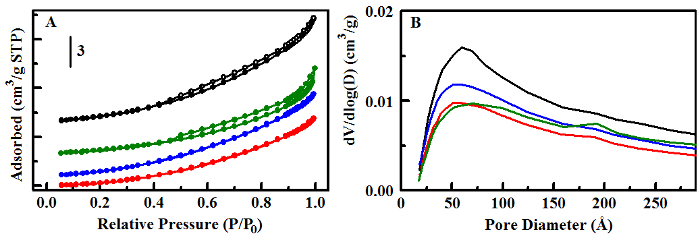
Figure 1: Morphological characterization of fabrics. Shown here are representative nitrogen sorption isotherms (A) and pore size distributions (B) for a typical fabric swatch (red), a similar swatch following the microwave initiation process (blue), the fabric following application of the sorbent (green), and the fabric following application of the full sorbent system (black). Please click here to view a larger version of this figure.
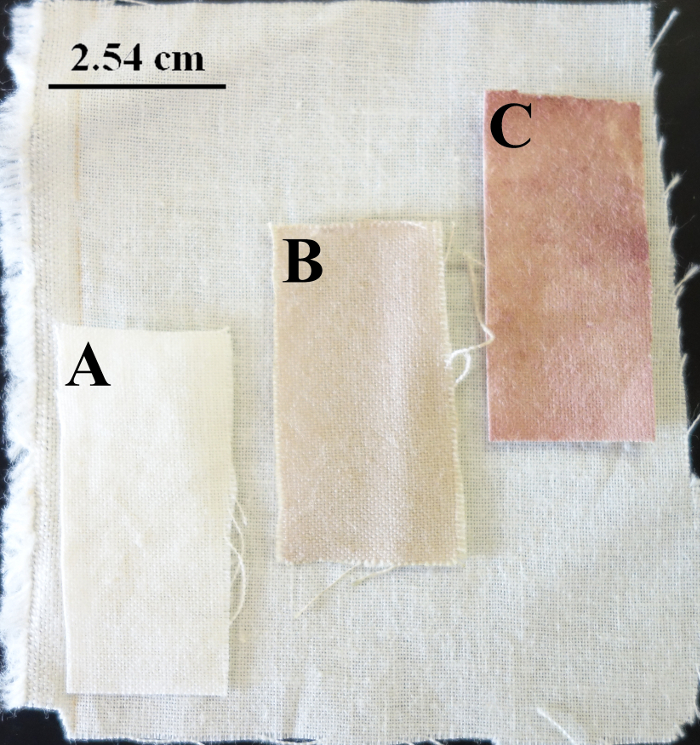
Figure 2: Photographs of fabric. The photograph here shows the microwave initiated, sorbent coated material (A), the CuDIX porphyrin alone on cotton (B), and a full porphyrin functionalized coating on the cotton (C). The treated swatches are overlaid on the untreated cotton fabric. Please click here to view a larger version of this figure.
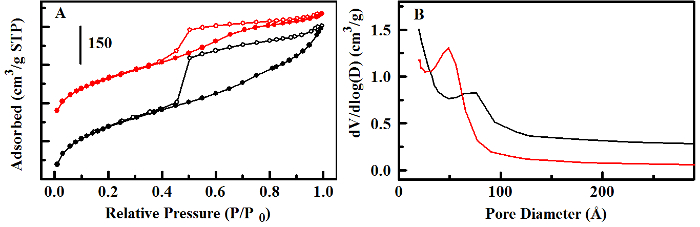
Figure 3: Morphological characterization of unsupported sorbent. Shown here are representative nitrogen sorption isotherms (A) and pore size distributions (B) for the sorbent when synthesized as a monolith (black) and when synthesized as a thick film (red)26. Please click here to view a larger version of this figure.
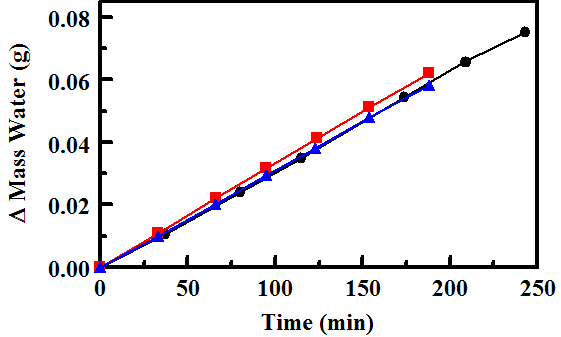
Figure 4: Water vapor permeation. Results from water vapor permeation analysis are presented for the complete CuDIX porphyrin functionalized sorbent on cotton fabric (black). Cotton fabric only (red) and cotton fabric with only the sorbent component (blue) are presented for comparison. Please click here to view a larger version of this figure.
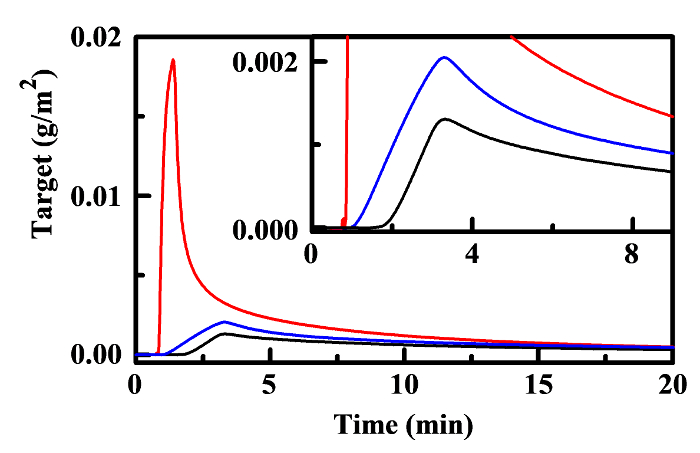
Figure 5: Permeation of CEES. Permeation of CEES through a complete porphyrin functionalized sorbent coating on cotton fabric is presented (black). Fabric only (red) and fabric with only the sorbent component (blue) are presented for comparison. The inset provides a zoomed view of the initial breakthrough period for the three materials. Please click here to view a larger version of this figure.
Discussion
Here, we have shown that the microwave-initiated deposition of TEOS can be used to prepare fabric for subsequent deposition of a porous organosilicate sorbent. The approach leads to loading of the fabric with 1.12 g sorbent per m2 of fabric surface. Analysis of the coated fabric by nitrogen adsorption indicated deposition of a porous coating with significant differences between the full treated material and that of the initiated fabric. The surface area was, however, less than that observed for a similarly composed material synthesized as a monolith. The sorbent alone reduced the rate of CEES transport across the fabric by 85%. Addition of the porphyrin functionalization to the supported sorbent further decreased transport (93% total reduction). Initial breakthrough for the porphyrin functionalized treated fabric occurred at 2 min; initial breakthrough the cotton fabric was at 0.6 min. This reduction in chemical permeation was achieved with little impact on the water vapor transport of the fabric.
The deposited sorbent is not a continuous thin film. The approach produces a coating that is more closely conformal to the yarn of the fabric. As a result, reduction to permeation is limited by the weave of the fabric. Here, a light-weight cotton fabric is used as the support material. The microwave initiation is suitable for use on other fabrics that provide amine or hydroxyl groups for modification. A more densely woven fabric, such as the nylon and cotton blend used in the US Army Combat Uniform (ACU), would produce greater reduction to target transport simply on the basis of reduction in void spaces within the weave. A densely woven fabric used as a shelter material would provide similar advantages. Recalling that the sorbent treatment is not limited to the surface of the fabric, a material providing some depth in the manner of a fleece or heavy knit fabric would also be expected to produce additional reductions in permeation. This concept would also apply to the three-dimensional pleated materials used in air filtration.
The treatment outlined here is not limited to use on traditional fabrics. It provides the potential for modification of the paper, layered, and pleated materials more typically applied in filtration approaches as well as nonwoven textiles. In some cases, the conditions described here may need to be gentled to maintain the integrity of the supporting material. Reducing the concentration of the base (ammonium hydroxide) may be necessary, as in the case of polyethylene fabrics. Shortening the duration of the microwave period may be necessary to avoid scorching (paper materials). Some synthetic fabrics, polypropylene for example, require reduction in the drying temperatures used. Changes to sol aging temperatures and durations should be avoided as these conditions have significant impact on the morphology of the resulting sorbent.
Ethanol may be substituted for methanol in the dip coating sol. This is encouraged when scaling up a synthesis and using a larger volume of sol, because ethanol presents a lesser health hazard. The sol can be diluted considerably with alcohol, e.g., 4 to 12 g ethanol instead of 2 g methanol) to prepare a greater volume of the mixture without a proportional increase in the masses of BTE, Pluronic P123, mesitylene, and acid. Relative amounts of reactants and solvent can also be multiplied to prepare a sol for generation of larger samples of coated materials. The degree of dilution or concentration of a sol may impact the resulting mass loading of sorbent material on a particular fabric. Multiple cycles of dipping into a sol mixture should also lead to changes in total loading.
Optimization of the deposition approach for other support materials is ongoing. Modification of the ACU nylon and cotton blend fabric is of particular interest for a daily wear solution providing baseline chemical protection as are jersey knit based materials. The deposition of other sorbent materials is also being explored. The diethylbenzene bridged sorbents developed for capture of pesticide targets, for example, use a sol preparation that differs from the one described here17,20,27 and catalysis is based on a different porphyrin. Finally, evaluation of the fabric supported materials against aerosol, liquid, and vapor targets is ongoing.
Disclosures
The authors declare that they have no competing financial interests.
Acknowledgements
This research was sponsored by the Defense Threat Reduction Agency (DTRA BA08PRO015) and the U.S. Office of Naval Research through Naval Research Laboratory base funds. The views expressed here are those of the authors and do not represent those of the U.S. Navy, the U.S. Department of Defense, or the U.S. Government.
Materials
| Name | Company | Catalog Number | Comments |
|---|---|---|---|
| unbleached 100% cotton fabric | JOANN Stores | N/A | Protocol is suitable for use on a variety of fabrics |
| ammonium hydroxide | Aldrich | 32,014-5 | |
| tetraethyl orthosilicate | Aldrich | 13,190-3 | |
| Pluronic P123 | Aldrich | 435465 | |
| mesitylene | Sigma-Aldrich | M7200 | |
| 1,2-bis(trimethoxysilyl)ethane | Aldrich | 447242 | |
| methanol | Fisher Chemical | A454SK-4 | |
| nitric acid | Sigma-Aldrich | 438073 | Prepare 0.1 M aqueous solution |
| 3-aminopropyltriethoxysilane | Gelest | SIA0603.4 | |
| toluene | Sigma-Aldrich | 650579 | |
| Deuteroporphyrin IX bis ethylene glycol | Frontier Scientific | D630-9 | |
| dimethyl sulfoxide | Sigma-Aldrich | 276855 | |
| copper chloride | Sigma-Aldrich | 256528 | |
| 2-(N-morpholino)ethansulfonic acid | Sigma-Aldrich | M3671 | Prepare 0.1M buffer at pH 5.5 |
| 1-ethyl-3-(3-dimethylaminopropyl)carbodiimide | Sigma-Aldrich | E6383 | |
| ethyl alcohol | Warner-Graham | 64-17-5 | |
| Drierite | Sigma-Aldrich | 737828 | |
| Microwave | Daewoo | KOR-630A | |
| Nitrogen adsorption instrument | Micromeritics | TriStar II Plus | |
| Environmental chamber | custom part | N/A | Here, a modified Thermolyne incubator, Compact Series 5000 was used |
| Flame ionization detector (FID) | SRI Instruments | 8690-0010 | Model 110 |
| Humidity probe | Vaisala | HMT3303E0A193BCAC100A0CCABEA1 | |
| AVLAG Cell | custom part | N/A | AERO-Space Tooling and Machining, P/N RS0010 Permeation cell |
| Computer controlled heater | World Precision Instruments | AIRTHERMY-ATX | |
| Mass flow controller | MKS Instruments | 1179A01312CS | |
| Dipper mechanism Type D1L | NIMA Technology Ltd | D1L | |
| Gravity oven | Fisher Scientific | 15-103-0520 | |
| Stirring hotplate | Fisherbrand | S28482 | |
| Octagon spinbar, magnetic stirring bar | Fisherbrand | 14-513-82 | |
| PSI-Plot version 9.5 | Poly Software International, Inc | N/A | |
| Microsoft Office Professional Plus - Excel 2013 32-bit | Microsoft | N/A | |
| MicroActive TriStar II Plus Software | Micromeritics | packaged with the TriStar II nitrogen adsorption instrument |
References
- Bromberg, L., Pomerantz, N., Schreuder-Gibson, H., Hatton, T. A. Degradation of Chemical Threats by Brominated Polymer Networks. Industrial & Engineering Chemistry Research. 53 (49), 18761-18774 (2014).
- Bui, N., et al. Ultrabreathable and Protective Membranes with Sub-5 nm Carbon Nanotube Pores. Advanced Materials. 28 (28), 5871-5877 (2016).
- Truong, Q., et al. Pilot-scale coating of fabrics with fluorodecyl polyhedral oligomeric silsesquioxane/fluoroelastomer blends. Surface Innovations. 2 (2), 79-93 (2014).
- Kar, F., Fan, J. T., Yu, W. Comparison of different test methods for the measurement of fabric or garment moisture transfer properties. Measurement Science and Technology. 18 (7), 2033-2038 (2007).
- Hayn, R. A., Owens, J. R., Boyer, S. A., McDonald, R. S., Lee, H. J. Preparation of highly hydrophobic and oleophobic textile surfaces using microwave-promoted silane coupling. Journal of Materials Science. 46 (8), 2503-2509 (2011).
- Bae, Y. S., et al. Separation of gas mixtures using Co(II) carborane-based porous coordination polymers. Chem Commun. 46 (20), 3478-3480 (2010).
- Bandosz, T. J., Petit, C. MOF/graphite oxide hybrid materials: exploring the new concept of adsorbents and catalysts. Adsorption. 17 (1), 5-16 (2011).
- Glover, T. G., Peterson, G. W., Schindler, B. J., Britt, D., Yaghi, O. MOF-74 building unit has a direct impact on toxic gas adsorption. Chem Eng Sci. 66 (2), 163-170 (2011).
- Head, A. R., et al. Electron Spectroscopy and Computational Studies of Dimethyl Methylphosphonate. Journal of Physical Chemistry A. 120 (12), 1985-1991 (2016).
- Johnson, R. P., Hill, C. L. Polyoxometalate oxidation of chemical warfare agent simulants in fluorinated media. Journal of Applied Toxicology. 19, S71-S75 (1999).
- Peterson, G. W., Rossin, J. A., Karwacki, C. J., Glover, T. G. Surface Chemistry and Morphology of Zirconia Polymorphs and the Influence on Sulfur Dioxide Removal. Journal of Physical Chemistry C. 115 (19), 9644-9650 (2011).
- Plonka, A. M., et al. In Situ Probes of Capture and Decomposition of Chemical Warfare Agent Simulants by Zr-Based Metal Organic Frameworks. Journal of the American Chemical Society. 139 (2), 599-602 (2017).
- Wang, G., et al. Mechanism and Kinetics for Reaction of the Chemical Warfare Agent Simulant, DMMP(g), with Zirconium(IV) MOFs: An Ultrahigh-Vacuum and DFT Study. Journal of Physical Chemistry C. 121 (21), 11261-11272 (2017).
- Wycisk, R., Barpaga, D., Pintauro, S., Levan, M. D., Pintauro, P. N. Electrospun zirconium hydroxide nanoparticle fabrics as sorptive/reactive media. Adsorption-Journal of the International Adsorption Society. 20 (2-3), 261-266 (2014).
- Johnson, B. J., Leska, I. A., Melde, B. J., Taft, J. R. Removal of phosgene by metalloporphyrin-functionalized porous organosilicates. Catalysis Communications. 27, 105-108 (2012).
- Johnson, B. J., Leska, I. A., Melde, B. J., Taft, J. R. Self-reporting materials: Dual use for porphyrin-embedded sorbents. Sensors and Actuators B-Chemical. , 399-404 (2013).
- Johnson, B. J., et al. Adsorption of organophosphates from solution by porous organosilicates: Capillary phase-separation. Microporous and Mesoporous Materials. 195, 154-160 (2014).
- Johnson, B. J., et al. Porphyrin-embedded organosilicate materials for ammonia adsorption. Journal of Porphyrins and Phthalocyanines. 16 (12), 1252-1260 (2012).
- Johnson-White, B., Zeinali, M., Malanoski, A. P., Dinderman, M. Sunlight catalyzed conversion of cyclic organics with novel mesoporous organosilicas. Catalysis Communications. 8, 1052-1056 (2007).
- Melde, B. J., Johnson, B. J., Dinderman, M. A., Deschamps, J. R. Macroporous Periodic Mesoporous Organosilicas with Diethylbenzene Bridging Groups. Microporous and Mesoporous Materials. 130 (1-3), 180-188 (2010).
- Nakanishi, K., Kobayashi, Y., Amatani, T., Hirao, K., Kodaira, T. Spontaneous Formation of Hierarchical Macro-Mesoporous Ethane-Silica Monolith. Chemistry of Materials. 16, 3652-3658 (2004).
- Johnson, B. J., et al. Miniaturized reflectance devices for chemical sensing. Measurement Science & Technology. 25 (9), 10(2014).
- D'Onofrio, T. G. Development of a contact permeation test fixture and method. , U.S. Army Research, Development and Engineering Command. Aberdeen Proving Ground, MD. Report #ECBC-TR-1141 (2013).
- Martin, B. D., et al. An Elastomeric Poly(Thiophene-EDOT) Composite with a Dynamically Variable Permeability Towards Organic and Water Vapors. Advanced Functional Materials. 22 (15), 3116-3127 (2012).
- Pushpadass, H. A., Marx, D. B., Hanna, M. A. Effects of Extrusion Temperature and Plasticizers on the Physical and Functional Properties of Starch Films. Starch-Starke. 60 (10), 527-538 (2008).
- Johnson, B. J., Melde, B. J., Moore, M. H., Malanoski, A. P., Taft, J. R. Improving Sorbents for Glycerol Capture in Biodiesel Refinement. Materials. 10 (6), (2017).
- Johnson, B. J., et al. Fluorescent Silicate Materials for the Detection of Paraoxon. Sensors. 10 (3), 2315-2331 (2010).
Reprints and Permissions
